Women in History: Irina Sendler

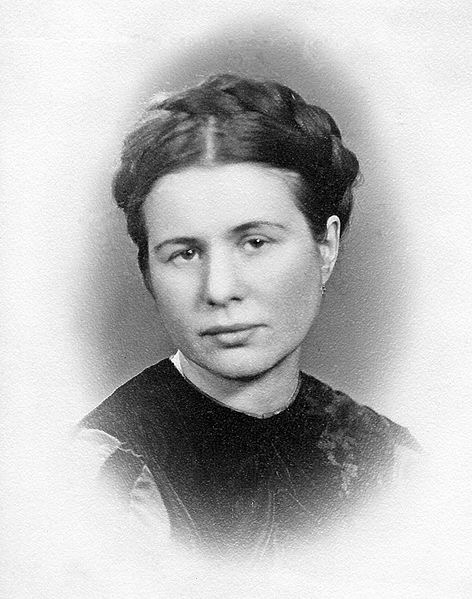
Irina Sendler (also called Irina Sendlerowa) was born in Warsaw in 1910. Her father was a doctor who treated the very poor at no charge, and who instilled his strongly Humanitarian values in his daughter. 

After finishing school, Irina studied law and literature  at the University of Warsaw. She opposed the practice of discrimination against the poor and the a Jewish people, and joined both the Union of Polish Democratic Youth and the Socialist Party, earning a reputation for being both a Communist and sympathetic to Jews that kept her from finding employment as a teacher throughout the 1930s. Instead, she took up a role as a social worker which exposed her to the most extreme poverty in and around Warsaw. She worked closely with mothers and children, and published articles about the conditions in which disadvantaged women were living.

When Germany invaded Poland on September 1st, 1939, the division in which Sendler was working was prohibited from working with Jewish people, and began working with sick and wounded a Polish soldiers. Irons and her colleagues began to issue false medical documents to help the soldiers and their families access welfare, a practice which she extended to Jewish families without telling her colleagues she was doing so. 

The Jewish people were restricted to one small area of the city which became known as the Warsaw ghetto, which was closed off to general access in 1940. Sendler and her colleagues gained entry on the proviso of checking for infectious diseases such as Typhus. Against orders, they smuggled in medications, food, sanitary supplies and other necessities. Over time, this extended to smuggling out babies and small children by various means, including carrying them in their medical bags. 

The children were sent to Polish families, Catholic orphanages and convents, and other orphanages. A Christian institution offered the best protection for the children, who were given Christian names and taught Christian prayers and religion once placed there. Sendler kept detailed records, though, in the hope of eventually reuniting children with their families.

Obviously, this work put Sendler and her colleagues at great personal risk, as helping Jews carried the death penalty.  The degree of danger increased when the ghetto was officially dismantled by Germany in 1942, with orders for its residents were collected in groups and sent to extermination camps. Sendler and her colleagues helped as many adults and adolescents to escape to temporary emergency housing as they could. 

On October 18, 1943, Irina was arrested, tortured for information which she refused to divulge, and then imprisoned in Pawiak. She was further interrogated on later dates, and then sent elsewhere for execution, only escaping this fate because her guards had been bribed. She resumed her work under an assumed name, and tried to remain in hiding as much as she could. 

In 1944, the Polish resistance engaged in the Warsaw Uprising, during which Irina worked as a nurse in a field hospital. When that hospital ran out of money and supplies, Irina took the initiative and hitchhiked to Lublin to seek assistance from the communists who were in control of the city. 

After the war, the hospital in which Irina worked was transformed into the Warsaw Children’s Home. Sendler and her colleagues gave all the names and family details of the children they had saved to the Central Committee of Polish Jews with the aim of reuniting the families, but most of the parents had been killed during the Holocaust, so this only had limited success. 

Irina Sendler received numerous decorations and honours for her service and bravery in the years after the war, both in Poland and from other countries and international bodies. 
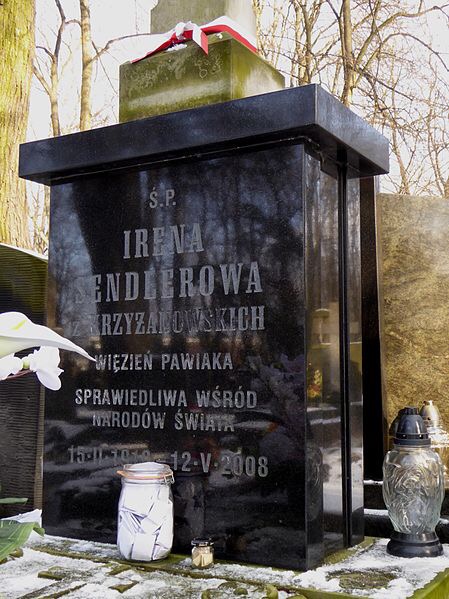
The grave of Irena Sendler in Powązki cemetery
Image: Jake from Manchester, UK via Wikimedia Common

Sendler continued to work for the wellbeing and care of women and children. She also remained active in the Communist party, although her relationship with the party was not always a harmonious one. She taught until the age of 73, when she retired, remaining in Warsaw for the rest of her life. After her death on May 2nd, 2008, Irina Sendler was buried in the Powazki Cemetery in Warsaw. 
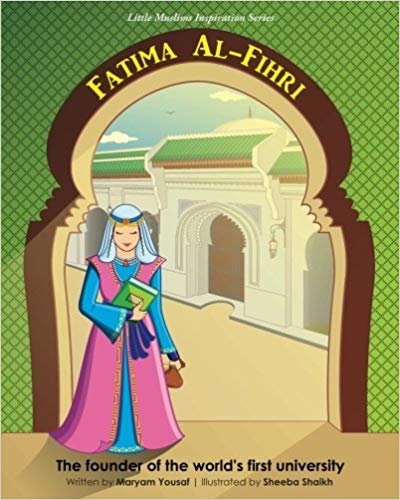
Women in History: Fatima al-Fihri

In the year 850 CE there was no such thing as a university. By 859, there was— thanks to Fatima al-Fihri.

The cover of a children’s book about Fatima al-Fihri’s life by Maryam Yousaf, available on Amazon

Fatima al-Fihri was an Arab Muslim woman who, having received an education and understanding its value, established the first ever university in Fez, Morocco.

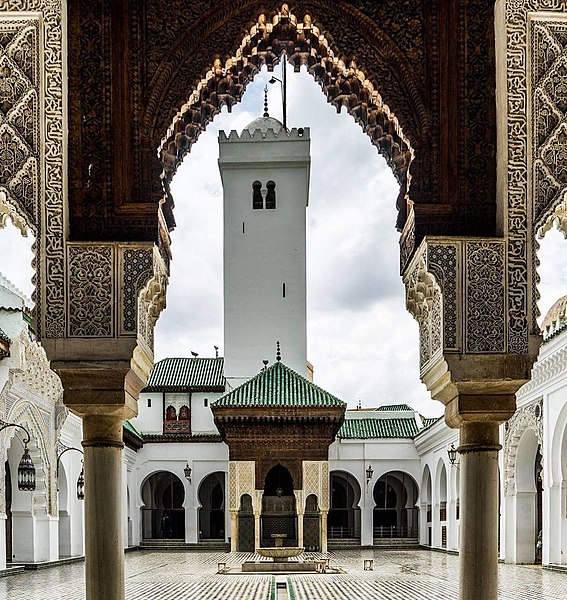
When her father died, he left his estate to his daughters, Fatima and Mariam, each of whom used the money to establish a mosque. Fatima’s mosque grew to hold thousands of worshippers while at the same time evolving into a place of learning that offered degrees for different levels of education in the subjects of Islamic studies, mathematics, natural sciences, music, medicine and grammar.  A library was also established,
providing the resources and documents
needed by students and teachers alike.

Image: Abdel Hassouni via Wikimedia Commons

The University was not exclusive to Muslim students, and attracted scholars from both Jewish and Christian traditions. One of those students went on to become Pope Sylvester II, who introduced both Arabic numerals and the idea of zero to Western mathematics.

By the time Fatima died at the age of eighty years old, The University of Al Quaraouiyine had been running for twenty-four years,
alongside the mosque from which it
had developed.

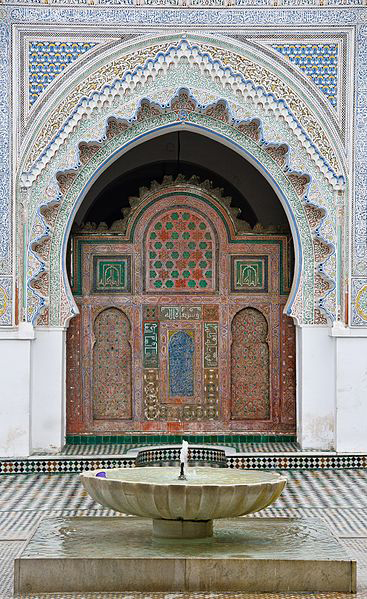
Image: Mike Prince on flickr via Wikimedia Commons

This makes the university more than two hundred years older than the oldest Western universities at Bologna (est. 1088) and Oxford (est. 1096).

Both the mosque and university are still running today. Both the University of Al Quaraouiyine and its library are the oldest of their kind in the world. The library contains many ancient documents, some of which  date right back to the 9th century origins of the library, and other texts and books written by renowned academics.

What an amazing and enduring legacy, and a testament to foresight and wisdom! 

WordyNerdBird’s note: 
Having grown up in Australia and enjoyed a very Western education, I had no idea until much later in life that the concept of the university was something that came from the Muslim tradition. 

Perhaps if we were taught more overtly and deliberately about the legacies that have come to us from traditions other than our own,  our places of learning and society in general would be far more respectful of those traditions and the people who still hold them. 

Women in History: Tomoe Gozen


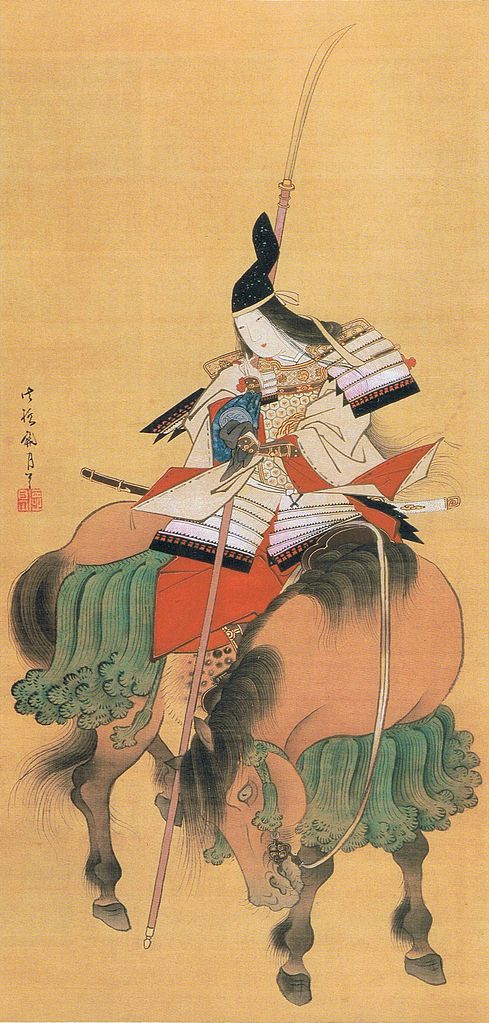
蔀関月筆 Image: Public domain.

Unlike most of the women featured on this blog for Women’s History Month, we don’t know a lot of the details of Tomoe Gozen’s life story.  Even so, what we do know tells us of a woman of incredible strength and bravery.

Tomoe Gozen was a Japanese warrior who lived from 1157 to 1247. This places her on the timeline of history just after Matilda Plantagenet, and makes her the contemporary of Eleanor of Aquitaine, yet she is far less well known in Western culture than she should be. She has appeared as a character in books, film, anime, manga and video games at various times in the last fifty years.  Before that, her story was kept alive in Japanese  festivals and on the stage in classical Kabuki theatre productions.

It was during the Genpei War that Tomoe Gozen won fame as an incredibly strong warrior in Japan’s Samurai tradition.  Female Samurai were called onna-bugeisha, their ranks made up of noble women who fought alongside the men of their clans. Of course, Tomoe Gozen was renowned for being beautiful and strong, but it was her skill as a brave and indefatigable martial warrior in archery, sword fighting and horsemanship and that earned her military reputation and place in history.   

Arising out of long and deep-seated rivalry between the two clans, the Genpei War between Japan’s Minamoto and Taira clans was a bloody and bitter five year long period of conflict which resulted in the defeat of the Taira clan, after which  Minamoto no Yoritomo was established as the first feudal ruler of all Japan, known as the Shogun, in 1192.

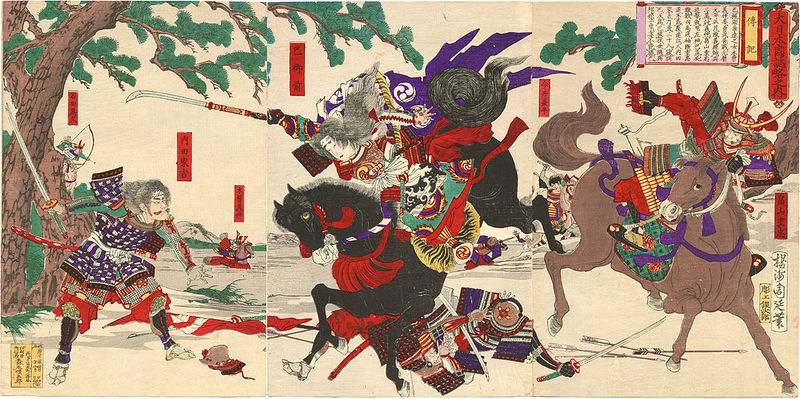
Tomoe Gozen’s family was closely associated with the Minamoto clan, and it is believed by many that she was either married to or the concubine of Minamoto no Yoshinaka, a powerful Minamoto general who led his clansmen  to victory over the Taira but lost his lifewhen challenged for the leadership by his cousin Yoritomo, After Yoshinaka’s death, she continued to fight, and is known for beheading several key enemies and evading those who wanted to capture her.


Image: Public Domain.  Tomoe Gozen with Uchida Ieyoshi and Hatakeyama no Shigetada by Toyohara Chikanobu (1838-1912)

The accounts of what happened to Tomoe Gozen after the Genpei war vary. Some say she married a rival warlord, while others say she gave up the martial lifestyle and became a nun.

Regardless of how her life ended, her courage, skill and commitment set her apart from most whom she fought alongside, and earned her place as a hero in the history of the key battles that brought about a turning point in the history of Japan. 

Women in History: Khutulun

Today’s ‘Woman in History’ is a very different kind of Medieval princess.

Khutulun was born in 1260, the daughter of Kaidu, the powerful Mongol ruler of Central Asia, and the great-great-granddaughter of legendary Mongol leader Genghis Khan. 

While Kaidu’s cousin, the great Kublai Khan, had built his own empire with cities and a more settled and sedentary way of life, Kaidu’s empire continued in the old ways of horsemanship, weaponry and fighting, and a traditionally nomadic lifestyle. 

Khutulun was raised to be a skilled and powerful warrior who accompanied her father and his soldiers into battle, demonstrating prowess in both stealth and combat. Even when the opposing empires of Kaidu and Kublai went to war against one another, she went to war alongside Kaidu and acquitted herself in a most exemplary manner. 

Khutulun was so impressive in battle that the famous explorer Marco Polo wrote of her military exploits and abililites. Even though he was a ruler over a large empire and had an enormous army at his disposal, he would often seek her advice and support in both political and military matters. In fact, Kaidu wanted to make Khutulun his heir as the ruler of his empire, but because she had fourteen brothers, he was unable to do so. 

Khutulun would never settle for an arranged marriage and resisted her familiy’s attempts to find her a husband. Instead, she issued a challenge: any man who wanted to marry her would have to wrestle her and win.  Any suitor who lost the match would have to give her a horse. 

Clearly, she was a woman who knew her strengths and was willing to back herself in a contest. According to legend,  Khutulun won more than ten thousand horses from the eligible men of Mongolia. She did eventually marry, although it was not because someone was able to successfully win her hand in marriage by beating her in a wrestling match.

Picture: Qutulun, daughter of Qaidu. Public Domain via Gallica Digital Library. https://gallica.bnf.fr/

When Kaidu died, Khutulun took up vigil as the guard of his tomb. Her brothers continued to oppose her at every turn, and she gradually slipped out of public and military life. 

Khutulun died in 1306. The manner of her death remains unknown. 

Her story remained untold for the next four hundred years until a French historian by the name of Francois Petis de La Croix researched and wrote a biography of Genghis Khan. He wrote the story of Turandot based on her life, although he greatly altered the details of the story. It seems Shakespeare wasn’t the only one guilty of deciding he could tell a story more interesting than the truth

Khutulun certainly did things her own way and lived life by the rules that she set. Although she never got to rule the empire as her father had hoped, you’ve got to admire her ability to show all the other soldiers how the fighting should be done, and for finding a  most creative and lucrative way to deal with everyone who wanted to marry her off. 

And admire her is what the Mongolian people still do: their traditional wrestling costume is still worn widely open at the chest to prove that the wrestler is not female. 


Women in History: What Medieval Princesses Could Do

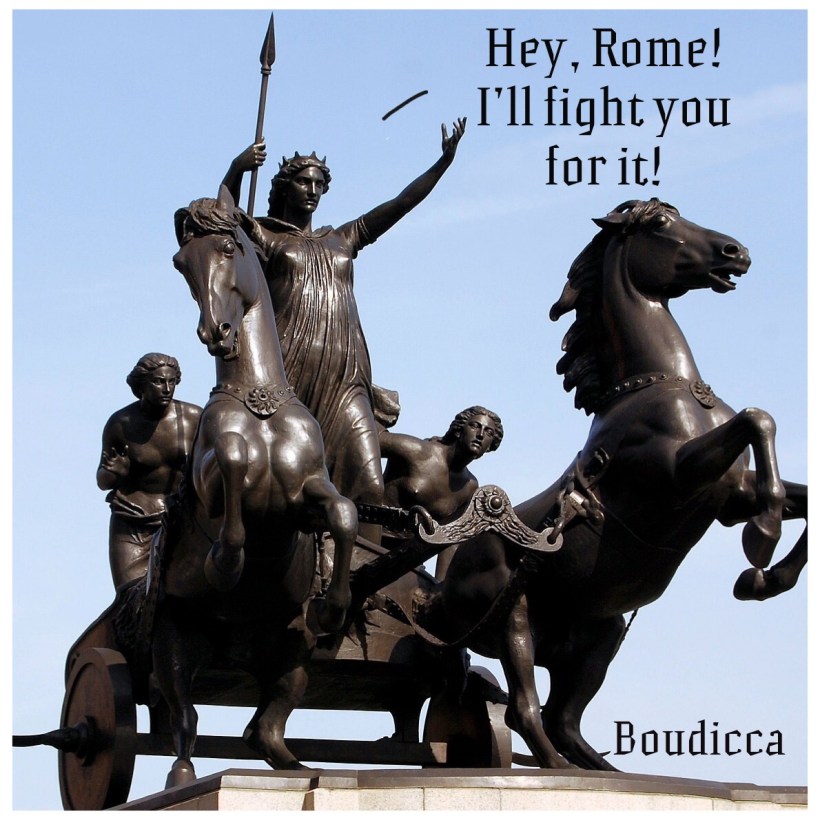
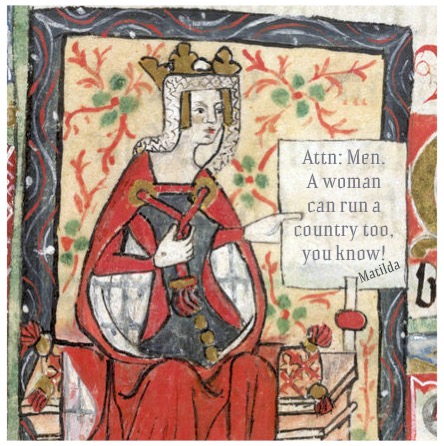
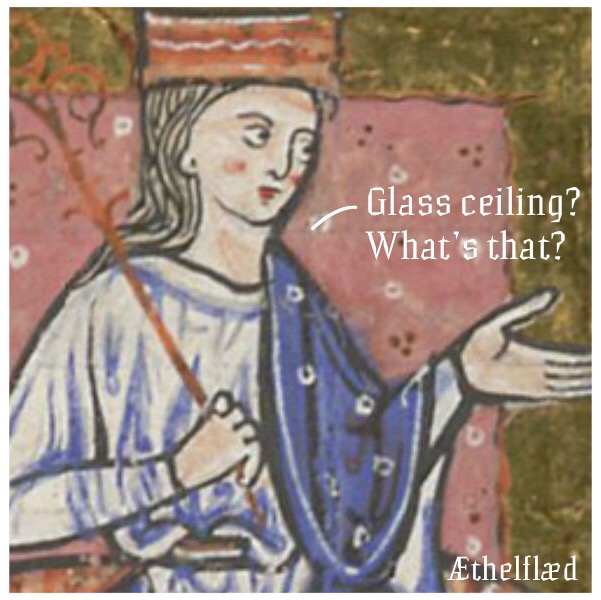
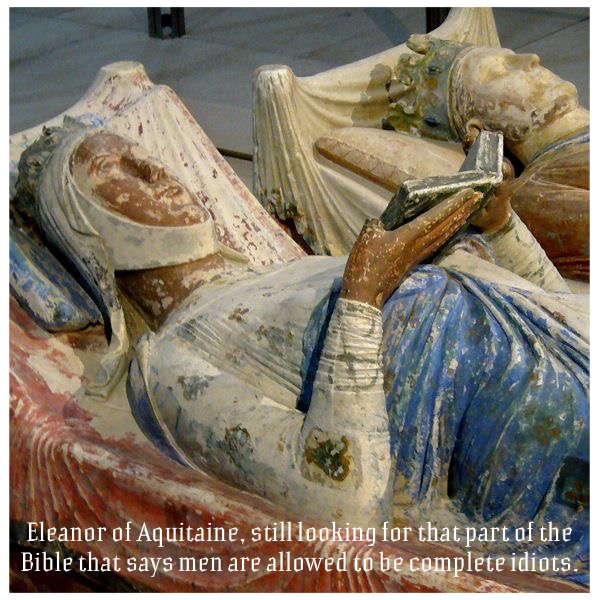
Among the amazing women I have featured for Women’s History Month over the past few weeks are some of my favourite feisty medieval royal women: Boudicca, Æthelflæd. Matilda, Eleanor of Aquitaine, Queen Philippa of Hainault, Margaret  of Anjou and Anne Neville

Each of them rebelled in one way or another against the social conventions of their time, showing even in their strongly patriarchal societiy that women were capable of far more than just making politically astute marriages nd popping out royal babies to guarantee the king an heir— or several. 

I stumbled across this article from the History Extra website on the weekend, and thought it made a wonderful addition to my collection of articles here. 

I hope you enjoy it as much as I did! 

7 Things You Didn’t Know A Medieval Princess Could Do

https://www.historyextra.com/period/medieval/princesses-what-life-like-middle-ages-daughters-edward-i-eleanor-joan-acre/

Women in History: Nancy Wake

Nancy Wake was born in New Zealand in 1912, and just a few months before her second birthday, her family moved to Sydney, Australia, where she grew up.

When she was sixteen years old, Nancy left home and got a job as a nurse until she lleft the country for New York, then London where she trained in journalism, before moving to Paris where she worked as a journalist in the 1930s, writing a great deal about the rise of fascism and the horrors of anti-semitism in Nazi Germany. She married and moved to Marseilles in 1939. 

When France surrendered to Germany in 1940, Nancy worked as an ambulance driver in the war. She and her husband joined the French Resistance, for whom she worked as a courier before working to help both Jewish people and Allied servicemen to escape. She made several attempts of her own to escape, having fled Marseilles and even being imprisoned for attempting to leave the country unlawfully.

By the time Nancy did manage to escape to Spain via the Pyrenees Mountains, she was one of the Nazi’s “most wanted” secret agents. It was the Germans who gave her the name ‘The White Mouse’ in reference to her ability to evade capture. 

Once out of France, Nancy made her way to England where she received training in Special Operations. Nancy returned to France in 1944, tasked with helping the French Resistance organise and prepare for D-Day. She organised parachute drops of arms and supplies, and actually experienced combat against German troops. 

It wasn’t until after the liberation of France that Nancy learned that the Gestapo had killed her husband in 1943. His death was something she never got over, as she held herself responsible because he would not betray her. She finished her time with the Resistance in 1944, and returned to Special Operations in Paris and then London. 

After the war she received medals and, in later years, honours from Britain, France and the USA for her service and bravery. 

On her return to Australia she tried to enter politics more than once, but her attempts to win a seat in Parliament were unsuccessful. Restless and unfulfilled, Nancy travelled to England in 1957 and married again, returning to Australia with her husband. 

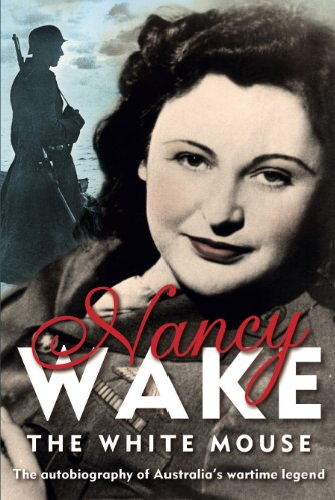
Nancy Wake published her autobiography, ‘The White Mouse’ in 1985. 

After her husband’s death in 1997, Nancy sold her medals to provide for herself. She went back to England in 2001 and spent the rest of her life there. She died in August, 2011, and her ashes were scattered near Verneix in central France. 

I admire Nancy Wake for her gutsy attitude, her opposition to injustice and her total commitment to a cause. She is a woman in history whom others can rightly consider a most inspiring role model.

Women in History: Nellie Bly

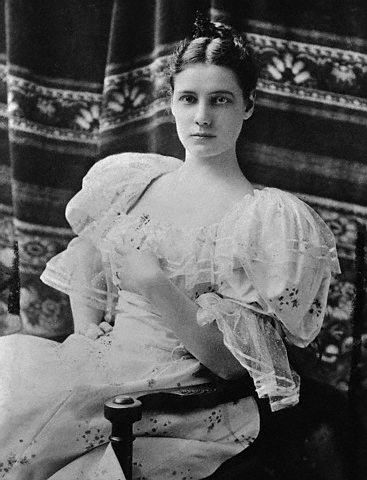
Picture: Public domain.

Born Elizabeth Jane Cochran in a suburb of Pittsburgh, Pennsylvania, and having altered her name slightly by adding an ‘e’, Cochran’s began her career in journalism when she responded to a newspaper article which contended that girls were really only good for motherhood and housekeeping. 

Significantly impressed by her response, which she had written under a pseudonym, the editor of the paper ran an ad asking the author to come forward. 

When Cochrane introduced herself to the editor, he offered her the opportunity to write another piece for the newspaper, and when she impressed him again, he offered her a permanent job.  At that time, the convention was for women who wrote for newspapers writers to use pen names. Her pen name was taken from a popular song, and when the editor wrote ‘Nellie’ instead of ‘Nelly’, the name stuck.

Nellie wrote a series of articles about issues confronting women factory workers which resulted in complaints from the men who owned and ran the factories. When the editor reassigned her to articles on homemaking and gardening, Nellie soon became frustrated and left for Mexico, where she spent six months reporting on the lives of the people. She had to leave Mexico, however, when her article decrying the imprisonment of a local journalist angered the authorities, then controlled by the dictator Porfinio Diaz. 

Unwilling to spend the rest of her life writing about things in which she took little interest, Nellie moved to New York in 1887 where, after living in very poor conditions, she undertook a job for The World newspaper as an undercover reporter in the notorious women’s asylum on Blackwell’s Island. It took considerable effort to actually get committed to the asylum, where Nellie experienced all the horrors of the place firsthand for ten days before her release was secured by her editor. 

The conditions and treatment of patients in the asylum became known through Nellie’s articles, which were later published as a book. Cruel staff, poor sanitation, dreadful food and the fact that a number of the women were not insane at all — some simply did not speak English, others were sent there when their affairs with prominent members of society had soured— brought about reforms and made Nellie Bly a household name. 

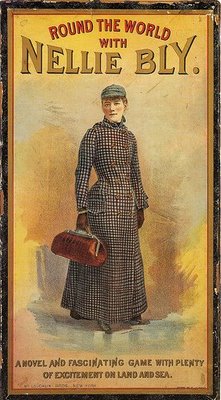
In 1888, Bly suggested to her editor that she undertake a trip around the world inspired by Jules Verne’s Around the Workd In Eighty Days, to see if it could be done int hat time.

Picture: Public Domain. Cover of the 1890 board game Round the World with Nellie Bly

She left on November 14, 1889, in the clothes she wore, with some money in a pouch that hung on a cord from her neck, concealed by her clothes, and a small bag containing some basic requirements. She travelled by ship and rail, and actually met Jules Verne in France. Her tip was not without delays or complications, but she arrived back in New York just 72 days after her departure — then a world record time.

Later in life, Cochrane became an industrialist and then a reporter on both the events of World War I and the campaign for women’s suffrage in America. 

Nellie died of pneumonia in 1922. She had certainly led an interesting life and demonstrated quite powerfully that women were capable of far more than having babies and running a household. 


Women in History: Queen Philippa of Hainault

Life is crazy busy sometimes, and it’s not always possible to write a great post every day.

Today’s Women in History post on Philippa Of Hainault comes from Sarah Kay Bierle’s Gazette 665 history blog, which is always interesting.

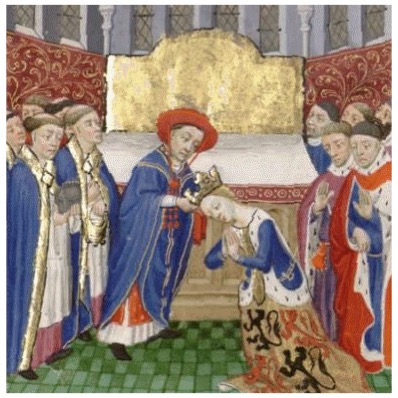
The coronation of Phillipa of Hainault, queen of Edward III of England.

Women in History: Margaret of Anjou

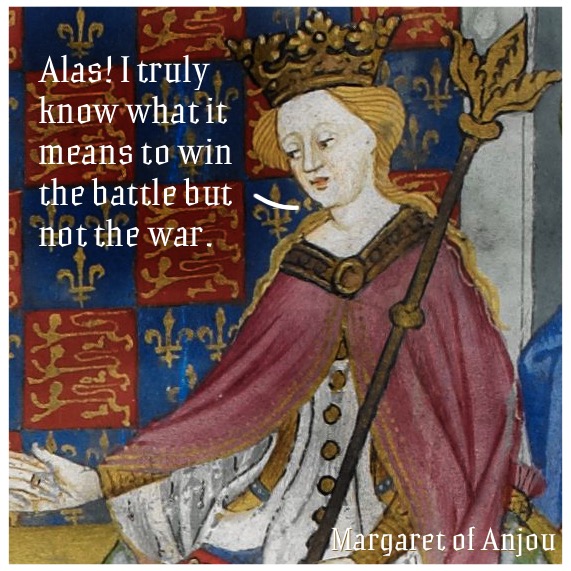
In my ‘Women in History’ post about Anne Neville, I commented that she was one of the women of history most grievously misrepresented by Shakespeare. There is a good argument for Margaret of Anjou being another. 

Margaret was the wife of Henry IV and the mother of Edward of Westminster, Prince of Wales, who married Anne Neville.

Shakespeare paints Margaret as a bitter and twisted old woman who hung around the castle and served everyone with a vitriolic curse or two before breakfast every morning. Of course, Shakespeare was not one to let the truth get in the way of a good story or a really effective dramatic device. He was all about the entertainment— and on sucking up to Elizabeth I by portraying her grandfather as the king who brought peace to England after the Wars of the Roses.

It’s understandable, really. Not only was he working from accounts of history written by Tudor-friendly historians, he also understood how foolhardy it would be to offend the reigning monarch and risk his head. Thus, his play casts the first Tudor king, Henry VII in a very godly light, and delivers messages to the masses about how only evil people try to take the throne from the rightful ruler. 

It is a matter of course, then, that both the Yorks and the Lancasters are shown to be fractious, grasping and hateful people. 

What, then, is the real story of Margaret of Anjou?

Margaret was born in 1430 to the Duke of Naples, Rene of Anjou, and his wife Isabella, Duchess Of Lorraine. As the niece of the queen of France, the arranged marriage of Margaret to the young Lancastrian king in 1445, and solidified a truce between France and England that brought an end to the Hundred Years’ War.

Margaret took an active role in supporting Henry IV in his rule, but when his mental health declined, Richard, Duke of York, who held significant position and power at court was appointed as Lord Protector. Margaret and York distrusted one another’s pride and ambition, she because she feared he would claim the throne that rightfully belonged to her husband and son, and he because he deeply disliked the self-assured and proud young French queen. 

Enmity blew out into full conflict in 1455, and the two factions met on battle at St Albans. Henry VI’s forces were defeated, and Richard took the reigns of government.  Henry VI’s mental and physical health had deteriorated to the point where he was unable to govern, so Margaret, determined to maintain hold on the throne for her husband and son, worked relentlessly to remove York from his position, finally regaining control of the throne in 1456. 

By 1459, the situation had degraded so badly that Margaret outlawed York and his key supporters, and armed conflict could no longer be avoided. Henry VI was captured at Northampton in 1460 and, when offered a compromise that would see York declared to be Henry’s heir instead of her son, she steadfastly refused, maintaining that her son was the only rightful heir to the throne of England. 

Margaret’s soldiers killed York near  the Yorkshire town of Wakefield in the December of 1460 and won Henry’s release from Yorkist captivity at the second Battle of St. Albans in February of 1461. 

This was not the end of the conflict, however. York’s sons and supporters continued to fight, and his eldest son Edward of York laid claim to the throne as Edward IV on March 4. His army met and crushed Margaret’s forces at the Battle of Towton on March 29, causing Margaret and Henry to flee to Scotland with their son.

By 1470, Warwick the Kingmaker had become disillusioned with Edward IV as king and commenced machinations to lead a coup against Edward and return Henry IV to the throne. Although there had been strong enmity between them, Warwick and Margaret negotiated a reconciliation arrangement by which Henry was restored as king in October of 1470, and his son Edward was married to Warwick’s daughter Anne Neville to seal the deal. 

It was only a matter of months before Edward’s soldiers killed Warwick in the Battle of Barnet on the on the 14th of April— the same day that Margaret, Edward and Anne returned to England from France. 

The two armies met again at Tewksbury on May 4th, 1471, with Margaret leading the Lancastrian forces in the absence of Henry, whose health had once again deteriorated. Edward dealt Margaret a crushing defeat and her son was killed. 

Shortly after that,  Henry VI was put to death in the Tower of London. This final blow put an end to Margaret’s hopes to reclaim the kingdom, and she was taken into custody where she was held in various places including the Tower of London. She appealed to her father for help, but he refused, so she remained imprisoned until 1475 when the French king Louis XI negotiated her release and paid the ransom that enabled her to return to France.Margaret died in poverty in 1482.

While I have no doubt that she did indeed weep and that she most passionately hated the Yorks, she certainly didn’t get a chance to lurk behind pillars in their castles and curse them face to face. She never saw Richard take the throne of England, nor was she a witness to the death of his wife Anne, her own former daughter-in-law. Both of those things happened in the year after her death.

Women in History: Anne Neville

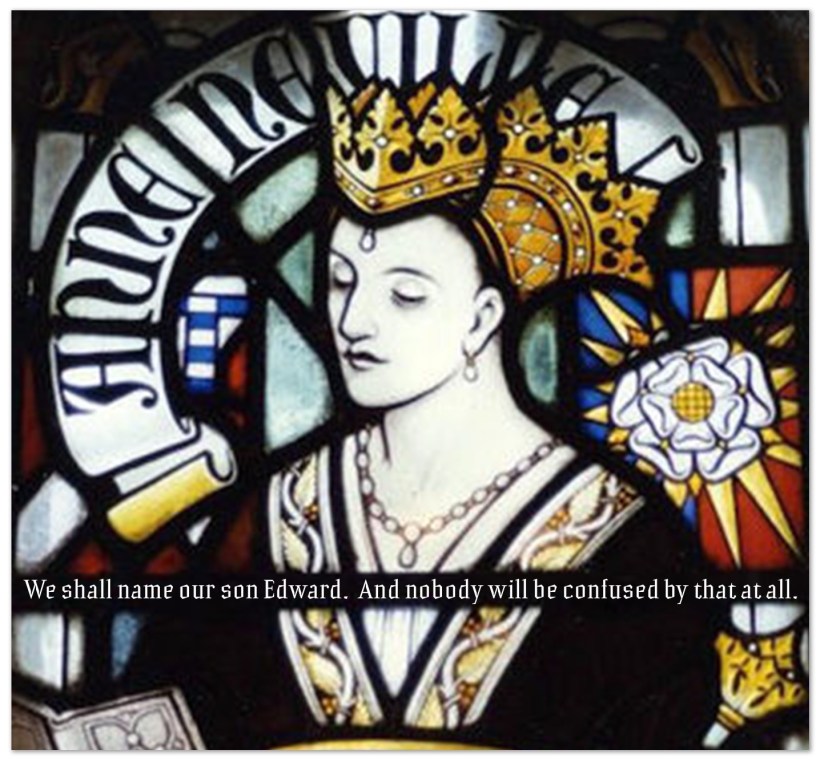
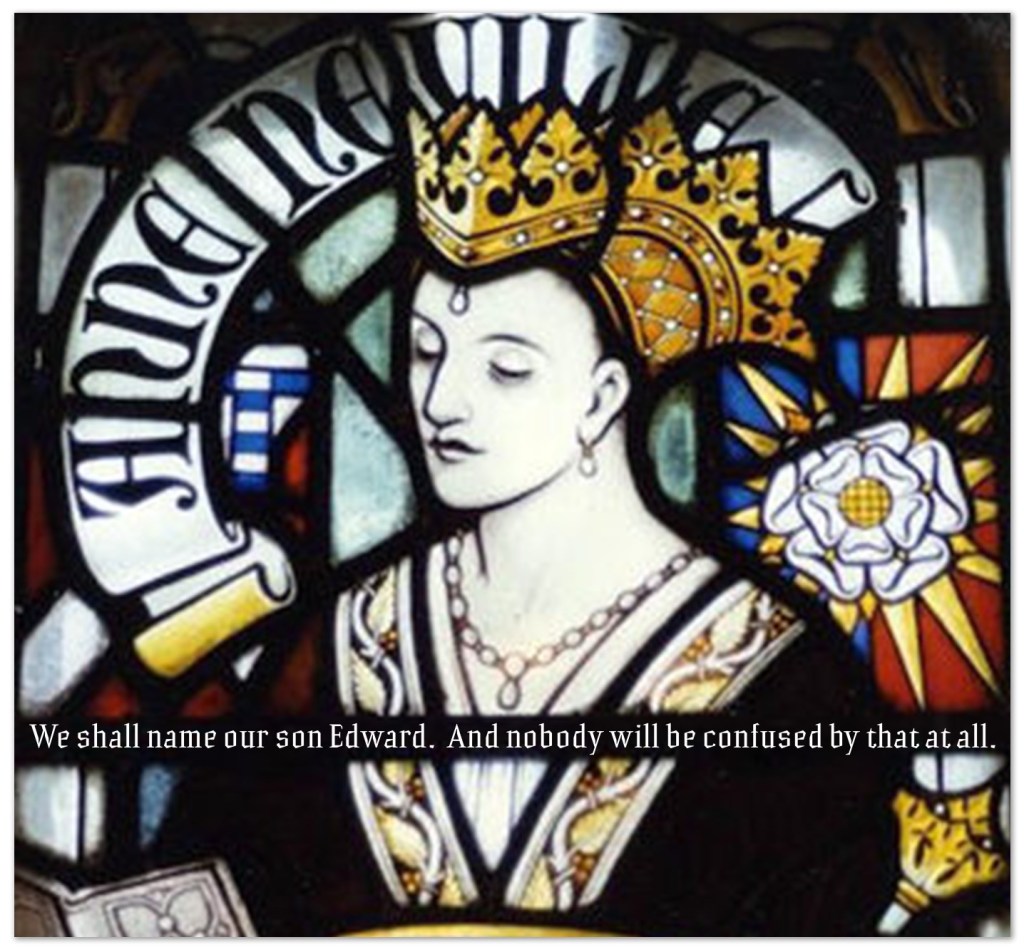
Anne Neville has to be one of the women in history most maligned by Shakespeare.

While it is true that he does portrays her as one of the many victims of Richard III, and doesn’t really say anything terribly nasty about her, it is also undeniable that her reputation is maligned by the way she is portrayed as being quite fickle and very, very gullible.

As I always remind my students, there is a vast difference between actual history and Shakespeare’s play. In fact, Shakespeare entirely misrepresents both the course of events and the relationship between Anne and Richard. 

Not only were their families well known to one another, they were quite closely related. 

Anne grew up at Middleham Castle, the daughter of the 13th Earl of Warwick and his wife, Anne Beauchamp. Anne’s great aunt was Cecily Neville, the wife of Richard, Duke of York, and mother of Richard and his brothers.

When the Duke Of York died, his youngest sons George and  Richard went to live at Middleham with Warwick’s family. Anne’s sister Isabel would later marry George, Duke of Clarence.

Warwick, known as The Kingmaker, played a crucial role in helping his cousin take and hold the throne as the King Edward IV of the House of York during the troubled times of conflict commonly referred to as either The Cousins’ War or the Wars of the Roses. For the first few years of Edward’s reign, Warwick held enormous influence over the young King. 

However, when Warwick tried to negotiate a marriage arrangement for Edward to secure an alliance with France, he discovered that Edward had secretly married Elizabeth Woodville, the widow of Sir John Grey who had been loyal to the Lancastrians. Warwick was not alone in distrusting her and her family, and was profoundly annoyed by Edward’s secret marriage to a woman whom Warwick considered entirely unsuitable. 

At the same time, and quite likely in direct response to Warwick’s contempt for his queen, Edward refused to give his blessing to a proposed union between his brother George, Duke of Clarence, and Warwick’s daughter Isabel, but the pair married anyway with Warwick’s blessing. 

This pitched Warwick and Edward against Edward, and their forces met in battle at Edgecote Moor in 1469. Edward was defeated and taken captive, although released before long, Warwick had sufficient time to reconcile his differences with Margaret of Anjou, the queen of the former Lancastrian King Henry VI. The significance of this is enormous: Warwick and Margaret absolutely hated one another.  

Even so, Warwick’s daughter Anne Neville was betrothed to Margaret’s son Edward of Westminster, the Lancastrian Prince Of Wales,  as a seal of the alliance, and Henry VI was restored to the throne of England two months before Anne and Edward were married in November of 1470. Thus,  Anne became the Princess of Wales and part of the Lancaster dynasty. 

Edward of York, however, was not so easily deposed. He defeated and killed Henry VI in the Battle of Barnet in April 1471, just as Margaret, Edward and Anne were returning to England. Margaret led an army to Tewksbury in May, where her son Edward was killed either during or just after the battle. Edward IV of York then reclaimed the throne as king of England.

Anne, a young widow, took up residence with her sister Isabel and her husband. When Richard asked for and was given consent to marry Anne, the only opposition came from his own brother, who wanted to inherit the entirety of Warwick’s wealth for himself. 

Anne was very willing to marry Richard, and harbored no resentment toward Richard for any of his deeds, perceived or real. They married in 1472 and theirr only son, Edward of Middleham, was born in 1473.

Her relationship with Richard’s mother Cecily was good and her marriage to Richard was happy, although stricken by grief when their son died at the age of ten. Anne and Richard then adopted the young orphaned son of her sister and Clarence, who was also named Edward — of course he was! and of a similar age to their own son. In yet another striking contrast to Shakespeare’s play, the newly adopted boy was named Richard’s heir. 

Anne Neville died at Westminster on 16th March 1485, from an illness that was most likely tuberculosis. She was only in her late twenties, but she had witnessed a very great deal of conflict, grief and turmoil in the kingdom in the course of her life. She was buried in Westminster Abbey, near the High Altar, although the location of her grave was never marked. 

Anne’s story is very different than that told by Shakespeare. Instead, Anne appears to have been a woman who possessed both integrity and backbone, and to have dealt with her trials with considerable resilience. As much as I love the works of the Bard, I do prefer the real story of Anne Neville, and feel sorry that for so many years, she was neither admired nor respected as she deserved to be.