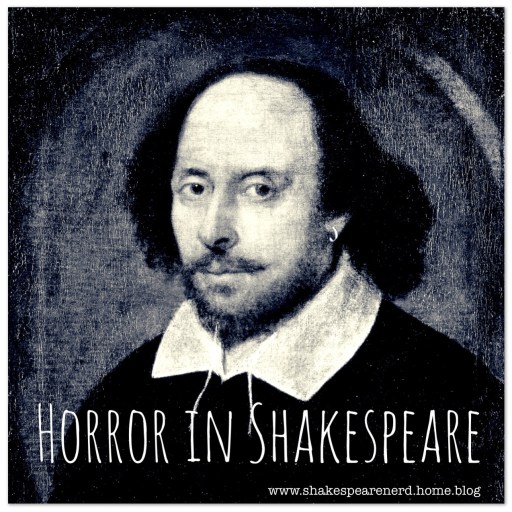
Horror In Shakespeare: The Haunting of Richard III

Happy Halloween!

I hope you enjoy this most Halloween-ish scene from Shakespeare’s ‘Richard III’, courtesy of Shakespeare Nerd.

wordynerdbird's avatarShakespeare Nerd

Of all the scenes written by Shakespeare, this is the most Halloween-worthy. What is more appropriate for All Hallow’s Eve than a haunting, right?

Shakespeare’s ‘Richard III’ portrays Richard as an evil, conniving, murderous villain who plots and murders his way onto the throne of England. His deeds are ruthless and his victims are many.

In Act 5, Scene 3, the ghosts of all of Richard’s victims haunt him in his tent the night before the battle. Each of them bids him to “despair and die”, which becomes a powerful refrain that haunts him as he sleeps. This kind of regular repetition of a phrase is called epimone (uh-pim-o-nee): it compounds and gives power to an idea by dwelling on it.

Each of the ghosts also visits Richard’s opponent, Richmond, as he sleeps, bidding him to live, conquer and flourish. It is significant that their words to him are not…

View original post 143 more words

Horror Scenes in Shakespeare: “Out, damned spot!” The Blood on Lady Macbeth’s Hands

There is no doubt that a guilty conscience can really do a number on one’s wellbeing and mental health.

This post from Shakespeare Nerd’s ‘Horror Scenes in Shakespeare” series features the psychological horror of Lady Macbeth’s guilty conscience and the profound effect it would have had on the superstitious audiences of Shakespeare’s time.

I hope you enjoy this Halloween week post.

wordynerdbird's avatarShakespeare Nerd

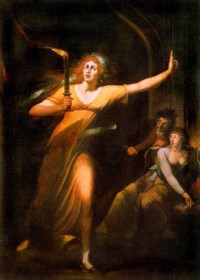
The horror of Act 5, Scene 1 of Macbeth is subtle, but very real. While there is no real blood on the stage, there is definitely blood on Lady Macbeth’s hands. 

After belittling Macbeth more than once for being haunted by visions and ghosts, the same thing happens to Lady Macbeth – or Lady Macdeath, as I like to call her. She is spared such public humiliation, though – her suffering is is revealed in the privacy of her own rooms,witnessed only by her servant and a doctor. This enables the audience to witness theintensely personal and intimate nature of the psychologicalhorror experienced by Lady Macbeth.

In the chaos of her behaviour, the audience sees the extent of Lady Macbeth’s mental torment: she is plagued by guilt and losing her grip on reality. She walks and talks in her sleep, carrying a candle because she…

View original post 458 more words

Easily Confused Words: Stationary vs. Stationery

Yesterday I saw a sign in a shop that said “Stationary” attached to a shelf. 

They were absolutely right: that shelf wasn’t going anywhere. I suspect it’s still in the same place even now, although it’s been about 30 hours since I was there. 

This is a common mistake because people often don’t realise that ‘stationary’ and ‘stationery’ are two different words.  They sound the same, but are spelt differently and have very different meanings.

Stationary means “not moving”. 
A train stops at a station, and remains stationary while people get on and off the train. 

Stationery, on the other hand, is the sort of supplies you’d get at a Stationer’s stop: paper, pens, pencils, erasers, notebooks, and the like. 

Therefore, in order for the sign in the store to have been fully accurate, it could have said “This stationery shelf is stationary”. 

I suspect, however, that most people  would be less appreciative of such a sign than I would be. 

Totally Inappropriate Children’s Books

It’s Friday, and the week that feels like it has been a very long, very busy one is not over yet. Some weeks are just like that.

When I discovered this gem of a post while eating my lunch, it made my day. Laughter is great therapy, after all, and knowing there is another blogger out there with a similar sense of humour to mine isn’t hurting, either.

So here’s a shoutout to Christine Seifert, to laughter, and to Friday afternoons brightened by someone else’s creativity.

Christine's avatarChristine Seifert

I love searching through out-of-print books and finding those that have aged particularly poorly. Here are my recent favorites. I found all of them on out-of-print booksellers’ sites.

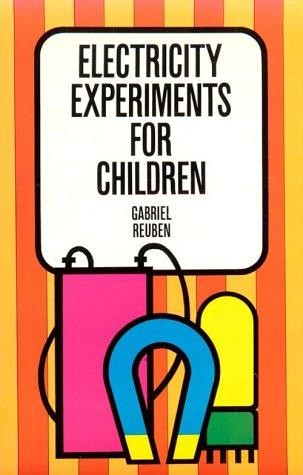
Electricity experiments

The description of the book reassures readers that all experiments are perfectly “safe.” But really?

Adam and eve children

This is supposed to be a kids’ version of Adam and Eve. I know the image is blurry, but if you look closely, they are naked. What could possibly go wrong with putting nude cartoon kids on a book cover? And since when did Adam and Eve have a Dalmatian?

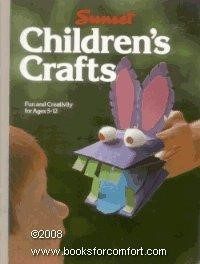
Creepy children's crafts

Instructions for children’s crafts to totally freak out ginger kids.

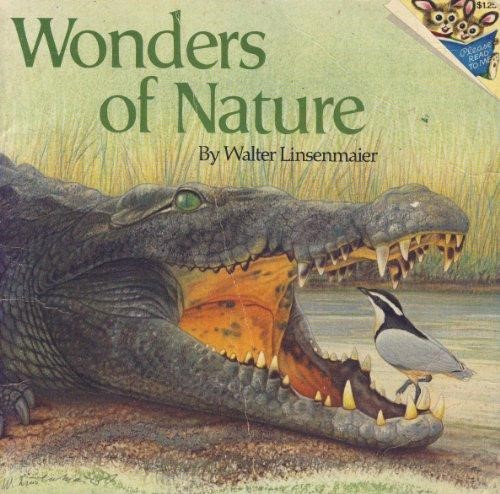
when nature eats you

There is no good way to explain to the kid reading this book what’s going to happen to that bird.

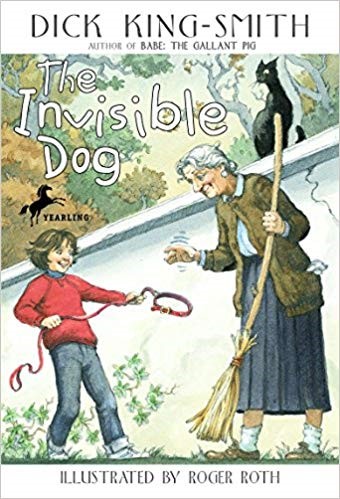
Messing with an old lady

Subtitle: How to mess with a poor old lady who, until she met you, didn’t think she was losing her marbles.

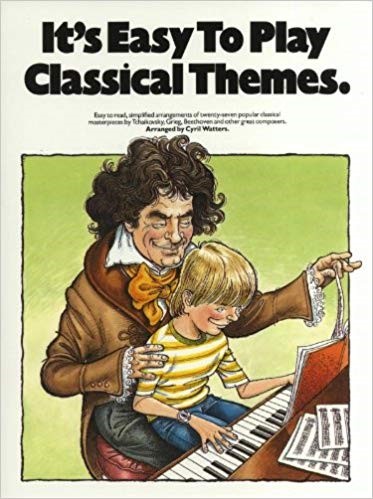
Sit in my lap

Ah, something seems terribly wrong here.

View original post 122 more words

The Benefits of Reading Aloud During the Editing Process

Reading aloud when proofreading and editing is excellent practice because far fewer errors escape our notice.

I teach my students to do it. I recommend other authors and bloggers do it. And even though I have been teaching English for 30 years, I know I am not infallible, so I still do it, too.

Renea Guenther's avatarRenea Guenther

The Benefits of Reading Aloud During the Editing Process

By this point, we’ve put so much work into our stories, we believe there couldn’t be anything left to handle.

The plot’s cohesive, the stakes are high, our characters are compelling, we’ve kept the reader interested to the end

Everything is as it should be.

Then we edit.

Only to find our story doesn’t read as it should, things can be worded better, overused words and phrases that need to be cut or substitutions found…

Editing can be a huge mess, especially if you’ve never done it before.

It’s not always as easy as one might expect. Nor are the mistakes always obvious.

We know what we wrote and expect it to read as we remember it.

So we skim through our writing, catching a mistake here and there, but often missing key problems.

Our minds often fill in the blanks for missing words, especially in…

View original post 577 more words

New Short Story: Tappety Tap

I had a lot of fun writing this story. It quite literally gave me the shivers – which I consider to be a good sign.

I hope you enjoy ‘Tappety Tap’. It’s not in any of my books, and it’s free to read on WordyNerdBird Writes until after Halloween.

Horror Scenes in Shakespeare: Hamlet’s Father Haunts Elsinore Castle

Today’s post via Shakespeare Nerd focuses on the ghostly apparition of the former king in the opening scenes of ‘Hamlet’.

Enjoy!

wordynerdbird's avatarShakespeare Nerd

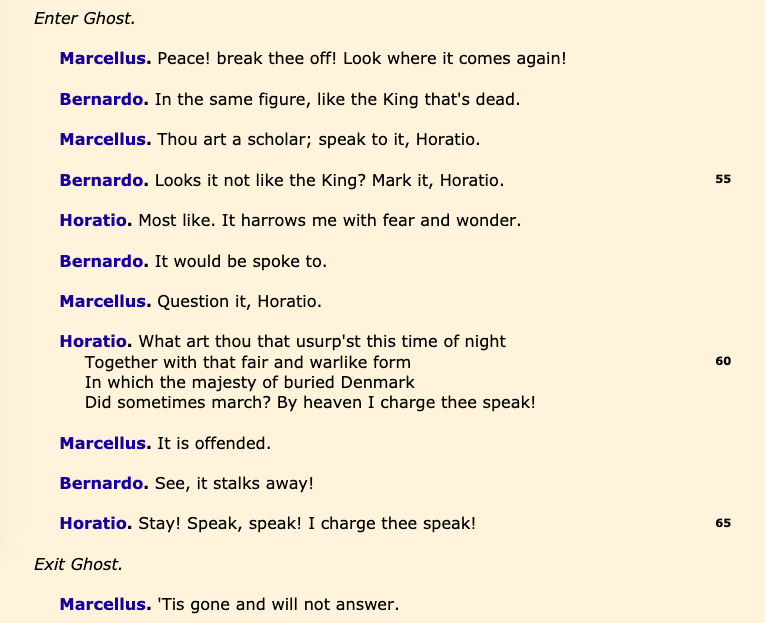
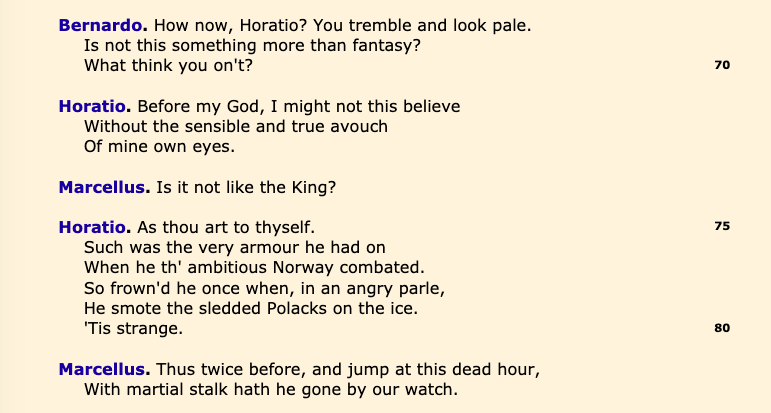
‘Hamlet’ opens with a spooky, although not macabre, scene. This scene is all about those common elements that make horror work: creepy chills, fear and dread. 

It’s the dead of night and the guards at Elsinore Castle are going about their regular duties, except that they seem nervous: Bernardo opens with the line “Who’s there?” and Marcellus leads their conversation leads with, “What, has this thing appeared again tonight?”

They are discussing the apparition that has appeared to them on the two previous nights. As they talk, the ghost appears again. It doesn’t speak to them, it doesn’t harm them… but it definitely scares them. 

As they discuss the ghost and hypothesise as to whether or not it’s a bad omen, it returns, spreads its arms wide, and then disappears when a rooster crows. 

Afterwards, Horatio tells Hamlet about seeing the ghost, and gives more detail of how frightened they…

View original post 220 more words

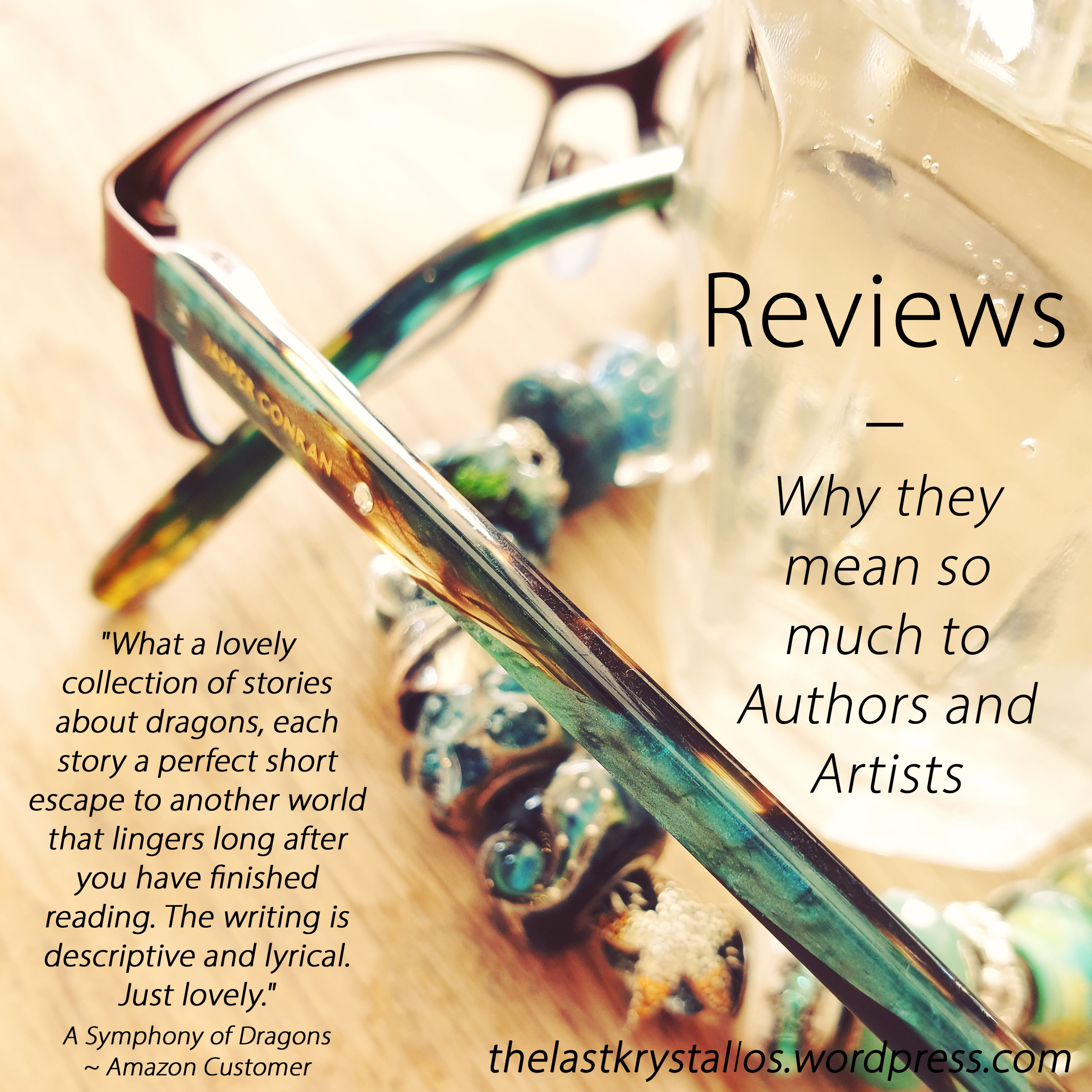
Reviews – Why they mean so much to Authors and Artists

Lisa Shambrook hits the nail on the head repeatedly in this great blogpost about the life of an Indie creator.

It is so hard to achieve and maintain visibility, and it takes time and effort that authors and artists would really rather invest into writing or creating. Marketing your work sometimes feels like selling yourself. It’s a really tough gig.

A review helps to gain visibility. Attention, it seems, attracts attention, It encourages others to take a chance on a book, or a CD, or a hand-crafted item that has been created with heart and soul, time and energy, that readers, listeners and admirers may never fully understand.

So, take a look at Lisa Shambrook’s article and, whenever you get the chance, leave a review for someone who needs it— an author, a artist, a crafter, a local small business, or your favourite coffee shop. Sharing the love is easy once you get the hang of it.

Lisa Shambrook's avatarThe Last Krystallos

Review: to think again. It’s about considering, assessing, and to offer an opinion, and how many of us love offering an opinion? Social media is all about reviews… we’re posting about our lives, reviewing what we’ve done, where we’ve been, and sharing our thoughts about it. These days, reviewing is just another part of our life.

Reviews - Why they mean so much to Authors and Artists - The Last Krystallos

So, since we’re doing it all the time, how about taking a few minutes – the time to write a status update – to offer a review to those who need them?

It’s my birthday week this week and when I’m asked “What would you like?” – right now, I’d just love a review.

Not a review of me, I think I’m open enough for everyone to know who I am, and I don’t need a rate! I’d love a book review or an Amaranth Alchemy Etsy review.

If you love and…

View original post 1,008 more words

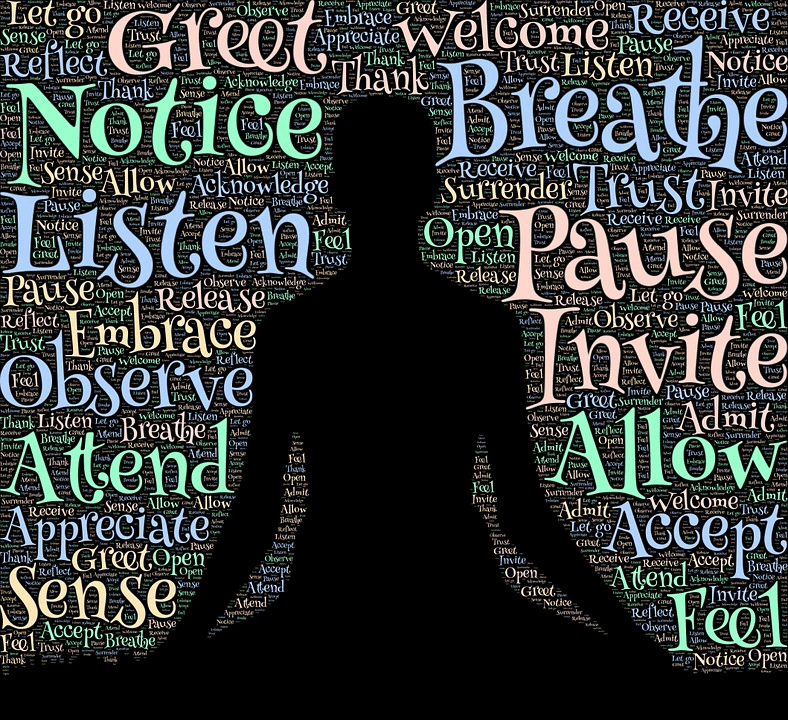
The Value of Listening.

In this highly screen-oriented world, are we losing the skill of listening?

There are four main sets of skills that English teachers work to develop in their students: reading, writing, speaking and listening. 

Over the past few years of my teaching career, I have observed that my students find listening much more difficult than the others. 

I’m not talking about them showing respect or being quiet when I’m talking – most of them are pretty good at that, thankfully. 

It’s the art of deliberate, intentional listening, focusing on what is heard and processing that kind of information, that people seem to struggle with. 

I have offered my students audiobooks to help them with reading their set texts. Most of them aren’t interested in that— not even the struggling readers, who would really benefit from that kind of assistance in getting through a book. I have also offered them podcast episodes related to the books they are studying, and I don’t recall anyone taking up the offer. 

Give them a YouTube clip, though, and they’re on it like flies at a barbecue. 

Don’t get me wrong – those YouTube clips and TED Talks can be super helpful. My issue is that people – and it’s not just kids, I’m sure – are so oriented to screens and visuals and  hooked on sensory overload that they’re losing the art of listening. 

People these days frequently have music playing while they do other things – work, run, work out, eat, walk, shop, drive, clean the house, you name it. There’s absolutely nothing wrong with that. But do they ever really just stop everything else and just listen to something? 

It is really healthy to turn off the “noise” of the world and the demands of a busy life and close your eyes to focus on what you can hear. You don’t even have to listen to anything in particular – it can be fascinating to see what you can hear when devices, TVs, and appliances are turned off and things are quiet, especially if you go outside.  

In terms of listening material, there is so much available that is good to listen to beyond music or commercial radio. Audiobooks are fantastic, as I’ve observed in a previous post. There are podcasts on every imaginable subject, free of charge, just begging to be listened to. Listening to talkback radio is both informative and entertaining, if you can find a station or a show you really like. 

Listening is such a valuable skill. It enriches life in so many ways. It builds relationships, enhances learning, develops understanding of the world and the different people in it, provides entertainment, aids relaxation and soothes the soul. 

If we would all just turn off the screens, close our eyes, and open our ears more, we’d be a lot better off. 

The Cow Lick Bookshop

I love finding a great bookshop. It makes me feel like I’ve stumbled on a treasure trove, and it’s all just waiting for me to plunder it. In all honesty, I do my best — within the limits of my budget, of course.

I visited the Cow LIck Bookshop for the first time yesterday. It won’t be my last visit.