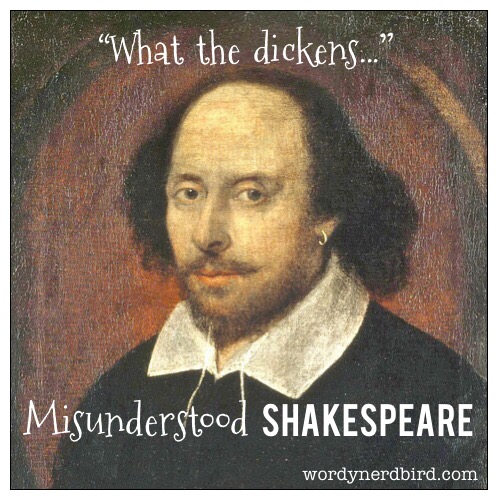
Misunderstood Shakespeare: “What The Dickens”

Many people assume that “What the dickens?” is a reference to the author Charles Dickens. 

Considering that Shakespeare wrote this expression in ‘The Merry Wives of Windsor’ in 1600 and Charles Dickens was born in 1812, that is entirely impossible. 

Instead, ‘dickens’ is a euphemism for ‘devil’, as is ‘deuce’. When Mrs Page says “I cannot tell what the dickens his name is…” she really means ‘what the devil”.

It’s a more polite way of expressing strength of an idea or emphasising their intent, in this case, that she has no idea of the identity of the person she is being asked about. It’s exactly the same as people saying ‘heck’ instead of hell, ‘gosh’ instead of ‘God’ and ‘jeez’ instead of ‘Jesus’, and is probably  done for the same reason: superstitious avoidance of using religious terms, or “using in vain” the names of religious entities. 

There’s also a chance that, for some folks, old-fashioned good manners may enter into it, too. 

In short, this is a euphemism: an inoffensive word or phrase used to replace an impolite or offensive one. We use euphemism when we talk about “powdering my nose” or “going to see a man about a dog” instead of “going to the bathroom”, or “bathroom” instead of “toilet”.

Like many of Shakespeare’s words and phrases, “what the dickens” has stood the test of time and is still used as a euphemism today.
A Fit of Pique.

I get really annoyed when I see people writing about peaking someone’s interest. 

A mountain is peaked. A cap can be peaked. 
People can even look peaked: in this sense, it means they are pale. 
A career can peak. 
In fact, someone’s interest in something can peak, right before it declines again. 

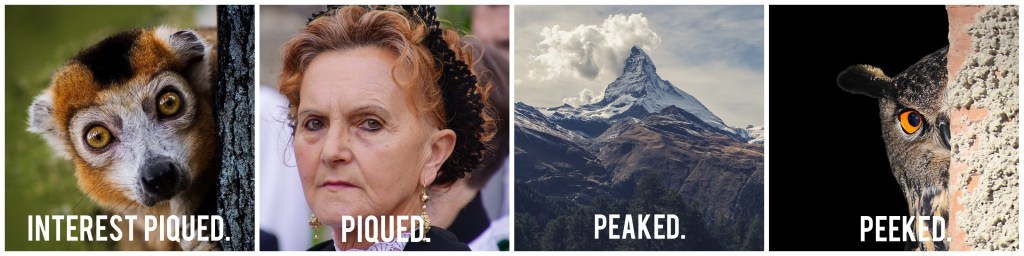
While they sound the same, the correct term for having caused intense interest or curiosity, is piqued

To pique someone’s interest is to heighten or arouse it. In other words, it is to stimulate their curiosity or attention. 

A fit of pique is an episode of annoyance or irritation – such as might happen, for example, if someone’s negative emotions are piqued. 

A related word is piquant, which means provocative, tantalising, spicy or tangy. Food that excites the taste buds or a story that excites the imagination can both be described as piquant. 

The other homophone is peeked. This is the past tense of peek: to take a quick look, or a sneaky one. 

So… now that I’ve piqued your interest with my fit of pique, and you’ve peeked at my post… I’m sure your interest has long since peaked. 

See? Homophones can be fun!

Don’t Pour Over Those Books!

I’ve read a couple of different posts and even in a couple of books recently about people “pouring over” documents or books. 

I wondered at first if this was one of those things Americans do with words that nobody else does, but I checked, and it’s not. It’s simply an error caused by confusion by words that sound the same even though they are spelt differently and mean completely different things. 

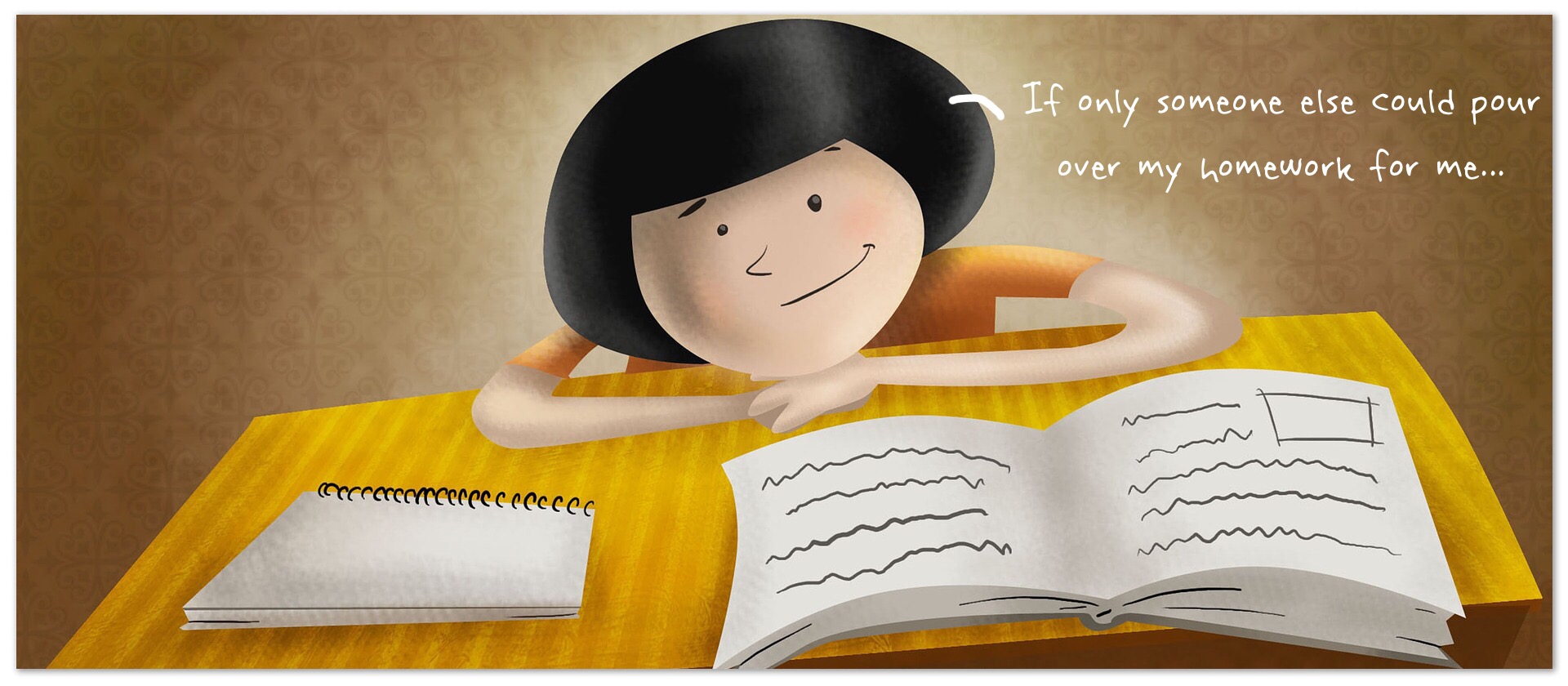
What the people in question should be doing is poring over their books. 
To pore over books or documents is to be completely absorbed in what one is reading or studying. It suggests thoughtful application and concentration. 
The gerund is poring. 

To pour over books is just going to make a mess, and probably ruin them completely.  It’s really not advisable.