No matter how bad things get, never, ever, comment that things can’t get much worse.
They can, and they will. The universe seems to take that kind of talk as a dare.
I am living, despairing proof.
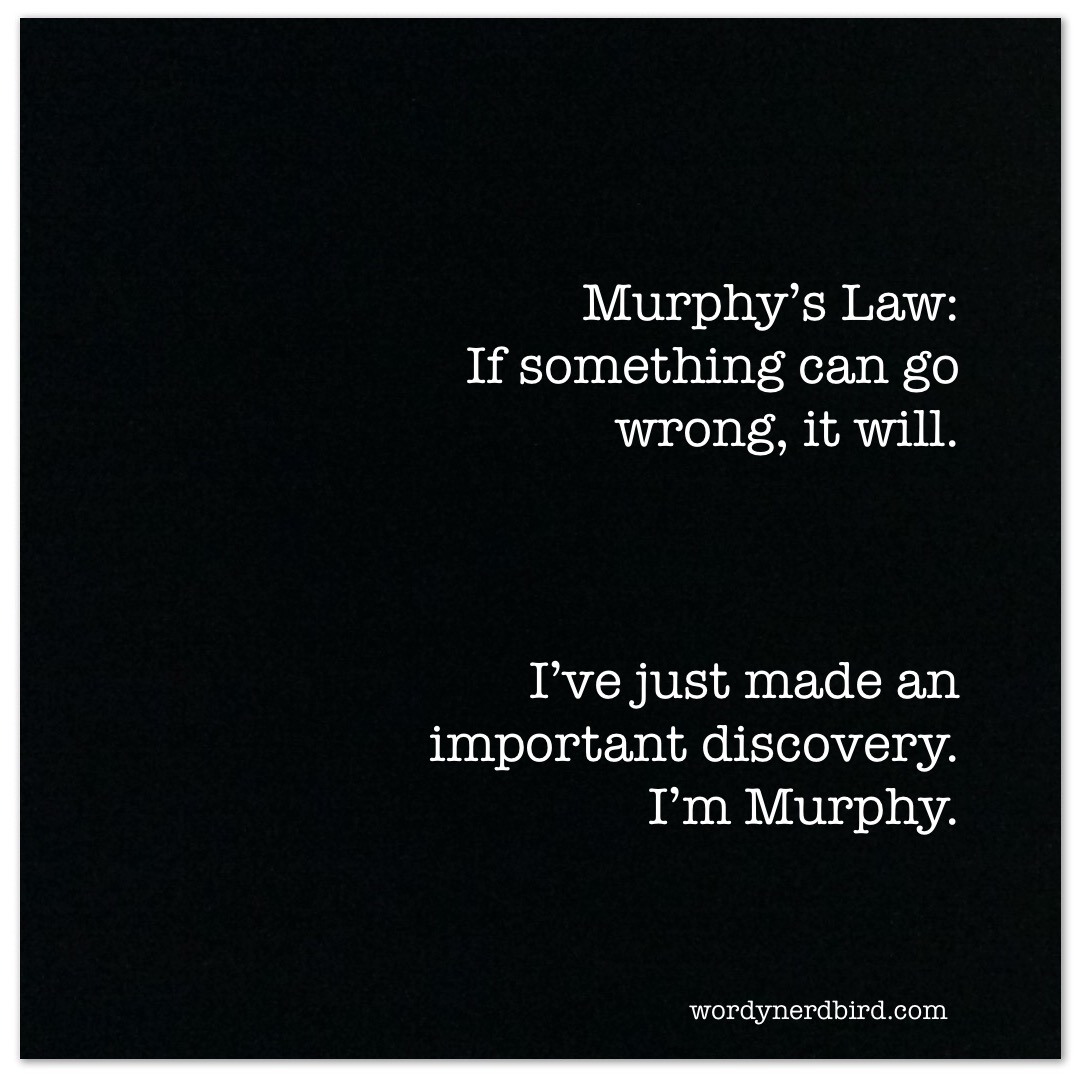
No matter how bad things get, never, ever, comment that things can’t get much worse.
They can, and they will. The universe seems to take that kind of talk as a dare.
I am living, despairing proof.
Don’t misunderstand me: I am not being flippant or casual in saying ’Thank God It’s Friday”.
Not.
Ever.
And especially not tonight.
At the end of yet another really sucky week in a succession of variously sucky weeks, I can honestly say I am so thankful for the fact that it’s Friday night and I am free of any obligation to look or sound like I know what I’m doing, stick to a schedule, wear proper shoes, or talk to anyone that I’d rather not talk to, for two whole days.
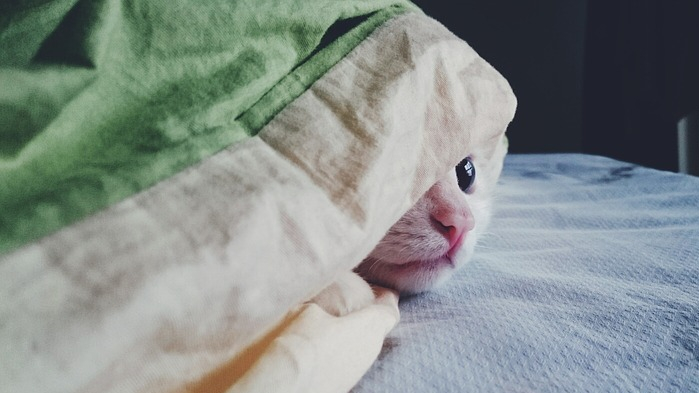
I’ve come home from work tonight, fed the dog and fed my dad, done the dishes, and consider all my obligations to have been met. I am currently hiding under a quilt in my living room so that the universe might not know where to find me.
And if you see someone poking pins into a voodoo doll that looks like me, do me a favour and take it off them, will you please? Gently? And maybe give it coffee and pizza. Thanks in advance.

I found this discussion on the Nerdome blog about the nature of true satisfaction very interesting.
I fully agree with it for the most part.
And yet, the past three weeks would have been a lot more satisfying and a lot less sucky if my car would quit jerking me around, the garage door would open and close as it’s supposed to, and if the costumer for my show had not done a “no show” on me seven weeks out from putting my school’s musical on stage.I’m independent. I’m resilient. But golly gosh, sometimes satisfaction does come from outside oneself.
Before dying at the age of 68, Seneca the Younger made vast contributions to the school of philosophy, most notably in Stoicism.
The influence of Seneca’s work, however, would reach far greater than the school of ancient philosophy, and many of his principles and letters have moulded the landscape of the modern self-help world.
During his retirement and not long before his death, Seneca spent his days writing letters to his friend Lucilius, which have since been collated into a series of 124 letters known as ‘Epistulae Morales ad Lucilium’— Moral Letters to Lucilius. (These are summarised in the modern-day translation, ‘Letters From a Stoic’.)
Seneca’s letters detail his innermost thoughts, offloading his lifelong wisdom before passing. These writings contain a wealth of thought-provoking and insightful material…
View original post 897 more words
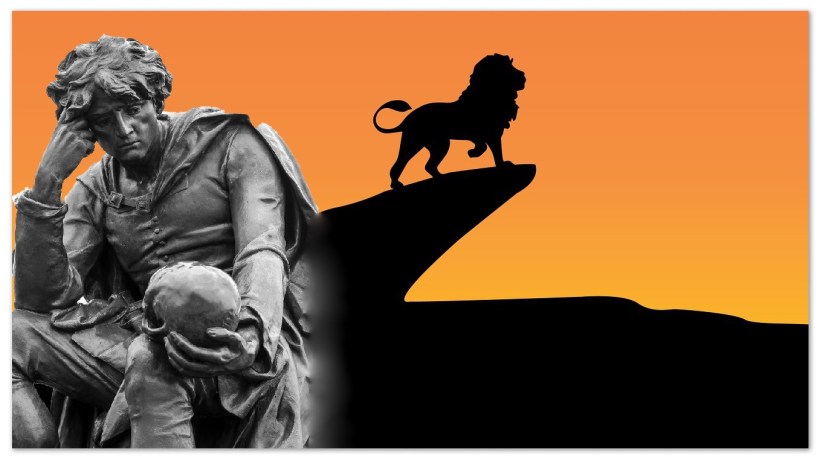
‘The Lion King’ is on TV tonight and, of course, I’m watching it. I’m singing the songs. I’m totally loving it. If anything is able to make me turn the TV on, it’s going to be a musical.
And Facebook is alive with people proclaiming that it’s basically ‘Hamlet’.
Well, no. It’s basically not.
And I’m not even sorry for any disappointment that may cause.
Anyone who believes the two stories are the same either pays too much attention to social media and the popular clickbait theories that abound there, or they have not paid sufficient attention to ‘Hamlet’ at all.
Scar is certainly as evil as Claudius. He’s certainly interested in getting rid of his brother and his nephew and taking over the kingdom, and takes full advantage when Mufasa dies in a situation that he has engineered.
That’s really where the similarities end.
In fact, it’s really only a very tenuous connection. Scar is by no means the only brother of a king ever to aspire to the throne through nefarious means, so that’s hardly a convincing argument for a direct correlation between the two texts. You could use the same argument to suggest that ‘The Lion King’ is based on ‘Richard III’, which it clearly is not.
Furthermore, Sarabi – Simba’s mother – does not enter into a relationship with Scar. The fact that his mother married Claudius, his father’s brother and murderer, is the root cause of much of Hamlet’s angst and misery. Given that this is one of the crucial elements of the play, and there is zero correlation in ‘The Lion King’, that’s fairly conclusive evidence that the two are not the same story.
Sure, the ghosts of the dead fathers both appear and speak to their sons. However, they hardly communicate the same thing, and it’s at a very different stage of the plot. Mufasa tells Simba to grow up and retake his kingdom while Hamlet’s father urges him to get revenge on his brother for murdering him and taking not only his kingdom, but also his wife. “Remember who you are” is a very different message from “Revenge!”
Simba is nothing like Hamlet in character, other than being the son of the dead king. Simba is naturally optimistic, fun-loving and adventurous. Simba runs away thinking he’s responsible for his father’s death. Morose and pessimistic, Hamlet hangs around the castle, feigning madness and overthinking everything to the point where his agonising over what to do actually prevents him from doing anything much at all.
The correlations among the minor characters are, similarly, only superficial.
While both Simba and Hamlet have two friends, Timon and Pumbaa are not anything like Guildenstern and Rosencrantz. Timon and Pumbaa rescue Simba and remain his friends throughout the story. Hamlet’s friends are quite willing to sell him out at Claudius’ bidding, and there is nothing loyal or supportive about them.
Both Simba and Hamlet have girlfriends, but Nala doesn’t go mad and drown herself in a river.
Zasu and Polonius both talk way too much, but that’s about the only similarity between them.
In fact, that’s the difference between the two in a nutshell: ’The Lion King’ is life-affirming and positive. In direct contrast to ‘hakuna matata’, there is no ‘problem free philosophy” in Hamlet, a play that philosophises about death and suicide and which finishes with the main characters and many of the minor ones dead.
So, there you have it. The difference between ’The Lion King’ and ‘Hamlet’ is a matter of life or death. The basic premises are polar opposites, so the two cannot possibly be the same story.
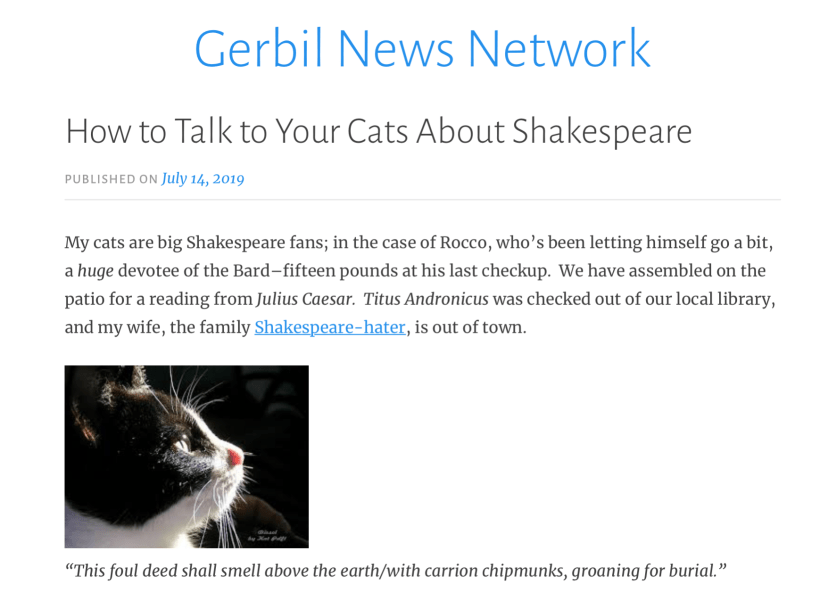
I Never realised how lacking my relationship with Scout Kitty and Abbey the Labby has been.
I’ve been selfish. I’ve been keeping the Shakespeare all to myself.
After reading this fabulous post that I discovered today, I have just apologised to them both, and told them that it’s all about to change.
The cat yawned and went back to sleep, but the dog shall have her day.
I’ve spent some time over the past few weeks discussing what I like and what frustrates me about different social media platforms. Most of them I’ve ended up feeling quite positive about, but it occurred to me today that I never even thought to discuss Tumblr.
I don’t even know if Tumblr is still really a thing or not.
I have a Tumblr account, and I post there, but it feels a little like shooting into the void. I still feel as though I don’t understand it. And that means I’m probably doing it all wrong.
Does anyone out there use Tumblr? I would appreciate any hints or tips you could give me to make my experience there more satisfying.
And if you’d like to connect there, that would be great!
I may need to learn to turn the volume down a little when being a comic genius in public places.
We were sitting at a cafe deciding what to have when I commented on one of the options: “I’m not sure I needed to know that their chicken was marinated by a jerk.”

A lady at the next table laughed out loud, turned around and said, “I had the same thought, but wasn’t brave enough to say it.”
The waiter showed up while I was writing this post, and I shared my observations. He laughed and said, “Actually, the chef IS a jerk!”
I nodded safely. “Many of them are,” I said.
“Too true!” he said. “But that’s all just between you and me, right?”
“Of course!” I smiled… and then kept on writing.
It’s the last day of term.
Even though I am, like every other teacher, exhausted and keen for that bell to ring at the end of the day, I am still trying desperately to keep the kids on task and get things finished before then.
The problem is, they’ve already checked out.
They just don’t care.
They’re restless.
They’re talkative.
They’re twitchy.
Their eyes have glazed over with the promise of freedom, of late sleep-ins and no school uniforms or restrictions on their social media life for the next two weeks.
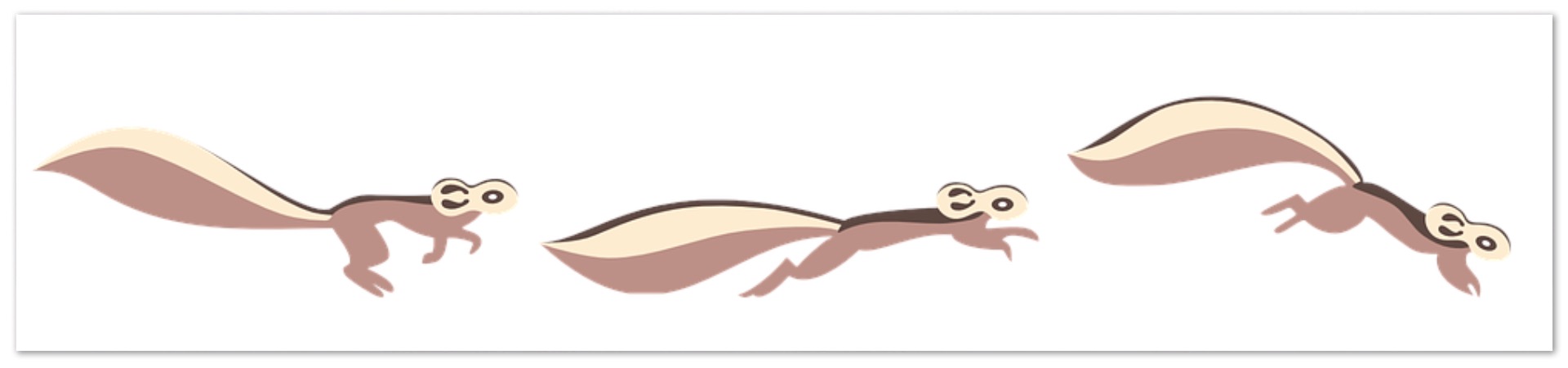
If you’ve ever watched a squirrel running around in a park or a forest, that is the precise image of the mental and emotional engagement in my classroom today.
One or two are evolving into chipmunks as I watch.
Except for that one kid at the back, who is working like a champion to get everything completed.
I don’t have favourites, but today I really love that kid.

They say having an email list is crucial for an author. It’s the one sure-fire way to reach your readers.
I am clearly the exception to that rule.
Either I really suck at creating newsletters, or my subscribers signed up for the wrong list.
It’s why I am very reluctant to send out newsletters now.
When I send emails with other people’s books in them, my subscribers click through to those books.
Do they click through to mine? Nope.
And sadly, I get as many clicks to unsubscribe as I do on the links in my newsletter.
It really is quite depressing.
Yet I don’t do anything different than any of the dozens of authors whose newsletters I receive. Well, that part isn’t strictly true:
I don’t spam my books repeatedly.
I don’t email every week, let alone every day or two, like some do.
I don’t use high pressure sales pitches.
I don’t beg, and I don’t whine.
I don’t even include only my own content. I always share other books and bookish events that readers might be interested in.
I have observed all those things happening in various different authors’ newsletters at different times, and have always tried to avoid doing anything I have found off-putting.
Honestly? I don’t know what I’m doing wrong, but I appear to be doing it consistently.
I do suspect that maybe newsletter writing is not for me. I’ve given it a fair crack and it hasn’t been at all well received.
For now, I think I’ll stick to blogging.
Despite the crisis that had unfolded overnight as I slept, I woke this morning to find that the sun had risen, gravity still worked, and the earth continued to turn on its axis.
I had breakfast, got ready for work, and headed into a very busy day. Surprisingly, I found that the work deadlines and professional requirements that were in place yesterday still existed today.
My students, however, were despondent.
Them: Facebook is gone! Instagram doesn’t work!
Me: Imagine how much work you might get done in the meantime!
Them: You’re not very sympathetic.
Me: And that surprises you because…?
Them: Rolled eyes and sighs. Some lovely moments of dramatic pathos that I shall try to draw on in drama class.
This left me wondering: what on earth does the world do without Facebook and Instagram?
It seems the general response is to complain.
Many of the real social media junkies responded by rushing over to Twitter to complain and commiserate with their followers and the social media world in general.
In all honesty, some of the responses are pretty funny.
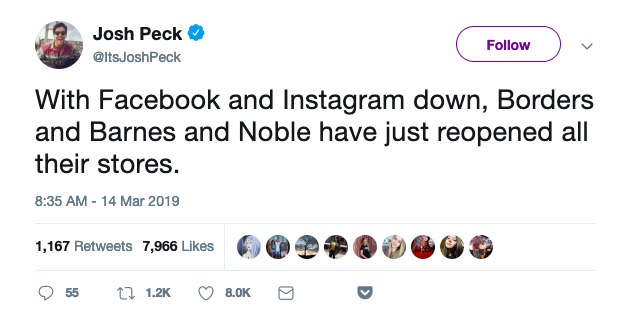
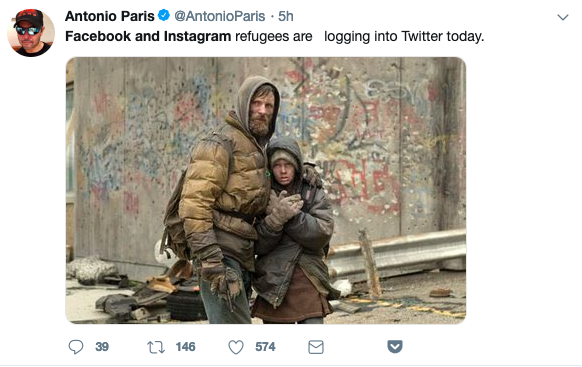
Others demonstrate that many people are much worse at dealing with this kind of thing than they should be.
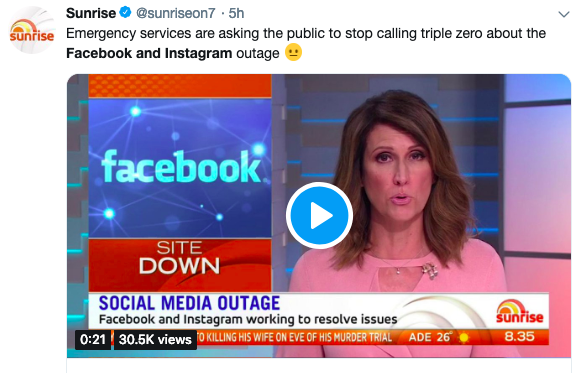
I mean, really, Australia?
Emergency services?
That’s… pathetic.
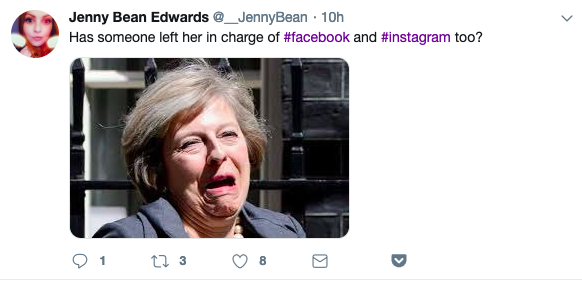
This one has to be my favourite. It cuts through the whining and combines the sublime and the ridiculous with glorious snark.
Jenny Bean Edwards gets an A+ for World Studies.
Cheer up, folks.
I’m sure Facebook and Instagram and their enormously profitable algorithms will be back soon.
Until then? You may actually be forced to either read a book or have face-to-face conversations with real people.
Alternatively, you can head to twitter and follow me!

 WordyNerdBird