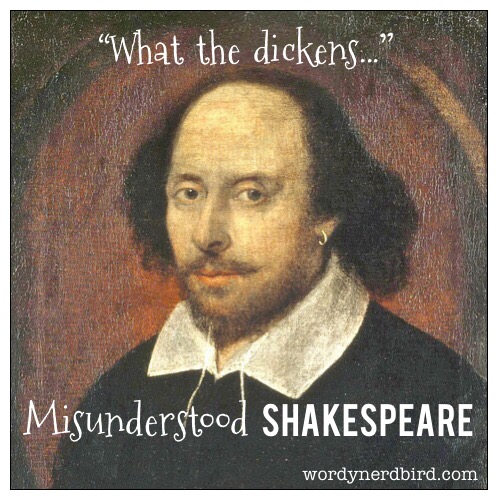
Many people assume that “What the dickens?” is a reference to the author Charles Dickens.
Considering that Shakespeare wrote this expression in ‘The Merry Wives of Windsor’ in 1600 and Charles Dickens was born in 1812, that is entirely impossible.
Instead, ‘dickens’ is a euphemism for ‘devil’, as is ‘deuce’. When Mrs Page says “I cannot tell what the dickens his name is…” she really means ‘what the devil”.
It’s a more polite way of expressing strength of an idea or emphasising their intent, in this case, that she has no idea of the identity of the person she is being asked about. It’s exactly the same as people saying ‘heck’ instead of hell, ‘gosh’ instead of ‘God’ and ‘jeez’ instead of ‘Jesus’, and is probably done for the same reason: superstitious avoidance of using religious terms, or “using in vain” the names of religious entities.
There’s also a chance that, for some folks, old-fashioned good manners may enter into it, too.
In short, this is a euphemism: an inoffensive word or phrase used to replace an impolite or offensive one. We use euphemism when we talk about “powdering my nose” or “going to see a man about a dog” instead of “going to the bathroom”, or “bathroom” instead of “toilet”.
Like many of Shakespeare’s words and phrases, “what the dickens” has stood the test of time and is still used as a euphemism today.
I get really annoyed when I see people writing about peaking someone’s interest.
A mountain is peaked. A cap can be peaked. People can even look peaked: in this sense, it means they are pale. A career can peak. In fact, someone’s interest in something can peak, right before it declines again.
While they sound the same, the correct term for having caused intense interest or curiosity, is piqued.
To pique someone’s interest is to heighten or arouse it. In other words, it is to stimulate their curiosity or attention.
A fit of pique is an episode of annoyance or irritation – such as might happen, for example, if someone’s negative emotions are piqued.
A related word is piquant, which means provocative, tantalising, spicy or tangy. Food that excites the taste buds or a story that excites the imagination can both be described as piquant.
The other homophone is peeked. This is the past tense of peek: to take a quick look, or a sneaky one.
So… now that I’ve piqued your interest with my fit of pique, and you’ve peeked at my post… I’m sure your interest has long since peaked.
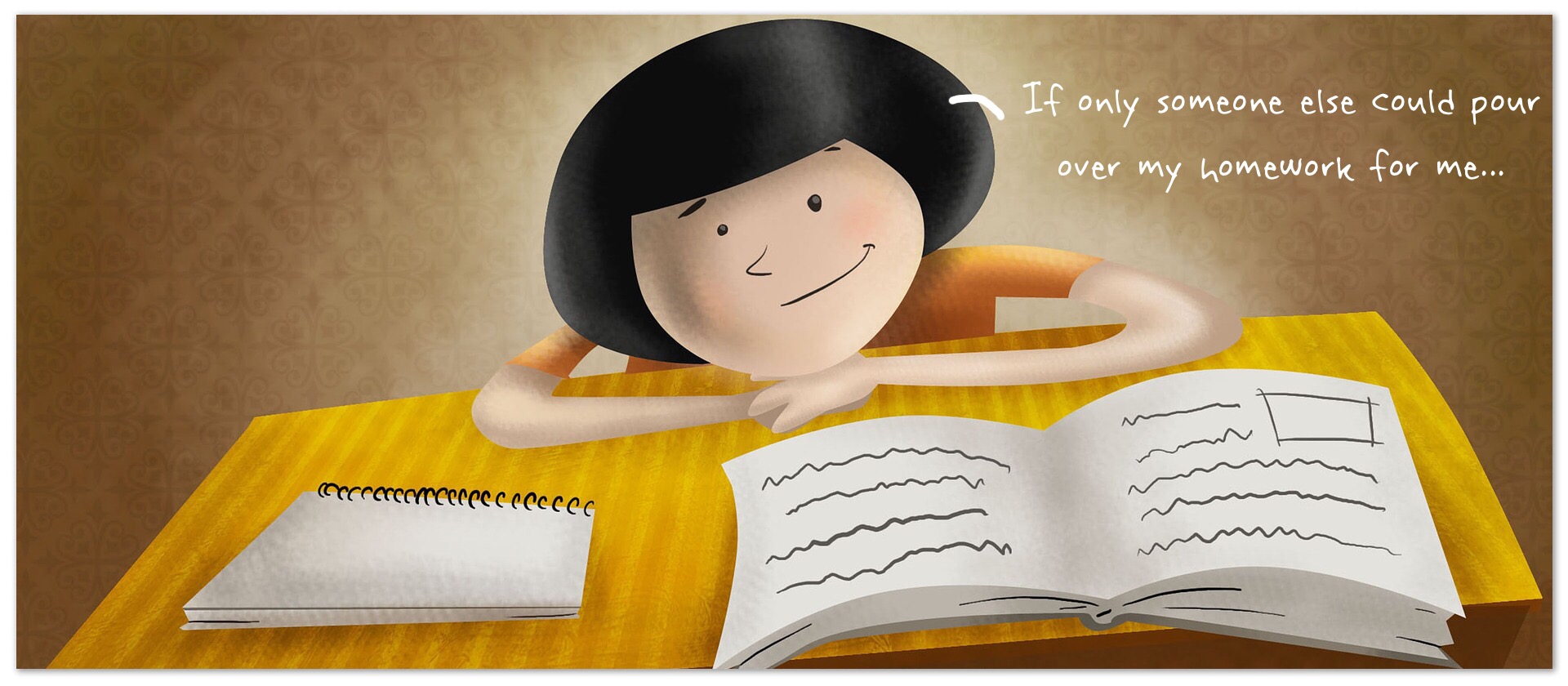
I’ve read a couple of different posts and even in a couple of books recently about people “pouring over” documents or books.
I wondered at first if this was one of those things Americans do with words that nobody else does, but I checked, and it’s not. It’s simply an error caused by confusion by words that sound the same even though they are spelt differently and mean completely different things.
What the people in question should be doing is poring over their books. To pore over books or documents is to be completely absorbed in what one is reading or studying. It suggests thoughtful application and concentration. The gerund is poring.
To pour over books is just going to make a mess, and probably ruin them completely. It’s really not advisable.
Most of the time, when people protest about the way the English language is abused, it’s a case of the language continuing to evolve as it has always done.
One such example is the practice of verbing, which takes the noun form of a word and transforms it into a verb form… like ‘verb’ and ‘verbing’.
Just last week, I was talking with a friend about how annoying she finds it when people say “I’m going to action that.” I’m sure she sought me out for the conversation because I’m both a word nerd and an English teacher.
“Action is a noun! A bloody noun! How can so many otherwise intelligent people get that wrong?”
“It grates on us because it’s recent,” I said. “We’ll get used to it.”
“No, I won’t! It’s just wrong!”
“You know Shakespeare did it?”
“What?”
“Verbing. He did it all the time.”
“You and your Shakespeare. It’s like he’s the answer to everything.”
“You know he invented the word ‘friending’, right?”
She rolled her eyes and walked away. She didn’t even flinch at my use of the term “verbing”, which is exactly the same thing as “actioning” in terms of the language. After all, ‘verb’ is a noun, too.
It is the recent examples of verbing, such as “actioning” an idea, that we notice because we’re not used to hearing them yet. When Facebook was new, people complained the same way about “friending”, but these days nobody thinks twice about that. At some point in time, someone decided that it was okay to talk about bottling fruit, or shelving books, and now those terms are just everyday language.
It is also true, however, that some things people commonly say are, quite simply, wrong.
My pet peeve is when my students are talking about sport or some other kind of competition, and they say “We versed Team X”.
This is a common bastardisation of the Latin versus, which means ‘against’. It is commonly used for sporting matches and legal cases, and is generally abbreviated as v. or vs., as in Black v. White or Blue vs. Red.
My first response is always to ask whey they wrote poetry about another team. “You played them. You opposed them. You clashed with them. You competed with them. You did not write poetry about them.” Then I explain how the different words work, and what they actually mean.
The reason “versed” is wrong is because the words ‘versus’ and ‘verse’ have absolutely nothing to do with each other. Because ‘against’ is a preposition, it simply doesn’t make sense to say “We againsted them”. It is not verbing, by any stretch of the imagination.
The first time we have that conversation, they look at me with confusion. Some have a glazed look of fear, like the proverbial deer caught in the headlights. This never fails to entertain me. The second and third times, they roll their eyes.
Over time, the tedium of having the same grammar-nerdy conversation persuades them to start using the language correctly. They learn, I win, and so does the English language.
I’m currently reading a great book titled ‘Blood and Ink’ by DK Marley. It is a really well written historical fiction novel that explores, in part, one of the theories about the identity of the man we know of as William Shakespeare.
Rumours and theories that Shakespeare’s works were written by someone else have abounded for a long time. Various people have been proposed as the actual author.
That’s all very interesting, of course, but the fact is, I really don’t care whether his name was actually Filchin McFarkle.
My love for Shakespeare isn’t about the person: it’s about the language, the writing, and the craftsmanship that combine to be the genius of the writer. What his name was doesn’t matter one bit.
The power of Shakespeare’s plays and poetry is that they take something ordinary and transform it into something extraordinary.
Themes of love, passion, ambition, revenge, hatred, despair, desire, and family dysfunction make his work interesting and relatable to just about everyone. And while there are at least a dozen ways to write any story, the way Shakespeare tells each story is absolute magic.
Shakespeare used rhythm and poetic devices like imagery, allegory and highly emotive language to heighten the feelings and drama of the situations his characters find themselves in. He enmeshes them in a complex web of conflicting emotions and ambitions and then exposes their innermost thoughts in the most profound ways. He really is the master of intrigue and dramatic irony, able to hold the audience spellbound, even though they probably already know what’s going to happen and what the various characters are thinking.
To be honest, some of the storylines are pretty rubbish. There are very convenient coincidences, leaps of logic, and plot holes galore, particularly in the comedies. The history plays are at times more fiction than history. Despite all that, Shakespeare dramatises the stories and scenes in such a compelling way, and so deeply engages the audience in the dilemmas and conflicts experienced by the characters, that any issue of credibility actually doesn’t matter.
I will still pick up a play and read it, or watch a performance, or read the sonnets and be as entranced as ever. Even when interpretations change, the magic with which the words are crafted and woven never gets old.


 WordyNerdBird