April is National — or, more correctly, International Poetry Month.

Poetry Month is a great opportunity to enjoy great poetry.

npm_2018_poster-e1520635983486

National Poetry Month started as a national celebration in the US back in 1996 as an initiative of the Academy of American Poets but has become something that is celebrated more and more internationally, with not just publishers but bookstores, schools, libraries, and poets themselves joining in the celebrations. As you know, I’m a poet, so I’m absolutely in favour of all of that.

As the month progresses, I’ll be sharing some of my poems with a bit of context about why they were written and how I went about crafting my initial idea into a poem that delivered the message I wanted to put out there.  I’ll also be sharing some of my favourite poems that I’ve loved for a long time, and introducing you to some new poets that you may not yet have heard of.

If you’re not into poetry, don’t worry – my blog posts won’t be exclusively poetry related. I hope to share some more insights about writing and social media for authors, too.

To encourage you to get involved in small ways, I have compiled a list of ten ways in which you can celebrate Poetry Month this April. Choose one, or choose all– it’s up to you.

  1. Read a poem that is new to you.
  2. Memorise a poem, or part of one.
  3. Support a poet by following their blogs or websites. Follow my blogs – here and at WordyNerdBird Writes where you can read my new writing, including recent poems and one or two from each of my books.
  4. Support a poet on social media by following and sharing their posts. I’ll be posting some more suggestions in the coming week about where you might like to start, but for now, my social media links are at the bottom of the post!
  5. Support a poet by buying a book of poetry. I’ll be posting some suggestions in a day or two, but you can check out last year’s suggestions here! They’re all really good.
  6. Participate in the Dear Poet project, even if just by enjoying the fantastic videos on the website.
  7. Subscribe to Poem-A-Day, where you will receive a brand new poem  and some insights from the poet each day.
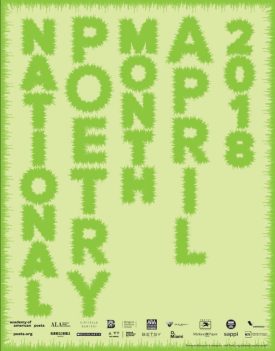
  8. Put the National Poetry Month poster image on your social media, website, notice board, shop window or anywhere else you think it might make a good impression.
  9. Write your own poem for someone special.
  10. Listen carefully to songs on the radio. You might be surprised how many of them are poetry set to music.

 

Follow me on
FACEBOOK |TWITTER |INSTAGRAM | GOOGLE+TUMBLR | GOODREADS | WEBSITE

An Author With A Mission.

Developing my mission statement helped me to clarify my goals in a way that I had not done before.

When completing an author interview recently, I was surprised to find a question about my mission statement. My immediate reaction was, “My what?”


My next thought was of Jake and Elwood saying, “We’re on a mission from God!” in The Blues Brothers.

BluesBrothers
Image from tenor.com
Of course, it makes sense. If I can crystallise my goals in writing into a statement, it’s going to make them easier to achieve.


I do that all the time as a teacher. I think about objectives, learning intentions and success criteria all the time. So why didn’t I think about my objectives, intentions and success criteria as a writer? To be completely honest with you, I have no idea.


So, I started to work on my mission statement by writing down some basic questions:
What do I want to achieve?
What do I want my readers, or potential readers, to know?
How do I measure success?


Simple, right?


Wrong.
They’re actually really complex questions.


What does success as an author mean? Is it selling a million copies of my books? Well, that would be nice, of course, but it’s not just going to happen without me doing anything to achieve that. Who is going to buy my books if they’re not actually any good? My goal has to be one that I can achieve, and it has to be one that I can measure to see if I’ve met the mark.  My goal , therefore, is to write something that people enjoy and benefit from, not to become a millionaire. Because it’s more achievable, and measurable through both feedback and sales, it’s far more satisfying and encouraging than hoping for something that might never happen.


What do I want my readers to know? Recluses are mysterious, sure, but that only has limited appeal. What I really want them to know is that I understand what I’m writing about – grief, love, pain, pleasure, excitement, fear, exhaustion, joy. I want them to know that what I’m writing is real and meaningful. I want them to know that if they’re going through something really awful and difficult, I get that because I’ve been through some awful and difficult stuff too.  Particularly in my poetry, I want them to catch a glimpse of my soul, or see some blood on the page – metaphorically speaking, of course. I want there to be understanding between us. I want to connect.


So, measuring success isn’t in how many copies of each book I’ve sold, or how many dollars I’ve made. For me, success is in knowing that I’ve touched someone’s heart, or encouraged them, or entertained them. If they read my horror stories, I want to know that I scared them and they loved it.


The beauty of this process of setting goals and working toward them is that I can see with every review that I am achieving my goal, even more effectively than I can with each sale.


I owe enormous thanks to the person who asked me about my mission statement. They helped me clarify my goals in a way that I had not done before./div>

So, without further ado, this is my mission statement as an author:


Joanne Van Leerdam is an award winning poet and multi-genre author who is committed to writing meaningful and thought-provoking literature for the enjoyment of her audience.
Joanne is a thinker and puzzler, a reader and musician, a traveller, and a teacher who has never lost the joy of learning.
Joanne draws inspiration from her own experiences and observations of the world around her, crafting those ideas into works which will encourage those who struggle to persevere and inspire others to see the world from a new perspective. This is as true of her blog posts as it is of her works of poetry and fiction. She aims to continue to grow her readership into a fully global and inclusive audience.

So tell me, do you have a mission statement?

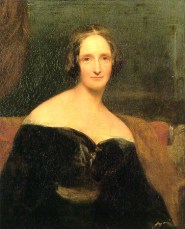
Thank you, Mary Shelley.

How Mary Shelley Has Inspired Me, Yet Again!

Mary_Shelley
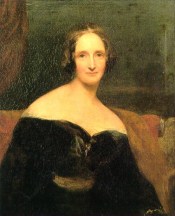
At the beginning of February, celebrated as Women in Horror Month, I wrote about Mary Shelley, the author of Frankenstein, as one of my literary inspirations.


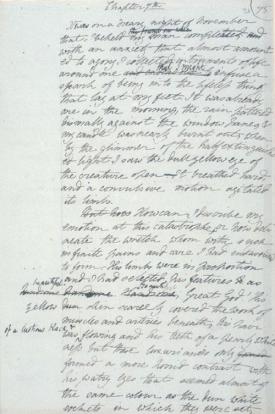
On this last day of the month, a friend shared with me a post from smithsonian.com titled ‘Frankenstein’ Manuscript Shows the Evolution of Mary Shelley’s Monster’ which speaks of a British publisher releasing 1500 facsimile copies of Mary Shelley’s original manuscript notebooks, complete with revisions and edits, in celebration of the 200th anniversary of the book’s first publication.


Oh, my heart! I know I’ll never be able to own one of those 1500 copies, but how I would love to read that manuscript!


FrankensteinDraft
Even just looking at the photograph of two pages, my author-heart swelled. Here is the work of a woman I have admired almost all of my life, showing that her work, too, needed editing and revising. She understood that no piece of writing is perfect the first time, even if the story itself is brilliant.


This is so incredibly encouraging in the moments when I doubt myself, or my story, or my ability to communicate my ideas the way I want to. It reassures me when the words don’t flow for a time. And it reminds me that I’m by no means the first, or last, to experience these things. The doubts and writers block don’t make me any less of a writer; instead, it’s working through them and in spite of them that makes me a better one.


Through these images, Mary Shelley inspires me all over again.

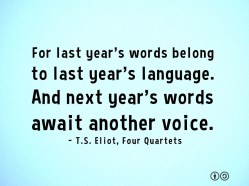
T.S. Eliot’s letter of advice to a sixteen year old aspiring writer

This article is a marvellous piece of writing in itself.  I really hope you’ll take the time to read it. 

Every now and then, I stumble across an absolute gem of inspiration. Sometimes it’s in a book. Sometimes it’s a quotation. Sometimes, as it was tonight, it was a blog post written by someone else.

This article is a marvellous piece of writing in itself.  It’s beautifully put together and composed, and the content is just magnificent.

15960194728_e48e03bb3b_b
It’s something every author, whether published or aspiring, should read because it addresses that infernal question with which we all torture ourselves: What’s the right way to do this? And the answers come from T.S. Eliot himself, esteemed 20th century author and poet.

I really hope you’ll take the time to read it.

You’ll find the post titled T.S. Eliot’s letter of advice to a sixteen year old aspiring writer on the Nothing In The Rule Book blog,

Women in Horror Month: Inspirations

I want to acknowledge two authors who were my first inspirations with all things Gothic and macabre.

As a woman who both reads and writes horror, that’s an exciting prospect. I am set to be be featured on some blogs and websites this month, and I’ll be sharing posts featuring other authors on my social media, too.

First though, I want to acknowledge two authors who were my first inspirations with all things Gothic and macabre.

Emily_Brontë_by_Patrick_Branwell_Brontë_restored

Emily Bronte was the author of the Victorian Gothic classic ‘Wuthering Heights’ and some very dark, moody poetry. It was a significant change in the literature of the time – it was so dark and fraught with anger and tension that many readers really had no idea how to respond to it. I also think it is a sign of her literary genius that she wrote a book that became recognised world-wide as a masterpiece and a classic, despite the fact that there is not one single character who is likeable throughout the whole work!

She is also a very fitting figurehead for Women in Horror Month, given that she and her sisters couldn’t get their books published until they deliberately put masculine pen names on them instead of their own. For the most part, we’ve moved beyond such Victorian prejudices and embraced the  myriad wonderful books that have been written by women, although there are still some today who suggest that women who write horror should publish under their initials or a pen name to avoid such discrimination. How is it even possible that this is still a reality 170 years later?

Mary_Shelley
Mary Shelley wrote  the Victorian Gothic/horror classic ‘Frankenstein’ in a competition with  her future husband, Percy Bysshe Shelley, the poet Lord Byron and another man named John Polidori to see who could write the best horror story in a given time. Not only did she write something incredibly powerful and ground-breaking on a number of levels, she beat three men at their own game in the process.

These are just two of the women in the course of literary history who made an event like Women in History Month a possibility for female authors and for readers of all persuasions in the 21st century.
What a debt of gratitude and honour we owe them.