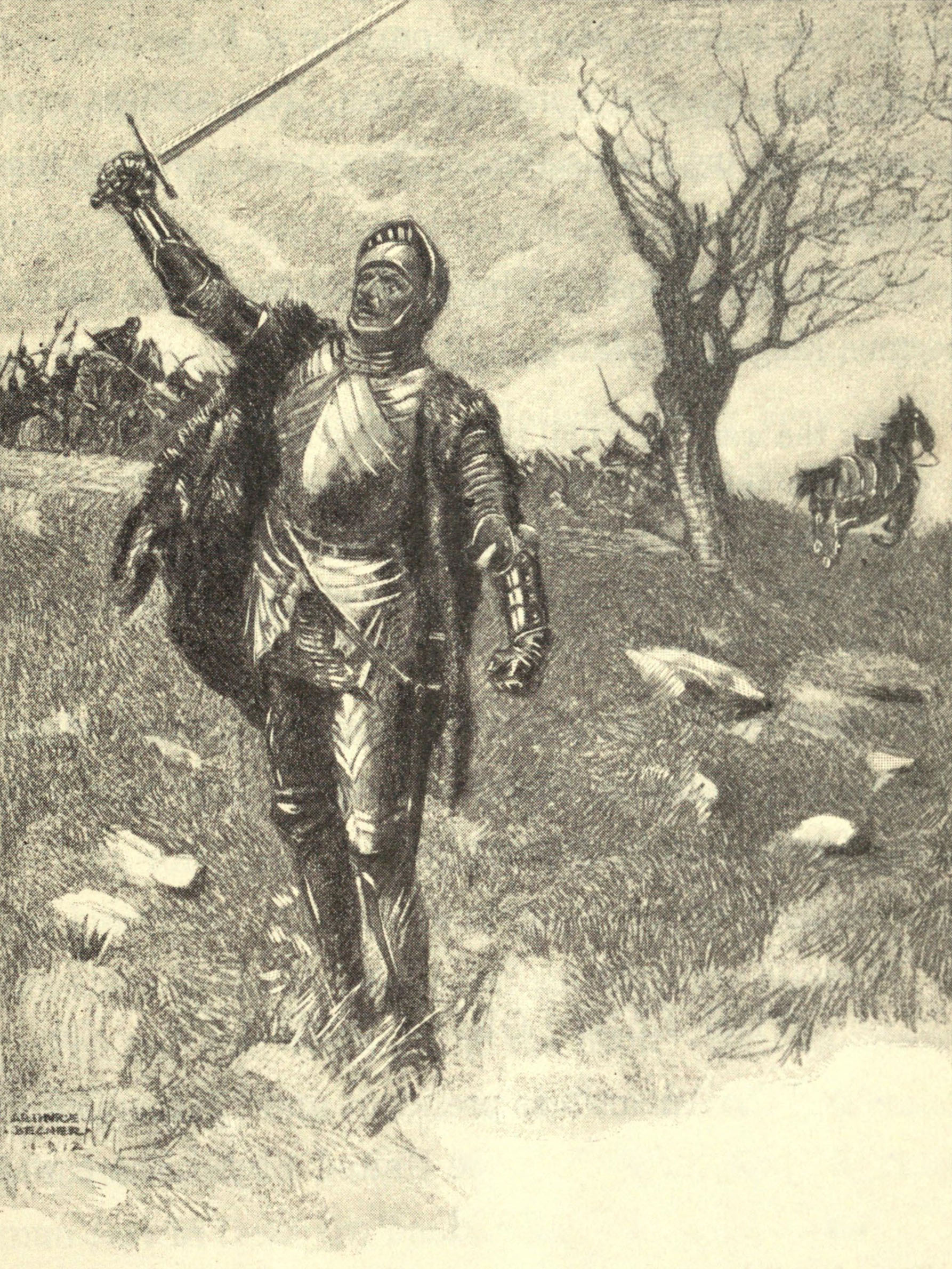
Written by Shakespeare in around 1593, these words have become immortalised as the final words of desperation spoken by King Richard III of England as he battled Henry Tudor for control of the throne of England.
These words are also possibly the most frequently misinterpreted Shakespeare quotation in history, although Prince Hal’s “The first thing we do, let’s kill all the lawyers!” from Henry Vl is right up there on the list.
Shakespeare very cleverly painted Richard III to be entirely evil and villainous, self-serving and single-minded in his pursuit of the throne at the expense of all others who stood between him and the ultimate royal goal.
As evil and villainous as Shakespeare’s Richard is, it’s crucial to remember that Richard was fighting for both his kingdom and his life. It makes absolutely no sense, therefore, that he would have been wandering around Bosworth Field offering someone his kingdom in exchange for a horse.
What this line actually means is that Richard knew he was going to lose the battle if he couldn’t get back on a horse and keep fighting. His horse had just been killed in battle, while he was still riding it. On foot, he was without means of either strategic defence or meeting the enemy in an even fight. He was an easy target that travelled much slower and far less deftly than his mounted opponent.
The line could be interpreted as meaning, “Without a horse, I’m going to lose my kingdom!” It was a cry of despair, not an attempt at last-minute marketing.
The urgency and foreboding in Richard’s words make this scene a magnificent piece of drama. If there’s anything the audience loves more than a villain getting it in the neck, it’s the villain realising that it’s coming.
When understood properly, this oft-misinterpreted quotation reveals once again the genius of the wordsmith.
If you have a line or scene of Shakespeare you’d like explained, feel free to ask a question or make a suggestion in the comments and I’ll give it a red hot shot.
Most of the time, when people protest about the way the English language is abused, it’s a case of the language continuing to evolve as it has always done.
One such example is the practice of verbing, which takes the noun form of a word and transforms it into a verb form… like ‘verb’ and ‘verbing’.
Just last week, I was talking with a friend about how annoying she finds it when people say “I’m going to action that.” I’m sure she sought me out for the conversation because I’m both a word nerd and an English teacher.
“Action is a noun! A bloody noun! How can so many otherwise intelligent people get that wrong?”
“It grates on us because it’s recent,” I said. “We’ll get used to it.”
“No, I won’t! It’s just wrong!”
“You know Shakespeare did it?”
“What?”
“Verbing. He did it all the time.”
“You and your Shakespeare. It’s like he’s the answer to everything.”
“You know he invented the word ‘friending’, right?”
She rolled her eyes and walked away. She didn’t even flinch at my use of the term “verbing”, which is exactly the same thing as “actioning” in terms of the language. After all, ‘verb’ is a noun, too.
It is the recent examples of verbing, such as “actioning” an idea, that we notice because we’re not used to hearing them yet. When Facebook was new, people complained the same way about “friending”, but these days nobody thinks twice about that. At some point in time, someone decided that it was okay to talk about bottling fruit, or shelving books, and now those terms are just everyday language.
It is also true, however, that some things people commonly say are, quite simply, wrong.
My pet peeve is when my students are talking about sport or some other kind of competition, and they say “We versed Team X”.
This is a common bastardisation of the Latin versus, which means ‘against’. It is commonly used for sporting matches and legal cases, and is generally abbreviated as v. or vs., as in Black v. White or Blue vs. Red.
My first response is always to ask whey they wrote poetry about another team. “You played them. You opposed them. You clashed with them. You competed with them. You did not write poetry about them.” Then I explain how the different words work, and what they actually mean.
The reason “versed” is wrong is because the words ‘versus’ and ‘verse’ have absolutely nothing to do with each other. Because ‘against’ is a preposition, it simply doesn’t make sense to say “We againsted them”. It is not verbing, by any stretch of the imagination.
The first time we have that conversation, they look at me with confusion. Some have a glazed look of fear, like the proverbial deer caught in the headlights. This never fails to entertain me. The second and third times, they roll their eyes.
Over time, the tedium of having the same grammar-nerdy conversation persuades them to start using the language correctly. They learn, I win, and so does the English language.
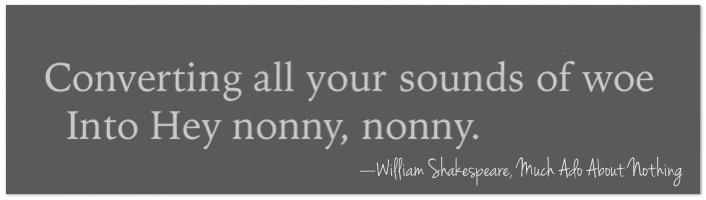
‘Hey nonny nonny’ is a curious little phrase found in Shakespeare’s ‘Much Ado About Nothing’. The character Balthasar sings a song to the ladies in which he recommends that instead of worrying about what the men are up to, they should convert their sighs of despair into ‘hey nonny nonny’.
The phrase ‘Hey nonny nonny’ has no direct translation into modern English, but is understood from the context that it could be taken to mean a dismissal of circumstances as we do today with expressions like “whatever”, “what the heck?” or “that’s life”, or simply refer to general merry-making.
As such, it is a phrase that can be safely used in circumstances where less appropriate responses cannot be uttered. In my experience, expressing one’s umbrage using Shakespearean quotations is almost as satisfying as actually swearing anyway. There is something remarkably cathartic about speaking in Elizabethan English, although that will likely never be understood by anyone who does not appreciate and enjoy the language as I do.
I have decided to add “hey nonny nonny” into my repertoire as a worthy companion exclamation to my renowned-among-those-who-know-me question, “What manner of nitwittery shall plague me on the morrow?” In writing this post, however, I’ve come to one realisation: I will have to teach my devices that I intend to type “hey sonny sonny” or “hey nanny nanny” about as much as I ever mean to type “oh shot”.
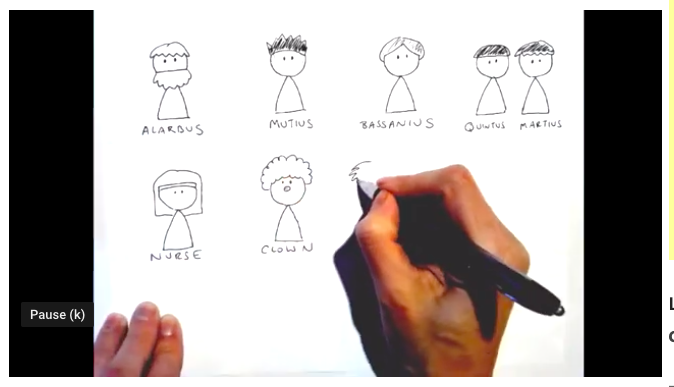
For Shakespeare Sunday this week, I want to share with you the wonderful work of cartoonist Mya Gosling at Good Tickle Brain.
Mya takes the vast works of Shakespeare and condenses them into cartoons that even those with very little knowledge of Shakespeare can read, understand and appreciate.
For Shakespeare nerds like me, it presents a lot of fun and great “oh yeah!” moments. For those new to the plays or wondering what on earth the characters are saying and doing, Mya’s cartoons make the complex much more straightforward.
This website contains a wealth of play summaries, character spotlights, analysis and audience insights. I frequently share Good Tickle Brain with my students because it really does help to make whatever play we are studying more accessible and relatable for them.
Even if you haven’t seen or read the play Titus Andronicus — and let’s face it, most people haven’t— make sure you watch the video titled ’Titus Andronicus: All The Deaths’. The way she draws all the characters and then depicts how they died in the play is brilliant!
Also incredibly insightful is the non-Shakespeare section titled ‘Keep Calm and Muslim On’, which is Mya’s exploration of the way in which Muslims and non-Muslims get along together in American society, which I find highly relevant to Australia too. I always enjoy seeing the simple but profound ways in which Mya breaks down the barriers and embraces the differences while still showing how similar we really all are.
It’s a great website that holds lots of fabulous little surprises. I really hope that you’ll take a look, and I hope that you enjoy it as much as I do.
As I mentioned last week, my Year 9 class is studying ‘Much Ado About Nothing’ this term.
Today my students investigated the words and phrases coined by Shakespeare.
I started by giving them a list of the words and asking them to highlight which ones they knew and used. This really engaged them, and it was great to see their motivation change as they realised that Shakespeare’s language isn’t all lofty poetry and words that finish in -eth.
I followed that up with some great videos and a website resource to extend their knowledge and reinforce their learning.
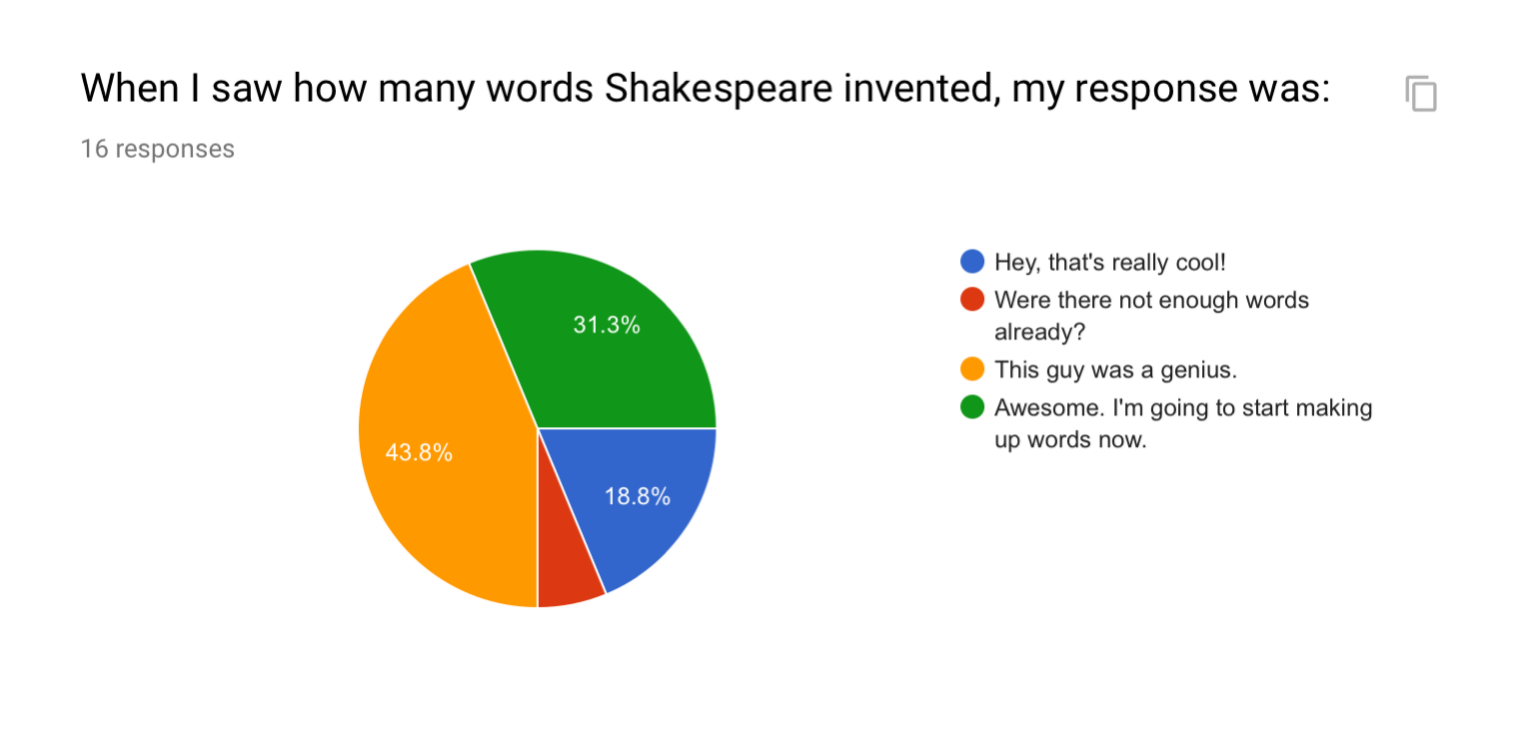
An unexpected bonus for me was the overall positive response to the exit quiz I made for the end of the lesson.
Of course, it wasn’t all enthusiastic. I’ve been teaching Year 9 English for long enough to know not all kids are going to respond positively, so I do at least try to make my quizzes fair so that they can express their feelings honestly, and kind of fun so that they actually want to do them.
They know there is no obligation to respond in a way that will make me feel good, and I know my students, so I’m confident that these responses are an accurate reflection of attitudes throughout the group.
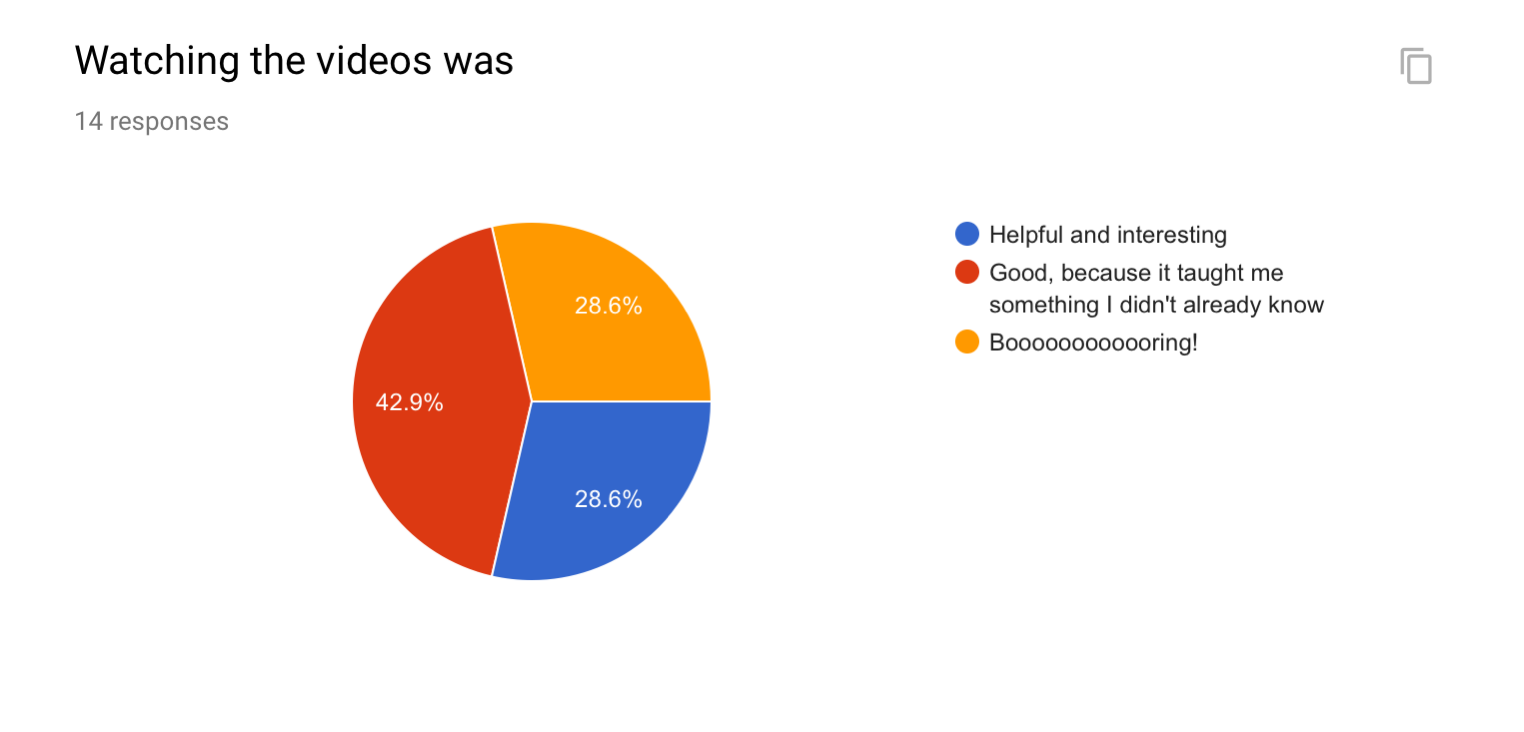
Wait, what? Boring?
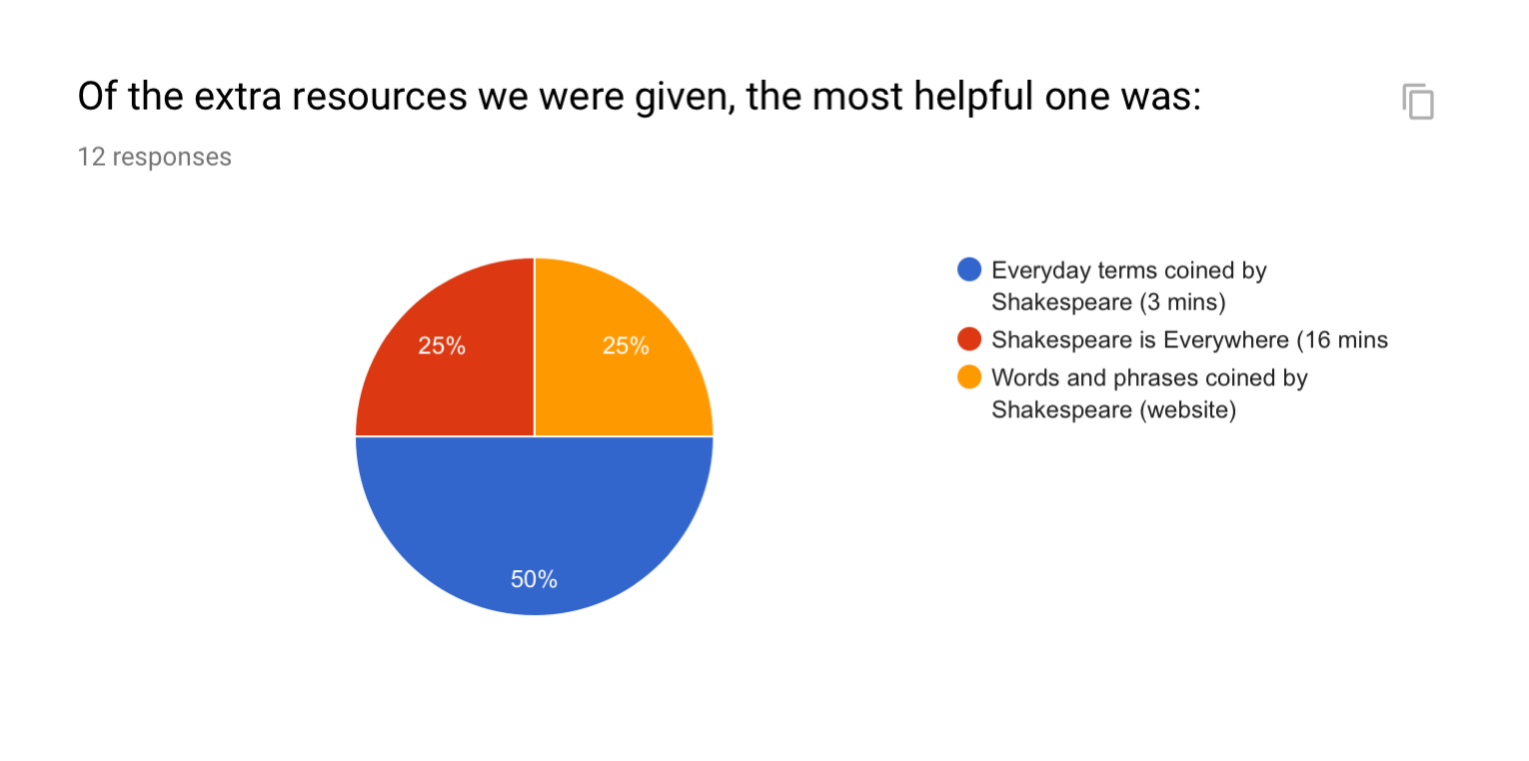
Thankfully, the next set of responses explained that. The 26% who found the videos boring are probably the ones who preferred the website based resource instead. That’s a relief!
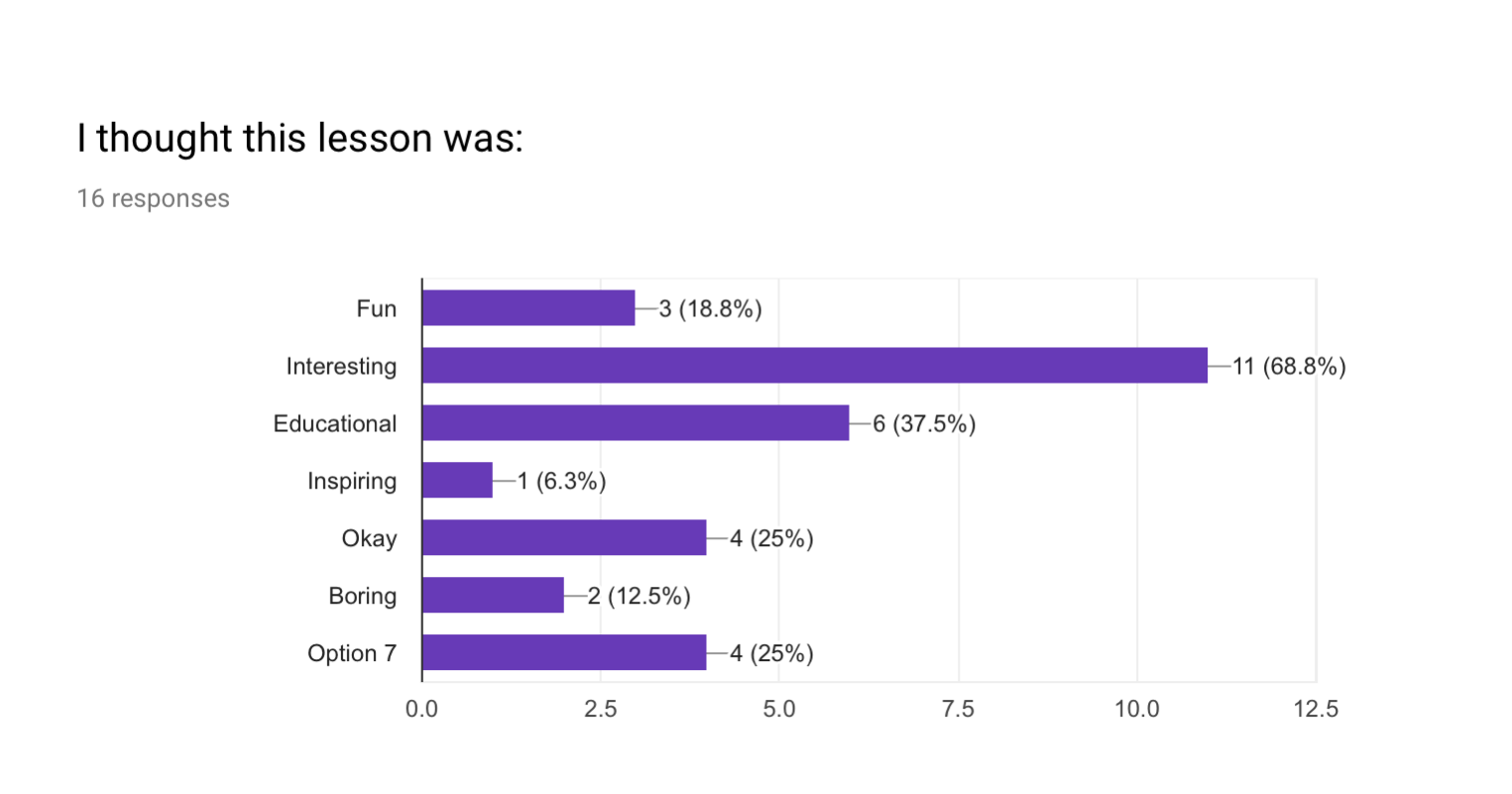
There was a surprise waiting for me, though.
The funny thing is, I didn’t even know there was an option 7. I must have accidentally hit ‘return’ while making the quiz on Google Forms. I don’t know if Option 7 was perceived to be better or worse than ‘boring’. I’m telling myself that since they could choose multiple options, Option 7 was checked by those with a good sense of humour.
This was the closest I got to asking the students to identify themselves. If they don’t have to tell me their names, they are more likely to give honest responses. I’m not-so-secretly excited that so many of them identify as dragons.
‘Julius Caesar’ is a play by William Shakespeare about the assassination of Caesar by a group of his senators.
Given that the play clearly demonstrates that the assassination was morally wrong, and that the conspirators did not prosper as a result of their actions, you might be tempted to think that anyone who knew the play well enough to perform the role of Mark Antony would know better than to assassinate someone.
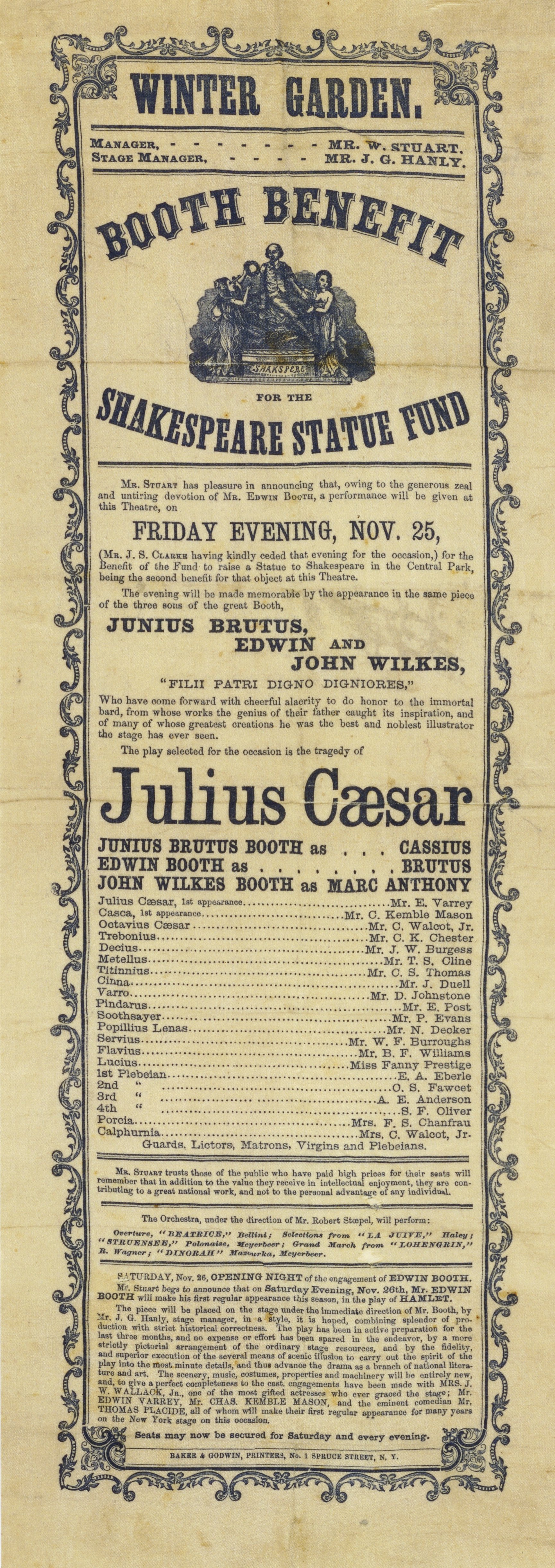
And if you thought so, you’d be wrong. A famous actor and a member of a prominent family among theatre circles, John Wilkes Booth played Marc Antony while two of his brothers played Cassius and Brutus in a production of Shakespeare’s ‘Julius Caesar’ at The Winter Garden theatre on November 25, 1864, just four months before he assassinated President Abraham Lincoln.
Obviously, his decision to shoot the president brought his acting career to a screeching halt. What a shame that he took more inspiration from Brutus than he did from Mark Anthony. Less violence and more brilliant rhetoric might have served us all well.
‘Julius Caesar’ is a brilliant play in which Shakespeare demonstrates his genius is in taking a story we all know and making the characters familiar in a personal and almost tangible way. Shakespeare takes one of the most famous men in history and portrays him as fully human, flawed and even vulnerable in different ways. It’s not the way we’re accustomed to thinking about ‘historical giants’ like Caesar., but Shakespeare makes it all seem quite natural.
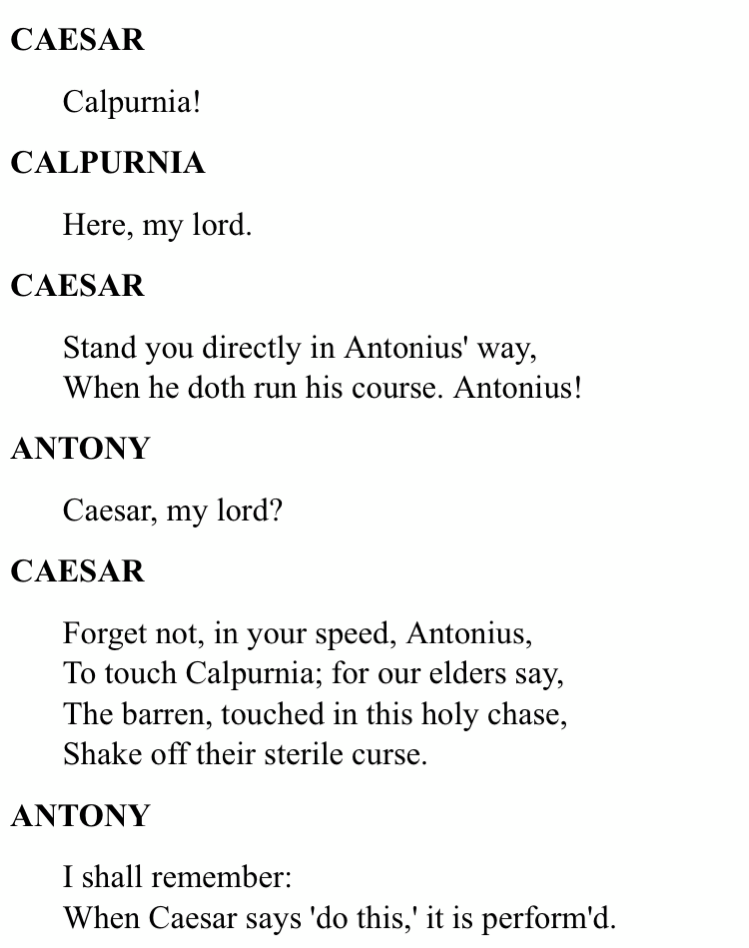
At the beginning of the play, even while he is being celebrated as Rome’s all-conquering hero, his first interactions cast him as a husband who is acutely aware of his wife’s childlessness. We don’t know if his instructions to Calpurnia and Antony are motivated by sorrow or by his desire for an heir to whom he might pass his empire, but either way, Caesar doesn’t miss an opportunity that might make a difference.
Before long, we see him as a man afflicted by disease when he is struck by a seizure, and is obviously bothered by the fact that is happens in public. He may control all of Rome and its empire, but he cannot control his illness. We also see him as a man keenly aware of popular opinion, sen in his public refusal of the crown not once, but three times, yet ignorant of the way his own senators feel about him personally. Regardless of his aspirations, he is astute enough to know that actually accepting a crown as Emperor is not the best move for him at this point in time.
In these things, the audience begins to see the great historical hero Julius Caesar as a complex, thoughtful man, one who holds a variety of responsibilities and obligations that he takes very seriously. He is very much human, in contrast to the Roman tendency to venerate their heroes almost as gods. We see his humanity rather than his pride, although we know that exists because it is his hubris that brings about his downfall.
Shakespeare’s portrayal of other characters is equally powerful.
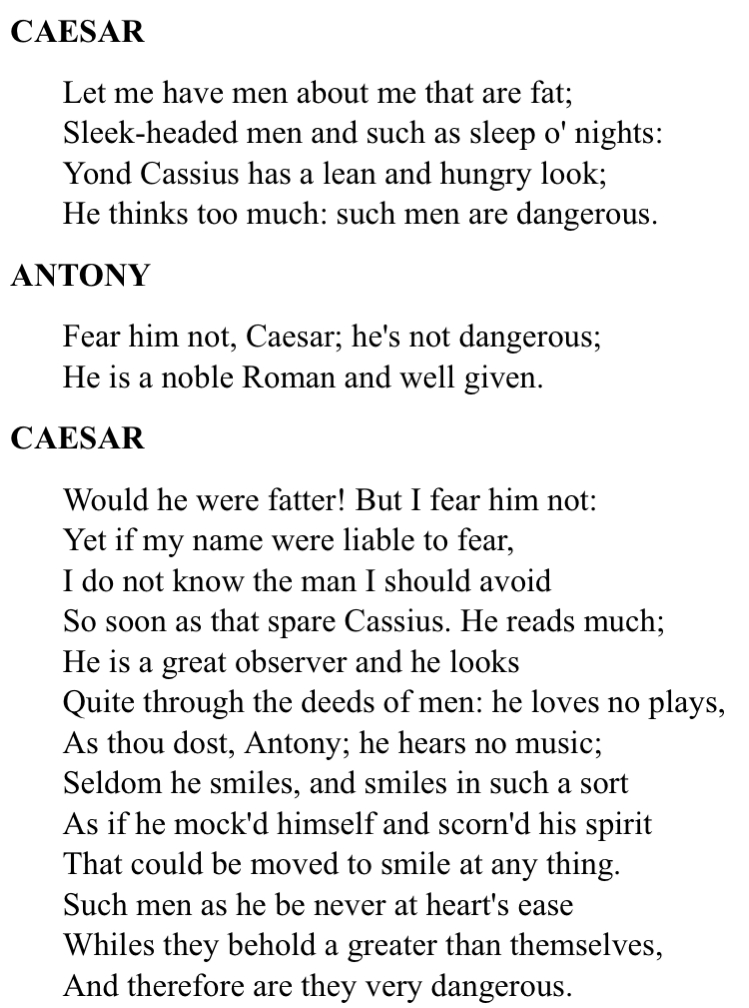
Caesar’s assessment of Cassius is profound: “Yond Cassius has a lean and hungry look; he thinks too much: such men are dangerous.” In those few words, Shakespeare establishes a vivid image that shapes our perception of the man and positions the audience to distrust the character.
Brutus is shown as a moral man struggling with a dilemma that weighs heavily on him. A strong sense of foreboding settles on the audience when he puts his trust in Cassius, making himself vulnerable to a man whose thoughts and conspiracies are indeed dangerous, particularly for Caesar. At this point, even though both Caesar and the audience like Brutus, his destiny as one of the conspirators is sealed.
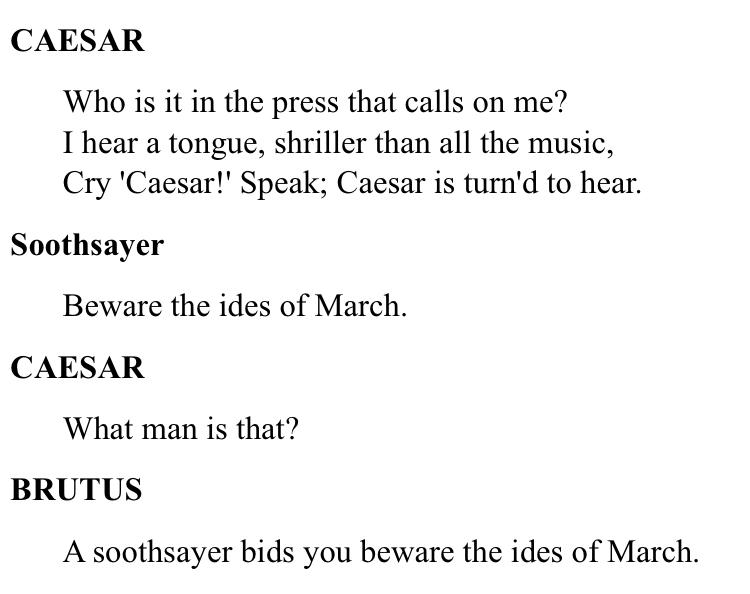
In all of this, Shakespeare makes expert use of dramatic irony and foreboding to keep the audience in suspense as Caesar’s train speeds ignorantly toward its derailment. This is established right at the start of the play with the mysterious soothsayer who delivers the warning, “Beware the Ides of March”.
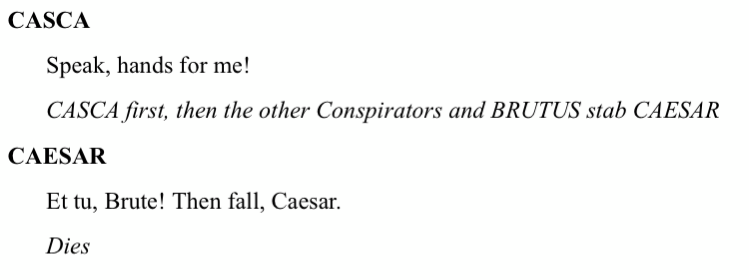
While it is a history play, it has some elements of a tragedy in that Caesar is completely oblivious to the fact that his actions are contributing to his own eventual demise at the hand of the conspirators whom he still perceives as friends and allies. The pathos of his question to Brutus: “Et tu, Brute?” — “You too, Brutus?” makes the moment of his all-too-late realisation one of almost palpable betrayal and sorrow. In that moment, Caesar dies knowing that he is truly friendless and alone.
It’s important to note that the play makes it clear that assassinating anyone is not a good idea, and the assassins do not prosper as the result of their actions. It wasn’t in Shakespeare’s interests to be seen to promote or condone assassinating the established ruler, as he was reliant on the good favour of Queen Elizabeth I and, after her, King James. He wasn’t encouraging anyone to try to kill their leader: he was showing that, historically, doing so didn’t actually achieve what the conspirators hoped it would.
It’s a very direct and straightforward play – there are no real subplots and the political undercurrents are all really obvious because they are what drives the play. This makes it a great play for a “first Shakespeare play” for those who are just beginning their Shakespeare journey.
For the word-nerds, this is the text from which we get great, still commonly used phrases like “It’s all Greek to me” and “Friends, Romans, countrymen, lend me your ears”. It’s also the source of the title of John Green’s enormously popular novel ’The Fault In Our Stars’.
‘The Lion King’ is on TV tonight and, of course, I’m watching it. I’m singing the songs. I’m totally loving it. If anything is able to make me turn the TV on, it’s going to be a musical.
And Facebook is alive with people proclaiming that it’s basically ‘Hamlet’.
Well, no. It’s basically not. And I’m not even sorry for any disappointment that may cause.
Anyone who believes the two stories are the same either pays too much attention to social media and the popular clickbait theories that abound there, or they have not paid sufficient attention to ‘Hamlet’ at all.
Scar is certainly as evil as Claudius. He’s certainly interested in getting rid of his brother and his nephew and taking over the kingdom, and takes full advantage when Mufasa dies in a situation that he has engineered.
That’s really where the similarities end.
In fact, it’s really only a very tenuous connection. Scar is by no means the only brother of a king ever to aspire to the throne through nefarious means, so that’s hardly a convincing argument for a direct correlation between the two texts. You could use the same argument to suggest that ‘The Lion King’ is based on ‘Richard III’, which it clearly is not.
Furthermore, Sarabi – Simba’s mother – does not enter into a relationship with Scar. The fact that his mother married Claudius, his father’s brother and murderer, is the root cause of much of Hamlet’s angst and misery. Given that this is one of the crucial elements of the play, and there is zero correlation in ‘The Lion King’, that’s fairly conclusive evidence that the two are not the same story.
Sure, the ghosts of the dead fathers both appear and speak to their sons. However, they hardly communicate the same thing, and it’s at a very different stage of the plot. Mufasa tells Simba to grow up and retake his kingdom while Hamlet’s father urges him to get revenge on his brother for murdering him and taking not only his kingdom, but also his wife. “Remember who you are” is a very different message from “Revenge!”
Simba is nothing like Hamlet in character, other than being the son of the dead king. Simba is naturally optimistic, fun-loving and adventurous. Simba runs away thinking he’s responsible for his father’s death. Morose and pessimistic, Hamlet hangs around the castle, feigning madness and overthinking everything to the point where his agonising over what to do actually prevents him from doing anything much at all.
The correlations among the minor characters are, similarly, only superficial.
While both Simba and Hamlet have two friends, Timon and Pumbaa are not anything like Guildenstern and Rosencrantz. Timon and Pumbaa rescue Simba and remain his friends throughout the story. Hamlet’s friends are quite willing to sell him out at Claudius’ bidding, and there is nothing loyal or supportive about them.
Both Simba and Hamlet have girlfriends, but Nala doesn’t go mad and drown herself in a river.
Zasu and Polonius both talk way too much, but that’s about the only similarity between them.
In fact, that’s the difference between the two in a nutshell: ’The Lion King’ is life-affirming and positive. In direct contrast to ‘hakuna matata’, there is no ‘problem free philosophy” in Hamlet, a play that philosophises about death and suicide and which finishes with the main characters and many of the minor ones dead.
So, there you have it. The difference between ’The Lion King’ and ‘Hamlet’ is a matter of life or death. The basic premises are polar opposites, so the two cannot possibly be the same story.
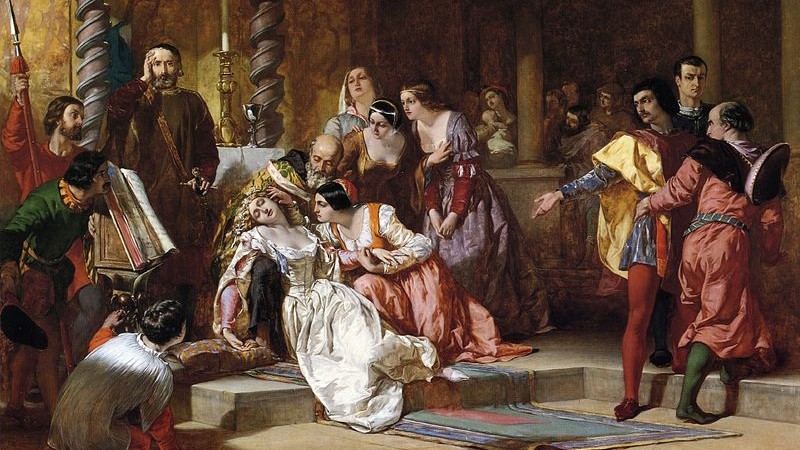
Much Ado About Nothing by Alfred Elmore, 1848. Image: Public Domain.
‘Much Ado About Nothing’ was written in 1598-99. It is one of Shakespeare’s comedy plays, which means that the main characters enjoy a happy ending.
In that sense, the word ‘comedy’ has changed over time, because now it’s understood to mean a text that is designed to make the audience laugh. There is plenty of humour in this play, though, as it was written purely to entertain and amuse the Elizabethan audiences.
While it’s all about the entertainment, the play does explore some key ideas in ways that are designed to make the audience consider or contemplate those concepts for themselves.
The play revolves around the challenges encountered by several couples who are in love but face various challenges in their personal lives that threaten their happiness and wellbeing. The ways in which different people respond to those conflicts and complications are well worth thinking about, because relationships are always challenged by problems of one kind or another. As Shakespeare observed in ‘A Midsummer Night’s Dream’, “the course of true love never did run smooth”, an epithet which is demonstrated with profound clarity in ‘Much Ado’.
Questions of commitment, trust, belonging, family dysfunction, hatred and revenge all emerge in this play, seamlessly woven into and underpinning the plot and the responses of the characters. It is those timeless ideas that enable audience five hundred years later to still appreciate and relate to Shakespeare’s plays even though the language and many elements of our society have evolved since then. Shakespeare really was a master of exploring and portraying human nature at its best and its worst.
In contrast to those more serious ideas, one of the things I enjoy most about this play is the wit and banter between Beatrice and Benedick. They’re crazy about each other, but spend most of their time insulting and taunting each other because neither one knows that other is crazy about the other. In that way, theirs is an unconventional romance because there’s no formality, no swooning, and no overly sentimental conversations. They’re far more likely to be saucy or sarcastic than sickly sweet.
Dogberry is hilarious in his frequent mangling of the language and the way he continually bungles his job as the constable despite his pretentiousness and high opinion of himself. He is entirely inept and ridiculous, providing some welcome comic relief during the more emotionally intense phase of the play.
I also enjoy the way in which Shakespeare uses the characters and events of this play to make fun of the stereotypical romances that occurred in many popular plays and stories of the time, adding another level of wit and engagement to this play. I do love a bit of snarky, subversive humour, especially when it comes to the tropes of the genre of romance.
As with all good Shakespeare plays, there are a couple of characters we can enjoy hating on. Don John, in a perpetual bad mood, seems determined to make everyone else suffer, just because things haven’t always gone his way. His selfish dudgeon may be as annoying to the audience as it is to the rest of the characters, but his blatant disregard for Hero makes him despicable.
I also harbour significant dislike for Claudio and Leonato because they never even stop to consider that Hero might be innocent of the accusations levelled against her. For two men who love her – albeit in different capacities – they have a mighty strange way of showing it. They don’t give her any credit for honesty or integrity: instead, they both default to outright condemnation. The fact that Claudio delivers his judgement with such vengeance puts him right into my “love to hate” group with Don John.
Finally, I can’t help but love a play that can get so much mileage out of a line like “hey, nonny nonny!”






 WordyNerdBird