The Tradition Of ANZAC Day.

As my post about my local ANZAC Day ceremony generated a number of questions from around the world, especially via my social media posts, I thought I would follow it up with an explanation of the history and traditions of ANZAC Day.

This article from the Australian War Memorial explains everything very clearly, so I hope you enjoy it and learn a little more about your Australian friends through it.

ANZAC Day, 2019

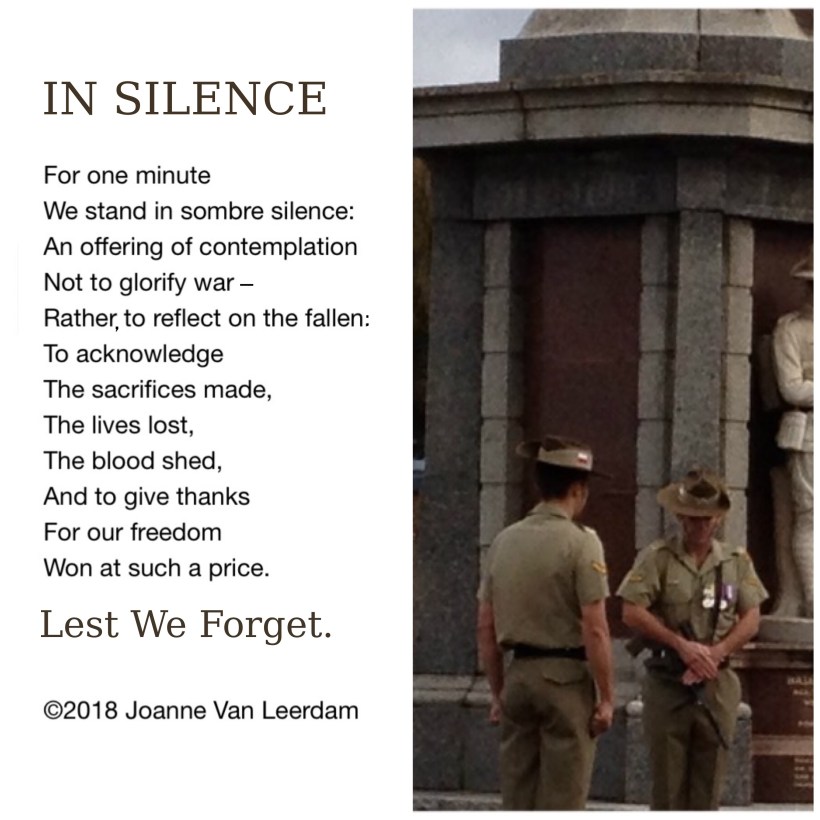
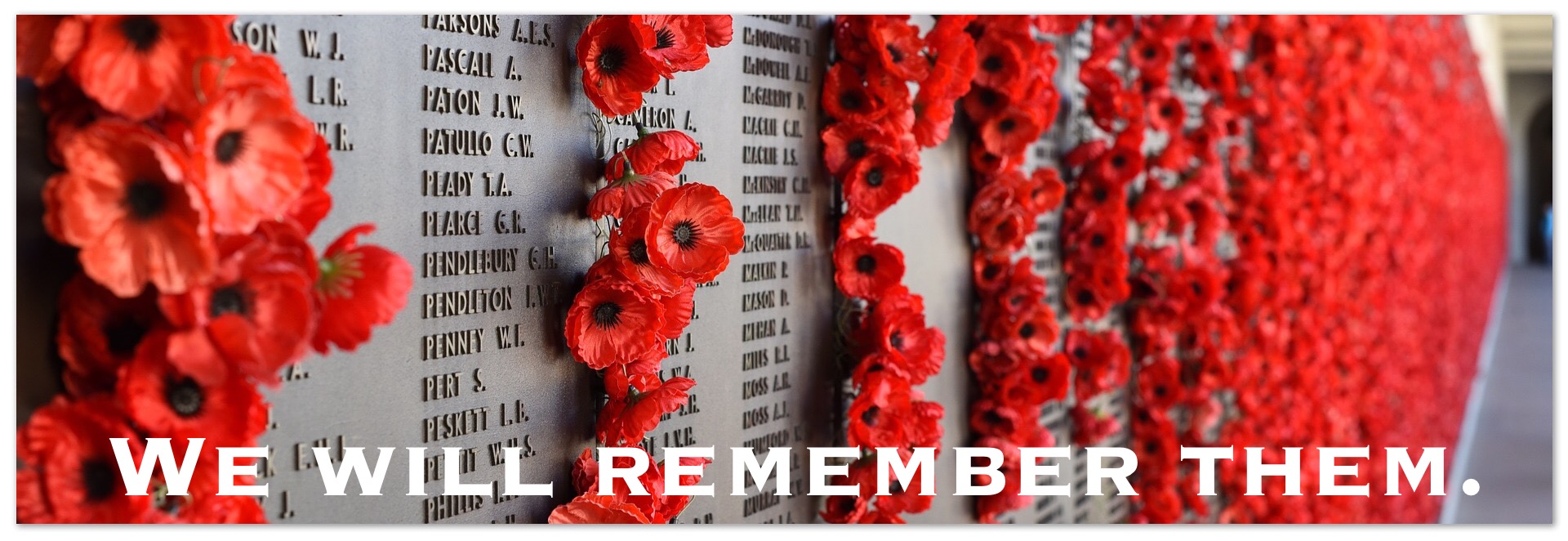
101 years after the end of World War I, people all over Australia and New Zealand gathered today in remembrance of our soldiers, the nurses and doctors who supported them, and all those who served to preserve our freedom.

At our local ANZAC Day ceremony, I witnessed some lovely moments. 

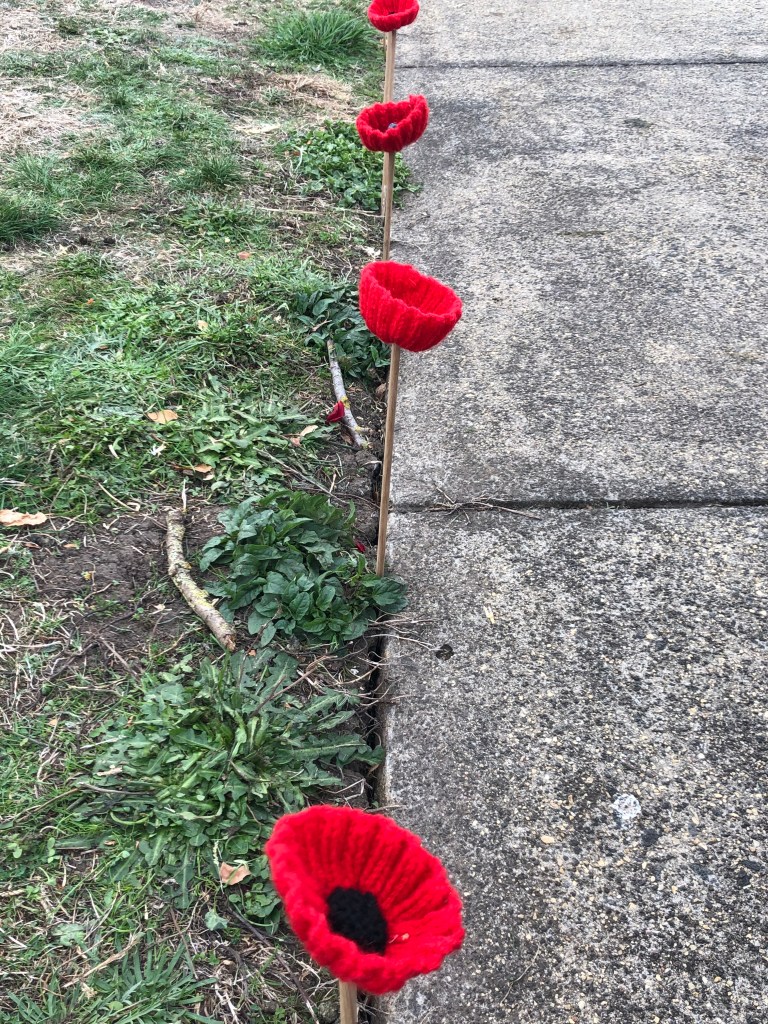
Members of the CWA had knitted poppies and used them to line the path to the cenotaph. They looked beautiful, but also served as a poignant reminder of those who had given their lives during the war.

Local men who had served stood proudly, wearing their medals. There are fewer of them each year, but their number was supported by the children and grandchildren of those who have passed, wearing their forebears’ medals with pride and reverence.

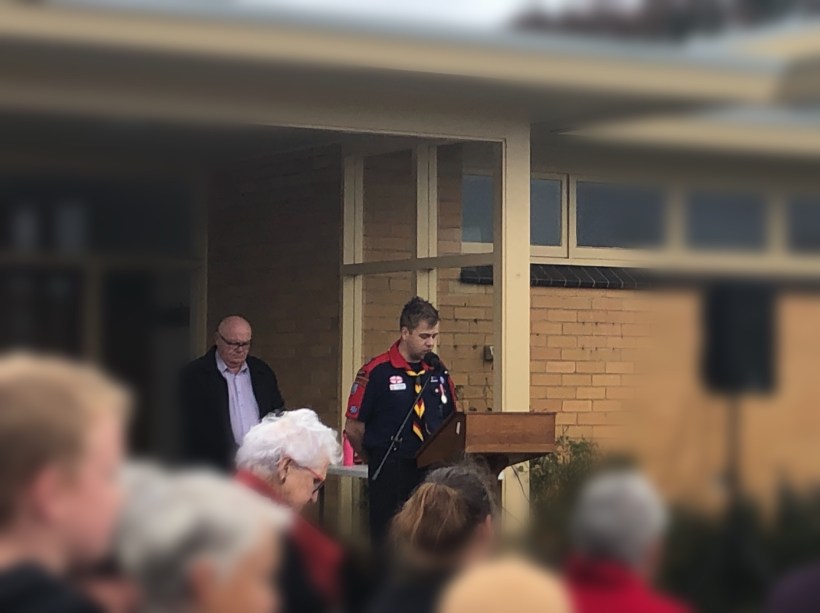
One of my own former students gave a beautiful heartfelt requiem for the fallen. He spoke so well, and really knew his history. He made me really proud. 

An elderly gentleman standing near me bent down, took his restless young grandsons in his arms and explained to them why they needed to be quiet and pay respect. He then pinned his own poppy on one boy’s shirt. The smile on that child’s face as he stood quietly beside his grandfather for the rest of the ceremony was a wonderful thing to see.

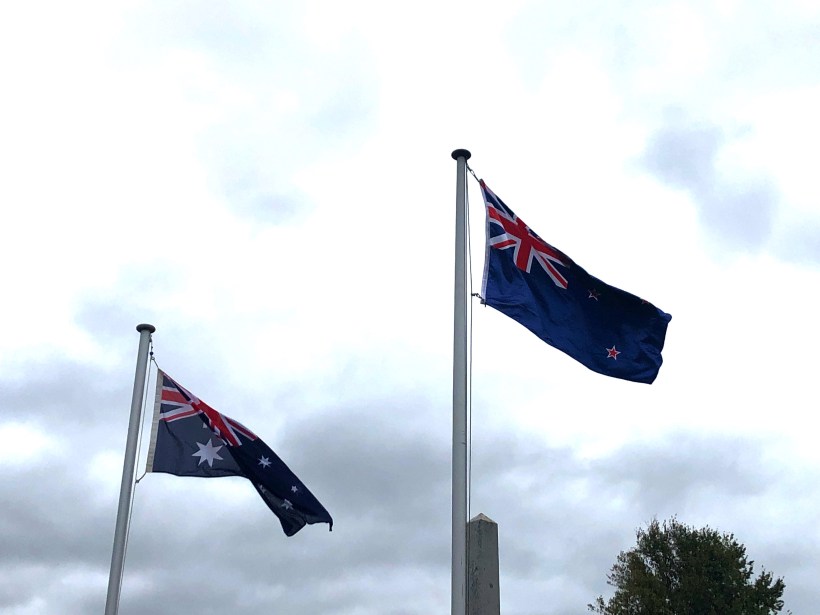
Several young people of my town raised the flags of Australia and New Zealand to half mast and stood with their heads bowed during the Last Post and the minute of silence before raising the flags to full height and saluting them. 

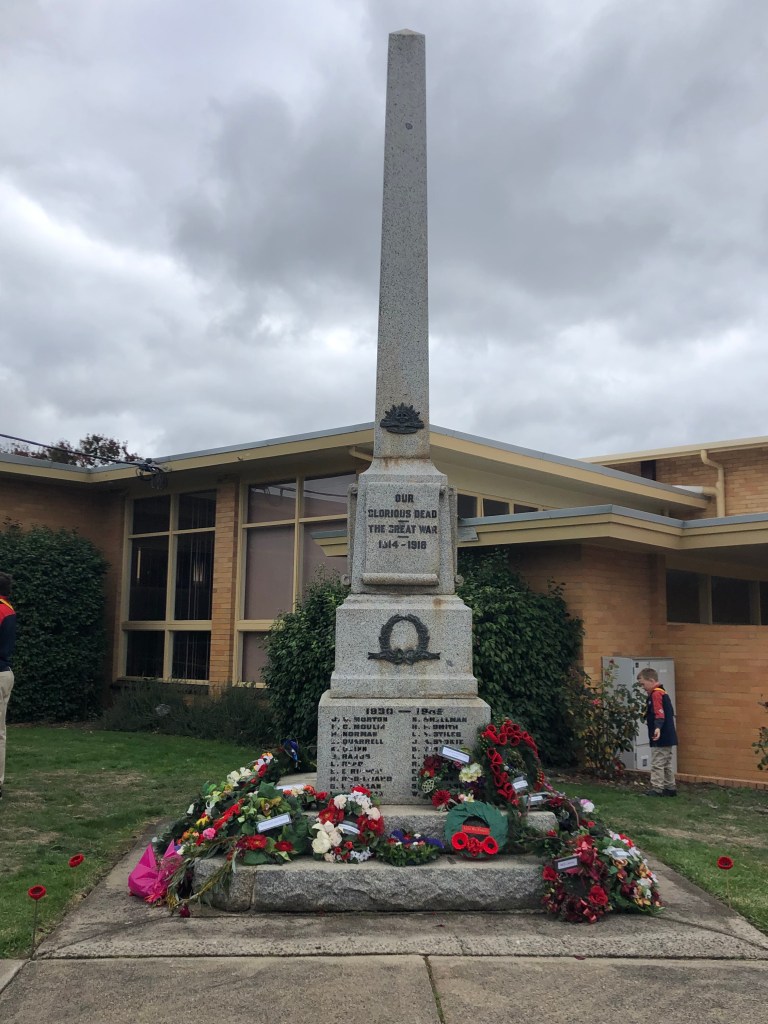
Over thirty local groups, organisations and businesses laid memorial wreaths at the base of the cenotaph. Young members of the local Scout group carried and laid wreaths for those who were too elderly or frail to do so, keeping pace with the older folk as they walked to and from the cenotaph. 

A teenaged member of my theatre company sang the national anthems of both countries with reverence and pride. Everyone in attendance stood and sang along with pride. Not everyone knew the New Zealand anthem, but plenty of folk did. 

After the ceremony, the local Scouts carried around plates of sandwiches and refreshments for the townsfolk who had congregated. Every single one of them said “Excuse me” before offering us something to eat. Every single one of them smiled and spoke respectfully.

I have no doubt that similar things happened in every locality across Australia at 11am today to commemorate all those who served to defend our country and preserve our freedom, because that is what Australians do on April 25th.  

Poem: ‘Clancy of the Overflow’ by A.B. Paterson

Last year during Poetry Month, I shared Paterson’s magnificent poem ‘The Man From Snowy River’. This year, I thought it would be good to share a city-dweller’s perspective of the Australian stockman’s life in the 19th century through another of Paterson’s much-loved works.

 The Stockman by S.T. Gill (1818-1880) Public Domain.

Clancy Of The Overflow

I had written him a letter which I had, for want of better
   Knowledge, sent to where I met him down the Lachlan, years ago,
He was shearing when I knew him, so I sent the letter to him,
   Just “on spec”, addressed as follows: “Clancy, of The Overflow”.
 
And an answer came directed in a writing unexpected,
   (And I think the same was written in a thumbnail dipped in tar)
‘Twas his shearing mate who wrote it, and verbatim I will quote it:
   “Clancy’s gone to Queensland droving, and we don’t know where he are.”
 
In my wild erratic fancy visions come to me of Clancy
   Gone a-droving “down the Cooper” where the western drovers go;
As the stock are slowly stringing, Clancy rides behind them singing,
   For the drover’s life has pleasures that the townsfolk never know.
 
And the bush hath friends to meet him, and their kindly voices greet him
   In the murmur of the breezes and the river on its bars,
And he sees the vision splendid of the sunlit plains extended,
  And at night the wondrous glory of the everlasting stars.
 
I am sitting in my dingy little office, where a stingy
    Ray of sunlight struggles feebly down between the houses tall,
And the foetid air and gritty of the dusty, dirty city
   Through the open window floating, spreads its foulness over all.
 
And in place of lowing cattle, I can hear the fiendish rattle
   Of the tramways and the buses making hurry down the street,
And the language uninviting of the gutter children fighting,
   Comes fitfully and faintly through the ceaseless tramp of feet.
 
And the hurrying people daunt me, and their pallid faces haunt me
  As they shoulder one another in their rush and nervous haste,
With their eager eyes and greedy, and their stunted forms and weedy,
   For townsfolk have no time to grow, they have no time to waste.
 
And I somehow fancy that I’d like to change with Clancy,
   Like to take a turn at droving where the seasons come and go,
While he faced the round eternal of the cashbook and the journal —
   But I doubt he’d suit the office, Clancy, of “The Overflow”.

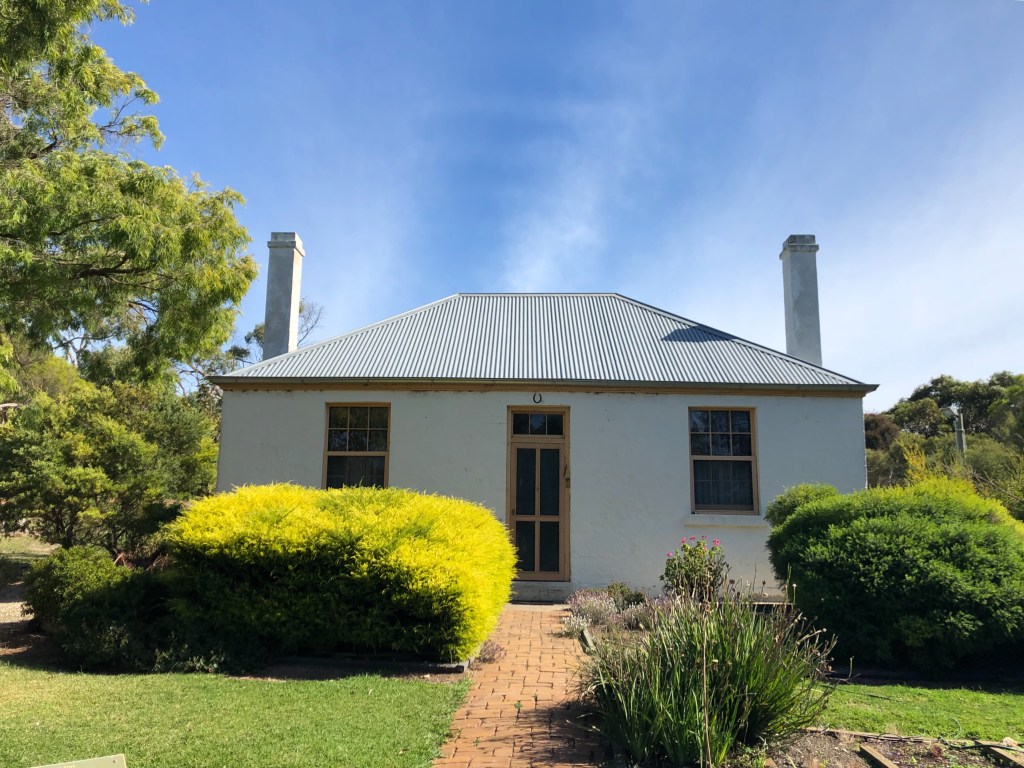
Dingley Dell Cottage: Home of poet Adam Lindsay Gordon

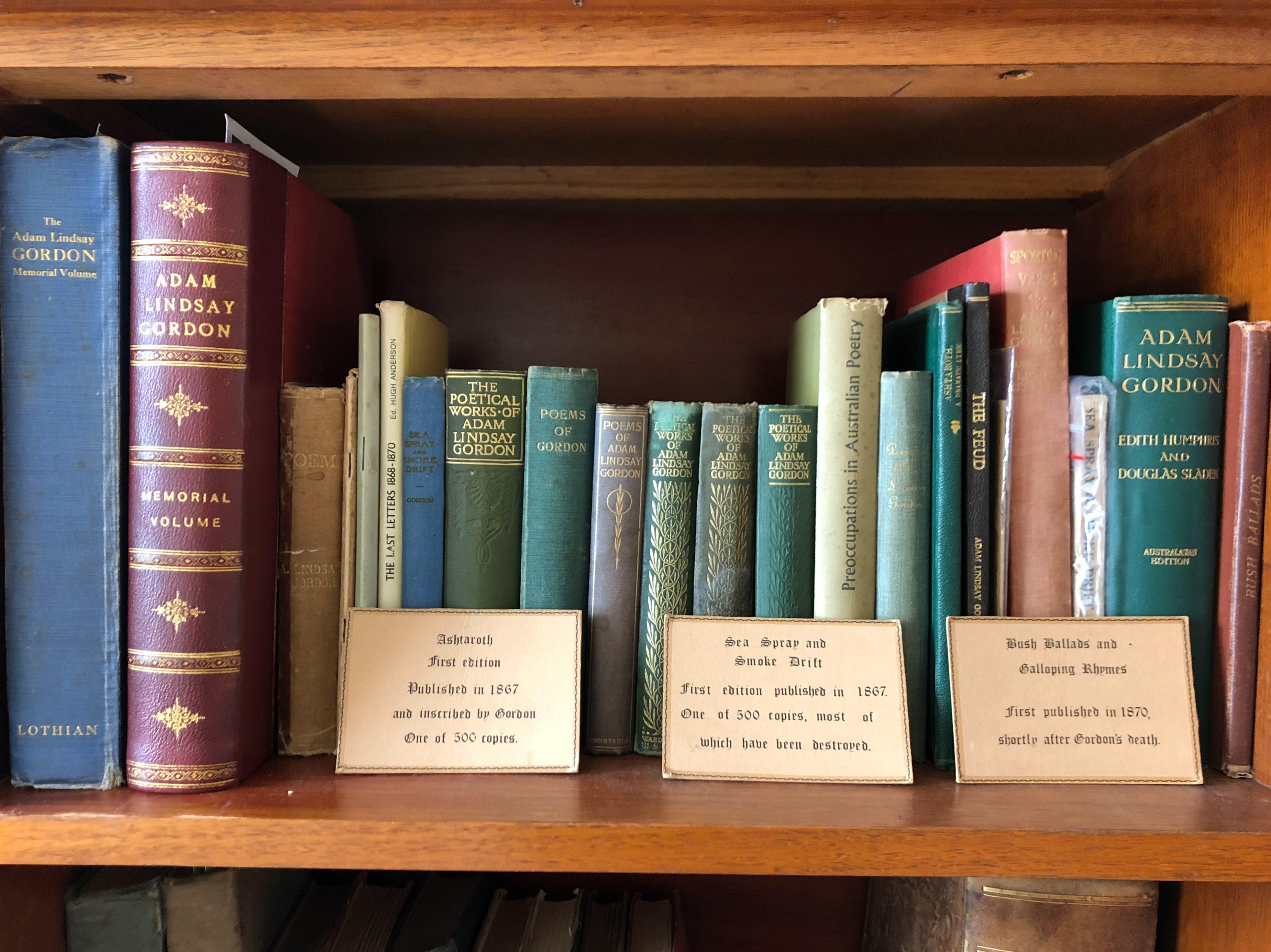
Nestled in the countryside at Port Macdonnell, South Australia, is Dingley Dell Cottage, once the home of Australian poet Adam Lindsay Gordon. He came to South Australia from England as a mounted policeman in 1853, and also made a name for himself as a jockey and steeplechase rider before entering politics in 1865.

His first published poem was’The Feud’, printed in the Border Watch newspaper in July, 1864. Two volumes of his poetry were published in 1870, after which Gordon suicided. 

After falling into disrepair over the years, Dingley Dell Cottage has been restored and now operates as a museum, displaying Gordon’s horse-riding themed drawings, letters, and some of his personal possessions. 

I was privileged to visit Dingley Dell on Saturday and see Gordon’s home and belongings for myself. My time there gave me a sense of connection with a poet whose works I confess I have read and studied less than other Australian poets, and motivated me to address that oversight. 

Poem: ‘Elegy Written in a Country Churchyard’ by Thomas Gray

An elegy is a formal poem that usually delivers a lament for  someone who has died, but there is also an element of praise or reflection that makes it positive, even while it’s sad. It’s different to a eulogy – a speech given about someone’s life, usually at their funeral, and also to a dirge, which is entirely mournful.

In this poem, Thomas Gray paints a picture of a mourner, alone in a church yard as evening falls. Left to his contemplation, he reflects on those buried nearby and what their lives may have been. Because this poem is about people who were unknown to him, and not specific to one particular person, Gray’s poem is actually more of an ode than an elegy, but given that he was the poet, he was free to call it whatever he wished.

The imagery of the evening scene before him is breathtaking. The reader can almost feel the weariness in the way the first stanza forces them to slow down and contemplate, alongside the poet, by the use of assonance on long vowel sounds in words like ‘curfew’, ‘lowing’, ‘plowman’, ‘home’, ‘leaves and ‘world’, and alliteration on the ‘m’ and ‘l’ sounds that do, indeed, evoke the plodding of the plowman. Gray continues using these devices throughout the poem, maintaining careful control of the pace and rhythm and ensuring that the reader’s reflections will not be rushed. 

The poem leaves the reader with the understanding that death really is the great equaliser – it doesn’t matter whether one is nobly or humbly born, famous or not: eventually we’ll all end up the same way.

Like Donne’s ‘For Whom The Bell Tolls’, this is another classic poem from which another author took a line as the title for a novel. Far From The Madding Crowd by Thomas Hardy was published in 1874, 23 years after the poem was published by Gray in 1751.

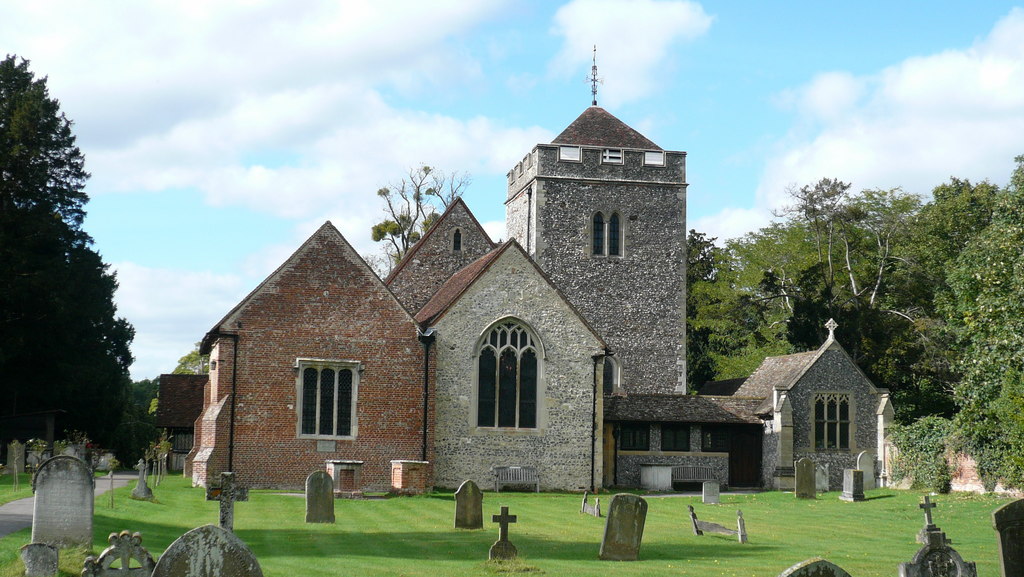
Although it is likely Gray had written at least part of this poem before taking up residence there, the churchyard referred to in the title is that of St Giles Church in Stoke Poges, Buckinghamshire, England.  In 1788, thirty-seven years after self-publishing  this poem, Thomas Gray was himself buried in the very same churchyard. 

Image: Used with permission. St Giles Church, Stoke Poges
cc-by-sa/2.0 – © Mark Percy – geograph.org.uk/p/5571063

Elegy Written in a Country Churchyard

The curfew tolls the knell of parting day,          
The lowing herd wind slowly o’er the lea, 
The plowman homeward plods his weary way,          
And leaves the world to darkness and to me. 

Now fades the glimm’ring landscape on the sight,        
And all the air a solemn stillness holds, 
Save where the beetle wheels his droning flight,          
And drowsy tinklings lull the distant folds; 

Save that from yonder ivy-mantled tow’r          
The moping owl does to the moon complain 
Of such, as wand’ring near her secret bow’r,          
Molest her ancient solitary reign. 

Beneath those rugged elms, that yew-tree’s shade,          
Where heaves the turf in many a mould’ring heap, 
Each in his narrow cell for ever laid,          
The rude forefathers of the hamlet sleep. 

The breezy call of incense-breathing Morn,          
The swallow twitt’ring from the straw-built shed, 
The cock’s shrill clarion, or the echoing horn,          
No more shall rouse them from their lowly bed. 

For them no more the blazing hearth shall burn,          
Or busy housewife ply her evening care: 
No children run to lisp their sire’s return,          
Or climb his knees the envied kiss to share. 

Oft did the harvest to their sickle yield,          
Their furrow oft the stubborn glebe has broke; 
How jocund did they drive their team afield!          
How bow’d the woods beneath their sturdy stroke! 

Let not Ambition mock their useful toil,          
Their homely joys, and destiny obscure; 
Nor Grandeur hear with a disdainful smile          
The short and simple annals of the poor. 

The boast of heraldry, the pomp of pow’r,          
And all that beauty, all that wealth e’er gave, 
Awaits alike th’ inevitable hour.          
The paths of glory lead but to the grave. 

Nor you, ye proud, impute to these the fault,          
If Mem’ry o’er their tomb no trophies raise, 
Where thro’ the long-drawn aisle and fretted vault          
The pealing anthem swells the note of praise. 

Can storied urn or animated bust          
Back to its mansion call the fleeting breath? 
Can Honour’s voice provoke the silent dust,          
Or Flatt’ry soothe the dull cold ear of Death? 

Perhaps in this neglected spot is laid          
Some heart once pregnant with celestial fire; 
Hands, that the rod of empire might have sway’d,          
Or wak’d to ecstasy the living lyre. 

But Knowledge to their eyes her ample page          
Rich with the spoils of time did ne’er unroll; 
Chill Penury repress’d their noble rage,          
And froze the genial current of the soul.

Full many a gem of purest ray serene,          
The dark unfathom’d caves of ocean bear: 
Full many a flow’r is born to blush unseen,          
And waste its sweetness on the desert air. 

Some village-Hampden, that with dauntless breast          
The little tyrant of his fields withstood; 
Some mute inglorious Milton here may rest,          
Some Cromwell guiltless of his country’s blood. 

Th’ applause of list’ning senates to command,          
The threats of pain and ruin to despise,
To scatter plenty o’er a smiling land,          
And read their hist’ry in a nation’s eyes,

Their lot forbade: nor circumscrib’d alone          
Their growing virtues, but their crimes confin’d;
Forbade to wade through slaughter to a throne,          
And shut the gates of mercy on mankind,

The struggling pangs of conscious truth to hide,          
To quench the blushes of ingenuous shame, 
Or heap the shrine of Luxury and Pride          
With incense kindled at the Muse’s flame.

Far from the madding crowd’s ignoble strife,          
Their sober wishes never learn’d to stray; 
Along the cool sequester’d vale of life          
They kept the noiseless tenor of their way. 

Yet ev’n these bones from insult to protect,          
Some frail memorial still erected nigh, 
With uncouth rhymes and shapeless sculpture deck’d,          
Implores the passing tribute of a sigh. 

Their name, their years, spelt by th’ unletter’d muse,          
The place of fame and elegy supply: 
And many a holy text around she strews,          
That teach the rustic moralist to die. 

For who to dumb Forgetfulness a prey,          
This pleasing anxious being e’er resign’d, 
Left the warm precincts of the cheerful day,          
Nor cast one longing, ling’ring look behind?

On some fond breast the parting soul relies,          
Some pious drops the closing eye requires; 
Ev’n from the tomb the voice of Nature cries,          
Ev’n in our ashes live their wonted fires. 

For thee, who mindful of th’ unhonour’d Dead          
Dost in these lines their artless tale relate; 
If chance, by lonely contemplation led,          
Some kindred spirit shall inquire thy fate,

Haply some hoary-headed swain may say,          
“Oft have we seen him at the peep of dawn 
Brushing with hasty steps the dews away          
To meet the sun upon the upland lawn. 

“There at the foot of yonder nodding beech          
That wreathes its old fantastic roots so high, 
His listless length at noontide would he stretch,          
And pore upon the brook that babbles by. 

“Hard by yon wood, now smiling as in scorn,          
Mutt’ring his wayward fancies he would rove, 
Now drooping, woeful wan, like one forlorn,          
Or craz’d with care, or cross’d in hopeless love. 

“One morn I miss’d him on the custom’d hill,          
Along the heath and near his fav’rite tree; 
Another came; nor yet beside the rill,          
Nor up the lawn, nor at the wood was he; 

“The next with dirges due in sad array          
Slow thro’ the church-way path we saw him borne. 
Approach and read (for thou canst read) the lay,          
Grav’d on the stone beneath yon aged thorn.” 

THE EPITAPH 
Here rests his head upon the lap of Earth        
A youth to Fortune and to Fame unknown. 
Fair Science frown’d not on his humble birth,        
And Melancholy mark’d him for her own. 

Large was his bounty, and his soul sincere,        
Heav’n did a recompense as largely send: 
He gave to Mis’ry all he had, a tear,        
He gain’d from Heav’n (’twas all he wish’d) a friend. 

No farther seek his merits to disclose,        
Or draw his frailties from their dread abode, 
(There they alike in trembling hope repose)        
The bosom of his Father and his God. 
Poem: ‘Paul Revere’s Ride’ by Henry Wadsworth Longfellow

This is a poem that makes history really memorable. Longfellow tells the story of Paul Revere riding through Massachusetts late at night in 1775, warning of the impending arrival of the British military during the American War of Independence.

A story well known to Americans, Paul Revere’s ride became known to me- and probably many other Australians- through this poem long before I knew anything else about why it mattered that the British were coming.

It is an exciting poem that draws the reader in, even though they know how it ends. The pace and rhythm seem to echo the galloping of the horse’s hooves, evoking the urgency and importance of Revere’s late-night mission, and taking the audience along for the ride.

Image: Public Domain. New York Public Library Archive

Paul Revere’s Ride

Listen my children and you shall hear
Of the midnight ride of Paul Revere,
On the eighteenth of April, in Seventy-five;
Hardly a man is now alive
Who remembers that famous day and year.

He said to his friend, “If the British march
By land or sea from the town to-night,
Hang a lantern aloft in the belfry arch
Of the North Church tower as a signal light,
One if by land, and two if by sea;
And I on the opposite shore will be,
Ready to ride and spread the alarm
Through every Middlesex village and farm,
For the country folk to be up and to arm.”

Then he said “Good-night!” and with muffled oar
Silently rowed to the Charlestown shore,
Just as the moon rose over the bay,
Where swinging wide at her moorings lay
The Somerset, British man-of-war;
A phantom ship, with each mast and spar
Across the moon like a prison bar,
And a huge black hulk, that was magnified
By its own reflection in the tide.

Meanwhile, his friend through alley and street
Wanders and watches, with eager ears,
Till in the silence around him he hears
The muster of men at the barrack door,
The sound of arms, and the tramp of feet,
And the measured tread of the grenadiers,
Marching down to their boats on the shore.

Then he climbed the tower of the Old North Church,
By the wooden stairs, with stealthy tread,
To the belfry chamber overhead,
And startled the pigeons from their perch
On the sombre rafters, that round him made
Masses and moving shapes of shade,
By the trembling ladder, steep and tall,
To the highest window in the wall,
Where he paused to listen and look down
A moment on the roofs of the town
And the moonlight flowing over all.

Beneath, in the churchyard, lay the dead,
In their night encampment on the hill,
Wrapped in silence so deep and still
That he could hear, like a sentinel’s tread,
The watchful night-wind, as it went
Creeping along from tent to tent,
And seeming to whisper, “All is well!”
A moment only he feels the spell
Of the place and the hour, and the secret dread
Of the lonely belfry and the dead;
For suddenly all his thoughts are bent
On a shadowy something far away,
Where the river widens to meet the bay,
A line of black that bends and floats
On the rising tide like a bridge of boats.

Meanwhile, impatient to mount and ride,
Booted and spurred, with a heavy stride
On the opposite shore walked Paul Revere.
Now he patted his horse’s side,
Now he gazed at the landscape far and near,
Then, impetuous, stamped the earth,
And turned and tightened his saddle girth;
But mostly he watched with eager search
The belfry tower of the Old North Church,
As it rose above the graves on the hill,
Lonely and spectral and sombre and still.
And lo! as he looks, on the belfry’s height
A glimmer, and then a gleam of light!
He springs to the saddle, the bridle he turns,
But lingers and gazes, till full on his sight
A second lamp in the belfry burns.

A hurry of hoofs in a village street,
A shape in the moonlight, a bulk in the dark,
And beneath, from the pebbles, in passing, a spark
Struck out by a steed flying fearless and fleet;
That was all! And yet, through the gloom and the light,
The fate of a nation was riding that night;
And the spark struck out by that steed, in his flight,
Kindled the land into flame with its heat.
He has left the village and mounted the steep,
And beneath him, tranquil and broad and deep,
Is the Mystic, meeting the ocean tides;
And under the alders that skirt its edge,
Now soft on the sand, now loud on the ledge,
Is heard the tramp of his steed as he rides.

It was twelve by the village clock
When he crossed the bridge into Medford town.
He heard the crowing of the cock,
And the barking of the farmer’s dog,
And felt the damp of the river fog,
That rises after the sun goes down.

It was one by the village clock,
When he galloped into Lexington.
He saw the gilded weathercock
Swim in the moonlight as he passed,
And the meeting-house windows, black and bare,
Gaze at him with a spectral glare,
As if they already stood aghast
At the bloody work they would look upon.

It was two by the village clock,
When he came to the bridge in Concord town.
He heard the bleating of the flock,
And the twitter of birds among the trees,
And felt the breath of the morning breeze
Blowing over the meadow brown.
And one was safe and asleep in his bed
Who at the bridge would be first to fall,
Who that day would be lying dead,
Pierced by a British musket ball.

You know the rest. In the books you have read
How the British Regulars fired and fled,
How the farmers gave them ball for ball,
From behind each fence and farmyard wall,
Chasing the redcoats down the lane,
Then crossing the fields to emerge again
Under the trees at the turn of the road,
And only pausing to fire and load.

So through the night rode Paul Revere;
And so through the night went his cry of alarm
To every Middlesex village and farm,
A cry of defiance, and not of fear,
A voice in the darkness, a knock at the door,
And a word that shall echo for evermore!
For, borne on the night-wind of the Past,
Through all our history, to the last,
In the hour of darkness and peril and need,
The people will waken and listen to hear
The hurrying hoof-beats of that steed,
And the midnight message of Paul Revere.
Poem: ‘The Owl and the Pussycat’ by Edward Lear

As a child, I always enjoyed this poem. I enjoyed the silliness of it, the musical rhythm and the sense of Fantasy. 

I
The Owl and the Pussy-cat went to sea
In a beautiful pea-green boat,
They took some honey, and plenty of money,
Wrapped up in a five-pound note.
The Owl looked up to the stars above,
And sang to a small guitar,
‘O lovely Pussy! O Pussy, my love,
What a beautiful Pussy you are,
You are,
You are!
What a beautiful Pussy you are!’

II
Pussy said to the Owl, ‘You elegant fowl!
How charmingly sweet you sing!
O let us be married! too long we have tarried:
But what shall we do for a ring?’
They sailed away, for a year and a day,
To the land where the Bong-Tree grows
And there in a wood a Piggy-wig stood
With a ring at the end of his nose,
His nose,
His nose,
With a ring at the end of his nose.  

III
‘Dear Pig, are you willing to sell for one shilling
Your ring?’ Said the Piggy, ‘I will.’
So they took it away, and were married next day
By the Turkey who lives on the hill.
They dined on mince, and slices of quince,
Which they ate with a runcible spoon;
And hand in hand, on the edge of the sand,
They danced by the light of the moon,
The moon,
The moon,
They danced by the light of the moon.


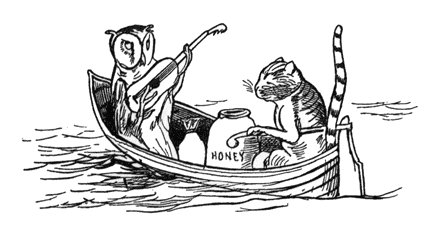
Image:Public Domain 
Edward Lear’s Own illustration of The Owl and the Pussy Cat

I must confess, though, that I hadn’t thought about this poem for many years until a friend quoted it in her newly-released paranormal romance novel. Having read and reviewed the book, it left me pondering the poem. 

In the poet’s Victorian setting it was classified as nonsense poetry, a bit of whimsy and silliness for the entertainment of children. 

I do wonder now, though, if there is a hint of rebellion against Victorian society’s moral and class standards in the unlikely union of those two mismatched creatures, and if that’s why they had to go away to be together. It could just be my 21st century sensitivities talking, but I’d like to think that maybe, back in the late 1860s, Lear was sending a subtle message to the morality police of the time that if two people were in love, they should be able to be together. 

I know people accuse English teachers of overthinking these things all the time, but just stop and think about it for a moment.

The owl and the pussycat weren’t supposed to be together, but they were quite free in expressing their feelings for one another and very happy together. Which of the two is male, and which is female? Or are they really even one of each? They do seem remarkably neutral in that regard, especially if you think of the strict gender stereotypes apparent in other Victorian literature such as that by Dickens, Thackeray, Trollope and the Brontes. 

It is just a curious thought, and I don’t want to shatter anyone’s enjoyment of a much-loved children’s poem. Maybe it is just whimsical make-believe. Maybe it’s not. We will never know. 

But it’s also a possibility that there are a whole bunch of people out there who might appreciate this poem a whole lot more on consideration of my uncommon little theory. Oh, I hope so!

Transition.

It’s the last day of March, which brings us to the end of Women’s History Month. In all honesty, I’m feeling a little sad about that.

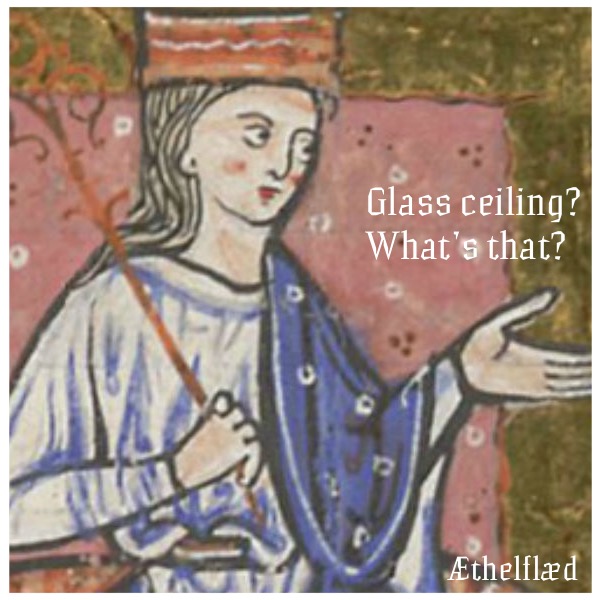
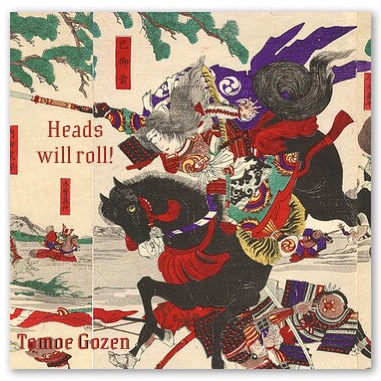
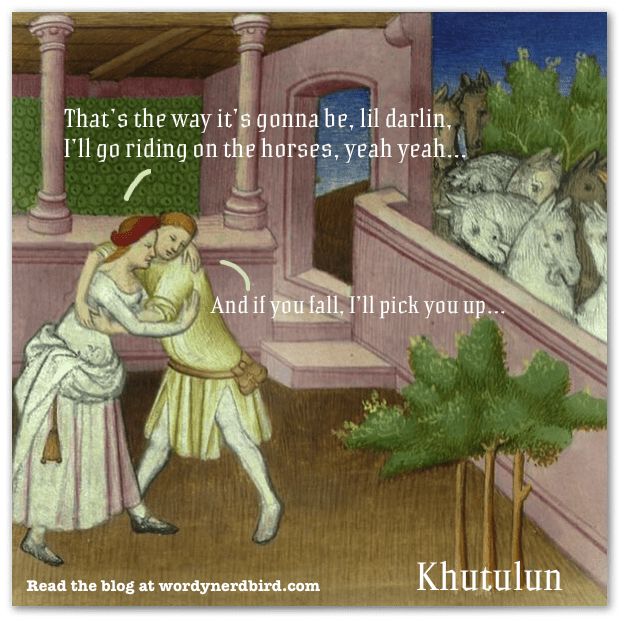
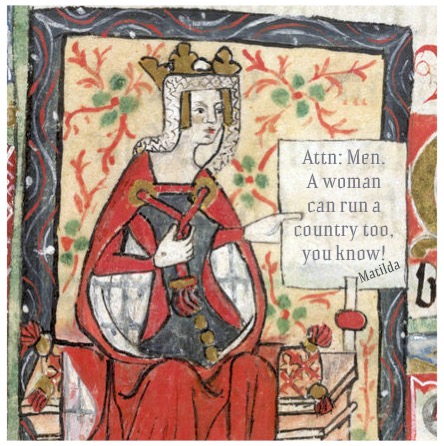
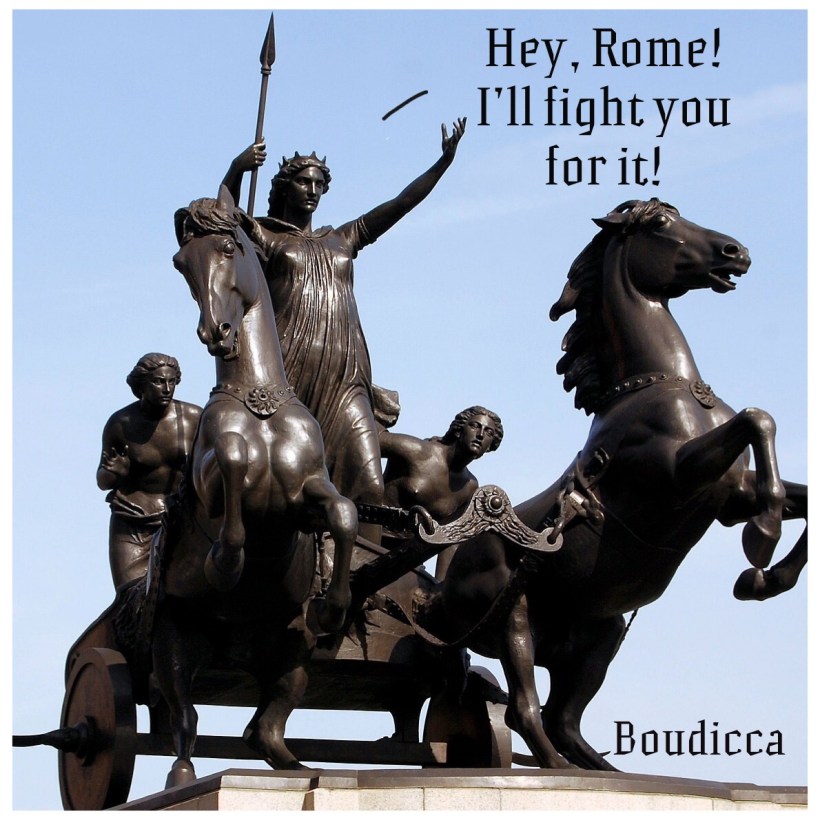
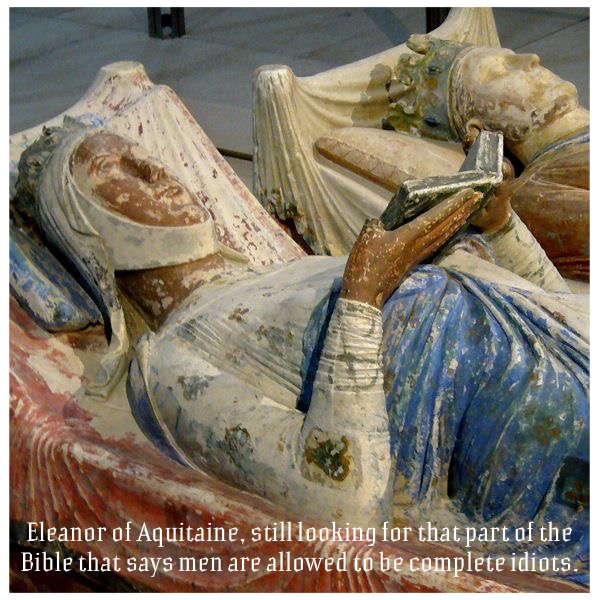
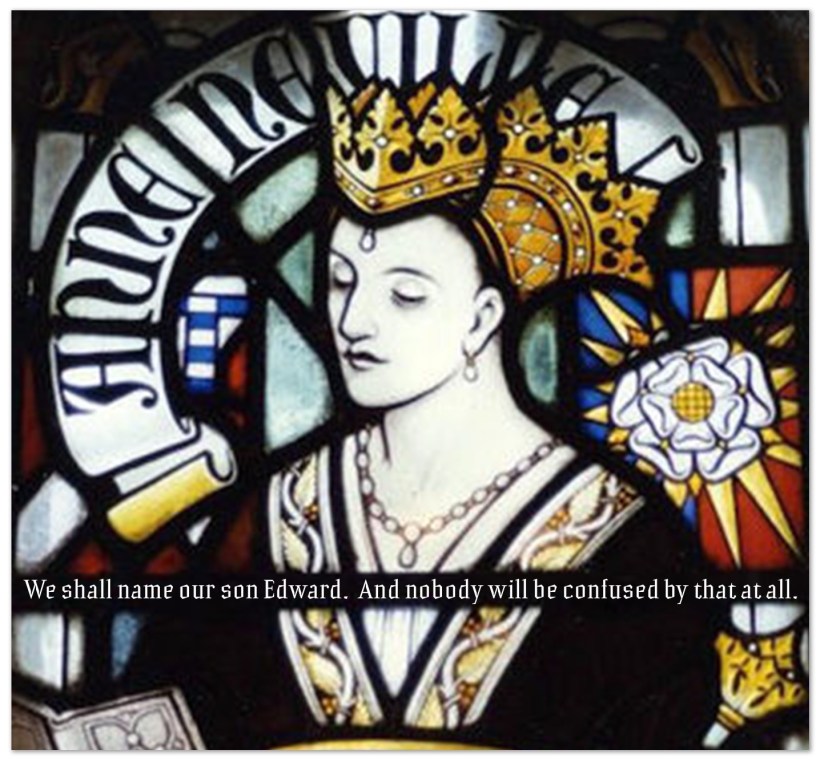
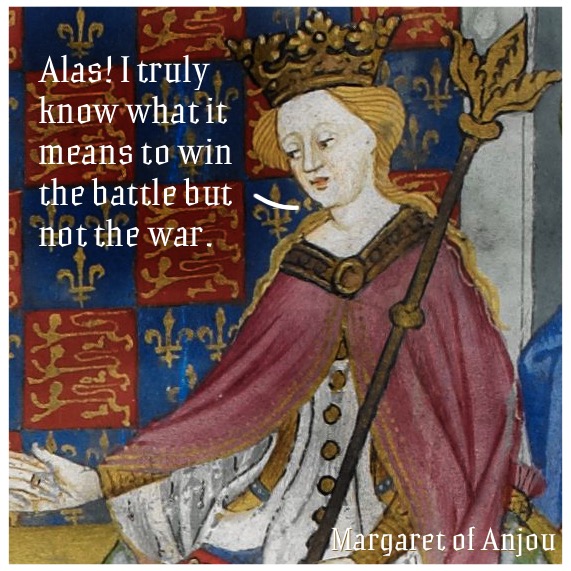
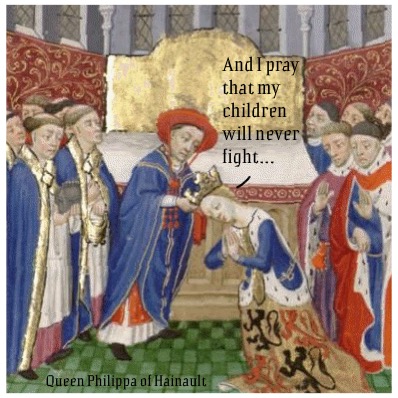
Blogging about some of the less well known  heroines of ancient and medieval history has been a most enjoyable occupation. I had fun creating some historical memes to accompany the posts and promote them on my social media, too.

I also loved writing about some of the courageous women who willingly took on situations of conflict, oppression and segregation in the 19th and 20th centuries.


If you missed any of those posts, they are easily found by clicking on Women, Women’s History Month or Women’s History categories and tags in the sidebar. 

With those great stories told, I am feeling a little like I do when I have just finished a great book and I don’t really know what to do with myself.

Yet I know that tomorrow  I will feel differently because there are some great things happening in April: not only is it (Inter)National Poetry Month, but it’s also a month-long celebration of Indie books in the Read Self Published group on Facebook. 

The first half of the Pead Self Published month will feature a specific genre or set of genres each day, which readers are free to peruse. The second half of the month will be focused on helping each individual visual reader find what they want to read. There will also be some giveaways, which are always fun — especially for the winners! 

Everyone is welcome to join in those events, which is aimed at showing readers what they want to read without the “hard sell” that many find offputting. 

I know with all of that going on, I will have some great things to share.  I will be posting some of my favourite poems on this blog, and Book Squirrel will be sharing some great reads and book suggestions in various genres.

On a personal level, there will be continued rehearsals for the show I’m in, a very well-earned and much needed two week long term break, and a camping trip over Easter that I am really looking forward to.

So, away with my sadness. I shall welcome April with open arms and a great deal of anticipation.

Women In History: More Fabulous, Famous Femmes

History is full of amazing women who had strength, courage and determination and showed men a thing or two about how things should be done.

There are so many great women that I would have loved to write about, but I couldn’t get to them all because I wanted to focus on featuring some of the less heroines of history with whom many people would not be familiar. I did find this excellent post that includes quite a few ladies who were on my list, so I thought I would share it with my readers on this final day of Women’s History Month.

I hope you enjoy this great post from Nerdome featuring some fabulous famous femmes including feisty royals Elizabeth I and Catherine the Great, and two of my literary loves, Jane Austen and Maya Angelou.

GigaWorld's avatarNerdome

Happy Women’s Day ! , Today we are going to remember , powerful and inspirational women who have been pioneers for women’s rights and racial equality and have defined the worlds of science, mathematics, aviation and literature.

Whether these famous females were inventors, scientists, leaders, politicians, or literal Queens, these  strong women undeniably changed the world for the better.

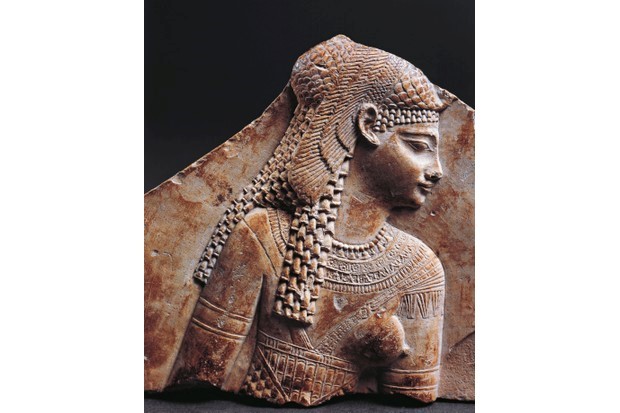
Cleopatra, 69 BC-30 BC Egyptian pharaoh

cleo.jpg

Cleopatra. (Photo By DEA PICTURE LIBRARY/De Agostini/Getty Images)

Final ruler of Egypt’s Ptolemaic dynasty, Cleopatra was more than the famous beauty her subsequent, simplistic portrayals often depict. A formidable, politically shrewd monarch, she was directly involved in the running of a kingdom that faced challenges on many fronts.

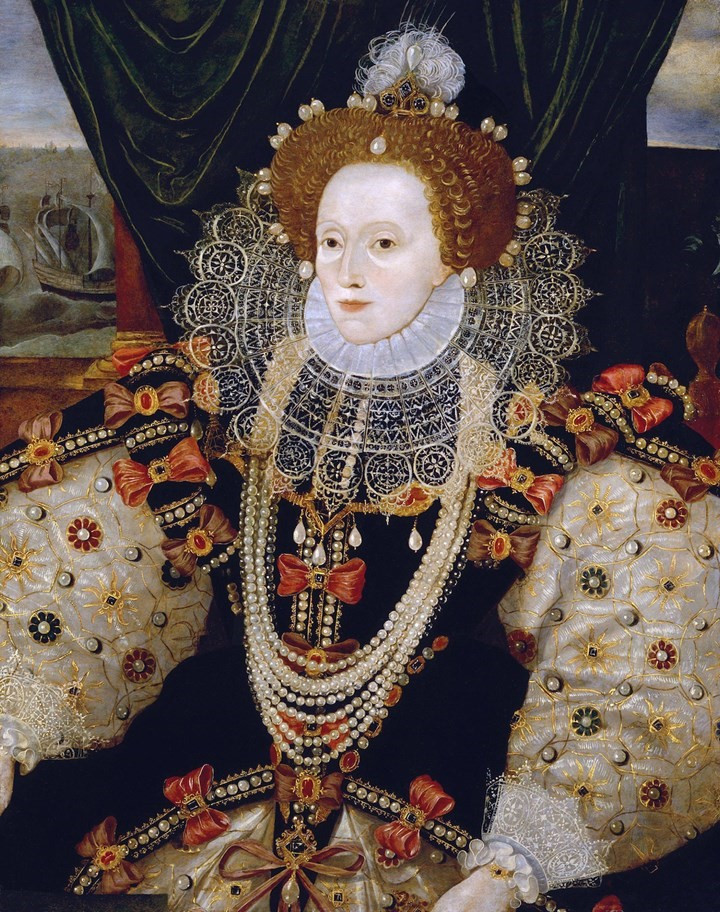
Queen Elizabeth I (1533 – 1603)elizabeth.jpg

“Though the sex to which I belong is considered weak you will nevertheless find me a rock that bends to no wind.”

The Armada portrait of Queen Elizabeth I painted in 1588

Elizabeth called herself ‘The…

View original post 1,523 more words

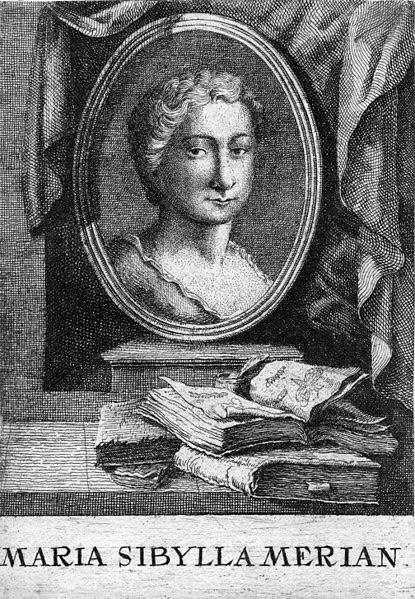
Women in History: Maria Sibylla Merian

Image: Public Domain

I had not heard of Maria Sibylla Merian until I stumbled across this post. I found myself amazed by her talent and intelligence, and her dedication to her study of butterflies!

My very great thanks to the author of this excellent ‘Women in History’ post at My Window Seat.