Zarf.

Zarf is a word you might never have heard or used, but it relates to something with which most of us are quite familiar.

These days, the word zarf refers to that cardboard or silicone band on a portable coffee cup that insulates it and stops your fingers getting too hot while holding your drink. Some call it a cup sleeve or a cup holder: zarf is a far more evocative and interesting word.

The word zarf comes from Arabic via Turkish, and simply means ‘envelope’. Thus, its adoption for a cardboard sleeve to go around a disposable coffee cup is logical, and it soon came to be applied to anything that went around or held a cup to make it more comfortable to hold.

Many people assume that the zarf was a late 20th century invention that came about with the advent of the disposable, followed by the the reusable, takeaway coffee cup. Those people are wrong.

The zarf began as a holder for a hot coffee cup in Turkey and across the Middle East as early as the 1600s.

Image credit: nokta_cizgi on Pixabay.

When the Ottoman Empire banned alcohol in the 16th century, coffee became the premier drink of the people. Within one hundred years, coffee houses became such important centres of gathering, culture and political discussion that the Empire banned coffee, too.

As any coffee lover could predict, that didn’t work. The people responded so profoundly that the Empire decided not to stand between the people and their caffeine ever again, but added a significant tax on coffee instead, in keeping with the age-old governmental proverb: if you can’t beat them, tax them. 
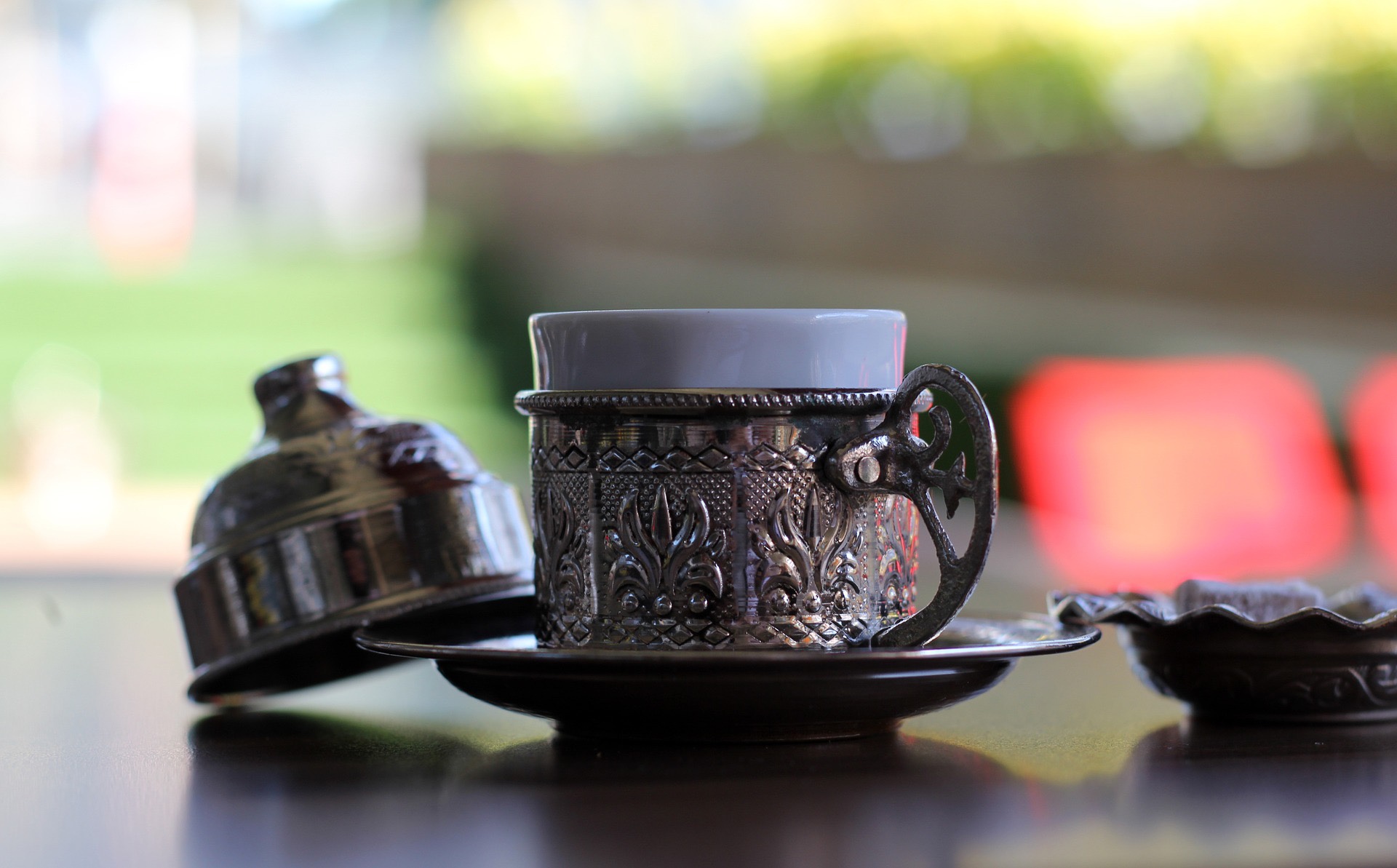
image credit: Activedia on Pixabay

As the traditional coffee cups had no handles, the zarf evolved as a functional holder, but soon became elaborately decorative. These are still used today.

Traditionally, the  more ornate and beautiful the zarf, the higher the esteem in which the drinker is held. An ornate zarf can indicate status or affection and respect, which means that a lover, a close friend or a family member might serve coffee in a zarf as beautiful as that served to a sultan or emir.

The zarf and the coffee served in it are just two of the many wonderful things we have inherited from Eastern history and culture. Coffee houses are still cultural and social hubs in the Middle East, a legacy reflected in the popularity of coffee shops and cafes worldwide.

Anyone inclined toward prejudice against Eastern and Muslim cultures should remember that when sipping their morning cup of joe: it would be impossible to live as we do without their contributions and influence.
Sources:
Macquarie Dictionary
The Story of the Zarf
What is a zarf? The bizarre story behind this everyday object.

Zarf.
#words #coffee #coffeelovers
Zucked.

I do the love the Macquarie Dictionary.

It is the dictionary of Australian English, expressive of all classes and of our multicultural society. Regular readers of this blog will be familiar with it because of my frequent reference to it in my word-nerdy posts.

Today, though, the editors excelled themselves.

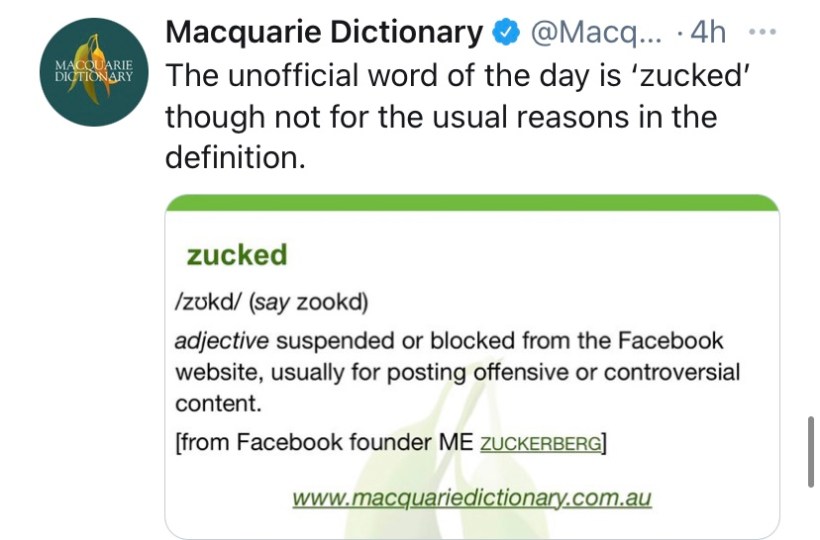
On the day when Facebook cut off access to all Australian news channels— sadly including sources of information relied upon by particular social groups such as  Indigenous communities, domestic violence support groups for women and families, and local information networks— as a result of a disagreement with the Australian government over market share and finances, the Macquarie tweeted that Australians have been zucked.

An obvious play on the F-bomb and Zuckerberg, it’s a clever new portmanteau word.

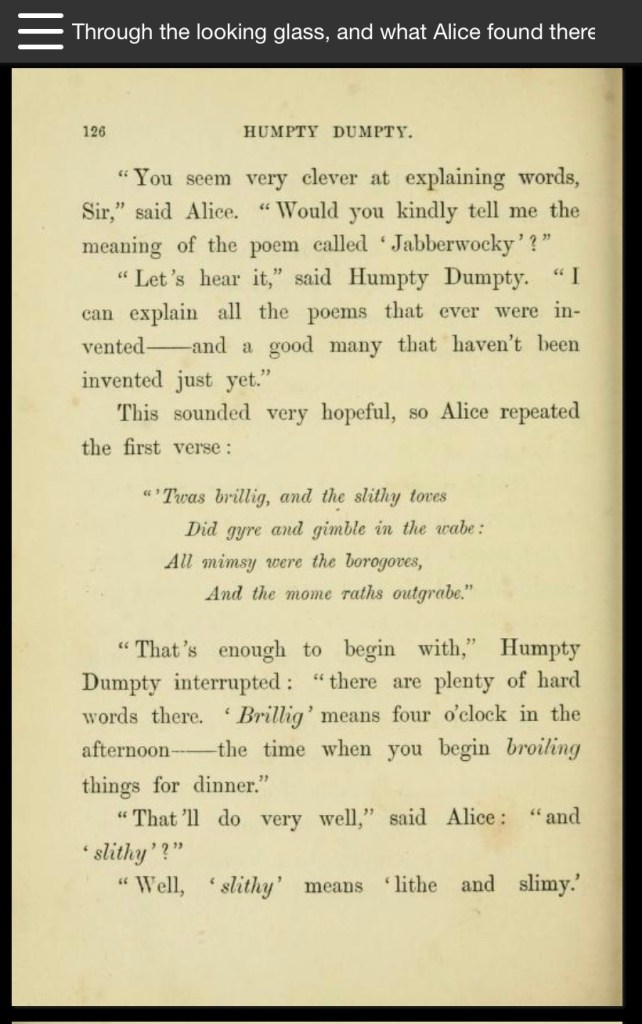
A portmanteau word is one created by blending two existing words or parts of words to create a new word. The name comes from a portmanteau, which is a type of suitcase that opens into two halves. This  dates back to Lewis Carroll’s ‘Through the Looking Glass’:

from ‘Through the Looking Glass’ by Lewis Carroll, courtesy of archive.org

We use portmanteau words every day, without many of us realising how they were created:

  • Botox —  botulism toxin
  • Brexit — British exit from the European Union
  • Bollywood — Bombay and Hollywood
  • Email — electronic mail
  • Fortnight — fourteen nights, so two weeks
  • Sitcom — situation comedy
  • Webinar — web seminar

English is actually full of these words, as it’s a form of wordplay that has been around for hundreds of years.

Sources:
Britannica
Etymonline
Macquarie Dictionary

Zucked.
#words #language #facebooknewsban

Pretty.

Photo by Simon Berger on Pexels.com

‘Pretty’ is quite a versatile word because we use it in a variety of ways:

One can drive a pretty nice car.
A child, a pet, a garden, and a picture can all be pretty.
Pleasant or attractive music , noises or words sound pretty.
An ornament or decoration can be called a pretty.
Something expensive is said to cost a pretty penny.
Someone in a safe or comfortable position is sitting pretty.
A person can pretty themselves up for a special occasion.
A request or plea is made more emphatic and emotive when someone adds pretty please.

On a more negative note, someone who is in trouble or said to be in a pretty mess.
If someone or something is only moderately attractive, they might be described as prettyish.
An event or a relationship can be pretty much over.

It is also interesting in that none of those meanings relate to the original meaning of pretty.

Pretty comes from the Middle English word ‘pratie’ which meant cunning, crafty, or clever”
This is related to a number of Old English words:

  • prættig – West Saxon
  • pretti – Kentish
  • prettig  – Mercian

These are all adjectives that mean cunning, skilful, artful, wily, or astute.

Before that, the words prætt or prett meant a type of trick, wile or craft. These words have a Proto-Germanic origin in *pratt- , which has closely related words in Old Norse , Frisian, Old Dutch, and Flemish.
Bt the beginning of the 15th century, pretty had evolved to also mean something manly or masculine, gallant, and something cleverly made.  By the mid 1400s, it had developed further to include the senses of attractiveness to the senses or holding aesthetic appeal, and of being slightly beautiful.

The use for pretty to express degree or amount developed by the mid 1500s, and pretty much had evolved by the mid 1600s.

A collection of pretty tho gs was called a prettiness in the late 1600s, while the use of pretty as a noun, such as “my pretty” developed in the 1700s, first in reference to things and then people.

The earlier meaning related to masculinity,  bravery and cleverness did an about-turn by the late 1800s, when the term pretty-boy came to be used as a derogatory term for any man deemed to be effeminate or suspected of being a homosexual.

In the early 1900s, pretty became a verb, meaning to make something or oneself more attractive.

It turns out that pretty is more than just a rather versatile word: it’s also fairly old and quite interesting.

Sources:
Macquarie Dictionary
Etymonline

Pretty.
#words #language #blog

Auld Lang Syne.

The fireworks over Sydney Harbour were sensational.

Last night, at the turn of the new year, we watched the fireworks over Sydney Harbour on TV, followed by this beautiful rendition of ‘Auld Lang Syne’ by the cast of the musical Hamilton.

Traditionally sung on New Year’s Eve, ‘Auld Lang Syne‘ is a song about remembering the friends and loved ones we have known in the past.

For the first time in my lifetime of knowing this song, it brought tears to my eyes: not only was 2020 brutal in numerous ways, I knew I was not the only one who was painfully aware of missing a beloved someone. I was blown away by the realisation that this song is as much about grief as it is about wistfulness, friendships of the past, and happy memories.

“Should auld acquaintance be forgot
And never brought to min’?
Should auld acquaintance be forgot
And auld lang syne?”

Robert Burns, 1796

The song we sing now is part of a longer song written by the Scottish poet Robert Burns in the late 18th century. Sadly, though, many people sing it without really knowing what it means.

Auld Lang Syne is a sweet little Scots phrase that means ‘for old time’s sake’. It translates literally to “old long since”.
This song was a reinvention of an older song. Burns wrote about his song in separate letters to different people:

“It is the song of the olden times, which has never been in print… I took it down from an old man’s singing.”
“Light be on the turf of the heaven-inspired poet who composed this glorious fragment.”

Robert Burns

Just as the original song was much older than Burns’ version, the words themselves are very old. Auld and lang both come from the Old English of the Anglo-Saxons, while syne dates to the 1300s.

It is a beautiful phrase to say: it feels nice in the mouth, and it sounds just lovely, especially when spoken with a Scottish accent.

From now on, when I hear ‘Auld Lang Syne’, I shall think of the wonderful people I have known and loved in my life, and of the happier times of the past, but I will also think of the beautiful words that have been passed down to use from auld lang syne, too.

I’d like to take this opportunity to wish all my readers a happier, more hopeful new year. Lang may yer lum reek.

Auld Lang Syne.
#words #AuldLangSyne #NewYear2021

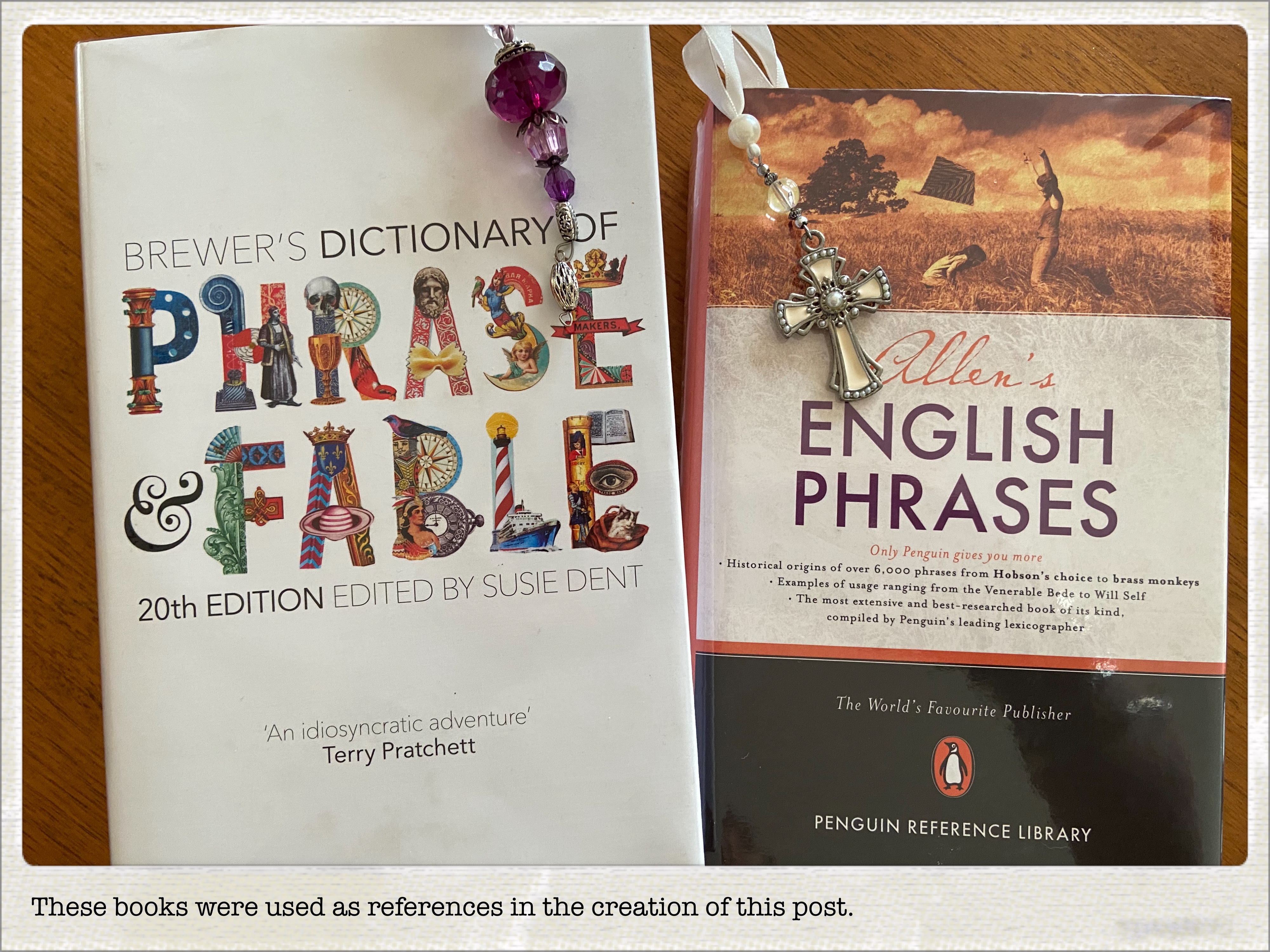
These books, both in my personal library, were used as references in the preparation of this post.

Tinsel.

Image by Adina Voicu from Pixabay

I love tinsel. It’s so glittery and cheerful and colourful. It’s instant Christmas decoration that you can pull out of a bag and strew around the room and it immediately feels more like December.

Tinsel seems like a fairly recent invention, and in its current form, it is. Its history, though, goes back five hundred years to the very fine strands of hammered silver used in Nuremberg, Germany, in the early 1600s. At first, it was used more often to decorate sculptures or statues than trees., but it’s ability to sparkle and magnify the light from the candles used to illuminate Christmas trees caused its popularity to grow.  

Flawed by both brittleness and tarnish, early types of tinsel were nowhere near as hardy or long-lasting as what we have now. Over time, various other tinsel-like decorations were made using various different shiny or sparkly materials: silver or gold thread, or pieces of shiny fabric, and foil made from lead, copper or aluminium. During the 20th century, the advent of plastics made production of what we now know as tinsel cheaper and easier, while the dangers of other more flammable or toxic materials caused them to decrease in popularity.

The word tinsel dates back to the mid-1400s when it was used to describe cloth with gold or silver thread woven through it.

It is this sense of the word that is used by Shakespeare in ‘Much Ado About Nothing’ where Margaret describe’s Hero’s fine wedding gown as being enhanced with a “bluish tinsel”.

The word came from Old French estencele, or estincelle — the es- was not pronounced– which meant ‘sparkle’ or ‘spangle’. From the 1590s onwards, tinsel was the name given to very thin sheets, strips or strands of shiny metal or fabric. This Old French word is related to the Latin word scintilla  meaning ‘spark’ , which in turn most likely came from the PIE roots*ski-nto, from which English also gets ‘shine’ and ‘scintillate’. It is also related to ‘stencil’.

By the mid 17th century, tinsel was also used in a non-literal sense to mean something showy or shiny, but not with any real value.

Sources:
Etymonline
The History of Tinsel
The Tumultuous History of Tinsel
This Is Why We Hang Tinsel At Christmas

Tinsel.
#christmasdecorations #Christmas #words

Why Are Christmas Songs Called Carols?

Photo by Blue Ox Studio on Pexels.com

I recently heard someone insisting that there was a difference between Christmas carols, which were all about baby Jesus and the angels, the star and the wise men, and Christmas songs, such as Jingle Bells or Rudolph the Red Nosed Reindeer.

It sounded like a feasible explanation, and the guy put up what seemed like a good argument– mostly due to his confidence and the underlying implication that he knew more about it than anyone else.
(See malapert and ultracrepidarian.)

That’s what triggered me to research the question. I confess it was more out of my desire to possibly prove him wrong than to actually know the answer that I took out my phone and searched Etymoline for ‘carol’. To my delight, he was wrong! It does seem to be a popular belief, but it’s not consistent with the etymology of the word carol.

Carol is a very old word that dates back to about 1300 in both its noun and verb forms.

At this time, the noun meant both a joyful song and a form of dance in a circle or ring. Both of these meanings probably came from the Old French word carole that referred to that kind of circular dance, which was sometimes accompanied by singers. The origins of the word before that are unclear, but it certainly does paint a festive picture.

It wasn’t until about 1500 AD – two centuries later – that the word had also come to refer to a hymn or song of joy sung at Christmas. Thus, the religious connotations of the word came much later than the secular meaning.

The verb form to carol first meant to dance in a ring or circular formation. The sense of the word that meant to sing with joy or celebration had developed by the late 14th century.

The verb carol did not mean to sing Christmas songs, often moving from place to place to do so, until the late 1800s. It does seem, though, that the practice of carolling is believed to be a much older tradition that was outlawed in Britain, along with the celebration of Christmas itself, by the Puritans who governed in the mid-1600s.

So, Christmas songs are called carols because of their festive and joyful nature. Given that a. the word was originally far more specific about the type of dance than the type of songs being sung, other than that they were joyful, and b. Jingle Bells and Rudolph are as festive in their own ways as Hark The Herald Angels Sing or Joy to the World, there is no reason to classify them differently. They’re all Christmas carols, and that’s that.

Sources:

Carole: European Dance
Etymonline
Medieval Circle Dance: Carole
The History of Christmas Carols

Why Are Christmas Songs Called Carols?
#ChristmasSongs #ChristmasCarols #blogpost

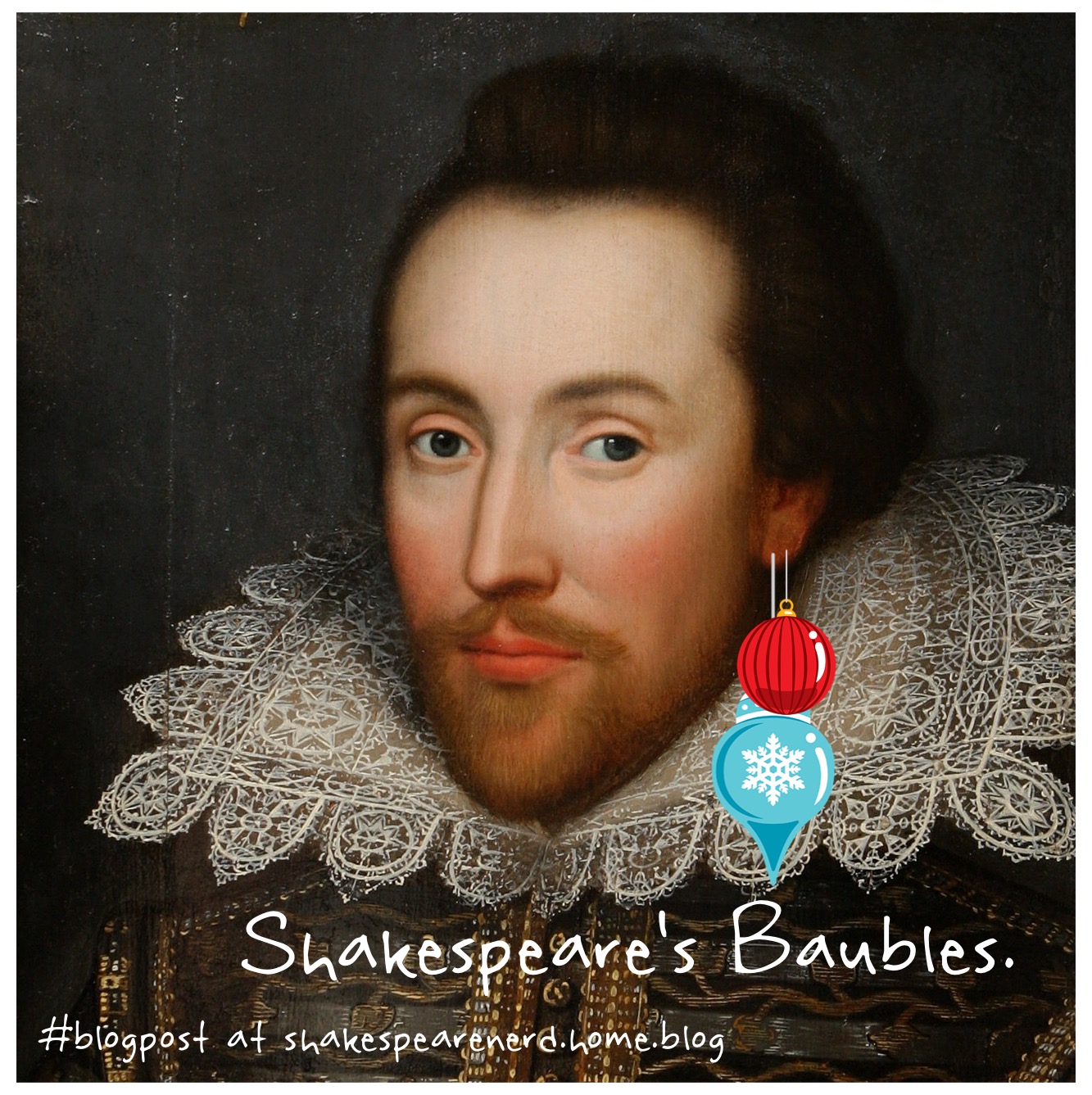
Shakespeare’s Baubles.

wordynerdbird's avatarShakespeare Nerd

Because it’s December and Christmas decorations are everywhere, I wrote last night about the meanings and etymology of the word ‘bauble’ on WordyNerdBird. I wondered then if it were a word used by Shakespeare. To my delight, it was indeed!

Interestingly, Shakespeare references one of the continued senses and the obsolete sense of the word, and creates double entendre with it for extra credit.

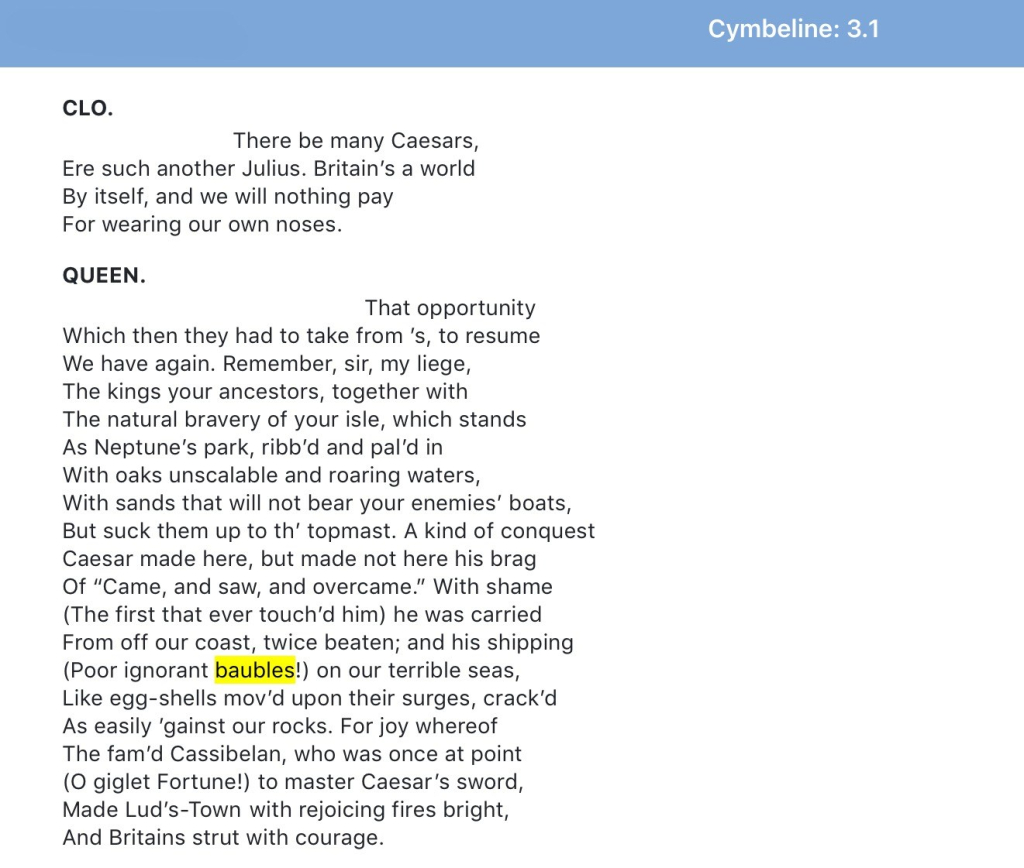
In ‘Cymbeline’, the queen refers to Caesar’s ships bobbing around on the sea as ‘ignorant baubles’, describing them further as being like egg shells, being thrown and broken against the rocks.

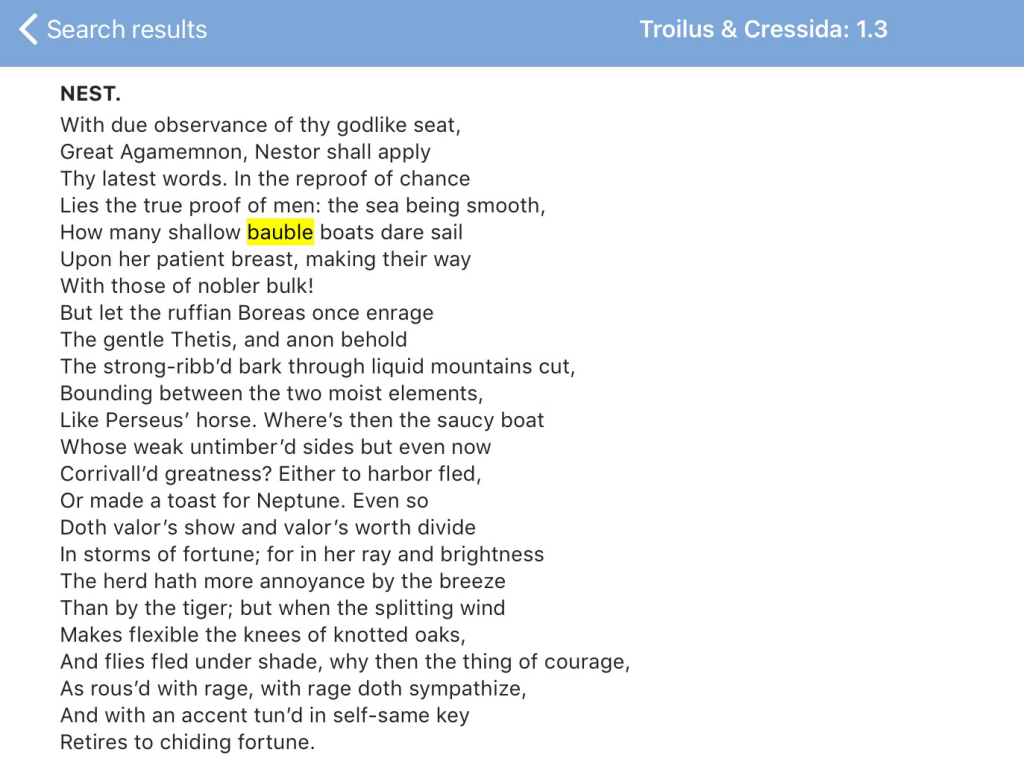
A similar reference to boats as ‘baubles’ is made in ‘Troilus and Cressida.

In ‘Othello’, Cassio shows his disregard for Bianca by describing her as a bauble that follows him around and tries to make him fall in love with her. That his companions laugh with him demonstrates that this use of the word…

View original post 193 more words

Baubles.

‘Bauble’ is a word used more in December than at any other time of the year.

Photo: Joanne Van Leerdam

On Saturday night we were out for a family dinner — we’re finally allowed to go out here, now, after months of lockdown and restrictions— and one of the young kids at the gathering commented to me that they liked the pretty balls on the light fittings, and then asked me if that’s what they were called.

I explained that they are called baubles, and added that the beads on her bracelet could also be called baubles because they are pretty things designed for decoration. They’re both different kinds of ornaments, and it’s cool how there are often multiple useful words to use for things.

This got me wondering about the origin of the word ‘bauble’. I suspected it was French, simply because of how it sounded,  but such assumptions are not safe. As always, my trusty Macquarie dictionary and Etymonline had my back.

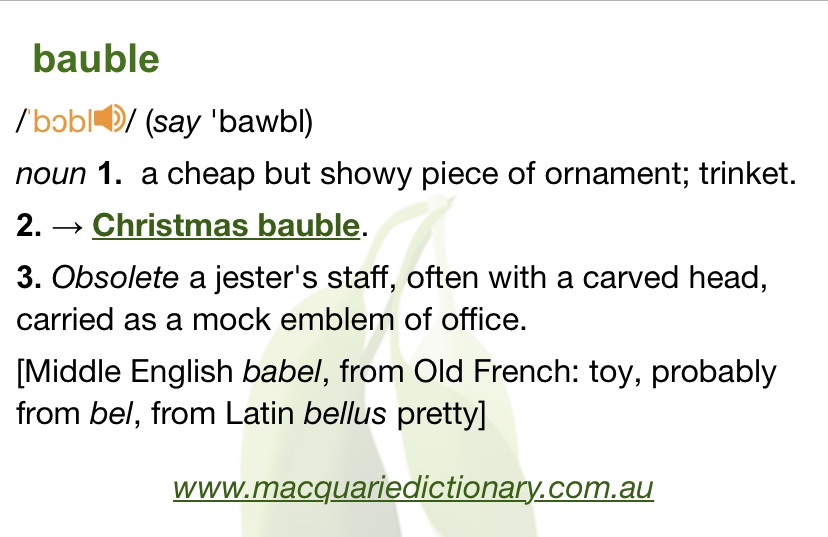
‘Bauble’ came into English in the early 14th century, meaning a decorative trinket or ornament. It came from the Old French word ‘baubel’ meaning a child’s toy or trinket. That may have come from the Latin word ‘bellus’ meaning “pretty” which gave us belle, as in ‘belle of the ball’,  or it could be related to ‘babe’ or ‘baby’. The sense of bauble meaning something of little or no value is later, dating from the early 1600s.

Long ago, ‘bauble’ was also the name given to a staff with a decorated or carved head, carried by a court jester and designed to mock the sceptre carried by a monarch. This meaning has fallen out of use, much as the position of court jester and the practice of a monarch carrying a sceptre have done.

So, now ‘bauble’ only relates to the pretty things. It is important to understand, though, that just because something can be called a bauble does not automatically mean that it has no value. It’s fair to say that while some baubles, such as Christmas decorations and the beads in a child’s bracelet, might usually be fairly inexpensive, there are other kind of baubles that tend to be more valuable.

Thus, the two meanings of bauble remain distinct, even though they can both apply at the same time.

Beyond Tired.

It’s almost the end of a school year that has been perpetually exhausting. Every teacher I know is beyond worn out.

I’ve used the words ‘tired’ and ‘exhausted’ so much in recent times, they have started to lose their currency. Not only are they becoming cliched, neither one really adequately describing the profundity or the long-term nature of the tiredness we’re feeling.

So, in the interests of communicating more effectively, I’d like to suggest some more expressive words to use instead.

Toilworn is a lovely word that reflects the nature of the tiredness that comes from hard work. It can also be used for something showing the effects of that kind of tiredness, or of the work that caused it.

Forswunk, as I’ve mentioned before, is one of my favourites. It’s a very old word that means exhausted by hard work.

Knackered is a term that is certainly expressive, and remarkably pleasing to say. I don’t know where else in the world people say this, but it’s certainly well understood in Australia as a term that means absolutely worn out.

If you have any other suggestions, I’d love to hear them.

Beyond Tired.
#language #vocabulary #tired

The Proud Man’s Contumely.

In Hamlet’s most famous soliloquy — the one that stars with “To be or not to be…” — the overthinking prince lists a number of problems that make life hard to bear. Most of these are things to which we can relate quite easily: oppression, love that is not returned, the wheels of justice turning too slowly, and people being rude to you.

Hamlet, Act 3, Scene 1

Most people, though, would read the speech and get to the phrase ‘the proud man’s contumely’ and be completely stumped.  It’s not a word one comes across terribly often. In all honesty, it’s probably only literature scholars and high school students studying ‘Hamlet’ that are likely to come across the word, and only one of those groups are likely to know right away what it means.

Contumely is a very old word that means disrespectful, offensive or abusive speech or behaviour.

Contumely is interesting in that most English words that end in -ly are adverbs, which describe verbs, but this is a noun. It doesn’t follow the grammatical pattern of English because it is not originally an English word.

It came into English in the late 14th century from the Old French word contumelie,. That came from the Latin word contumelia, which meant’ reproach’ or insult’, and is related to ‘contumax’ with means ‘haughty’ or ‘insolent’.

These days, we’re far more likely to use terms like ‘insolence’, ‘disrespect’ ‘scorn’ or  ‘abuse’ instead. 

Still, it could be fun to respond to someone’s arrogance with ‘I do not have to tolerate your contumely’. Hopefully, it would leave them as perplexed as those high school students reading Hamlet’s soliloquy for the first time.

It could also be useful to know that someone behaving with contumely would be described as contumelious.

This word evolved in the 15th century, so it follows the common pattern of the noun form being used first and the adjective coming afterwards.  Mr Darcy’s haughty dismissal of Elizabeth Bennet at their first meeting, a lawyer strutting and posturing in the courtroom, or one’s mother-in-law’s disdain for their general existence could all be described as contumelious.

References:
Vocabulary.com
wordsmith.org
Online Etymology Dictionary

The Proud Man’s Contumely.
#words #Shakespeare #language