Women in Horror Month: My Kind of Horror

I want to give my readers a reading experience that is original, well-written and provocative enough to give them the chills and shudders that they seek when they pick up a horror story.

One of the most powerful features of excellent Gothic, horror or macabre writing is the ability of an author to affect the reader on an intellectual and emotional level, even more than they do physically.

This is something that I aspire to in my own writing. I always try to engage the mind and the emotions, not just the reflexes that make one gag or feel their skin crawling, although those are certainly effects that I enjoy stimulating in a reader. I don’t write splatter for splatter’s sake – there has to be a deeper meaning and a greater purpose to it than that if I really want to connect with and move my reader on a psychological level. There needs to be a story, not just a scene, and the reader needs to be able to connect with that story in order for it to have full effect on them.
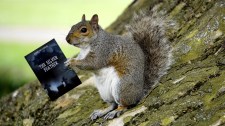
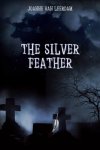
I sought to do this in ‘The Silver Feather’ by developing strong emotions in my main character’s responses to things that happened around him and to him – grief, shock, dread, surprise, horror, and fear. Phil is an ordinary guy with talents, strengths and flaws that make his situation one in which any of us could find ourselves. Not everything is explained in full, because as an author, you want the reader to be wondering what’s going on, and holding their breath as they anticipate what’s coming next. Things become clearer as the story progresses, but sufficient questions remain at the end because you want the reader to remain interested enough to read the sequel.
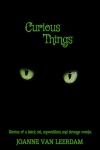
‘Curious Things’ is a little different in that it consists of thirteen stories, all featuring a black cat named Friday and his interaction with people who are all doing the wrong thing in one way or another. It’s not enough to blow them up or have them arrested – I want to make them face consequences, to be confronted by their conscience, and to pay the price for their less-than-savoury ways. Each story develops from some kind of superstition – do black cats bring bad luck? What would happen if the ground really did open up and swallow someone? Again, some questions about Friday remain unanswered, although it is evident that he’s not exactly your ordinary house cat. The reader doesn’t need to know everything to understand that Friday is actively involved in the strange events that occur, one way or another.

I do have plans for more horror stories this year. Friday will emerge from time to time, as he did on Christmas Eve and New Year’s Eve, when new stories were published on WordyNerdBird Writes. There may, or may not, be a sequel to The Silver Feather – the truth is that I haven’t decided on this just yet. There will be another collection of horror stories, two of which have already been written and edited, and another is well under way. I’m not setting myself a due date for any of these projects – they will happen when they happen, and I will work steadily toward them.

My goal in all of this is to give my readers a reading experience that is original, well-written and provocative enough to give them the chills and shudders that they seek when they pick up a horror story. I want them to hold their breath, and gasp, and recoil when they read my work. And I want them to come back for more, because that is the greatest compliment and honour that an author can receive from a reader.
WiHM9-GrrrlLogoTall-BR-S

So here’s to all the women writing horror, and to all the readers who love what they write. Here’s to all the authors whose horror works I love reading, and to celebrating them and their books during a delightfully creepy Women in Horror Month.

I’m dead keen. Are you?

Women in Horror Month: Inspirations

I want to acknowledge two authors who were my first inspirations with all things Gothic and macabre.

As a woman who both reads and writes horror, that’s an exciting prospect. I am set to be be featured on some blogs and websites this month, and I’ll be sharing posts featuring other authors on my social media, too.

First though, I want to acknowledge two authors who were my first inspirations with all things Gothic and macabre.

Emily_Brontë_by_Patrick_Branwell_Brontë_restored

Emily Bronte was the author of the Victorian Gothic classic ‘Wuthering Heights’ and some very dark, moody poetry. It was a significant change in the literature of the time – it was so dark and fraught with anger and tension that many readers really had no idea how to respond to it. I also think it is a sign of her literary genius that she wrote a book that became recognised world-wide as a masterpiece and a classic, despite the fact that there is not one single character who is likeable throughout the whole work!

She is also a very fitting figurehead for Women in Horror Month, given that she and her sisters couldn’t get their books published until they deliberately put masculine pen names on them instead of their own. For the most part, we’ve moved beyond such Victorian prejudices and embraced the  myriad wonderful books that have been written by women, although there are still some today who suggest that women who write horror should publish under their initials or a pen name to avoid such discrimination. How is it even possible that this is still a reality 170 years later?

Mary_Shelley
Mary Shelley wrote  the Victorian Gothic/horror classic ‘Frankenstein’ in a competition with  her future husband, Percy Bysshe Shelley, the poet Lord Byron and another man named John Polidori to see who could write the best horror story in a given time. Not only did she write something incredibly powerful and ground-breaking on a number of levels, she beat three men at their own game in the process.

These are just two of the women in the course of literary history who made an event like Women in History Month a possibility for female authors and for readers of all persuasions in the 21st century.
What a debt of gratitude and honour we owe them.

Exhausted.

Teacher exhaustion is real.

School has resumed after the six week summer break that we enjoy here in Australia. After completing my First Aid, Asthma/Anaphylaxis First Aid and CPR re-certs last week, followed by three full-on days of professional development and preparation, I had my first day with classes today.

The kids are great and, if the first day is any indication, I’m pretty sure we’re going to have a good year together.

But holy beaverschnitz! I am exhausted. I don’t remember being this tired at the start of a school year before.

Exhaustion
Exhaustion by Jessica Cross via Flickr 

I’ve come home every evening this week, fallen onto my bed and wept until I fell asleep like a two-year-old who still desperately needs that afternoon nap. I honestly have no idea why they resist that so much!

This afternoon a colleague asked me a question about something that happened last year, and I told him quite honestly that I was having trouble remembering yesterday. I can’t do social media. I can’t read. I can’t write. It’s a good thing I did my preparation for the semester over summer, because there’s no way I could get it done now given the shape I’m in at the moment.

There’s a running joke in my house – okay, so it’s actually not much of a joke, to be honest – that my husband makes me a double shot in the mornings because it’s my kick starter dose of Vitamin DHP – “Don’t Hurt People”. That double shot usually keeps me going most of the day. Today, it got me to about 10.15am and then my grip on reality started to crumble. I focused on my classes, tried to make all the words make sense, and dragged myself to lunchtime, and then downed 600ml of Coke Zero in record time – even for me.

Don’t get me wrong – I don’t want to sound like I’m complaining. I know it’s part of my job and it will pass. I’m just trying to explain why the blog has been quiet, why I’m not active on social media, and why emails are going longer than usual before I respond.

The only thing I can do effectively right now is hope I snap back into the rhythm and routine of teacher life quickly, because the pile of essays and papers in need of grading is going to start mounting up very soon.

Until then, though, if you see me staring into space or collapsed at my desk, administer caffeine… and please, be kind.


Focus: Looking Beyond The Cloud In My Silver Lining.

It’s time to focus my time and energy on what really matters: writing.

2018-01-14 20.35.35 HDR

A week of camping by the river has given me opportunity for reflection about the past year, particularly in terms of my writing. I’m proud of what I’ve accomplished – two new books of poetry, two deliciously macabre horror titles, and two reinvented fairy tale novellas in a completely unique and absolutely gorgeous anthology collection. I’ve also had poems included in a couple of themed anthologies and a number of magazines. I have received emails and messages when something I’ve written has moved or helped someone else in a powerful way, which gives me confidence that what I write is actually pretty good. At this point, I’m highly motivated to move on and write more.

There is, however, a cloud in my silver lining. In my experience, the biggest downside of being an Indie author is that the demands of social media can be a whirlwind – marketing, promotion, teasers, creating new material to keep up momentum, engaging so that others don’t think you’re only there to push your own stuff… It’s easy to get sucked into that vortex and start to believe that marketing is the be-all and end-all of your writing career.

Yes, marketing and promotion matters. I want to find readers who will be interested in my books. But it’s not the most important thing. The most important thing for me to invest my time and energy into is writing.

The time has come to redirect my focus. Of course, I will still engage in social media and promote my work there, but I need to do it differently so that I spend more time each day writing than I do trying to leap across people’s screens to get noticed. I’m going to work out how to use Facebook‘s mysterious algorithms, which are set to change yet again, to my advantage instead of the other way around. Furthermore, I’m not going to give them one cent to achieve that. I’ll keep doing what I’m doing on Twitter, as that’s working well for me thus far. My blogs will see some revision, and hopefully some renewed focus there will have good results.

There are so many stories and poems I want to write. Some of the stories are planned and outlined. Some are just ideas at this point in time. The poems happen when the muse overtakes me, but I have quite a few ideas written down so that they can simmer away on the back burner of my mind, developing slowly until they’re ready to go. A renewed focus on bringing my ideas to life on the page for others to read will serve me well: writing is the most satisfying and therapeutic thing I do.


If you appreciate this post, please click ‘like’ below. That one small click makes a big difference by helping more people see it. Comments and shares are also appreciated. 

ScreenHunter_434 Jan. 16 23.45Find out more about my books here.

Follow me on Facebook, Instagram or Twitter.

My New Years Resolutions for 2018.

My goals for 2018 are realistic and achievable… so here goes!

I’m not the world’s biggest believer in New Year’s Resolutions, because I’ve seen plenty of people make ridiculous decisions that fall over before January 5th.

Even so, I decided at this time last year to write down a few things I needed to do, and I did fairly well at achieving them.

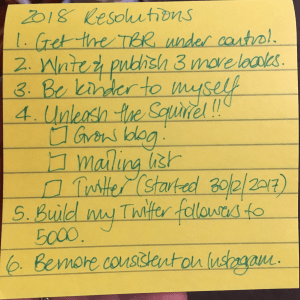
So, I’m doing the same thing for 2018. Here are my goals for this year, in no particular order:

2017-12-31 23.16.59

1. Beat the TBR Backlist – read and review the books in my kindle that I have not yet read. I haven’t counted how many books are on it… but I know it’s a lot.

2. Write and publish three more books.

3. Be kinder to myself. I am probably my own harshest critic and most demanding taskmaster. That needs to change.

4. Unleash the Squirrel! Grow his profile with Twitter, Facebook and the Book Squirrel blog with continued reviews, featured author interviews and a regular mailing list.

5. Build my Twitter list to 5000.

6. Be more consistent in posting to Instagram.

They’re certainly achievable, so here goes!

My New Year’s Resolutions for 2017: How Did I Do?

An honest response to the list of resolutions I wrote for myself a year ago.

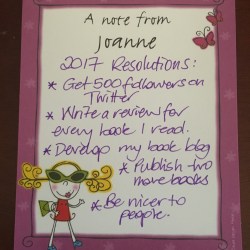
2017-01-01 13.58.14

Lots of people are talking today about New Year’s Resolutions. I haven’t always set a lot of importance upon them, but at the beginning of this year I did make some resolutions.

Today, I thought I should revisit them and evaluate my “performance”.


#1. Get 500 followers on Twitter.
Check! I started the year on about 317. Today, I have just over 3100.

#2. Write a review for every book I read.
So, there were two books for which I did not leave a review. They were… how do I say this nicely? The reviews would not have been positive, nor would they have helped to sell any further books.
I did, however, email both authors with my responses and comments. Hopefully they made some changes, hired an editor, and improved the quality of their book.
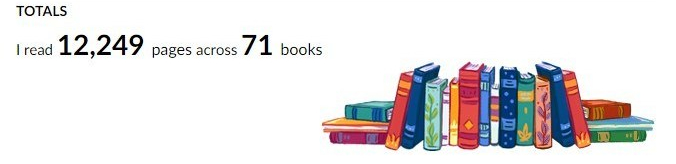
Goodreads tells me that I read and reviewed 68 books, so that’s a fair effort!
I’m checking that one off, too.

#3. Develop my book blog.Book Squirrel Reading TSF
This is something of which I am very proud. Book Squirrel has spent the year featuring books, authors, new releases, and book reviews. On December 15th, Book Squirrel announced the inaugural Golden Squirrel Awards for Indie books of excellence.
This is a definite check!

#4. Publish two more books.
Done! In fact, I added five (Five! How the heck did I manage that?) more books to my author’s shelf, two in a new genre for me, and two novellas in a wonderful collection of reinvented fairy tales. I also have two poems published in two different anthologies, one on forgiveness and one on fairy tales and folklore. Whew!

#5. Be nicer to people.
In all honesty, I’ve tried. I haven’t always succeeded. But when I wrote this on my note almost a year ago, I had no idea just how much grace or forbearance I was going to need in order to survive some of the treatment I’ve received this year, either.
I want to give this a check, but with a “work in progress” disclaimer.


All in all, I think I’ve done okay. Some of these will feed into my resolutions for 2018. I’ll be posting about those tomorrow!

If you have suggestions, or reflections on your own resolutions, I’d love for you to leave a comment below.

2017: My GoodReads Year in Review

There are a number of things I quite like about Goodreads.

 So, I enjoyed looking over the page of stats they collated for me about what I’ve read in 2017.

As a reader, I enjoy Goodreads as book-nerdy social media.

I like being able to organise and “shelve” my books so that others interested in those sorts of books can find them easily.
I like being able to leave a review and a rating for those books so that people who find them can know more about them and hopefully choose to read them.

I like the goalsetting element of the “Reading Challenge” where you set a number of books that you plan to read in a year, and then the website keeps track of them for you.

I like it that my connections there can see what I’m reading and when I’ve left a review.

And I like being able to recommend a book I’ve read and enjoyed to friends with similar interests and tastes.

 So, I enjoyed looking over the page of stats they collated for me about what I’ve read in 2017.
ScreenHunter_428 Dec. 27 15.33

I have read a wide variety of books this year – short and long, popular and… less well known, from a wide range of genres. Historical fiction, adventure, horror, romance, mystery, thriller, contemporary, fantasy, sword and sorcery, magical realism, urban fantasy, kids’ books, Christmas stories and humour… they’re all represented. I’ve found some new all-time favourites and broadened the horizons of my knowledge and imagination.

ScreenHunter_429 Dec. 29 16.18

Reading through the highlights and looking at the great cover art of the books I’ve read gave me a lovely sense of achievement and brought back some great memories of books I really enjoyed.

ScreenHunter_428 Dec. 27 15.36ScreenHunter_429 Dec. 27 15.36

If you’re on Goodreads and would like to connect, you can find me there at

WordyNerdBird’s “One Click” Authors.

There are many authors whose work I love reading. My to-be-read list is populated with dozens of books by fine writers, many of them Indies who write every bit as well as traditionally published authors.

Some, though, are on a special list. These are the writers whose book I will buy with the “Buy with 1 click” button on Amazon without needing to read a blurb, check out the cover, or read reviews to see what others have to say. 

Without an exception, these authors are brilliant writers who deliver original, interesting and entertaining books every single time. I love the way they use words and the ways in which they stretch and stimulate my mind.

These are my “One Click” authors – in no particular order of preference. They’re all at the top of the list.

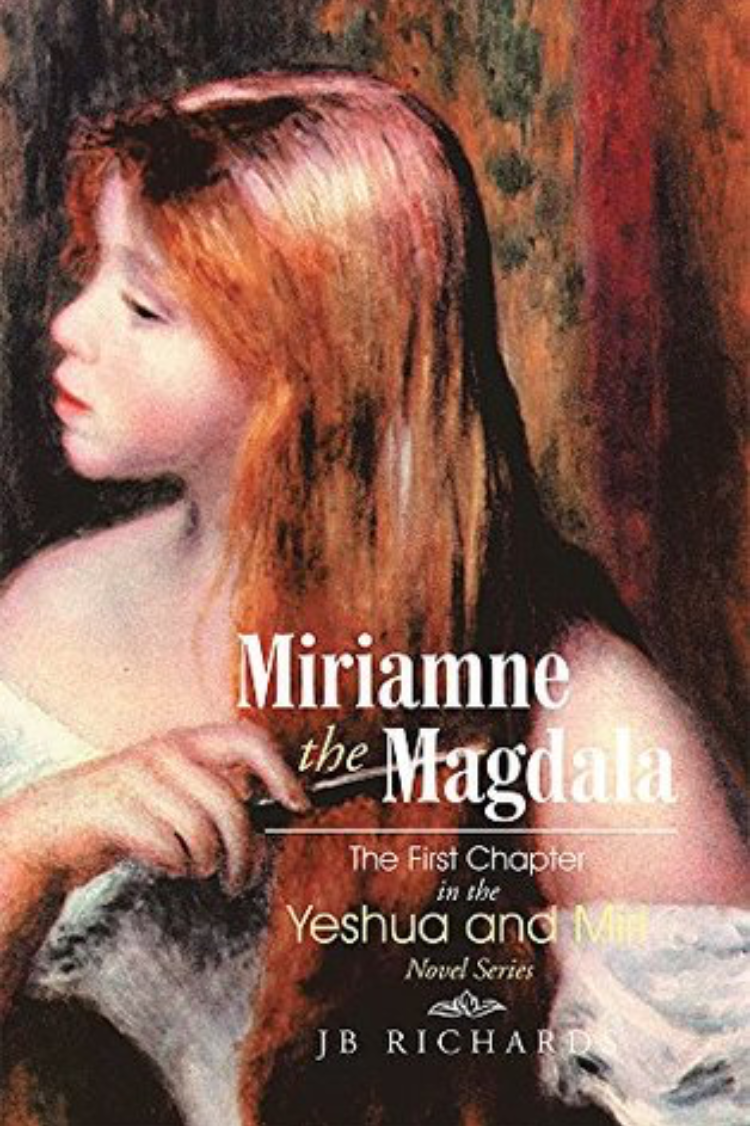
J.B Richards – historical fiction
Eva Pasco – contemporary fiction
R.M. Gauthier – mystery/thriller, romance
Aliya DalRae – paranormal mystery/romance
Lyra Shanti – sci-fi/space opera, poetry
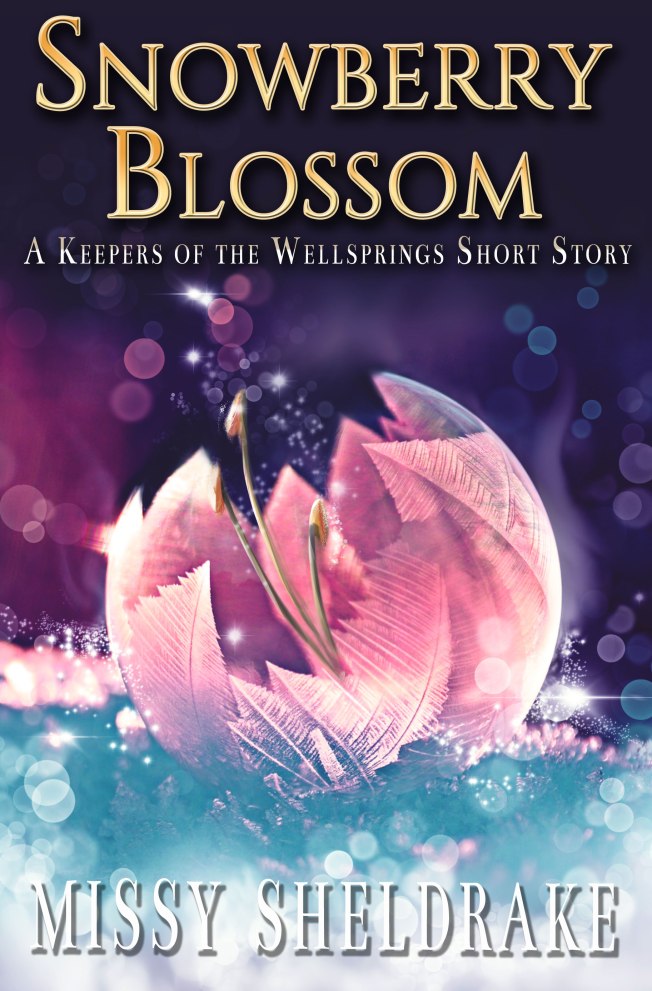
Missy Sheldrake – fantasy
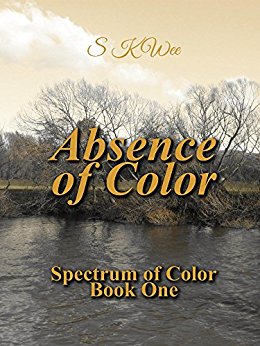
S.K Wee – fantasy
T.J. Green – fantasy
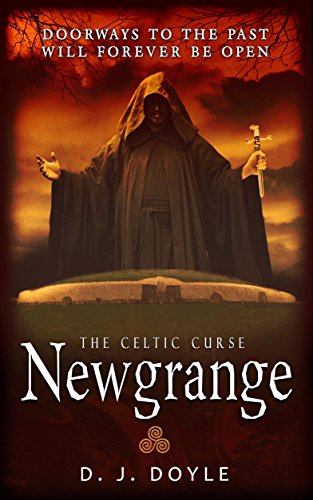
D.J. Doyle – horror
Nikki Landis – romance, mystery, horror
Eric Tanafon – fantasy with a paranormal element
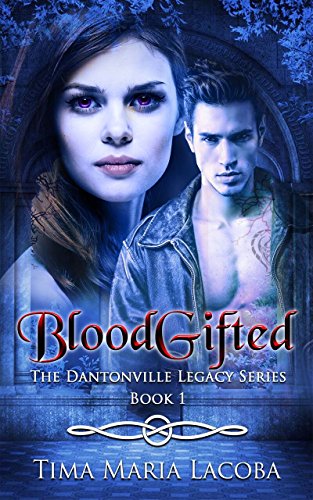
Tima Maria Lacoba – paranormal
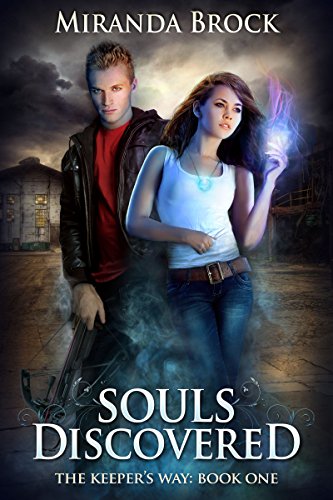
Miranda Brock – contemporary fantasy
India Emerald – magical realism, contemporary fiction
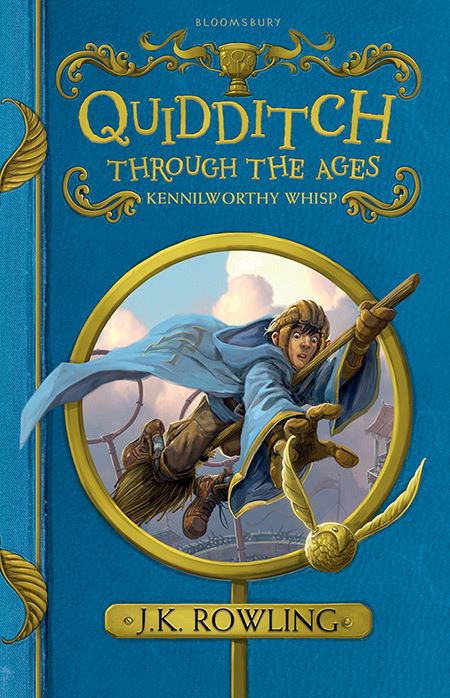
Neil Gaiman – fantasy, macabre
J.K. Rowling – magical realism, fantasy

Barbarians: who knew?

What does a teacher do when a student calls another a name that is just plain wrong?

Yesterday one of my students called another a ‘Philistine’. I know he meant to suggest that his friend was uncultured and ignorant, and that is what many understand the word to mean.

So, being the time-and-knowledge-generous history nerd that I am, I took a break from our study of World War I and explained to my class that what he meant to suggest is not what the Philistines were at all.

The Philistines were a cultured and wealthy civilisation that lived in Canaan between the coast of the Mediterranean Sea and the biblical kingdoms of Judah and Israel. They lived in and between five cities: Gaza, Ashkelon, Ashdod, Ekron and Gath. The same region bears the name ‘Palestine’ today – a name derived from the Philistine civilisation. The ancient Philistines enjoyed enough military prowess to hold their own against Lebanon, Syria and Egypt at different times, fighting with spears, straight swords and shields. When not fighting wars, they lived in elaborate buildings and made their own pottery.

It doesn’t really seem consistent with the idea of ignorance, does it?

Sadly, this is not the only case of such name-calling being so ironic.

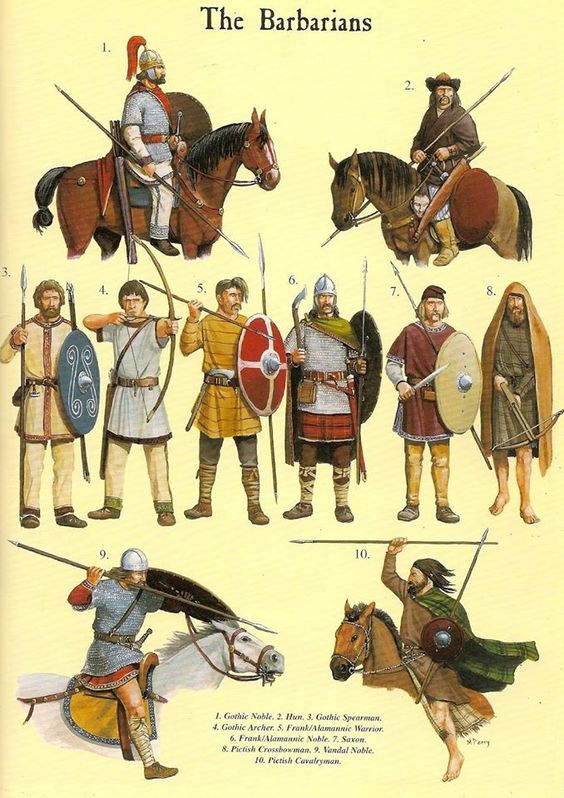
Barbarian is another term which is used quite wrongly. It’s used to suggest that someone is wild or uncivilised.  Historically, the Barbarians were any number of Germanic tribes that moved throughout Europe in what many refer to as ‘The Dark Ages’, even though they weren’t so dark at all.

Barbarians
The Barbarians. https://www.pinterest.com.au/pin/416794140495615038/

Really, if you look at them, they don’t look so incredibly different from one another, nor from the folk our history books tell us were our own ancestors. It may surprise you to know that the Barbarian tribes included the Angles, Saxons and Picts who set up shop in Britain after the fall of the Roman Empire and eventually became some of the most devotedly civilised people on earth. The Gauls became the French, the Geats became the Swedes, and the Danes went on to give us Hamlet, pastries and an Australian princess.
(Disclaimer: I don’t know if the part about the pastries is true, but they must be called danishes for a reason… right?) 

The Vandals, for example, may have left a trail of destruction in Gaul and Iberia, but they only made a bit of a mess of Carthage before taking it as their capital and making extensive renovations. As a military power, they had skill and knowledge – you’ve actually got to hand it to anyone who could not only withstand the power of the Roman Empire, but also hold their own in so many battles over such a long period. And when they weren’t busy fighting the Romans, they were highly cultured, enjoying music and poetry. They conducted a lot of industry and trade in their North African kingdom. It really was not about breaking or ruining stuff at all.

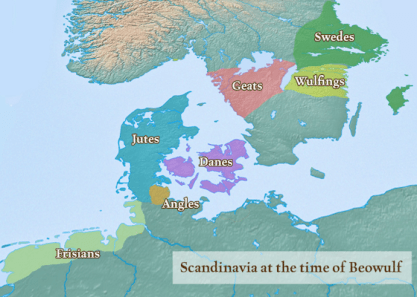
The Goths, oddly enough, did not sit around in dark clothes wearing black makeup. The name “Goth”  was derived from ‘Geats’, the tribe famous for its honour and pride in the Anglo-Saxon legend of Beowulf,  as told in the oldest English poem in existence.

Scandinavia at the time of Beowulf.
Map Prepared by Louis Henwood for ‘The History of English’ podcast, episode 42

They actually had sophisticated architecture and beautiful mosaic art. They made and wore intricate gold jewellery. They were farmers, weavers, potters, blacksmiths. They followed intricate burial rites, making sure that the graves always pointed north.

Related to the Goths were the Visigoths, meaning “Goths of the west” who ruled Spain for a couple of centuries. They built churches that still stand today, decorated their buildings with intricate filigree art and stone arches. They were skillful metalworkers and jewellers.

It seems to me that we do history a disservice by misusing these terms in such a way.  Connotations are not always the easiest things to track through history, but these seem quite unfair. I suspect that such practice grew out of the fear of anything or anyone different, foreign and/or pagan – a concept with which Western society is still painfully familiar.

By the end of all that, the kids’ eyes had glazed over a bit, and there was a fair bit of smiling and nodding going on. I don’t think they will be calling each other Philistines again, though. So… mission accomplished.


If you’d like to know more about Beowfulf and the Geats, you could listen to a fabulous episode from ‘The History of English’ podcast. It’s a great podcast, and if you’re interested in the development and history of the English language, or the relationships between language, people, and places, you should consider subscribing. 

Two-sday Surprises.

Sometimes, a small surprise can mean a whole lot more than its face value might suggest.

This morning didn’t seem any different than most when I left the house to head to work, but it proved to hold two lovely surprises.

The first surprise came in the form of a shop assistant who remembered me as her teacher from a number of years ago, and happily recalled the things she had studied and learned with me. An adult now, and with a different hair colour, I had not recognised her, but she knew me straight away.

It was nice to hear that she thought the books we read and the lessons we drew from them were valuable, and that history classes were interesting. It was wonderful to see that she had grown up into a confident, friendly and polite young woman with a lovely personality.

Of all the fond memories she recalled, though, one in particular had a profound effect on me: “You were the one teacher I ever had who showed me that it was okay to just be me, because that’s who I was meant to be. It’s something I have never forgotten.”

Wow! What a privilege to hear a former student say those words. I have struggled for many years with self acceptance, and as a teen I knew full well the agony of not fitting in with a particular crowd. Even then, I had the strength of will to resist peer pressure and not buy into many of the pitfalls that offered themselves to me at bargain prices and opportune moments. But that didn’t mean I was free of the wish to be someone or somewhere else – a desire that has recurred several times since.

Yet, somehow along the way, I managed to communicate something valuable about self acceptance to at least one teen in a similar situation.

I wonder if that knowledge would appease or satisfy those who think I push too many boundaries. Being part of a fairly conservative school, church and family, I take both pleasure and pride in not exactly looking conservative. I don’t intentionally break the rules, but I don’t mind testing their limits. My opinions often differ, and my willingness to assert them can make others uncomfortable. I don’t see that as a problem, though. There is merit in challenging people to see different perspectives and to accept differences. I’d like to think that people might become so used to my differences that I will need to think of something new to do to keep them on their toes.

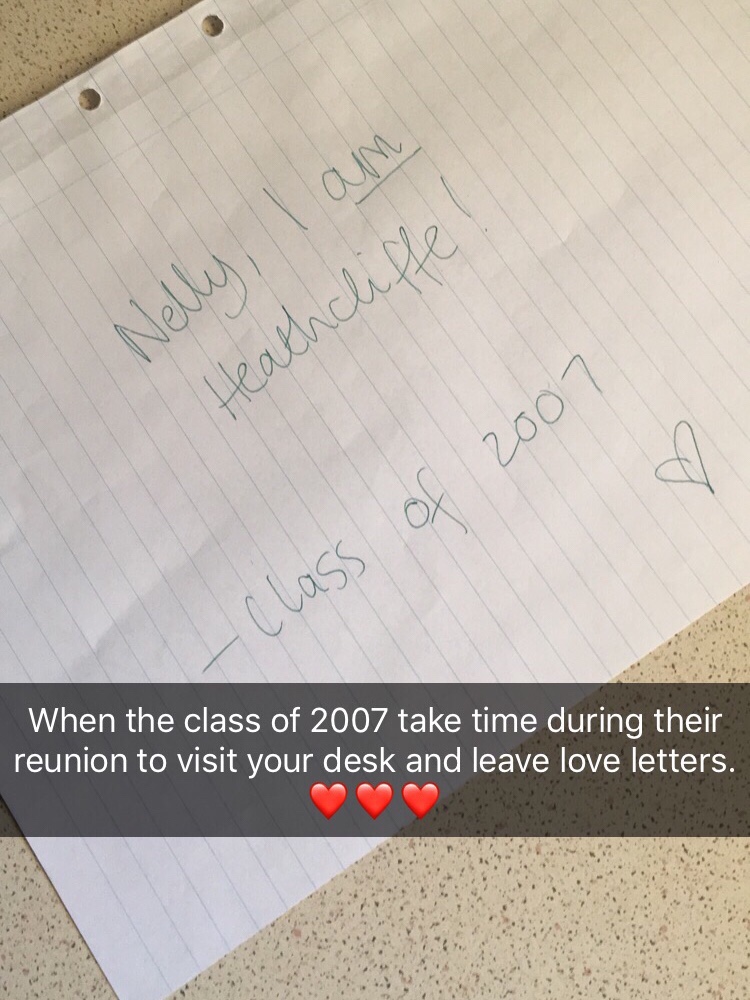
My second surprise was a note on my desk from ex-students who had a reunion on Saturday night. I attended the reunion: it was a lovely evening of catching up and reminiscing. I didn’t realise, though, that they had left me a love letter on their tour of the school. How gorgeous that they still know how to make their English teacher happy and proud.