Why the W is called ‘Double U’ instead of ‘Double V’.

Why do we call the W ‘double U’ instead of ‘double V’?

For the answer to this, we need to go back to Rome, where they made no distinction V and U, nor between the letters I and J, even though one of each pair is a vowel and the other a consonant.

This means that in Roman times, these pairs of letters– U and V , and I and J –were what we call allographs. An allograph is an alternative form of the same letter, like upper and lower case letters, or the same letter in plain or italic, or in different fonts. Replacing one with the other does not change how the words are said.

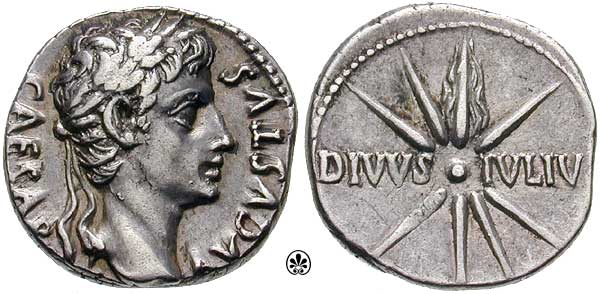
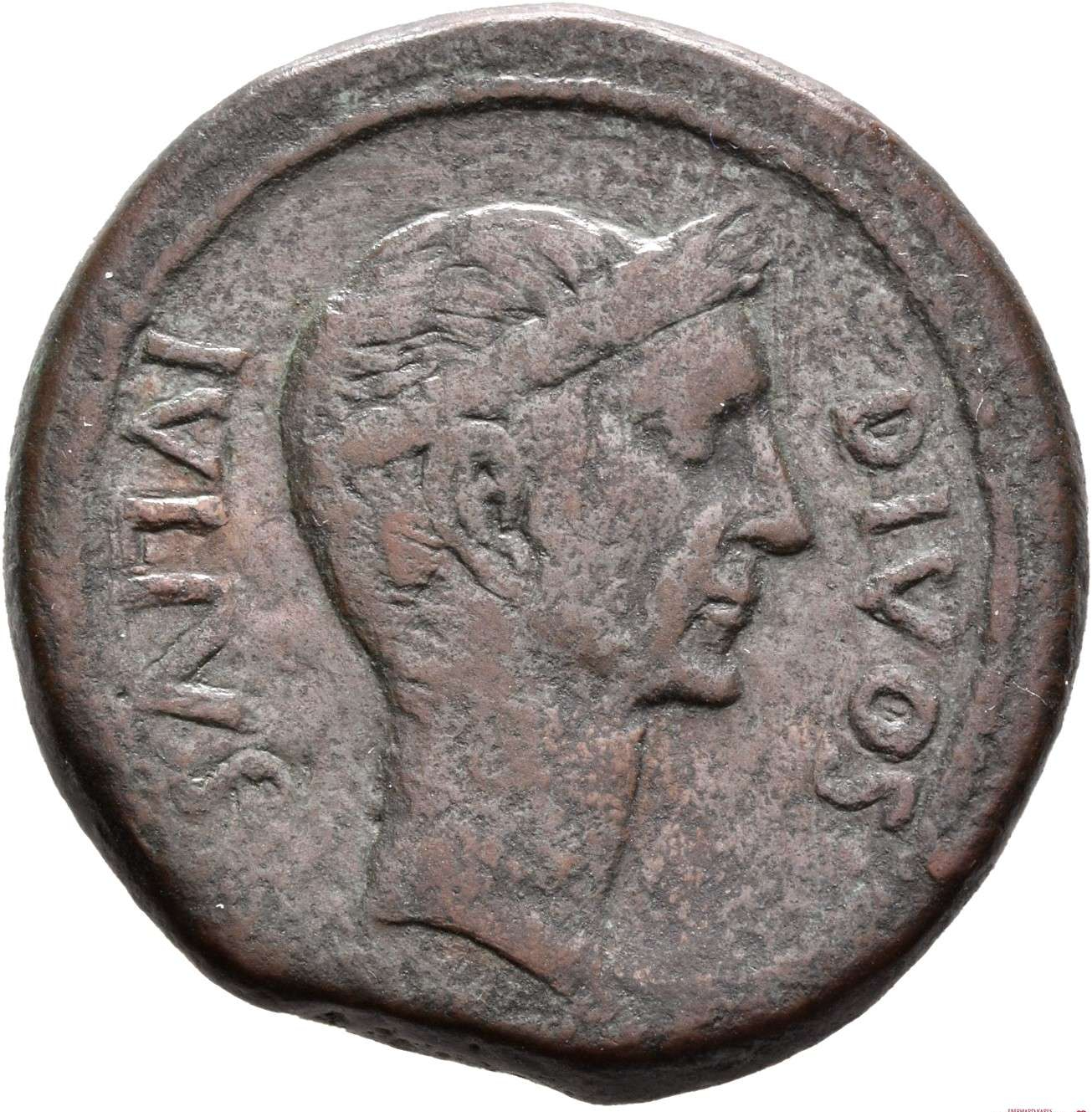
Thats why you’ll see AVGVSTVS instead of AUGUSTUS or IVLIVS instead of JULIUS on old Roman coins.

Images used under Creative Commons Licences: Image 1 Image 2

The Romans did not have a letter for the /w/ sound because they didn’t really use it. In contrast, the Anglo-Saxons of early medieval England used the sound a lot in their language, so they needed a letter for it when they started writing things down using the Latin alphabet instead of the runic alphabet they had used previously. They originally wrote it as uu– which makes sense as the /w/ sound comes right at the end of the long /u/ sound– but then reverted to using the runic character wynn to represent the sound. When the Normas arrived in England in the 11th century, they brought back the usage of the conjoined uu to represent the /w/ sound, and it literally became the double U.

Even in today’s English, the previous identity of U and V is reflected in the varied spelling of similarly pronounced words such as flower and flour, guard and ward, or lour and lower.

Sources:
Grammarphobia
Lexico.com

Why the W is called ‘Double U’ instead of ‘Double V’.
#English #language #history

Duplicity: The Many Unattractive Faces of Scott Morrison

A person who shows different sides of their personality to different people or in different situations is commonly called two-faced
Another word for this is duplicity

duplicitous person varies the way they act and speak in various situations in order to conceal the truth and try to make themselves look good, to save face, or to increase their popularity. 

The problem with that kind of behaviour is that nobody likes being lied to and, sooner or later, the truth will expose the lies. 

It must be enormously difficult for any person to maintain the deceit, and exponentially difficult for someone in a position of power or celebrity. 

Scott Morrison, the Prime Minister of Australia, is also our Prime Example of Duplicity. Like most politicians, he has made an art of duplicity for years, but it seems that now the carefully constructed facades are crumbling. 

After two months full of allegations of heinous behaviour by members of parliament and other employees of the government, one after another after another, closely followed by revelations of concealment and obfuscation by others in positions of power and responsibility, Morrison’s default ‘Thumbs Up’ and ‘Daggy Dad’ personas are insufficient for dealing with the fallout of the current scandals, both in Parliament and in the media. 

He says one thing to reporters he feels are antagonistic, another to reporters he thinks are his allies, and something else in Parliament. You can bet he says something different again behind closed doors when talking with his colleagues, and something else entirely when talking with those who have been accused of a range of very nasty behaviours or of sweeping the offences under a very large piece of Parliament House carpet.

What we are seeing now is an astounding array of very unattractive faces of Scott Morrison:
Overconfident Morrison is glib and supercilious. 
Angry Morrison is vindictive and thoughtless. 
Mansplaining Morrison is condescending and dismissive. 
Misogynistic Morrison assumes the men are telling the truth and the women are always lying— and this is, perhaps, the most telling of all his faces. 

The man who declares that an alleged rapist and another man accused of saying horrible things about his victim are both innocent, without listening to or looking at a scrap of evidence and without any official investigation into either allegation, is disregarding the law  and demonstrating complete and utter disregard for the experiences of every woman who has ever been harassed, abused, assaulted, raped, or gaslighted. He is bringing the government, the political party, and the law of the land into disrepute. 

While Morrison proclaims that his wife and daughters are the centre of his world, his actions communicate something different to Australian women: he and his own power are in fact his first priority. He speaks warmly about the women in his family when he doesn’t want to appear entirely heartless, but his emotions are never for the victims of the plethora of offences against women committed by the other privileged and powerful blokes he knows. 

If he ever stopped for three minutes, like his wife Jen suggested,  to think about any of the women who have been raped, assaulted, publicly denounced as liars, and vehemently slut-shamed over recent weeks as if they were his daughters, it doesn’t appear to have had any effect on his determination to protect the perpetrators in Parliament House. It hasn’t stopped him trying to deflect attention with corny staged photo opportunities and questionable claims about how well Australia’s Covid-19 vaccination program is going. It hasn’t stopped him attempting to explain it all away as storytelling and hysteria, or tut-tutting about the complainants’ mental health. 

Like many Australian women, I am angry at the continued failure of our nation’s leader to make a meaningful stand on the current scandals rocking the nation. I am furious that the accounts of victims are dismissed, and that there is no responsibility taken at any level for the absence of belief and the lack of justice experienced by victims. I am disgusted that the women themselves are blamed for what has happened to them. I am sickened by the fact that this goes all the way to the highest levels of the Australian government: Members of Parliament and SenatorsCabinet ministers, senators, the Attorney-General and the Prime Minister have both had their integrity besmirched in different ways. 

These issues aren’t going away anytime soon. The credibility of the Prime Minister and his government are damaged, probably beyond  any hope of repair, and many Australians— mostly, but not all, women— are insistently demanding justice for the victims and genuine cultural change. Scott Morrison has a choice: he can lead it, or he can be left behind by it. The longer he leaves it, though, the latter is the far more likely option.
Duplicity: The Many Unattractive Faces of #ScottMorrison

Consent: A Message For The Australian Government

Many men understand and handle the concept of consent perfectly well. Many men are respectful, decent human beings. 
Others? Not so much.

There has been a lot of talk recently in Australian politics and the media about consent. It seems that some blokes out there just don’t understand the concept. 

Honestly, it is not that difficult. 

An image of two hands holding a sign that says “no means no”.

If you’re interested in someone and they say no, that’s the end of it.

Even if you are not particularly interested in someone but you just want to have sex with them, and they say no, that’s the end of that, too.

Even if you’re in a relationship and you want sex and the other person says no, that’s that. 

If someone is drunk or otherwise under the influence, unconscious or otherwise unable to formulate a clear decision about whether or not they want sex, the assumed answer should be no. 

Even if people are already in the middle of having sex, should one partner say they want to stop, that means consent is withdrawn and the other partner should actually stop. 
Awkward? Maybe. 
But that is not the point. 

The entire point is that sex should not happen unless both parties are willing. That’s what consensual means: the people involved are equally willing and in agreement.

Anything else is assault. 
Anything else is rape. 

Any person forcing themselves on another for sex is a rapist. 
Any person assuming consent by someone unable to give it is a rapist.  

It doesn’t matter whether they are strangers, friends, in a relationship or married. It doesn’t make any difference if one is a sex worker, or an employee, or happens to be lying naked in a field of wildflowers. 

Even the dullest-minded man understands consent perfectly well when they are approached by someone they are not interested in or attracted to. When they say no, that’s that. 

Clearly then, is not that they just don’t get it: the fact is that they refuse to get it. Somehow, they think the rules that apply to everyone else don’t apply to them.

So here’s a message from Australian women to the boys’ club in Parliament House: 


‘No’ actually does still mean ‘no’. It always has. 

We don’t need a stupid phone app to register consent.

We just need everyone to understand privilege and power do not magically make “no” mean “yes”. 

We need the people running the country to be truthful and respectful about the wicked deeds of other men— and some women— about things that have been done, and covered up, and excused by those who should be the first to uphold and apply the laws of the land.

It doesn’t matter who it is or what public position they hold:  no rapist deserves leniency, no rapist deserves pity, and no rapist should have anyone explaining things away, covering up the truth or making excuses for them. 
And anyone who does anything to protect a rapist deserves nothing but contempt. 

Carnival

Photo by Julia Kuzenkov on Pexels.com

I mentioned to someone yesterday that I would be at my school’s athletics carnival today.

“Ooooh, car-nee-vah-lee!” they exclaimed with a twinkle in their eye.

Brightly coloured images of vivid costumes, scantily clad women and wild parties in Rio de Janeiro flashed through my mind.
“Er… not quite!” I responded. “It’s not that colourful! And it’s a school event, so let’s keep it family-friendly, shall we?”

This got me thinking about the different meanings of carnival, and wondering what a rowdy celebration or a colourful parade might have to do with a school track and field sports day.

In my mind, the answer was obvious: not much.
So, as is my usual habit, I turned to Etymonline for some insights.

Photo by Nishant Aneja on Pexels.com

The English word carnival dates back to the 1540s, when it was used to refer to a “time of merrymaking before Lent”. This was derived from French carnaval, which in turn came from the Italian word carnevale which referred to Shrove Tuesday. This came from older Italian forms such as Milanese carnelevale and Old Pisan carnelevare which meant to remove meat, presumably referring to changing one’s diet for the period leading up to Easter.

Etymonline also offered the folk etymology — that is, a popular but generally untrue story about the origins of a word— that carnival came from the Medieval Latin words carne and vale meaning ‘flesh, farewell!’

In the late 1500s , carnival had come to mean feasting or revelry in general.

Carnival being used in reference to a circus, sideshow or amusement fair developed in American English in the early 20th century.

Photo by Elly Fairytale on Pexels.com

That was as far as Etymonline got me, so I looked up a few other websites, but none of them shed any more light on the answer to my question.

I am still no closer to understanding why a series of track and field events is called a carnival.

Consequently, I am left performing some folk etymology of my own: perhaps it relates to the celebration of the physical achievements of the competitors, or the cheering and noise made by the spectators.  It could even relate to the pre-competition parading of competitors, team colours and mascots that used to be popular but, thankfully, is much less fashionable now.

Perhaps, though,  it’s just one of those weird quirks of English that I’ll never really understand.

Sources:
Celebrating an Etymological Carnival
Etymonline

‘Cancel Culture’ or Consequences?

Image by Gerd Altmann from Pixabay

There has been a lot of discussion and a fair bit of outrage over recent months about different things being “cancelled”.

The term ‘cancel culture’ is thrown around quite liberally in response to a particular movie or TV show that will no longer be aired, a book that will no longer be published, or someone’s social media account being shut down.  ‘Cancel culture’ is often used as a slur to denigrate those who stand by the principles of integrity, equality and collectively being better about racism or hatred than we once were.

While it is true that sometimes such measures go too far or seem to be nitpicking, there are things which we should be willing to put behind us because we now understand and acknowledge they are hurtful or misrepresent the true nature of a group of people or a situation.

If something is racist, misogynistic or hateful, it should definitely be set aside and left in the past. We’re not saying it never existed: just that we don’t to continue being like that. As we move further into the 21st century, our society has evolved to understand things differently than we did a hundred, or even fifty, years ago.

If someone posts hate speech or promotes violence on social media, it goes against the terms and conditions agreed to when opening their account. Their ability to post might be restricted for a time, or shut down permanently. That’s not being cancelled: that’s the consequence of posting what they should not.

If someone disagrees or is offended by something another person posts, they are free to scroll past, or mute or block the poster. That is not cancelling: it’s a choice made by the individual to limit another person’s negativity and it’s effects on  them personally.

Personally, I have blocked certain people because I find their views repugnant. Others have probably blocked me, and I am completely okay with that: I am not so deluded as to expect everyone else to like me or to agree with my perspectives.

If I discover that I have said or written something hurtful, hateful,  or offensive, I’ll gladly apologise and unpublish it. I have done so in the past, because I am not perfect and I am the first to admit it. That’s not being cancelled, that’s being a decent person.

The decision made by the estate of Dr Seuss to no longer publish six of his many books is not cancelling all his books: it is an acknowledgement that some elements of those six books are problematic and may do more harm than good to the ongoing legacy of the much-loved author. You will still be able to read Green Eggs and Ham or Yertle the Turtle to your kids.

Backlash against certain politicians, journalists or other public figures over things they have said or done isn’t cancelling them. They still actually have more of a voice than most of us do. It’s just a consequence of them being horrible to other people and, quite frankly, they should be talking a good hard look at themselves instead of accusing others of being intolerant.

Thus, while some decry  ‘cancel culture’ and accuse others of being closed-minded, it is far more often the direct consequences of speech, though or actions that are no longer acceptable to many members of society. As uncomfortable as that truth may be for some, there are some things that really should be discarded and left in the past.

‘Cancel Culture’ or Consequences?
#CancelCulture #consequenceculture

Knowing When To Use ‘Me’ and ‘I’

Photo by Olya Kobruseva on Pexels.com

Confusion over when to use the pronouns ‘I’ and ‘me’ is widespread, and it’s not limited to the less-well-educated: in my own experience, people with university degrees get it wrong equally as often as anyone else.

It’s not that others won’t understand you if you get it wrong — they will.
It’s not even about being judged by others, although there are people out there who will either judge you or correct you.
It’s actually about communicating as clearly and effectively as possible. That’s why the “rules” and conventions of grammar exist.

Using the right pronouns is not actually that hard. Perhaps it just needs clearer explanation than has been experienced in the past.

We instinctively know when to use the pronouns when it’s just ourselves we are talking about. We know to say “I am happy”, not “Me is happy”.  We know to ask “What do you want me to do?” Or “Can I do anything for you?”

We can use that basic knowledge to help get it right when we add someone else into the sentence.

If you are talking about two or more people , simply remove the other subject(s) from the sentence for a moment and think about which pronoun you would use if it were just you.

Then pop them back into the equation, always putting yourself after the others because that’s good manners.

Jules and I are happy.
Do you want Kim and me to do that for you?
If you need help, please see Robin, Beck or me.

If you are adding possession to the mix, such as talking about something that belongs to both of you or a friend in common, the same rule applies.

Kim is a friend of Robin’s.
Kim is a friend of mine.
Kim is a friend of Robin’s and mine.
This is Jules’ and my house.
When can I see Beck’s and your new puppy?

These guidelines will enable you to know which pronouns to use, and so help you speak and write with more confidence, which is a great thing.

Knowing When To Use ‘Me’ and ‘I’
#language #grammar #pronouns

A Quick Guide to Using an Apostrophe

Apostrophes are used for two reasons:

Photo by Pixabay on Pexels.com
  • contractions: Dave isn’t walking his dog. He can’t today— he’s sick.
    It’s a shame he is so unwell.

    The apostrophe shows that two words have been mashed together, and it is placed in the position where a letter or letters have been taken out.

Photo by Markus Spiske on Pexels.com
  • ownership: Dave’s dog. Penny’s cat.

    If someone’s name ends in s, an apostrophe can simply be added after their name, without adding the extra ‘s’ afterwards: Jules’ car.

    The only time an apostrophe should not be used for ownership is when using the pronoun it:
    The house was missing its chimney.
    Kerry gave the dog its ball.

Apostrophes should never be used to make plurals, or for regular words ending in s.
This means “Dave’s dogs” only needs that one apostrophe after Dave, and “Dave rocks” doesn’t need any.

It can get complicated, though, when one needs to follow multiple conventions at the same time.

It can get complicated when a proper noun needs to be made a plural before the possessive apostrophe is added. For example, the Johnson family live in the Johnsons’ house.

Following the same rule used for Jules’ car, the de Jesus family live in the de Jesus’ house.

If the Weatherby family own a house, it is the Weatherbys’ house.
Here, the family name ends in y, but because it’s a proper noun, the plural is made by simply adding an ‘s’ instead of using the conventional -ies ending for regular nouns that end in y. The apostrophe is then added at the end.

A Quick Guide to Using an Apostrophe
#punctuation #writingtips

The Uncomfortable Truth: The Rapists Are Likely To Be Blokes You Know

The irony of writing to men on International Women’s Day has not escaped me, but this is something they need to understand.

Photo by Lukas on Pexels.com

On the morning of Sunday, March 6, 2021, a white, middle-aged male Australian journalist, especially the privileged and powerful stated on national television that while he was glad that women were speaking up about rape and sexual abuse, he was struggling with the fact that his friend— a prominent member of the government who is obviously innocent, of course— had been accused of rape and is at the centre of a maelstrom of media and public scrutiny as a result. 

It was an absolute AYFKM moment for any thinking g woman watching. The two women on the discussion panel did an excellent job of not saying what they were clearly thinking.I, on the other hand, was not on national television so I was able to express my thoughts more freely. 

When the rage and the nausea subsided, I asked my husband, “Who exactly does he think the rapists are if they’re not among the friends of all the other men?”

The fact of the matter is, rapists and child abusers are very often friends or family members of their victims. They all have friends who would be as shocked by the truth as Peter Van Onselen is by the allegations against Christian Porter. They would all struggle with accepting the heinous behaviour of someone they know and respect. 

That does not mean that allegations and accusations are not true. The only way to know with any confidence is to fully investigate and, if necessary, prosecute the matter. 

In the meantime, friends of the alleged rapist— particularly journalists and his parliamentary colleagues— should recuse themselves from public forums discussing the matter because, quite frankly, it is not the place for biased male perspectives on the experiences of women. It is most definitely not the place for making a woman’s account of rape about them and how much they are struggling with the allegations against their mate. 

Conversely, Australian women are way past being surprised or shocked by men we know, or those in positions of privilege and power, being accused of rape and abuse. And while we have always been angry about rape and abuse, our fury has grown over recent weeks over the number of allegations of rape and abuse connected  to the government and the apparent inability— or outright failure— of those in positions of responsibility and power to deal with those situations appropriately. 

It’s high time Peter Van Onselen, Scott Morrison and anyone else struggling with the current accusations and publicity realised what the rest of us know: while most Australian men are not rapists and many of them are excellent, the abusers and rapists are moving among them and look just like the. They could turn out to be anyone. Nobody is beyond suspicion, regardless of their position in society. 

One other thing is just as sure: if Christian Porter or any of the other accused men in Parliament House were a teacher rather than a politician, his employer’s response would have been very, very different. 

The Rapists Are Likely To Be Blokes You Know
#UncomfortableTruth #blog

Frequently Confused Words: Conscious vs Conscience

This post was inspired by the numerous social media posts I saw this week either stating that certain Australian politicians “have no conscious” or wishing that they would “have a conscious”.While that is, quite ironically, a remarkably astute observation, what those comments obviously meant was that certain Australian politicians have no conscience

Screen shot from Google taken on March 7th, 2021

Conscious is an adjective which means awake, aware, alert, responsive, or possessing mental or moral faculty. If the tweets had been observing a lack of those qualities in said politicians, the word should have been consciousness, as that is the noun form.

Of course, given the behaviour of certain members of the government in recent weeks, and of certain journalists who defend them without investigation or proof of innocence, there is a very strong argument to be made that they lack any number of types of consciousness.

Conscience is the innate, internal knowledge or recognition of right and wrong behaviour, speech, thoughts or motives, or one’s inner sense of fairness and justice. It can also refer to one’s mental or moral faculty that makes decisions based on such knowledge or recognition.

Given the behaviour of certain members of the government in recent weeks, and of certain journalists who defend them without investigation or proof of innocence, there is also a very strong argument to be made for a complete and utter lack of conscience among them.

The two words are crucially different… unless, of course, one lacks both. In that case, the distinction is somewhat irrelevant.

Frequently Confused Words: Conscious vs Conscience
#vocabulary #words

Raspberry.

A raspberry can be one of two things.

First and foremost, a raspberry is a small red, black or yellow fruit which grows on a bramble or vine-like style of bush, and which generally tastes delicious.

Photo by Pixabay on Pexels.com

In English, the word raspberry goes back to the early 1600s, but its actual origins are a matter of contention: it could have come from Old French, Medieval Latin, or one of the Germanic languages.

Photo by cottonbro on Pexels.com

The second sense of the word raspberry dates to the late 19th century, and relates to the rude sound made with one’s tongue and lips. This meaning is derived from ‘raspberry tart’, which is rhyming slang for ‘fart’, which is precisely what a raspberry sounds like.

Blowing a raspberry is also called a Bronx cheer, a term which came from the sound being used to express derision or displeasure during sporting matches in the area of New York City called the Bronx.

In linguistic terms, blowing a raspberry is an unvoiced labial fricative. This may seem like somewhat useless information for anyone other than linguists and language enthusiasts, but rude children can be quite effectively stunned into submission with reprimands such as “Don’t you dare address me with your unvoiced labial fricatives!” I know this, because I have achieved it more than once with other people’s teenagers.

This term has also been immortalised in the Golden Raspeberry Awards or Razzies, a parody of the Oscars in which the awards are given for terrible performances in film.

Finally, raspberry is also used as an adjective to describe any shade of purplish red colour, as referenced by Prince in Raspberry Beret. You don’t need to thank me for the earworm – you’re welcome!

Raspberry beret
Photo by Roel Wijnants on Flickr. Reproduced without alteration under Creative Commons licence.

Sources:
Etymonline
The Razzies
Wiktionary

Raspberry.
#words #language #blog