FibroMyFriday

The aim of this post is not to complain. My spirit is still quite positive, albeit a little weary after working hard to tick things off my “do or die” list this week. Instead, my purpose is to raise awareness of what it’s like to live with Fibromyalgia. 

People cannot see my illness. It’s easy to feel sympathy for someone in a cast, a wheelchair or a hospital bed. I notice an immediate difference in people’s responses on the days I need to use my walking stick. Some are kinder, and most are more physically careful around me. 

Of course, there are always some who couldn’t care less about someone with a cane, but there is no point losing time or sleep getting upset about them. Their attitude only highlights the good in others’. 

My disease is invisible, although some of its effects are not. I may look tired, or upset, at times. My emotions sometimes get a bit messy, although I am a good actor so most people don’t know that. 

After a busy and somewhat stressful week, my body is letting me know how unimpressed it is. 
My pain levels are in the “stupid” range. 
My legs don’t want to bend anymore. 
I have zero need to take my pulse because everything is throbbing. 
Even  typing this is slow because my fingers hurt too.

To anyone else, I probably just look like someone in a recliner, covered with a quilt on a cold night, typing on her iPad. The truth is, I want to go to bed but I don’t want to move because I ache so badly.

I have medicated, but it’s not touching the pain. That’s always good. 

In a further act of bodily insubordination, my very dodgy spine is giving me spasms— yet another an indication that I have probably (read: definitely) overdone it, yet again. 

I don’t want sympathy. I don’t want medals or admiration, or people telling me I’m brave.

What I want is for people to understand that Fibromyalgia and other “invisible illnesses” are not imaginary. They are not something we adopt because they are “trendy”. 

Fibromyalgia hurts. And it sucks. And it doesn’t go away. 

And if you think I “don’t look sick”? Just remember, you can’t see my superhero cape, either. 

Taking Control of My Social Media

Over the past few months I’ve been making changes to my social media usage in an effort to take better care of myself. 

I have for quite some time now had  a pattern of posting, responding to other people’s posts, and then looking for posts of value or interest to share. While those are all great things to do, I came to realise that I needed to put some limits on how much I did of each. 

It’s so easy to get sucked into the mentality of thinking that we have to be perpetually present, always available, and never really “switched off”. 
That way of thinking is a lie— and a dangerous one at that.  It’s a really unhealthy pattern that leads to a sense of social obligation that is really hard to break. 

Sure, we all want to interact with friends, respond to their posts and see what’s interesting out there in cyberspace. We all want to share our own posts and, for those of us who are authors or other types of Indie creative, we need to promote our work. 

That doesn’t mean that we have to do it constantly. 

Consequently, I’ve made some changes. I have chosen to take control of my social media, instead of it controlling me.

I’ve cut down the number of times a day I check my various social media. I have found that checking in a couple of times a day is actually just as effective as checking in far more frequently. 

I’ve made a deliberate effort to reduce the amount of time spent scrolling through my newsfeed. Scrolling through when things are new and there are people and posts I want to respond to is fine, but the mindless scrolling that often followed wasn’t helping me get things done. Once again, I have found that I’m interacting just as much, but wasting less time and energy in between. 

If I need to post something in between as I often do, I post it, check my notifications for anything important, ignore anything that can wait until later, and leave again. 

The verdict: 

I feel a lot less distracted and far less pressured to “perform” on social media. 

I’m using my time more constructively without losing out on contact or interaction with others. 

I’m resting better. Because there’s less “white noise” in my thoughts, I can get the peace I need to relax. 

Making my social media work for me is far better than me trying to fulfill its never ending demands. 

I’m not saying I have total control of the circus, but at least now I am a lot closer to directing the show. 


Only Way Out

The blogpost ‘Only Way Out’ by Allison Marie Conway moved me powerfully.

This is me. This is the power writing has over me.
It is my therapy.
My escape.

And yet, lately, a deep, overwhelming sadness that has wrapped its weighty fingers around me, constricting my thoughts and paralysing my creativity.

“Give yourself time. Breathe. Be kind to yourself. Be patient.” I keep telling myself these things, hoping to make myself small enough and relaxed enough to slip from its grasp.

I will get through this. I will write my way out of it yet.

Perhaps this confession is the beginning.

A Drabble Is Harder To Write Than You Think It Is

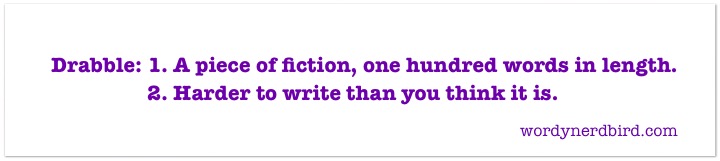
As a poet and author, I know full well what many do not: delivering a message of great import in one hundred words is much more difficult than writing it in one thousand. Condensing meaning, crafting and shaping ideas with an efficiency of words, is harder than it looks.

I enjoy the challenge, though, of telling a story in such a very compact form. A well-written drabble is a thing of beauty, and while I am not suggesting every one I write is excellent, some of them are.

The poem ‘Inside My Head’ was published on The Drabble blog yesterday. It is one hundred words long, yet captures the experience of being inside my own mind perfectly. It’s so relatable, so deep, so powerful – and yet, so concise. I doubt I could explain it better, so I am sharing it here for your enlightenment and enjoyment.

The Drabble's avatar

woman-1890573_1280

By Kelley Morris

Memories
Reminders
Fears
Prayers
Occur in a mere
Sixty seconds

Images
Lists
Problems
Answers
Circling thoughts
Take control

Whirling
Spinning
Crashing
Linking
Hypnotic space
Easily lost

Wake up!
Eyes wide
Ears open
Life surrounds
Be still
Fully aware

Face reality
Move ahead
Be engaged
Time’s too short
To remain
Inside my head

         
Kelley is a wife, mom, pianist, and an elementary music teacher. She enjoys writing honest, personal stories and reflections about life. Writing helps calm her sometimes over-thinking brain.

View original post

Thank God It’s Friday.

Don’t misunderstand me: I am not being flippant or casual in saying ’Thank God It’s Friday”. 

Not. 
Ever. 

And especially not tonight. 

At the end of yet another really sucky week in a succession of variously sucky weeks,  I can honestly say I am so thankful for the fact that it’s Friday night and I am free of any obligation to look or sound like I know what I’m doing, stick to a schedule, wear proper shoes, or talk to anyone that I’d rather not talk to, for two whole days. 

I’ve come home from work tonight, fed the dog and fed my dad, done the dishes, and consider all my obligations to have been met. I am currently hiding under a quilt in my living room so that the universe might not know where to find me. 

And if you see someone poking pins into a voodoo doll that looks like me, do me a favour and take it off them, will you please?  Gently? And maybe give it coffee and pizza. Thanks in advance. 

You’re Looking for Satisfaction in the Wrong Places.

I found this discussion on the Nerdome blog about the nature of true satisfaction very interesting.

I fully agree with it for the most part.
And yet, the past three weeks would have been a lot more satisfying and a lot less sucky if my car would quit jerking me around, the garage door would open and close as it’s supposed to, and if the costumer for my show had not done a “no show” on me seven weeks out from putting my school’s musical on stage.

I’m independent. I’m resilient. But golly gosh, sometimes satisfaction does come from outside oneself.

GigaWorld's avatarNerdome

Source:https://medium.com/
By:Adrian Drew
Photo by Braden Collum on Unsplash

It’s not over there — it’s right here

Before dying at the age of 68, Seneca the Younger made vast contributions to the school of philosophy, most notably in Stoicism.

The influence of Seneca’s work, however, would reach far greater than the school of ancient philosophy, and many of his principles and letters have moulded the landscape of the modern self-help world.

During his retirement and not long before his death, Seneca spent his days writing letters to his friend Lucilius, which have since been collated into a series of 124 letters known as ‘Epistulae Morales ad Lucilium’— Moral Letters to Lucilius. (These are summarised in the modern-day translation, ‘Letters From a Stoic’.)

Seneca’s letters detail his innermost thoughts, offloading his lifelong wisdom before passing. These writings contain a wealth of thought-provoking and insightful material…

View original post 897 more words

“Success” habits I should have but don’t.

I am a real sucker for posts that offer writing tips, publishing tips, and the experiences of other authors and bloggers. I’ve shared a number of them on this blog, because some people have genuinely good advice and share their experiences in a very positive and constructive way.

This response to those kind of posts is quite refreshing in its honesty and in its explanations of why those posts can actually be demotivating for some people. I can totally relate to the feeling of disappointment in myself that I haven’t adopted and implemented more of the great advice given by other Indie authors since beginning my own author journey, and to the sense of “exhaustion” at the number of “You Can Do This If You Follow My Formula” posts out there.

It’s true that those hints and tips for success aren’t “one size fits all”, and nor is success. There are many ways to measure success, and we all have individual goals that determine what our own standards or images of success might be.

It is also fair to say that there is so much advice, so many tips, so many things people tell us to do, that it’s simply not possible to try it all out, and we really do need to remain realistic about what advice we are going to take on at any given time.

I do like Daegan’s points about daily and weekly reviews of what has been done or achieved. I actually do this, and it helps me stay on track because I find achieving small goals and milestones along the way incredibly motivating.

I don’t meditate as such, but I do set time aside for quietness and reflection in my daily routine. I wear a lot of hats in my day-to-day life, so taking even just a few minutes when my brain has nothing to do is a vital means of refreshing and resetting my mind at various stages of the day. As an introvert who is often surrounded by people all day long and again at home, that quietness is also how I recharge my energy, so it’s a crucial thing for me to do.

My “takeaway” from this article is that it’s important for each of us to set our own goals, define what sort of “success” we are hoping to achieve, and find what works for us as individuals.

The one thing we should all do is keep striving to make it happen.

GigaWorld's avatarNerdome

Source:https://medium.com/
By: Daegan

View original post 1,806 more words

Thirteen Thoughts On Writing

I found these writing tips by Paul Skenazy to be very pertinent to myself as a writer.

I really like the one that says “Never lose your awkwardness,” I have awkwardness by the bucketload, so I’ve got that part covered.

Really, though, when I read and consider these points, they converge into an encouragement to be the writer only you can be, and to tell the story the way only you can tell it.

Individuality,
Awkwardness.

I think I’ve got this.

Guest Blogger's avatarThe Brevity Blog

By Paul Skenazy

  1. Writing is an invitation to humility—you realize you’re on the wrong track, you’ve lost connection with a scene, an emotion, a voice. The return on that humility is when your imagination lets you slip into someone else’s skin. The tales you come up with tell the story you are trying to tell when you sit down to write and also the story of the years you spend working on the book. Rendering a/your life into art changes you.
  2. Trust your intuitions but trust (admit) that you don’t understand what your intuitions are telling you. They have their own truth and direction; your job is to follow where they lead. This doesn’t mean you don’t exert control, but you don’t exert as much control as you think you do. And you are often at your best when you don’t.
  3. Defend your story; don’t give up on it. At…

View original post 618 more words

‘The Lion King’ and ‘Hamlet’: A Question of Life or Death

‘The Lion King’ is on TV tonight and, of course, I’m watching it. I’m singing the songs. I’m totally loving it. If anything is able to make me turn the TV on, it’s going to be a musical. 

And Facebook is alive with people proclaiming that it’s basically ‘Hamlet’. 

Well, no. It’s basically not. 
And I’m not even sorry for any disappointment that may cause. 

Anyone who believes the two stories are the same either pays too much attention to social media and the popular clickbait theories that abound there, or they have not paid sufficient attention to ‘Hamlet’ at all. 

Scar is certainly as evil as Claudius. He’s certainly interested in getting rid of his brother and his nephew and taking over the kingdom, and takes full advantage when Mufasa dies in a situation that he has engineered. 

That’s really where the similarities end. 

In fact, it’s really only a very tenuous connection. Scar is by no means the only brother of a king ever to aspire to the throne through nefarious means, so that’s hardly a convincing argument for a direct correlation between the two texts.  You could use the same argument to suggest that ‘The Lion King’ is based on ‘Richard III’, which it clearly is not.

Furthermore, Sarabi – Simba’s mother – does not enter into a relationship with Scar. The fact that his mother married Claudius, his father’s brother and murderer, is the root cause of much of Hamlet’s angst and misery.  Given that this is one of the crucial elements of  the play, and there is zero correlation in ‘The Lion King’, that’s fairly conclusive evidence that the two are not the same story. 

Sure, the ghosts of the dead fathers both appear and speak to their sons. However, they hardly communicate the same thing, and it’s at a very different stage of the plot. Mufasa tells Simba to grow up and retake his kingdom while Hamlet’s father urges him to get revenge on his brother for murdering him and taking not only his kingdom, but also his wife. “Remember who you are” is a very different message from “Revenge!”

Simba is nothing like Hamlet in character, other than being the son of the dead king. Simba is naturally optimistic, fun-loving and adventurous. Simba runs away thinking he’s responsible for his father’s death. Morose and pessimistic, Hamlet hangs around the castle, feigning madness and overthinking everything to the point where his agonising over what to do actually prevents him from doing anything much at all. 

The correlations among the minor characters are, similarly, only superficial. 

While both Simba and Hamlet have two friends, Timon and Pumbaa are not anything like Guildenstern and Rosencrantz.  Timon and Pumbaa rescue Simba and remain his friends throughout the story. Hamlet’s friends are quite willing to sell him out at Claudius’ bidding, and there is nothing loyal or supportive about them. 

Both Simba and Hamlet have girlfriends, but Nala doesn’t go mad and drown herself in a river. 

Zasu and Polonius both talk way too much, but that’s about the only similarity between them. 

In fact, that’s the difference between the two in a nutshell: ’The Lion King’ is life-affirming and positive.    In direct contrast to ‘hakuna matata’, there is no ‘problem free philosophy” in Hamlet, a play that philosophises about death and suicide and which finishes with the main characters and many of the minor ones dead. 

So, there you have it. The difference between ’The Lion King’ and ‘Hamlet’ is a matter of life or death.  The basic premises are polar opposites, so the two cannot possibly be the same story.

Thursday Thoughts: I’m Textually Active.

If you’ve been following my blog for any amount of time, you’ll probably know that when I’m not blogging, reading or writing, or strutting my stuff on stage in musicals, I’m a teacher. 

Teaching is demanding and tiring and stressful, but I am always up for a great booknerdy discussion with my students, who I happen to believe are some of the coolest kids on the planet. That is one of the parts of my job that I really love. 

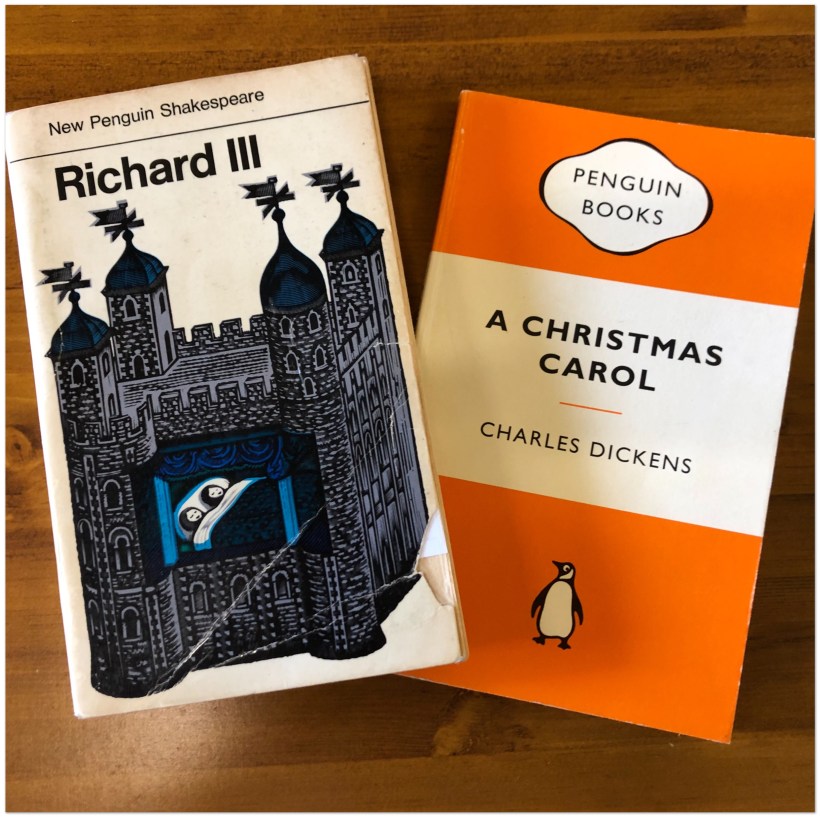
Last semester, my Year 9 English class studied ‘Beowulf’ and Year 11 studied both ‘Richard III’ and ‘A Christmas Carol’

The fun continues this semester. I’m excited to be teaching four more texts I really enjoy. 
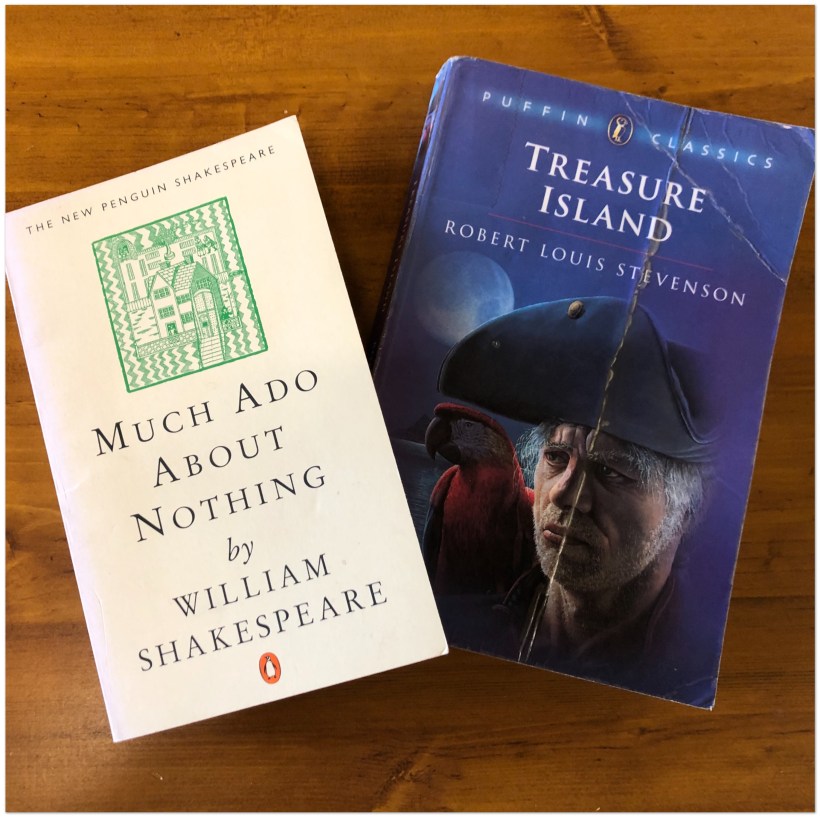
My Year 9 English class are going to study ‘Much Ado About Nothing’  and ‘Treasure Island’
My Year 11 English class will be studying ‘The Complete Maus’ and ‘The Book Thief’. 

Teaching teenagers can be a tough gig sometimes, but it also has its perks.

If you had a teacher you liked, I’d love to know what it was about them that appealed to you or inspired you. Leave a comment and inspire me!