Two More Reasons Why History is Not Boring

I’m always a bit lost for words when people remark that history is boring. Not because I have nothing to say— far from it— but because I know they are never going to be anywhere near ready for the conversations I want to have with them.

I accept that in the past, some teachers have been guilty of making history very, very dull, but it was not the history that was boring: it was the teacher. 

I’ve had some of my own students question, “Why do we need to learn about this? How am I ever going to use this in real life?”
My responses vary depending on the topic at hand, but they are consistently positive and enthusiastic about how interesting and inspiring history can be. 

I have recently discovered two new examples to offer to students or friends who complain about history. 

A week or so ago, I read a story of a 14th century nun named Joan who faked her own death to get out of the convent she was living in.
How’s that for dedication?

Apparently, she wasn’t the only one who wanted to escape either. Having studied medieval history and knowing the lifestyle adhered to by monks and nuns of the time, I can’t say I blame any of them.

Faking your own death is definitely taking it to the next level, though, so I feel that Joan deserves a bit of recognition and applause for her commitment to the performing arts. 
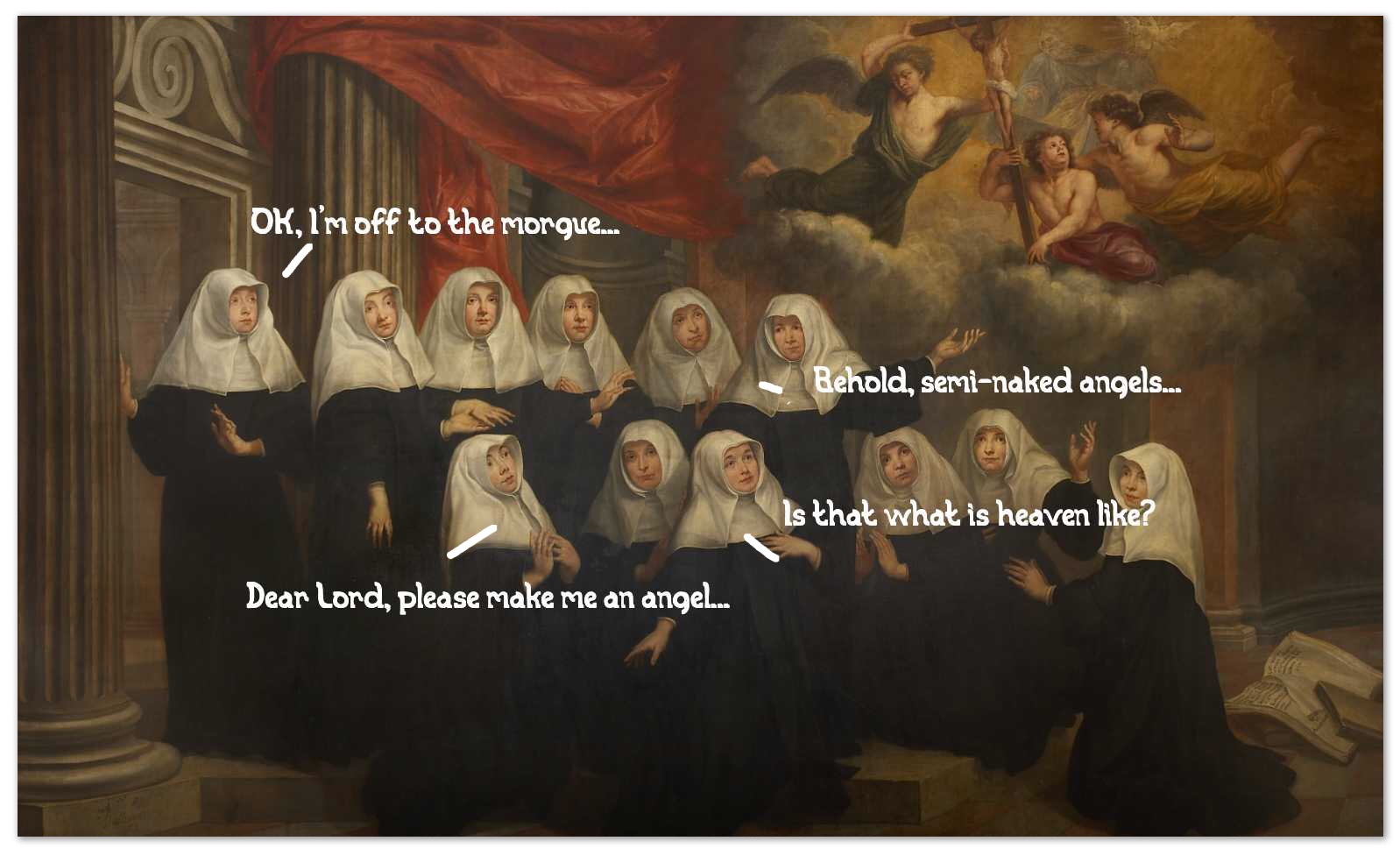
Original painting: Jan Van Helmont Portrait of the Sisters of the Black. Public Domain
The clever edits are my own. 

Then, today, one of my favourite History blogs on WordPress posted about “the mythical animal with a deadly rear end”. I followed the link to the full story about the Bonaccon, and did a little more research after that.

I now know more about this amazing creature than my friends will ever think beneficial. You can bet I’m going to tell them all about it, and I know my Year 9 boys are going to love it, too. I almost can’t wait until they complain again, so that I have a good reason to get the story out and share it. 

Seriously, take a look at this beast. This picture from a medieval bestiary, or book of animals, portrays this particular bonnacon as being rather pleased with himself and his toxic poop. He’s never going to be sorry. 
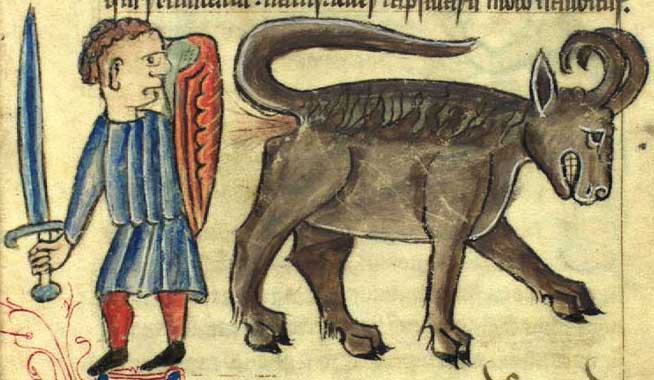
Go on. Tell me now that history is boring. I dare you. 

“Success” habits I should have but don’t.

I am a real sucker for posts that offer writing tips, publishing tips, and the experiences of other authors and bloggers. I’ve shared a number of them on this blog, because some people have genuinely good advice and share their experiences in a very positive and constructive way.

This response to those kind of posts is quite refreshing in its honesty and in its explanations of why those posts can actually be demotivating for some people. I can totally relate to the feeling of disappointment in myself that I haven’t adopted and implemented more of the great advice given by other Indie authors since beginning my own author journey, and to the sense of “exhaustion” at the number of “You Can Do This If You Follow My Formula” posts out there.

It’s true that those hints and tips for success aren’t “one size fits all”, and nor is success. There are many ways to measure success, and we all have individual goals that determine what our own standards or images of success might be.

It is also fair to say that there is so much advice, so many tips, so many things people tell us to do, that it’s simply not possible to try it all out, and we really do need to remain realistic about what advice we are going to take on at any given time.

I do like Daegan’s points about daily and weekly reviews of what has been done or achieved. I actually do this, and it helps me stay on track because I find achieving small goals and milestones along the way incredibly motivating.

I don’t meditate as such, but I do set time aside for quietness and reflection in my daily routine. I wear a lot of hats in my day-to-day life, so taking even just a few minutes when my brain has nothing to do is a vital means of refreshing and resetting my mind at various stages of the day. As an introvert who is often surrounded by people all day long and again at home, that quietness is also how I recharge my energy, so it’s a crucial thing for me to do.

My “takeaway” from this article is that it’s important for each of us to set our own goals, define what sort of “success” we are hoping to achieve, and find what works for us as individuals.

The one thing we should all do is keep striving to make it happen.

GigaWorld's avatarNerdome

Source:https://medium.com/
By: Daegan

View original post 1,806 more words

The Average Earnings of Authors

I’m always interested to see how different people react when I tell them I’m a published author. You can never really tell which way it’s going to go.

I’m accustomed to people saying, “Oh, that’s nice” or “Oh, interesting! I’ve never met an author before!”. Some people look at me with pity, others adopt an expression that suggests I have three heads.

I am, I confess, always puzzled by people who say, “I don’t read”. I have absolutely no idea what that kind of existence must be like, so I just smile and nod.

The response I find most confronting, though, is “Oh, you must be rich!”

I have two favourite responses for those people: I either say “Nobody gets rich writing poetry!” or “You don’t become a writer if you’re looking for an easy way to make a buck.” To write really well is hard work. It takes time, commitment, energy and attention to detail – and those things generally don’t see a vast return in cash.

My motivation as a writer doesn’t come from money – if it did, I’d have quit after the first book. Sure, I’d like to sell more books, and be able to quit my job and write full time. That would be great… but it’s not likely to happen anytime soon.

For me, writing is a passion, a drive that I find it almost impossible to resist. When I write something good, I feel fulfilled. When I refine it, edit it, craft it, polish it and finally publish it, it’s both exciting and immensely satisfying.

The real thrill comes when a reader responds positively to my work, especially my poetry. To know someone has enjoyed one of my stories or been touched by one of my poems is the best feeling because that doesn’t happen accidentally.

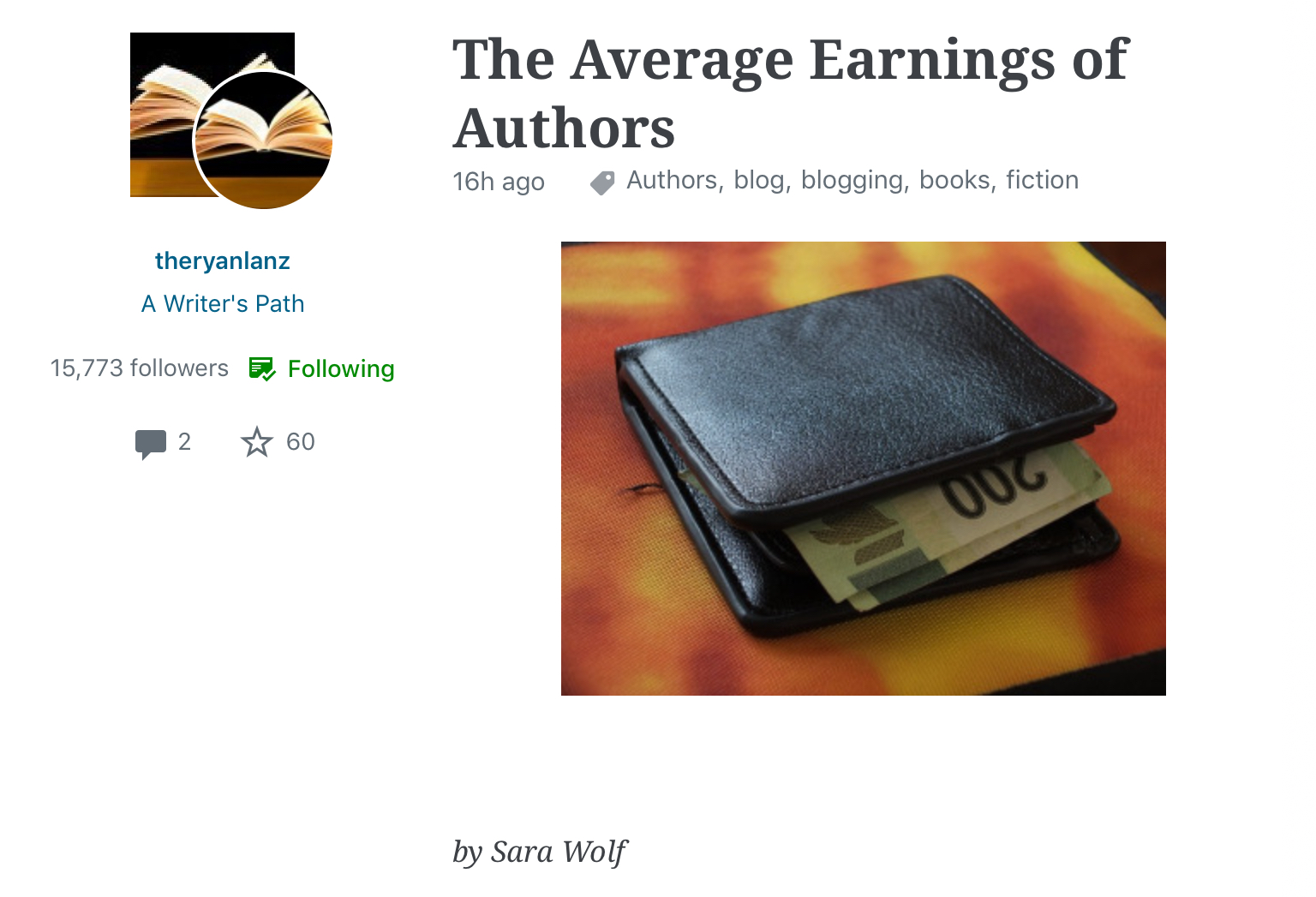
This post by Sara Wolf, which I found on Ryan Lanz’s blog, addresses the issue of the vast differences between what the majority and the minority of authors earn. It’s a well-written article with a message that comes as no surprise to me or any other Indie author.

Most authors aren’t rich. Some manage to make a living. Only a very small percentage make it into the big league and get rich and super famous.

theryanlanz's avatarRyan Lanz

by Sara Wolf

It is a frequent occurrence in the news to hear about authors cutting multi-million (or even billion) dollar book or movie deals. Famous examples of ridiculously successful authors, such as J.K. Rowling, E. L. James, and Stephen King, often lead people to think that becoming an author will undoubtedly lead to an equally as lucrative outcome. However, it turns out that the average author makes much, much less.

View original post 632 more words

‘The Lion King’ and ‘Hamlet’: A Question of Life or Death

‘The Lion King’ is on TV tonight and, of course, I’m watching it. I’m singing the songs. I’m totally loving it. If anything is able to make me turn the TV on, it’s going to be a musical. 

And Facebook is alive with people proclaiming that it’s basically ‘Hamlet’. 

Well, no. It’s basically not. 
And I’m not even sorry for any disappointment that may cause. 

Anyone who believes the two stories are the same either pays too much attention to social media and the popular clickbait theories that abound there, or they have not paid sufficient attention to ‘Hamlet’ at all. 

Scar is certainly as evil as Claudius. He’s certainly interested in getting rid of his brother and his nephew and taking over the kingdom, and takes full advantage when Mufasa dies in a situation that he has engineered. 

That’s really where the similarities end. 

In fact, it’s really only a very tenuous connection. Scar is by no means the only brother of a king ever to aspire to the throne through nefarious means, so that’s hardly a convincing argument for a direct correlation between the two texts.  You could use the same argument to suggest that ‘The Lion King’ is based on ‘Richard III’, which it clearly is not.

Furthermore, Sarabi – Simba’s mother – does not enter into a relationship with Scar. The fact that his mother married Claudius, his father’s brother and murderer, is the root cause of much of Hamlet’s angst and misery.  Given that this is one of the crucial elements of  the play, and there is zero correlation in ‘The Lion King’, that’s fairly conclusive evidence that the two are not the same story. 

Sure, the ghosts of the dead fathers both appear and speak to their sons. However, they hardly communicate the same thing, and it’s at a very different stage of the plot. Mufasa tells Simba to grow up and retake his kingdom while Hamlet’s father urges him to get revenge on his brother for murdering him and taking not only his kingdom, but also his wife. “Remember who you are” is a very different message from “Revenge!”

Simba is nothing like Hamlet in character, other than being the son of the dead king. Simba is naturally optimistic, fun-loving and adventurous. Simba runs away thinking he’s responsible for his father’s death. Morose and pessimistic, Hamlet hangs around the castle, feigning madness and overthinking everything to the point where his agonising over what to do actually prevents him from doing anything much at all. 

The correlations among the minor characters are, similarly, only superficial. 

While both Simba and Hamlet have two friends, Timon and Pumbaa are not anything like Guildenstern and Rosencrantz.  Timon and Pumbaa rescue Simba and remain his friends throughout the story. Hamlet’s friends are quite willing to sell him out at Claudius’ bidding, and there is nothing loyal or supportive about them. 

Both Simba and Hamlet have girlfriends, but Nala doesn’t go mad and drown herself in a river. 

Zasu and Polonius both talk way too much, but that’s about the only similarity between them. 

In fact, that’s the difference between the two in a nutshell: ’The Lion King’ is life-affirming and positive.    In direct contrast to ‘hakuna matata’, there is no ‘problem free philosophy” in Hamlet, a play that philosophises about death and suicide and which finishes with the main characters and many of the minor ones dead. 

So, there you have it. The difference between ’The Lion King’ and ‘Hamlet’ is a matter of life or death.  The basic premises are polar opposites, so the two cannot possibly be the same story.

The Value Of Commenting On A Blog.

I’ve questioned quite a bit recently why people don’t engage or leave comments on WordPress blog posts as much as they do on Facebook or Instagram.

As I suggested in this post some time back, maybe it’s because many people just don’t realise how encouraging or helpful leaving a comment can be.

wordynerdbird's avatarWordyNerdBird

blogging

It’s easy to read a post and move on, andeven easier to like a blog post without reading it.

But stop and think for a moment. How much more valuable to the writer, and other readers, if you actually bothered to respond. Isn’t that what you’d hope for when writing your next blog post? Nobody wants to invest time in writing something that people are just going to skim over.

Not only that, but you will gain more from the post and from the interaction with others than you realise.

You might gain new ideas or perspectives, or you might just end up feeling a little better about life.

It doesn’t have to be a long or complicated post. Even just saying “thank you” or “I liked this!” does the trick.

However, commenting on a blog post is more useful than just propping up the ego of some blogger who…

View original post 247 more words

Is Tumblr Still Even a Thing?

I’ve spent some time over the past few weeks discussing what I like and what frustrates me about different social media platforms. Most of them I’ve ended up feeling quite positive about, but it occurred to me today that I never even thought to discuss Tumblr.

I don’t even know if Tumblr is still really a thing or not. 

I have a Tumblr account, and I post there, but it feels a little like shooting into the void. I still feel as though I don’t understand it. And that means I’m probably doing it all wrong. 

Does anyone out there use Tumblr? I would appreciate any hints or tips you could give me to make my experience there more satisfying. 

And if you’d like to connect there, that would be great! 

A Favourite Shakespeare Play: ‘Much Ado About Nothing’

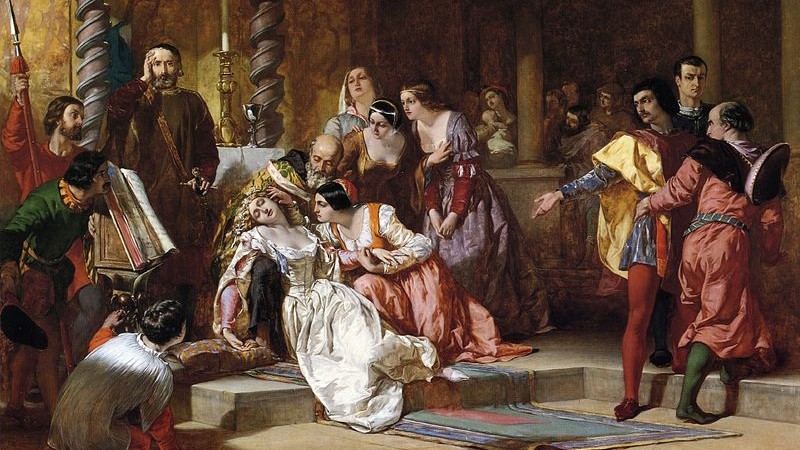
Much Ado About Nothing by Alfred Elmore, 1848. Image: Public Domain.

‘Much Ado About Nothing’ was written in 1598-99.  It is one of Shakespeare’s comedy plays, which means that the main characters enjoy a happy ending.  

In that sense, the word ‘comedy’ has changed over time, because now it’s understood to mean a text that is designed to make the audience laugh. There is plenty of humour in this play, though, as it was written purely to entertain and amuse the Elizabethan audiences. 

While it’s all about the entertainment, the play does explore some key ideas in ways that are designed to make the audience consider or contemplate those concepts for themselves. 

The play revolves around the challenges encountered by several couples who are in love but face various challenges in their personal lives that threaten their happiness and wellbeing. The ways in which different people respond to those conflicts and complications are well worth thinking about, because relationships are always challenged by problems of one kind or another. As Shakespeare observed in ‘A Midsummer Night’s Dream’, “the course of true love never did run smooth”, an epithet which is demonstrated with profound clarity in ‘Much Ado’.  

Questions of commitment, trust, belonging, family dysfunction, hatred and revenge all emerge in this play, seamlessly woven into and underpinning the plot and the responses of the characters. 
It is those timeless ideas that enable audience five hundred years later to still appreciate and relate to Shakespeare’s plays even though the language and many elements of our society have evolved since then. Shakespeare really was a master of exploring and portraying human nature at its best and its worst.

In contrast to those more serious ideas, one of the things I enjoy most about this play is the wit and banter between Beatrice and Benedick. They’re crazy about each other, but spend most of their time insulting and taunting each other because neither one knows that other is crazy about the other. In that way, theirs is an unconventional romance because there’s no formality, no swooning, and no overly sentimental conversations. They’re far more likely to be saucy or sarcastic than sickly sweet. 

Dogberry is hilarious in his frequent mangling of the language and the way he continually bungles his job as the constable despite his pretentiousness and high opinion of himself. He is entirely inept and ridiculous, providing some welcome comic relief during the more emotionally intense phase of the play. 

I also enjoy the way in which Shakespeare uses the characters and events of this play to make fun of the stereotypical romances that occurred in many popular plays and stories of the time, adding another level of wit and engagement to this play. I do love a bit of snarky, subversive humour, especially when it comes to the tropes of the genre of romance. 

As with all good Shakespeare plays, there are a couple of characters we can enjoy hating on. Don John, in a perpetual bad mood, seems determined to make everyone else suffer, just because things haven’t always gone his way. His selfish dudgeon may be as annoying to the audience as it is to the rest of the characters, but his blatant disregard for Hero makes him despicable. 

I also harbour significant dislike for Claudio and Leonato because they never even stop to consider that Hero might be innocent of the accusations levelled against her. For two men who love her – albeit in different capacities –  they have a mighty strange way of showing it. They don’t give her any credit for honesty or integrity: instead, they both default to outright condemnation.  The fact that Claudio delivers his judgement with such vengeance puts him right into my “love to hate” group with Don John. 

Finally, I can’t help but love a play that can get so much mileage out of a line like “hey, nonny nonny!” 

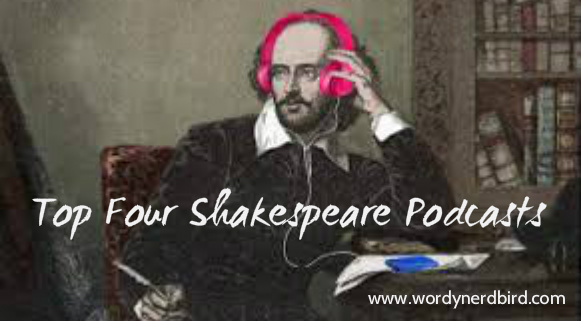
‘Top Four Shakespeare Podcasts’: The Most Successful Blog Post I’ve Ever Written.

It is a constant source of amusement to me that barely a day goes by without someone reading a post I wrote over two years ago. As hard as I try to write posts that are interesting and engaging, and have some relevance to either readers or other authors the one post that shows up in my blog stats almost every day is ‘Top Four Shakespeare Podcasts’, posted in June 2017.

While I have had some posts that got a great response at the time, othing else I’ve published on this blog has had that kind of perpetual popularity,

The funny thing is, it’s only got three likes, but more people than that visit that post every day. Perhaps WordPress needs to make the “like” button bigger and brighter so that it’s easier to see and click.

Given that it’s the most successful blog post I’ve ever written, I thought it was worth posting again for all the followers I’ve gained since then. Enjoy.

wordynerdbird's avatarWordyNerdBird

Promo WordyNerdBird Shakespeare Podcasts

I love podcasts, and I love Shakespeare. In these four podcasts, you’ll find the best of those two worlds combined.

#1: No Holds Bard. An informative and entertaining podcast by Dan Beaulieu and Kevin Condardo, directors of the Seven Stages Shakespeare Company in Portsmouth, New Hampshire.  They discuss the plays, words that people in the 21st century might not know, different interpretations, and various performances of Shakespeare’s plays.  They even have a segment where they’ll answer homework questions sent in by students. 

You can follow on Facebook and Twitter.

#2: Folger Shakespeare Library: Shakespeare Unlimited. A podcast that explores the associations between Shakespeare’s writing and the world today through the words we use, ideas we discuss, and performance of the works of Shakespeare and others.

You can find more information on their website.

#3: Chop Bard – In Your Ear Shakespeare. This podcast explores different parts of the…

View original post 74 more words

What I Love… and What Frustrates Me… About Pinterest

Pinterest is great for inspiration, curating themed collections and procrastinating by getting distracted with eye candy. 

It is a platform on which the users create collections of images called boards. These are usually themed, although how organised and themed they are is entirely up to each individual user.

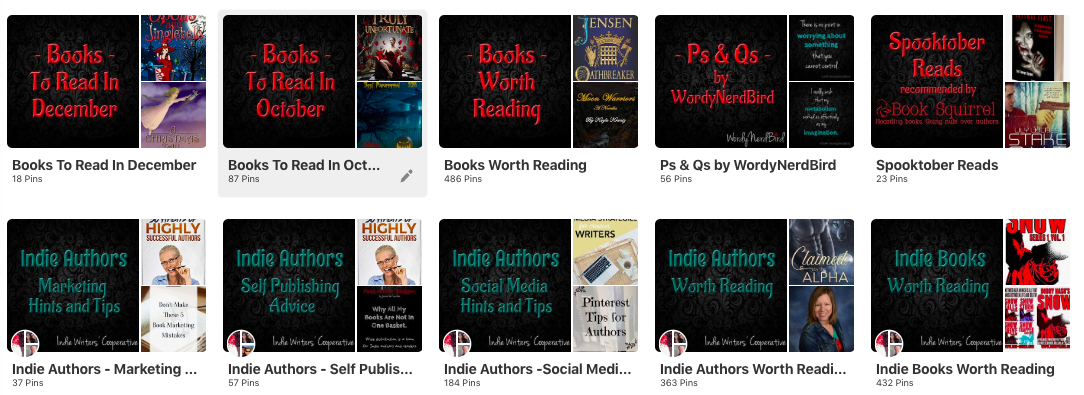
I love being able to put together a collection of images on any theme I wish. The evidence of this is the fact that I have a bazillion Pinterest boards for everything from books worth reading, my book reviews and blog posts and social media for Indie authors to costume and set ideas for musical theatre productions and swoonworthy libraries. I’ve collected hundreds of great looking recipes that I might never make, and probably twenty that I have. I can be as nerdy about things as I like- in fact, that is positively encouraged! It really is all very enjoyable. 

Just a few of my bookish and Indie author boards.

Pinterest is a great way to highlight my own content and link it back to my blogs or website. When I write a blog post relevant to Indie authors in one way or another, I can add it to one of my boards on Pinterest where it is easily found and accessed by others. The link back to my blog post is an integral part of the pinned image, so that a click on that image takes a viewer straight to my blog. This link is easily achieved by sharing to Pinterest directly from each WordPress blogpost, or by adding the link manually to a custom image. 

It is a wonderful thing to be inspired by others, whether it’s by “how to do something” posts, images of places you’d like to travel to,  or ideas about how to take better photos of different things. This is something that Pinterest and Instagram have in common because they’re both highly visual in nature. 

I also like the fact that you can have secret boards. This means that you can save collections of things like Christmas or birthday gift ideas or whatever else you want to keep private, and nobody else can see them. 

One very practical, personal use for Pinterest is creating a Wish List. My best friend, my sister and I all have a Wish List board, where we place images of things we’d like to have as birthday or Christmas gifts. It makes shopping for one another so much easier, and enables us to buy the perfect gift every time. They don’t have to be expensive things – one of my friends used that board to find the pattern for a pair of knitted gloves I liked, and presented me with those very gloves in my favourite colour: black! If there is a particular book I want, or a particular bear I want to add to my collection, I can add it to that list and use it as a shopping list for myself, too! 

What frustrates me, though, is that Pinterest is really not all that social.

You used to be able to like someone’s post, but you can’t do that anymore. You can save it to your own collection. You can leave a comment, but not many people do. You can send someone a pin via direct message, assuming they’re on Pinterest too. But none of it feels much like an immediate connection like it does on Facebook or Instagram. I may have 735 followers, but I never actually know if they’re there. 

I suppose that’s because Pinterest is focused more on curating content than on creating connections between people. I understand the different emphasis, but I really don’t think being able to like someone’s image distracted from that. 

The Verdict: Pinterest is a helpful and enjoyable media platform, but not exactly social in nature. It is best used for collecting and sharing content, not connections. 

Having said that, if you’d like to follow me on Pinterest, you are more than welcome to do so. You won’t be able to ‘like’ my posts, but you may find one or three – or thirty – boards that inspire or help you somehow. 

One In A Million.

Believe it or not, I’m one in a million. 

A million authors writing to entertain others.
A million poets bleeding their souls onto the page.
A million people trying to help others.
A million people who are actually loyal. 
A million teachers going the extra mile for their kids. 
A million people caring for someone they love. 

It might be easy to get lost in the crowd. 
It’s easy to feel insignificant.
One tree among a million in the forest, so to speak. 
But I know I am one in a million. 

We all write and grieve and serve and give of ourselves differently. 
Each of us is unique. 
Each of us is a distinct blend of personality, talent and substance. 

Not a single one of us is worthless. 

I may not stand out among the million. 
I may never strike it rich or become famous.
I may never be someone else’s ideal. 
I cannot be perfect.

The truth is, I don’t have to.None of us do.

What matters is the contrast with some of the other people on this planet: the hateful, the cruel, the greedy, the selfish, the power-hungry, the narcissists. 
What matters is that I stand against the things they accept. 
What matters is that I am true to who I am, to my priorities, my values, my faith. 

What matters is integrity. 
That’s what stands out in this world. 

That, more than anything else, makes me one in a million.