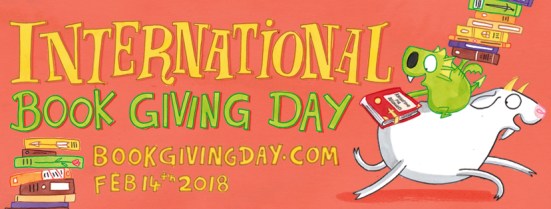
Give books, not flowers!

Give Books, Not Flowers!

#Feb14th
#InternationalBookGivingDay

book-giving-day-facebook.jpg

Everyone knows February 14th is Valentine’s Day, but did you know it’s also International Book Giving Day?

Apparently, that’s been a “thing” for several years now. The first I heard of it, though, was earlier today when I saw a post – one post – on Twitter. Why have I never heard of this before? Why aren’t bookstores and publishers worldwide promoting this? Why have I been conditioned all my life to hope for a rose or a card that usually doesn’t materialise, when I could have been my own best friend and presented myself with a book instead? That, my friends, is absolute rubbish!

An international day for giving and receiving books is an idea that really appeals to me on so many levels.  In just five minutes, I came up with these reasons why books are better than roses, chocolates, and drugs:

Books don’t die like flowers do.

Books don’t make you fat or mess with your blood glucose like chocolates do.

Nobody judges you for showing off your new book on social media.
(Unless, of course, you’re an author and you wrote the book, in which case people complain because you’re somehow pressuring them to support you or asking them for money, which just isn’t the done thing, despite the fact that you’ve supported their careers in plastic kitchenware, fancy saucepans, designer linen ware, boutique underwear, party plan beauty products, and whatever other blarney they’ve asked you to buy. But that’s different, and I digress. And I’m not jaded, okay?)

You can stay home with a book and consume it as greedily as you wish without losing any respect.

Books are budget friendly. Do you have any idea how many books you could buy for the price of a bunch of long-stemmed roses in the middle of February?

Books are an investment in your mind and your soul.

Books are an investment in an author who will be more than happy to write more books for you to enjoy. It’s the ultimate gift that keeps on giving.

Books provide the most budget-friendly and instant escape from reality available to humanity.

Books won’t land you in rehab.

There is no law against driving with stories, ideas and knowledge in your system.

Not bad, eh?

So, what are you waiting for? Get out there and give someone you love, or yourself, a book.
Support An Author 3


If you’d like to suggest more reasons why books are better gifts than flowers and chocolates, feel free to leave them in a comment. 
A Conversation Between A Romance Lover and a Horror Writer.

Me? Writing romance? Not anytime soon.

Today I commented to a friend that I’d written a story for Valentine’s Day.

She smiled and said, “Oh Jo! I didn’t really pick you for the romantic author type! How lovely!”

I laughed. “Just because it’s a Valentine’s Day story, doesn’t mean it’s romantic.”

black stone heart

She looked at me as though she were waiting for a punch line.

“No, really. This is not a romantic story. This is a story for anyone who has had their heart broken, who knows the sting of rejection—” I shrugged.

“It doesn’t end well, does it?” she asked sadly.

“That depends entirely on your perspective!” I replied.


If you’re one of the anti-Valentine’s Day crew, or if you just like creepy stories, check out my chilling little tale: A Curious Valentine’s Day. It’s free to read at WordyNerdBird Writes.


WiHM9-GrrrlLogoWide-BR-L


My Favourite Escape.

When life takes an unexpected turn, there is no better place to escape than into a book.

What a week!

It was the first full week back at school with students after the summer break. New students, new classes, new schedules, new demands.  Not only was I ready, I was keen! I was determined to get through the week without falling in a heap.

The first day was great.

Then, just after recess on Wednesday, I got a call from my local medical clinic. My elderly father was unwell – again – and was on his way to hospital in an ambulance. Everything stopped except my mind: Is this it? Is this the beginning of the end? Must let the others know. Must tell the boss that I have to leave work. Must keep breathing. Can’t breathe. Okay. One thing at a time. Call the boss. Explain. No – don’t fall apart now. You don’t have time. 

I got to the hospital half an hour ahead of Dad because I work in town and the ambulance had a 45 minute trip, plus some road works to negotiate. I completed the necessary paperwork for him, and sat down to wait.

Waiting rooms suck on a major level. You sit there, surrounded by other people’s pain and misery, feeling alone and fearful, and trying to keep everything under control in your own overactive imagination – it’s quite some challenge.

reading-wonder.jpegSo while I sat and waited, I took refuge in a book. It didn’t stop me from looking up every time an ambulance rolled in, wondering if that was Dad being wheeled in. It didn’t stop me checking my phone and answering messages and questions from my siblings. But it did give me somewhere to go.

For the six and a half hours that I sat by Dad’s bedside in the Emergency Department, with medical questions answered and initial treatment under way, I escaped back into the book whenever I could. Dad knew I was there, but he wasn’t up to conversation. Reading someone else’s story kept me from focusing on my own, and it kept me from being overwhelmed by the flood of emotions that threatened to sweep me away while witnessing the pain and distress of my increasingly frail father.

After a somewhat tearful journey home, I thought I might be exhausted enough to fall asleep as soon as I got to bed. Nope. No such luck. Yet again, it was a book that came to the rescue. It didn’t put me to sleep, but it did relax me enough to be able to rest.

Taking refuge in a book is something I have often done in the troubled times of my life. Over the past couple of years, that has taken the form of both reading them and writing them. There are times, though, when I can’t write because the pain and fear is actually too close to think about at that level of depth. Wednesday was one such day.

Thursday was a blur of medical consultations, visits with various physical therapists, and further tests for Dad. Thankfully, at the end of all of that, I was able to bring him home again. It will take time for him, and for me, to recover. There will, undoubtedly, be further moments when I feel the need to make the world around me stop by escaping into a book.

Today, I’ve tried to catch up on the things I’ve let slide over the last few days. I haven’t quite managed yet to pick up all the threads again. I use Buffer, so my Twitter feed has kept on rolling, but many other things, including my writing, are at a standstill. Social media has only had the occasional cursory glance. I’ll get there – but not today.

For now, I’m thankful that Dad and I both survived the week, and that things are starting to return to normal.

And to the authors who continually craft such brilliant stories for me to escape into: thank you, from the bottom of my heart.  Your gifts mean more to people than you realise.


Exhausted.

Teacher exhaustion is real.

School has resumed after the six week summer break that we enjoy here in Australia. After completing my First Aid, Asthma/Anaphylaxis First Aid and CPR re-certs last week, followed by three full-on days of professional development and preparation, I had my first day with classes today.

The kids are great and, if the first day is any indication, I’m pretty sure we’re going to have a good year together.

But holy beaverschnitz! I am exhausted. I don’t remember being this tired at the start of a school year before.

Exhaustion
Exhaustion by Jessica Cross via Flickr 

I’ve come home every evening this week, fallen onto my bed and wept until I fell asleep like a two-year-old who still desperately needs that afternoon nap. I honestly have no idea why they resist that so much!

This afternoon a colleague asked me a question about something that happened last year, and I told him quite honestly that I was having trouble remembering yesterday. I can’t do social media. I can’t read. I can’t write. It’s a good thing I did my preparation for the semester over summer, because there’s no way I could get it done now given the shape I’m in at the moment.

There’s a running joke in my house – okay, so it’s actually not much of a joke, to be honest – that my husband makes me a double shot in the mornings because it’s my kick starter dose of Vitamin DHP – “Don’t Hurt People”. That double shot usually keeps me going most of the day. Today, it got me to about 10.15am and then my grip on reality started to crumble. I focused on my classes, tried to make all the words make sense, and dragged myself to lunchtime, and then downed 600ml of Coke Zero in record time – even for me.

Don’t get me wrong – I don’t want to sound like I’m complaining. I know it’s part of my job and it will pass. I’m just trying to explain why the blog has been quiet, why I’m not active on social media, and why emails are going longer than usual before I respond.

The only thing I can do effectively right now is hope I snap back into the rhythm and routine of teacher life quickly, because the pile of essays and papers in need of grading is going to start mounting up very soon.

Until then, though, if you see me staring into space or collapsed at my desk, administer caffeine… and please, be kind.


My New Years Resolutions for 2018.

My goals for 2018 are realistic and achievable… so here goes!

I’m not the world’s biggest believer in New Year’s Resolutions, because I’ve seen plenty of people make ridiculous decisions that fall over before January 5th.

Even so, I decided at this time last year to write down a few things I needed to do, and I did fairly well at achieving them.

So, I’m doing the same thing for 2018. Here are my goals for this year, in no particular order:

2017-12-31 23.16.59

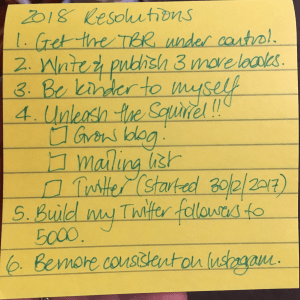
1. Beat the TBR Backlist – read and review the books in my kindle that I have not yet read. I haven’t counted how many books are on it… but I know it’s a lot.

2. Write and publish three more books.

3. Be kinder to myself. I am probably my own harshest critic and most demanding taskmaster. That needs to change.

4. Unleash the Squirrel! Grow his profile with Twitter, Facebook and the Book Squirrel blog with continued reviews, featured author interviews and a regular mailing list.

5. Build my Twitter list to 5000.

6. Be more consistent in posting to Instagram.

They’re certainly achievable, so here goes!

Things I Have Learned In 2017.

They say you should keep on learning until you die. Measuring by this list, I’m not dead yet.


2017-02-19 14.48.15


These are the important lessons I’ve learned in 2017:


  • Anyone who supports you, champions your cause, and/or loves you unconditionally is worth their weight in gold.
  • I am very blessed to have a number of people in my life who are worth more than their weight in gold.
  • Not everyone who says “I love you”, “Congratulations”, or “Thank you, that means so much”, actually means it.
  • It is entirely possible to encourage another person when you are feeling completely discouraged yourself.
  • Integrity matters far more than the words that come out of someone’s mouth. Those words, though, can be a fairly good indication of  integrity – or the lack thereof.
  • There are some things which should be left in the past: do not let them define the present.
  • There are some things which some folk will never understand. That doesn’t mean they don’t matter; it means it’s a waste of time and energy trying to talk with them about it or hoping they will change.
  • I will most likely continue to trust people and assume their “goodness” far too readily, and that will most likely continue to backfire on me. Apparently, there are some lessons I never learn.

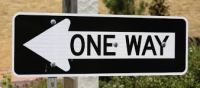
One Way

  • Just because I often find myself on a one-way street doesn’t mean I have to unpack and live there forever.
    I am learning to see the signs and walk away.
  • There is no shame in tears. They are natural, and they are necessary.
  • People talk about “grace” far too easily. Showing grace to the undeserving is hard, painful, and usually invisible.
  • There is, in fact, an ear piercing that helps with chronic pain.

Barbarians: who knew?

What does a teacher do when a student calls another a name that is just plain wrong?

Yesterday one of my students called another a ‘Philistine’. I know he meant to suggest that his friend was uncultured and ignorant, and that is what many understand the word to mean.

So, being the time-and-knowledge-generous history nerd that I am, I took a break from our study of World War I and explained to my class that what he meant to suggest is not what the Philistines were at all.

The Philistines were a cultured and wealthy civilisation that lived in Canaan between the coast of the Mediterranean Sea and the biblical kingdoms of Judah and Israel. They lived in and between five cities: Gaza, Ashkelon, Ashdod, Ekron and Gath. The same region bears the name ‘Palestine’ today – a name derived from the Philistine civilisation. The ancient Philistines enjoyed enough military prowess to hold their own against Lebanon, Syria and Egypt at different times, fighting with spears, straight swords and shields. When not fighting wars, they lived in elaborate buildings and made their own pottery.

It doesn’t really seem consistent with the idea of ignorance, does it?

Sadly, this is not the only case of such name-calling being so ironic.

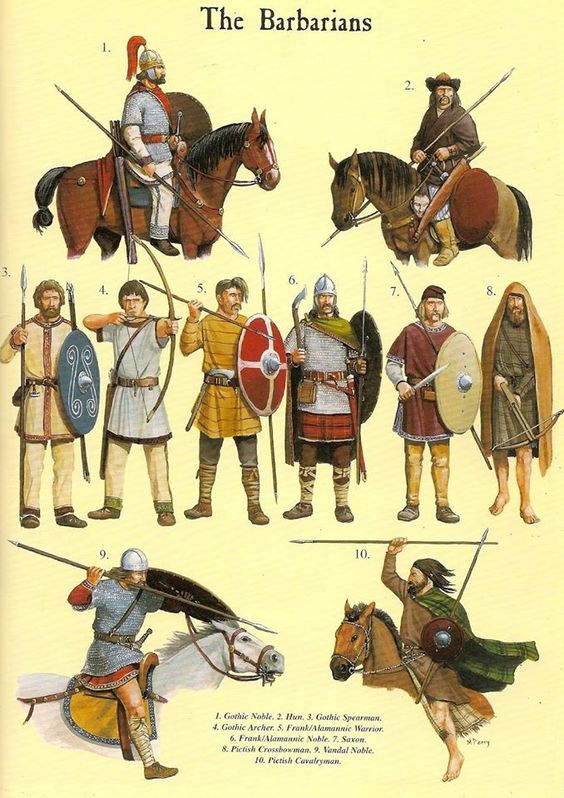
Barbarian is another term which is used quite wrongly. It’s used to suggest that someone is wild or uncivilised.  Historically, the Barbarians were any number of Germanic tribes that moved throughout Europe in what many refer to as ‘The Dark Ages’, even though they weren’t so dark at all.

Barbarians
The Barbarians. https://www.pinterest.com.au/pin/416794140495615038/

Really, if you look at them, they don’t look so incredibly different from one another, nor from the folk our history books tell us were our own ancestors. It may surprise you to know that the Barbarian tribes included the Angles, Saxons and Picts who set up shop in Britain after the fall of the Roman Empire and eventually became some of the most devotedly civilised people on earth. The Gauls became the French, the Geats became the Swedes, and the Danes went on to give us Hamlet, pastries and an Australian princess.
(Disclaimer: I don’t know if the part about the pastries is true, but they must be called danishes for a reason… right?) 

The Vandals, for example, may have left a trail of destruction in Gaul and Iberia, but they only made a bit of a mess of Carthage before taking it as their capital and making extensive renovations. As a military power, they had skill and knowledge – you’ve actually got to hand it to anyone who could not only withstand the power of the Roman Empire, but also hold their own in so many battles over such a long period. And when they weren’t busy fighting the Romans, they were highly cultured, enjoying music and poetry. They conducted a lot of industry and trade in their North African kingdom. It really was not about breaking or ruining stuff at all.

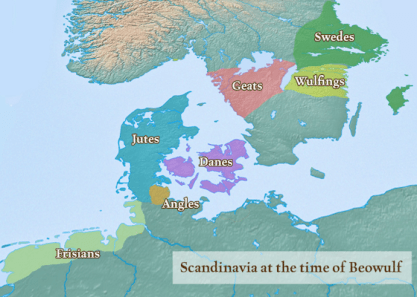
The Goths, oddly enough, did not sit around in dark clothes wearing black makeup. The name “Goth”  was derived from ‘Geats’, the tribe famous for its honour and pride in the Anglo-Saxon legend of Beowulf,  as told in the oldest English poem in existence.

Scandinavia at the time of Beowulf.
Map Prepared by Louis Henwood for ‘The History of English’ podcast, episode 42

They actually had sophisticated architecture and beautiful mosaic art. They made and wore intricate gold jewellery. They were farmers, weavers, potters, blacksmiths. They followed intricate burial rites, making sure that the graves always pointed north.

Related to the Goths were the Visigoths, meaning “Goths of the west” who ruled Spain for a couple of centuries. They built churches that still stand today, decorated their buildings with intricate filigree art and stone arches. They were skillful metalworkers and jewellers.

It seems to me that we do history a disservice by misusing these terms in such a way.  Connotations are not always the easiest things to track through history, but these seem quite unfair. I suspect that such practice grew out of the fear of anything or anyone different, foreign and/or pagan – a concept with which Western society is still painfully familiar.

By the end of all that, the kids’ eyes had glazed over a bit, and there was a fair bit of smiling and nodding going on. I don’t think they will be calling each other Philistines again, though. So… mission accomplished.


If you’d like to know more about Beowfulf and the Geats, you could listen to a fabulous episode from ‘The History of English’ podcast. It’s a great podcast, and if you’re interested in the development and history of the English language, or the relationships between language, people, and places, you should consider subscribing. 

Facing the Beast.

Defiant, I stood as tall as I could and faced the huge beast.

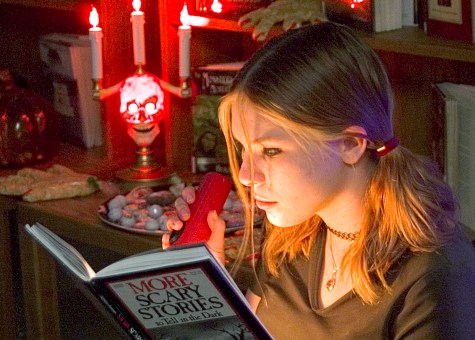
Haunted reading room spooks teens
Defiant, I stood as tall as I could and faced the huge beast.

It met my bravado with derision. As time wore on, it was only getting uglier and more insistent.

With all the strength and conviction I could muster, I growled, “As intimidating as you are, remember this: I created you, and I will defeat you.”

And my TBR pile laughed and laughed.

The Problem With Sentence Fragments.

I’ve read a couple of books lately that have been rather good, although plagued with something that is becoming the bane of my life as a reader: sentence fragments. 

Words and Phrases


I’ve read a couple of books lately that have been rather good, although plagued with something that is becoming the bane of my life as a reader: sentence fragments.

There was one book I started reading a couple of weeks ago where this was rampant, along with other issues, to the point where I couldn’t continue.

A sentence fragment is something that presents as a sentence in that it starts with a capital letter and ends with a period, but doesn’t actually make sense on its own.

A sentence fragment is often added as an afterthought when it really should be tacked onto the previous sentence with either a comma or a semicolon.

Consider the following example:

Jack went into his bedroom and closed the door, preferring privacy for reading his new book. Which was something that he knew annoyed his little brother.


That last sentence fragment actually makes no sense without the previous sentence.

If this happens just once or twice in a book, it’s still too often. However, it happens a lot. To be completely honest, it’s something I mark my senior high school English students down on. It’s what I consider quite a basic error: it’s not that hard to read something you’ve written down and ask yourself if it makes sense.

I understand that some readers don’t notice it, but many others will find it very frustrating indeed.

The exception is in direct speech or train of thought writing. People do speak like that, and they often think in fragments of thoughts, especially when under stress or in pain. If it’s something a character is thinking or saying, there is no problem. When it is part of the narrative, however, it really is an issue.

I don’t want to come across as being all finicky and fussy. My intention is that writers might recognise and self-correct this problem in their writing, even if it means  revising an entire manuscript so that their book reads better.

This is also another argument for having any manuscript thoroughly proof-read and edited before you publish anything, especially as an Indie author who wants to be taken seriously as a writer.

In the end it will earn you more stars and more readers.

When your story is great, and your message is important, please don’t allow something that is easily fixed to compromise the success of your book.

Instead, take the time and effort to make sure that your writing, and the overall quality of your book, is the best it can be. You owe it to your readers, and you owe it to yourself.


What’s on your list?

What’s on your list?

I’d love to hear your ideas!

Human Girl Person Silly Blond Making A Face Child
I just found that I have a follower on Twitter called “Buy Followers”.
 
Weird.
I haven’t bought that one, or any other.

 
Which leads me to wonder… why would someone even bother?
In a world full of things I *would* buy if I had the cash, followers on social media isn’t going to be among them.
The top three things on my permanent list of things I’d like to buy are:

1. Another, longer trip to Canada.
2. Books. More books.
3. Another Labrador puppy.

What’s on your list?
I’d love to hear your ideas!