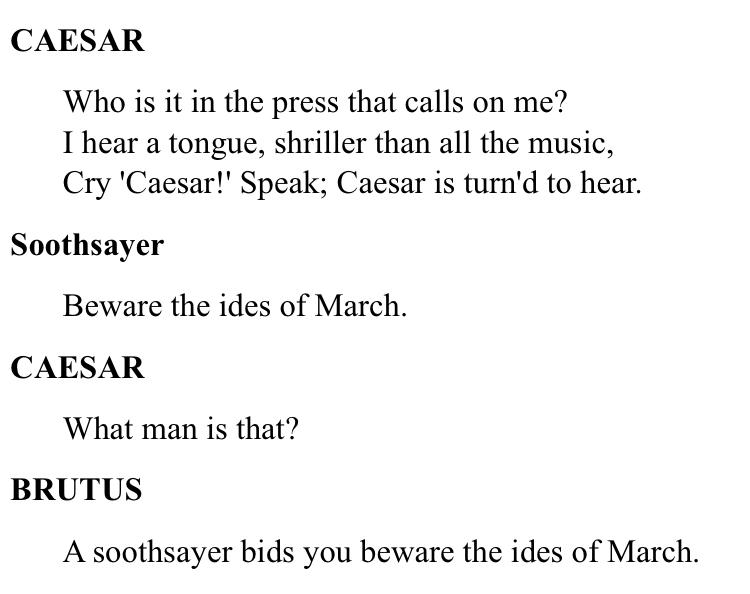
‘Julius Caesar’ is a play by William Shakespeare about the assassination of Caesar by a group of his senators.
Given that the play clearly demonstrates that the assassination was morally wrong, and that the conspirators did not prosper as a result of their actions, you might be tempted to think that anyone who knew the play well enough to perform the role of Mark Antony would know better than to assassinate someone.
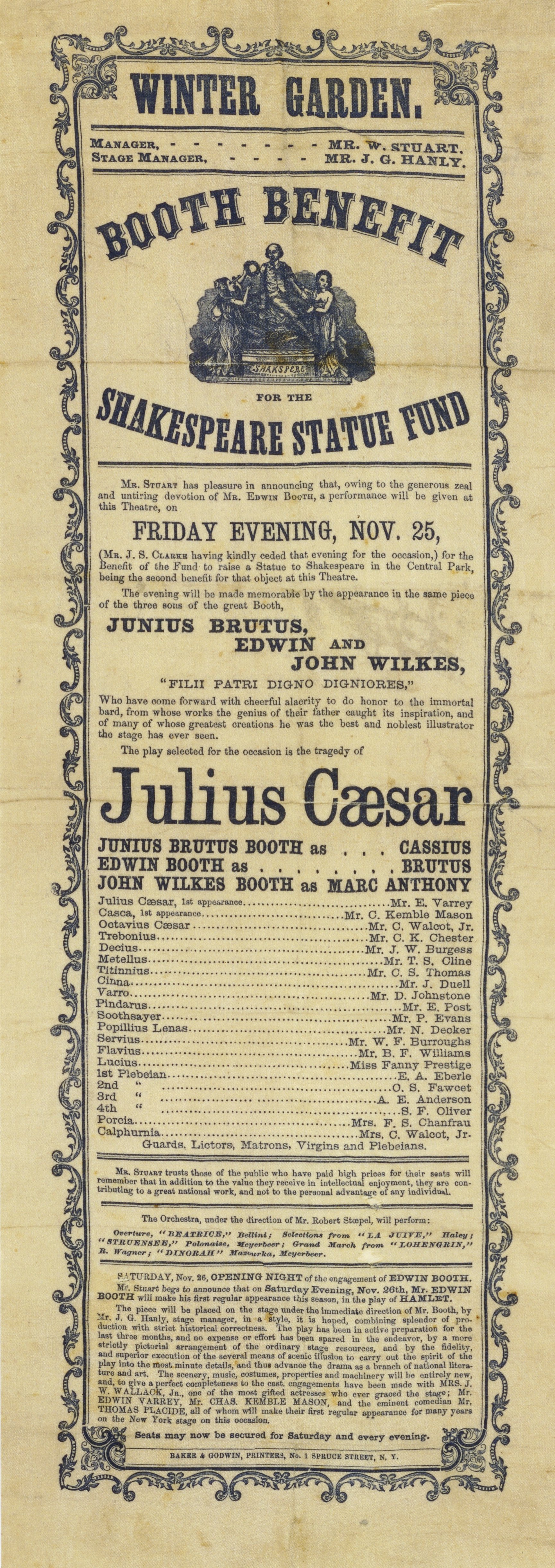
And if you thought so, you’d be wrong. A famous actor and a member of a prominent family among theatre circles, John Wilkes Booth played Marc Antony while two of his brothers played Cassius and Brutus in a production of Shakespeare’s ‘Julius Caesar’ at The Winter Garden theatre on November 25, 1864, just four months before he assassinated President Abraham Lincoln.
Obviously, his decision to shoot the president brought his acting career to a screeching halt. What a shame that he took more inspiration from Brutus than he did from Mark Anthony. Less violence and more brilliant rhetoric might have served us all well.
I’m always interested to see how different people react when I tell them I’m a published author. You can never really tell which way it’s going to go.
I’m accustomed to people saying, “Oh, that’s nice” or “Oh, interesting! I’ve never met an author before!”. Some people look at me with pity, others adopt an expression that suggests I have three heads.
I am, I confess, always puzzled by people who say, “I don’t read”. I have absolutely no idea what that kind of existence must be like, so I just smile and nod.
The response I find most confronting, though, is “Oh, you must be rich!”
I have two favourite responses for those people: I either say “Nobody gets rich writing poetry!” or “You don’t become a writer if you’re looking for an easy way to make a buck.” To write really well is hard work. It takes time, commitment, energy and attention to detail – and those things generally don’t see a vast return in cash.
My motivation as a writer doesn’t come from money – if it did, I’d have quit after the first book. Sure, I’d like to sell more books, and be able to quit my job and write full time. That would be great… but it’s not likely to happen anytime soon.
For me, writing is a passion, a drive that I find it almost impossible to resist. When I write something good, I feel fulfilled. When I refine it, edit it, craft it, polish it and finally publish it, it’s both exciting and immensely satisfying.
The real thrill comes when a reader responds positively to my work, especially my poetry. To know someone has enjoyed one of my stories or been touched by one of my poems is the best feeling because that doesn’t happen accidentally.
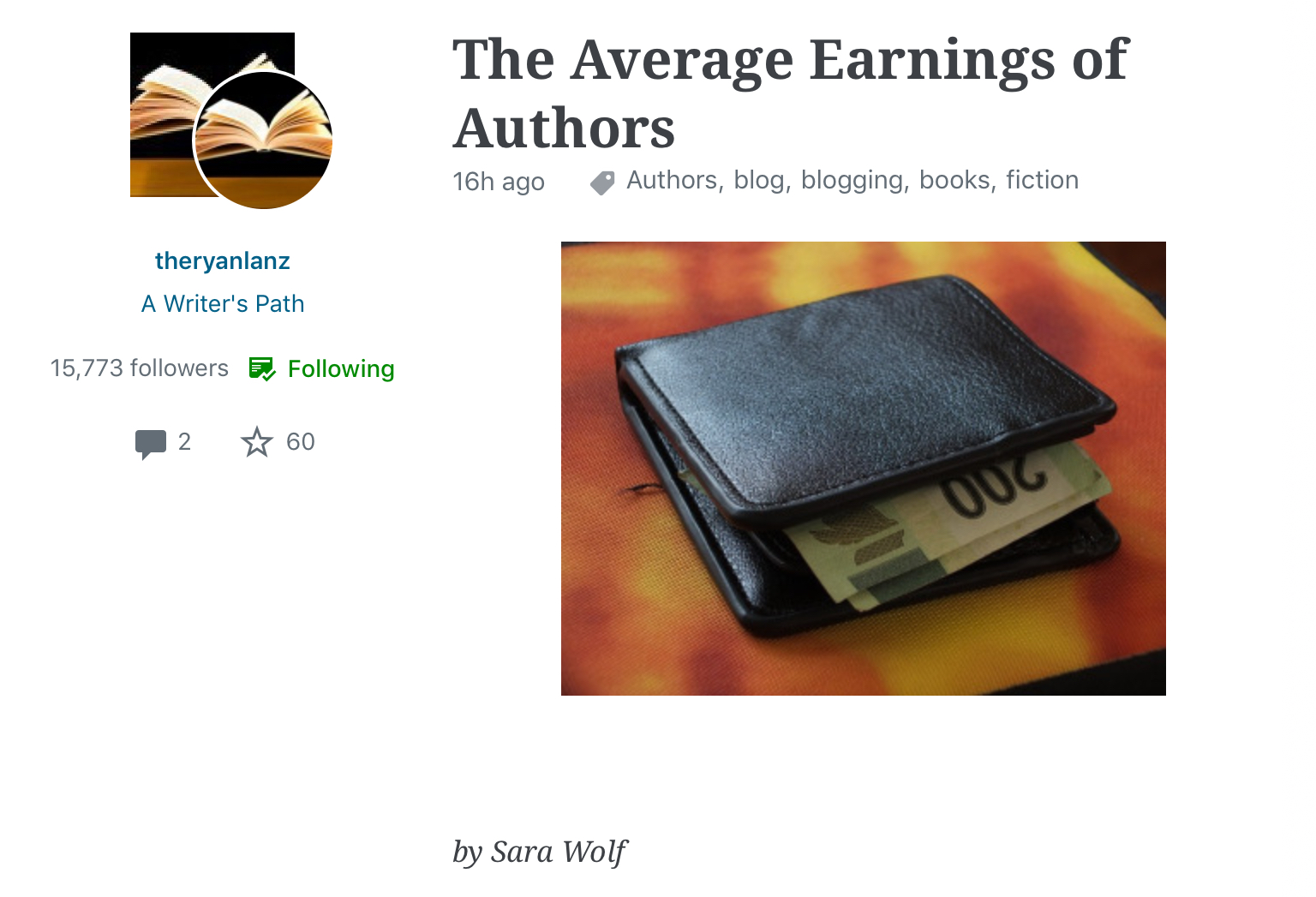
This post by Sara Wolf, which I found on Ryan Lanz’s blog, addresses the issue of the vast differences between what the majority and the minority of authors earn. It’s a well-written article with a message that comes as no surprise to me or any other Indie author.
Most authors aren’t rich. Some manage to make a living. Only a very small percentage make it into the big league and get rich and super famous.
It is a frequent occurrence in the news to hear about authors cutting multi-million (or even billion) dollar book or movie deals. Famous examples of ridiculously successful authors, such as J.K. Rowling, E. L. James, and Stephen King, often lead people to think that becoming an author will undoubtedly lead to an equally as lucrative outcome. However, it turns out that the average author makes much, much less.
‘Julius Caesar’ is a brilliant play in which Shakespeare demonstrates his genius is in taking a story we all know and making the characters familiar in a personal and almost tangible way. Shakespeare takes one of the most famous men in history and portrays him as fully human, flawed and even vulnerable in different ways. It’s not the way we’re accustomed to thinking about ‘historical giants’ like Caesar., but Shakespeare makes it all seem quite natural.
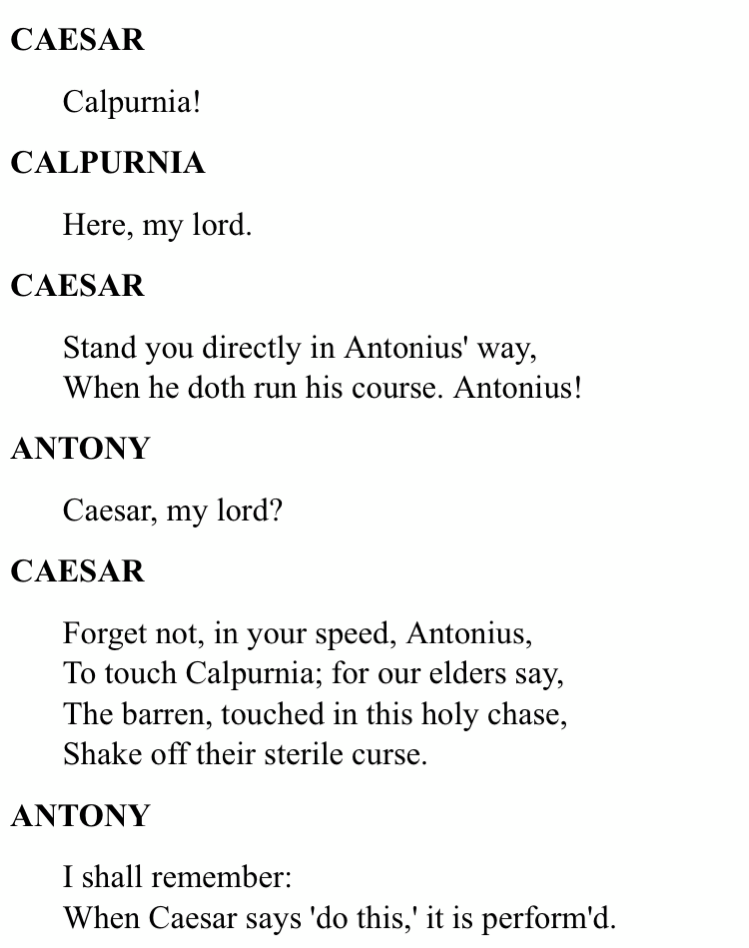
At the beginning of the play, even while he is being celebrated as Rome’s all-conquering hero, his first interactions cast him as a husband who is acutely aware of his wife’s childlessness. We don’t know if his instructions to Calpurnia and Antony are motivated by sorrow or by his desire for an heir to whom he might pass his empire, but either way, Caesar doesn’t miss an opportunity that might make a difference.
Before long, we see him as a man afflicted by disease when he is struck by a seizure, and is obviously bothered by the fact that is happens in public. He may control all of Rome and its empire, but he cannot control his illness. We also see him as a man keenly aware of popular opinion, sen in his public refusal of the crown not once, but three times, yet ignorant of the way his own senators feel about him personally. Regardless of his aspirations, he is astute enough to know that actually accepting a crown as Emperor is not the best move for him at this point in time.
In these things, the audience begins to see the great historical hero Julius Caesar as a complex, thoughtful man, one who holds a variety of responsibilities and obligations that he takes very seriously. He is very much human, in contrast to the Roman tendency to venerate their heroes almost as gods. We see his humanity rather than his pride, although we know that exists because it is his hubris that brings about his downfall.
Shakespeare’s portrayal of other characters is equally powerful.
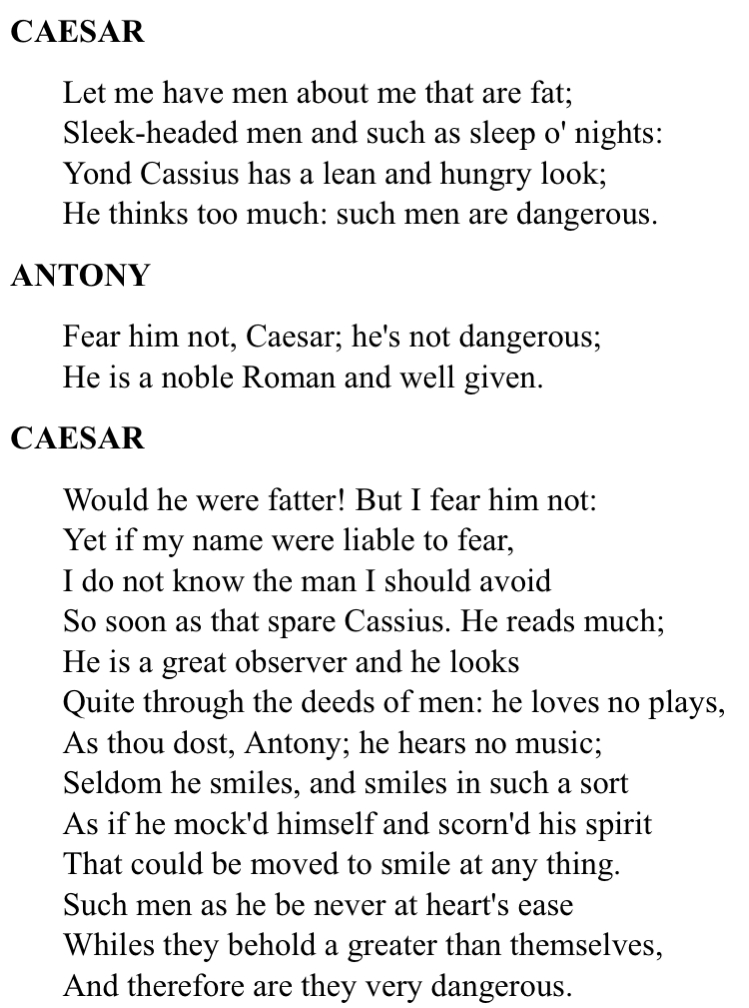
Caesar’s assessment of Cassius is profound: “Yond Cassius has a lean and hungry look; he thinks too much: such men are dangerous.” In those few words, Shakespeare establishes a vivid image that shapes our perception of the man and positions the audience to distrust the character.
Brutus is shown as a moral man struggling with a dilemma that weighs heavily on him. A strong sense of foreboding settles on the audience when he puts his trust in Cassius, making himself vulnerable to a man whose thoughts and conspiracies are indeed dangerous, particularly for Caesar. At this point, even though both Caesar and the audience like Brutus, his destiny as one of the conspirators is sealed.
In all of this, Shakespeare makes expert use of dramatic irony and foreboding to keep the audience in suspense as Caesar’s train speeds ignorantly toward its derailment. This is established right at the start of the play with the mysterious soothsayer who delivers the warning, “Beware the Ides of March”.
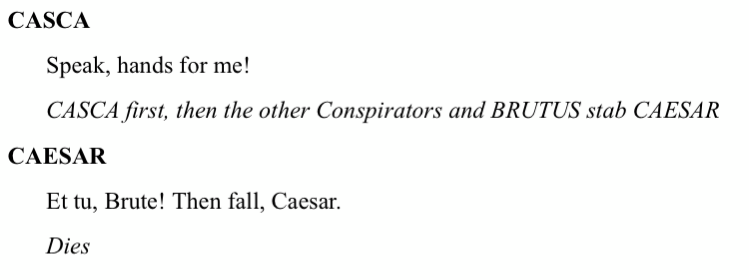
While it is a history play, it has some elements of a tragedy in that Caesar is completely oblivious to the fact that his actions are contributing to his own eventual demise at the hand of the conspirators whom he still perceives as friends and allies. The pathos of his question to Brutus: “Et tu, Brute?” — “You too, Brutus?” makes the moment of his all-too-late realisation one of almost palpable betrayal and sorrow. In that moment, Caesar dies knowing that he is truly friendless and alone.
It’s important to note that the play makes it clear that assassinating anyone is not a good idea, and the assassins do not prosper as the result of their actions. It wasn’t in Shakespeare’s interests to be seen to promote or condone assassinating the established ruler, as he was reliant on the good favour of Queen Elizabeth I and, after her, King James. He wasn’t encouraging anyone to try to kill their leader: he was showing that, historically, doing so didn’t actually achieve what the conspirators hoped it would.
It’s a very direct and straightforward play – there are no real subplots and the political undercurrents are all really obvious because they are what drives the play. This makes it a great play for a “first Shakespeare play” for those who are just beginning their Shakespeare journey.
For the word-nerds, this is the text from which we get great, still commonly used phrases like “It’s all Greek to me” and “Friends, Romans, countrymen, lend me your ears”. It’s also the source of the title of John Green’s enormously popular novel ’The Fault In Our Stars’.
‘The Lion King’ is on TV tonight and, of course, I’m watching it. I’m singing the songs. I’m totally loving it. If anything is able to make me turn the TV on, it’s going to be a musical.
And Facebook is alive with people proclaiming that it’s basically ‘Hamlet’.
Well, no. It’s basically not. And I’m not even sorry for any disappointment that may cause.
Anyone who believes the two stories are the same either pays too much attention to social media and the popular clickbait theories that abound there, or they have not paid sufficient attention to ‘Hamlet’ at all.
Scar is certainly as evil as Claudius. He’s certainly interested in getting rid of his brother and his nephew and taking over the kingdom, and takes full advantage when Mufasa dies in a situation that he has engineered.
That’s really where the similarities end.
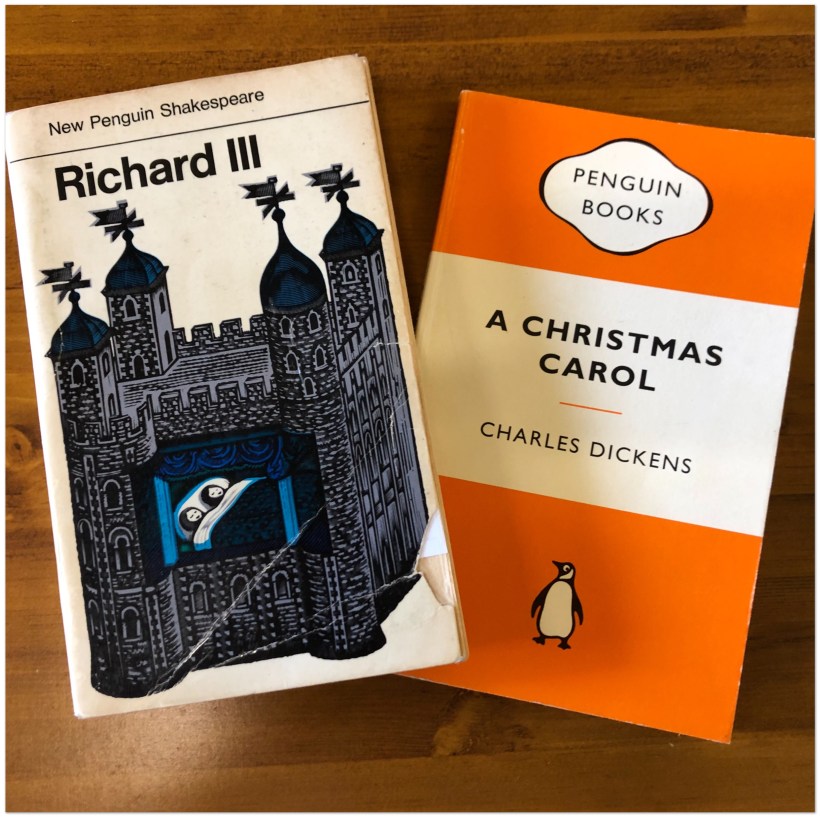
In fact, it’s really only a very tenuous connection. Scar is by no means the only brother of a king ever to aspire to the throne through nefarious means, so that’s hardly a convincing argument for a direct correlation between the two texts. You could use the same argument to suggest that ‘The Lion King’ is based on ‘Richard III’, which it clearly is not.
Furthermore, Sarabi – Simba’s mother – does not enter into a relationship with Scar. The fact that his mother married Claudius, his father’s brother and murderer, is the root cause of much of Hamlet’s angst and misery. Given that this is one of the crucial elements of the play, and there is zero correlation in ‘The Lion King’, that’s fairly conclusive evidence that the two are not the same story.
Sure, the ghosts of the dead fathers both appear and speak to their sons. However, they hardly communicate the same thing, and it’s at a very different stage of the plot. Mufasa tells Simba to grow up and retake his kingdom while Hamlet’s father urges him to get revenge on his brother for murdering him and taking not only his kingdom, but also his wife. “Remember who you are” is a very different message from “Revenge!”
Simba is nothing like Hamlet in character, other than being the son of the dead king. Simba is naturally optimistic, fun-loving and adventurous. Simba runs away thinking he’s responsible for his father’s death. Morose and pessimistic, Hamlet hangs around the castle, feigning madness and overthinking everything to the point where his agonising over what to do actually prevents him from doing anything much at all.
The correlations among the minor characters are, similarly, only superficial.
While both Simba and Hamlet have two friends, Timon and Pumbaa are not anything like Guildenstern and Rosencrantz. Timon and Pumbaa rescue Simba and remain his friends throughout the story. Hamlet’s friends are quite willing to sell him out at Claudius’ bidding, and there is nothing loyal or supportive about them.
Both Simba and Hamlet have girlfriends, but Nala doesn’t go mad and drown herself in a river.
Zasu and Polonius both talk way too much, but that’s about the only similarity between them.
In fact, that’s the difference between the two in a nutshell: ’The Lion King’ is life-affirming and positive. In direct contrast to ‘hakuna matata’, there is no ‘problem free philosophy” in Hamlet, a play that philosophises about death and suicide and which finishes with the main characters and many of the minor ones dead.
So, there you have it. The difference between ’The Lion King’ and ‘Hamlet’ is a matter of life or death. The basic premises are polar opposites, so the two cannot possibly be the same story.
I discovered this post on the abooknation today. It reminded me of starting my own book blog, although my reasons were slightly different.
Like this blogger, I have always been an avid reader, but it was really only when my first book was published that I began to understand the true value of a review for an author.
It’s really the only feedback you get from readers.
A negative review can crush your soul until you think about the fact that you haven’t liked every single book you’ve picked up, either. Sometimes it’s a matter of taste.
A thoughtful review helps you improve your writing and motivates you to keep going. And if someone praises your work, it’s incredibly satisfying and fulfilling because you know you’ve connected with a reader’s soul.
The fact that such a small proportion of readers leave reviews does not really surprise me, because I had never done so before, either.
Once I recognised the need for reviews of Indie books, I saw that this was an opportunity for me to use my love of reading to help other Indie authors by leaving an honest, constructive review.
Thus, Book Squirrel was born.
After developing my confidence with book reviews, Book Squirrel’s blog extended to include author spotlights and interviews, book events and, recently, a range of integrated Indie book promotion services.
I love blogging about books and supporting other Indie authors. I enjoy giving back to the Indie author community and showing others how positive and proactive Indying is done.
Book Squirrel brings me, and others, joy. And that is the best reason ever to keep going.
I’m not sure if I’ve actually ever mentioned why I got into book blogging but if I did I don’t think I made a blog post about it so… HUR WE GOO:
I’ve always loved reading but I feel like I went through phases where I went on a bit of a (very) long slump until I read a book that hooked me back into reading! I’m someone with the shitest memory, even now when someone asks me for book recommendations I have to skim through my posts to jig my memory of what books I’ve read. So around 4/5 years ago when I got back into reading, I had no idea that book blogging was a thing, I thought why would anyone want to hear my rambling thoughts about a book I’ve read??????
Whenever I finished a book I would write up a review and literally just leave it…
If you’ve been following my blog for any amount of time, you’ll probably know that when I’m not blogging, reading or writing, or strutting my stuff on stage in musicals, I’m a teacher.
Teaching is demanding and tiring and stressful, but I am always up for a great booknerdy discussion with my students, who I happen to believe are some of the coolest kids on the planet. That is one of the parts of my job that I really love.
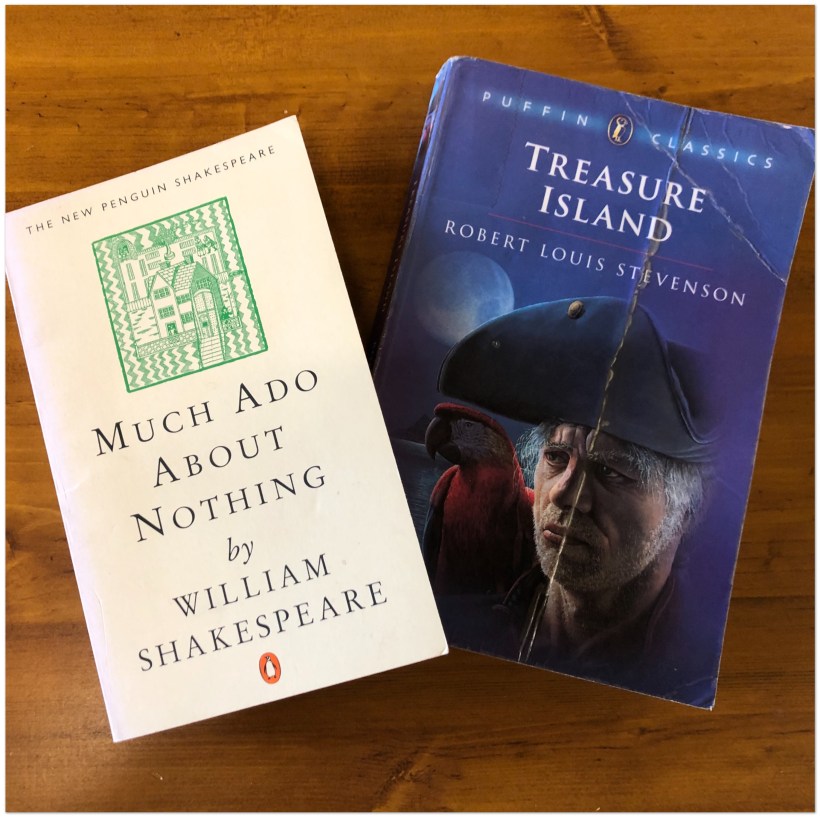
The fun continues this semester. I’m excited to be teaching four more texts I really enjoy. My Year 9 English class are going to study ‘Much Ado About Nothing’ and ‘Treasure Island’. My Year 11 English class will be studying ‘The Complete Maus’ and ‘The Book Thief’.
Teaching teenagers can be a tough gig sometimes, but it also has its perks.
If you had a teacher you liked, I’d love to know what it was about them that appealed to you or inspired you.Leave a comment and inspire me!
It’s easy to read a post and move on, andeven easier to like a blog post without reading it.
But stop and think for a moment. How much more valuable to the writer, and other readers, if you actually bothered to respond. Isn’t that what you’d hope for when writing your next blog post? Nobody wants to invest time in writing something that people are just going to skim over.
Not only that, but you will gain more from the post and from the interaction with others than you realise.
You might gain new ideas or perspectives, or you might just end up feeling a little better about life.
It doesn’t have to be a long or complicated post. Even just saying “thank you” or “I liked this!” does the trick.
However, commenting on a blog post is more useful than just propping up the ego of some blogger who…
I’ve spent some time over the past few weeks discussing what I like and what frustrates me about different social media platforms. Most of them I’ve ended up feeling quite positive about, but it occurred to me today that I never even thought to discuss Tumblr.
I don’t even know if Tumblr is still really a thing or not.
I have a Tumblr account, and I post there, but it feels a little like shooting into the void. I still feel as though I don’t understand it. And that means I’m probably doing it all wrong.
Does anyone out there use Tumblr? I would appreciate any hints or tips you could give me to make my experience there more satisfying.
And if you’d like to connect there, that would be great!
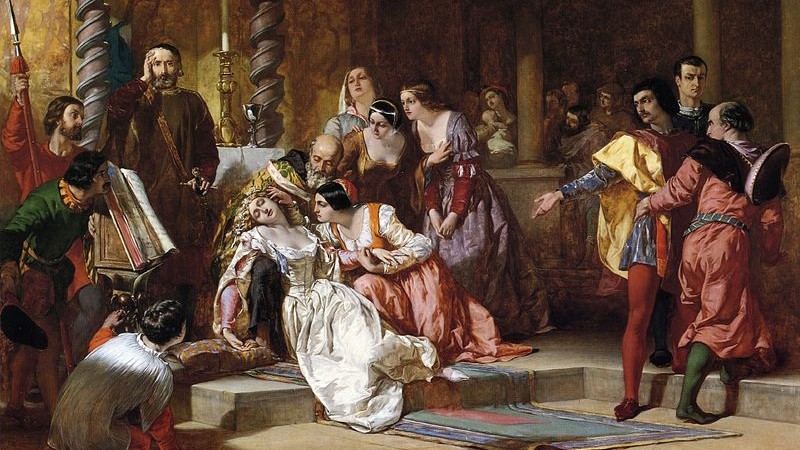
Much Ado About Nothing by Alfred Elmore, 1848. Image: Public Domain.
‘Much Ado About Nothing’ was written in 1598-99. It is one of Shakespeare’s comedy plays, which means that the main characters enjoy a happy ending.
In that sense, the word ‘comedy’ has changed over time, because now it’s understood to mean a text that is designed to make the audience laugh. There is plenty of humour in this play, though, as it was written purely to entertain and amuse the Elizabethan audiences.
While it’s all about the entertainment, the play does explore some key ideas in ways that are designed to make the audience consider or contemplate those concepts for themselves.
The play revolves around the challenges encountered by several couples who are in love but face various challenges in their personal lives that threaten their happiness and wellbeing. The ways in which different people respond to those conflicts and complications are well worth thinking about, because relationships are always challenged by problems of one kind or another. As Shakespeare observed in ‘A Midsummer Night’s Dream’, “the course of true love never did run smooth”, an epithet which is demonstrated with profound clarity in ‘Much Ado’.
Questions of commitment, trust, belonging, family dysfunction, hatred and revenge all emerge in this play, seamlessly woven into and underpinning the plot and the responses of the characters. It is those timeless ideas that enable audience five hundred years later to still appreciate and relate to Shakespeare’s plays even though the language and many elements of our society have evolved since then. Shakespeare really was a master of exploring and portraying human nature at its best and its worst.
In contrast to those more serious ideas, one of the things I enjoy most about this play is the wit and banter between Beatrice and Benedick. They’re crazy about each other, but spend most of their time insulting and taunting each other because neither one knows that other is crazy about the other. In that way, theirs is an unconventional romance because there’s no formality, no swooning, and no overly sentimental conversations. They’re far more likely to be saucy or sarcastic than sickly sweet.
Dogberry is hilarious in his frequent mangling of the language and the way he continually bungles his job as the constable despite his pretentiousness and high opinion of himself. He is entirely inept and ridiculous, providing some welcome comic relief during the more emotionally intense phase of the play.
I also enjoy the way in which Shakespeare uses the characters and events of this play to make fun of the stereotypical romances that occurred in many popular plays and stories of the time, adding another level of wit and engagement to this play. I do love a bit of snarky, subversive humour, especially when it comes to the tropes of the genre of romance.
As with all good Shakespeare plays, there are a couple of characters we can enjoy hating on. Don John, in a perpetual bad mood, seems determined to make everyone else suffer, just because things haven’t always gone his way. His selfish dudgeon may be as annoying to the audience as it is to the rest of the characters, but his blatant disregard for Hero makes him despicable.
I also harbour significant dislike for Claudio and Leonato because they never even stop to consider that Hero might be innocent of the accusations levelled against her. For two men who love her – albeit in different capacities – they have a mighty strange way of showing it. They don’t give her any credit for honesty or integrity: instead, they both default to outright condemnation. The fact that Claudio delivers his judgement with such vengeance puts him right into my “love to hate” group with Don John.
Finally, I can’t help but love a play that can get so much mileage out of a line like “hey, nonny nonny!”











 WordyNerdBird