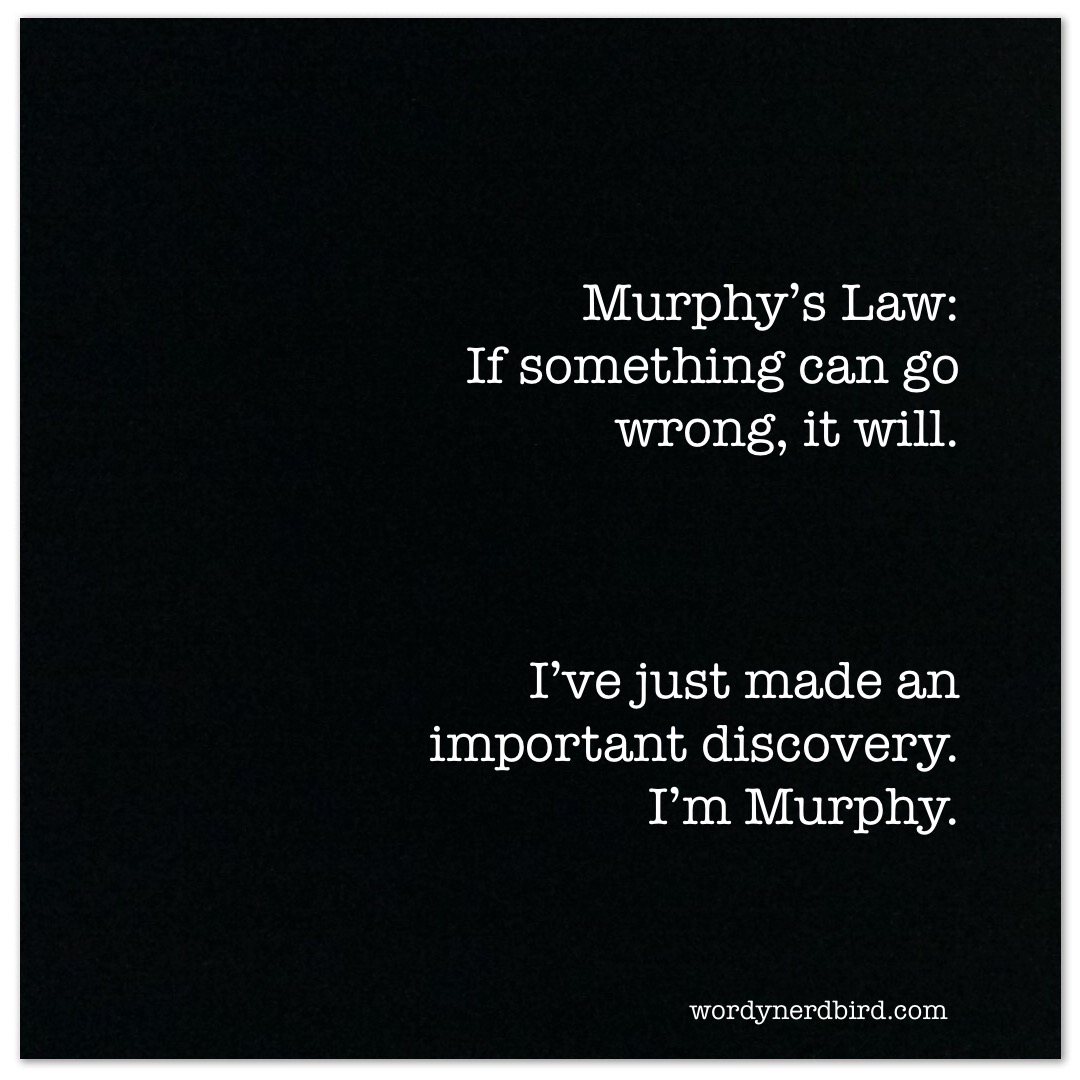
No matter how bad things get, never, ever, comment that things can’t get much worse.
They can, and they will. The universe seems to take that kind of talk as a dare.
I am living, despairing proof.
No matter how bad things get, never, ever, comment that things can’t get much worse.
They can, and they will. The universe seems to take that kind of talk as a dare.
I am living, despairing proof.

I found this discussion on the Nerdome blog about the nature of true satisfaction very interesting.
I fully agree with it for the most part.
And yet, the past three weeks would have been a lot more satisfying and a lot less sucky if my car would quit jerking me around, the garage door would open and close as it’s supposed to, and if the costumer for my show had not done a “no show” on me seven weeks out from putting my school’s musical on stage.I’m independent. I’m resilient. But golly gosh, sometimes satisfaction does come from outside oneself.
Before dying at the age of 68, Seneca the Younger made vast contributions to the school of philosophy, most notably in Stoicism.
The influence of Seneca’s work, however, would reach far greater than the school of ancient philosophy, and many of his principles and letters have moulded the landscape of the modern self-help world.
During his retirement and not long before his death, Seneca spent his days writing letters to his friend Lucilius, which have since been collated into a series of 124 letters known as ‘Epistulae Morales ad Lucilium’— Moral Letters to Lucilius. (These are summarised in the modern-day translation, ‘Letters From a Stoic’.)
Seneca’s letters detail his innermost thoughts, offloading his lifelong wisdom before passing. These writings contain a wealth of thought-provoking and insightful material…
View original post 897 more words
I have read most, but not all, of these quotations before, but I still find them to be very pertinent reminders of the ways in which I need to continue to develop and refine my craft as a writer.
They’re all good advice, although my favourite is the contribution from Chekhov. Not only is it instructional, it’s so poetic and powerful.
I’m also very partial to the advice from Edgar Allen Poe, because he is someone whose work I love reading, and has been an enormous influence own writing.

This fabulous infographic image was created by the fine people at assignmenthelper.com
https://wordynerdbird.com/wp-content/uploads/2019/07/time-3306753_640.jpg
I am a real sucker for posts that offer writing tips, publishing tips, and the experiences of other authors and bloggers. I’ve shared a number of them on this blog, because some people have genuinely good advice and share their experiences in a very positive and constructive way.
This response to those kind of posts is quite refreshing in its honesty and in its explanations of why those posts can actually be demotivating for some people. I can totally relate to the feeling of disappointment in myself that I haven’t adopted and implemented more of the great advice given by other Indie authors since beginning my own author journey, and to the sense of “exhaustion” at the number of “You Can Do This If You Follow My Formula” posts out there.
It’s true that those hints and tips for success aren’t “one size fits all”, and nor is success. There are many ways to measure success, and we all have individual goals that determine what our own standards or images of success might be.
It is also fair to say that there is so much advice, so many tips, so many things people tell us to do, that it’s simply not possible to try it all out, and we really do need to remain realistic about what advice we are going to take on at any given time.
I do like Daegan’s points about daily and weekly reviews of what has been done or achieved. I actually do this, and it helps me stay on track because I find achieving small goals and milestones along the way incredibly motivating.
I don’t meditate as such, but I do set time aside for quietness and reflection in my daily routine. I wear a lot of hats in my day-to-day life, so taking even just a few minutes when my brain has nothing to do is a vital means of refreshing and resetting my mind at various stages of the day. As an introvert who is often surrounded by people all day long and again at home, that quietness is also how I recharge my energy, so it’s a crucial thing for me to do.
My “takeaway” from this article is that it’s important for each of us to set our own goals, define what sort of “success” we are hoping to achieve, and find what works for us as individuals.
The one thing we should all do is keep striving to make it happen.
I have read so many articles that have a headline similar to:
“If you want to be successful, adopt these 5 habits right away!”
The problem is, the author is always telling me what I should do to be successful as if my success and their success looks exactly the same.
I get so many of these articles telling me about the habits that I should have or my life is clearly falling apart. I’ll admit, many are good and I have certainly tried them.
But what about the author? Are they using all of those tips? Do they really have all of those habits locked down when they had a post a month ago telling me 12 other success tips? I want to know the person behind the word and if it’s actually worth my time.
Maybe I’m small minded and not wired for success, but…
View original post 1,806 more words
https://wordynerdbird.com/wp-content/uploads/2019/07/paulskenazy2018color.jpg?w=225
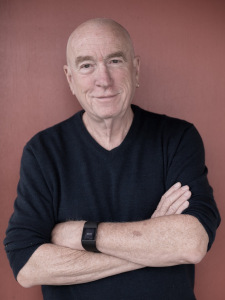
I found these writing tips by Paul Skenazy to be very pertinent to myself as a writer.
I really like the one that says “Never lose your awkwardness,” I have awkwardness by the bucketload, so I’ve got that part covered.
Really, though, when I read and consider these points, they converge into an encouragement to be the writer only you can be, and to tell the story the way only you can tell it.
Individuality,
Awkwardness.I think I’ve got this.
 By Paul Skenazy
View original post 618 more words
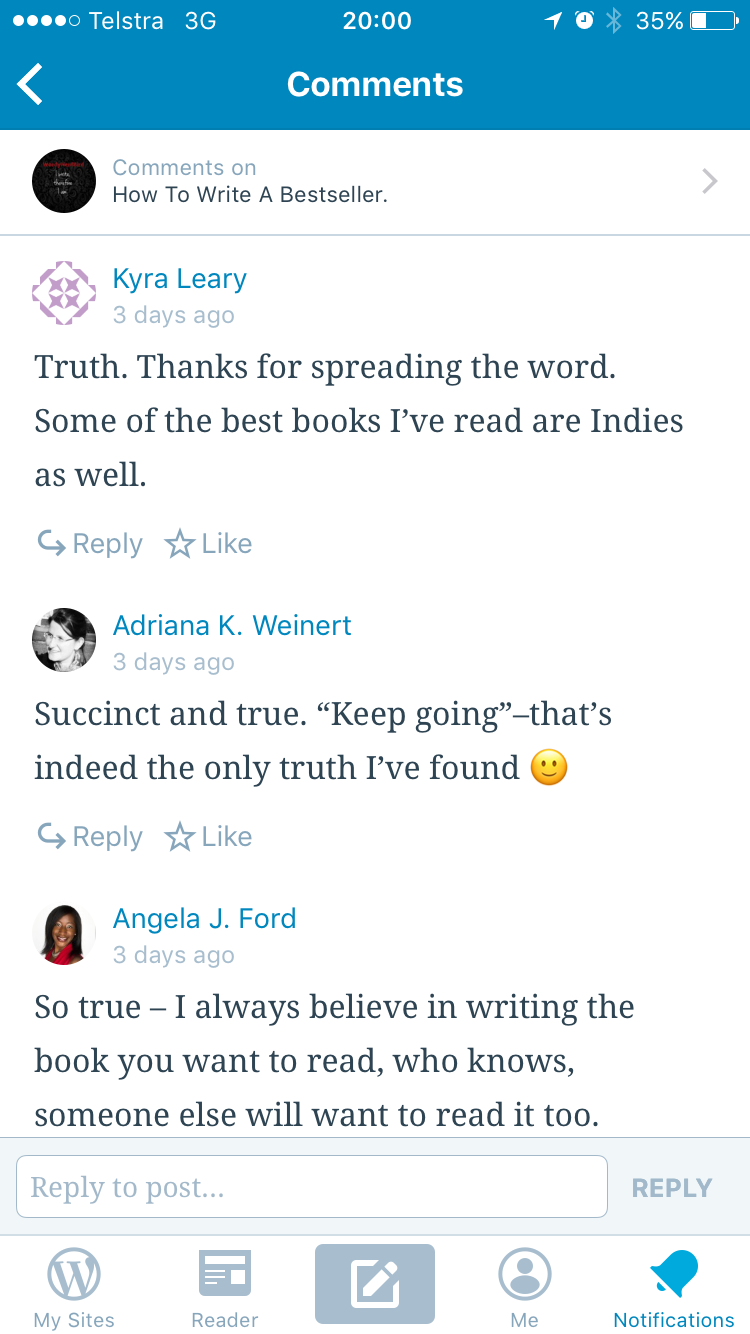
I’ve questioned quite a bit recently why people don’t engage or leave comments on WordPress blog posts as much as they do on Facebook or Instagram.
As I suggested in this post some time back, maybe it’s because many people just don’t realise how encouraging or helpful leaving a comment can be.
https://wordynerdbird.com/wp-content/uploads/2019/07/f9975918-1ad4-4ab3-8b88-640a3031eb3c.png

It’s easy to read a post and move on, andeven easier to like a blog post without reading it.
But stop and think for a moment. How much more valuable to the writer, and other readers, if you actually bothered to respond. Isn’t that what you’d hope for when writing your next blog post? Nobody wants to invest time in writing something that people are just going to skim over.
Not only that, but you will gain more from the post and from the interaction with others than you realise.
It doesn’t have to be a long or complicated post. Even just saying “thank you” or “I liked this!” does the trick.

However, commenting on a blog post is more useful than just propping up the ego of some blogger who…
View original post 247 more words
In a recent post, I commented that someone suggested that the angry face reaction to one or more of my Facebook posts may have contributed to some of the problems I have been having with them flagging and suspending my posts for no obvious reason.
It turns out that this theory may well be correct.
Having read a number of conversations on forums in the hope of discovering the cause of my problems, I have a strong suspicion that the algorithm may well interpret an angry face reaction as meaning that people don’t like the post, or object to it somehow. Whether or not this causes that post to undergo more scrutiny by the algorithm, and whether or not that might result in the post being deleted by Facebook, and the user having certain types of access or posting permissions suspended for a time, can only be a matter of conjecture, but it would certainly explain my circumstances.
The problem with that is that people might not intend for that to happen at all when they use the angry face reaction. It may be that they are sharing the anger, frustration or dislike expressed by the author of the post about something entirely different. It’s not the post they object to, it’s whatever the writer is angry about that makes them angry, too.
It would be most unfair if the algorithm were to completely misinterpret that and set in place consequences that are both unintended by the responder while they are trying to be supportive of the author of the post.
While I cannot prove that this is what has happened to me and to others, it seems to me that it is better to be safe than sorry.
In short. unless someone posts content that is completely objectionable, I will not use the angry face reaction.
There are, after all, much more helpful alternatives:
That way, your friends and their posts will actually receive support rather than potential suppression.
Let’s save the angry face for those posts that express hatred, vilification, prejudice, discrimination or violence. They’re the ones that should be suppressed.

Author’s note: When I first wrote this post, it was based on information I found in forum conversations while looking for the answers to problems I was having with my posts and my ability to post on Facebook being suspended even though I was not active, and had not been for some hours, when those suspensions occurred. The posts in question had received angry responses because people were angry at the problems I was having.
I should have recorded the urls of those conversations at the time, but failed to do so then, and am unable to find them again now.
Therefore, I have edited my original post to reflect the fact that what I have written here can now only be considered anecdotal and conjectural in nature.
My intention was only ever sincere and honest, and my initial statements based on information that did indeed seem to be consistent with my own experience. I apologise that I am unable to direct my readers to that evidence now.
I quote, verbatim, this afternoon’s status on my Facebook profile.
Dear Facebook,
You have been temporarily blocked from accessing some of my features.
I’m not telling you why.
I”m not going to listen to your appeal.But you can bet your algorithmic little hiney I’m going to have my eye on you for quite some time. Possibly forever.
Joanne Van Leerdam, June 25, 2019.
So, it seems that I’ve run afoul of the Facebook algorithm yet again.
Now they’re suggesting I’m a robot.
You read that right. A robot.
I haven’t made identical posts in forever. I vary what I post from page to page. l really don’t know what brought that on.
And let’s not overlook the irony of an algorithm calling me a robot. It’s beyond ridiculous.
They can’t still be sour about my “What I Do and Don’t Like About Facebook” post… can they?
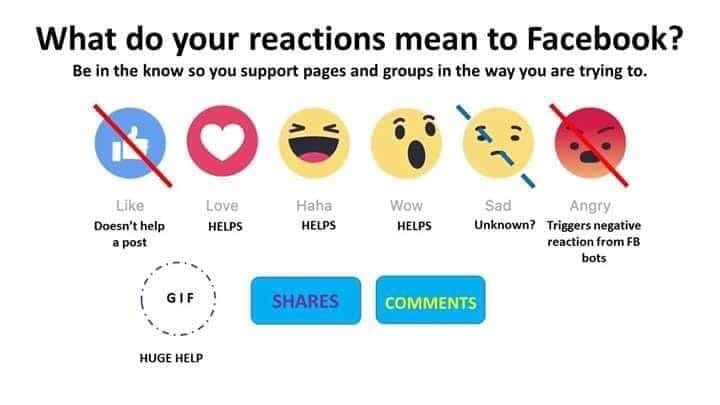
One suggestion that has been made is that when I’ve posted about things that annoy me, some well-meaning people have responded with the “angry face” reaction because they’re angry at the nonsense that a certain social media platform is throwing at people lately.
Apparently, for all its cleverness, the Facebook algorithm is unable to comprehend that it’s actually Facebook people are angry at. It interprets this reaction as those people being angry at me.
Because who could be angry at Facebook or its ever-changing algorithm?
It’s fair to say that Facebook is not doing a single thing to recommend itself to me right now.

It seems to me that people either love Twitter or can’t stand it. I am definitely in the former category, for several reasons:
That all sounds pretty great, doesn’t it?
However, no social media platform is without its pitfalls.
My dislikes include, in no particular order:
Overall, I find Twitter much more user-friendly than Facebook, but I doubt that I would if I hadn’t taken the time to learn how to keep my Twitfeed positive and focused, and free of politics, gossip and drama.
In the ever-evolving state of affairs that is the Facebook algorithm, there is one recent change that is actually quite easy to work with. Facebook now places more value on the other reactions than it does on the standard “thumbs up” or “like”.

I can understand why.
It takes just a little more effort, so it is easy to see why it might be interpreted as a more thoughtful and deliberate response to a post than simply hitting the default.
It’s all part of their reported change of focus from content to engagement. It may be that this is a way to still be able to increase the reach of our posts, and boost our audience engagement at the same time.
So, I’m trying to respond accordingly:

It’s all positive interaction and engagement, so it can’t hurt.
Hopefully, it will be contagious. If people see more hearts and wow faces, and additional comments, they might start using them too!