How Do We Build and Maintain a Thriving Indie Author Community?

It is easy for an Indie author to become discouraged by the challenges that come from various sources. It’s a tough gig sometimes, especially for someone who is new to the world of self-publishing. 

So how do we develop and maintain a thriving and motivated Indie author community that we all want to be part of? 

These are the key behaviours we need to adopt and make regular habits: 

  • Encourage each otherRead each other’s work
  • Give honest, constructive feedbackHelp each other achieve excellence 
  • Share each other’s work and social media posts 
  • Be professional about every phase of the writing, editing, publishing and marketing process.
  • Be free and liberal with sharing insights, experience and knowledge that will help those who are new to our community.

How do I know these things work? 

The more time you spend in the community, the clearer the divide between those who do them and those who don’t.

Those Indies who already do these things consistently demonstrate that they are are the most engaged, motivated and productive authors. They are positive and proactive. 

Most significantly, they express joy in doing these things. You can’t fake or manufacture that. 

Those who don’t support others are more likely to express jealousy and resentment in response to the success of others. They are more likely to be critical and competitive. 

And those who adopt the “success at any cost” will be far more likely to turn to less ethical avenues of advancement. It is from this small, murky pool that those willing to cheat the system will emerge. 

All in all, that doesn’t seem like much of a choice to me. I want my books to sell because they are good, not because I am pretending to be something I am not. 

Women in History: Eleanor of Aquitaine

One of the most powerful and influential women of her time, Eleanor of Aquitaine was born in the early 1120s and lived until 1204. 

By birth, she became Duchess of Aquitaine, a province in the southwest of France, when her father died in 1137. Independently wealthy and renowned for her beauty, she was the most sought-after bride in Europe.

Eleanor married King Louis VII of France in 1137, but the marriage was not happy. She sought an annulment of her marriage— one wonders how many women were in a position to do that for themselves back then— but it was rejected by the Pope.

It was not until 1152 and Louis’ agreement because she had not produced a son that Eleanor was able to obtain an annulment on the grounds of their family relationship. Louis kept their daughters, but Eleanor’s lands were restored to her and Eleanor was free to move on, which she did almost immediately.

Two months later, despite the efforts of two other lords to abduct and marry her, Eleanor married the Duke of Normandy, who would become King Henry II of England in 1154.

Five sons— three of whom became kings—and three daughters secured the line of inheritance to the English throne before Eleanor and Henry grew apart and became estranged, their marriage complicated by Henry’s frequent affairs and numerous illegitimate children.

While the idea of courtly love was not new, Eleanor and her daughters brought the concept to life at Poitiers, where they and their courtiers discussed matters of love and chivalry and adjudicated both theoretical questions and disputes between lovers. This gave rise to the great popularity of courtly love literature in Europe.

Suspicion that Eleanor was encouraging one or more of their younger sons to rebel and possibly ultimately challenge him for the throne led Henry to summon Eleanor to meet him at Rouen in 1173, from whence he took her captive and kept her as his prisoner at either Winchester Castle or Sarum Castle, and then at various other locations, for the next sixteen years. 

Eleanor was released from her albeit comfortable imprisonment by her son Richard, who became king on Henry’s death in 1189. She returned to Westminster and was welcomed with oaths of loyalty from the lords and, although not officially given any position or title, went on to rule for several years on behalf of her son Richard the Lionheart during his extended absences from England, both while on Crusade and while being held hostage by the Holy Roman Emperor, Henry VI. She was instrumental in raising the money needed and negotiating to secure Richard’s release. 

After John’s accession to the throne on the death of his brother, he sent Eleanor to Castile to bring back one of her granddaughters for an arranged marriage to secure a truce and alliance with Philip II of France. On her way there, Eleanor was kidnapped by Hugh IX of Lusignan who held her hostage, demanding land that his family had owned before selling it to Henry II be returned to him. An old hand at dealing with men who couldn’t think of a better way to solve their problems than to take someone captive and make demands before letting them go, and more than likely quite weary of men telling her what to do, she gave him what he wanted regardless of whether or not it was hers to give, negotiated her own release and went on her way.

That wasn’t the last of the trouble on her errand. On the way back, Eleanor and her granddaughter Blanche spent Easter at Bordeaux where they met a renowned soldier, Mercadier, who agreed to escort them back to Normandy. However, he was killed by the man-at-arms of one of his  rivals.  Shocked by his death, Eleanor retreated to Fontrevaud Abbey, committing her granddaughter to the care and escort of the Archbishop of Bordeaux. 

Despite ill health, Eleanor left Fontrevaud when hostilities once again broke out between England and France. She returned to Bordeaux to support John against the claims of her grandson Arthur, Duke of Brittany.

Not easily dissuaded, Arthur besieged her in the castle of Mirabeau until John arrived and captured Arthur, who was still only fifteen years old. One could be forgiven for suspecting he inherited some of his nerve from his grandmother.

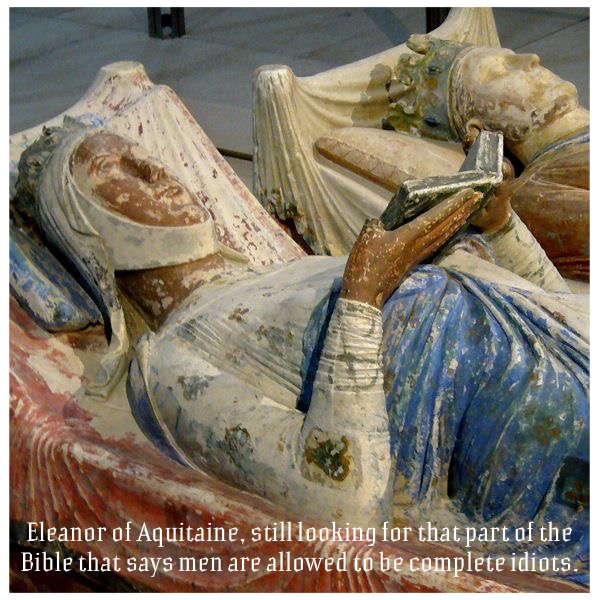
Eleanor returned to Fontrevaud Abbey, where she died and was entombed beside her husband Henry and her son Richard in 1204. Her effigy has her reading a book, presumably a Bible. 

By the end of her life, she had been queen of both France and England, and become the mother of not only two kings of England and one of France, but also of several queens of European nations and provinces. Eleanor had led armies into battle on more than one occasion, and had been a leader of the Second Crusade.  

She was clearly a woman of great temerity and independence of spirit. Even though she very obviously lived in a man’s world, she would never settle for not having just a bit of it for herself and leaving her mark on it when she left. 
Women in History: Boudicca

Boudicca, also known as Boadicea, was queen of the Iceni tribe in the first century AD. 

The Iceni people lived in south-eastern England at the time when the Romans were invading and taking possession of the land. When the Roman forces gained control of southern England in 43AD, they allowed the Iceni king Prasutagus and his queen, Boudicca, to continue to rule.  

This changed when Prasutagus died: the Romans assumed direct control and confiscated the property of all the Iceni families that were considered important. Boudicca was stripped and flogged  and her daughters were raped. Not surprisingly, the resentment against the Romans grew in intensity and became more widespread.

In 60 or 61 AD, Boudicca and the  Iceni seized the opportunity to rebel while the Romans were distracted by a military campaign in North Wales. Other nearby tribes, also resentful of the Romans, joined the uprising.

As the Romans soon discovered, his was not just some local skirmish or a it of grumbly discontent.

Boudicca and her warriors not only defeated the Roman Ninth Legion, they destroyed the city of Camulodunum (Colchester), at that time the capital of Roman Britain, then killed thousands of people as they sacked the cities of Londinium (London) and Verulamium (St Albans). 

The scale and decisive nature of the rebellion caused Nero to consider withdrawing from Britain altogether. 

Finally, Boudicca’s forces were  defeated by a regrouped Roman force led by the Governor, Gaius Suetonius Paulinus himself. It was a crushing defeat in which many Britons were killed.  

While some claim she died of an illness, Boudicca is widely believed to have poisoned herself tather than being captured by the Romans. It does seem a fitting final act of defiance for that strong, brave and very angry woman to die in her own terms and not at the hands of the overlords she hated.


Women in History: Æthelflæd

Meet one of my favourite women in history: Æthelflæd, Lady Of The Mercians.

In today’s Women’s History Month post, I want to introduce you to another favourite feisty English princess: Æthelflæd, Lady of the Mercians.

Born in 870  as the first daughter of King Alfred the Great and his wife Ealswith,  she grew up in a kingdom plagued by Viking invasions and increasing Danish domination of lands the had until recently been other Anglo-Saxon kingdoms. 

In 878, the tide began to turn when Alfred defeated the Danes at the Battle of Edington, and  Æthelred  became leader of the the half of Mercia that was still under English control. As Lord of the Mercians, he acknowledged Alfred as King over all the English people who lived in areas not controlled by the Vikings. This alliance was sealed by the marriage of Æthelflæd to Æthelred. 

Not content to be a political pawn, Æthelflæd established herself in Mercia as a very capable co-ruler with Æthelred, and when his health began to fail, she took on the responsibilities of rule. When he died in 911, she assumed sole leadership of the kingdom and ruled in her own right as the Lady of the Mercians. 

This was the first time a woman had ruled an English kingdom, and she did a brilliant job of it. She fought against the Danes alongside her father and then he brother Edward, who became King on the death of Alfred in 899, enjoying victories that led to the Viking rulers of York offering her their loyalty in 918. However, Æthelflæd died before she was able to accept their offer and Edward absorbed Mercia into his own kingdom. 

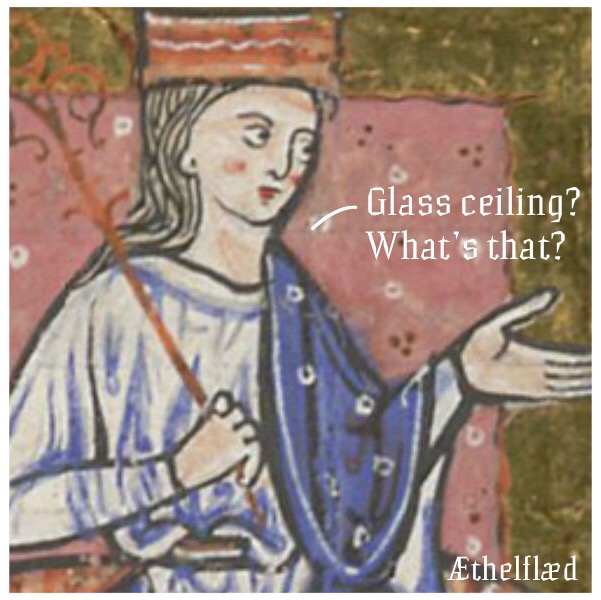
RClearly, Æthelflæd was a woman who was not content to take a passive role in either history or her own life. She recognised no glass ceilings, and showed most of the men around her— including her own brother— how leadership should be done. 

To learn more about this fascinating woman, I recommend Annie Whitehead’s fabulous work of historical fiction, To Be A Queen.

Women in History: Matilda

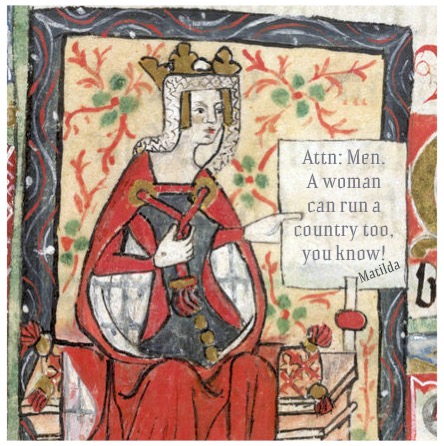
Matilda, also known as Maud, has long beem one of my favourite feisty women of history. Long before it was acceptable, let alone fashionable, she knew what she was entitled to, did everything in her power to get it, and refused to let any man tell her what she could or could not do. 

The daughter of Henry I of England, Matilda was born in London in 1102.
Her brother, William the Aetheling, was heir to both the English and Norman thrones. Matilda was married twice, both times in the interest of Political alliances that would help to protect strengthening Normandy against the French. In 1114 she was married to the German Prince Henry, who would later become the Holy Roman Emeror Henry V, but she was left childless and a widow when he died in 1125. In 1128 she married Geoffrey of Anjou, who gave the Plantagenet dynasty its name.

Her brother diedin 1120, making Matilda Henry I’s sole legitimate heir, and although a woman had not  ruled either England or Normandy on her own before, Henry forced his baronsto accept her as his successor. However, her marriage to Geoffrey was unpopular because the barons had insisted that Matilda should not be married out of England without their consent. In 1133, Matilda gave birth to her first son, giving the barons hope of a different heir, but he was only two when Henry I died.

In a swift and powerful coup, the English throne was taken by Stephen of Blois, grandson of son of William the Conqueror by his daughter, Adela. The church and most of the baronage supported Stephen, but Matilda’s claims were powerfully upheld in England by her half brother Robert of Gloucester and her uncle, King David I of Scotland.

A series of battles, captures and exiles ensued in a civil war between Matilda and Stephen and those loyal to each of them, a period referred to as The Anarchy. Never one to give up, Matilda kept on fighting despite the gradual attrition of her supporters, and managed to take Stephen as her prisoner at Lincoln in 1141.

A clerical council at Winchester acclaimed her ‘The Lady of the English” and she made a victorious entry into London, but the people thought her haughty and greedy, and rejected her before her coronation. She fled to the west of England, after which her support base continued to be depleted.

Matilda retreated to Normandy in 1148, and instead of fighting to regain her throne, sought instead to secure the position of her eldest son, Henry, who became duke of Normandy in 1150 and King Henry II of England in 1154. While Henry was active in ruling England, it was Matilda who oversaw and maintained the European elements of his kingdom.

The Facebook and Instagram Outage Crisis of March 13th, 2019

Despite the crisis that had unfolded overnight as I slept, I woke this morning to find that the sun had risen, gravity still worked, and the earth continued to turn on its axis. 

I had breakfast, got ready for work, and headed into a very busy day. Surprisingly, I found that the work deadlines and professional requirements that were in place yesterday still existed today. 

My students, however, were despondent. 

Them: Facebook is gone! Instagram doesn’t work! 
Me: Imagine how much work you might get done in the meantime!
Them: You’re not very sympathetic. 
Me: And that surprises you because…?
Them: Rolled eyes and sighs. Some lovely moments of dramatic pathos that I shall try to draw on in drama class. 

This left me wondering: what on earth does the world do without Facebook and Instagram? 
It seems the general response is to complain. 

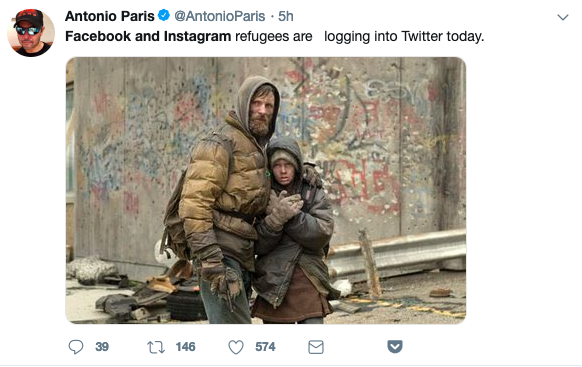
Many of the real social media junkies responded by rushing over to Twitter to complain and commiserate with their followers and the social media world in general. 

In all honesty, some of the responses are pretty funny. 

Others demonstrate that many people are much worse at dealing with this kind of thing than they should be.  
I mean, really, Australia?
Emergency services?
That’s… pathetic.

This one has to be my favourite. It cuts through the whining and combines the sublime and the ridiculous with glorious snark.
Jenny Bean Edwards gets an A+ for World Studies.

Cheer up, folks.
I’m sure Facebook and Instagram and their enormously profitable algorithms will be back soon.

Until then? You may actually be forced to either read a book or have face-to-face conversations with real people.

Alternatively, you can head to twitter and follow me!

Women in History: Claudette Colvin

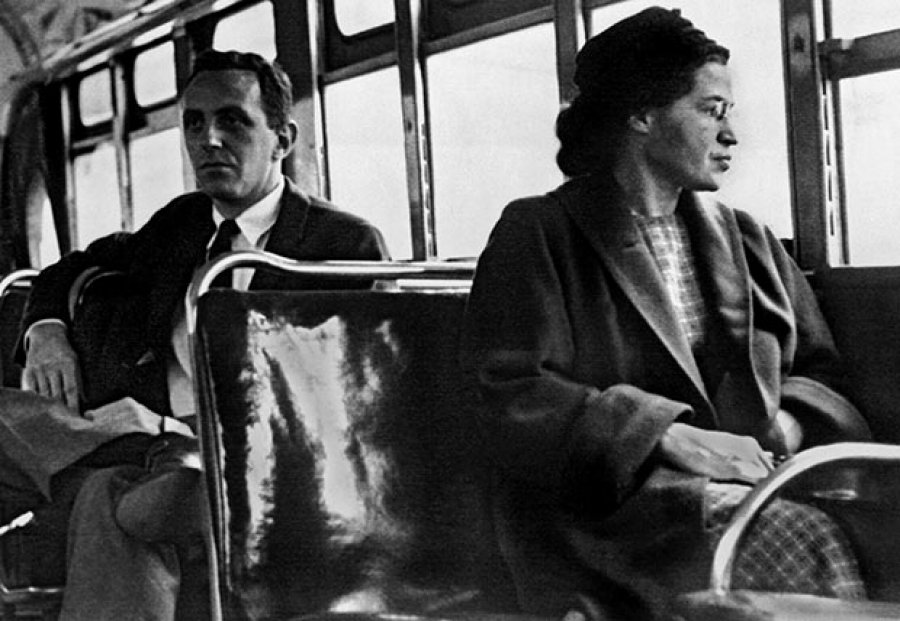
We’ve all heard of Rosa Parks, and rightly so. Her refusal to give up her seat to a white person on a segregated bus sparked the Montgomery Bus Boycott and was a pivotal moment in the Civil Rights Movement in the United States. 

The very bus on which she rode is in the Henry Ford Museum in Detroit, commemorating her actions and their importance in the history of the nation. 

Have you, though, heard of Claudette Colvin? 
Probably not. But you should have. 

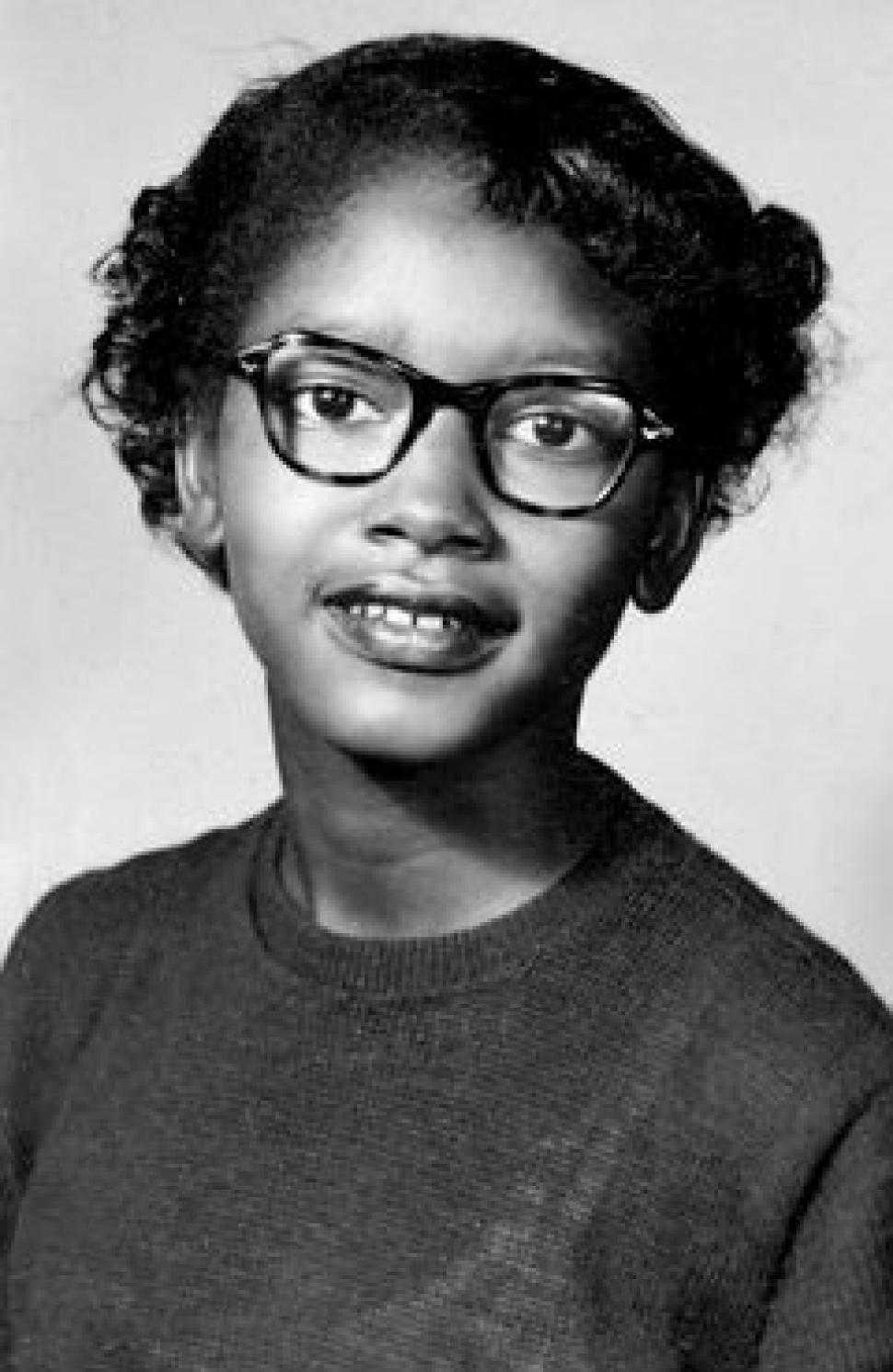
Nine months before Rosa Parks’ defiant actions, fifteen year old Claudette Colvin was riding a segregated bus home from school in Montgomery, Alabama, and refused to give her seat up for a white woman. 

Source: Claudette Colvin Biography, https://www.biography.com/people/claudette-colvin-11378 Accessed March 13, 2019

Colvin was arrested and tried in juvenile court for her defiance.  Her mother discouraged her from speaking publicly about her actions, preferring to let Rosa Parks take the spotlight. 

I have to wonder, though: just how much did Claudette Colvin inspire Rosa Parks to refuse to give up her seat? And why aren’t we taught with equal admiration about this brave young woman who made her stand by remaining seated?

I am sure of one thing, though: I will be including Claudette Colvin in my lessons on the Civil Rights Movement from now on. My fifteen year old students need to know that nobody is too young to change the world for the better. 

Was Jack the Ripper Actually Jill?

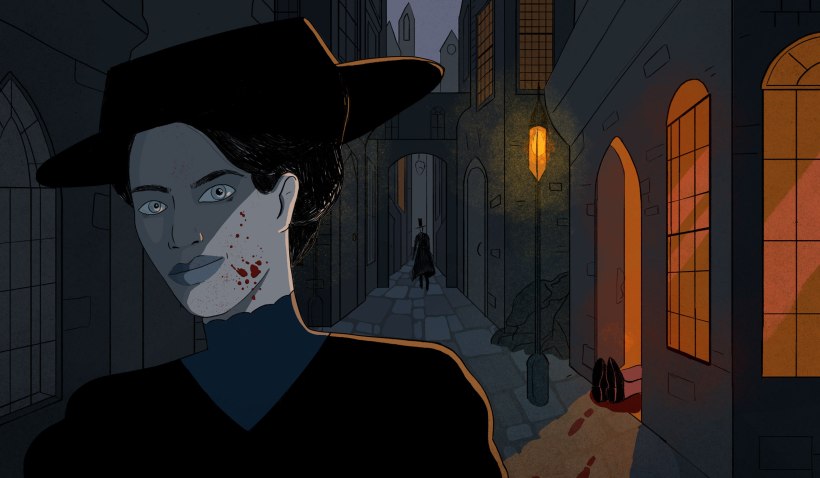
This is a fascinating article that presents a historical possibility that most of us have never considered. Was Jack actually Jill?

By sheer coincidence, I am currently enjoying Nicole Maniscalco’s ‘Stalking Jack the Ripper’ on audiobook, so the premise of this article really appeals to me, and the details discussed in it are some with which I have become more familiar over the past week.

Still, one doesn’t need to know the ins and outs of the case to understand this article’s insights and arguments about what is arguably the greatest unsolved true crime spree in history.

Both this article and Maniscalco’s book, either as a novel or audiobook, are excellent.

Tori Telfer's avatarLongreads

Tori Telfer | Longreads | March 2019 | 16 minutes (4,226 words)

Before the Zodiac Killer named himself, before someone strangled poor JonBenét, before the Black Dahlia was sliced open, and before Tupac and Biggie were shot six months apart under eerily similar circumstances, someone was slinking through the slums of London, killing women.

This someone — a shadowy aichmomaniac, possibly wearing a bloody apron — left the women of the Whitechapel district in shocking disarray. Their intestines were thrown over their shoulders; cultish markings were carved into their cheeks. One of them was found without her heart. To most people who saw the crime scenes or read the papers, everything about this appeared to be the work of a man — the brutality, the strength, the misogyny. And so in 1888, when people started looking for the Ripper, they were looking for…well, for a Jack. Was he a mad…

View original post 4,181 more words

Why Readers Should Be Paying For My Books.

Further to yesterday’s post about illegal book sharing sites, I thought it a good idea to state plainly where my books should— and should not—be found. 

My books are all available on reputable ebook sites: Amazon, Kobo, Barnes & Noble, iTunes, Google Play, and the like. 

They are not legally available anywhere for free. 

As I have openly stated previously, I do not believe in making my books available for free, nor do I accept books for free, because I strongly feel that authors should be paid for their work just like everyone else. 

Creating something excellent takes time, energy, and commitment. When a creator asserts their copyright and other creative rights over their intellectual property, it is their legal prerogative to place a purchase value on that work.

If a work of art, a book, a song or a movie are worth enjoying and owning, they are worth paying for. 

Indeed, I find the concept of someone claiming to be a lover of books, yet avoiding paying for a single one, hypocritical to say the least. 

To prosper by catering to those people? Despicable.

You Might Be On An Illegal Book Downloading Site if…

I have written several posts recently about scammers, cheats and piracy in the Indie publishing world.

This post by Suzan Tisdale lays out very plainly the ways in which readers can know that a book website is most likely illegal.

It’s hard to believe this is what it has come to: that people need to be informed so directly about the ways in which authors all over the world are being ripped off.

Yet this is one of those issues that goes much farther than most of us ever realise.