Serendipity: When Things Just Happen Really Nicely… For Once.

One of the things I really love is when, for even just a brief moment, my favourite things in the world converge.

There are a number of things in life that I’m passionate about. British history, especially the medieval period, has always been my favourite for reading and study, as have the works of Shakespeare, along with a good number of other writers.  A teacher by profession, I love interacting with my students and leading them to those golden “penny drop” moments when something becomes real and meaningful. I have always loved reading. And as an Indie author who understands how hard it is to find readers, and how much harder than that it is to get reviews, I’m committed to reading, reviewing and sharing great Indie books of all genres.  Annie Whitehead To Be A Queen
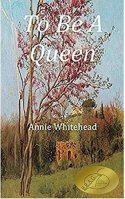
I was very excited recently to discover, read and review an Indie novel about the life of Aethelflæd, the Anglo-Saxon queen. To my absolute delight, it was well-written and beautifully told. I thought then that several Christmases had come at once.

Now, less than a month after posting that review, it’s happened again, and I find myself at a quite magical point in time where my passions have met and over lapped,  as though life has popped me into the middle of some invisible but very cool Venn diagram.

I’m currently teaching Shakespeare’s ‘Richard III’ in one of my senior English classes. Not only is the writing and language incredible – there are curses and insult exchanges galore, along with some great monologues – it’s also the one with the hunchbacked evil genius who usurps the throne and has himself crowned king, the princes being murdered in the tower, and a fabulous haunting scene! The historiography of the play may be fairly tenuous, but the audience is left in no doubt of the creative genius of the writer.  All of this means that I am getting paid to be an absolute nerd about the language, the writing and the history, all at the same time. That in itself is pretty darned great.
ScreenHunter_439 Feb. 21 23.43

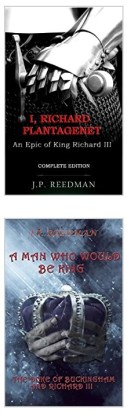
Tonight, though, as I was browsing through the Wordpress reader, I found an article about a great new Indie novel about the life of Henry Stafford, known in Shakespeare’s play as Buckingham, the ally and “other self” of King Richard III. When I went to a renowned global digital bookstore to check it out, I discovered the same author has also written a novel and several other books about Richard III.

That may not seem very exciting to some, but for me, it’s fantastic. I get to teach ‘Richard III’, indulge myself in Shakespeare and history to my heart’s content, and to read and review a couple of Indie books about two of the most fascinating characters in the play – and possibly in English history, it could be argued – at the same time.

My nerdy little mind is blown. I think I need to go and lie down.


How to Achieve A Visually Attractive Twitter Feed.

Just because you can use 280 characters, doesn’t mean you should.

Over the past few weeks, I’ve noticed a lot of people commenting on how they love the new 280 character limit for Twitter. I’ve also noticed a lot of people writing long tweets with no line breaks, and barely any space in them to take a breath.

My message here may be unpopular with those folks, but it must be said: just because you can use 280 characters, doesn’t mean you should.

Remember, people are basically lazy. They don’t want to have to work to figure out what you’re saying, and they don’t want to wade through thirteen hashtags to do so, either.

When it comes to writing tweets, I’ve always assumed that the rule of “less is more” applies. I want my message to be short, easily understood and digested, and easily acted upon.

ScreenHunter_439 Feb. 20 21.34

I’ve always tried to keep my tweets to well under the 140 characters, as short as 100 characters if possible. A short, effective message is more attractive to people than a slab of text.

As an author, I’ve heard more people than I care to try to count tell me that they don’t like reading. (I know, right? I don’t understand it either.) However, it’s something that I’ve taken to heart when writing anything promotional. Any ad, tweet, or invitation is completely ineffective if it puts people off before they even really look at it.

I always leave a line of space between my main message and my hashtags. It breaks up the tweet so it looks more accessible. I also think that it makes the hashtags a bit more obvious, given that some people might take notice of those before the actual message.

When it comes to hashtags, I wrote a few months back about ‘How To Avoid Hashtag Hell’ in social media. I advised then to use two well-chosen hashtags, and no more. Given the increased word limit, I’m about to start experimenting with using three to increase the discoverability of my tweets, but that would be my upper limit. This isn’t a rule, as such, but simply my desire to keep my tweets looking simple and attractive. I’m no expert in advertising or design, but I go by what I experience myself: when a message is easy on the eye, it’s going to get more attention.

On that same assumption, I always include an image. People are very visually oriented and will, more often than not, look at the picture before the text. I try to make the image relevant to the post, and will often superimpose text and web addresses on the image in a way that won’t detract from the visual effect I hope it will achieve. Where appropriate, I use logos that will build familiarity with my work. Otherwise, I use my own images or stock images that are copyright and royalty free, so that I’m not infringing on copyright, either. There are lots of places that offer them, but I find pexels.com and pixabay.com to be excellent sources of quality images that are free for reuse for any purpose.

ScreenHunter_437 Feb. 20 21.33I use a link shortening service so that half the tweet isn’t taken up by an enormous web address or link. Bit.ly is free, so are many others. I use Buffer to schedule my tweets, and it shortens links automatically, so that’s a double win!
A further advantage of using Buffer is that it enables me to recycle my tweets so that I don’t have to spend hours each week coming up with new content. I regularly change the hashtags and messages on a reused tweet so that I’m not just giving people the same old thing time after time.

When it’s done a few rounds, I’ll rest a great tweet for a while, and pick it up again down the track if it’s still relevant. I save them in files in Evernote, so all I have to do when I come back is copy and paste it into a new message, attach the image, and off I go.

ScreenHunter_439 Feb. 20 21.33

Some of my tweets don’t have links. This is a deliberate decision on my part – sometimes I just want to offer a thought, a joke, or a compliment to my audience without asking them to do anything in return. That’s not a rule either – it’s just how I like to do things.

Finally, mix it up. If all you tweet is ads for your book or service, or quotations from your work in progress, it can get a little humdrum. I keep things varied by tweeting about great books, free reads, short reads, book reviews, magazines, great blog articles, and interesting tidbits of history, science and general interest far more than I tweet ads for my own books. My books are worthy of advertising and attention, and I would love to find more readers, but I don’t believe in shoving them in people’s faces at every opportunity, either.

I know all that seems like a lot of work, but being active on social media does take effort and thoughtfulness if you’re going to have something meaningful to offer.

Since I have been following these guidelines, I have had new followers every day. I started 2017 with just over 300, and now I have 3000 more than that. It’s slow growth, but it’s organic growth – my audience actually wants to be my audience! And that is worth far, far more than being able to fit a bunch of stuff in one tweet.

T.S. Eliot’s letter of advice to a sixteen year old aspiring writer

This article is a marvellous piece of writing in itself.  I really hope you’ll take the time to read it. 

Every now and then, I stumble across an absolute gem of inspiration. Sometimes it’s in a book. Sometimes it’s a quotation. Sometimes, as it was tonight, it was a blog post written by someone else.

This article is a marvellous piece of writing in itself.  It’s beautifully put together and composed, and the content is just magnificent.

15960194728_e48e03bb3b_b
It’s something every author, whether published or aspiring, should read because it addresses that infernal question with which we all torture ourselves: What’s the right way to do this? And the answers come from T.S. Eliot himself, esteemed 20th century author and poet.

I really hope you’ll take the time to read it.

You’ll find the post titled T.S. Eliot’s letter of advice to a sixteen year old aspiring writer on the Nothing In The Rule Book blog,

Give books, not flowers!

Give Books, Not Flowers!

#Feb14th
#InternationalBookGivingDay

book-giving-day-facebook.jpg

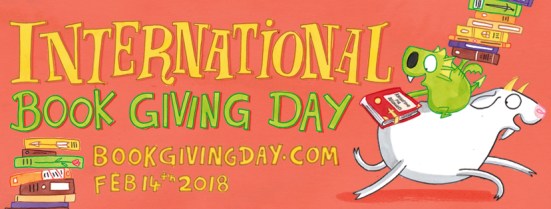
Everyone knows February 14th is Valentine’s Day, but did you know it’s also International Book Giving Day?

Apparently, that’s been a “thing” for several years now. The first I heard of it, though, was earlier today when I saw a post – one post – on Twitter. Why have I never heard of this before? Why aren’t bookstores and publishers worldwide promoting this? Why have I been conditioned all my life to hope for a rose or a card that usually doesn’t materialise, when I could have been my own best friend and presented myself with a book instead? That, my friends, is absolute rubbish!

An international day for giving and receiving books is an idea that really appeals to me on so many levels.  In just five minutes, I came up with these reasons why books are better than roses, chocolates, and drugs:

Books don’t die like flowers do.

Books don’t make you fat or mess with your blood glucose like chocolates do.

Nobody judges you for showing off your new book on social media.
(Unless, of course, you’re an author and you wrote the book, in which case people complain because you’re somehow pressuring them to support you or asking them for money, which just isn’t the done thing, despite the fact that you’ve supported their careers in plastic kitchenware, fancy saucepans, designer linen ware, boutique underwear, party plan beauty products, and whatever other blarney they’ve asked you to buy. But that’s different, and I digress. And I’m not jaded, okay?)

You can stay home with a book and consume it as greedily as you wish without losing any respect.

Books are budget friendly. Do you have any idea how many books you could buy for the price of a bunch of long-stemmed roses in the middle of February?

Books are an investment in your mind and your soul.

Books are an investment in an author who will be more than happy to write more books for you to enjoy. It’s the ultimate gift that keeps on giving.

Books provide the most budget-friendly and instant escape from reality available to humanity.

Books won’t land you in rehab.

There is no law against driving with stories, ideas and knowledge in your system.

Not bad, eh?

So, what are you waiting for? Get out there and give someone you love, or yourself, a book.

Support An Author 3


If you’d like to suggest more reasons why books are better gifts than flowers and chocolates, feel free to leave them in a comment. 

A Conversation Between A Romance Lover and a Horror Writer.

Me? Writing romance? Not anytime soon.

Today I commented to a friend that I’d written a story for Valentine’s Day.

She smiled and said, “Oh Jo! I didn’t really pick you for the romantic author type! How lovely!”

I laughed. “Just because it’s a Valentine’s Day story, doesn’t mean it’s romantic.”

black stone heart

She looked at me as though she were waiting for a punch line.

“No, really. This is not a romantic story. This is a story for anyone who has had their heart broken, who knows the sting of rejection—” I shrugged.

“It doesn’t end well, does it?” she asked sadly.

“That depends entirely on your perspective!” I replied.


If you’re one of the anti-Valentine’s Day crew, or if you just like creepy stories, check out my chilling little tale: A Curious Valentine’s Day. It’s free to read at WordyNerdBird Writes.


WiHM9-GrrrlLogoWide-BR-L


Women in Horror Month: Facing My Own Fears

An Author’s Perspective on Facing One’s Own Fears In Writing.

One of the principles of writing good horror is tapping into your readers’ fears and anxieties, albeit in a controlled manner – I don’t want to trigger a heart attack or a psychosis, but I do want their skin to crawl and their innards to lurch. After all, that’s why they pick up a horror book or film in the first place.

It’s interesting – at least to me, at any rate – that I haven’t got any better at confronting my own fears.

I have always been, and still am, terrified of spiders and snakes. Of course, I do live in Australia where just about everything that crawls or slithers is deadly, so that is quite sensible. We’ll call it a healthy sense of self-preservation. Butterflies and moths, though… not so much. And crickets: ugh! Not exactly the stuff of nightmares— until they touch me. That’s when I lose all sense of reality.

fear-of-heights-2040805_960_720When I was a child, I considered that I had a fear of heights. As I grew older, I realised that what I actually have is a fear of falling. I can look out of the window of a plane that is flying at altitude, and it doesn’t bother me a bit. Ask me to step onto the balcony of a lookout at the top of a mountain, or to walk on stairs or a surface where I can see through to underneath, and you will only ever be disappointed. It’s not going to happen. The times I have been in such places, I have frozen to the ground in fear.
Interestingly, these are not fears that I have explored in my own writing— not yet, anyway. I’m far more comfortable playing on someone else’s weaknesses. Death. Hell. Demons. Fire. Hair. Monsters. Ghosts. Superstition. Possession. Unexplained coincidences. Easy peasy!

Maybe I will try to address one of my own fears in my writing this month, given that it is Women in Horror Month, and I happen to be a woman who very much enjoys writing horror.

I’ll get back to you on that one.

Maybe.

My Favourite Escape.

When life takes an unexpected turn, there is no better place to escape than into a book.

What a week!

It was the first full week back at school with students after the summer break. New students, new classes, new schedules, new demands.  Not only was I ready, I was keen! I was determined to get through the week without falling in a heap.

The first day was great.

Then, just after recess on Wednesday, I got a call from my local medical clinic. My elderly father was unwell – again – and was on his way to hospital in an ambulance. Everything stopped except my mind: Is this it? Is this the beginning of the end? Must let the others know. Must tell the boss that I have to leave work. Must keep breathing. Can’t breathe. Okay. One thing at a time. Call the boss. Explain. No – don’t fall apart now. You don’t have time. 

I got to the hospital half an hour ahead of Dad because I work in town and the ambulance had a 45 minute trip, plus some road works to negotiate. I completed the necessary paperwork for him, and sat down to wait.

Waiting rooms suck on a major level. You sit there, surrounded by other people’s pain and misery, feeling alone and fearful, and trying to keep everything under control in your own overactive imagination – it’s quite some challenge.

reading-wonder.jpegSo while I sat and waited, I took refuge in a book. It didn’t stop me from looking up every time an ambulance rolled in, wondering if that was Dad being wheeled in. It didn’t stop me checking my phone and answering messages and questions from my siblings. But it did give me somewhere to go.
For the six and a half hours that I sat by Dad’s bedside in the Emergency Department, with medical questions answered and initial treatment under way, I escaped back into the book whenever I could. Dad knew I was there, but he wasn’t up to conversation. Reading someone else’s story kept me from focusing on my own, and it kept me from being overwhelmed by the flood of emotions that threatened to sweep me away while witnessing the pain and distress of my increasingly frail father.

After a somewhat tearful journey home, I thought I might be exhausted enough to fall asleep as soon as I got to bed. Nope. No such luck. Yet again, it was a book that came to the rescue. It didn’t put me to sleep, but it did relax me enough to be able to rest.

Taking refuge in a book is something I have often done in the troubled times of my life. Over the past couple of years, that has taken the form of both reading them and writing them. There are times, though, when I can’t write because the pain and fear is actually too close to think about at that level of depth. Wednesday was one such day.

Thursday was a blur of medical consultations, visits with various physical therapists, and further tests for Dad. Thankfully, at the end of all of that, I was able to bring him home again. It will take time for him, and for me, to recover. There will, undoubtedly, be further moments when I feel the need to make the world around me stop by escaping into a book.

Today, I’ve tried to catch up on the things I’ve let slide over the last few days. I haven’t quite managed yet to pick up all the threads again. I use Buffer, so my Twitter feed has kept on rolling, but many other things, including my writing, are at a standstill. Social media has only had the occasional cursory glance. I’ll get there – but not today.

For now, I’m thankful that Dad and I both survived the week, and that things are starting to return to normal.

And to the authors who continually craft such brilliant stories for me to escape into: thank you, from the bottom of my heart.  Your gifts mean more to people than you realise.


Women in Horror Month 2018 : An Interview with Joanne Van Leerdam

Originally posted on Unusual Fiction :
I’m really excited to introduce our next author to Women in Horror Month 2018 at Unusual Fiction. Joanne Van Leerdam is a poet, writer in many genres and of course horror lover. ? In addition to writing poetry and short stories, Joanne is a teacher of English, History and Drama/Production.…

WiHM9-GrrrlLogoTall-BR-M

This is my third author interview in fairly quick succession, but the questions have all been so different that I couldn’t even recycle any! This one focuses on my work as a writer of horror where the others were more general.

Many thanks to Fiona Hogan at Unusual Fiction for asking clever questions and publicising my answers in honour of Women in Horror Month 2018.

fionacooke's avatarUnusual Fiction

I’m really excited to introduce our next author to Women in Horror Month 2018 at Unusual Fiction. Joanne Van Leerdam is a poet, writer in many genres and of course horror lover.

jo van l

In addition to writing poetry and short stories, Joanne is a teacher of English, History and Drama/Production. She is an active member and performer in her local theatre company.
Her hobbies include reading, music, travel and photography.

Joanne loves travelling, and has visited many places in Australia as well as holidaying in New Zealand, Fiji, the USA and Canada at different times.

Question 1. What drew you to horror as a genre?

I’ve always loved Bram Stoker’s Dracula and Mary Shelley’s Frankenstein. I also loved The Addams Family and The Munsters on TV as a kid – although they’re lighthearted, that macabre sense of humour of mine just adored them.

Question 2. What horror writers do you read?

View original post 800 more words

Women in Horror: 10 Authors You Should Read

I’m going to do you a favour and introduce you to ten women authors who write great horror.

Horror as a genre is as varied as any other. While everyone raves about Stephen King and Ann Rice – and there’s no doubt, they are what horror writers would aspire to become – it doesn’t mean that anyone who writes differently, or in a less mainstream sub-genre, isn’t worth reading.

Over the past year or so, I’ve read some fabulous horror books and stories by women who were new to me at the time, but they have quickly become some of my favourites.

Don’t worry if you haven’t heard of them before – I’m going to do you a favour and introduce them here. All you need to do to find their books is click on the author’s name.


Jane Jago is a multi-genre author whose novel ‘Who Put Her In?’ has a delicious, slow build and some finely crafted moments of horror. If you’re new to reading horror and unsure of how intense you want it to be, this book would be a great starting point.

D.J. Doyle writes horror stories that are often based in Celtic legend and religion.
Where to start: The Celtic Curse: Banshee


A. Drew
is the author of The Dowling House, a story of haunting and possession.

Nikki Landis writes both paranormal romance and horror. There’s even a little horror in her paranormal romance books, so it’s a win-win if you like both genres.
Where to start: Reaper’s Folly


Fiona Hogan writes  beautifully crafted contemporary Gothic stories.
An additional advantage to her story collections is that they’re great for busy people who don’t always have time to delve into a whole novel.
Where to start: The Nightmare
Lucretia Stanhope writes both paranormal romance and horror.  Another win-win for people who enjoy both genres!

Where to start: Beating Hearts


A.M. Rycroft
is the author of dark fantasy novels and some excellent horror short stories.  Again, these are great for someone with limited time available for reading.
Where to start: The Clearing


Lily Luchesi writes paranormal novels as well as some horror.
Where to start: Never Again

Logan Keys writes both dystopian and horror books.
Where to start: Unhinged.


Joanne Van Leerdam writes both poetry and horror, although only occasionally does she write both at the same time.
Where to start: The Silver Feather
Okay. This is my book. But there are no rules against self-promotion!

There are also some great horror anthologies available, in which you’ll find a great range of stories and styles, with something to please everyone.


Beautiful Nightmares        Ghostly Writes         Damsels Of Distress

WiHM9-GrrrlLogoWide-BR-L

Calling All Romantics!

Attention: Romantics. This is for you!

Happy_Valentine's_Day...!

In addition to being Women in Horror Month, February is also celebrated worldwide as the month of love. Valentines Day is the most popular day for declarations of love, marriage proposals, fancy dinners, and gifts of long stemmed roses and chocolates.

We all know, though, that these things aren’t really what love is all about. It’s way more complex, and far more frustrating, than that.

I’ve been privileged to be part of a group of authors who have collected excerpts about different aspects of love from their books into ‘All About Love’ an online magazine, completely free for all readers, which is available now for your reading pleasure. I’m not someone who enjoys reading a lot of romance, especially if it’s clichéd, but I’ve enjoyed reading this magazine because the pieces are varied and interesting, and have been drawn from different genres and styles of writing.

If reading about love and romance doesn’t interest you, feel free to keep scrolling past. We won’t be offended. But for all the romantics, the dreamers, the lovers and the hopeful folk out there – this one’s for you.

ScreenHunter_437 Feb. 04 12.23

We hope that you enjoy this collection, and that you find some great books in there that you’d like to read in full.

Enjoy!