There are many authors whose work I love reading. My to-be-read list is populated with dozens of books by fine writers, many of them Indies who write every bit as well as traditionally published authors.
Some, though, are on a special list. These are the writers whose book I will buy with the “Buy with 1 click” button on Amazon without needing to read a blurb, check out the cover, or read reviews to see what others have to say.
Without an exception, these authors are brilliant writers who deliver original, interesting and entertaining books every single time. I love the way they use words and the ways in which they stretch and stimulate my mind.
These are my “One Click” authors – in no particular order of preference. They’re all at the top of the list.
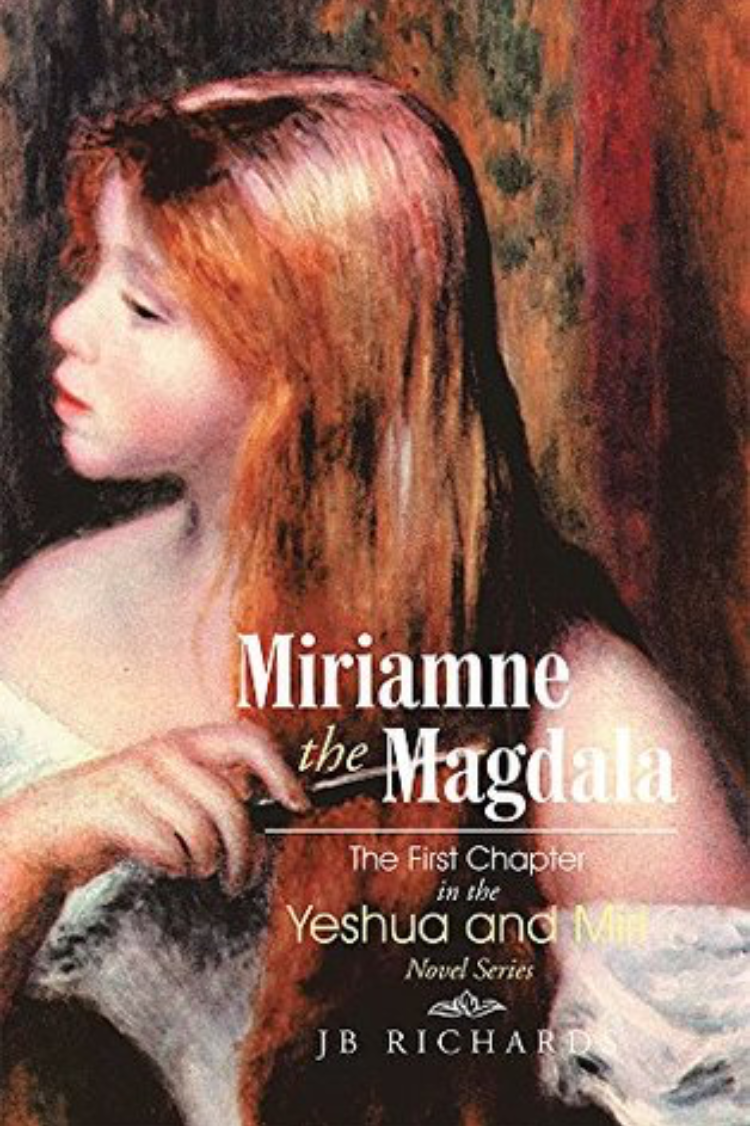
J.B Richards – historical fiction
Eva Pasco – contemporary fiction
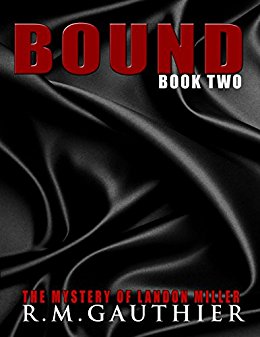
R.M. Gauthier – mystery/thriller, romance
Aliya DalRae – paranormal mystery/romance
Lyra Shanti – sci-fi/space opera, poetry
Missy Sheldrake – fantasy
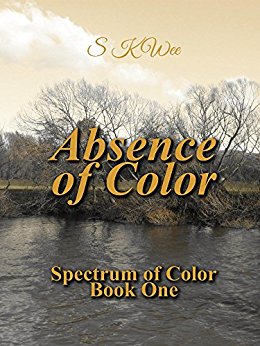
S.K Wee – fantasy
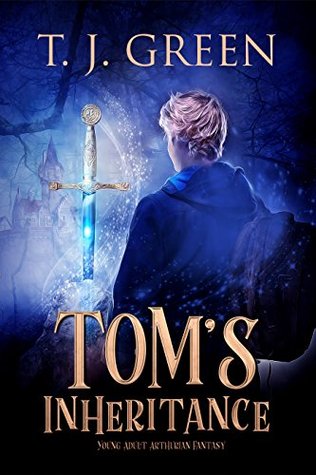
T.J. Green – fantasy
D.J. Doyle – horror
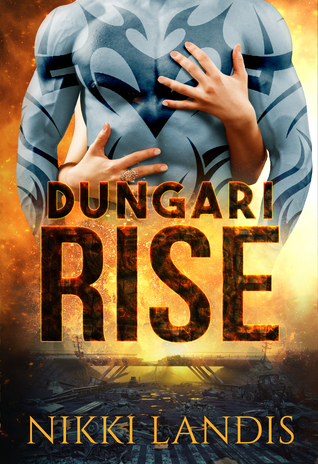
Nikki Landis – romance, mystery, horror
Eric Tanafon – fantasy with a paranormal element
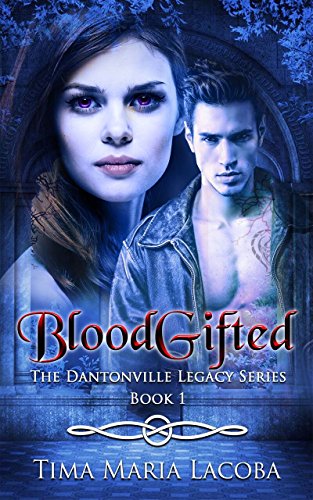
Tima Maria Lacoba – paranormal
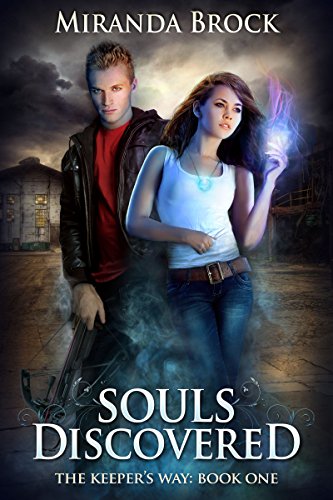
Miranda Brock – contemporary fantasy
India Emerald – magical realism, contemporary fiction
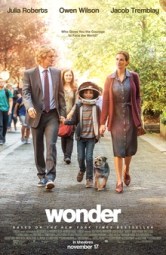
Today I accompanied my school’s Middle Year students on a trip to the cinema to see ‘Wonder’, a new film based on the bestselling book by the same name about a boy who has facial differences.Jacob Tremblay plays August Pullman, alongside Julia Roberts and Owen Wilson who play his parents. The stage is set when the Pullmans decide that Auggie should start 5th Grade in a mainstream school, having been homeschooled by his mother until then. Mandy Patinkin plays a very wise and empathetic school Principal, Mr Tushman.
What a sad world we live in when a kid gets less attention walking through the city or a park wearing a space helmet than he does when wearing his own face. It’s human nature, I know, but that doesn’t make it okay. This film challenges that “default setting” in a very compelling way.
Auggie’s teacher, Mr Brown, challenges the kids to ask themselves: What sort of person am I?
This movie challenges every audience member to ask themselves the same question. How do I deal with difference? What does my face tell them? What kind of friend am I? What monuments do my deeds leave?
The audience feels sympathetic to Auggie long before they see his face. When he says, “I know I’ll never be an ordinary kid ordinary kids don’t make others run away from playgrounds” it’s like a punch in the stomach that leaves you winded.
As the movie rolls on, we also see that the “regular” kids like Auggie’s sister, Via, have their own challenges with acceptance and friendship, even without the extra challenges that some kids face. Over and over, this film reminds me again just how cruel kids— and people in general— can be, in so many ways.
The journey of discovering who is real and who is not is often painful and traumatic. Together, Auggie and Via realise that they are each other’s best friends, and lean to rely on each other for the support and love that they need to get through each day.
The development of genuine friendship reminds us that looking past the surface to really see someone is what makes a crucial difference to anyone, but especially those who are so aware of that surface. There is also a painful reminder that even the nice kids can make mistakes when they focus on appearances instead of who someone really is.
This movie delivers so many powerful lessons about accepting others and even more about accepting ourselves. In both cases, we need to learn to live according to the precept established by Mr Brown in Auggie’s first lesson in 5th Grade: “When you have.a choice between being right or being kind, choose kind.”
It sounds simple— perhaps too simple. But is it?
The hardest part may be in finding the willingness to step out of our comfort zones and open our own minds to each other and the possibilities that our differences bring.
Everyone old enough to understand the difference between kindness and judgement should see this film.
Yesterday one of my students called another a ‘Philistine’. I know he meant to suggest that his friend was uncultured and ignorant, and that is what many understand the word to mean.
So, being the time-and-knowledge-generous history nerd that I am, I took a break from our study of World War I and explained to my class that what he meant to suggest is not what the Philistines were at all.
The Philistines were a cultured and wealthy civilisation that lived in Canaan between the coast of the Mediterranean Sea and the biblical kingdoms of Judah and Israel. They lived in and between five cities: Gaza, Ashkelon, Ashdod, Ekron and Gath. The same region bears the name ‘Palestine’ today – a name derived from the Philistine civilisation. The ancient Philistines enjoyed enough military prowess to hold their own against Lebanon, Syria and Egypt at different times, fighting with spears, straight swords and shields. When not fighting wars, they lived in elaborate buildings and made their own pottery.
It doesn’t really seem consistent with the idea of ignorance, does it?
Sadly, this is not the only case of such name-calling being so ironic.
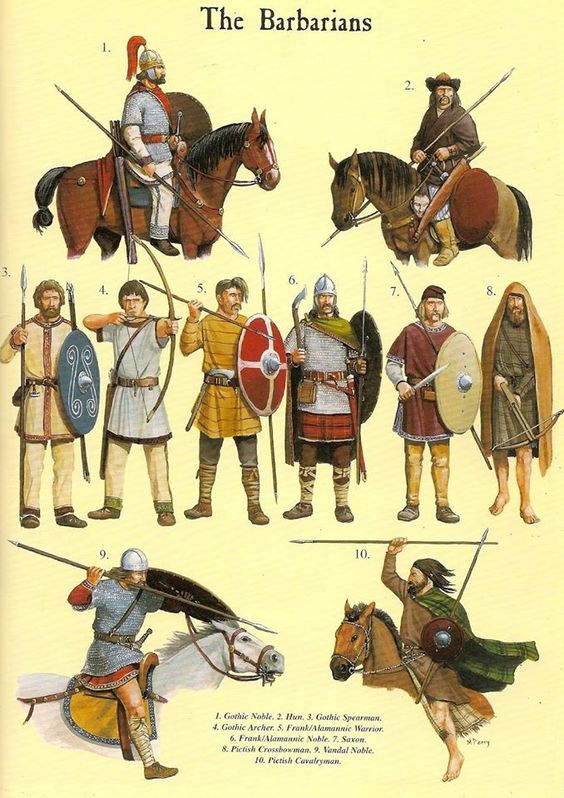
Barbarian is another term which is used quite wrongly. It’s used to suggest that someone is wild or uncivilised. Historically, the Barbarians were any number of Germanic tribes that moved throughout Europe in what many refer to as ‘The Dark Ages’, even though they weren’t so dark at all.
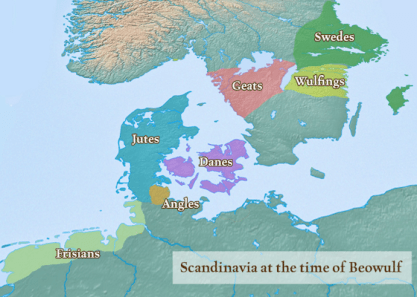
Really, if you look at them, they don’t look so incredibly different from one another, nor from the folk our history books tell us were our own ancestors. It may surprise you to know that the Barbarian tribes included the Angles, Saxons and Picts who set up shop in Britain after the fall of the Roman Empire and eventually became some of the most devotedly civilised people on earth. The Gauls became the French, the Geats became the Swedes, and the Danes went on to give us Hamlet, pastries and an Australian princess. (Disclaimer: I don’t know if the part about the pastries is true, but they must be called danishes for a reason… right?)
The Vandals, for example, may have left a trail of destruction in Gaul and Iberia, but they only made a bit of a mess of Carthage before taking it as their capital and making extensive renovations. As a military power, they had skill and knowledge – you’ve actually got to hand it to anyone who could not only withstand the power of the Roman Empire, but also hold their own in so many battles over such a long period. And when they weren’t busy fighting the Romans, they were highly cultured, enjoying music and poetry. They conducted a lot of industry and trade in their North African kingdom. It really was not about breaking or ruining stuff at all.
The Goths, oddly enough, did not sit around in dark clothes wearing black makeup. The name “Goth” was derived from ‘Geats’, the tribe famous for its honour and pride in the Anglo-Saxon legend of Beowulf, as told in the oldest English poem in existence.
Map Prepared by Louis Henwood for ‘The History of English’ podcast, episode 42
They actually had sophisticated architecture and beautiful mosaic art. They made and wore intricate gold jewellery. They were farmers, weavers, potters, blacksmiths. They followed intricate burial rites, making sure that the graves always pointed north.
Related to the Goths were the Visigoths, meaning “Goths of the west” who ruled Spain for a couple of centuries. They built churches that still stand today, decorated their buildings with intricate filigree art and stone arches. They were skillful metalworkers and jewellers.
It seems to me that we do history a disservice by misusing these terms in such a way. Connotations are not always the easiest things to track through history, but these seem quite unfair. I suspect that such practice grew out of the fear of anything or anyone different, foreign and/or pagan – a concept with which Western society is still painfully familiar.
By the end of all that, the kids’ eyes had glazed over a bit, and there was a fair bit of smiling and nodding going on. I don’t think they will be calling each other Philistines again, though. So… mission accomplished.
If you’d like to know more about Beowfulf and the Geats, you could listen to a fabulous episode from ‘The History of English’ podcast. It’s a great podcast, and if you’re interested in the development and history of the English language, or the relationships between language, people, and places, you should consider subscribing.
My Grandpa used to tell me that there were never any guarantees of success, but there was one sure-fire way to fail, and that was to not try.
It’s good advice, and I’m thankful for that lesson – and many others – that he instilled in me.
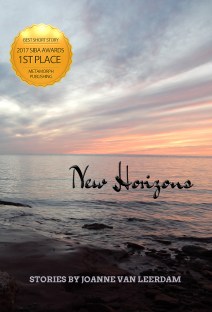
What a surprise this morning to realise it has been a year since ‘New Horizons’ was published.
When it launched, I was nervous about how it would be received. People knew me as a poet. Would they be interested in these stories? Would they find them as meaningful and profound as my poems?
It was certainly fitting that these stories are about how people encounter and respond to changes and new situations in their lives. Heaven knows, I was experiencing that for myself at the time.
Since then, it has sold around the world in paperback as well as ebook, and has won the 2017 SIBA Award for Best Short Story collection. It now has a shiny badge on its cover to announce that recognition to the world.
This gave me good reason for positive reflection this morning. There are times when life feels as though it’s at a standstill, or when it feels like I’m not achieving what I want to as a writer.
Yet in the past year, I’ve achieved more than I ever would have thought or dared to imagine twelve months ago:
Three new poetry collections, all of which have been nominated for awards.
Of those three books, Nova has won awards for 2017 Top Female Author – Poetry, Reality Bites 2017 Best Non-Romance, and the bronze medal for a poetry collection in the 2017 SIBA Awards.
Two poems in two different themed anthologies, nestled in amongst the work of some incredible writers.
Two macabre/horror titles.
Two ‘reinvented’ fairy tales about to be published in a magnificent anthology titled ‘Once Upon A Fabulous Time’, with other stories written by five of the most creative minds I know.
Who knew?
If you’re a writer – published, aspiring, or just for your own enjoyment – be encouraged. You may feel like you’re not achieving much, but you are. You may feel like you’re a small fish in a very large sea, but every small fish has its place and a purpose, too.
If there’s something you feel you’d like to do, or try, but you’re lacking confidence – be encouraged. You will never know what you can do until you try. The only way to find out where any road will take you is to follow it.
My Grandpa used to tell me that there were never any guarantees of success, but there was one sure-fire way to fail, and that was to not try. It’s good advice, and I’m thankful for that lesson – and many others – that he instilled in me.
So here’s to another year and whatever challenges, journeys and victories it brings.
Every now and then, as a reader, I experience an incredible moment of revelation when I take in an expression or image of something that is so powerful, it takes my breath away.
Every now and then, as a reader, I experience an incredible moment of revelation when I take in an expression or image of something that is so powerful, it takes my breath away.
Today, I started reading as book called ‘Robin Hood: Wolf’s Head’ by Eric Tanafon.
No sooner had I started reading this book than I had to stop and catch my breath. I had just read an extraordinarily beautiful sentence: “The forest clearing was a web of moonlight and shadows.”
What perfect imagery! It is simple and direct, but powerfully evocative at the same time.
In that moment, I was there. I had been transported to that forest clearing and drawn into the world of the story, even before I knew anything else about it.
This is the magic a writer works when wielding the wand that is their pen.
The Indie Author community is one of the most incredible groups of people I’ve ever had the privilege to be part of. Support, encouragement, commiseration and shared victories are the order of just about every day.
However, every now and then I stumble across a social media post that really disappoints me. Those posts fall into two groups.
1. Posts that rant at others for a perceived slight.
I’ve seen authors abusing people for not buying their books, not sharing their posts, or generally being less than 150% supportive.
How is this fair?
We’re writers. Most people have day jobs. Most people have families. Life is demanding. I don’t know anyone who can afford to be on social media 24/7, supporting others and buying six copies of every new release.
We cannot expect that all our friends and family are going to buy, read, and review our books. I can tell you from personal experience that this simply isn’t realistic. Shaming them on public media is hardly going to encourage them to change their ways.
2. Posts that demand people do something.
This morning I saw a “request for support” that was phrased as “do it now” and “I need this” and “you’ve been told, so do it”. There wasn’t a please or thank you in sight.
Am I likely to give my support? In all honesty, no. I scrolled past.
This is not my habit – anyone who knows me can affirm that I do everything I can to support my fellow Indies.
I felt belittled and taken for granted by that post. I don’t even talk to my dog like that.
It’s important that our public presence on social media is seasoned by good manners.
If we want to present ourselves as a public identity whose product – be it books, music, handcrafts, beauty products, or whatever – we want others to buy and enjoy, we have to make that engagement a positive thing, or it will never follow through.
I am in no way advocating being a doormat or accepting poor treatment. But that is not what I’m talking about here. I’m talking about keeping ourselves nice.
There is no place for arrogance, selfish demands or rudeness. Nobody is doing anyone, including themselves, any favours by carrying on like that.
My final piece of advice is one I apply every day in both my professional lives: you’ll get a lot more with honey than you do with a stick.
If you’re someone who takes knowing the difference between “your” and “you’re” seriously, if you experience a secret thrill when someone uses a semi-colon or an Oxford comma properly, or if you just want to know more, these podcasts could be for you.
Pleasantly surprised by how popular last week’s post on my top five history podcasts proved to be, I decided to share a little more of my podcast-loving joy with you this week.
It’s common knowledge that I’m pretty nerdy about words.
I love them. I love the way they work. I love knowing where different words and phrases came from. I love using them to write and communicate ideas in interesting ways. I love knowing which words are related to each other, even when they don’t actually sound much like each other anymore, like long-lost cousins who bump into each other when they leave home to go to university, and discover their common history that the family has been hiding in the dust and cobwebs behind the skeleton in the closet.
So, it should come as no surprise that I enjoy listening to podcasts about the English language, its roots and evolution, and how it works.
If you’re someone who takes knowing the difference between “your” and “you’re” seriously, if you experience a secret thrill when someone uses a semi-colon or an Oxford comma properly, or if you just want to know more, these podcasts could be for you.
So, without further ado, here are my four favourite word-nerdy podcasts.
#1. The History of English. This podcast gets into the down and dirty of where the English language and many of the words and phrases we use came from. If you suspect that Mr Webster didn’t just go out into a cabbage patch and find a newborn lexicon crying for its mother, give this podcast a try.
twitter: @englishhistpod http://historyofenglishpodcast.com/
#2. Lingthusiasm.This podcast explores different aspects of the English language in just over 30 minutes for each episode. It’s interesting, word-nerdy, and fun.
twitter: @lingthusiasm http://lingthusiasm.com/
#3. The Allusionist. This podcast focuses more on lexicon and how we use words to craft and deliver meaning in particular ways. The episodes are a bit shorter than the first two placegetters, staying under 20 minutes a shot.
twitter: @AllusionistShow www.theallusionist.org
#4. The English We Speak. This podcast from the BBC World Service explores those words and phrases we use every day in episodes that last about three minutes each. This might be a good place “to cut your teeth” if you don’t want to “go the whole hog”. You’re catching on. Cool. http://www.bbc.co.uk/learningenglish/english/features/the-english-we-speak
I’d really appreciate it if you would leave a comment.
And click “like”.
And if you shared my post, that would be almost like Christmas.
Who doesn’t love a good history podcast?
Today, I give you my top five, along with some honourable mentions.
#1 Rex Factor. In this absolutely brilliant podcast, the kings and queens of England followed by the kings and queens of Scotland are reviewed, ranked, and rated according to the qualities an ideal ruler should have. It’s both historical and hysterical. Don’t try to listen to this in the hope that it will lull you to sleep. It won’t. https://rexfactor.podbean.com/p/about/
#2 British History Podcast. A chronological history of Britain with a focus on the people and how they lived and died. It’s well told by a knowledgeable host with a very nice voice. Hey… it all helps. https://www.thebritishhistorypodcast.com/
#3 History of England Podcast Another chronological history of Britain, yet quite different to the BHP – David Crowther delivers the history in a bit more of an “English” style, whatever that is. https://thehistoryofengland.co.uk/
#4 Rum, Rebels and Ratbags Presented by David Hunt, author of ‘Girt’ and ‘True Girt’, and Dom Knight, this podcast explores the early years of European settlement in Australia. It’s insightful, irreverent, and irrepressibly Australian. https://soundcloud.com/rum-rebels-ratbags
#5 History of Byzantium Podcast by Robin Pearson. This podcast picks up where the History of Rome podcast left off and explores the story of the Byzantine empire, based in Constantinople, from 476 to 1453 AD. www.historyofbyzantium.com



 WordyNerdBird