Focus On Creation, Not Competition.

A reflection on integrity, creativity, and success.

Image by TeroVesalainen on Pixabay

Competition can be a good thing. It urges us to strive to make sure we do our best, and that our product is as good as anyone else’s. It makes us less willing to settle for something less.

However, it can also be unhealthy if we let ourselves be consumed by it. When a job or a hobby becomes all about being number one, and being better than everyone else, it takes us into territory far beyond what is good for us, and often beyond what is good for those we consider our competition. 

I see both things happening in the Indie Author community. 

Most strive to ensure their covers are eye-catching, their stories are good, and their books are error free. We compare our books to those in the same genre, so that we can gauge the likely level of attraction among readers.

Most of us see our fellow authors as people we can learn from. As a rule, The Indie author community excels at being helpful, free with advice, and positive and encouraging of one another. 

Some, though, seem intent on dragging others down— as though putting someone else down will push themselves further up the rungs of the ladder. Some resort to insult, backstabbing and rum our-mongering. Some sink low enough to leave nasty reviews and one-star ratings on their fellow authors’ books. Some find ways to cheat the system or rig contests to gain visibility and prestige. And some go even lower than that: plagiarism, book-stuffing, and various other ways of scamming the reader and making a lot of money that would otherwise be going to honest writers. Sadly, this discredits the entire Indie community in the eyes of many.

I abhor those behaviours, especially the more extreme they get. There is no place for them, no way to justify them, and certainly very little tolerance for them at all amongst those in the community who have any integrity. 

I also think that it’s a very sad indictment on how some people view their profession. Whether they are authors, realtors, bankers or whatever they do, how tragic is it that they are so fixed on their perceived image and definition of success that they will do anything – even risking destroying the very career they prize – to achieve that. 

The warning is clear: pursuit of “success at any cost” will probably bring about the very opposite.

If you see everyone else in your field as competition, you won’t find any joy in what you do. 
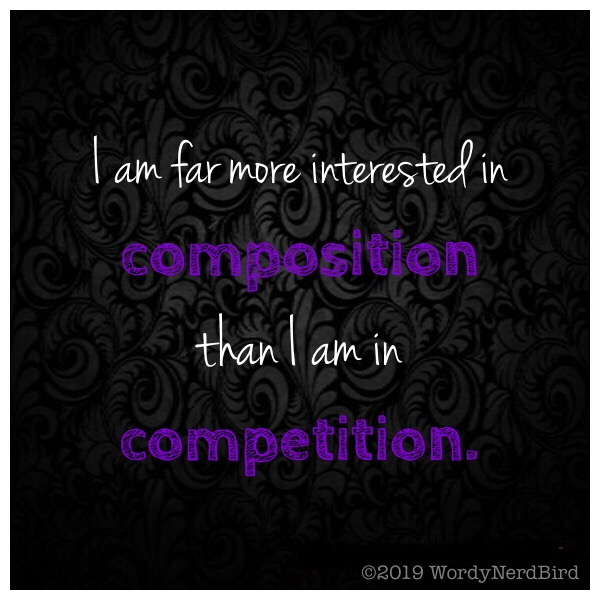
I would much rather be the writer who produces quality work that readers will love, even if it means I can’t quit my day job yet. I would rather be a poet who touches someone’s soul than a lowlife who helps themselves to someone else’s work or reputation.

The key to both success and integrity is simply to do your job well. That will speak for itself. 
There IS a Wrong Way to Write a Book Review!

What not to do when writing a book review – and what to do instead.

This week I read a blog post that asserted there is no right or wrong way to write a book review. The writer made some good points, particularly about reviews needing to be individual and personal responses to a book, but I disagree with the basic premise of the article.

I am writing this post from the perspective of a reader, not an author, and I realise that some people won’t agree with me, so let me explain my reasons.

A book review should never recount the story of the book. It shouldn’t give spoilers. Yet time after time, I see reviews that do exactly that. My issue is that if I already know what is going to happen, I feel as though I no longer need to read the book. The joy of the journey has been neutralised. That review has effectively cost the author a sale. 

In all honesty, I hate blurbs that do this, too. As a reader, that’s one of the quickest turnoffs when I’m looking at a book. 

Don’t give me a summary. Give me teasers, give me feelings, give me thoughts and observations. Pique my interest. Make me want to read it for myself, instead of making me feel as though I already have. 

A good review doesn’t have to be long or complicated.  It does needs to be at least 20 words in length, which gives you room to say whether you enjoyed the book and why. One or two sentences will do the trick.  There is no obligation to write any more than that if you don’t want to. 

  • If you do want to write more, you can consider including the following ideas: 
  • Why you liked or disliked it. Remember that others may like what you disliked, and vice versa, so try to be kind. 
  • What important ideas the story made you think about – love, anger, justice, revenge, pain, fear, overcoming… anything that is relevant to you is a valid point for comment.
  • What the characters are like as people, and what we learn from them Did the writer’s style impress you in any particular way?
  • Was it easy to read and understand, or did you have to really work at it?
  • Who else might like to read it? Think about interests, age group, and genres here. 

This will help you to write a review that is interesting in itself, and which will encourage the right readers to choose that particular book. In that way, you’ll help both the author and prospective readers at the same time. 

The Danger Of Dirty Links

With all the attention given among the Indie community to the removal of book reviews by Amazon, I’m amazed at the number of authors who still post dirty links to their books on social media. This is a rookie-level mistake that can actually do more harm than good. 

A dirty link helps the algorithm at Amazon to determine if there are connections between author and reader that might suggest collusion or partiality.. Even if a review is from a verified purchase, a simple connection via a shared link can be enough to make them suspect that it’s not unbiased or from an unrelated party.

If the link used by multiple customers can be traced directly back to the author, that’s one of the reasons they will start flagging and eventually removing reviews. 

The simple solution is to ensure your links are clean before you post them.

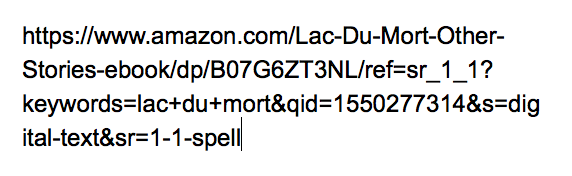
A dirty link occurs when one copies and pastes a URL without removing all the extra information that gets tacked onto it by searching for a product, copying links from a website, linking from another product, or using a bookmark created from a searched item.For example, if I search for one of my books on Google and click on the Amazon link, I get this as the URL: 

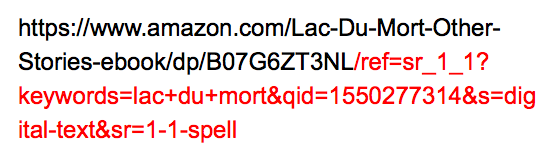
This is more information than is needed to actually find my book. In the image below, I’ve denoted the “dirty” part of the link by making it red. 

The highlighted part of this link is the “dirty” part. If I were to give this link to someone else to use, it tells Amazon how they got the link. 
All you need to post is the part of the link that directly goes to your book page. In the link above, that’s the part that is still black. Once the link identifies which display page your book has, no further information is necessary. 

You can check the clean link you want to post by pasting it into a new browser window and seeing that it goes directly to your book product page. 
Even if you use a link shortening service like bit.ly or buff.ly, or a customised branded link, you must ensure that the links you provide are clean. Just because you and your audience don’t see the extra information on a shortened or customised link doesn’t mean it isn’t there. 

That way, stores will have no reason to suspect you or your readers’ integrity, and your verified purchase reviews will remain proudly on your book page. 

How Not To Do Book Promotion.

I can’t tell you what kind of book promotion is guaranteed to work, but I can tell you what doesn’t.

Every author I know dreams of finding the perfect ‘set and forget’ book promotion. 

I’m here with some bad news: it doesn’t exist. 

Effective book promotion is about engagement and communication.  It’s letting people know your book exists, what it’s about, and why they should read it… without stuffing it in their face and demanding that they buy it. 

What many people don’t realise is that effectively promoting your book is a process, not an event.  You cannot simply advertise it once, post it on Facebook and/or Twitter, then sit back to wait for the sales to roll in. 

Personally, I’d love to think that everyone I know who sees my book will buy it, and that would flow on to lots of people I don’t know buying it. That isn’t how it works. The people you know are often less likely to be interested and willing to buy and read your book than complete strangers. 

You’ve got to make them interested. Bait the hook the right way, and they’ll bite. But the bait that works for one won’t necessarily work for another. Effectively promoting your book is complex: you’ve really got to be exploring different angles and be patient enough to follow them through to see if they work. If they don’t, you try something different. If they do, that’s great – but that doesn’t mean those same things will work again next time. 

As for what works, I don’t have all the answers. I wish I did. 
I do know what doesn’t work, though. 

Being pushy doesn’t work. Can you imagine how you’d feel if someone wandered around a bookstore holding a card in front of your face that told you where to find the book they wrote? Or if they followed you around, begging you to buy it?

Even worse, actually demanding that people buy your book is a complete turn off. Temper tantrums fall into the same category.

Making every social media post you ever write a “buy my book” post doesn’t work. Put that stuff on your page or author profile, share some of it by all means, but use your personal profile as exactly that. 

Taking advantage of the kindness of others doesn’t work – well, it might for about 30 seconds, but once they’re onto you, even the most supportive friend will back away and wear a necklace made of garlic cloves every time they see you coming. 

Abusing people and talking down to them doesn’t work. Those walls will go up faster than anything you’ve seen before. Not only will they not buy your book, they will tell everyone else what you said, and they won’t buy your book either.

Ignoring or dismissing those who help you along the way is entirely counterproductive. You’ll find yourself quite lonely and without the support you once enjoyed.

Assuming loyalty will not work. Sad to say, some people who know you in person might actually think that anything you write might not be that great. That doesn’t mean it isn’t excellent – but changing their perceptions is tricky. Humans are odd like that, and finding one who believes in you is like the proverbial needle in the haystack. 

The only way to go about it is to build engagement and develop a reputation for excellence

If you’re going to make the grade, your book needs to be top shelf: professionally edited, a well-designed cover, clean formatting, and engaging content. Without those things, your book might be good, but it’s competing with a market full of other good books that have had more time and effort invested in them to make them attractive to readers. 

It takes time, energy and commitment. Sometimes it takes sheer grit and determination, but you’ve got to manage all that without anyone really seeing that part of the job. 

But if you’ve got a story to tell, or a message to communicate to the world, there’s nothing stopping you. Just make sure you do it well

That will give you the best possible chance of promoting your book effectively and successfully. 

What They’re Really Saying.

It should come as no surprise that when you’ve been listening to people say the same thing for a while, you get better at understanding what they really mean. 

Person Z. 
Take, for example, a young woman who approaches her friends and family members and says something like, “Hey, so, I’m having a fancy brand-name plasticware/linenware/healthy and beauty product/accessory/clothing party at my house in a couple of weeks, and I really hope you’ll come.” 

What she’s really saying: Option A: I got sucked into one of these parties by relative/friend X, and she looked so hopeful that someone would book a party so she’d get some reward, and my mouth was open before my brain could stop it. 

What she’s really saying: Option B: There’s a thing this company makes, and I’d really like to have it, but it’s expensive so I’m having a party and anything you buy will help me get it cheaper. 

I’ve been on both ends of the equation, and can totally sympathise. It’s fair to say I’ve smiled and nodded through a whole bunch of those evenings, and even bought a thing or three, to help friends and family members out. From time to time, I’ve also been the Option A person. 

Person Y.
In another example, a child approaches family members and friends and explains that the school is selling chocolates/holding a “fun run”/doing some kind of suffer-a-thon as fundraising for a new toilet block so the kids can “go” comfortably during breaks. 

What the child is really saying: Option A: The school insists that I must do this thing and there’s no way out of it, so please give me some money toward it so it’s not for nothing. 

What the child is really saying: Option B: There are prizes for doing this, and I really want the floppitywoppity that you can only get if you raise $5000, so please give me some money to give me a fair chance at winning one. 
Again, I’ve helped more than one kid out of the hole. I don’t know if any of them ever got the floppitywoppity, but I know I have helped to build more than one toilet block in my time. 

Person X.
Then, there’s the Indie author. Actually, it could be any Indie creative – an artist, musician, or crafter. I just decided to use an author as the example here, because that enables me to draw on my own experience again.
Person X has a passion for writing, a message they want to get out to the world, and they finally get their book published. They tell their friends and family members that they have a book out, and they’re about to tell them what it’s about…

What the author is really saying: Option A: I finally fulfilled my dream. Aren’t you happy for me? 

What the author is really saying: Option B: I did a thing! I may never become a millionaire, but I did a thing! Please proud of me!

What the author is really saying: Option C: Remember all those times I supported your party plan things? And your fun runs? And your kids’ school toilet blocks? And… 

…But as Person X talks, there are virtual crickets chirping, and eyes looking nervously at the door, and people checking their phones, and remembering appointments they need to be at, and…
What the others are really saying: Option A: Well, this is awkward… who ever thought he/she was brave enough to get out there and do the thing! 
What the others are really saying: Option B: Yeah, we know you’ve supported us and our kids, but we’d prefer not to mention that now, because I would rather put my cash toward fancy plastic ware/linen/clothes/beauty products/accessories or a gym membership than some book by someone nobody’s ever heard of.

What the others are really saying: Option C: What the heck are we supposed to do now? We hope he’s not going to ask us to actually read it… maybe if I don’t ask what it’s about, he’ll stop talking about it.

What the others are really saying: Option D: But… you’re my brother/sister/cousin/relative/friend… how could a book you wrote even be any good? A bit full of yourself, aren’t you?

Person W. 
The final example is the one person in the room who hugs you and says, “Awesome! That’s fantastic! I’ll buy your book! How much do you want for it? You’ll sign it for me, won’t you? I can’t wait to tell my friends what you’ve done!”

What they’re really saying: Option A: I’m proud of you, and I’m on your team. 

What they’re really saying: Option B: I’ll probably never read it, but I’m proud of you, and I’m on your team.

What they’re really saying: Option C: “Awesome! That’s fantastic! I’ll buy your book! How much do you want for it? You’ll sign it for me, won’t you? I can’t wait to tell my friends what you’ve done!” then looking over their shoulder with a glare at the rest of the people in the room who were too selfish to do or say anything. 

The moral of the story: Option A: 
I’m really thankful for every ‘Person W’ in my life. I had no idea when I embarked on my journey as an Indie author that it would hurt so much to know there were so many Zs and Ys in my circles, but I also had no idea how wonderful it would be to know who the Ws were, and that they were on my team.  

The moral of the story: Option B: 
Always be a W. Even if you never read the book, be a W. 

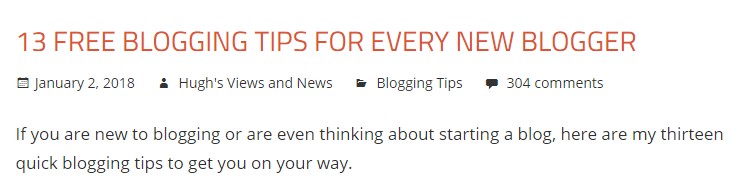
13 Free Blogging Tips for Every New Blogger.

It’s always a bonus when you can get helpful tips from others in your industry.

I stumbled across this article thanks to a friend sharing it earlier today.

The advice offered is helpful for new and old bloggers alike, especially given the dynamic world in which we live and blog. Things are changing all the time, so any constructive advice is a great thing!

Read Hugh’s great advice on his blog at Hugh’s Views & News


What A ‘Critical Review’ Really Means.

How to respond to a review that you see as less than ideal.

Ignorance is, for some people, bliss.

However, when that translates into comments in their book reviews, it can also be rather revealing.

I’m not talking about the nasty trolls who leave one-star ratings with hateful comments that demonstrate no evidence of even having read your book. Those are in a class all of their own, and way beyond anything I could logically explain.

I’m talking about the reviewers who buy and read a book, then leave a review that leaves you with more questions than answers.

Consider these examples. In the interests of brevity, I have paraphrased them.


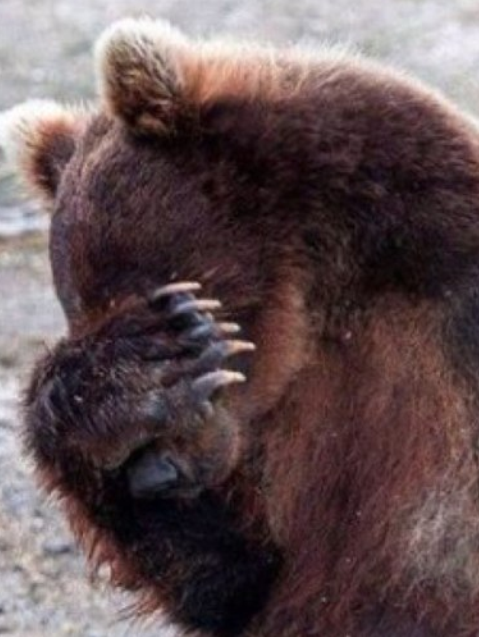
Facepalm 1

What they wrote: “A mix of Romeo and Juliet with Rapunzel… too much like spoiled five-year-olds instead of sixteen-year-olds. Sex on the first day? 2 stars.”
What I thought:
Have you even read Romeo and Juliet? Or watched the movie? Those were Shakespeare’s ideas, not mine.
Oh well. Some people don’t like his writing, either. I’m in good company.


facepalm-6.png


What they wrote:
“I didn’t expect a horror story.”
What I thought:
But it clearly says it’s a horror story! Did you read the product description? Did you check the categories in which it’s listed? Obviously not.
Wait.
Does that mean you “one-clicked” me? Awesome!


Facepalm 4

What they wrote: “I don’t read poetry. I don’t like it and I don’t understand it. So I didn’t really understand this book of poetry. But it was OK I guess.”
What I thought:
If you don’t read poetry… and you don’t like poetry… why would you buy a book of poetry?
Wait.
You “one-clicked” me, didn’t you? Alright!


Freakin’ A! I have two fans who buy my books, even though they don’t like what I write. Brilliant. Now I just need about a million more and I’ll be set.

To be honest, I actually very rarely read my reviews. Those are there for the benefit of other customers who need to know if they want to read my books (they do) and if they’ll enjoy them (they will).

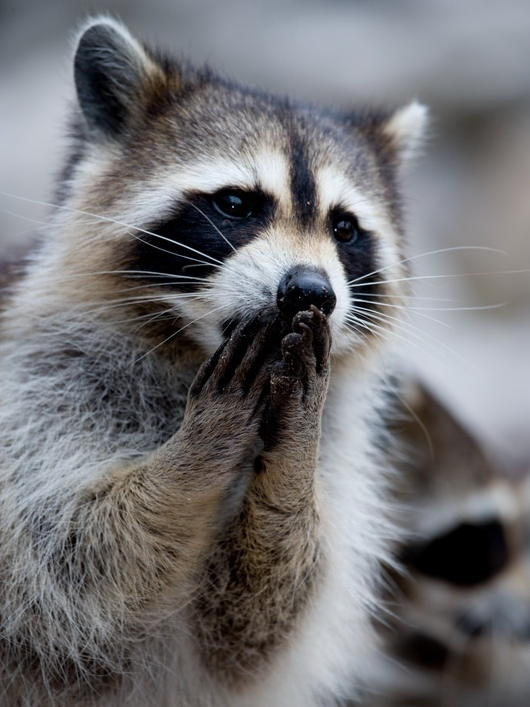
Oh No Raccoon 2014-09-12 18.07.36

I certainly don’t respond to them. That’s like hanging a target on your own back, and can cause far more heartbreak for an author than any review ever might have done.

Of course, the stores like us to get reviews, too. Amazon say it’s to inform other customers, but every Indie author I know thinks it’s so that they have something to feed their algorithm monster in the basement, and so they have something to take away from us when it appears we’re doing a little too well. Thankfully, other stores let us keep the reviews we get.

I don’t worry about the occasional baffling review. Reviewers are so rare that I’m reluctant to complain. Besides, it balances all those lovely shiny five star ones and makes everything look much more realistic. I don’t think any writer can reasonably hope for their work to be loved by everyone.

If your reviews are consistently negative, it’s fair to assume you probably have some work to do. The best way to avoid that happening is to ensure your book is properly proof-read, edited, and has been given a thorough working over by beta readers. You’re not doing yourself any favours by skipping those things. If it’s worth writing, it’s worth doing it properly.

Squirrel 2014-08-14 21.04.23

A critical review here and there doesn’t mean you’re a bad writer, nor that your book is terrible. It just means that your book, like any other author’s book, isn’t to everyone’s taste. And that’s perfectly okay.

The best response is to ask yourself if there’s anything useful you can take from it, make a note, and walk away.

Reciprocity: Magic or Myth?

A short lesson in how to be a positive and encouraging person.

I want to start by saying that the intention of this post is not to present myself as some icon of virtue or being any better than anyone else: I am definitely neither. But there are some things I am good at, and one of those things is supporting and encouraging other Indie authors.

I have always been very clear about the fact that nothing I do in the Indie Author community is done with the hope of receiving anything in return. I am more than happy to buy and review the books I do, share posts, help answer questions, and encourage others as much as I can.

You might be tempted to assume that, as a result, I have a veritable army of people ready to fall over themselves to do similar things for me. Well, that would be nice!

In fact, that’s very rarely how it works. More often than not, those who are generous with their time and energy receive very little in return. That’s life: I accept that, as do others I know in the same situation, and keep going.

There seems to be a groundswell of folk, however, who have taken it upon themselves to resent others that they perceive as being “more successful” or “more popular” than them, and to insist that they’re not going to do anything for anyone who hasn’t done anything for them.

Just last week there was a situation where a friend tagged some people in a Facebook post to ensure that her post was seen, and didn’t some of those tag-ees complain! One of them took the opportunity to launch a personal attack and completely degraded the conversation into a most hurtful state of affairs. Another had plenty of very demeaning things to say, not just about the friend in question but also those who sprang to her defence.

Well, isn’t it a good thing we don’t all work that way? What sort of a world would that be. where we all carried on like six-year-olds in the playground?

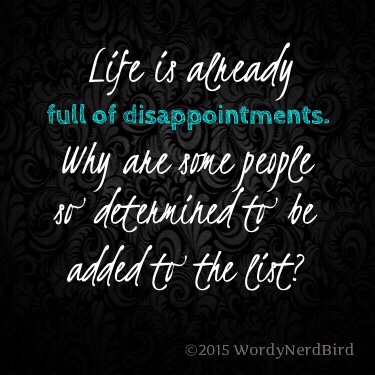
2015-11-29 12.46.29 disappointments

Folks, that is not how we Indie.

Assuming that someone will share your post because you shared theirs will sometimes work out that way, but often not. Hoping that someone will buy your book because you bought theirs is not at all realistic.

There’s one thing you can be sure of, though: If an author – or anyone else, for that matter – is horrible to people, those on the receiving end are not going to forget that. There is absolutely zero chance that they will share the post, buy the book, or attend a Facebook event for someone who has abused or belittled them. In addition, the chances of their friends doing any of those things are remote. Tearing someone else down on social media— or anywhere— is entirely counterproductive.

As Indie authors, we’re all in the same boat. We’re all trying to find readers, sell books, write the next number one bestseller, and get noticed by the universe. We’re all tweeting, Instagramming, Facebooking, blogging and whatever-else-ing we can in the hope of putting our books, or whatever it is we’re doing to make our way in the world, in front of appreciative eyes who want what we’ve got to offer. We’d all like to be able to quit our jobs and pay the bills with our royalties.

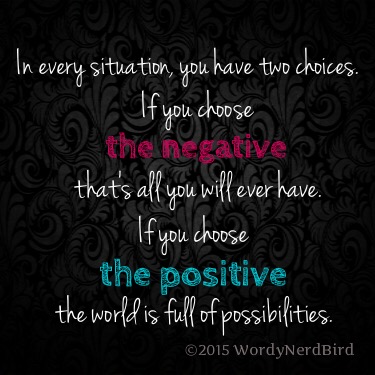
2015-11-27 10.51.43 Choose The PositiveBut here’s the thing: this isn’t a competition. Readers will always be interested in another book, another genre, another great read. There is absolutely no need to snuff out someone else’s candle so that yours can burn. We make more light and warmth together than we can on our own. This is something that my friends, especially the Indie Fabs, and I have experienced and proven time and time again.
Encouragement costs nothing. It doesn’t even take much time or energy. If someone asks you for one or two clicks of a mouse button that doesn’t end in costing you money, where’s the harm? If someone does something praiseworthy, commend them. If someone has a great cover, or hits the bestseller list, or writes a great book, congratulate them… and then go one step further by telling others. Who knows? You may even find that they do return a favour one day, or you might discover that someone has done something for you out of the blue, just because they can.

Reciprocity as most people perceive it is a myth. But initiating goodwill by being positive and encouraging? That’s magic. And that is how we Indie.

Why You Should Support Your Local Independent Book Store.

Supporting local businesses is vital. It should be a straightforward choice.

Yesterday was somewhat traumatic. Having confronted a face from the past that I’d really rather not ever see again, I was left with time on my hands and too much on my mind. So I defaulted to my usual sanctuary – books. I didn’t have my device with me, so I headed to my favourite book store to find something to read. My need for ink on paper and a pretty, nicely textured cover in my hands was just too strong.

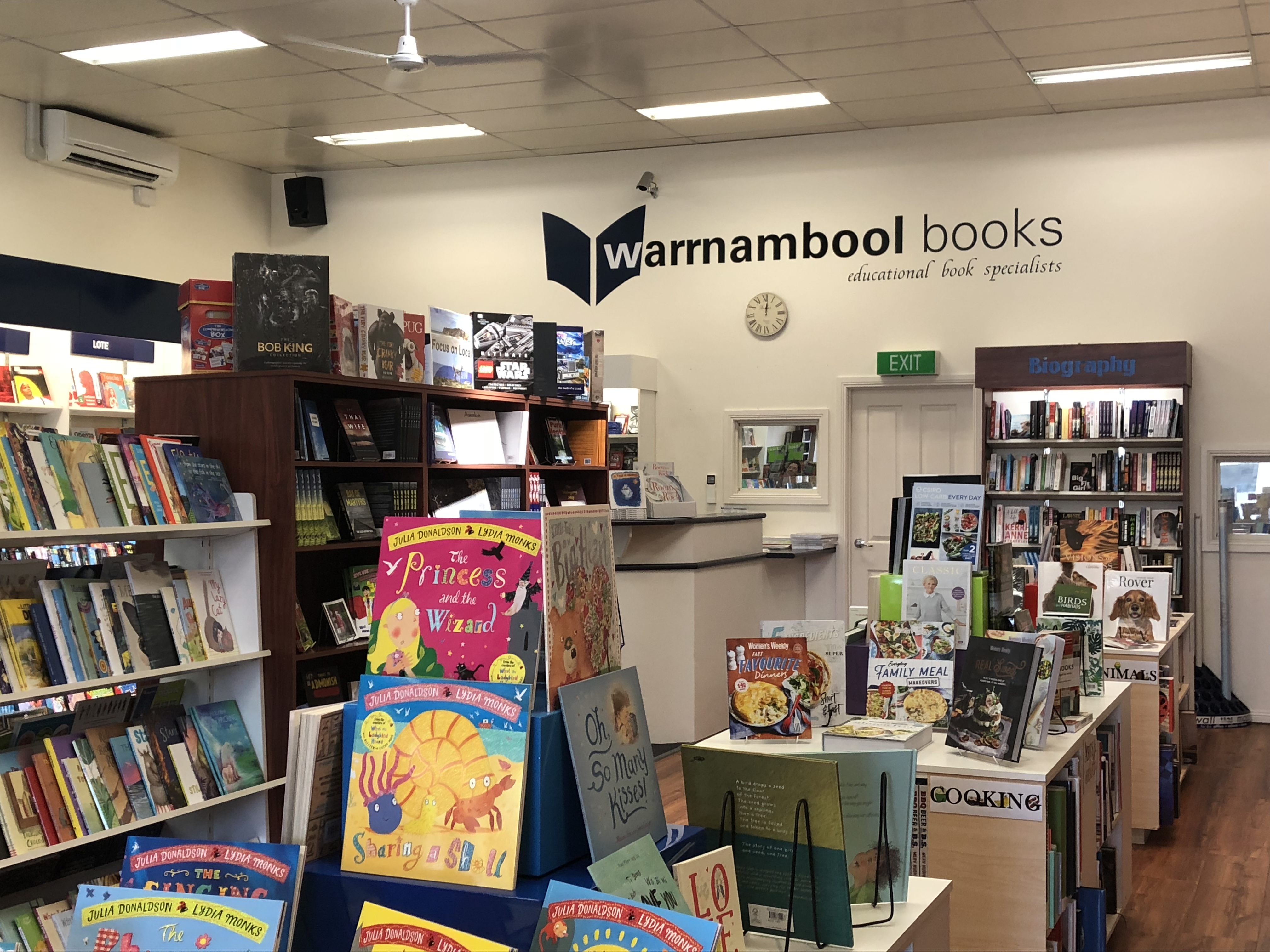
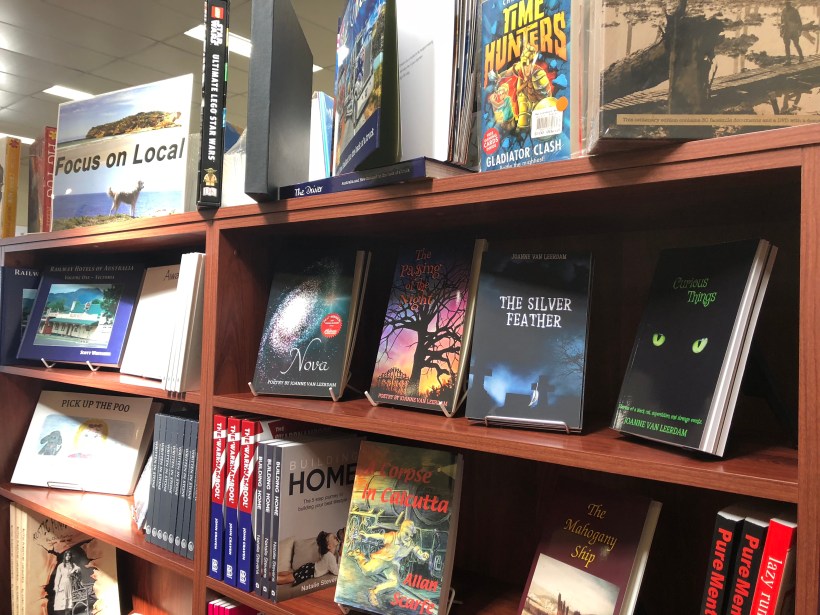
It’s a luxury, you know, having a local bookshop. The town in which I live doesn’t have one, but the larger town in which I work has two, as well as a fantastic place that sells second hand and antique books.  2018-04-06 12.01.50

For me, the choice is simple. I will always support locally owned, independent businesses rather than larger chains or big department stores.

As an Indie author, I know how hard it is to compete against the bigger fish that swim in the same pond. Among other advantages, traditionally published authors have someone else’s marketing budget on their side, along with a team of people to help them get their books in front of readers.

It’s actually not a lot different for independently owned shops, whether they sell books or anything else. Consider for a moment what they have to compete with: not just the huge online companies that control the world of desktop shopping, but also those local shops owned by large commercial chains which, while they may have a local presence, are generally not owned by anyone who lives down the street from you or whose kids go to the same school as yours. The owner of that local store has to pay the rent and insurance, stock the shop, pay employees, and make a living in an increasingly difficult and competitive marketplace.

2018-04-06 12.02.13

That’s why I buy my physical books at an independent store rather than from a book retail chain, or a big department store. The price for the same book is no different, but I know that I’m helping to put food on the table of a local family, or helping them to pay the neighbourhood mechanic for fixing the family car. My $30 probably won’t make much of a difference at all to an international company, but it makes a huge difference to an individual business owner.

2018-04-07 09.49.15I admit that the local store doesn’t have everything I want. I like to read some fairly specialised history, and I completely understand why they don’t usually stock that: I’m more nerdy about my history than most of the population. I can handle shopping further afield for that if I have to – but if I ask them to order a particular history book for me, they will.

They do, however, have a large range of children’s books, teen and young adult fiction, adult fiction, biographies, and new releases.

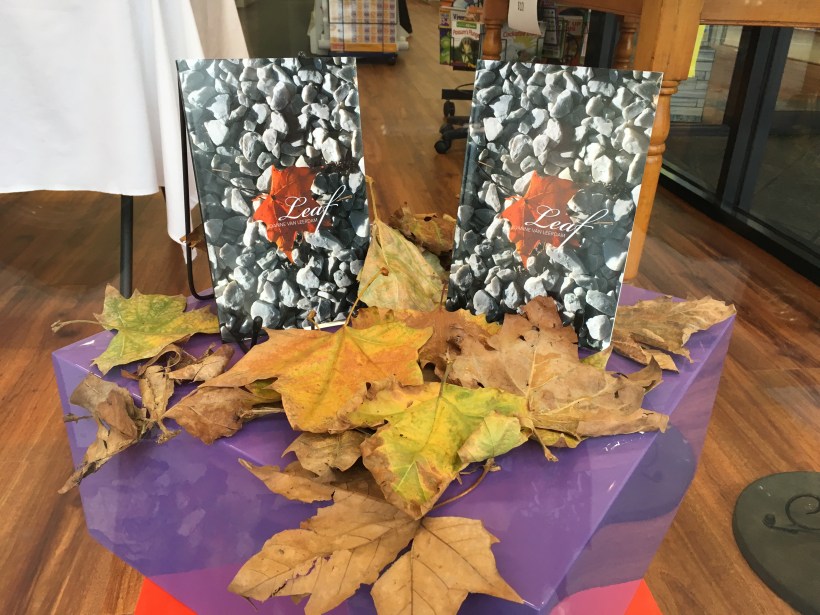
They also have a great selection of books written by local authors, whom they happily and actively support and promote.

Did the local book chain store agree when I asked them to stock my books on their shelves? No, they did not.

My local independent store not only agreed, but went way beyond that: they not only stock and display all of my books, they actually organised and hosted my first book launch.

They  also host regular events at which local authors are welcome to meet and greet readers, sign books, and give readings from their work. That kind of support is pure gold to an author.

If we don’t support our local businesses, we will lose them. We will be left with fewer options, poorer service, and towns and communities that no longer prosper and thrive the way they once did.

It’s not really such a difficult choice, is it?

Writing About Family and Friends.

Authors: keep your writing from causing problems with your family and friends.

Writing about family can be fraught with danger. The last thing you want to do as a writer is offend or alienate your family, especially if things are already fragile in some way.


That poses a challenge: what happens when there’s something you desperately want to write about? For starters, writers should know to always, always change names and details.  If possible, don’t mention names at all. Even when writing about positive feelings or experiences, people who aren’t used to putting themselves out into the public eye might hesitate to have something written about them and published. A great idea for a story or poem should never be pursued at the cost of an important relationship.


When I do write something about friends or family, I make sure they’ve seen it first, and I tell them I’m going to publish it. That way, they can’t say they didn’t know.


For example, I recently wrote a poem after two completely separate events: one was the wedding of my nephew, the other was a conversation with a friend who had recently lost her own nephew in tragic circumstances.  The poem, titled My Child, does not mention anyone by name, nor does it mention those particular situations. It is an expression of my feelings – and my friend’s feelings – for those whom we have loved, held, and helped to raise.  This is what I sent to “my children” and to my friend, well over a week before I posted it. That same text is what I posted on my writing blog where I published the poem today. Poem My Child


The other alternative, of course, if you feel you must write about something or someone, is to disguise the situation and details enough so they don’t know it’s about them. I’ve written plenty of poems about broken friendships, people in my life who have been determined to cause me trouble, and others who really deserve some special treatment from Karma, but it’s always been presented as me facing an invisible, unnamed challenger or enemy… or a certain black cat named Friday who metes out justice to people who really deserve it. It is not possible for anyone to identify who I was writing about at the time, and that’s a very good thing.

As a writer, it’s important to protect oneself. The last thing you want is something coming back to haunt you.


And if you’re a friend or family member of a writer,  remember that age old piece of advice: Never annoy a writer, or they might put you in a book and kill you. It’s true. 


2016-04-14 12.32.50