The Proud Man’s Contumely.

In Hamlet’s most famous soliloquy — the one that stars with “To be or not to be…” — the overthinking prince lists a number of problems that make life hard to bear. Most of these are things to which we can relate quite easily: oppression, love that is not returned, the wheels of justice turning too slowly, and people being rude to you.

Hamlet, Act 3, Scene 1

Most people, though, would read the speech and get to the phrase ‘the proud man’s contumely’ and be completely stumped.  It’s not a word one comes across terribly often. In all honesty, it’s probably only literature scholars and high school students studying ‘Hamlet’ that are likely to come across the word, and only one of those groups are likely to know right away what it means.
Contumely is a very old word that means disrespectful, offensive or abusive speech or behaviour.

Contumely is interesting in that most English words that end in -ly are adverbs, which describe verbs, but this is a noun. It doesn’t follow the grammatical pattern of English because it is not originally an English word.

It came into English in the late 14th century from the Old French word contumelie,. That came from the Latin word contumelia, which meant’ reproach’ or insult’, and is related to ‘contumax’ with means ‘haughty’ or ‘insolent’.

These days, we’re far more likely to use terms like ‘insolence’, ‘disrespect’ ‘scorn’ or  ‘abuse’ instead. 

Still, it could be fun to respond to someone’s arrogance with ‘I do not have to tolerate your contumely’. Hopefully, it would leave them as perplexed as those high school students reading Hamlet’s soliloquy for the first time.
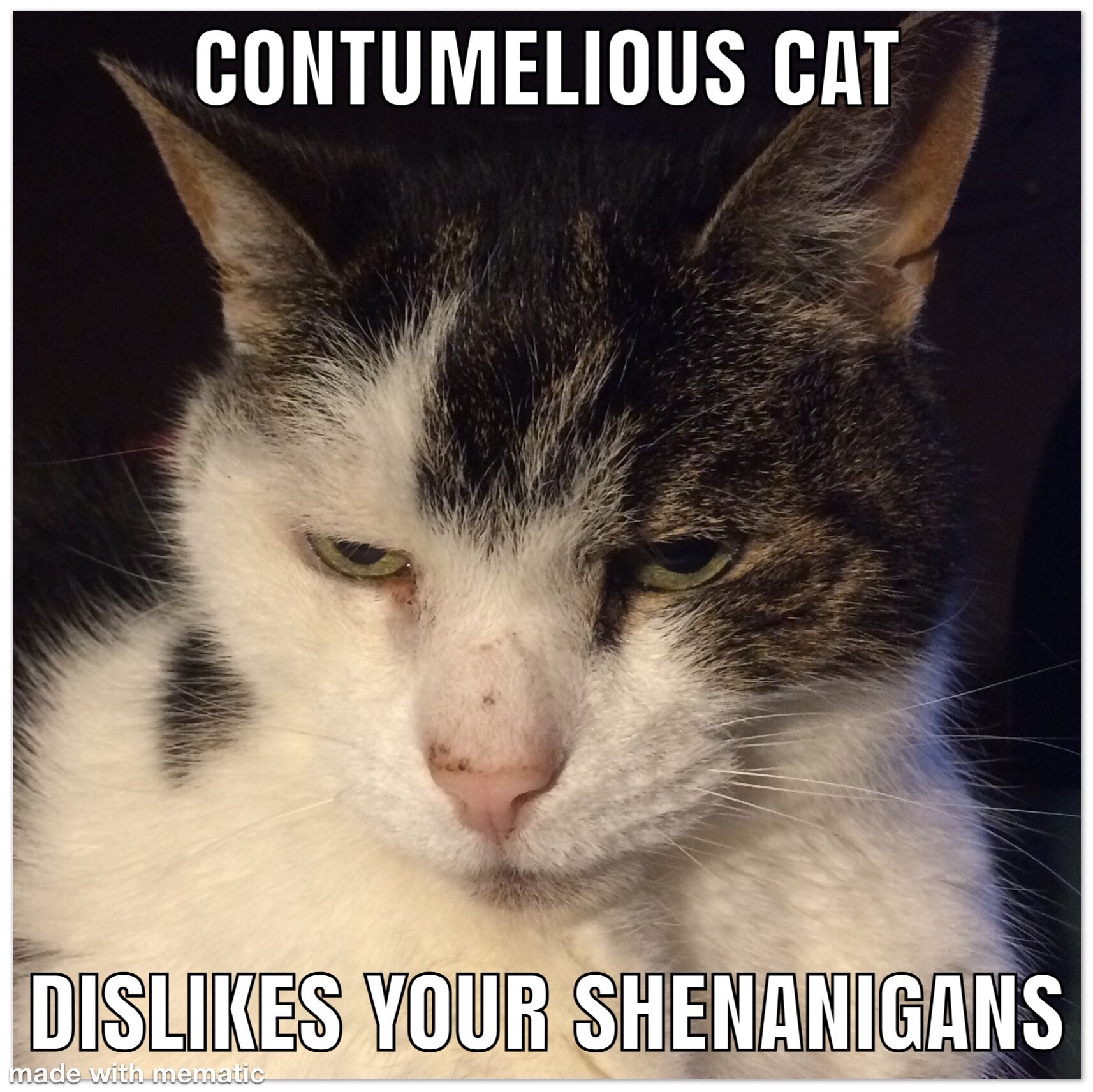
It could also be useful to know that someone behaving with contumely would be described as contumelious.

This word evolved in the 15th century, so it follows the common pattern of the noun form being used first and the adjective coming afterwards.  Mr Darcy’s haughty dismissal of Elizabeth Bennet at their first meeting, a lawyer strutting and posturing in the courtroom, or one’s mother-in-law’s disdain for their general existence could all be described as contumelious.

References:
Vocabulary.com
wordsmith.org
Online Etymology Dictionary

The Proud Man’s Contumely.
#words #Shakespeare #language

What Do You Say When People Try To Tell You What You Already Know?

This morning I heard someone use the phrase “preaching to the converted” in reference to someone insisting on telling another person something they already knew and believed.

My mother used to use that phrase all the time, while my usual idiom in response to that behaviour is “singing to the choir”.

Image by Mariamichelle on Pixabay.

It got me wondering: are there any other common phrases for that kind of behaviour? And do they all relate to religious practice, or are there others drawn from other aspects of life?

I asked a few friends who have different interests in life if they knew of any others. They made some great suggestions:

“That horse has already bolted” and ‘flogging a willing horse” are both metaphors drawn from the world of horse-racing. This is definitely not religious imagery… unless you’re Australian, in which case, it could be.

“I’ve already picked up what you’re putting down.” This seems to be a metaphor related to card games.

“We’re beating the same drum” and “We’re singing from the same song sheet” are both appealing musical images.

Similarly, one could say “We’re on the same page.” Exactly which page that is remains helpfully unclear, allowing for some flexibility of reference and application.

I’d love to know if you use or know of any other such terms, particularly if you are from somewhere other than Australia, or if we all say similar things.

In case you were wondering:

Idiom: a popular expression or way of saying something that has significance other than its literal meaning.
Idiom is often specific to a particular language or a particular group of people.

Metaphor: an image that sounds literal, but is understood not to be a literal statement.
For example, someone “singing to the choir” may neither actually be singing, nor in the presence of a choir.

What Do You Say When People Try To Tell You What You Already Know? #language #words #images

The Curious Origins of the Word ‘Wuthering’ – via Interesting Literature

My love of Emily Bronte’s ‘Wuthering Heights’ is no secret to anyone who knows me, nor to readers of this blog.

I was delighted to find this great post on the etymology of the word ‘wuthering’, which is definitely a word that should be more widely used!

Photo by Harrison Haines on Pexels.com

In this week’s Dispatches from The Secret Library, Dr Oliver Tearle explores the literary history of a distinctive word During the eight years I’ve been running this blog and combing every book, we…

Source: The Curious Origins of the Word ‘Wuthering’ – Interesting Literature

Awesome.

Image by spirit111 on Pixabay

“Awesome!” is an expression that has become widely used in response to things  or experiences that are really good and very positive and, in my opinion, has become greatly cheapened by overuse.

Dating back to the late 16th century, ‘awesome’ used to be an expression of something that generated profound reverence or fear.

This was the original sense of the word ‘awe’, which goes back to around the turn of the 13th century. It was the term used in English translations of the Bible to describe the human response to the presence of God or of angels: deep fear and worship at the same time.

The phrase “stand in awe” dates back to the early 15th century. The phrase “awe-inspiring’ was first recorded in 1814.

Sources:
Macquarie Dictionary
Etymonline

Awesome.
#words #language #awesome

Sloth.

Sloths have become enormously popular in recent times. Cute, fluffy sloths adorn pyjamas, tee shirts, and accessories. Plush sloth toys adorn bedrooms and living rooms of kids of all ages. In this era of COVID-19, I even have a face mask with sloths on it.

Native to the rainforests of Central America and South America, they are fascinating animals. Although not conventionally attractive, we still tend to think of them as “cute”. They appear to smile all the time, and they appear to have a more relaxed attitude to life than most other animals with which we are familiar. When life is stressful and busy, being a sloth for a little while might be an attractive option.

These animals were first called sloths in the early 1600s. It came from a translation of the Portuguese word  preguiça which meant “slowness” or “slothfulness”. This, in turn, originated in the Latin word  pigritia which meant “laziness”.

Sloth is a Middle English word that evolved from an Old English word that meant “laziness” or “indolence”. The sense of meaning that relates to moving slowly or being late dates to the middle of the 14th century. The King James Bible of the early 17th century uses the word sloth as one of the seven deadly sins, being the sin of laziness .

The animal, then, took its name from the behaviour rather than the other way round.

Sources:
Etymonline
Macquarie Dictionary

Sloth.
#words #language #sloth

You Could Hear a Pin Drop: More Interesting Ways of Saying ‘Quiet’

I really enjoy the sensory richness of the imagery in this post from the – About Words – Cambridge Dictionaries Online blog.

You could hear a pin drop: more interesting ways of saying ‘quiet’ – About Words – Cambridge Dictionaries Online blog

— Read on dictionaryblog.cambridge.org/2020/11/11/you-could-hear-a-pin-drop-more-interesting-ways-of-saying-quiet/amp/

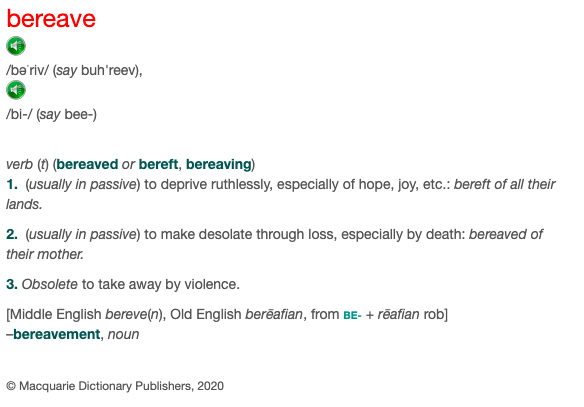
Bereavement.

Photo by Kat Jayne on Pexels.com

I’ve been thinking today about different words we use to communicate to others that we are grieving. It seems to me that in the 21st century, we talk more about ‘personal loss’ and one’s ‘grief journey’ than we do about bereavement.

Bereavement, although old fashioned, is a beautiful word. To me, it evokes a sense of that sense of deprivation that remains after the immediate, more aggressive emotions of immediate have subsided, and acknowledges that phase of grieving in which deep sadness fills the space left by the person who has passed away.

‘Bereave’ is a very old word. In Middle English, the word was ‘bireven’, and before that, the Old English word was ‘bereafian’, both of which meant to deprive, to steal, or take away by violence. It shares a common Germanic root with similar words in many other old languages. Old Frisian had ‘biravia’; Old Dutch had ‘berooven’; Old Saxon had ‘biroban’; Od High German had ‘biroubon’ and Gothic had ‘biarubon’.

Today, Dutch still has ‘beroeven’ which means ‘bereavement’. German still has rauben meaning ‘to rob’ and ‘berauben’ to mean ‘deprived’.

In English, ‘bereave’ has come to refer primarily to loss of life or loved ones. It can also be used in relation to the loss of something that has immaterial value, like love or hope or joy. It has been used that way since the mid 17th century. The past tense form ‘bereaved’ applies to these senses of loss.

English also has the past tense word ‘bereft’ which is used to describe the kind of grief and sadness that comes from loss or diminution of one’s personal circumstances, such as the loss of wealth or home or possessions.

Sources:
Macquarie Dictionary
Online Etymology Dictionary
Wordhippo

Bereaved.
#words #language #emotions

Easily Confused Words: Slither v. Sliver

I was watching a documentary with a friend on Wednesday evening. I nearly spat my drink out when I heard the presenter say, “There was just a slither of a new moon…”

I looked at my friend, only to find she was already looking at me. We were both wondering if we had misheard, but we had not.

What should have been said was, “There was just a sliver of a new moon…”

‘Sliver’ and ‘slither’ may sound similar, but they are neither homophones nor synonyms. They are very different words indeed, and therefore should not be confused.

‘Sliver’ is a noun that means a very thin slice.  There can definitely be a sliver of a new moon in the sky. One can have a sliver of chocolate, or a sliver of cake, although they may wish for more. A sliver of a chance is also likely to leave one wanting for more. A very slender piece of wood or metal – such as that created by shaving  or planing– may also be referred to as a sliver.

‘Slither’  is a verb that means to slide or to move in a squirmy way, as animals without legs do. Snakes and eels contract their muscles so they look to move sideways. So do some worms. Snails and slugs slither in a different way again, looking as though they simply contract and then stretch forward.

So, If someone claims to see a slither of a new moon, they may need to either get their eyes checked or give up drinking.

Easily Confused Words: Slither v. Sliver
#words #language #blogpost

Doomscrolling.

Image by geralt on Pixabay.

Doomscrolling is the act of continually updating and reading  one’s social media feed for the latest news on a significant event. It is closely related to doomsurfing, which is scouring the Internet for the same kind of information.

The term has been around for a few years, but found new popularity as a hashtag earlier  this year, predominantly in response to Covid-19. It is surging again on Twitter today as people try to stay updated on the results of the US election.

It may be a relatively recently coined term, but it’s fair to say the activity to which it refers has probably existed for as long as  easy access to the Internet, especially via platforms such as Twitter and Facebook, has been available.

It’s an understandable behaviour – we want to stay informed, after all. These things matter. We want to know. However, it can also be a very effective self-torture device, as it compels us to focus on what is actually causing our anxiety and distress.  It seems that the worse the news is, the more people tend to keep on watching or reading. Some people even become fixated on that event, to the exclusion of other things, no matter how sad or angry it makes them.

The term also hints at the subjectivity of the behaviour: what one interprets as ‘doom’ is likely to be the exact inverse of what another person interprets it to be. It all depends on what outcome one is hoping for whether the course of events is classified as doom or a reprieve.

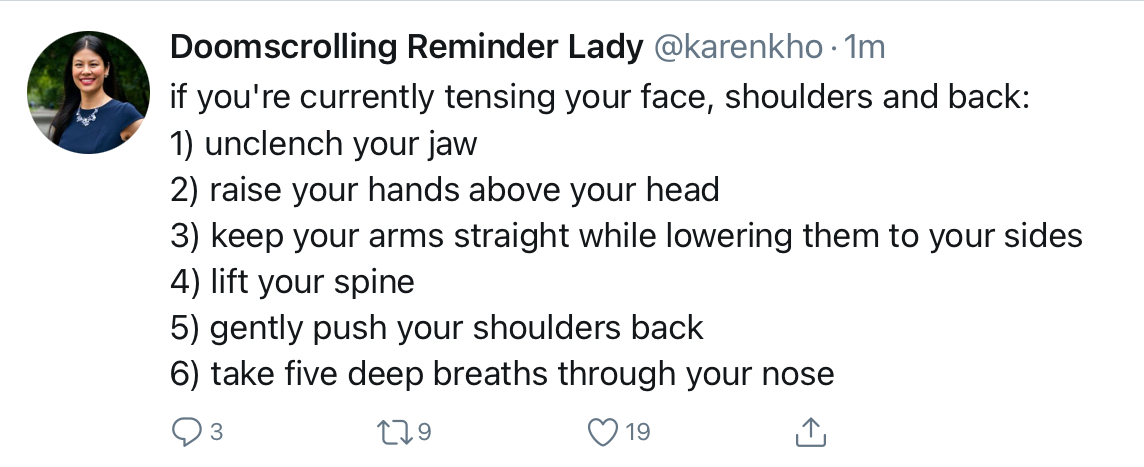
A highly relevant and helpful Twitter account is Doomscrolling Reminder Lady, who repeatedly tells people to get off the internet and take care of themselves instead.

It’s good advice.

Sources:
Merriam-Webster
Doomscrolling, Explained
Urban Dictionary

Doomscrolling
#words #DoomScrolling #behavior

Eerie.

Image by Free-Photos on Pixabay.

Eerie, occasionally spelt ‘eery’, is an adjective that means creepy, spooky, weird, or unsettling. 

It is a very old word that has an interesting past. It has been part of our language since the time of Old English, but it is one of a small group of words whose meanings have actually reversed over time. 

Originally, ‘eerie’ had a meaning similar to ‘fearful’ or ‘timid’. Over time, though, it’s meaning has flipped to meaning something that induced those feelings instead. This sense of the word was first recorded in 1792, and is the meaning we still attribute to it today. 

Eerie.
#words #language #Halloween