Another Souvenir.

Yesterday, as I was unpacking and sorting the Christmas decorations, I discovered a keepsake that I didn’t even know I had.
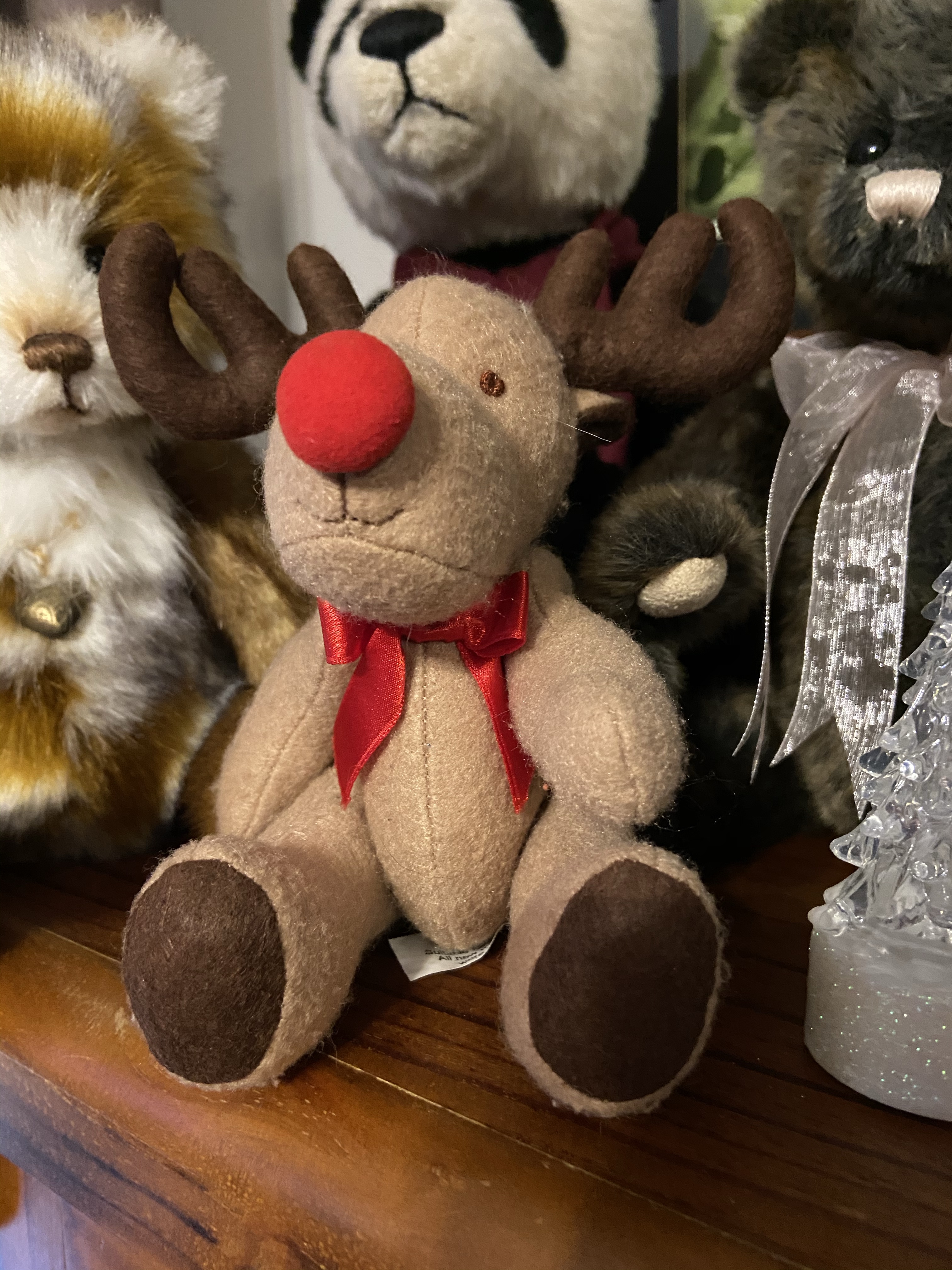
Morris the Rainbear

It seemed odd at first when I found one of last year’s Christmas cards tucked into the bag of tinsel and other soft decorations: my elves from Canada, Morris the Rainbear which my sister gave me decades ago, some plush toys in Santa hats, and all the tinsel.
And when I say “all the tinsel”, I’m not kidding.
There’s a lot of it.
I love that stuff.

The thing is, I don’t usually keep Christmas cards. I usually give them to the pre-school or school, where the kids use the pictures on the front or, in the case of the beautiful cards made by my very clever sisters, the whole fronts of them to make cards for their families and friends.

When I opened the surprise card, realisation was followed closely by tears welling up in my eyes: it was the Christmas card my father gave us last year.
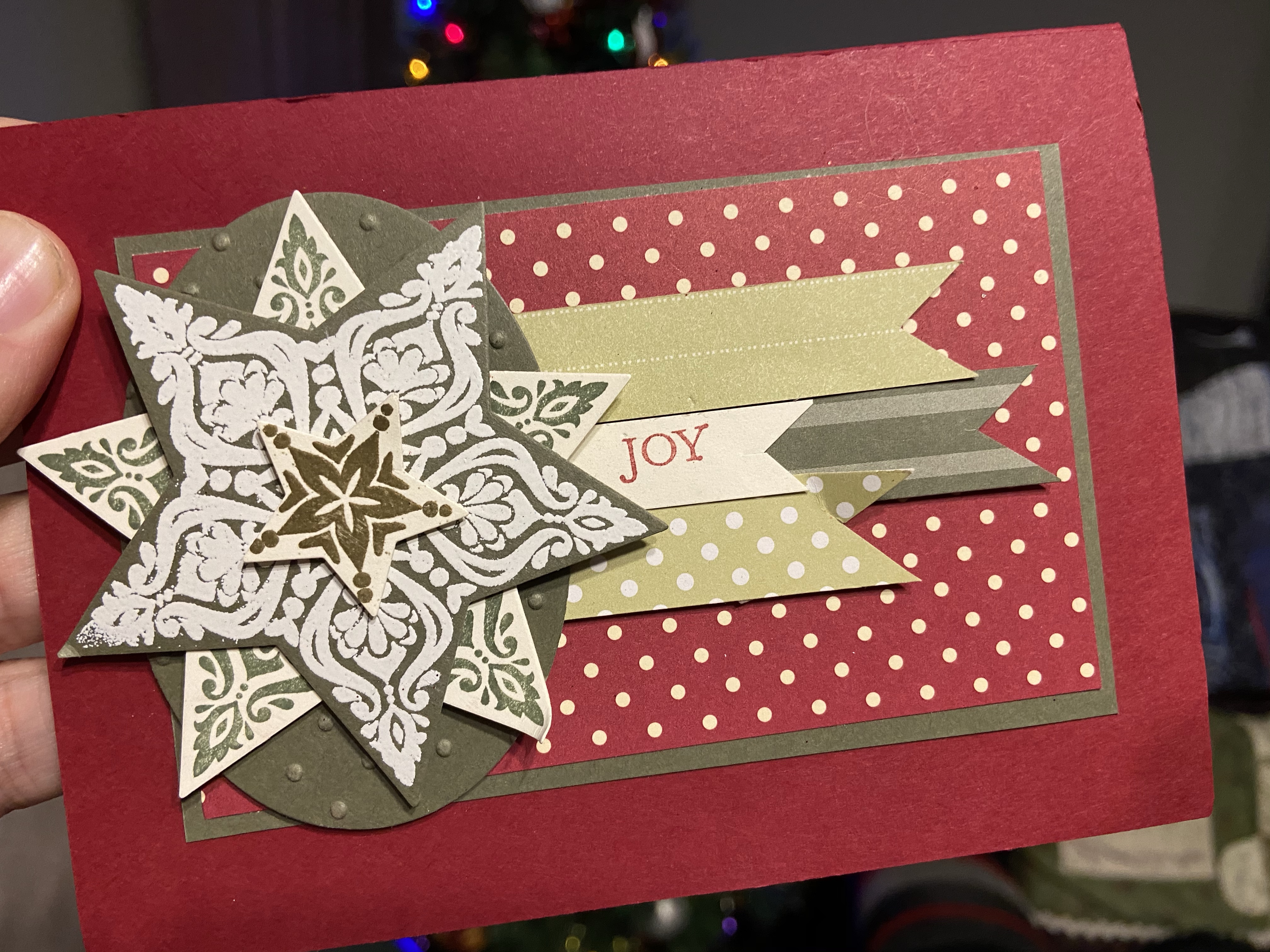
Card made by Jenny Greig.

I don’t know why I kept it.

I didn’t know then that it would be his last Christmas with us, or that it would be the very last thing I had with his handwriting on it.

When I saw his handwriting, all those mixed happy/sad feelings came rushing back. Tears from missing him so profoundly were mixed with laughter at how bad his handwriting was.

To say that Dad had lousy handwriting was no exaggeration.

If practically illegible handwriting alone were enough to qualify someone as a doctor, Dad could have been a professor of worldwide renown. It was a problem for as long as I knew him, and there were times when even he had no idea what he had written. More than once, he found that even though he had written a shopping list, by the time we got to the supermarket he had forgotten what was on it and neither of us could read it.

So, my attempt to transcribe what Dad wrote on this card may be inaccurate, but I think it says, “Jesus who came to suffer in our stead to the glory of his Father. For so was his wish.”
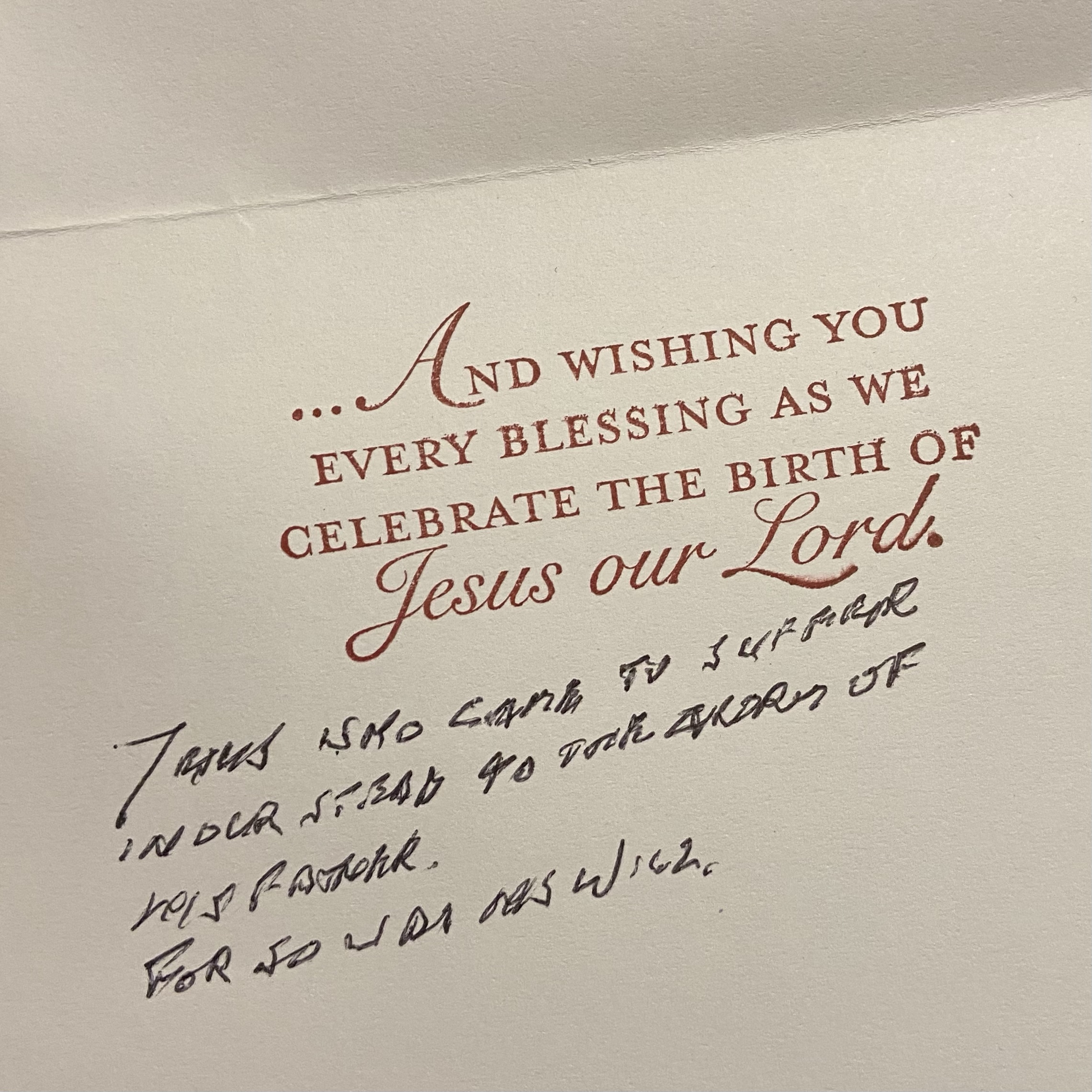
It’s such a classic Dad thing to do: just casually pop a little mini-sermon into a Christmas card. It’s such a lovely reminder of his love for Jesus and his desire for us to put our faith in Him, too. Among all the glitz and glitter and parties and feasting and end of year rush and revelry, the reminder of the true meaning of Christmas is as timely and important as it ever was. 
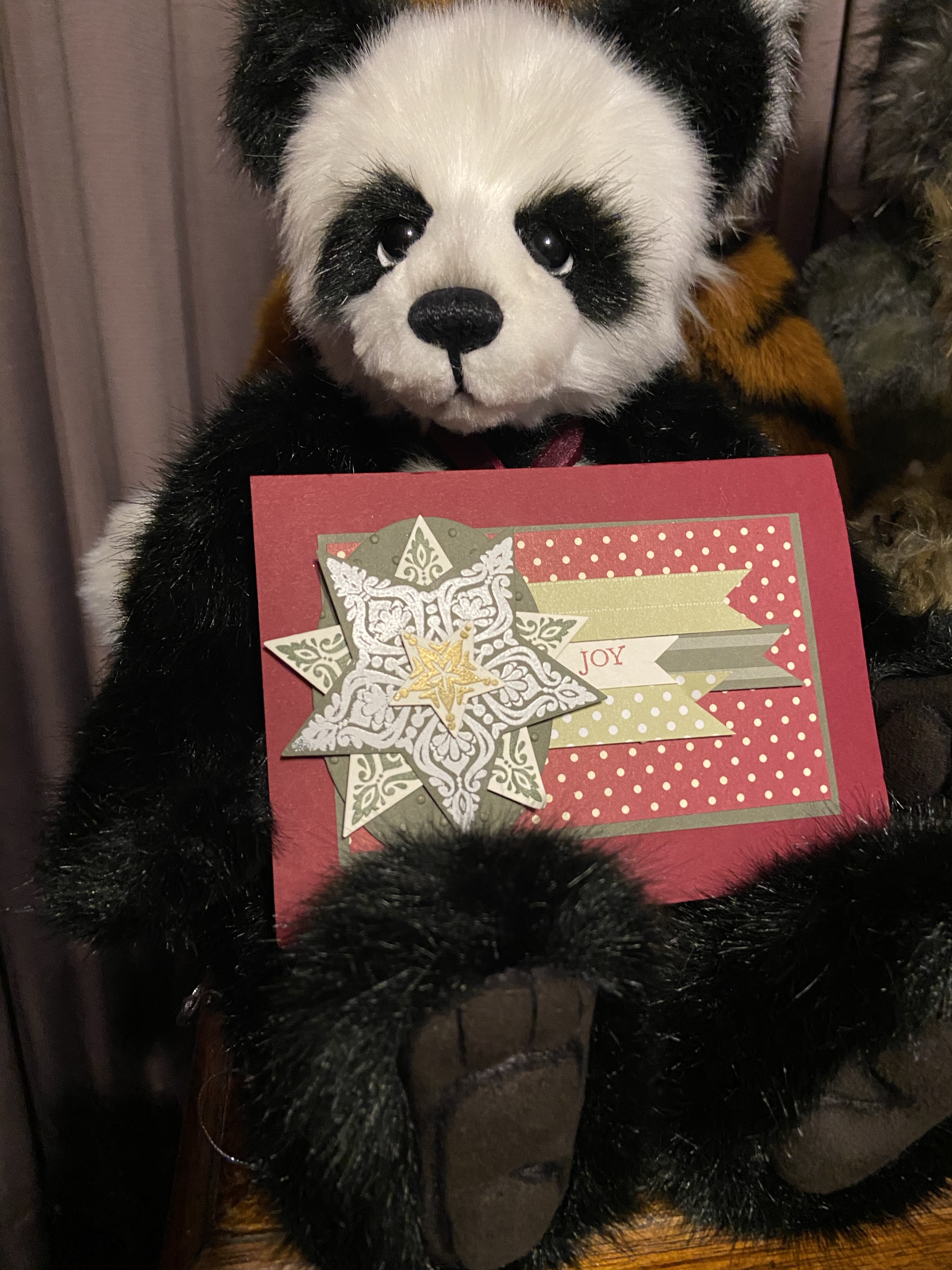
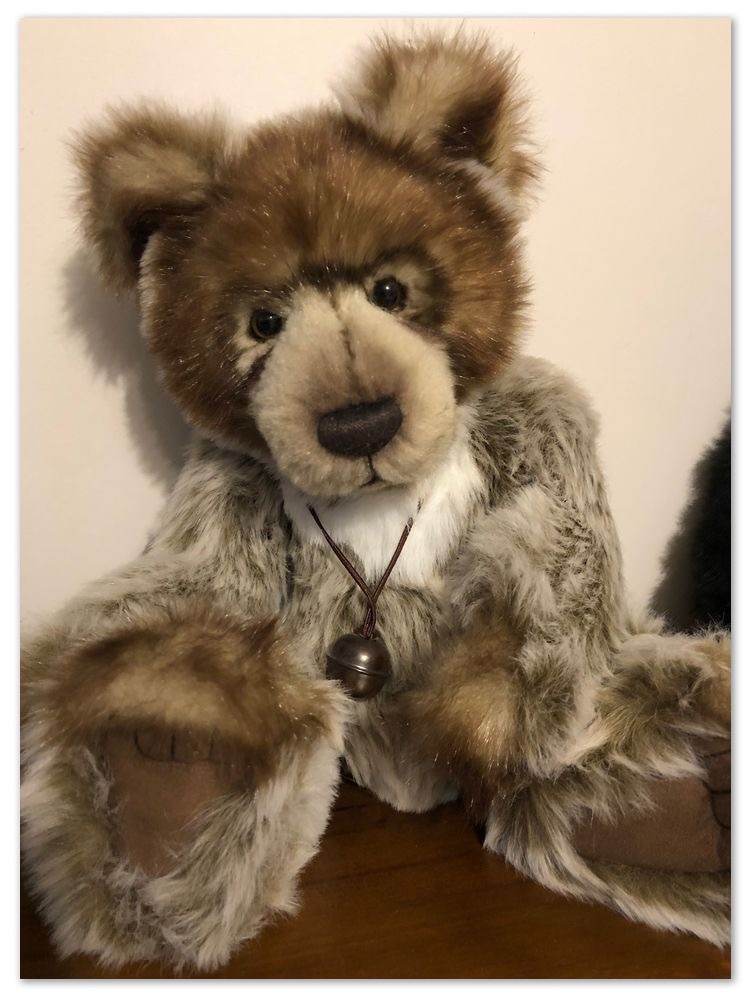
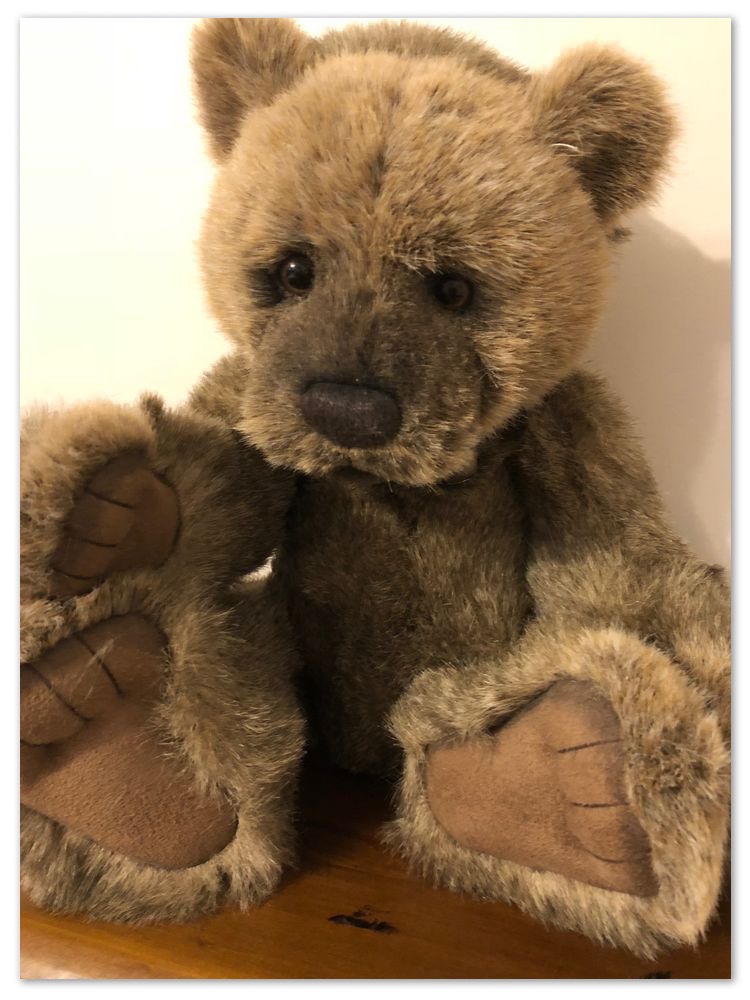
Teardrop is a collectable Charlie Bears bear.

I can tell you now, I’m keeping this card forever. It is on display on my grandfather’s bookshelf next to my chair, safely nestled in the lap of Teardrop, the bear who cuddled me throughout the afternoon and evening of the day Dad passed away, and mopped up more than a few tears along the way. .

It is an unexpected bonus having another souvenir of my Dad on display in my study this Christmas.

Sloth.

Sloths have become enormously popular in recent times. Cute, fluffy sloths adorn pyjamas, tee shirts, and accessories. Plush sloth toys adorn bedrooms and living rooms of kids of all ages. In this era of COVID-19, I even have a face mask with sloths on it.

Native to the rainforests of Central America and South America, they are fascinating animals. Although not conventionally attractive, we still tend to think of them as “cute”. They appear to smile all the time, and they appear to have a more relaxed attitude to life than most other animals with which we are familiar. When life is stressful and busy, being a sloth for a little while might be an attractive option.

These animals were first called sloths in the early 1600s. It came from a translation of the Portuguese word  preguiça which meant “slowness” or “slothfulness”. This, in turn, originated in the Latin word  pigritia which meant “laziness”.

Sloth is a Middle English word that evolved from an Old English word that meant “laziness” or “indolence”. The sense of meaning that relates to moving slowly or being late dates to the middle of the 14th century. The King James Bible of the early 17th century uses the word sloth as one of the seven deadly sins, being the sin of laziness .

The animal, then, took its name from the behaviour rather than the other way round.

Sources:
Etymonline
Macquarie Dictionary

Sloth.
#words #language #sloth

Uhtcare

Uhtcare— pronounced oot-care — is a lovely Old English word that dates back to the Anglo-Saxon poem ‘The Wife’s Lament’, and was probably used throughout medieval times.

I heard it for the first time today in the Something Rhymes With Purple podcast by Susie Dent and Gyles Brandreth.

Image by pasja1000 on Pixabay

Uhtcare translates to ‘dawn care’ and relates to the anxiety of lying in bed worrying about the coming day before it has even really started. It comes from the OE words uht meaning before dawn and cearu/caru meaning anxiety.

It wasn’t just the beauty of the word that struck me, but also the timeliness of hearing it today. Completely forwallowed after a night of very little sleep courtesy of painsomnia, I could totally relate to that feeling! I was lying in bed before dawn this morning wondering if it were at all possible for me to actually make it to work today. I thought about the lessons I wanted to teach, and how much effort it always takes to ensure that a substitute teacher has everything they need to deliver my lessons effectively.I also felt incredibly guilty about the fact that we have only just returned to face to face teaching, and there I was thinking about staying home.

Still, I knew I wouldn’t be a safe driver today, and I also knew there was very little likelihood of me teaching anything effectively at all.

So, I got up at 5.45 am and made sure all my lessons, material and extra notes for my replacement for the day were loaded in the school’s system and ready to go.

Image by MichaelGaida on Pixabay

Given that we don’t really have an adequate alternative for such a useful and expressive word in today’s English, It is a shame that this word has fallen out of use. Maybe it’s time to bring it back.

Uhtcare: lying awake before dawn, worrying about the day.
Anglo-Saxon/Old English
#English #words #blogpost

Sources:
Something Rhymes With Purple podcast: Vedettes 15/9/2020

Ten Rare But Useful Words Everyone Should Know

Anglish Wordbook

Tmesis: Abso-flaming-lutely!

Tmesis— pronounced teh-MEE-sis—  is an unusual word that many people will never have heard of, even though it’s the name for something we do frequently and quite naturally.

Tmesis is the name given to that linguistic behaviour by which we divide a word and insert another word into the middle. In the 21st century, the inserted word is often a swear word, but it doesn’t have to be. 

Image by hpgruesen on Pixabay

We do it to add emphasis and increase the strength of what we’re saying. 

The Ancient Greek word temnein meant ‘to cut’, and from that came the word tmesis, which meant ‘cutting’. It refers to the cutting or division of the first word in order to insert the second. 

The practice is centuries old. There are examples of it in Old Irish and Scandinavian poetry, although the earliest written examples of it being used in English only date back to the 1500s. 

Shakespeare used tmesis in a number of his plays:

  • “This is not Romeo, he’s some other where.” — Romeo and Juliet
  • “How heinous ever it be” — Richard II
  • “That man – how dearly ever parted.” — Troilus and Cressida

Tmesis also exists in the poetry of John Donne:


“In what torn ship soever I embark,
That ship shall be my emblem,
What seas soever swallow me, that flood
Shall be to me an emblem of thy blood.” — Hymn to Christ

From these examples, it is clear that the device has always been used to strengthen the idea or emotion being communicated, which is exactly how it’s still used today. 

In Australia, where we seem to love a good swear word and the power it gives our expressions, tmesis is so common that it seems to me to be part of our linguistic identity. Inserting a term such as ‘flaming” or ‘flipping’, or one’s preferred swear word, into words and phrases is a standard part of our speech. From “abso-flaming-lutely’ to “no freaking way!”, Australians have made tmesis their own without ever knowing that it was a literary device or that it has a name. 

Tmesis: Abso-flaming-lutely!
#language #English #grammar #speaking #englishvocabulary #wordynerdbird #blogpost 

Why Word Nerds Love The International Phonetic Alphabet

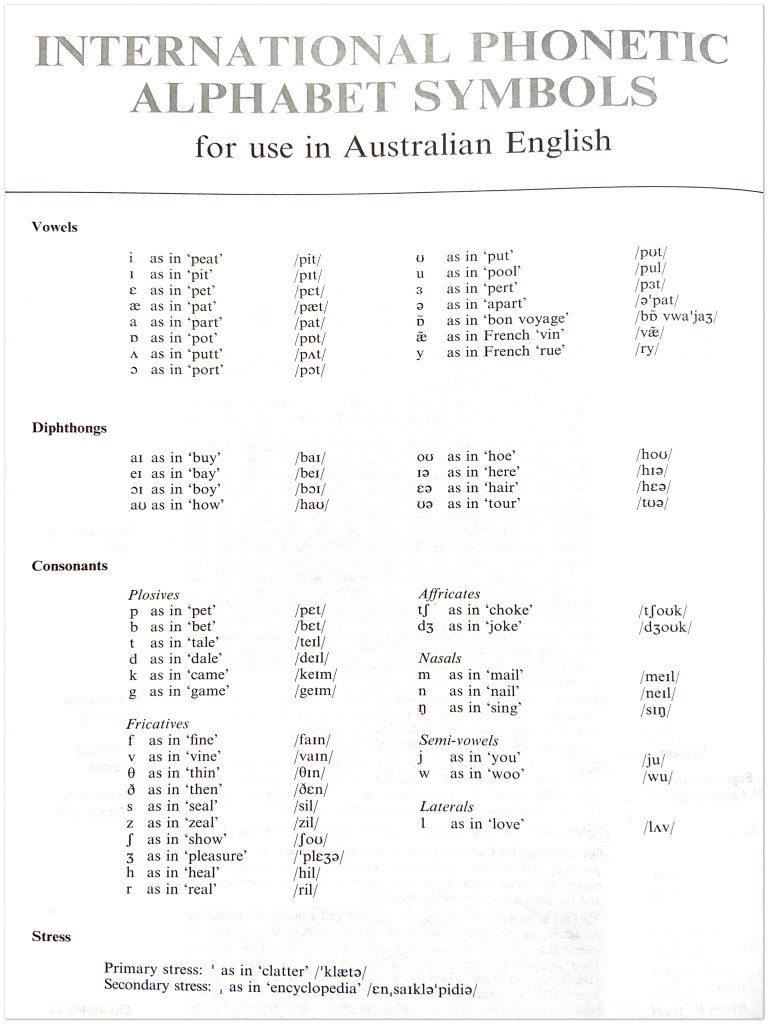
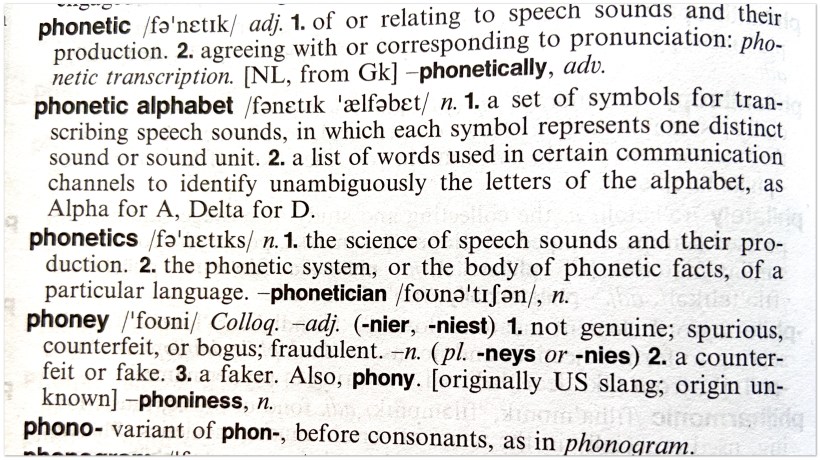
The International Phonetic Alphabet is a system of symbols that denote all the different units of sound — called phonemes — that make up words in any language. It was first developed in the late 19th century, and has been developed and updated ever since. 

Photo: Joanne Van Leerdam. The IPA page in my copy of The Macquarie Encylopedic Dictionary, 2011 Signature Edition.

I learned the IPA in my first year at Macquarie University in 1985. and found it to be an incredibly useful extension of my literacy and learning.  It is knowledge and fluency that I have actively maintained ever since. 

While it has more symbols to learn, it is more straightforward than the English alphabet, where letters can have more than one sound, and a sound can have multiple letters and letter combinations assigned to them. In the IPA. there is one symbol for one sound. There are no silent letters, and there is clear differentiation between words such as ‘foot’ and ‘boot’ that look as though they should rhyme, but do not. It also avoids situations such as that created by the letter a having six different pronunciations from which the reader must choose correctly if they are to understand what has been written. Syllables in words are marked, so that the pronunciation of the word is clearly and accurately transcribed. 

Hypothetically, one could write any word of any language as it was heard, and anyone fluent in IPA could read it regardless of which other languages they could or could not speak or read fluently. 

That came in very handy when lecturers and tutors in other courses used words or names I didn’t know: I used the IPA to write them down, so that I could research and identify them later. When I wanted to keep something confidential, I used the IPA to make notes or records, confident in the knowledge that my friends and family would have absolutely zero clue what was written. That probably wasn’t always entirely necessary, but it did give me a sense of security at the time. The IPA also helped me learn and perfect key phrases to use when family from overseas came to visit, and again later on when I was visiting other countries.

Photo: Joanne Van Leerdam. from The Macquarie Encylopedic Dictionary, 2011 Signature Edition.

A number of dictionaries, both online and hard copy, provide the pronunciation of every word in IPA, giving clear guidance to how unknown words should be spoken. As a fan of the IPA, this is something I consider essential in a dictionary for my own use. 

Because it is an international system of transcribing language, the IPA does include symbols that are not often used in standard UK or Australian English. They may, however, be very useful in transcribing the spoken English of migrant communities. It also has some symbols that are only used in English, and some that are used predominantly in American English.

All of this makes the IPA a versatile tool for all sorts of contexts: work, travel, study, clear communication, and general word nerdery. 

Resources: 

A Sweet Act of Kindness.

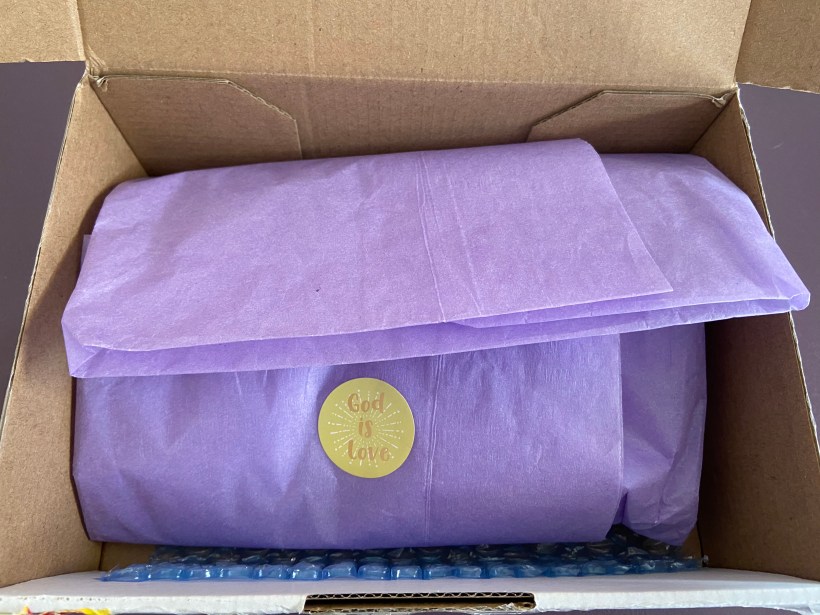
Today I received a mystery package in the post.

Well, this was intriguing!

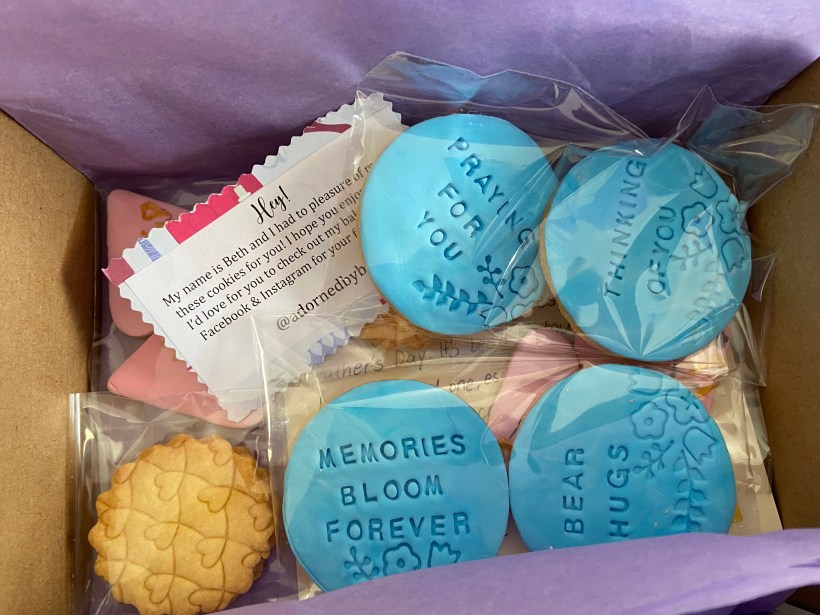
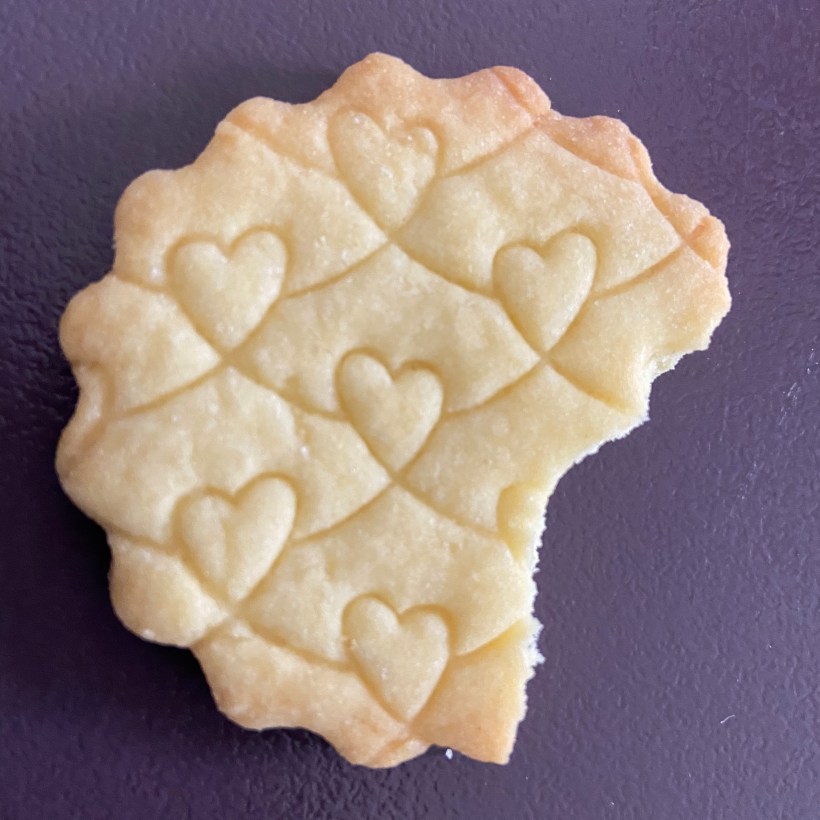
It turned out to be a box full of kindness from a former student who read Sunday’s post about my first Father’s Day without my dad. 

Beautiful cookies by @adornedbybeth on Instagram

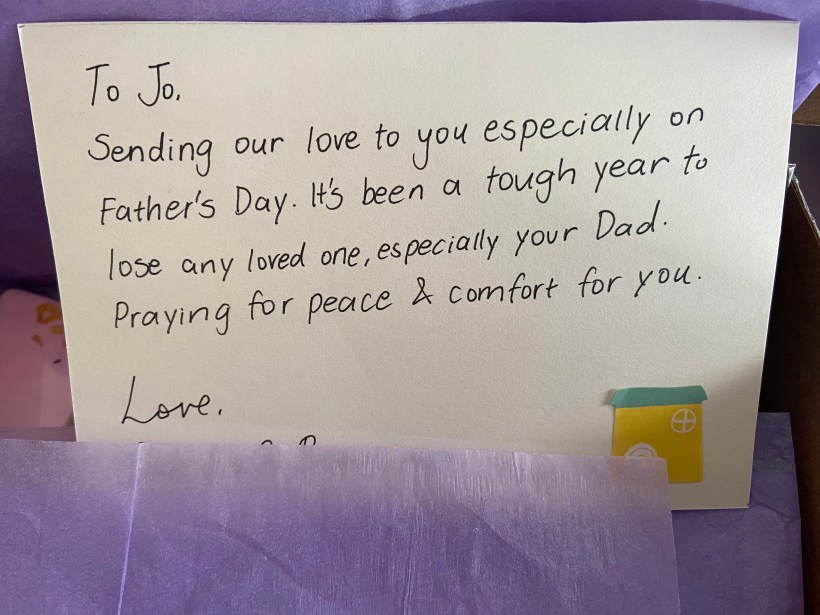
The cookies were accompanied by a lovely note.

In case you’re wondering… yes, I cried.

In that moment, I felt so cared for. I felt valued and understood. 

What a blessing to receive such kindness. 
What an honour to know that a former student likes and respects me enough to do something so sweet and generous. 

Highly recommended.

Finally, those cookies! They’re sensational – and almost too pretty to eat.

Only almost, though. 

Happy National Teddy Bear Day!

Happy National Teddy Bear Day!

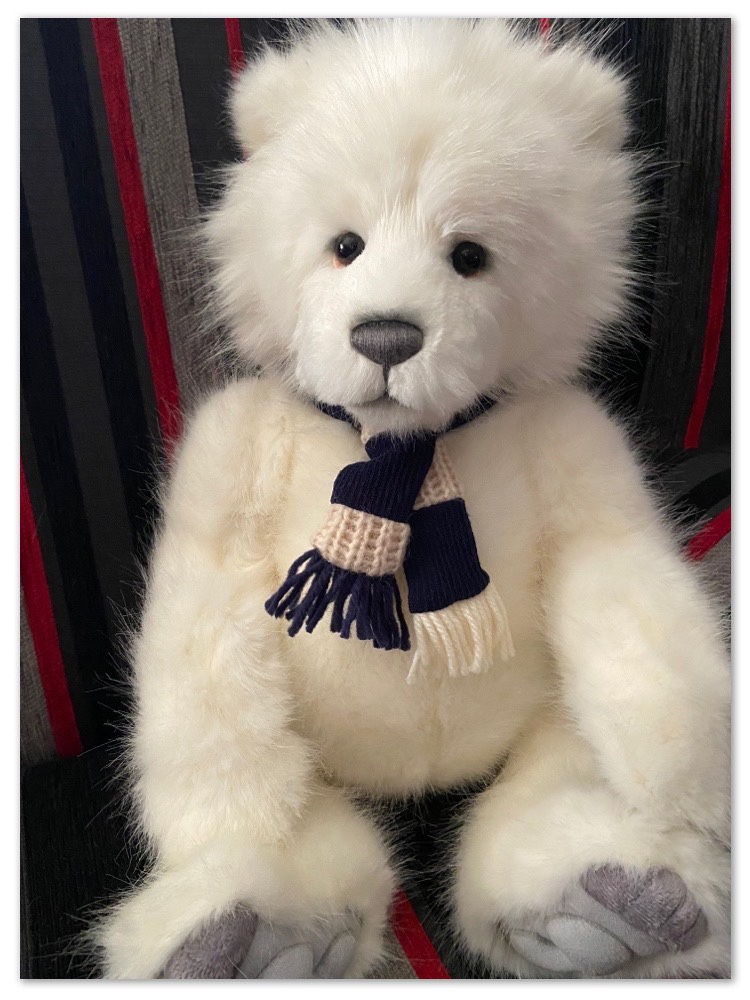
This is a celebration I can get right behind, because every day is Teddy Bear Day in my house!

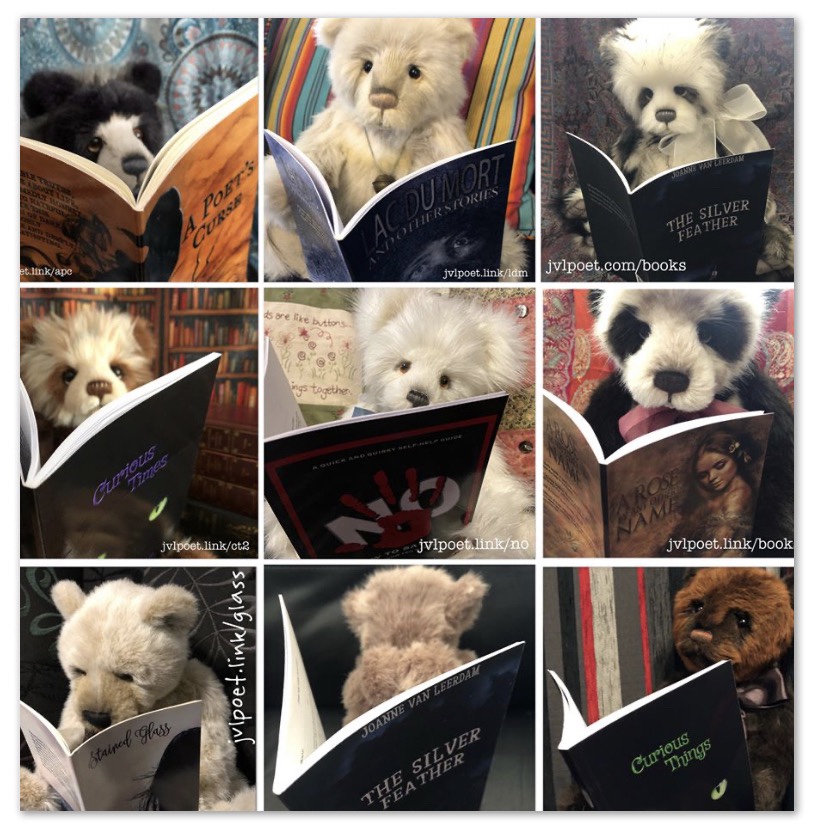
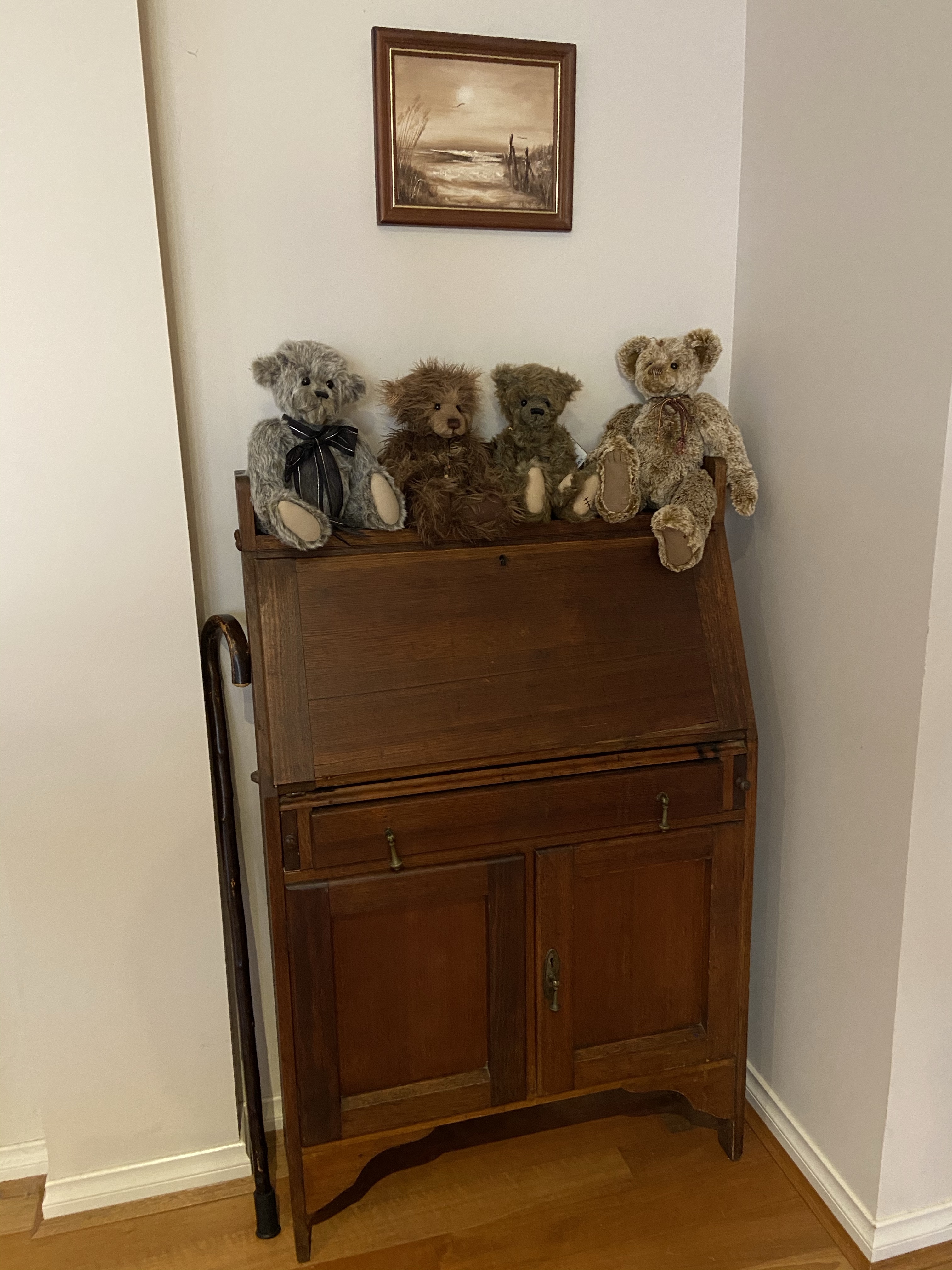
I actually have a beautiful collection of Charlie Bears, who not only adorn my house but help me market my books on Instagram.

To see all my beary bookish posts, follow the hashtag #abearandabook on Instagram.

They are beautifully made and delightful to hold, and their faces are so expressive!

Some of my bears mark special occasions. Others are rescues, having been adopted from other people who no longer want them. As I keep telling my husband, our home provides an important service as a refuge for orphaned bears. And others, I have bought because I just fell in love with them when I saw them.

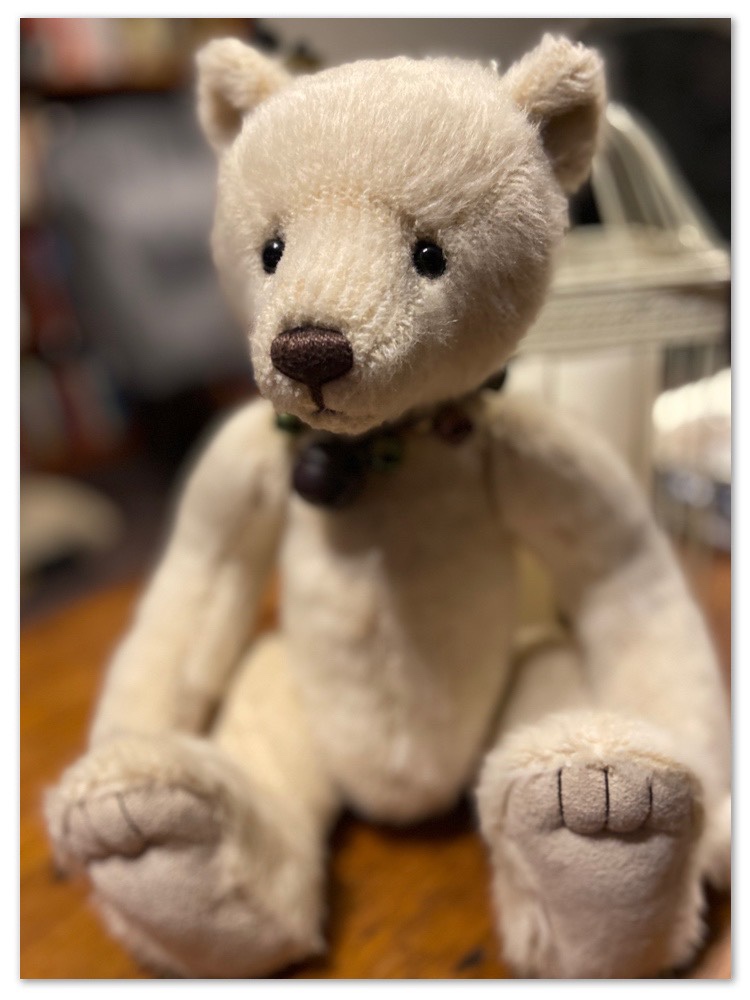
Benson: my first Charlie Bear.

If you’re interested in seeing my bear collection, there are photos of them all on my Pinterest board titled ‘Bear Collection’. There are some that are not Charlie Bears, because I already had a small collection of other bears before I discovered Benson, my first Charlie Bear, in a shop and was forced – forced, I tell you! – to bring him home with me and love him forever.

In additional acts of service to teddy bears, I’ve inspired my cousin and my sister to start collecting Charlie Bears. Between us, we’re saving the world, one bear at a time.

And in case you were wondering, the collective noun for teddy bears is a hug.

My Souvenirs.

Yesterday, I wrote about completing thef tasks I needed to do after my father’s passing. That included rehoming a number of his things, including two bookshelves that have been in our family longer than me, the art prints that Mum and Dad loved to have on their walls, and personal things like his bed and his walker. 

I don’t know how many times I told my siblings that I wasn’t sentimental about giving away things we didn’t need, or selling the things worth money, via buy/swap/sell groups on Facebook. There are people out there who needed them more than we did. That was mostly true. 

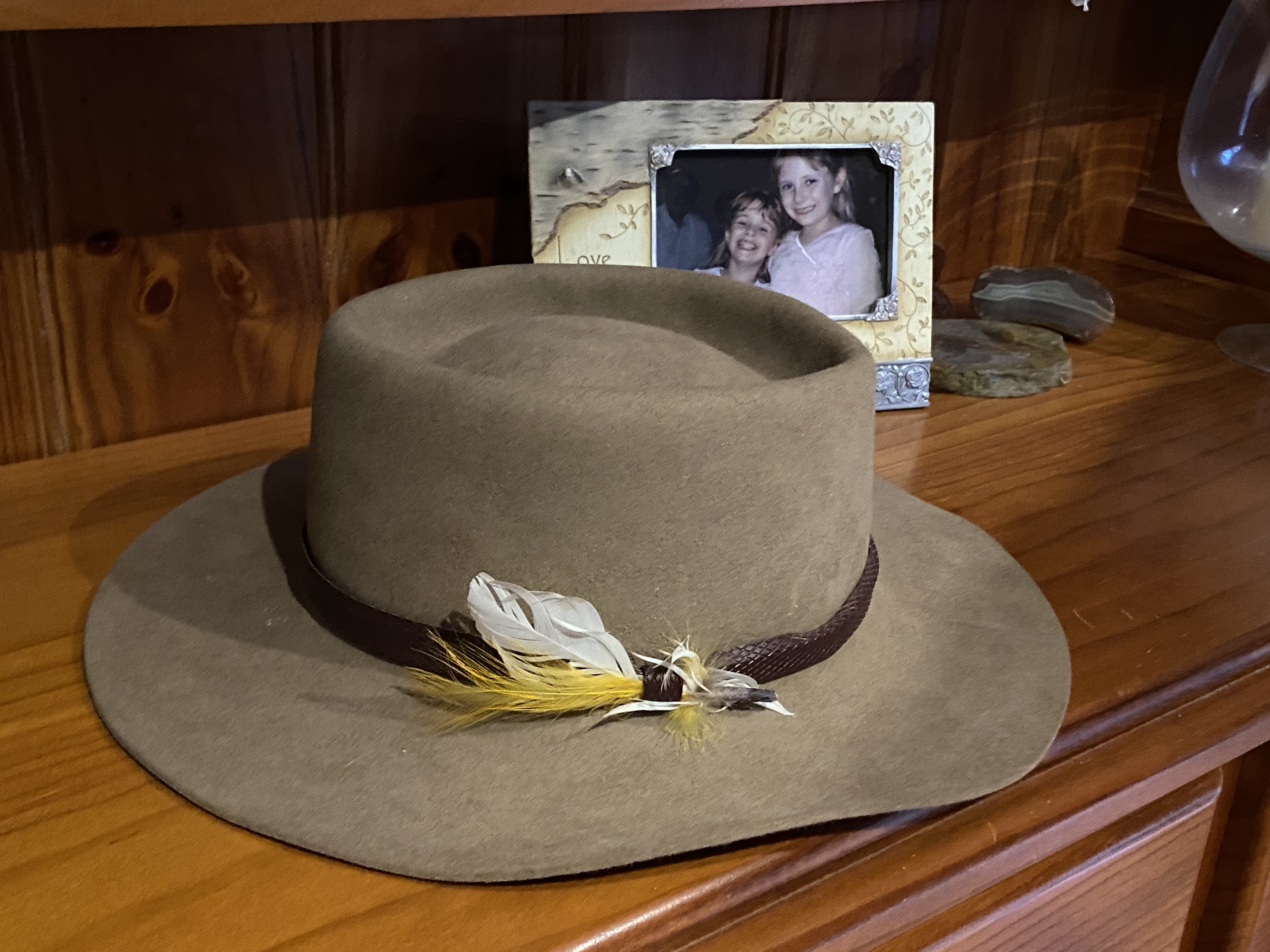
I have kept Dad’s hat and his walking stick. I don’t need them, but they are so iconic of him in the last few years that they are deeply meaningful to me. Those are things that he held and wore most days. They identified him at any distance, and had become part of his identity to everyone who saw him when he was out and about. 

My beloved Dad in March, 2020.

These things are my souvenirs, tangible holders of memory, and valued physical symbols of my no-longer-present, much loved father dad. 

On Tenterhooks.

Image Credit: Daniel_Nebreda

This morning I used the term “on tenterhooks” and then wondered where it came from.

It’s a term that means painful anticipation or being kept in suspense, commonly used by English speakers to describe any situation of tension or anxiety while waiting.

I imagined something being suspended or hung up, waiting for something to happen— which is exactly how I felt when I said it. I imagined the hooks to be larger and more cruel than they actually were, perhaps as some form of medieval torture or punishment, like hanging someone on a wall or in mid air using hooks to hold the body. That is an indication of several truths about me: my own feelings at the time, my love of medieval history, and my horror author’s tendency toward macabre imagination.

As it turns out, I was overthinking that part.

A little research at etymonline.org and worldwidewords.org informed me that it’s a very old word from the early 14th century that relates to the preparation of cloth, particularly woven woollen fabric, by hanging it up on a frame known as a tenter to stretch, straighten the weave, and dry. Tenter hooks were bent nails that held the fabric in place on the frame.

By the early 1500s, people spoke of being on the tenters to express being in suspense or waiting anxiously. The phrase “on tenterhooks” appeared in print for the first time in Tobias Smollett’s Roderick Random in 1748.

It is related to the word tent in that the word was used to describe the way in which hides, skins or coarse cloth were hung over a framework of poles to create a temporary dwelling, which then came to be called a tent.

Both tent and tenterhooks come to English from the Latin, tendere, meaning to stretch, via the old French word tente. They are related to the words tense, tension, intense and the phrase highly strung.

Although the ideas have come to be closely associated, tenterhooks and suspense are not related words.

More.

How people respond to adversity speaks volumes about their character.


Yesterday a friend posted on Facebook that living in quarantine conditions “turns people into a**holes”. 

My response was that this was true, but only for those already so inclined. 

Thinking more about it since then, I have come to the conclusion that this extended quarantine/lockdown is proving to be an intensifier. It brings out the true colours that underlie each person’s character and makes them more evident.

Those who are inclined to be selfish have been increasingly inconsiderate of others.  Those who sulk at not getting their own way have done exactly that, usually all over social media. Those who tend to be angry have been. Those who tend to resist being told what to do have defied the rules and done as they pleased. 

On the other hand, we have also seen plenty of evidence that recent adversity has brought out the best of humanity, too. 

Those who tend to be generous have definitely been so. Those who advocate for the underprivileged have done so relentlessly. Those who are kind and thoughtful have shown more kindness and thoughtfulness, often to the very great surprise and gratitude of others. The levels of commitment, giving, service and going the extra mile have been inspiring.

What we are seeing is more of each person’s true colours. 

It’s also becoming evident that we will see even more of the same while social restrictions and slowed economies continue. 

It is important to understand this because we should not be making excuses for anyone’s bad behaviour. We should not be dismissing things we would not normally accept or shrug off. And we certainly shouldn’t respond to appalling behaviour by explaining it away with lines like “they are under pressure”. 

All that does is enable people to continue being nasty, with little fear of consequences for their words and actions. 

We are all under pressure. Many of us are struggling one way or another. We are all missing people, places and things we love.
We’re just not all being horrible about it. 

Quarantine: Bringing Out the Best And Worst In People
‪#QuarantineLife #LOCKDOWN2020 #COVIDー19 #Personality #behavior #blogpost‬