One Poet’s Approach to Writing Poetry

Today, I’d like to share with you my own approach to writing poetry.

If you’re not really a poetry reader, it may reassure you to know that it’s not always super-formal language and words that are hard to understand.  Sometimes it is- especially if you’re approaching poetry written a hundred  or more  years ago. In my mind, though, making it so elegant and clever that people are resistant to it or almost afraid of it really defeats the purpose. I want the reader to connect with what I’m saying, not feel like I’m some self-important hyper-intellectual with an overactive sense of rhyme.


npm_2018_poster-e1520635983486

It’s also helpful to understand that there are different types of poetry. Some types, like sonnets, are formal in structure and rhyme pattern, and a poet really has to stick to those rules.  Haiku is said to be one of the most popular types of poetry in the world at the moment, and while it seems quite simple, it still has formal rules that have to be followed. Other types, like free verse, is much more liberated and often easier to understand because those same rules don’t apply.

Some people these days insist that poems shouldn’t rhyme at all – to that, I say– possibly rather loudly and perhaps quite rudely – “Poppycock!”. There is nothing wrong with using rhyme, or any other tool in the poet’s toolbox, as long as meaning is not sacrificed for the sake of making that device work. I write poetry that rhymes, but I also write poetry that doesn’t.

I don’t aim for things to sound pretty and sing-song, or to rhyme neatly, but I do try to use language that sounds beautiful when its read. The important thing is to choose words, and language styles and poetic techniques that suit my subject and deliver the meaning the way I want it to be understood.

I aim for my ideas and feelings to be communicated in a way that makes someone stop and think, and maybe see something or someone in a new way.

Sometimes my writing helps me – and other people – make sense of what’s going on in my head or in my life. It’s the best therapy, because I get to explore and deal with my thoughts and feelings as I work with the ideas, and I always have an outlet to say what’s on my heart and mind.

And sometimes I write poems because it’s the only way I can find to say what other people are afraid to say. I’m happy to provide a voice for others, and I’m always keen to have my readers see situations or experiences from different perspectives.

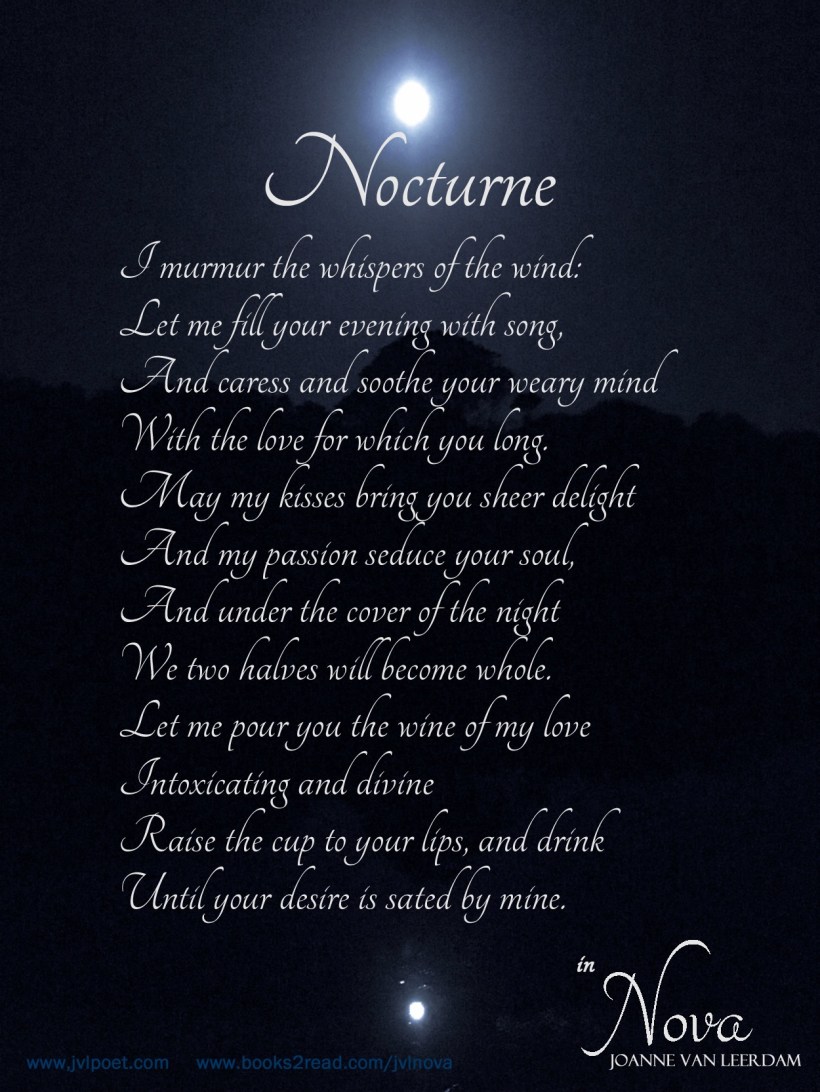
Let me give you an example. One of my favourite poems among those I’ve written is the one titled ‘Nocturne’. Try reading it aloud, not worrying about the rhythm but just letting the language carry you along.
promo nova nocturne poem

When reading it, you’ll see that it rhymes,  and the lines are of similar length when read aloud. This enabled me to achieve a musical type of rhythm in the words, which suits the idea of a nocturne, given that that’s the name of a piece of music written to be played or listened to at night – which is also when the poem is also set at night, for which the idea of a nocturne is also really appropriate. Despite all of that, it’s still quite plain in its meaning.

I’d love to know what you think of it, so feel free to leave a comment below.

You’re also welcome to jump over to WordyNerdBird Writes and read some of my other poems and stories.

An Author With A Mission.

Developing my mission statement helped me to clarify my goals in a way that I had not done before.

When completing an author interview recently, I was surprised to find a question about my mission statement. My immediate reaction was, “My what?”


My next thought was of Jake and Elwood saying, “We’re on a mission from God!” in The Blues Brothers.

BluesBrothers
Image from tenor.com
Of course, it makes sense. If I can crystallise my goals in writing into a statement, it’s going to make them easier to achieve.


I do that all the time as a teacher. I think about objectives, learning intentions and success criteria all the time. So why didn’t I think about my objectives, intentions and success criteria as a writer? To be completely honest with you, I have no idea.


So, I started to work on my mission statement by writing down some basic questions:
What do I want to achieve?
What do I want my readers, or potential readers, to know?
How do I measure success?


Simple, right?


Wrong.
They’re actually really complex questions.


What does success as an author mean? Is it selling a million copies of my books? Well, that would be nice, of course, but it’s not just going to happen without me doing anything to achieve that. Who is going to buy my books if they’re not actually any good? My goal has to be one that I can achieve, and it has to be one that I can measure to see if I’ve met the mark.  My goal , therefore, is to write something that people enjoy and benefit from, not to become a millionaire. Because it’s more achievable, and measurable through both feedback and sales, it’s far more satisfying and encouraging than hoping for something that might never happen.


What do I want my readers to know? Recluses are mysterious, sure, but that only has limited appeal. What I really want them to know is that I understand what I’m writing about – grief, love, pain, pleasure, excitement, fear, exhaustion, joy. I want them to know that what I’m writing is real and meaningful. I want them to know that if they’re going through something really awful and difficult, I get that because I’ve been through some awful and difficult stuff too.  Particularly in my poetry, I want them to catch a glimpse of my soul, or see some blood on the page – metaphorically speaking, of course. I want there to be understanding between us. I want to connect.


So, measuring success isn’t in how many copies of each book I’ve sold, or how many dollars I’ve made. For me, success is in knowing that I’ve touched someone’s heart, or encouraged them, or entertained them. If they read my horror stories, I want to know that I scared them and they loved it.


The beauty of this process of setting goals and working toward them is that I can see with every review that I am achieving my goal, even more effectively than I can with each sale.


I owe enormous thanks to the person who asked me about my mission statement. They helped me clarify my goals in a way that I had not done before./div>

So, without further ado, this is my mission statement as an author:


Joanne Van Leerdam is an award winning poet and multi-genre author who is committed to writing meaningful and thought-provoking literature for the enjoyment of her audience.
Joanne is a thinker and puzzler, a reader and musician, a traveller, and a teacher who has never lost the joy of learning.
Joanne draws inspiration from her own experiences and observations of the world around her, crafting those ideas into works which will encourage those who struggle to persevere and inspire others to see the world from a new perspective. This is as true of her blog posts as it is of her works of poetry and fiction. She aims to continue to grow her readership into a fully global and inclusive audience.

So tell me, do you have a mission statement?

Aftermath.

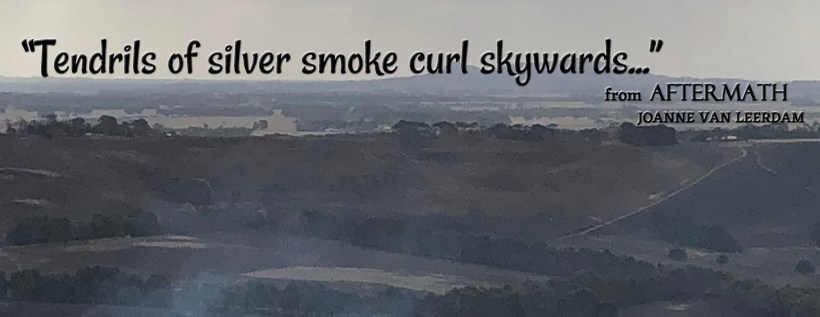
Today, driving to and from work, I saw the devastation with my own eyes, and my mind took a snapshot that developed into a poem. 

Yesterday I wrote about the fires that had burned around my town on the weekend.

Today, driving to and from work, I saw the devastation with my own eyes, and my mind took a snapshot that developed into a poem.

It’s titled Aftermath and I’d love for you to read it.

Promo Y Aftermath 2018-03-20 17.17.03


I took some actual photos, too.

This slideshow requires JavaScript.

Preparation: Who Needs It?

There’s always at least one in every group who doesn’t follow instructions.

Last Friday, I gave my History class an essay question half a week in advance of their assessment task.

They were to prepare a plan and notes to use while writing the essay in class this week. I advised them that they could use their handwritten notes and their textbook while writing, but they were not allowed the use of any devices. All the information about the task was given to them in writing as well as my explaining everything in class.

I expected that today, when the students came to class, they would be ready to start. Happily for me, most were.

And then, because nothing ever goes smoothly, this happened:

Student A: “Can we type this?”

Me: No. No devices.

Student B: “My notes are at home. Can I use my iPad?”

Me: “No. No devices.”

Student C: “Can you write the question on the board please?”

Me: “I gave you the question on Friday.”

Student C: Yeah but I didn’t write it down.

Me: That makes me happy.
Bemused, I wrote the question on the board.

Student B: “What page is it in the textbook?”

Me: “Do you mean the pages you were supposed to read and study last week?”

Student B: “Yeah.”

Me: Speechless, I allow The Eyebrow to speak for me.

All the kids except two commenced writing. Students B and D, though? They’re still reading the textbook.

How Getting Pushed Around Changed My Perspective.

You see things differently when you’re in a wheelchair.

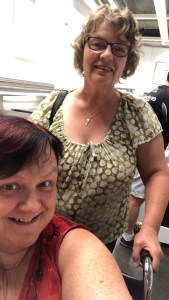
Today we went to a very large store that specialises in flat-pack furniture of Nordic design. It’s an amazing store full of very interesting things to look at.

Including me, apparently.

Being on crutches with an injured foot, I was anxious about how long I was going to last before I was exhausted, so my friends asked for a courtesy wheelchair. And thank God they did. I would have fallen over in tears before I got through the first section.

It came as a shock to realise, though, that when you’re in a wheelchair, people don’t look at you the same way as they do other people.

Sometimes it’s a look of sympathy. Sometimes it’s an expression that says, “You look surprisingly normal”.

And then there’s the occasional person who looks at you with fear and contempt, like you’re dangerous, or they might catch whatever it is that put you in the chair.

One woman gasped audibly, glared at me and pulled her child away from the aisle I was in, although he wasnt actually anywhere near me. What an appalling display of ignorance!

Seriously, folks. It’s my leg that doesn’t work properly, not my mind. And with limited mobility, I’m certainly no threat.

Then I had a sobering thought. Is this what people who are in wheelchairs permanently or long-term experience every day?

How absolutely awful.

It has never entered my mind to look at other people so differently. A disability or physical limitation does not define one’s character or personality. To me, a person is a person is a person.

Apparently, that is not the case for everyone.

Some people seem to think it’s acceptable to look at a person differently, or treat them differently, or pull their children away just because they look or move or get around differently than you most people.

I’m pretty sure that in the 21st century, we can be more decent and open-minded than that.

Mind Blown.

Mind Blown: A story from my Year 10 history classroom.

The classroom was quiet although full of students; the only sounds were made by a page turning, someone typing, or the occasional movement of a foot on the carpet as students worked individually on the task that had been set for them.


One boy sniffed noisily. I glanced at him, but he was too focused on his work to make eye contact with me. At the back of the room, another boy sniffed, gaining more traction so that his friend had done. I could almost feel the lump of whatever that was in my throat, and my stomach lurched. The boy at the front of the room sniffed again.


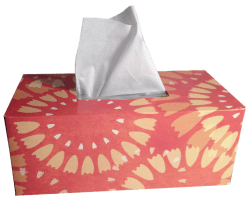
“Okay, guys… the sniffing has to stop. Did you know they make these squares of fabric called handkerchiefs, that you can use to clear your nose? They even make disposable ones, called tissues, so you don’t have to deal with them or their contents again later.”


“Sorry, Mrs V,” said the young man at the front desk, looking suitably repentant.
tissues-1000849_960_720.png


“Wait!” said another young fellow. “A tissue is a disposable hanky?”


“Well, yes.” I grinned at the obvious surprise on his face.


“I’ve never thought of it that way before!” Caught in the spell of his ‘penny drop’ moment, his eyes were wide and his smile was one of discovery and wonder.


“So, it’s your mind that has been blown, not your nose?”


He nodded, laughing along with his classmates, then returned to his work as industry and silence once again took custody of the classroom.


I really enjoy teaching these kids. They’re pretty great.
And they seem to genuinely appreciate the fact that I am a comic genius.


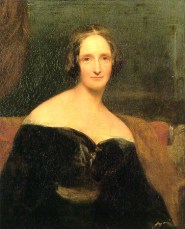
Thank you, Mary Shelley.

How Mary Shelley Has Inspired Me, Yet Again!

Mary_Shelley
At the beginning of February, celebrated as Women in Horror Month, I wrote about Mary Shelley, the author of Frankenstein, as one of my literary inspirations.


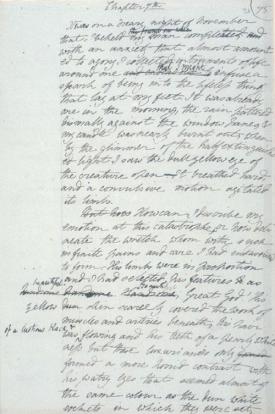
On this last day of the month, a friend shared with me a post from smithsonian.com titled ‘Frankenstein’ Manuscript Shows the Evolution of Mary Shelley’s Monster’ which speaks of a British publisher releasing 1500 facsimile copies of Mary Shelley’s original manuscript notebooks, complete with revisions and edits, in celebration of the 200th anniversary of the book’s first publication.


Oh, my heart! I know I’ll never be able to own one of those 1500 copies, but how I would love to read that manuscript!


FrankensteinDraft
Even just looking at the photograph of two pages, my author-heart swelled. Here is the work of a woman I have admired almost all of my life, showing that her work, too, needed editing and revising. She understood that no piece of writing is perfect the first time, even if the story itself is brilliant.


This is so incredibly encouraging in the moments when I doubt myself, or my story, or my ability to communicate my ideas the way I want to. It reassures me when the words don’t flow for a time. And it reminds me that I’m by no means the first, or last, to experience these things. The doubts and writers block don’t make me any less of a writer; instead, it’s working through them and in spite of them that makes me a better one.


Through these images, Mary Shelley inspires me all over again.

Serendipity: When Things Just Happen Really Nicely… For Once.

One of the things I really love is when, for even just a brief moment, my favourite things in the world converge.

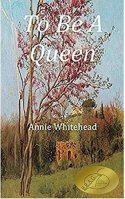
There are a number of things in life that I’m passionate about. British history, especially the medieval period, has always been my favourite for reading and study, as have the works of Shakespeare, along with a good number of other writers.  A teacher by profession, I love interacting with my students and leading them to those golden “penny drop” moments when something becomes real and meaningful. I have always loved reading. And as an Indie author who understands how hard it is to find readers, and how much harder than that it is to get reviews, I’m committed to reading, reviewing and sharing great Indie books of all genres.  Annie Whitehead To Be A Queen

I was very excited recently to discover, read and review an Indie novel about the life of Aethelflæd, the Anglo-Saxon queen. To my absolute delight, it was well-written and beautifully told. I thought then that several Christmases had come at once.

Now, less than a month after posting that review, it’s happened again, and I find myself at a quite magical point in time where my passions have met and over lapped,  as though life has popped me into the middle of some invisible but very cool Venn diagram.

I’m currently teaching Shakespeare’s ‘Richard III’ in one of my senior English classes. Not only is the writing and language incredible – there are curses and insult exchanges galore, along with some great monologues – it’s also the one with the hunchbacked evil genius who usurps the throne and has himself crowned king, the princes being murdered in the tower, and a fabulous haunting scene! The historiography of the play may be fairly tenuous, but the audience is left in no doubt of the creative genius of the writer.  All of this means that I am getting paid to be an absolute nerd about the language, the writing and the history, all at the same time. That in itself is pretty darned great.

ScreenHunter_439 Feb. 21 23.43

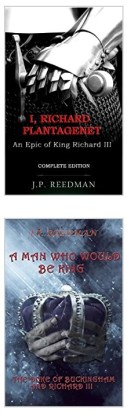
Tonight, though, as I was browsing through the Wordpress reader, I found an article about a great new Indie novel about the life of Henry Stafford, known in Shakespeare’s play as Buckingham, the ally and “other self” of King Richard III. When I went to a renowned global digital bookstore to check it out, I discovered the same author has also written a novel and several other books about Richard III.

That may not seem very exciting to some, but for me, it’s fantastic. I get to teach ‘Richard III’, indulge myself in Shakespeare and history to my heart’s content, and to read and review a couple of Indie books about two of the most fascinating characters in the play – and possibly in English history, it could be argued – at the same time.

My nerdy little mind is blown. I think I need to go and lie down.


T.S. Eliot’s letter of advice to a sixteen year old aspiring writer

This article is a marvellous piece of writing in itself.  I really hope you’ll take the time to read it. 

Every now and then, I stumble across an absolute gem of inspiration. Sometimes it’s in a book. Sometimes it’s a quotation. Sometimes, as it was tonight, it was a blog post written by someone else.

This article is a marvellous piece of writing in itself.  It’s beautifully put together and composed, and the content is just magnificent.

15960194728_e48e03bb3b_b
It’s something every author, whether published or aspiring, should read because it addresses that infernal question with which we all torture ourselves: What’s the right way to do this? And the answers come from T.S. Eliot himself, esteemed 20th century author and poet.

I really hope you’ll take the time to read it.

You’ll find the post titled T.S. Eliot’s letter of advice to a sixteen year old aspiring writer on the Nothing In The Rule Book blog,

Give books, not flowers!

Give Books, Not Flowers!

#Feb14th
#InternationalBookGivingDay

book-giving-day-facebook.jpg

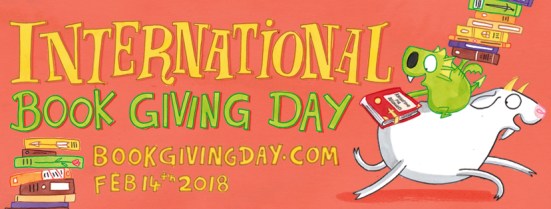
Everyone knows February 14th is Valentine’s Day, but did you know it’s also International Book Giving Day?

Apparently, that’s been a “thing” for several years now. The first I heard of it, though, was earlier today when I saw a post – one post – on Twitter. Why have I never heard of this before? Why aren’t bookstores and publishers worldwide promoting this? Why have I been conditioned all my life to hope for a rose or a card that usually doesn’t materialise, when I could have been my own best friend and presented myself with a book instead? That, my friends, is absolute rubbish!

An international day for giving and receiving books is an idea that really appeals to me on so many levels.  In just five minutes, I came up with these reasons why books are better than roses, chocolates, and drugs:

Books don’t die like flowers do.

Books don’t make you fat or mess with your blood glucose like chocolates do.

Nobody judges you for showing off your new book on social media.
(Unless, of course, you’re an author and you wrote the book, in which case people complain because you’re somehow pressuring them to support you or asking them for money, which just isn’t the done thing, despite the fact that you’ve supported their careers in plastic kitchenware, fancy saucepans, designer linen ware, boutique underwear, party plan beauty products, and whatever other blarney they’ve asked you to buy. But that’s different, and I digress. And I’m not jaded, okay?)

You can stay home with a book and consume it as greedily as you wish without losing any respect.

Books are budget friendly. Do you have any idea how many books you could buy for the price of a bunch of long-stemmed roses in the middle of February?

Books are an investment in your mind and your soul.

Books are an investment in an author who will be more than happy to write more books for you to enjoy. It’s the ultimate gift that keeps on giving.

Books provide the most budget-friendly and instant escape from reality available to humanity.

Books won’t land you in rehab.

There is no law against driving with stories, ideas and knowledge in your system.

Not bad, eh?

So, what are you waiting for? Get out there and give someone you love, or yourself, a book.

Support An Author 3


If you’d like to suggest more reasons why books are better gifts than flowers and chocolates, feel free to leave them in a comment.