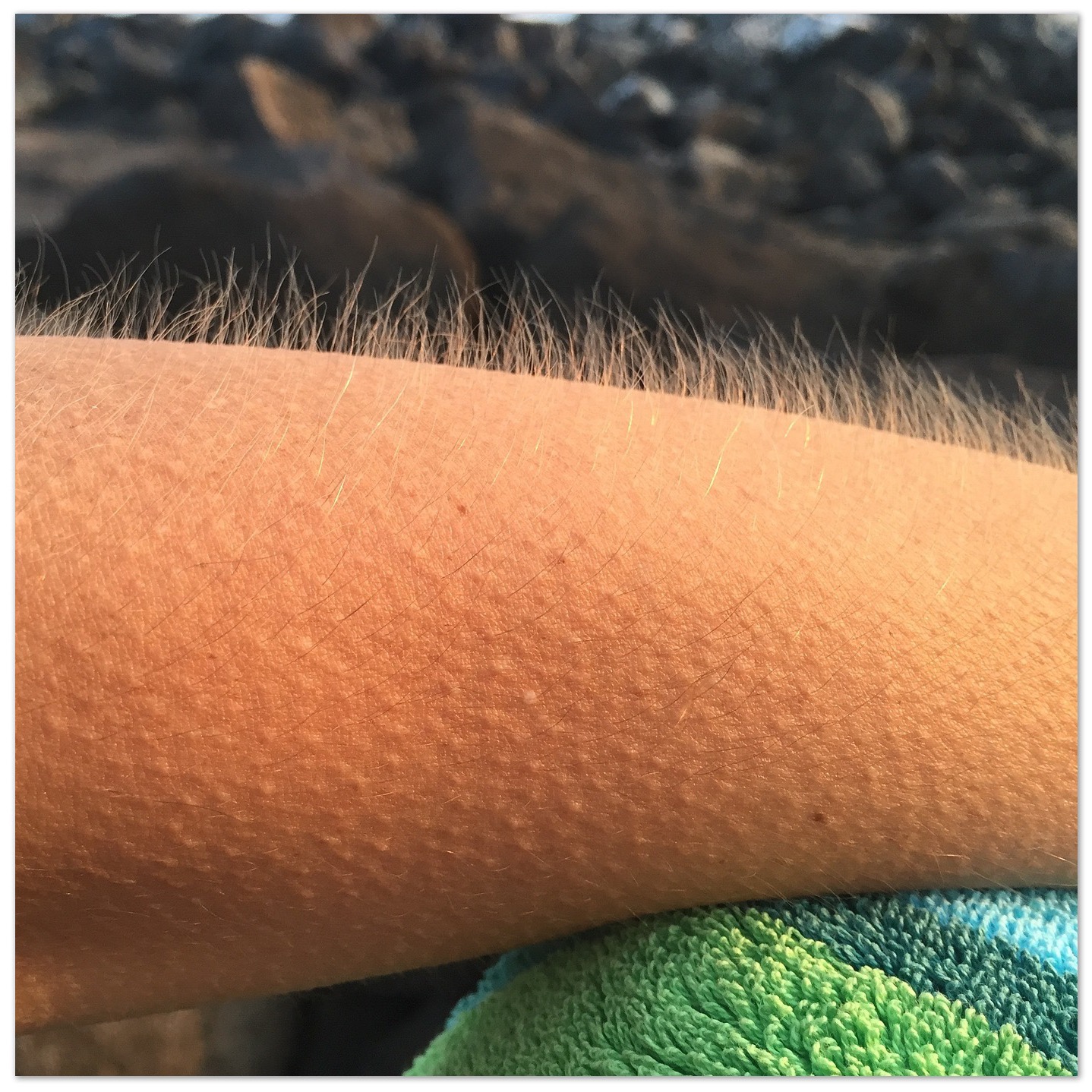
It refers to the way in which the little hairs on our skin stand on end in response to certain sensations or experiences. It makes our skin tingle and can feel as though something with tiny feet is walking over our skin.
This is called goosebumps because The term, which reflects the way in which the skin looks like the skin of plucked poultry, goes back to the mid 1800s. Earlier than that, it was referred to as goose-flesh in 1801, goose-skin in 1761, goose’s skin in 1744 and, as far back as the early 1400s, hen-flesh.
It’s very interesting to see the evolution of the term over time, and then to see it persist for so long now because there really is no better way to describe the appearance of the skin.
Also interesting is the fact that goosebumps also has two other descriptive names: piloerection and horripilation.
Piloerection, meaning the actual standing up of the hair, comes from the same word pilus and the Latin ‘erectio’ which is the source of words such as ‘erect’ and ‘erection’, and beyond that needs no further explanation.Horripilation comes from the Latin word ‘horripiliatio’, from horripilāre which means ‘bristle’. This in itself is a portmanteau of the Latin words horrere meaning ‘shudder’ and pilus meaning ‘hair’.
This makes horripilation a relative of ‘horror’ as they share the same Latin root, although ‘horror’ took another detour and came into English via the French word ‘horreur’.
To refer to something frightening or exciting as ‘hair-raising’ is, therefore, not a metaphor, but is rather a direct description of the physical effects of the experience. We’ve got the nerdy words to prove it.
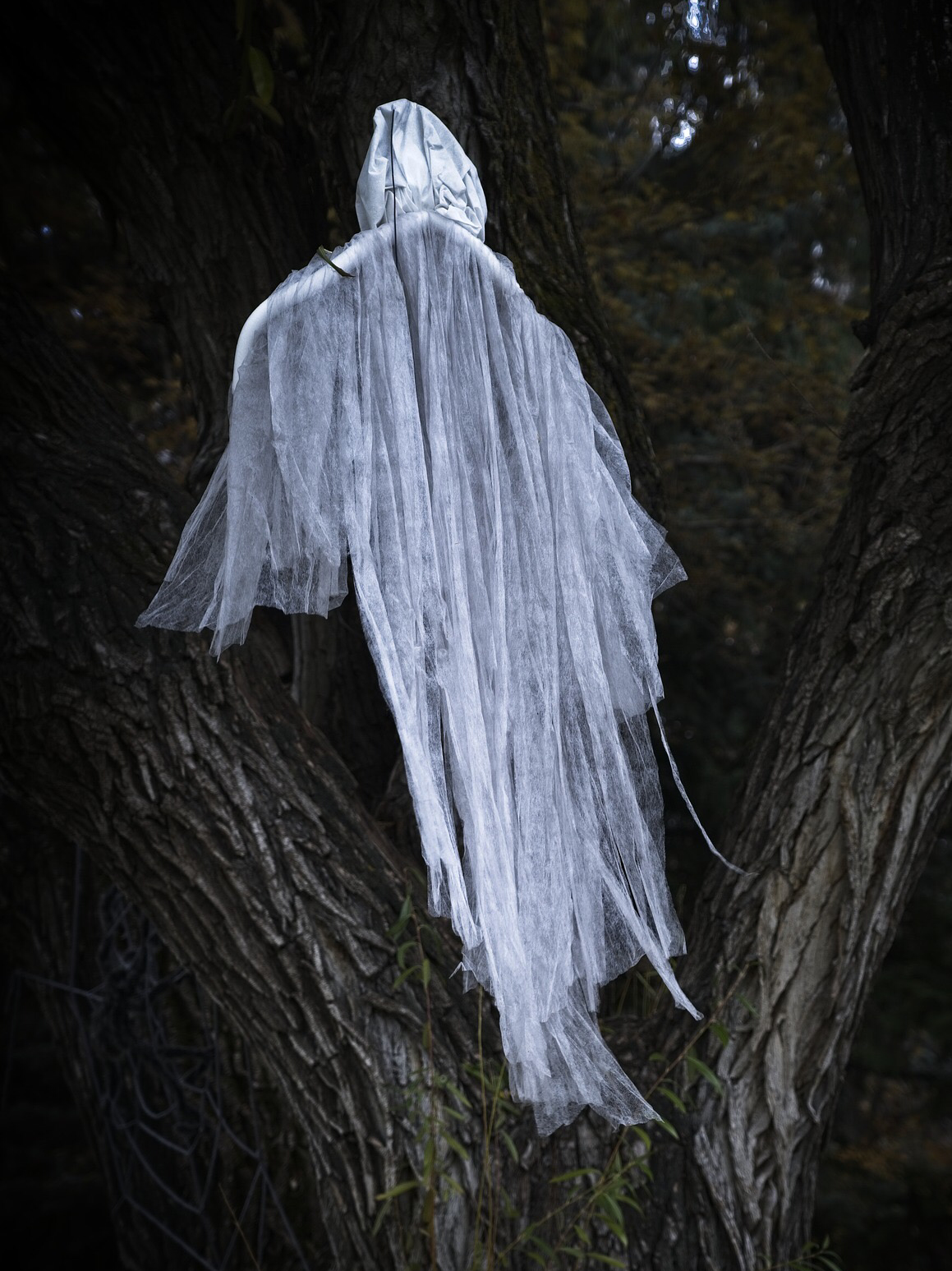
Spooky is a word that is fun to say, and feels good in the mouth when you say it. It is perceived as a more positive term than its synonyms, so it can be used to make scary things seem less threatening or terrifying. Perhaps that is why it’s used so much around the time of Halloween.
Spooky is an adjective that means frightening, scary or creepy, or which is used to describe someone who is easily frightened.
The earliest written record of spooky to mean ‘frightening’ dates back to 1854, and to describe someone who was easily frightened goes back to 1926.
Spooky is derived from the Dutch word spook which is much older. It came into English from Dutch, where it had been used for centuries to mean ‘ghost’. it shares a Germanic root with similar words in other languages: the Swedish call a scarecrow a ‘spok’, while the Norwegians cale a ghost or spectre a ‘spjok’.
The use of spook as a verb, meaning to move or act like a ghost dates to 1867, and meaning to haunt goes back to 1881, while the sense of startling or unnerving someone is first recorded in 1935.
In the 20th century, spook took on some new meanings. During World War I, spook was used as a term for a wireless operator or signaller in the army. In the 1940s, people began to use spook as a term for a spy or undercover agent.
So, when you see or hear the word ‘spooky’, remember that it’s more than just a fun word: it also has a long and interesting history.
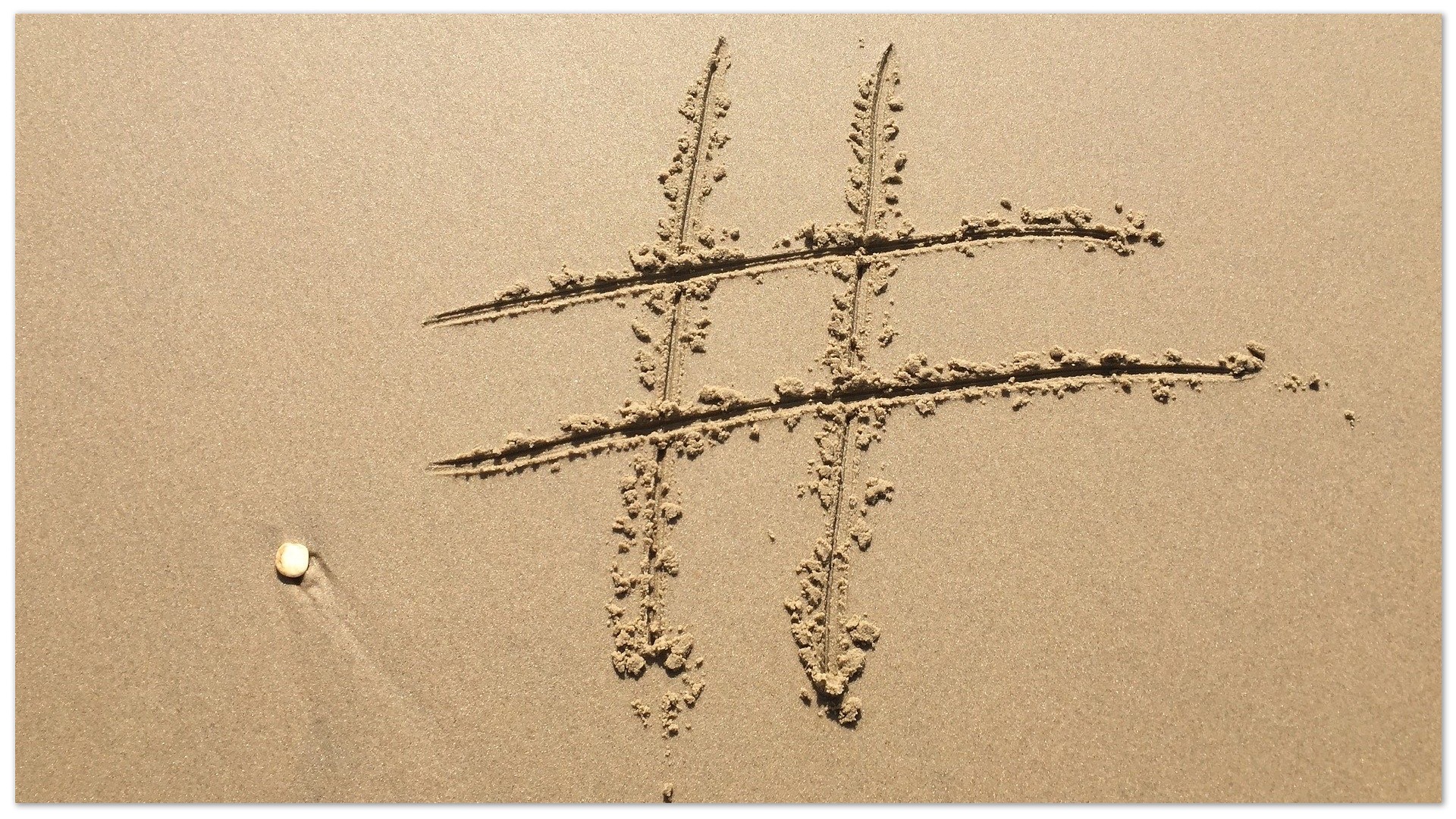
Octothorpe is a less-well known name for that beloved symbol we call the hash symbol. It has been used for a plethora of functions for centuries, but it has really taken on new life in the 21st century with the proliferation of hashtags on social media.
Octo comes from the Latin for eight, just as it does in words like octopus or octagon, and in October— which used to be the eighth month, but that’s another story. When you look at the hash symbol, it has eight points. That part is logical enough.
The origin of the rest of the word is much more recent and much less clear..
The popular story is that it was named after Jim Thorpe, an athlete whose Olympic medals were taken from him because he had been a professional basketballer. Workers at Bell Laboratories, who happened to be fans of his, named the symbol in his honor at some point on the 1960s or 1970s.
That’s a pretty cool story, supported by some dictionaries, but it’s not the only one. The name was almost certainly coined at Bell Laboratories, but the real story behind it is unclear.
One theory is that it comes from a team member burping while talking about the hash symbol with his co-workers. A third theory is that it comes from an Old English word for “village.” Yet another is that the Bell Laboratories workers deliberately chose something that non-English speakers would find hard to pronounce. Of all the possible options, I really hope that wasn’t it.
Ultracrepidarian is an old word that can be used as either a noun or an adjective to describe someone who is critical and judgemental, or who gives advice or opinions, about matters in which they have little or no knowledge, experience or expertise.
Although somewhat different to a malapert, it is entirely possible for a person to be both.
The earliest record of the word ultracrepidarian comes from the early 1800s, when it was derived from the Latin phrase ultrā crepidam which means “above the sole”. This was a reference to a story relayed by Pliny the Elder about a Greek painter named Apelles, who when criticised by a cobbler, said something to the effect of “nē suprā crepidam sūtor jūdicāre” or“let the cobbler not judge above the sandal”.
People generally don’t welcome advice or critique that they have not sought. If advice must be given, it’s probably wise to stick to one’s actual area of knowledge and expertise. Even more importantly, it’s essential to be kind and gentle about it, and to try to be humble. That’s how to avoid being ultracrepidarian.
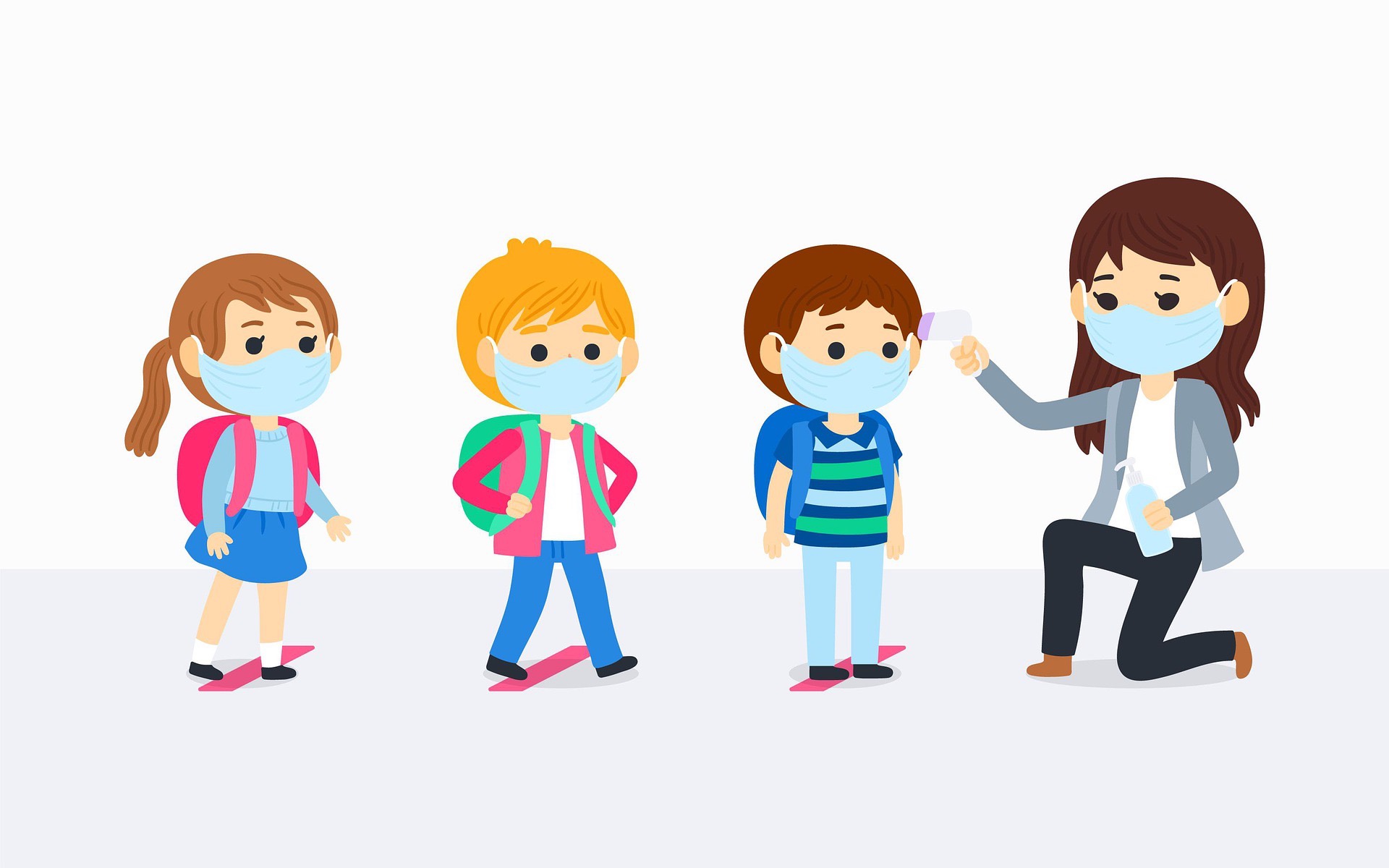
Disclaimer: I don’t kneel for my students, as that would send entirely the wrong message. Besides, they are teenagers and I’m only 5’2″. Also, I can no longer kneel. Image via Pixabay
Face to face teaching is back in full swing in Victoria, with all students over the age of 12, and all teachers, required to wear masks.
The kids generally don’t like wearing masks, and I totally get that. Still, that’s not an excuse for defiance. It’s currently a legal requirement, so whether or not we like it is a moot point.
Most of the students are quite cooperative. Some kids, though, are getting sneakier— or perhaps just less conscientious— about wearing them properly. The challenge for teachers is to find ways to remind them without being awkward or, even worse, coming across as nagging. As anyone who has tried to get a teen to do something they don’t want to will attest, that’s only ever going to create more resistance.
As I am wont to do, I have reverted to humour in addressing the problem.
When a student has their mask pulled under their nose, I tell them “don’t fly the flag at half mask”.
When someone is not wearing a mask, I say, “Oops! Your face is naked.”
When the mask is sitting under their chin, I tell them to “pull their face pants up.”
In a quiet classroom environment, or if I want to remind someone without drawing attention, I simply make eye contact, hold my hand horizontally near my chin and lift it to above my nose.
These responses engage the students by surprising the m and making them think about what I’m saying. They generally respond with a smile and then comply. The occasional student tries to argue, which invariably ends in disappointment for them.
I am always happy when it works. I was also very pleased when, while I was on yard duty, I heard one of my students tell another kid to pull his face pants up. I smiled with great satisfaction and whispered, “Good work, kid! Keep it up!” Nobody noticed, though, because I had my mask on.
Masking Awkwardness With Humour #TeacherLife #humour #blogpost
A malapert is a person who acts like they know everything and is confident that they are always right.
These days, we might call them a know-it-all. We could also call them a wise guy, a smart aleck, or an expert on everything. There are a number of less polite terms available to those willing to use them, too.
The difference between a pedant and a malapert is that a pedant knows they are right about something in particular, while a malapert thinks they are right about everything.
Malapert is a word that dates back to the 14th century, coming into English from the Old French words mal meaning bad or badly, and apert meaning skilful or clever. By the mid1400s, it was being used to describe a type of person rather than just a behaviour or attitude. Given that Shakespeare uses the word three times in his plays, each time without any explanation, one can assume that the word was commonly used and understood throughout the medieval and early modern periods.
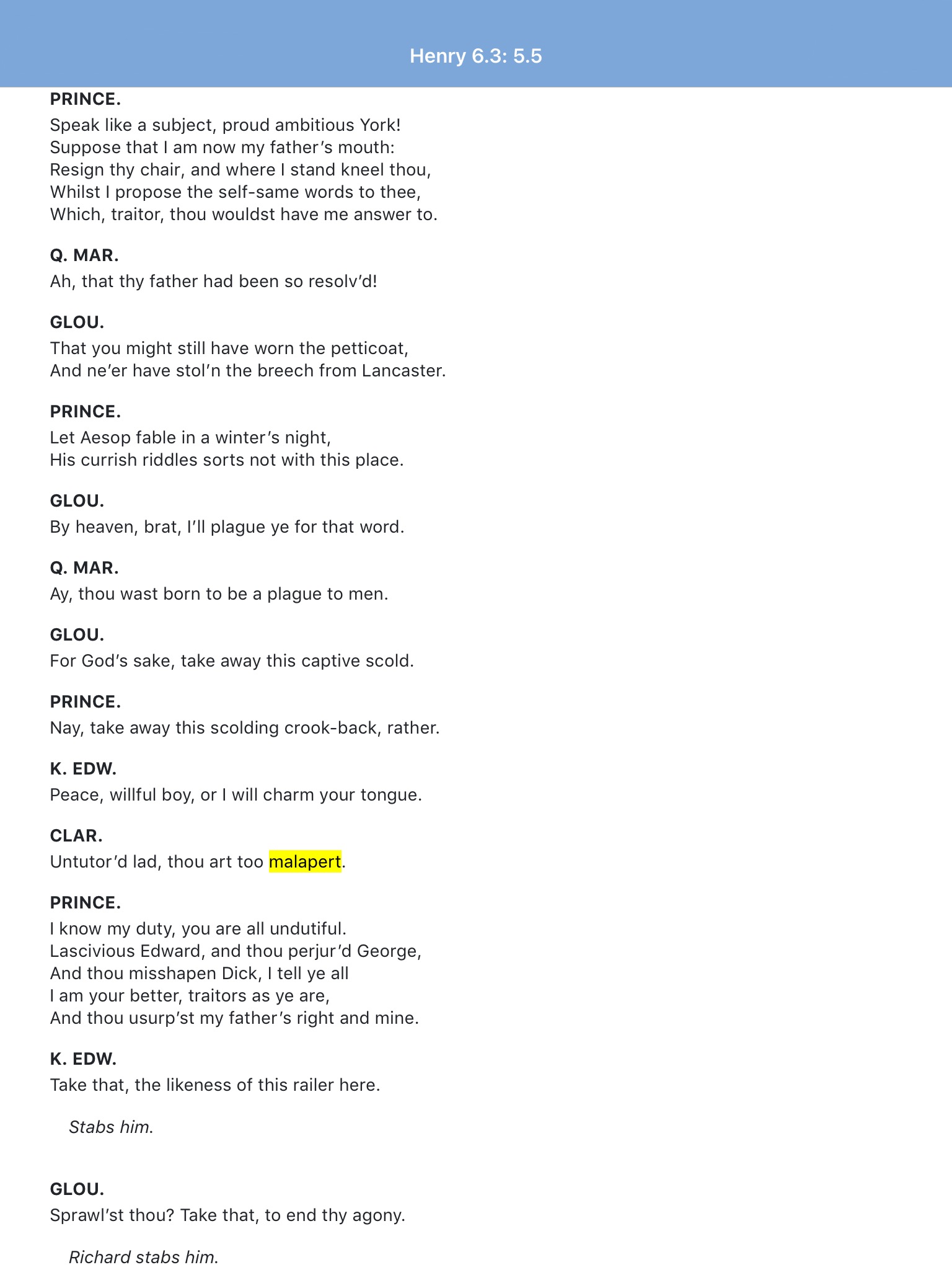
In Henry 6, Queen Margaret and her son, the young Lancaster Prince Edward, engage in a contest of insults with their captors: Clarence and Gloucester. As sons of Richard, Duke of York these two are the Lancastrian King Henry’s enemies, as the two houses are rivals for the English throne. Clarence calls the young prince malapert, highlighting his youthful confidence by calling him an “untutor’d lad”.
Almost as proof of Clarence’s assessment, the prince responds by insulting them again. Despite the clevernesand bravery of his words, this proved to be a bad move, as “perjur’d George” and “misshapen Dick” respond by stabbing him to death. End of argument.
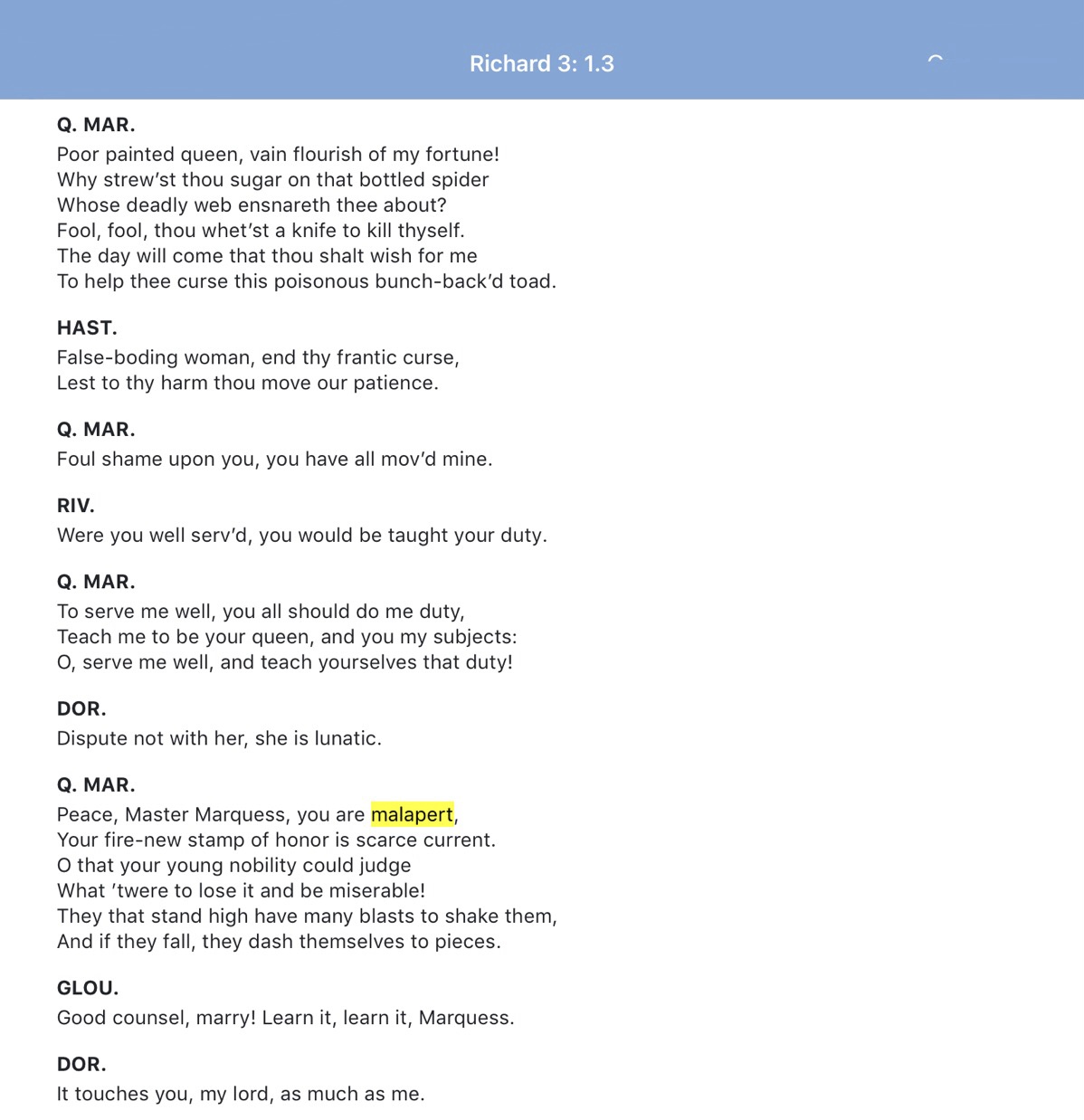
In Richard III, the same Queen Margaret tells the Marquess of Dorset that he is malapert and warns him that his newly found nobility won’t protect him from being destroyed by the Yorks, particularly Richard (Gloucester) whom she describes as a “bottled spider” and a “poisonous bunch-back’d toad”. Richard turns the insult back on Margaret, and Dorset promptly turns it right back on him.
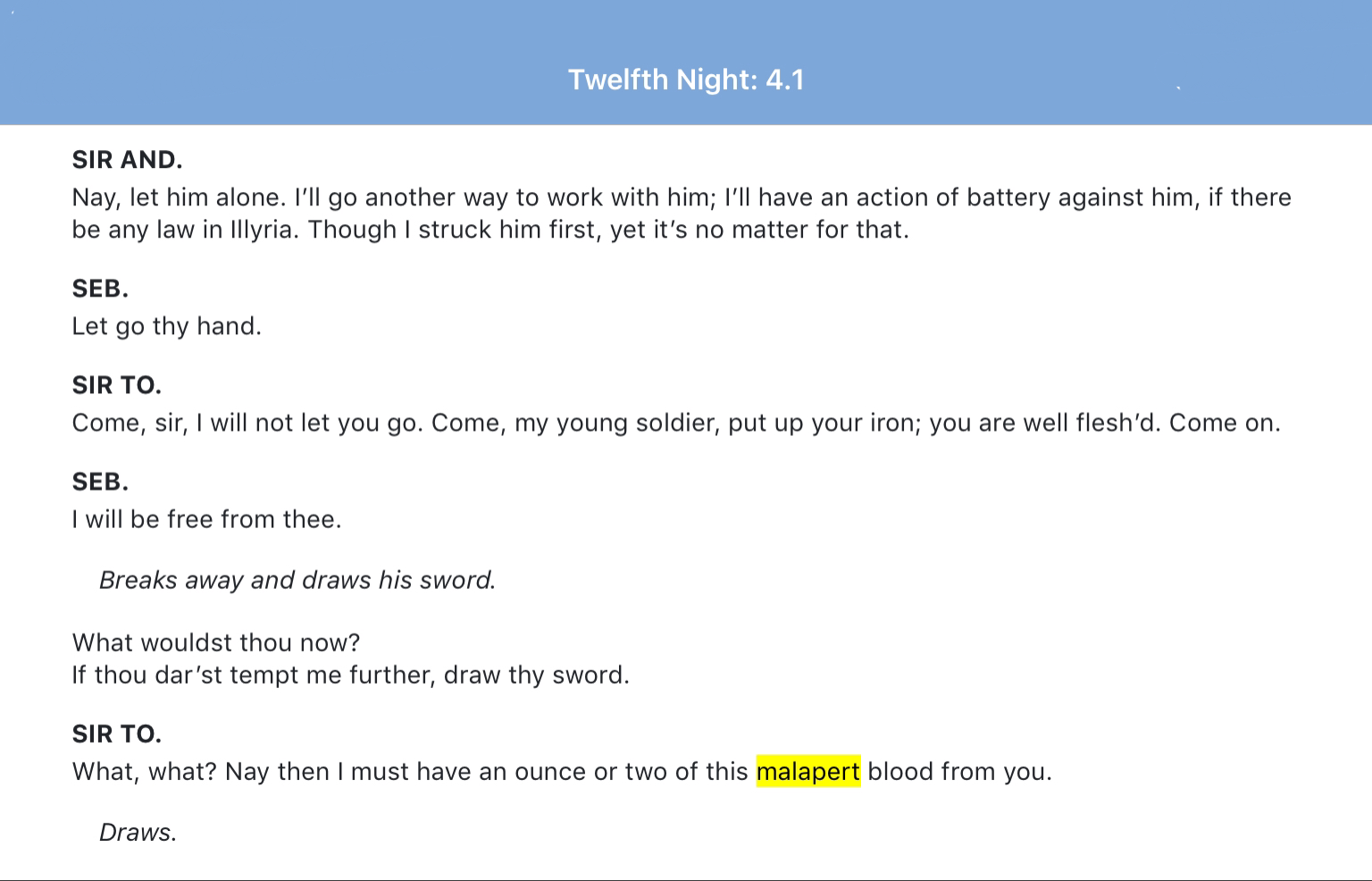
In the comedy Twelfth Night, Sir Toby Belch and Sebastian are engaged in an argument when Sir Toby insists that he “must have an ounce or two of this malapert blood” from his rival.
This is a word I have long been aware of, yet I have definitely not made as good use of it as I could have done. This, however, is likely to change in the near future.
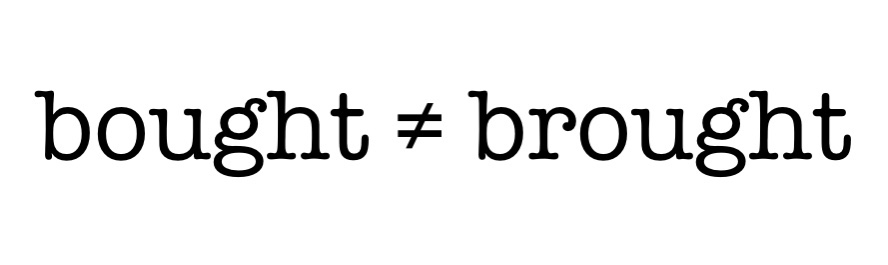
Bought and brought are words that lots of people get mixed up. They may look similar, but they are very different words.
These words are by no means interchangeable, so in the interests of both being clearly understood and preserving one’s credibility, it is beneficial to know which is which, and how to use them confidently at the right times
Bought is the past tense of buy. If you buy something, you have bought it.
Brought is the past tense of bring. If you bring something home, you have brought it home. Note: neither ‘brang’ nor ‘brung’ is standard English.
The easy way to remember which is which is that there is an r in bring and brought, but not in buy or bought. That makes pairing the correct words much easier.
Easily Confused Words: Bought vs Brought #grammar #English #explanation
Uhtcare— pronounced oot-care — is a lovely Old English word that dates back to the Anglo-Saxon poem ‘The Wife’s Lament’, and was probably used throughout medieval times.
I heard it for the first time today in the Something Rhymes With Purple podcast by Susie Dent and Gyles Brandreth.
Image by pasja1000 on Pixabay
Uhtcare translates to ‘dawn care’ and relates to the anxiety of lying in bed worrying about the coming day before it has even really started. It comes from the OE words uht meaning before dawn and cearu/caru meaning anxiety.
It wasn’t just the beauty of the word that struck me, but also the timeliness of hearing it today. Completely forwallowed after a night of very little sleep courtesy of painsomnia, I could totally relate to that feeling! I was lying in bed before dawn this morning wondering if it were at all possible for me to actually make it to work today. I thought about the lessons I wanted to teach, and how much effort it always takes to ensure that a substitute teacher has everything they need to deliver my lessons effectively.I also felt incredibly guilty about the fact that we have only just returned to face to face teaching, and there I was thinking about staying home.
Still, I knew I wouldn’t be a safe driver today, and I also knew there was very little likelihood of me teaching anything effectively at all.
So, I got up at 5.45 am and made sure all my lessons, material and extra notes for my replacement for the day were loaded in the school’s system and ready to go.
Image by MichaelGaida on Pixabay
Given that we don’t really have an adequate alternative for such a useful and expressive word in today’s English, It is a shame that this word has fallen out of use. Maybe it’s time to bring it back.
Uhtcare: lying awake before dawn, worrying about the day. Anglo-Saxon/Old English #English #words #blogpost
The practice of leaving a preposition at the end of a sentence, often referred to as preposition stranding, has long been considered to be “against the rules”. Generations of teachers and grammarians have condemned it as a grammatical taboo.
That isolated, lonely preposition, separated from its noun, is known as a terminal preposition, and may also be described as danging, hanging or stranded.
Albeit with the best of intentions, this was drummed into me as a child, so I simply accepted it and tried to avoid doing so in whatever I wrote.
As I got older, though, I came to realise that it’s something we do very naturally in speaking. In fact, avoiding it in spoken English can make what one is saying seem very formal and stilted.
When I was in high school, one of my History teachers told us a story about one of Winston Churchill’s famous comebacks. On receiving a correction about finishing a sentence with a preposition in the draft of a speech, he responded, “This is nonsense, up with which I shall not put.”
As it turned out, it probably wasn’t Churchill who first made the joke. I don’t know if he ever did, despite numerous and varied attributions. It has also been attributed to various other people, and there are variations on the line that was said to have been delivered, so it’s hard to know who said what, and when.
Either way, the story demonstrates that the rule is actually a bit ridiculous.
So where did this rule come from? And is it something we still have to abide by?
Back in the 1600s, a grammarian named Joshua Poole developed some principles about how and where in a sentence prepositions should be used, based on Latin grammar.
A few years later, the poet John Dryden, a contemporary of John Milton, took those rules one step further when he openly criticised Ben Johnson— another great poet— for ending a sentence with a preposition. Dryden decreed that this was something that should never be done. Nobody bothered to correct or oppose Dryden, and Ben Johnson certainly couldn’t because he had been dead for years, so Dryden’s strident and public protestations popularised the principle into a rule. Over time, strict grammarians and pedants began to actively oppose the practice, and the rule became widely accepted and firmly established.
Ironically, despite all the wise and clever plays, poetry and essays written by John Dryden, it was his consistent complaint about the terminal preposition that became his most enduring legacy.
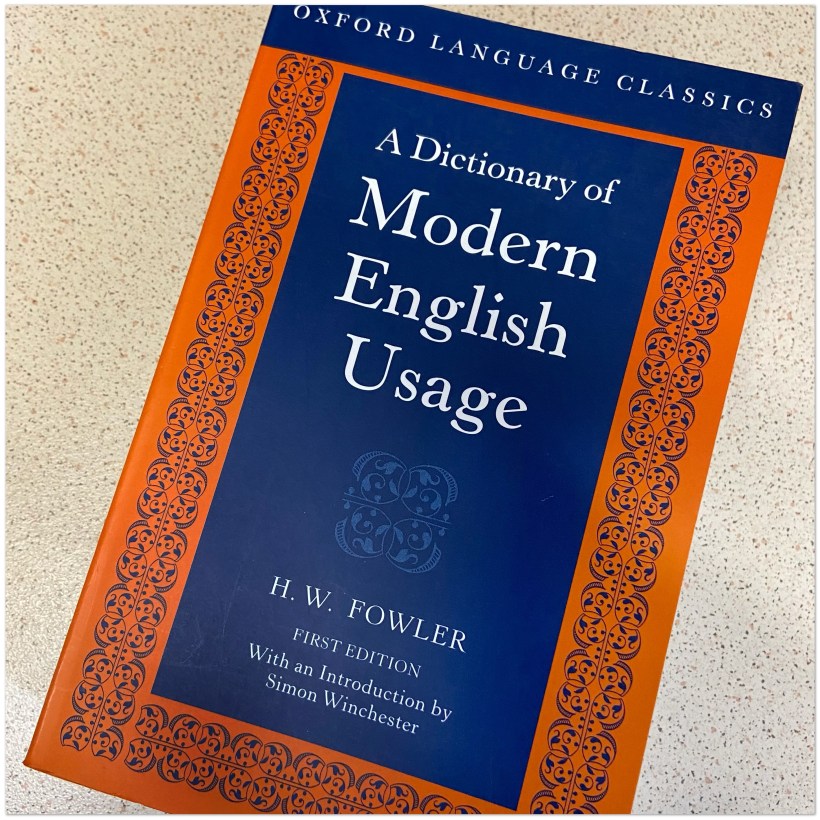
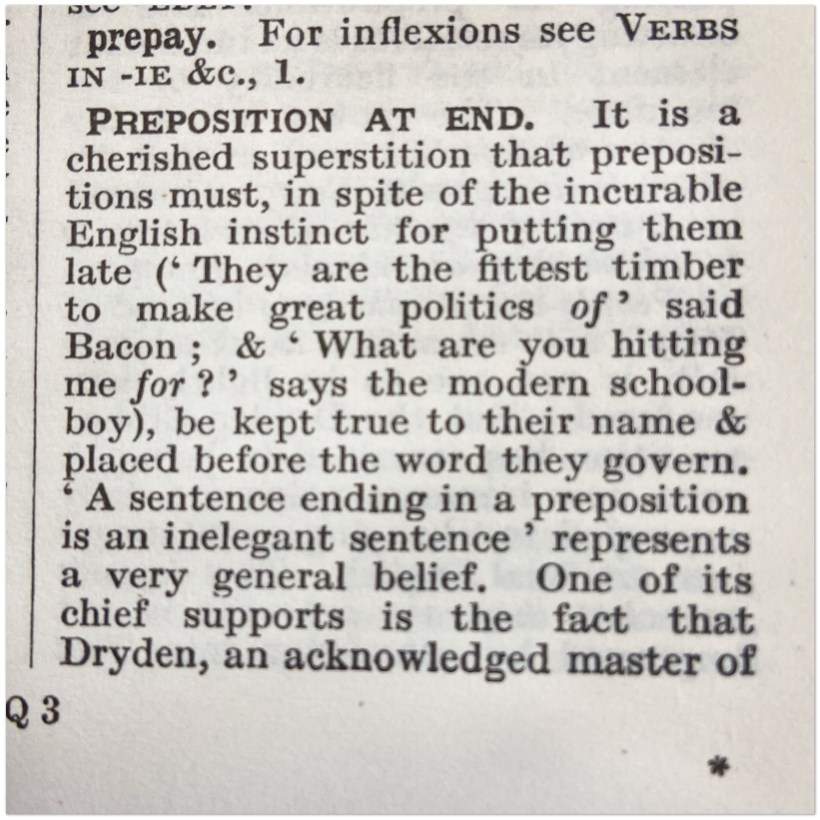
Fowler’s A Dictionary of Modern English Usage, published in 1926, calls it a “cherished superstition that prepositions must, in spite of the incurable English instinct for putting them late… be kept true to their name and placed before the word they govern.” Fowler goes on to assert that even Dryden had to go back and edit all of his work to eliminate the terminal prepositions in his own writing.
In the last century or so, people have become progressively less fussy and worried about it, but some still seem determined to cling to the rule no matter what.
I advise my students that in formal writing such as essays, speeches, official letters and submissions, it is best to avoid the terminal preposition just in case their reader is someone who might judge them for it. Any other time, in keeping with standard spoken English, they are free to use their prepositions wherever they feel most natural and make the most sense.
Nobody in the 21st century is going to naturally ask someone “On which char did you sit?” rather than “Which chair did you sit on?”, nor will they say “I wonder for whom that parcel is intended” Instead of “I wonder who that parcel is for.”
In the 21st century, that really is nonsense up with which we do not have to put.
Sources: Quote Investigator Merriam-Webster Fowler, H.W (1926) A Dictionary of Modern English Usage. Oxford Language Classics, OUP, Reprinted 2002.
Is It OK to End a Sentence with a Preposition? #grammar #English #language
The asterisk is the handy little star symbol* that we use to indicate that there is more information attached to something, to denote the existence of a footnote, to add emphasis to a word or point of notice, or to blank out letters in offensive words that we don’t want to type or write in full.
The word asterisk means ‘little star’ and has been used as a noun since the late 14th century— well before the invention of the printing press— while the verb form “to asterisk something” was first recorded in 1733.
Asterisk comes to use from Latin via Greek, but actually goes back to Proto-Indo-European roots, which is about as far back as any language or individual words can be traced. The PIE root *ster- is the source of the words for star in numerous languages including Hittite, Sanskrit, Greek, Latin and, thus, English.
Therefore, the word asterisk is related to asteroid, aster daisies, disaster, constellation and starfish, among others. It is also a cousin of names such as Esther, Estelle and Stella.**
More recently, the asterisk also inspired the name of Asterix, the hero of the classic comics by Goscinny and Uderzo. Those books are characteristically full of puns and word play, and the names of Asterix and Obelix are derived from mispronunciations of asterisk and obelisk respectively.
* located above the 8 on a keyboard ** They are not close cousins, but more like the kind who are jealous of each other because they all want to be the most popular starlet in the family, and only make small talk with one another at family reunions.




 WordyNerdBird