A Favourite Classic Series: The Narnia Chronicles by C.S. Lewis

I may be cheating by covering a whole series instead of just one of the novels, but how does one choose a single favourite among such an incredible set of books?

Supposedly written for children, The Narnia Chronicles fill me with as much joy and wonder now as they ever did. They are stories that never, ever get old.

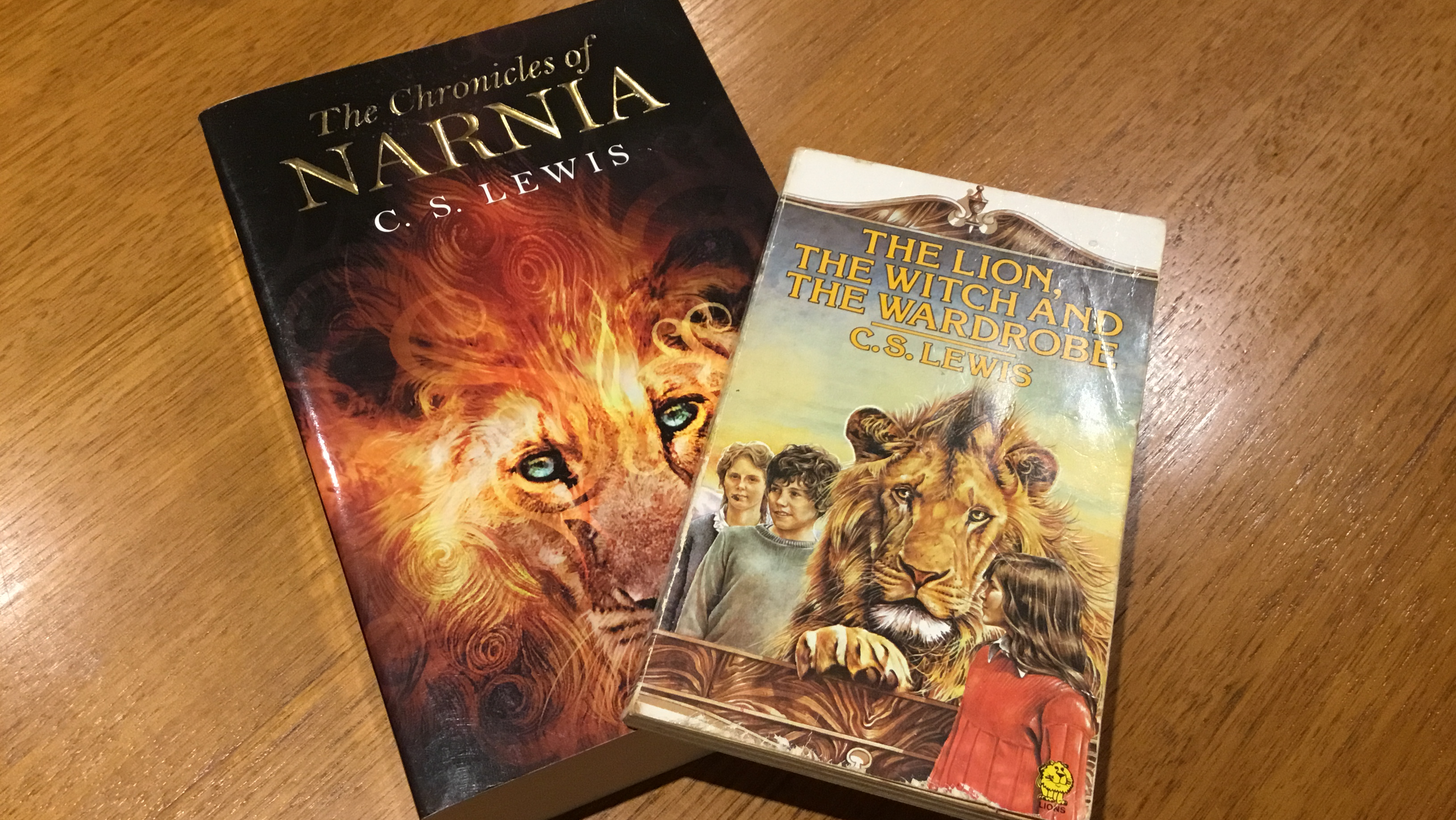
I collected a mismatched set of the books over several years as a child, and then as a teenager I indulged my slightly OCD book-neediness and bought a boxed set with matching covers. I can’t find any of the first lot, and only one of the boxed set remains on my shelf. I’ve lost a few in different classrooms over the years and others courtesy of unreturned loans, so several years ago I bought the complete set in one volume so I could read them all again.

While each book in the series is a unique and brilliant story in its own right, as a collection they are remarkably cohesive and unified.

The Narnia Chronicles really are the works of a master storyteller. 
A Favourite Classic Novel: ‘Vanity Fair’ by William Makepeace Thackeray

‘Vanity Fair’ is the story of Becky Sharp, a woman who starts out with very little and demonstrates that with ingenuity and determination, one could work one’s way up the ranks of society, despite the upper classes pretensions that this could never be so. 

Written with considerable wit and thoughtful insight, it’s a really entertaining story, but it also delivers a fascinating study of human nature and quite biting commentary on social status and those who possess it.

Although our society has changed significantly since this book was published in 1848, human nature hasn’t, so ‘Vanity Fair’ remains quite a relevant commentary on people and how they see and treat one another. 

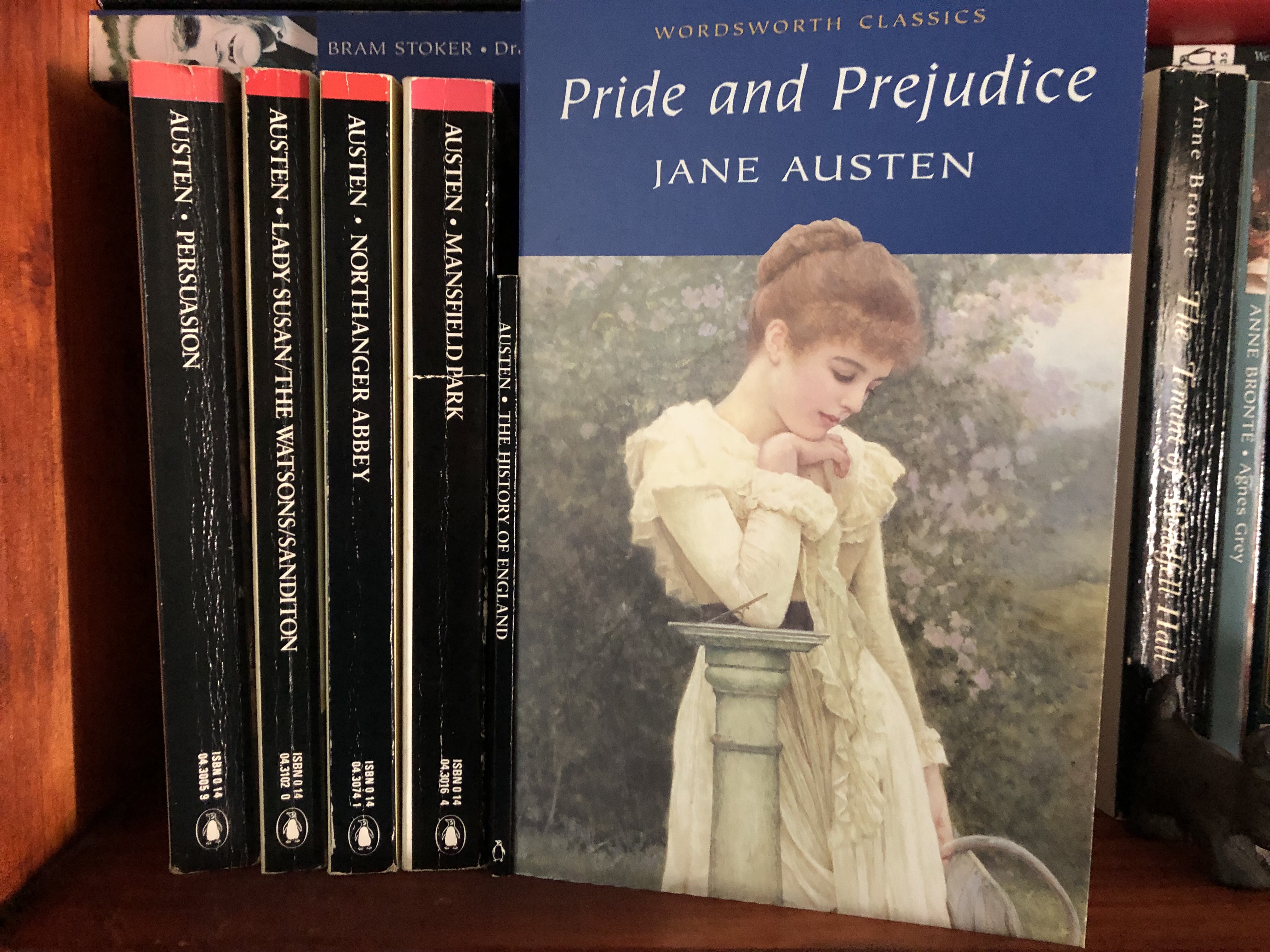
A Favourite Classic Novel: ‘Pride and Prejudice’ by Jane Austen

Many people assume that this is a book all about love and courtship. That comes into it, of course, but really only the sense that Jane Austen is blowing an enormous raspberry to the way society did those things.

‘Pride and Prejudice’ is full of delicious snark and subversive humour, parody and caricature, that make its observations far more rapier than romantic. 

Of course, Mr Darcy is smolderingly handsome and, as an introvert, I totally get that he was regretting being dragged along to that party long before he even got there, and by the time he was offending all the locals, was busy trying to think of ways to leave without anyone noticing. Further evidence of that is found in the fact that he falls for the one brainy chick who is happy in her own company and reading a book without needing someone affirming her delicate sense of self every three minutes.

Elizabeth is smart and sassy enough to stand up for herself, and to not settle for the first nincompoop who tried to marry her, nor does she agree to marry Darcy just because he’s loaded. No, she is a woman of substance.

Those things are enough to make us love them both more than the rest of the characters, most of whom are either quite socially acceptably bland or rather horrid.

If you’re not sure where to find the sarcasm,  it all starts with the very first line. Let’s be honest: what rich man, living the dream and enjoying his wealth, is desperate to find a wife to keep him at home and spend his money for him? 

Yeah. I don’t think so, either. 

A Favourite Classic Novel: ‘Anne of Green Gables’ by L.M. Montgomery

Among its feisty, quirky main character Anne Shirley and the entire delightful cast of characters, the wonderful story and animated storytelling, and the magnificent Prince Edward Island settings which I have visited in person, there is nothing about this book that I do not adore. 

Anne taught me that it was a wonderful thing to love books and poetry more than anyone else I knew, and that it was better to be myself than to try to be someone else. She showed me how to embrace my quirks and to disregard the criticism of those made uncomfortable by them. 
This is a wonderful story, beautifully told, which I have loved since I first read it when I was seven years old. Yes, I was a prodigious reader even then, having started reading for myself at the age of three! Like Anne, I started out in the way I was destined to continue.

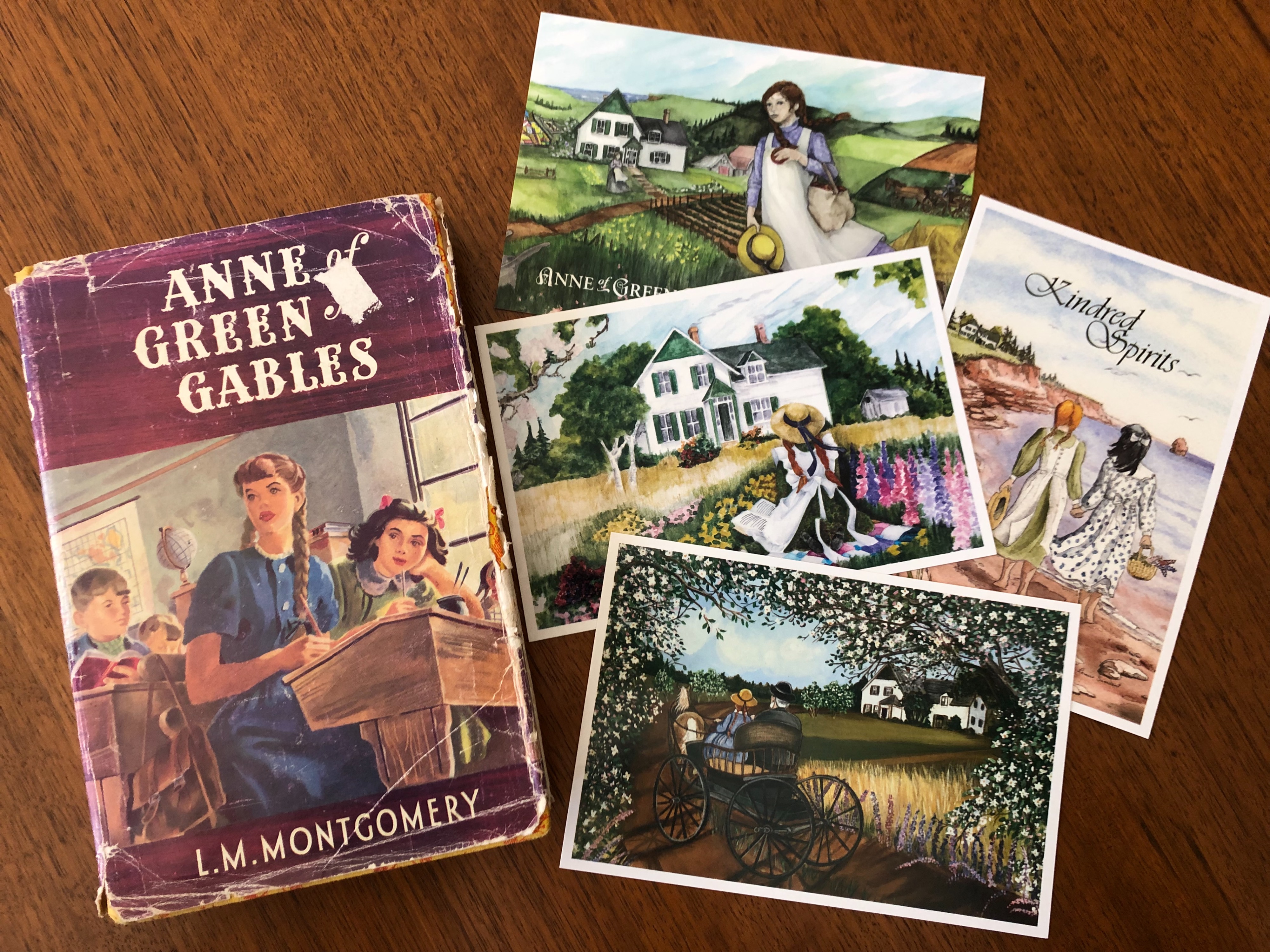
My vintage copy of ‘Anne of Green Gables’ and the postcards I bought at Green Gables on Prince Edward Island.

This vintage copy came to me courtesy of my favourite book rescue shelter, Spectrum Books in Warrnambool. It is the same vintage as the set I inherited from my mother although, sadly, her copy of ‘Anne of Green Gables’ has been lost.

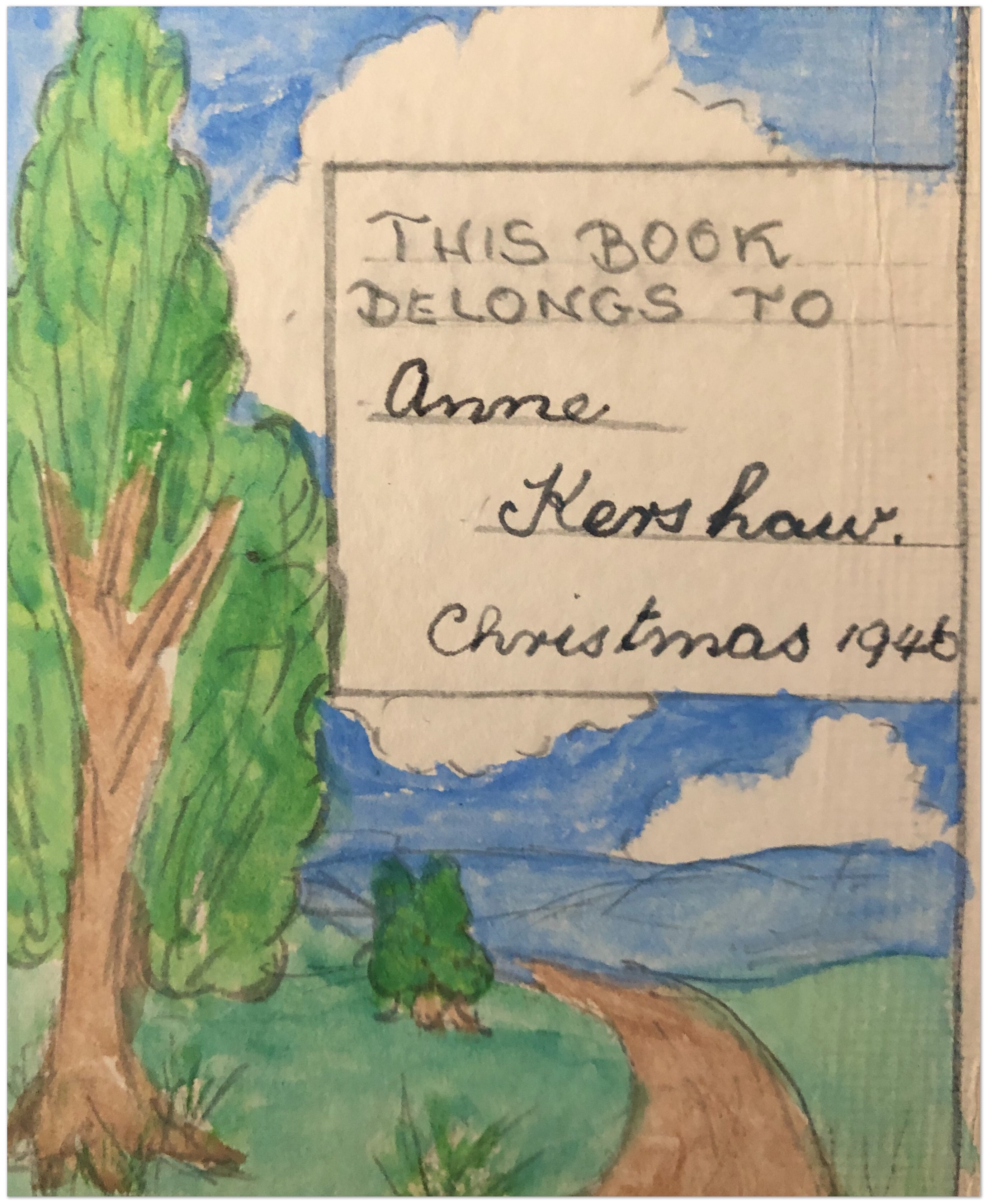
I remember that her book had an original bookplate inside the front cover which she had drawn and painted before adding her name and the date. For me, that is the saddest part of losing her book: her art is lost, too. This is her work inside the cover of the sequel, ‘Anne of Avonlea’, which she received along with the first book for Christmas when she was thirteen years old. 
Her full name was named Shirley Anne – named after both Shirley Temple and Anne Shirley of ‘Green Gables’ fame. 

Attention: Facebook

Due to recent trends, my algorithm has been realigned.

You may notice that your invitations to boost my posts or create advertisements will receive zero attention. Some may be marked as spam due to lower perceived relevance to the audience. 

If you won’t show my posts to the people who do follow me, I most certainly will not be paying you to show them to people who don’t. 

Because, as you say so often yourself, “it’s all about engagement”. 

Fortunately for the rest of us, there are other places to “engage”, too. 
Are you aware that Twitter neither suppress nor hides anything I post? As soon as it’s sent, BAM, it’s out there for the whole Twitverse to see.

We’re you aware that WordPress allows me to use tags, categories and SEO to make my posts available beyond those who already follow my blog? And they do it free of charge. Ingenious, no?  

I’ll still give you a little attention, Facey. But not as much as you want. And not to help you make money. From what I have heard on the news, you’ve already got quite enough out of people like me. 

A Favourite Classic Novel: ‘A Christmas Carol’ by Charles Dickens

I have always enjoyed Dickens’ knack for transporting the reader to the grimy streets of London, or to the interior of a neat little Victorian house, and have them understand exactly why they had been taken there. His imagery and characterisation are vivid and his wit is razor sharp. 

I have several favourites among his novels, but ‘A Christmas Carol’ would have to be at the top of that list. In addition to its searing social criticism and powerful message about what actually matters in life, it is infused with some really well written macabre and Gothic horror scenes that have a profound effect on both Scrooge and the reader. It’s a short read with a huge impact. 

May Be A Favourite Novel.

Holy Toledo! It’s already the last day of April! I’m sure I can’t be the only one feeling as though the year is rushing by at unprecedented speed… can I? 

Sadly, the end of April means it’s also the end of Poetry Month. I have really enjoyed sharing some of my favourite poems and poets with you all this month— something I may still do from time to time as the mood strikes me.

In May, I plan to balance the poetry by sharing my thoughts on some great classic novels. I won’t be working from a definitive “most popular” list: rather, my list is a highly subjective collection of personal favourites. 

Of course, I will also continue to take the opportunity to share all those riveting highlights of my life— I never wake up expecting to be fascinating, but it just keeps on happening!— and to explore and discuss relevant points of interest for Indie authors as they come up, as I try to do.


Poem: ‘Sonnet of the Moon’ by Charles Best

A sonnet is a poem of fourteen lines with  strict patterns of rhythm and rhyme that give it both formality and musicality. 

I have read and studied many sonnets, and have written two that I love and one very poor one that shall never see the light of day, let alone be published. Let’s call that third one an important exercise in keeping the poet humble! 

This sonnet by Charles Best, a contemporary of Shakespeare, is beautifully evocative, bringing to mind images of moonlight on the water and the movement of the tides before transforming, as sonnets often do, into a declaration of love and devotion. 

Sonnet of the Moon

Look how the pale queen of the silent night
Doth cause the ocean to attend upon her,
And he, as long as she is in his sight,
With her full tide is ready her to honor.
But when the silver waggon of the moon
Is mounted up so high he cannot follow,
The sea calls home his crystal waves to moan,
And with low ebb doth manifest his sorrow.
So you that are the sovereign of my heart
Have all my joys attending on your will;
My joys low-ebbing when you do depart,
When you return their tide my heart doth fill.
So as you come and as you do depart, 
Joys ebb and flow within my tender heart.

A Shout-Out to my Favourite Co-Star

I commented here recently that life had been hectic with work, rehearsals and all my other commitments each demanding sizeable chunks of my time.

That has gone up another notch or two this weekend with full days of dress and tech rehearsals for Monty Python’s Spamalot, which opens on Friday May 3rd.

The sets are magnificent and the crew are great. The directors are positive and proactive and their standards are high. My fellow cast members are talented, encouraging and supportive. The band is that good, it would be worth just coming to hear them play without any of us being on stage. We’re all having a blast because the show is hilarious and great fun. There is no doubt this is going to be a sensational show.

Thus far, I have managed to keep things under control for the most part, and get things finished by deadlines and due dates. 

It’s fair to say, though, that I would not be doing anywhere near as well as I am without the consistent, faithful support of my favourite co-star: caffeine. 

It will continue to play a crucial supporting role this week— possibly even more so, given that the week ahead is further complicated by two evenings of parent-teacher conferences sandwiched between school and rehearsals, almost an hour’s drive away from where I work. 

Anyone who wishes to tell me that caffeine isn’t good for me or suggest that I cut back would be well advised to wait until after the final show, at least. 

Until then, I will continue indulging in my “morning  cup of don’t hurt people” as my husband and I like to call it, and rewarding myself with as many others as I need to get through each day. 

As for keeping me awake at night? I honestly don’t think that will be a problem. I’m beat. 

Poem: ‘Going to School’ by C.J. Dennis

I learned this poem when I was in 5th grade. My teacher loved poetry sand set us all a poem to memorise and recite. ‘Going to School’ was mine. 

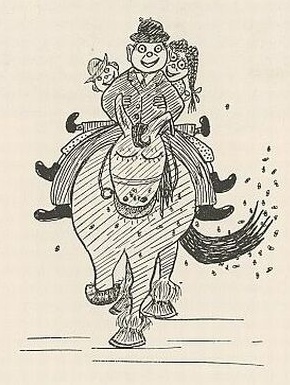
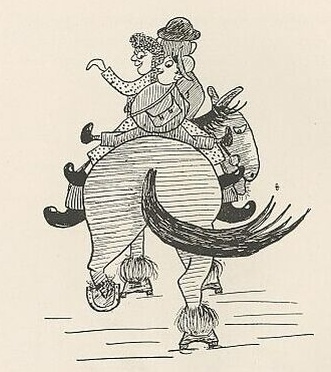
Published in ‘A Book for Kids’ in 1938 with a collection of similarly excellent poems, this is a fun poem with a very musical rhythm and rhyme pattern that are instantly engaging. It conjures images of a time when kids in Australian country schools might ride a horse to school if they loved too far away to walk and didn’t own a bicycle or three. 

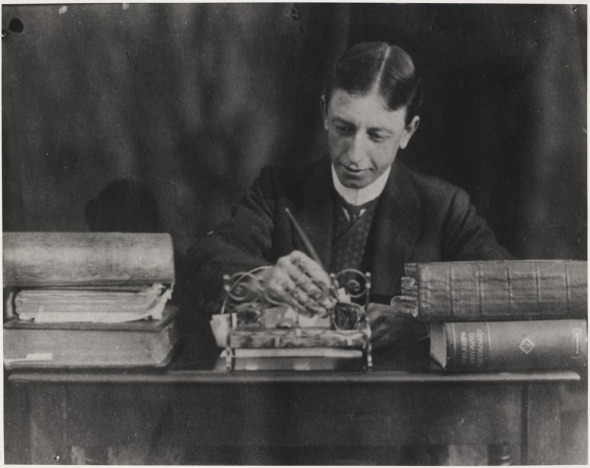
Dennis was a man of many talents: in addition to working as a journalist and poet, he also illustrated his own books with delightful pictures that were almost as much fun as the poetry. 

Image: C.J. Dennis working at his desk c.1938 . Public Domain via The State Library of Victoria 

Going to School

Did you see them pass to-day, Billy, Kate and Robin,
All astride upon the back of old grey Dobbin?
Jigging, jogging off to school, down the dusty track-
What must Dobbin think of it – three upon his back?
Robin at the bridle-rein, in the middle Kate,
Billy holding on behind, his legs out straight.


Now they’re coming back from school, jig, jog, jig.
See them at the corner where the gums grow big;
Dobbin flicking off the flies and blinking at the sun-
Having three upon his back he thinks is splendid fun:
Robin at the bridle-rein, in the middle Kate,
Little Billy up behind, his legs out straight.

Dennis’ images for ‘Going to School’ from ‘A Book for Kids’
Public Domain via Project Gutenberg

If you’d like a copy of A Book for Kids, Project Gutenberg has it available in a variety of formats, including for Kindle and other eReaders, free of charge. This is a legal download as the copyright on both the work and the illustrations included has expired.