Songs and Poetry

Songs and Poetry: Sometimes it’s hard to tell the difference.

2015-07-18-17-11-28-warrnambool-breakwater-blog-e1523956844938.jpg

In an earlier post, I referred to song lyrics as being a form of poetry.

There are many songwriters who write deeply poetic songs. Elton John and Bernie Taupin, John Lennon and Paul McCartney, Paul Simon, Billy Joel— they are among the greats. Today, singer/songwriters like Ed Sheeran and Katy Perry are among the artists whose songs contain some incredibly powerful poetry.

While it might be fun to come up with more examples, I have no desire to try to list them all – I don’t even think that’s really possible. Chances are, some who make my list might not be included in yours. I just named a few to get you thinking.

While many songs rely on a catchy hook or a beat that makes people want to dance, it’s the poetry of others that gives them the power to move a person emotionally, or to profoundly affect someone’s thoughts and actions.

Consider the influence John Lennon’s ‘Imagine’ had on an entire generation. Similarly, Simon & Garfunkel touched hearts and lives worldwide with the soaring power of “Bridge Over Troubled Water”, while the poignant emotion of Elton John’s “Candle In The Wind” or “Sorry Seems To Be The Hardest Word” is still hard to resist.

I don’t know if this happens to everyone, but poetic songs seem to attach themselves to part of my soul and remain there, indelible and timeless.

This line of thinking led me to trying to work out which song contains my favourite “song poetry”. That’s actually a really tough question, so I decided I’d listen to a few of my favourites and try to narrow it down.
A week later, I think I have an answer. (Disclaimer: this answer is likely to change at any moment.)

I am a rock 2018-04-17 11

This song is a brilliant extended metaphor about identity and finding one’s place in the world. The contrast between a rock or an island with the vulnerability of being human, and the paradox of isolation being a form of sanctuary, are ideas which should be jarring, yet they are delivered with such finesse that we’re left thinking, “I totally get that!” They’re ideas and images we all understand, and the poet communicates uses a depth of emotion and human experience to say things that many other people could never bring themselves to verbalise.

The clincher for me is the final verse. “I have my books and my poetry to protect me.” That’s exactly what I do! I retreat into fictional worlds. I write stories and poems that help me to deal with life. I use poetry to crystallise my thoughts and feelings, and use my writing to communicate what it’s hard to say any other way.

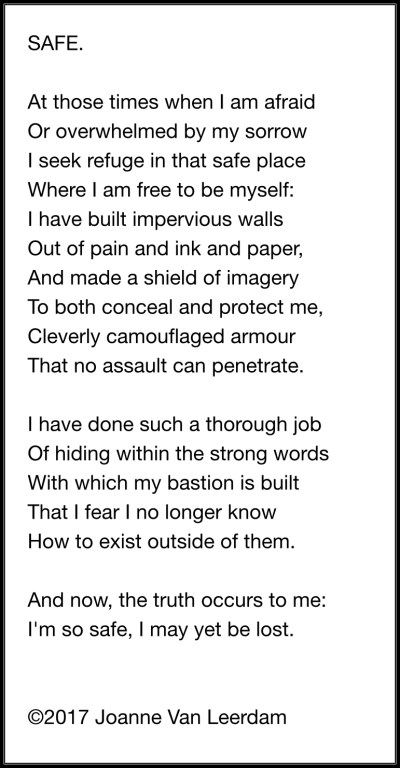
As I was reflecting on that final verse, a poem I wrote last year came to mind. I’m not suggesting that I think I’m as good as Paul Simon, but it does explore similar ideas of hiding behind – or within – the books and words I have written.
Poem Safe 2018-04-17 13

It was written during a time of great personal conflict and turbulence, and expresses the refuge I found in my writing. In different poems written during this period, I portrayed myself at different times as a fighter, as a hostage, and as a traveler. At no time did I portray myself as willing to surrender to the storm that raged around me, nor to anything else that tried to do me in. In my writing, I was strong. I was safe.

When I went back to read that poem as part of the process of writing this post, I was stunned to discover the similarity of the ideas to those explored by Paul Simon, even though my poem was neither based on nor drawn from his lyrics.

I was also confronted by the warning of the last two lines. I have to take care when I feel or experience something, or when I write something powerful, that I can’t afford to unpack and live there. I still have to live my life and be who I am, and I still have to deal with whatever life throws at me.

After all, I am neither a rock nor an island, no matter how much I might sometimes wish I were.

‘Safe’ is published in my book, ‘The Passing Of The Night’.


Joey'sMapleLeafTatt

If you enjoyed this post, please click “like” to increase its visibility to other readers.
Shares and comments are also appreciated.


When Life Gets Out Of Control, I Write Poetry.

What makes an introverted poet breathe fire?

Two weeks ago, I had finished an incredibly busy first term at school and was looking forward to a well-earned break for a couple of weeks.
When people asked me, “Are you doing anything for the holidays?” I gave them my standard answer: “As little as possible.”
You’d think I’d learn not to tempt fate like that, but apparently not.

Family came to stay, visitors called in, things happened. I just needed to rest… but when was that ever going to happen? I wanted to write, but there was no time for that, either. I began to feel as though life was out of control.

And then, I started to get angry. It wasn’t directed at anyone or anything in particular – instead, it was a rumbling discontent within me. As the only introvert in a house full of rampant extroverts, I felt misunderstood and somewhat neglected.

One afternoon, my house fell quiet for a few moments. I sat in the comfy chair in my study with a book, took a deep breath, and before I knew it, I had dozed off.  It didn’t last long.

I woke up to a barrage of sound from the football blaring on the TV in the adjoining room, people talking loudly to be heard over it, and others talking loudly with a phone on “speaker” mode. They could have gone to another room. They could have closed my study doors and left me there in peace. But they didn’t.

That was when this poem erupted from within me.

The imagery of a dragon is not accidental: I wanted to incinerate them them all, or at least toss them around a bit with my tail. Knowing that I couldn’t breathe fire on them all like I wanted to – they are family, after all – I escaped to my bedroom, closed the door, closed the drapes, and promised myself that whoever dared to knock on that door— or, heaven forbid, walk through it— and interrupt me again definitely had it coming. Then, as I generally do, I unloaded my feelings in the most therapeutic way I know: angry poetry.

ScreenHunter_440 Apr. 15 16.03

It doesn’t tell the complete story. It’s really just a brief glimpse of a scene, but it reveals enough for the reader to understand. And I’m sure every exhausted teacher or parent, every person who is exhausted by constant demands, and every introvert who reads it will totally get it.

Awoken

Friday the 13th and Other Curious Things.

If someone were to give me a hard time, I’d want Friday on my side.

As you’re probably already aware, today is Friday the 13th.
For many, superstition is just old-fashioned silliness. Others set very strong store in superstitions, old wives tales, and various other traditions.
Friday 5 Bless You

My affection for Friday 13th is different than mere superstition. I wrote Friday’s first story for Friday the 13th back in October last year. When I wrote what I thought was going to be a single piece of flash fiction, I had no idea how that cat was going to take over. Honestly, sometimes I wonder if I actually created him at all.

Between Friday 13th of October and Halloween last year, Friday demanded that thirteen stories be told. He’s a typical insistent cat in that sense… he just kept showing up and swatting my creative juju with his paw until I agreed to do his bidding. He has similarly demanded since then that his stories of Christmas Eve, New Years Eve and Valentine’s Day be told. And then, out of the blue, he whispered to me, “Tomorrow’s Friday the 13th. You should put Curious Things on sale for 99c.”

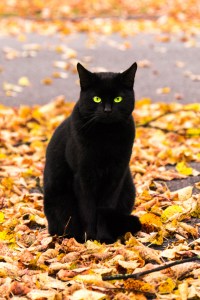
I’m really very fond of Friday. He’s a magnificent black cat with a lucky habit of being present when curious things take place.
He’s highly intelligent, fiercely loyal and devilishly handsome.
And I have to tell you– if someone were to give me a hard time, I’d want Friday on my side.

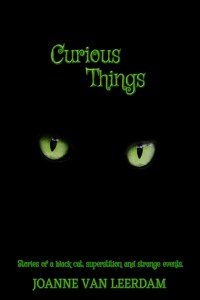
Promo Curious Things Cover
Curious Things delivers thirteen stories of people encountering justice for their wrongdoings, all as Friday watches on. Is he responsible? Or is it just lucky coincidence that he is present when these strange events take place?

If you’ve ever wished for karma to move a little faster, indulged in uncharitable thoughts about certain annoying people, or suspected that having a black cat cross your path was not quite as unlucky as people seem to think, this book is for you.

The book is full of dark humour, macabre events and mild-to-medium intensity horror, but it’s not just splatter for splatter’s sake. It’s really all about poetic justice and people getting what’s coming to them, via a very special feline.

Don’t just take my word for it, though. As the author, I’m clearly biased.
So, as a means of reassuring you, here’s what some of the reviewers on Amazon have said:

” Vengeance may be sweet—but, meting out justice vigilante-style just isn’t practical. Then along comes Friday, a black cat whose intelligence and curiosity gets the better of those who deserve their just desserts. Obvious or implied, Friday shows up where the wrath of Biblical justice is called for. And, it’s so gratifying to watch the gruesome details unfold!” – Reviewer

“I really like this book’s blend of dark humour and horror – that really appeals to me. I liked the way the author made each story about something different, and that the things that happened to the bad guys were all different to what happened to the others. The horror bits were good enough to make my skin crawl and give me a shudder, which is what I love in a spooky book. I really like Friday because he’s such a typical cat, but you also realise that he’s something more than that, too.
Don’t start reading this book thinking it’s just a story about a nice kitty. Read it because you want to see his dark side.” – Reviewer

“13 awesome stories with 13 lessons to think about. I adore the cat, Friday. I reckon if I had Friday in my life, I would feel way safer. This cat is like Karma on four legs.” – Reviewer

” A lovely collection of tales, overseen by a cat who defends his person with almighty power.
A little gory, and a lot killy!” – Reviewer

Curious Things is available on Amazon and in all other major digital stores.

Curious Things Banner 6

Even if horror isn’t your “thing”, some of my author friends have their books in Book Squirrel’s Friday 13th 99c sale today, too.
Why not pop over and check them out?

Friday the 13th 99c Ebook Sale

Don’t miss this fabulous little sale on Friday the 13th. 

A group of very generous authors have put together a collection of great books that are either on sale for 99c or free for Friday 13th.

It’s not just horror – there are mysteries, sci fi humour, YA adventures, poetry and flash fiction included. There really is something for everyone!

If you’re looking for a good new read for the weekend, or always up for a bargain, head over to visit Book Squirrel and see what’s on offer.

Friday 13th 99c sale


Book Squirrel Header Grey with URL
If you love reading, you should definitely follow Book Squirrel’s blog for book reviews, new release updates, and author interviews.

The Thrill of the Chase.

This week, I did something I haven’t done in quite some time: I put an item I really wanted on my “watch list” on eBay. That set in motion the next chain of events: checking in daily– or more often, as the end drew nearer– to see if anyone had placed a bid, choosing the precise time at which I would place my first bid so that nobody else could click the “Buy It Now” button, waiting with anticipation as time ticked away, and then moaning about how slowly time moves in that last half hour.

Honestly, that last half hour of an auction for an item you really want is like walking through glue. After a whole week of saying, “Far out! How is it 4pm already?”, yesterday afternoon d r a g g e d like you wouldn’t believe.

By the time there were just ten minutes left, I was poised like a cat watching the proverbial mouse. I was ready to bid if someone else outbid me. I was prepared for that battle of one-upmanship that often happens in the last five minutes, yet still breathing the mantra “nobody see this… please, nobody else see this.” The tension gripped my shoulders and I had to work to keep my breathing steady. When the auction finished without anyone else bidding, relief washed over me like a wave, right before the excitement of winning put me on a high for the rest of the day.

You may think I’m exaggerating, but this is a scene that is all-too-familiar to people accustomed to buying things on eBay and similar auction sites. It’s the thrill of the chase and a cat-and-mouse game, without even leaving the room. It can be quite addictive, although I only indulge occasionally.

Sure, I use eBay now and then for everyday items that my local stores don’t carry. Most of those, you can just buy casually because they always have more than one set of stainless steel drinking straws, for example. What I’m talking about here is the one-off item that you don’t want to miss out on.

2018-04-12 12.26.09

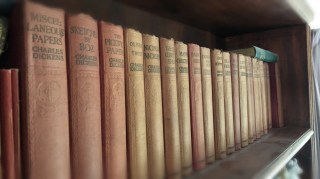
The last big thing I bought like this was a set of antique books – a complete set of Charles Dickens novels published in 1911, that I snapped up for $76. I’m pretty sure that whoever sold it didn’t know what they were selling, or how to list it properly, because that was an absolute steal. But hey – there it was, and there I was… what’s a book-loving girl to do?

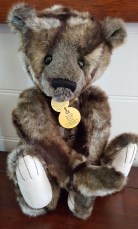
Yesterday, the item in question was an out-of-production collectable teddy bear by Charlie Bears, a UK firm who make the most adorable bears ever. Their faces are ever so expressive, and every bear is just a little bit individual.

percival-2.jpg

I have a number of these bears already, but there’s always room for one more. As my husband says, “Some women buy shoes. Some women gamble. For Jo, it’s books and bears.”

This is Percival. He is super cute, and was listed for about a third of the retail price. Again, what’s a bear-loving girl to do? It just wouldn’t be right to leave a poor little bear all homeless and alone, would it? Just think of me as one of those altruistic animal rescuers, giving otherwise miserable bears a new chance at life in a sanctuary with others of their own kind.

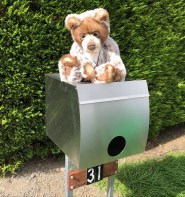
If you follow me on Facebook, Twitter, Pinterest or Instagram, you will most likely have seen some of my bears posing with my books. It’s a marketing angle I’m trying out since Facebook and Instagram in particular seem to favour posts that major on visual appeal rather than advertising value. In a social media world where everyone needs to find their own niche for marketing, “A Book and A Bear” is mine. People seem to enjoy the posts and respond very favourably, so I’m running with it.


2018-04-12-12-22-02.jpg


Now that the auction is over, the next phase begins.
We just have to be patient and wait for Percival to arrive. It’s fair to say that Diesel is as excited as I am.


Did you enjoy this post? Please help make it more visible to others by clicking “like” below. 

The Poet’s Insights: ‘The Artist’

The poet tells the story behind her poem, ‘The Artist’.

‘The Artist’ is one of my favourite poems from ‘Leaf’, my first published book of poetry.


2016-07-16-15-09-161.jpg
The inspiration for this poem came from my long-time friend Nicky, who is an gifted artist.
Nicky was one of the people who really pushed me to pursue publication of my poetry. She is an infinite source of encouragement and support, but more than that, she is a loyal and constant friend and confidant.

I should preface this story by pointing out that I’ve never been good at drawing or painting. My grandfather was an artist. My sister once painted a brilliant life-size portrait of Charlie Chaplin that covered her bedroom door for years. My mother could draw animals, people, and groovy designs with a ball point pen and make them look fantastic.

And then, there’s me. The only thing I can draw is cash from an ATM, and the occasional stick figure.

One day, Nicky showed me one of her beautiful paintings, which she had just completed. I gazed at it for a while, and sighed,”I wished I could do that.”

The Artists Plain

Without missing a beat, she replied, “You do. You just do it with words.”

That came as a real revelation to me. At that point in my life, I just wrote poetry for myself, and shared the ones I liked with a couple of friends. I didn’t really consider myself a poet as such, nor did I think I’d ever be published.

With those words, she inspired this poem.

The Artist.

ScreenHunter_439 Apr. 11 11.03

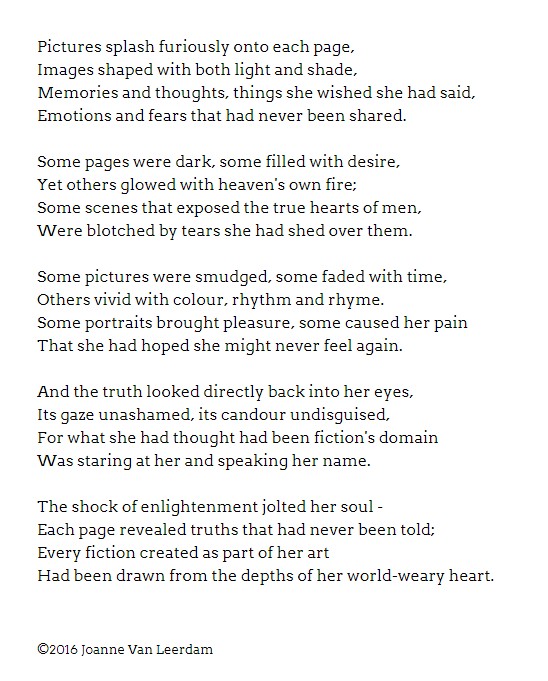
As a poem, I believe it hass integrity. It feels and sounds good when reading it aloud, and the rhythm works well with the ideas of making brush strokes and splashing a bit of paint around. At the end, it’s a reflection of that moment when the artist stands back and is surprised by what she finds on the easel in front of her.

The artist in the poem is definitely me. Like the artworks in the poem, some of my writing is vivid and colourful, while other pieces are dark and tear-smudged. Even a poem that appears to be fictional, like ‘Misery’ – which has been included in a fairy tale anthology! – is deeply rooted in my own reality.

I have very great affection for ‘The Artist’ for the truth it tells about my own experience as a poet, but I also love the fact that it will always be about my friendship with Nicky, too. Without her inspiration and encouragement, I might still just have a bunch of notebooks full of poems that nobody else would ever read.

Leaf 2nd Ed eBook Cover 6x9 350ppi

I first told ‘The Artist’s story when Nicky spoke at my book launch for ‘Leaf’ in June, 2016. Completely unaware of the story behind the poem or the fact that she had inspired it, Nicky chose ‘The Artist’ as the poem she would like to read to the guests. When she finished her reading and speech, I followed with the account of the poem’s inspiration. It was a beautiful moment in time that highlighted the wonderful thing that we share in our friendship.


Joey'sMapleLeafTatt

I hope you enjoyed ‘The Artist’ and the story behind it. If you appreciated this post, please click “like” below so that others find it more easily. You’re also welcome to leave a comment.
Thank you in advance.


Beowulf: A Marvellous Story, Magnificently Told.

Beowulf, a centuries-old epic poem, is a marvellous story, magnificently told.

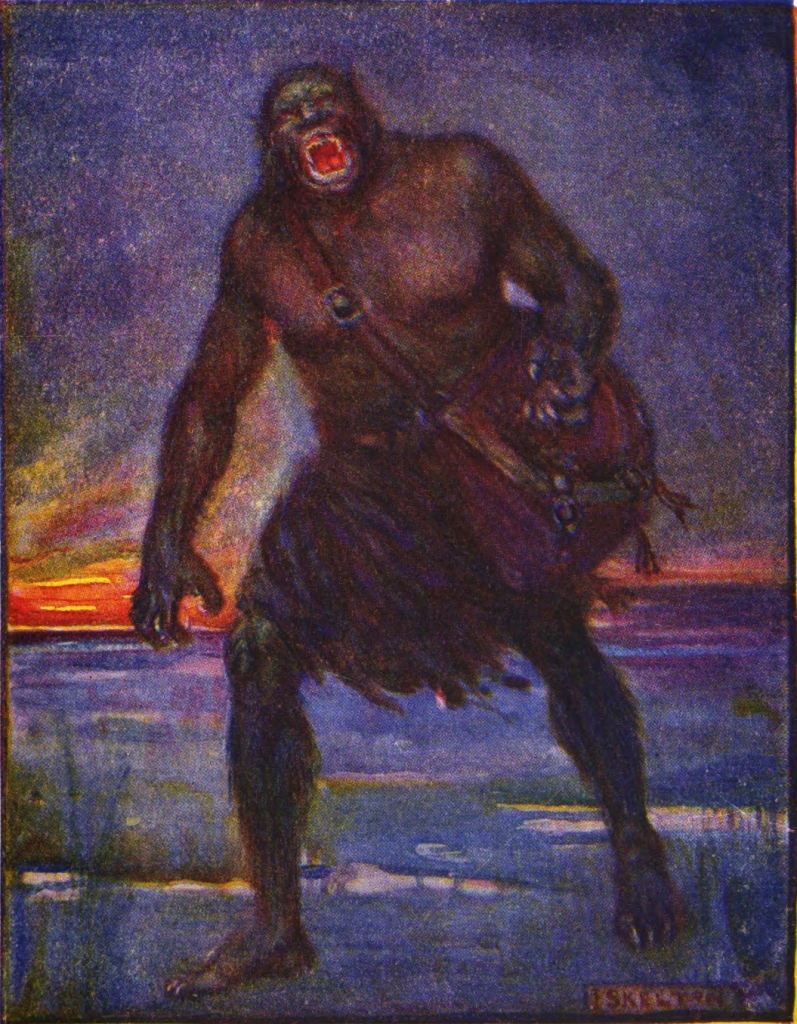
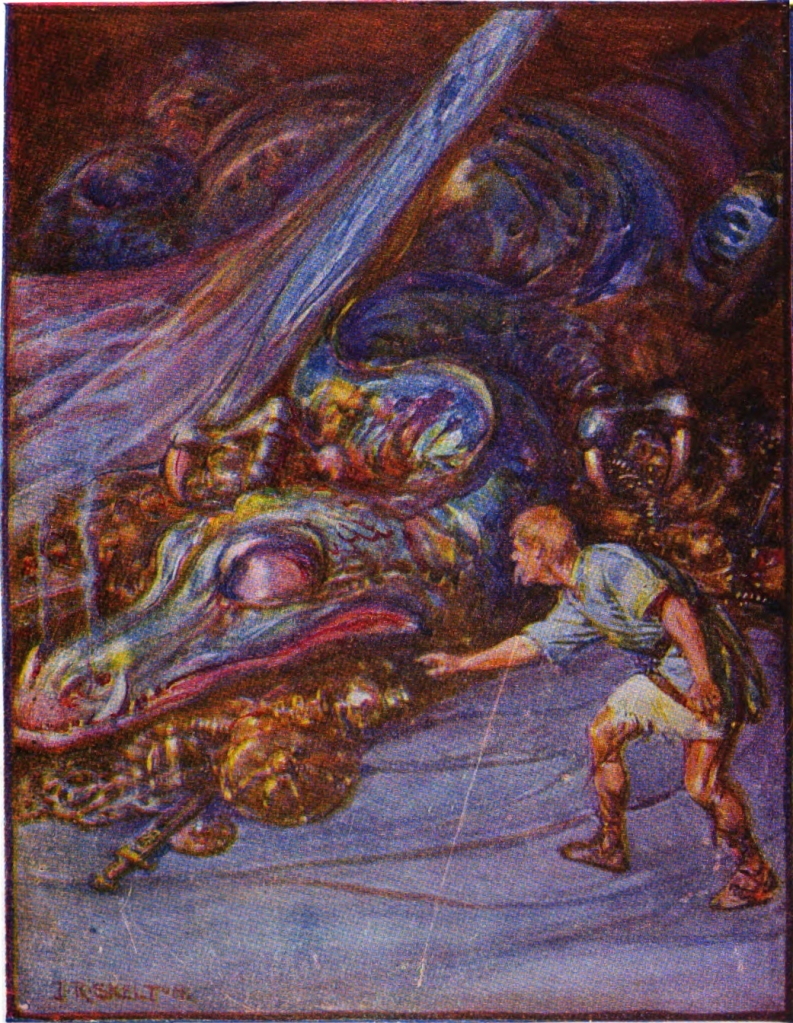
Beowulf is the oldest poem that we have in an English language. It is a medieval Anglo-Saxon epic poem that tells of the adventures of the hero, a great warrior named Beowulf, who crossed the sea from Sweden and helped the Danes fight the monster Grendel. ‘Beowulf’ is based on an early Germanic tale that relates events which would have happened after the fall of the Roman Empire and before these tribes moved into Britain. It celebrates a culture that glorifies strength, courage, and heroic achievements. These stories were told in verse by poet-singers called scops as a popular form of entertainment.

imagesAfter being passed down as an oral tradition for centuries, Beowulf was written down somewhere between the eighth and tenth centuries in Old English, the language that the Anglo-Saxons spoke in Britain. We don’t know who wrote it, or exactly when or where it was written down, or if the characters in the poem really existed. The single manuscript that still exists was written in two different people’s handwriting. The poem could be one traditional tale, or a combination of a number of folk tales into one great story. There was a Swedish king named Hygelac who died in 521AD, so it is possible that some or all of the characters were based on real people.
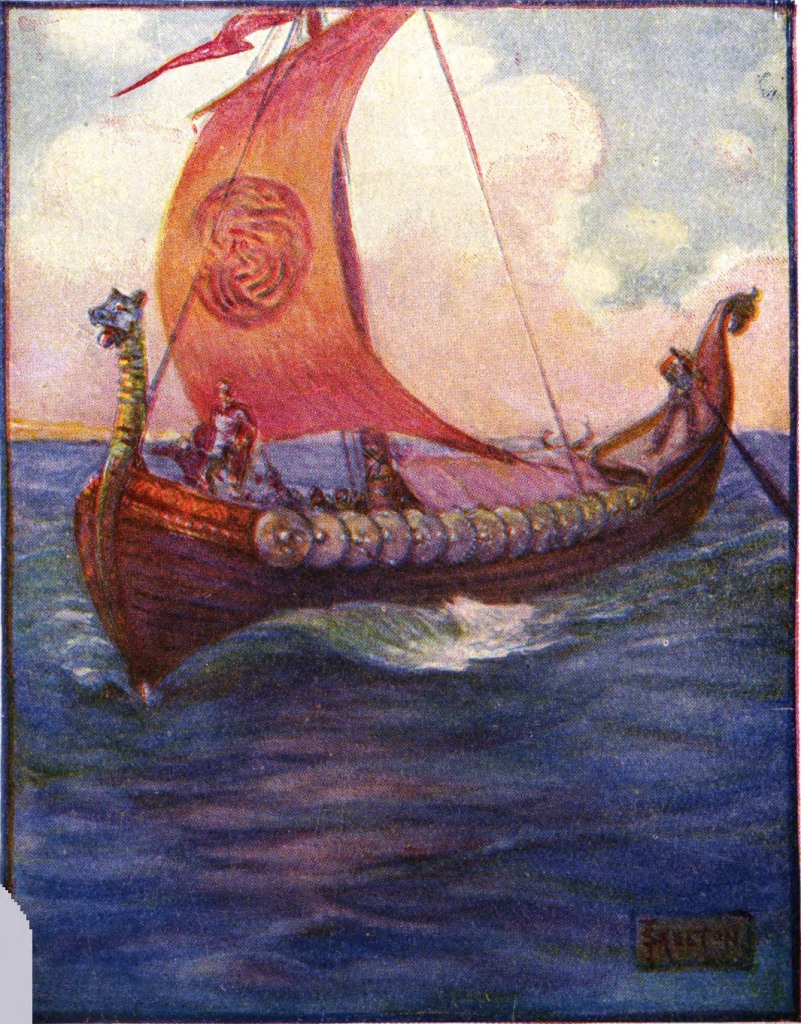
Old English is very different to modern English, so the poem has been translated into modern English so that we can still read and understand the poem today.

Perhaps the most distinctive poetic device in Old English poetry is the kenning. A kenning is a short, metaphorical term which describes a thing without using its name. In ‘Beowulf’, the king is referred to as a “ring-giver”, while Beowulf himself is called “Higlac’s follower”. My favourite from ‘Beowulf’ is “whale-road” as a description for the sea– isn’t that magnificent? While we are still very fond of metaphor, I think it’s a shame we don’t make more use of the kenning. Old English poetry was also characterised by strong rhythm and frequent alliteration. This would have helped the scops learn and remember the tale as an oral tradition, and added a musical element to the recitation, as well as making the story pleasant to listen to for the audience.

Beowulf_Manuscript

Modern translations follow the convention of making frequent and consistent use of both kennings and alliteration. This adds a wonderful sensory element to reading the story of Beowulf, which even today is a thrilling read. It delivers elements of adventure, history, heroism, and macabre storytelling.

The poem is way too long to include in this post, but you can find Beowulf, translated by Seamus Heaney, as a safe-to-download PDF at Scribd.
(Note: you do not have to subscribe or accept any trial memberships to get this file.)

There is also a wonderful reading of the poem in contemporary English on Youtube.

Joey'sMapleLeafTatt

Did you enjoy this post? Please help make it more visible to others by clicking “like” below.

A Favourite Poem: ‘The Man From Snowy River’ by A.B. Paterson

‘The Man From Snowy River’ is one of my life-long favourite poems.

There are many Australian poems and many well-known Australian poets.  Australian bush poetry, which brings to life the uniquely Australian landscape and the people who live there, has always been a prominent feature of Australian literature.

A.B. “Banjo” Paterson lived from 1864 until 1941. The author of ‘Waltzing Matilda’, ‘The Man From Snowy River’ and ‘Clancy of the Overflow’ is still one of Australia’s most beloved poets.

Like many of Paterson’s poems and those by his contemporaries, ‘The Man From Snowy River’ tells of life in the high country of south-eastern Australia in the late 1800s, where large cattle stations, smaller farms, villages and horsemen featured strongly in the landscape.

It’s highly descriptive, but it is also a narrative poem – that is, a poem that tells a story. They often make use of the voices of a narrator and one or more characters to help deliver the story to the audience. A narrative poems usually follows a set rhythm pattern, and will generally use a regular rhyming pattern throughout a poem.

This is one of my life-long favourite poems. I hope you enjoy it.

The Man From Snowy River

There was movement at the station, for the word had passed around
That the colt from old Regret had got away,
And had joined the wild bush horses – he was worth a thousand pound,
So all the cracks had gathered to the fray.
All the tried and noted riders from the stations near and far
Had mustered at the homestead overnight,
For the bushmen love hard riding where the wild bush horses are,
And the stock-horse snuffs the battle with delight.

There was Harrison, who made his pile when Pardon won the cup,
The old man with his hair as white as snow;
But few could ride beside him when his blood was fairly up-
He would go wherever horse and man could go.
And Clancy of the Overflow came down to lend a hand,
No better horseman ever held the reins;
For never horse could throw him while the saddle girths would stand,
He learnt to ride while droving on the plains.

And one was there, a stripling on a small and weedy beast,
He was something like a racehorse undersized,
With a touch of Timor pony – three parts thoroughbred at least –
And such as are by mountain horsemen prized.
He was hard and tough and wiry – just the sort that won’t say die –
There was courage in his quick impatient tread;
And he bore the badge of gameness in his bright and fiery eye,
And the proud and lofty carriage of his head.

But so slight and weedy, one would doubt his power to stay,
And the old man said, “That horse will never do
For a long and tiring gallop-lad, you’d better stop away,
Those hills are far too rough for such as you.”
So he waited sad and wistful – only Clancy stood his friend –
“I think we ought to let him come,” he said;
“I warrant he’ll be with us when he’s wanted at the end,
For both his horse and he are mountain bred.”

IMG_0051

“He hails from Snowy River, up by Kosciusko’s side,
Where the hills are twice as steep and twice as rough,
Where a horse’s hoofs strike firelight from the flint stones every stride,
The man that holds his own is good enough.
And the Snowy River riders on the mountains make their home,
Where the river runs those giant hills between;
I have seen full many horsemen since I first commenced to roam,
But nowhere yet such horsemen have I seen.”

So he went – they found the horses by the big mimosa clump –
They raced away towards the mountain’s brow,
And the old man gave his orders, “Boys, go at them from the jump,
No use to try for fancy riding now.
And, Clancy, you must wheel them, try and wheel them to the right.
Ride boldly, lad, and never fear the spills,
For never yet was rider that could keep the mob in sight,
If once they gain the shelter of those hills.”

So Clancy rode to wheel them – he was racing on the wing
Where the best and boldest riders take their place,
And he raced his stockhorse past them, and he made the ranges ring
With stockwhip, as he met them face to face.
Then they halted for a moment, while he swung the dreaded lash,
But they saw their well-loved mountain full in view,
And they charged beneath the stockwhip with a sharp and sudden dash,
And off into the mountain scrub they flew.

IMG_0057

Then fast the horsemen followed, where the gorges deep and black
Resounded to the thunder of their tread,
And the stockwhips woke the echoes, and they fiercely answered back
From cliffs and crags that beetled overhead.
And upward, ever upward, the wild horses held their sway,
Were mountain ash and kurrajong grew wide;
And the old man muttered fiercely, “We may bid the mob good day,
No man can hold them down the other side.”

When they reached the mountain’s summit, even Clancy took a pull,
It well might make the boldest hold their breath,
The wild hop scrub grew thickly, and the hidden ground was full
Of wombat holes, and any slip was death.
But the man from Snowy River let the pony have his head,
And he swung his stockwhip round and gave a cheer,
And he raced him down the mountain like a torrent down its bed,
While the others stood and watched in very fear.

He sent the flint stones flying, but the pony kept his feet,
He cleared the fallen timbers in his stride,
And the man from Snowy River never shifted in his seat –
It was grand to see that mountain horseman ride.
Through the stringybarks and saplings, on the rough and broken ground,
Down the hillside at a racing pace he went;
And he never drew the bridle till he landed safe and sound,
At the bottom of that terrible descent.

He was right among the horses as they climbed the further hill
And the watchers on the mountain standing mute,
Saw him ply the stockwhip fiercely, he was right among them still,
As he raced across the clearing in pursuit.
Then they lost him for a moment, where two mountain gullies met
In the ranges, but a final glimpse reveals
On a dim and distant hillside the wild horses racing yet,
With the man from Snowy River at their heels.

And he ran them single-handed till their sides were white with foam.
He followed like a bloodhound in their track,
Till they halted cowed and beaten, then he turned their heads for home,
And alone and unassisted brought them back.
But his hardy mountain pony he could scarcely raise a trot,
He was blood from hip to shoulder from the spur;
But his pluck was still undaunted, and his courage fiery hot,
For never yet was mountain horse a cur.

And down by Kosciusko, where the pine-clad ridges raise
Their torn and rugged battlements on high,
Where the air is clear as crystal, and the white stars fairly blaze
At midnight in the cold and frosty sky,
And where around The Overflow the reed beds sweep and sway
To the breezes, and the rolling plains are wide,
The man from Snowy River is a household word today,
And the stockmen tell the story of his ride.

ScreenHunter_439 Apr. 09 13.30


If you want to further enjoy this poem, you can listen to this wonderful reading of the poem by actor Jack Thompson, who played Clancy (of the Overflow) in the movie ‘The Man From Snowy River’ and has a very nice voice.


If you enjoyed this poem, please click “like” below, as it helps more people to see my post. Comments and feedback are always welcome. 

Writing What I Know.

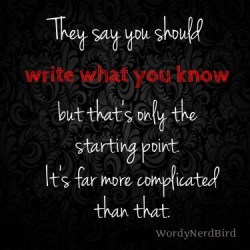
One of the simplest pieces of advice given to writers is to “write what you know”.

One of the simplest pieces of advice that is given to writers, especially those just starting out, is to “write what you know”.2018-04-08 18.10.55

It’s good advice.
It doesn’t take long, though, before it gets more complicated: it’s what you do with it after the first draft that makes any piece of writing effective and powerful.

While I don’t have any personal experience of unicorns or magical black cats— yes, it’s hard to believe, isn’t it?— my poetry is full of what I know. Every poem is inspired by real-life experience, either mine or that of someone close to me, or my own observations of other people and their actions. Even those poems that appear to be fictional are grounded in personal truth.

For this reason, there really isn’t anything that I won’t write about.
Grief. Fear. Joy. Sadness. Depression. Temptation. Despair. Determination. Anger.
It’s all there.

Writing poetry is the most effective therapy that I have ever experienced. At different times in my life, I’ve sat through grief counselling, infertility counselling, and therapy sessions to help with my depression. Each was worthwhile in its own way but, for me, none of that has come close to the healing power of ink on paper, working through ideas, shaping and crafting meaning with the words I choose, so that I can express my thoughts and feelings effectively.

Late last week, for example, I found myself confronted by the actions of a particular individual whom I had not seen for some time. Churning inside with revulsion and anger, I knew I was not ready to get into the car and drive home in that state, so I went and found a place where I could think and write and start to deal with both the new knowledge and the way it made me feel.

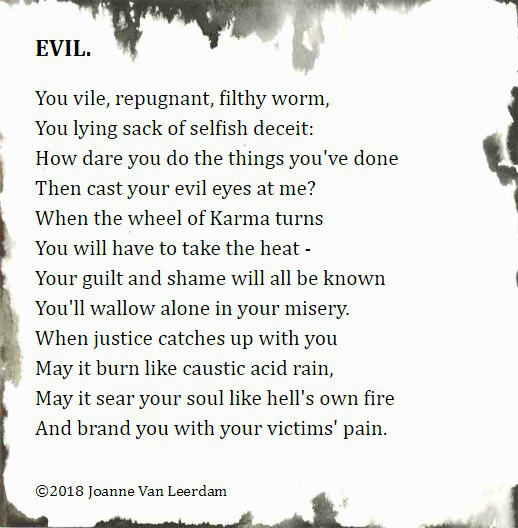
I didn’t write one poem. I started several, and have made progress on three. Only one is finished- at least, I think it is. It doesn’t identify anyone, nor is the finished poem specific to only my situation, but it leaves the reader in no doubt whatsoever about how I feel. It’s a poem that is entirely relatable for anyone who finds themselves horrified by the unsavoury actions and/or evil intentions of another.

My hope in publishing it is that, if someone in a similar situation to mine should read it, they will know they’re not alone in their feelings. There is, after all, solidarity in numbers.

Evil

I haven’t decided whether or not ‘Evil’ will make it into a future collection for a book.
I do know that I felt a great deal better when I had written it than before I started. And really, that was the whole point.

If you’d like to read more of my poems, there are a number of them published on WordyNerdBird Writes.

Joey'sMapleLeafTatt

If you appreciated this post, or the poem included, please like the post by clicking the button below, or leave a comment. All constructive feedback is welcome. 

Why You Should Support Your Local Independent Book Store.

Supporting local businesses is vital. It should be a straightforward choice.

Yesterday was somewhat traumatic. Having confronted a face from the past that I’d really rather not ever see again, I was left with time on my hands and too much on my mind. So I defaulted to my usual sanctuary – books. I didn’t have my device with me, so I headed to my favourite book store to find something to read. My need for ink on paper and a pretty, nicely textured cover in my hands was just too strong.

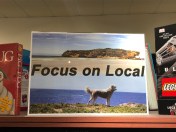
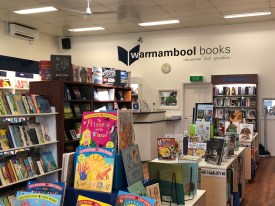
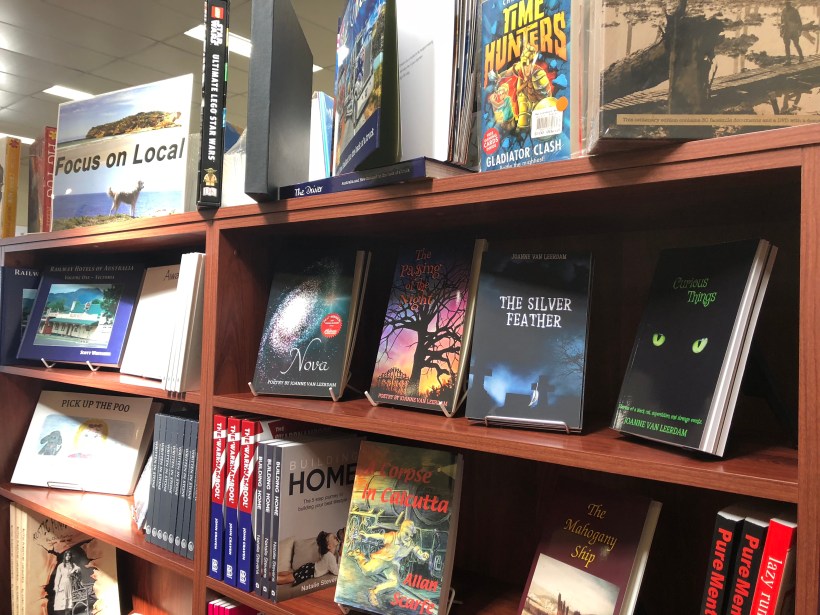
It’s a luxury, you know, having a local bookshop. The town in which I live doesn’t have one, but the larger town in which I work has two, as well as a fantastic place that sells second hand and antique books.  2018-04-06 12.01.50

For me, the choice is simple. I will always support locally owned, independent businesses rather than larger chains or big department stores.

As an Indie author, I know how hard it is to compete against the bigger fish that swim in the same pond. Among other advantages, traditionally published authors have someone else’s marketing budget on their side, along with a team of people to help them get their books in front of readers.

It’s actually not a lot different for independently owned shops, whether they sell books or anything else. Consider for a moment what they have to compete with: not just the huge online companies that control the world of desktop shopping, but also those local shops owned by large commercial chains which, while they may have a local presence, are generally not owned by anyone who lives down the street from you or whose kids go to the same school as yours. The owner of that local store has to pay the rent and insurance, stock the shop, pay employees, and make a living in an increasingly difficult and competitive marketplace.

2018-04-06 12.02.13

That’s why I buy my physical books at an independent store rather than from a book retail chain, or a big department store. The price for the same book is no different, but I know that I’m helping to put food on the table of a local family, or helping them to pay the neighbourhood mechanic for fixing the family car. My $30 probably won’t make much of a difference at all to an international company, but it makes a huge difference to an individual business owner.

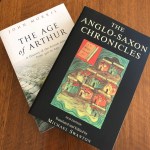
2018-04-07 09.49.15I admit that the local store doesn’t have everything I want. I like to read some fairly specialised history, and I completely understand why they don’t usually stock that: I’m more nerdy about my history than most of the population. I can handle shopping further afield for that if I have to – but if I ask them to order a particular history book for me, they will.

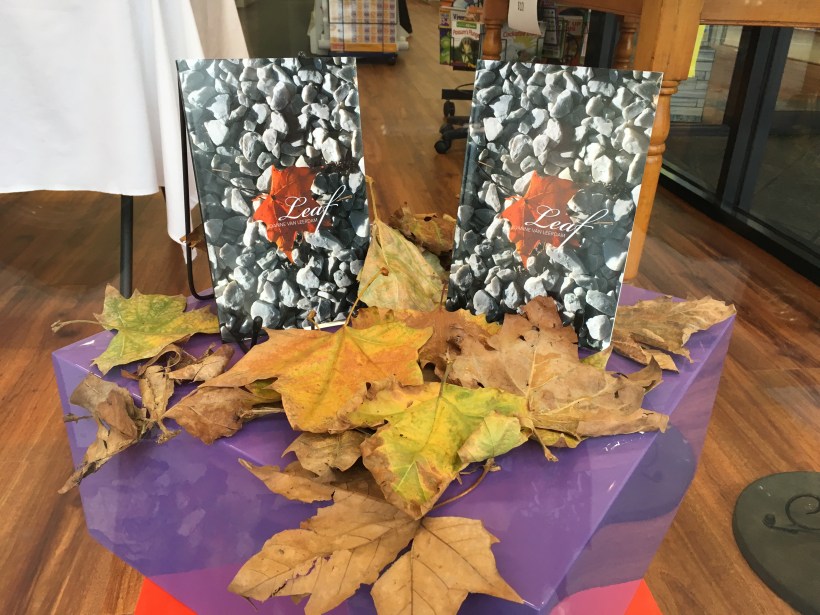
They do, however, have a large range of children’s books, teen and young adult fiction, adult fiction, biographies, and new releases.

They also have a great selection of books written by local authors, whom they happily and actively support and promote.

Did the local book chain store agree when I asked them to stock my books on their shelves? No, they did not.

My local independent store not only agreed, but went way beyond that: they not only stock and display all of my books, they actually organised and hosted my first book launch.

They  also host regular events at which local authors are welcome to meet and greet readers, sign books, and give readings from their work. That kind of support is pure gold to an author.

If we don’t support our local businesses, we will lose them. We will be left with fewer options, poorer service, and towns and communities that no longer prosper and thrive the way they once did.

It’s not really such a difficult choice, is it?