Last week, as my friends and I were sitting in a shopping centre food court, I watched a young boy carefully picki his nose, eating the booger, and follow it with a chicken nugget. He did this at least three times,
At a table nearby, another young boy watched too, with disbelief and horror written all across his face.
The scene amused me, and I filed a mental note about it. Did the second boy never pick his nose, I wondered, or was he just appalled by the thought of eating it?
As I was driving home, a story came to me.
It seems fitting that it is a macabre story, given that it is October and Halloween will soon be upon us.
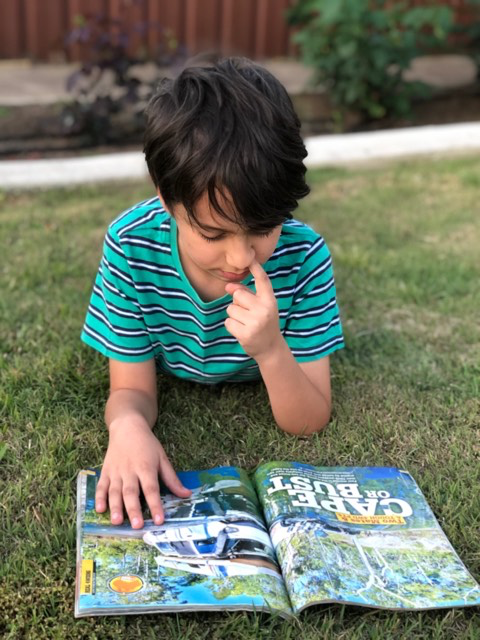
However, when I went looking for a copyright free image of a kid with their finger up their nose, I couldn’t find a single one. You would think that with the world-wide resources of the internet at our fingertips, things like that wouldn’t be so hard to find. There were stock images available, but I generally refuse to use those because, like all Indie authors, I’m on a budget and that seems like a luxury to me.
One Facebook post later, my cousin came to the rescue. Her young son was only too happy to stick his finger up his nose for the camera, and now he’s my little hero. He loves creepy stories, so I’ve promised to write one for him. I just have to wait for a little more strange inspiration to come my way.
He’s a natural! Image by Geanette Saad. Used with permission.
I hope you enjoy The Final Blow.
Image by Geanette Saad 2019. Used with permission.
“How many times do I have to tell you not to pick your nose?”
Sam sighed. All he wanted to do was dislodge those crusty bits that stabbed the inside of his nostrils every time she made him blow into a tissue, and remained there stubbornly regardless of his efforts with the tissue. Those things hurt, and they didn’t let go on their own.The best way to remove them was gently, with his favourite finger, and then flick them into the bin.
She should just be thankful he never wanted to eat it. He didn’t understand how other kids could. Just the other day when they had gone out for lunch he had watched another boy in the restaurant eating his booger off his finger before picking up a chicken nugget and eating that. He shuddered at the thought.
In her blogpost titled ‘Did That Dragon Call My Name?’ Susan Bass Marcus reflects on why she enjoys writing her blog. Like her and, I’m sure, many other authors, I really enjoy writing my blog as a different form of creative outlet than writing fiction.
Mine is quite an eclectic blog, I suppose. Shakespeare, my love of words and language, books and reading, life as an Indie author, teacher life, my involvement in community and school theatre— it’s all fodder for my musings and ruminations here at WordyNerdBird.
I enjoy the opportunities to explore ideas that I would not seek to explore in fiction. There are some aspects of life that are well suited to inclusion in a story, and others that really don’t work so well, yet they are still worth thinking about and exploring.
It’s good to share aspects of my life – as a teacher, an author, a poet, a reader, an actor or director, a blogger, or a member of the human race – in a way that others can hopefully relate to and feel as though they know me a little better each time. I also hope that some of those posts are thought-provoking and help others to see things from a different perspective.
I love sharing what I know about Shakespeare and making his writing more accessible to new readers. I try to do that in a way that is down-to-earth and easy to read, so that my pieces are interesting, enlightening and not too long.
I always hope that people will find my posts about choosing and using the right words helpful to them, whether they are students, authors, bloggers, or whatever else they do. I love language and how it works, which definitely qualifies me as a grammar nerd and a word nerd, and I appreciate the opportunities to share that knowledge and joy with others that a blog like mine provides.
Susan Bass Marcus blogs quite differently than I do, because we are individuals with different styles and interests. Her posts are interesting and helpful, so I trust you will enjoy her reflection on the pleasure she gets from blogging, too. She is definitely a blogger worth following, and an author worth reading.
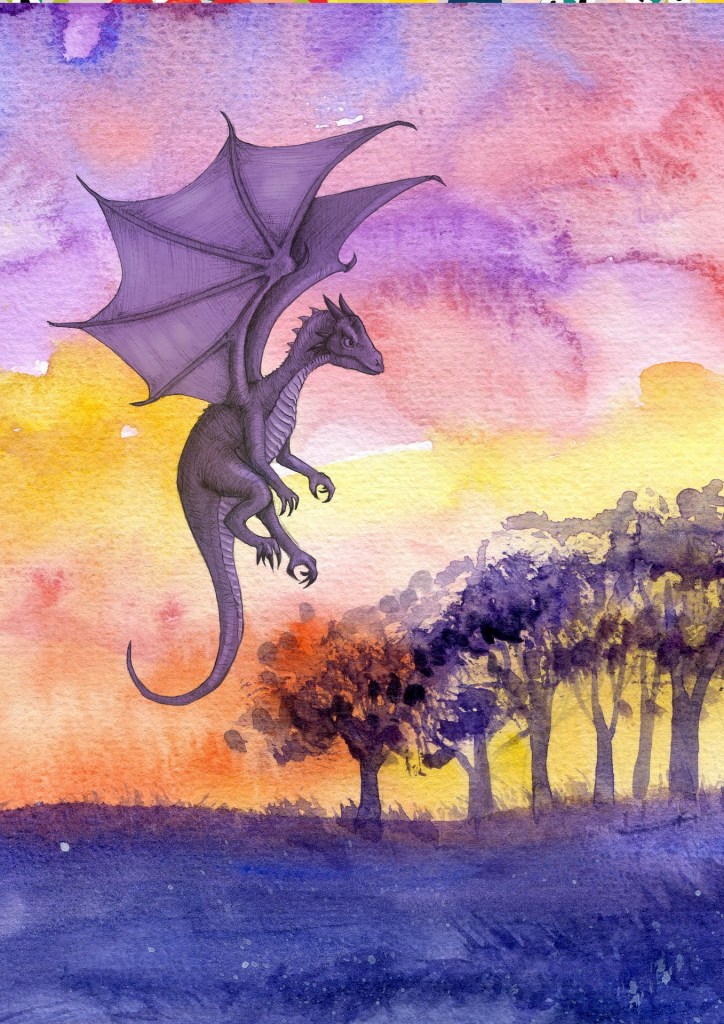
I am used to imagining the ways that dragons think and respond to humans, to change, and to challenges. For years, I studied dragon lore and felt the need to write my own story about them, which I did; and while two novels about the dragons that inhabit my mind have been published, I am still writing about them. Why? Because I have more to say. In a way, I have just begun to tell their story. Aurykk, the golden dragon, and his nephew Draaco, call my name and I answer, but not without feeling some anxiety and hesitation. It’s that darn opening paragraph.
A member of the Chicago Writers’ Association, Andrew Reynolds, once posted a blog entry that summarized responses to a question he threw out to the membership: Why [do] we write? His post: “[W]hen the question popped up as part of a discussion about writing among a group of writers I am…
I can relate to this post on so many levels. As a writer. As a teacher. As a performer. As a director. Sometimes, even as a decent human being.
I may have proven myself time and time again, but it doesn’t stop that sensation that maybe I’m not any good, nor does it quell the fear that one day someone will expose me or my work as being rubbish.
Fear isn’t rational. Anxiety doesn’t care about track records. And Impostor Syndrome is relentless.
I don’t know why it happens, but I know it plagues creative people and sometimes renders them unable to keep going.
I haven’t given in to it yet. I don’t ever want to. But my goodness, trying to resist it is tiring.
Writing is hard enough. Add imposter syndrome into the mix and it becomes the kind of challenge you have to remind yourself, quite often, is still worth pursuing.
Macbeth is certainly one of Shakespeare’s very interesting characters.
Macbeth and his wife present an interesting study of power, control and submission. A proven warrior, he lets not only his imagination, but also his wife’s, run away with him, and completely submits to her manipulation and taunting. Instead of waiting for things to take their natural course, they took matters into their own hands in pursuit of the position and power promised in the prophecy of the wyrd sisters.
As things are wont to do in Shakespeare’s tragedies, things get way out of hand and end up with a bunch of people dead.
I hope you enjoy this very good character study of Macbeth, courtesy of the Interesting Literature blog.
An Interesting Character Study: Macbeth
Macbeth is one of Shakespeare’s most famous tragic heroes, not least because he represents the Man Who Has It All (seemingly) and yet throws it away because of his ‘vaulting ambition’ to have Even …
My granddaughters and I were sitting on the floor of their pink-painted cabin at the bottom of the garden. I had evicted yet another invading spider and, while the youngest sat on my knee, her almost-five year old big sister was sprawling in the pink armchair.
The three of us had been playing. I had pushed little Imogen on her swing until she giggled with joy and had chased Hollie around the garden, swinging her up onto my shoulders and teaching her to stand on her head in a fairly unorthodox manner. Somehow, small children make you forget the aches and pains… at least until next morning when you try to move again.
By this point though, we had settled down in the playhouse and eaten a meal of chocolate-dipped worms and green slimegrobbels with custard… a menu chosen by Hollie and lovingly prepared by the…
The blogpost ‘Only Way Out’ by Allison Marie Conway moved me powerfully.
This is me. This is the power writing has over me. It is my therapy. My escape.
And yet, lately, a deep, overwhelming sadness that has wrapped its weighty fingers around me, constricting my thoughts and paralysing my creativity.
“Give yourself time. Breathe. Be kind to yourself. Be patient.” I keep telling myself these things, hoping to make myself small enough and relaxed enough to slip from its grasp.
I will get through this. I will write my way out of it yet.
I am a real sucker for posts that offer writing tips, publishing tips, and the experiences of other authors and bloggers. I’ve shared a number of them on this blog, because some people have genuinely good advice and share their experiences in a very positive and constructive way.
This response to those kind of posts is quite refreshing in its honesty and in its explanations of why those posts can actually be demotivating for some people. I can totally relate to the feeling of disappointment in myself that I haven’t adopted and implemented more of the great advice given by other Indie authors since beginning my own author journey, and to the sense of “exhaustion” at the number of “You Can Do This If You Follow My Formula” posts out there.
It’s true that those hints and tips for success aren’t “one size fits all”, and nor is success. There are many ways to measure success, and we all have individual goals that determine what our own standards or images of success might be.
It is also fair to say that there is so much advice, so many tips, so many things people tell us to do, that it’s simply not possible to try it all out, and we really do need to remain realistic about what advice we are going to take on at any given time.
I do like Daegan’s points about daily and weekly reviews of what has been done or achieved. I actually do this, and it helps me stay on track because I find achieving small goals and milestones along the way incredibly motivating.
I don’t meditate as such, but I do set time aside for quietness and reflection in my daily routine. I wear a lot of hats in my day-to-day life, so taking even just a few minutes when my brain has nothing to do is a vital means of refreshing and resetting my mind at various stages of the day. As an introvert who is often surrounded by people all day long and again at home, that quietness is also how I recharge my energy, so it’s a crucial thing for me to do.
My “takeaway” from this article is that it’s important for each of us to set our own goals, define what sort of “success” we are hoping to achieve, and find what works for us as individuals.
The one thing we should all do is keep striving to make it happen.
I have read so many articles that have a headline similar to:
“If you want to be successful, adopt these 5 habits right away!”
The problem is, the author is always telling me what I should do to be successful as if my success and their success looks exactly the same.
I get so many of these articles telling me about the habits that I should have or my life is clearly falling apart. I’ll admit, many are good and I have certainly tried them.
But what about the author? Are they using all of those tips? Do they really have all of those habits locked down when they had a post a month ago telling me 12 other success tips? I want to know the person behind the word and if it’s actually worth my time.
Maybe I’m small minded and not wired for success, but…
I’m always interested to see how different people react when I tell them I’m a published author. You can never really tell which way it’s going to go.
I’m accustomed to people saying, “Oh, that’s nice” or “Oh, interesting! I’ve never met an author before!”. Some people look at me with pity, others adopt an expression that suggests I have three heads.
I am, I confess, always puzzled by people who say, “I don’t read”. I have absolutely no idea what that kind of existence must be like, so I just smile and nod.
The response I find most confronting, though, is “Oh, you must be rich!”
I have two favourite responses for those people: I either say “Nobody gets rich writing poetry!” or “You don’t become a writer if you’re looking for an easy way to make a buck.” To write really well is hard work. It takes time, commitment, energy and attention to detail – and those things generally don’t see a vast return in cash.
My motivation as a writer doesn’t come from money – if it did, I’d have quit after the first book. Sure, I’d like to sell more books, and be able to quit my job and write full time. That would be great… but it’s not likely to happen anytime soon.
For me, writing is a passion, a drive that I find it almost impossible to resist. When I write something good, I feel fulfilled. When I refine it, edit it, craft it, polish it and finally publish it, it’s both exciting and immensely satisfying.
The real thrill comes when a reader responds positively to my work, especially my poetry. To know someone has enjoyed one of my stories or been touched by one of my poems is the best feeling because that doesn’t happen accidentally.
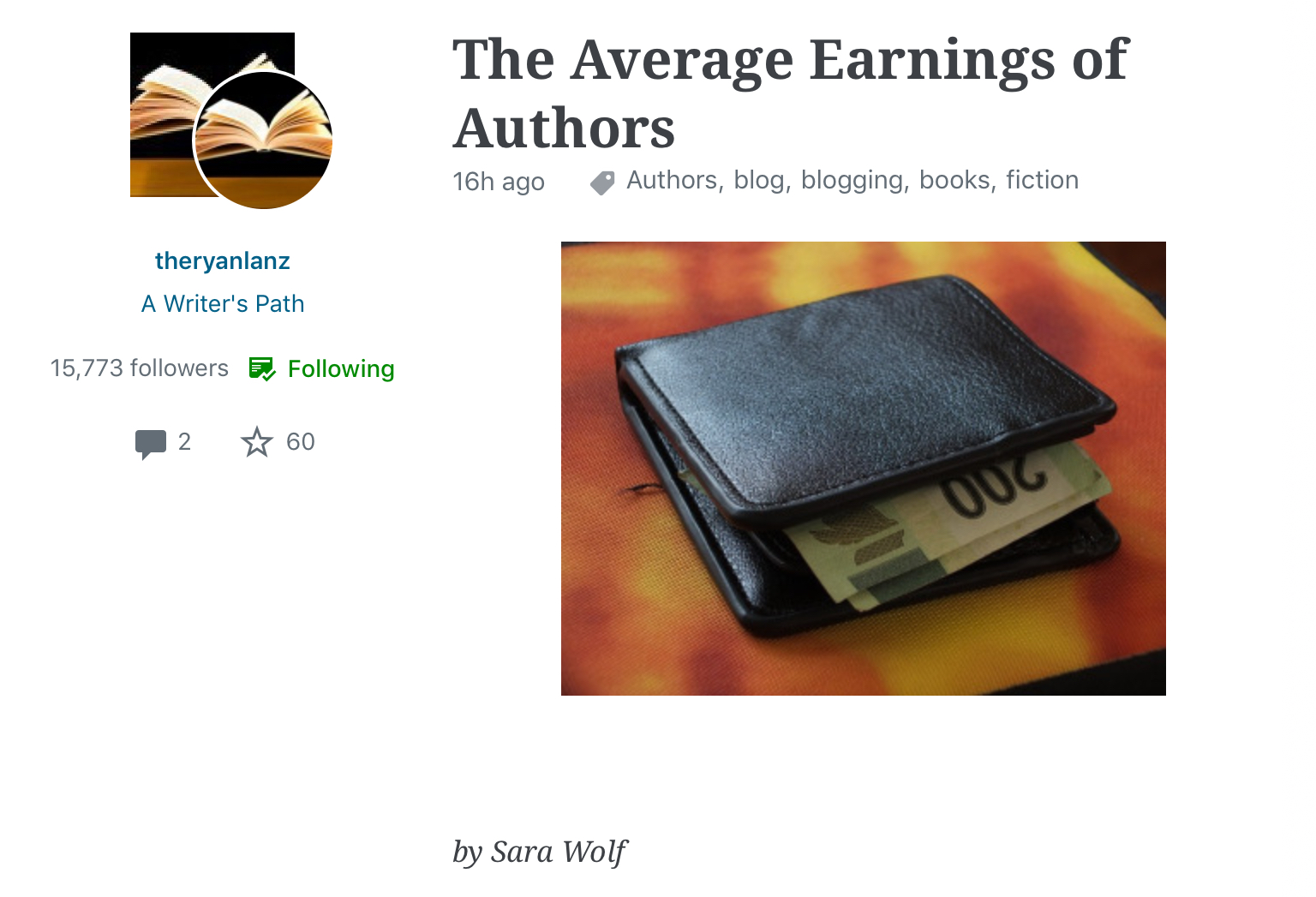
This post by Sara Wolf, which I found on Ryan Lanz’s blog, addresses the issue of the vast differences between what the majority and the minority of authors earn. It’s a well-written article with a message that comes as no surprise to me or any other Indie author.
Most authors aren’t rich. Some manage to make a living. Only a very small percentage make it into the big league and get rich and super famous.
It is a frequent occurrence in the news to hear about authors cutting multi-million (or even billion) dollar book or movie deals. Famous examples of ridiculously successful authors, such as J.K. Rowling, E. L. James, and Stephen King, often lead people to think that becoming an author will undoubtedly lead to an equally as lucrative outcome. However, it turns out that the average author makes much, much less.
I discovered this post on the abooknation today. It reminded me of starting my own book blog, although my reasons were slightly different.
Like this blogger, I have always been an avid reader, but it was really only when my first book was published that I began to understand the true value of a review for an author.
It’s really the only feedback you get from readers.
A negative review can crush your soul until you think about the fact that you haven’t liked every single book you’ve picked up, either. Sometimes it’s a matter of taste.
A thoughtful review helps you improve your writing and motivates you to keep going. And if someone praises your work, it’s incredibly satisfying and fulfilling because you know you’ve connected with a reader’s soul.
The fact that such a small proportion of readers leave reviews does not really surprise me, because I had never done so before, either.
Once I recognised the need for reviews of Indie books, I saw that this was an opportunity for me to use my love of reading to help other Indie authors by leaving an honest, constructive review.
Thus, Book Squirrel was born.
After developing my confidence with book reviews, Book Squirrel’s blog extended to include author spotlights and interviews, book events and, recently, a range of integrated Indie book promotion services.
I love blogging about books and supporting other Indie authors. I enjoy giving back to the Indie author community and showing others how positive and proactive Indying is done.
Book Squirrel brings me, and others, joy. And that is the best reason ever to keep going.
I’m not sure if I’ve actually ever mentioned why I got into book blogging but if I did I don’t think I made a blog post about it so… HUR WE GOO:
I’ve always loved reading but I feel like I went through phases where I went on a bit of a (very) long slump until I read a book that hooked me back into reading! I’m someone with the shitest memory, even now when someone asks me for book recommendations I have to skim through my posts to jig my memory of what books I’ve read. So around 4/5 years ago when I got back into reading, I had no idea that book blogging was a thing, I thought why would anyone want to hear my rambling thoughts about a book I’ve read??????
Whenever I finished a book I would write up a review and literally just leave it…












 WordyNerdBird