Poet, writer, teacher.
Good humoured. Cynical and sarcastic. More than slightly subversive.
I love language and words, and the power that they can hold when used well.
I spent some time in the car with my father today, and as we travelled the presenter on the radio was asking people to call in and talk about family memories and traditions at Christmas time. This was a great opportunity to ask Dad what Christmas was like for him when he was young, so that’s exactly what I did!
My father grew up in Holland during the Depression and World War II. His family were not really poor, but neither were they rich. My grandfather worked very hard to provide for his family, and both he and my grandmother managed their resources carefully.
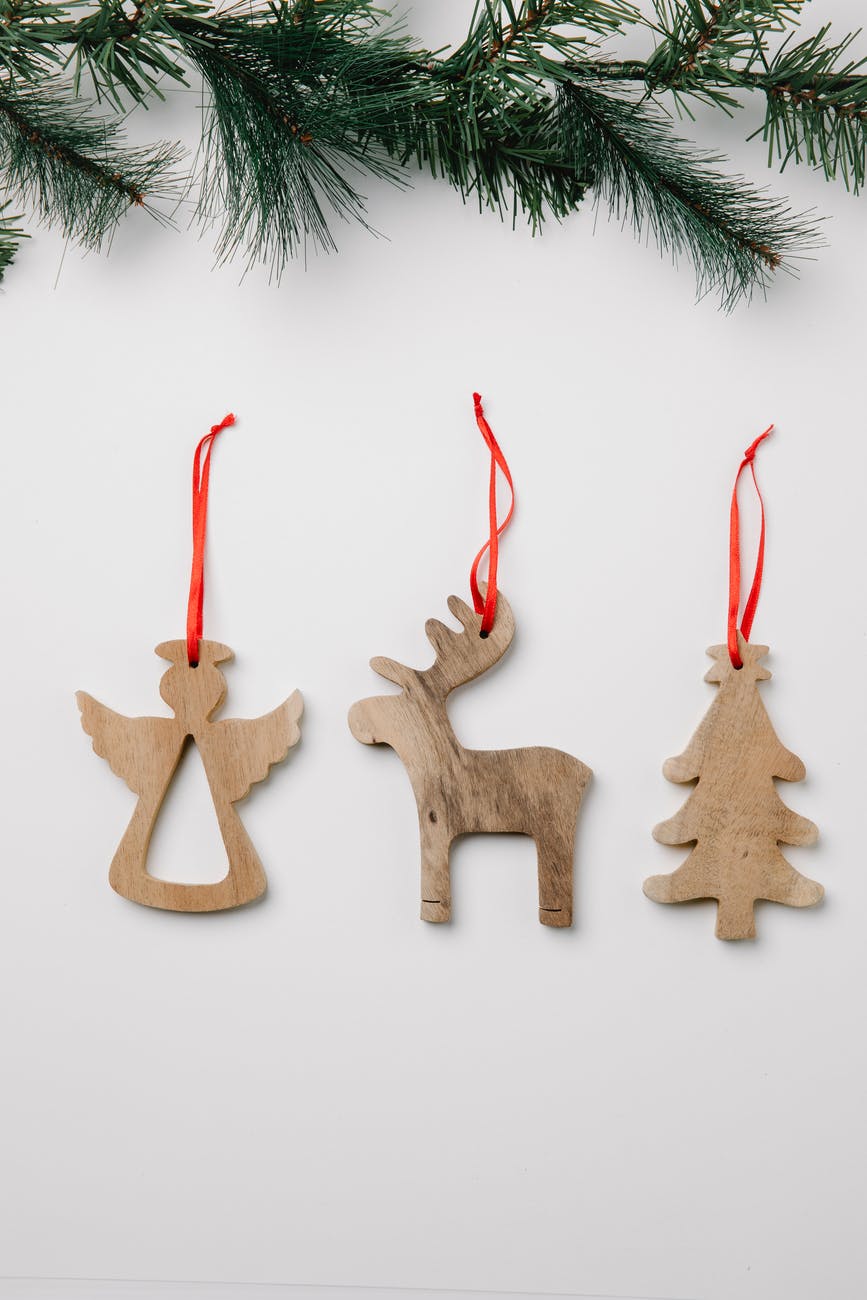
The house was usually not decorated much for Christmas, but they did have a Christmas tree lit with candles. Dad also remembers the large fir trees that were put up in the churches, almost as tall as the roof. Some were lit with electric lights, but most…
A Christmas Eva tradition we are adopting for the first time this year is the Icelandic tradition of Jolabokaflod, pronounced yo-la-bok-a-flot. (Hear it here.) it means ‘Christmas book flood’ and that’s exactly what it is.
It is the practice of giving books on Christmas Eve and then going to bed and reading them.
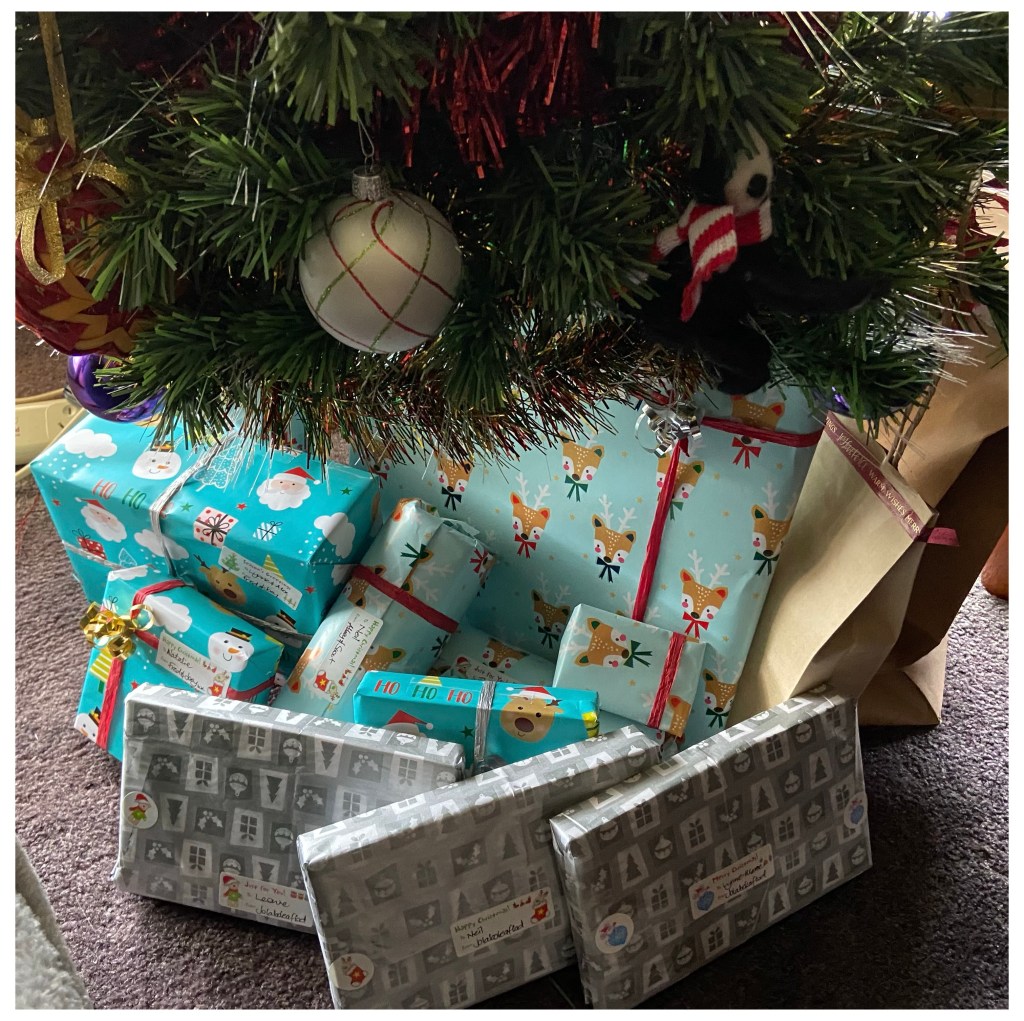
My little pile of book gifts for the family on Christmas Eve.
The tradition began in Iceland during World War II when imports were hard to come by and paper was relatively inexpensive. The publishing industry did not operate year round, but rather swung into action toward the end of the year, and culminated in the Bokatidindi—a catalogue of every new book published in Iceland, given free of charge to every home in the country. From there, people choose the books they will give their loved ones.
It’s no wonder that book lovers all over the world are looking on and thinking they’d like to get in on that action. That was certainly my response.
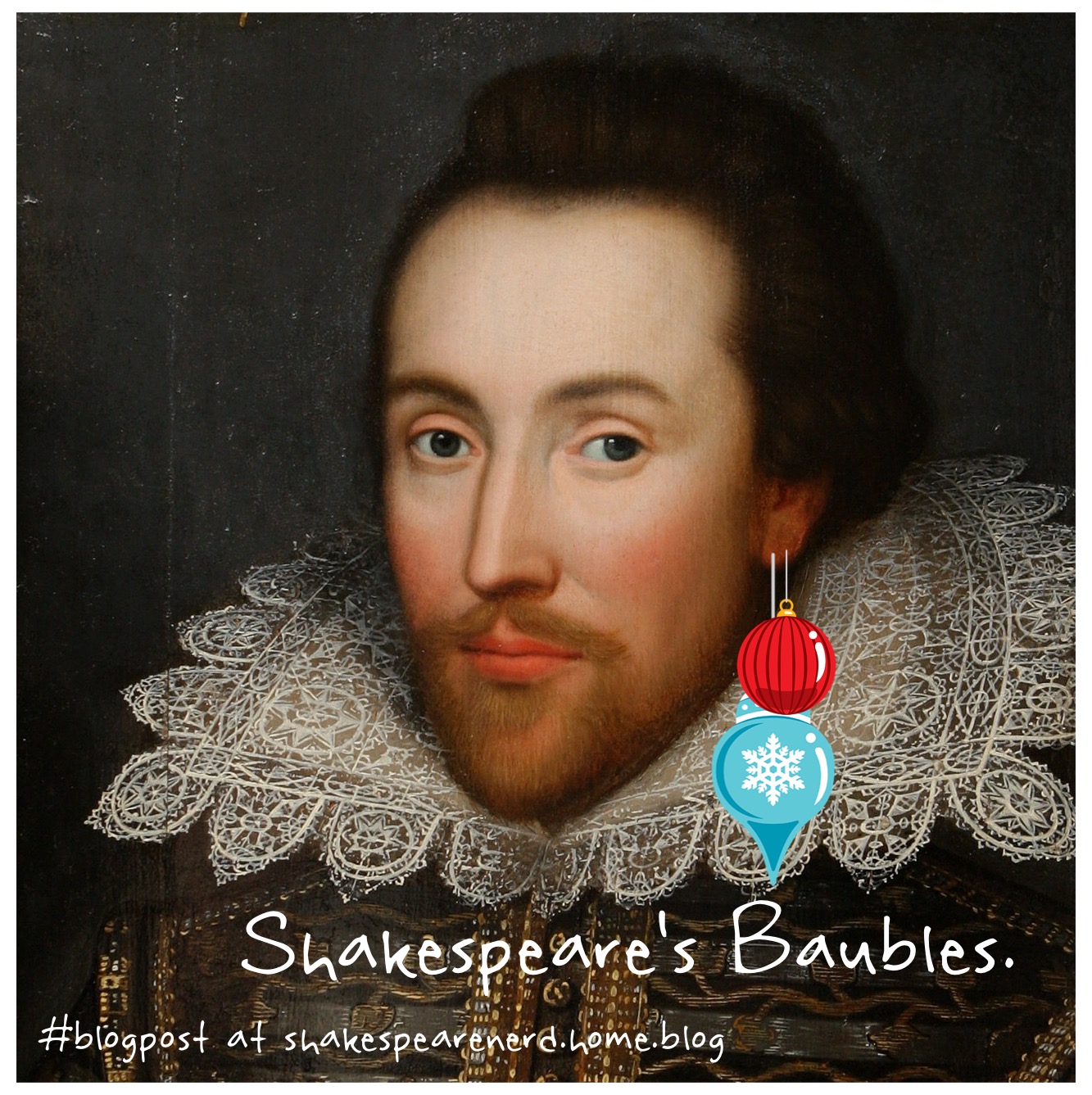
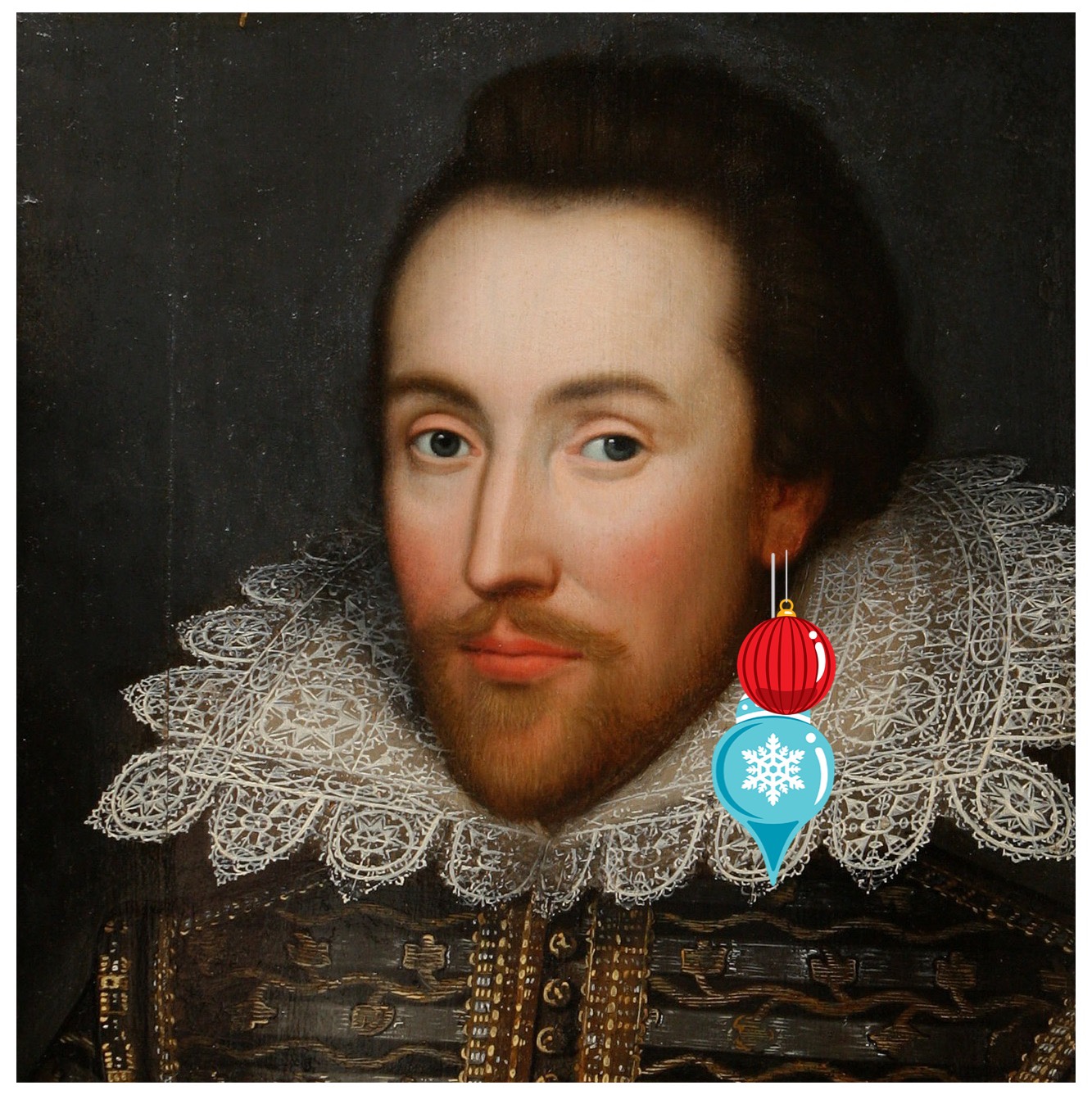
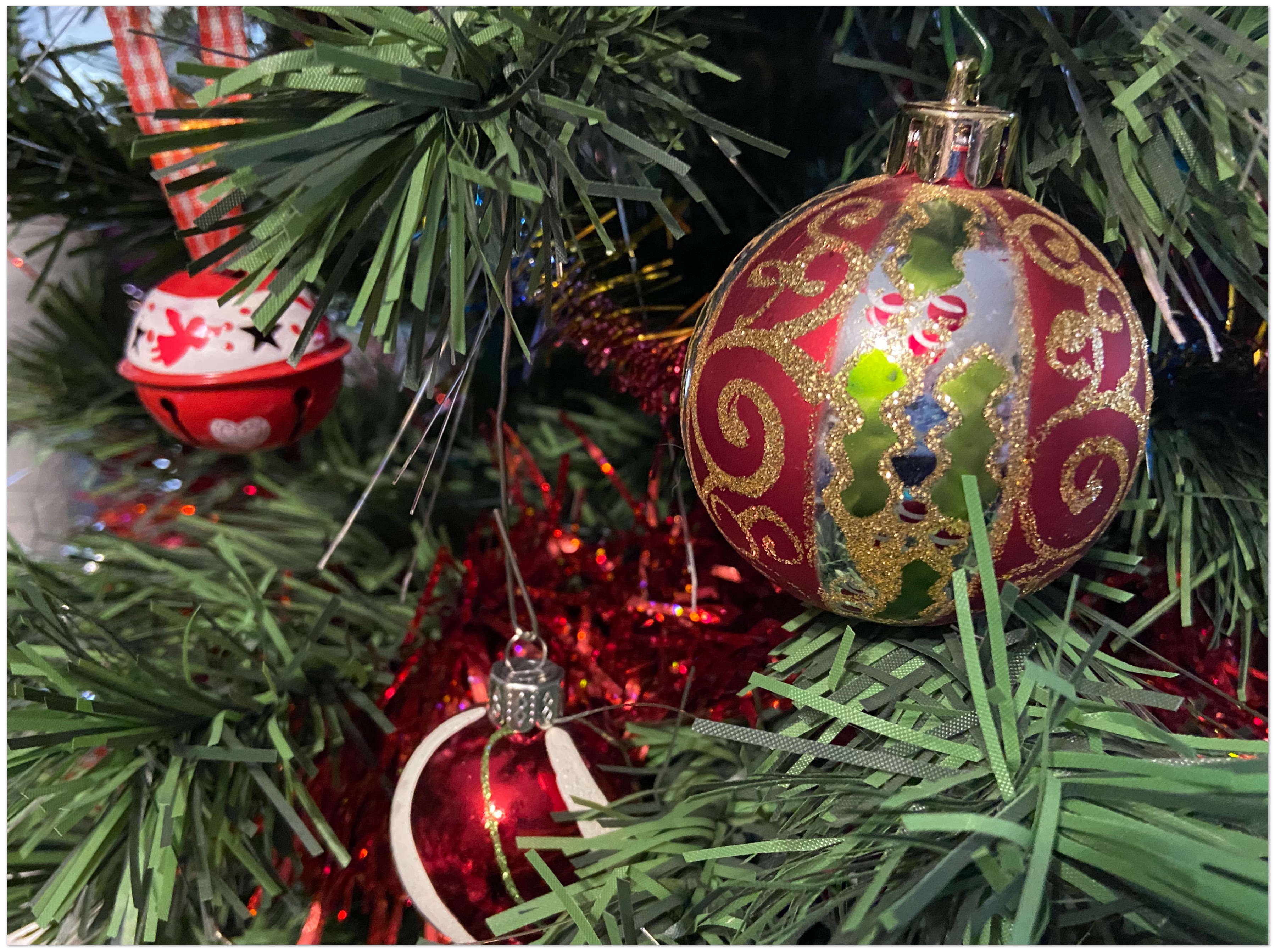
Because it’s December and Christmas decorations are everywhere, I wrote last night about the meanings and etymology of the word ‘bauble’ on WordyNerdBird. I wondered then if it were a word used by Shakespeare. To my delight, it was indeed!
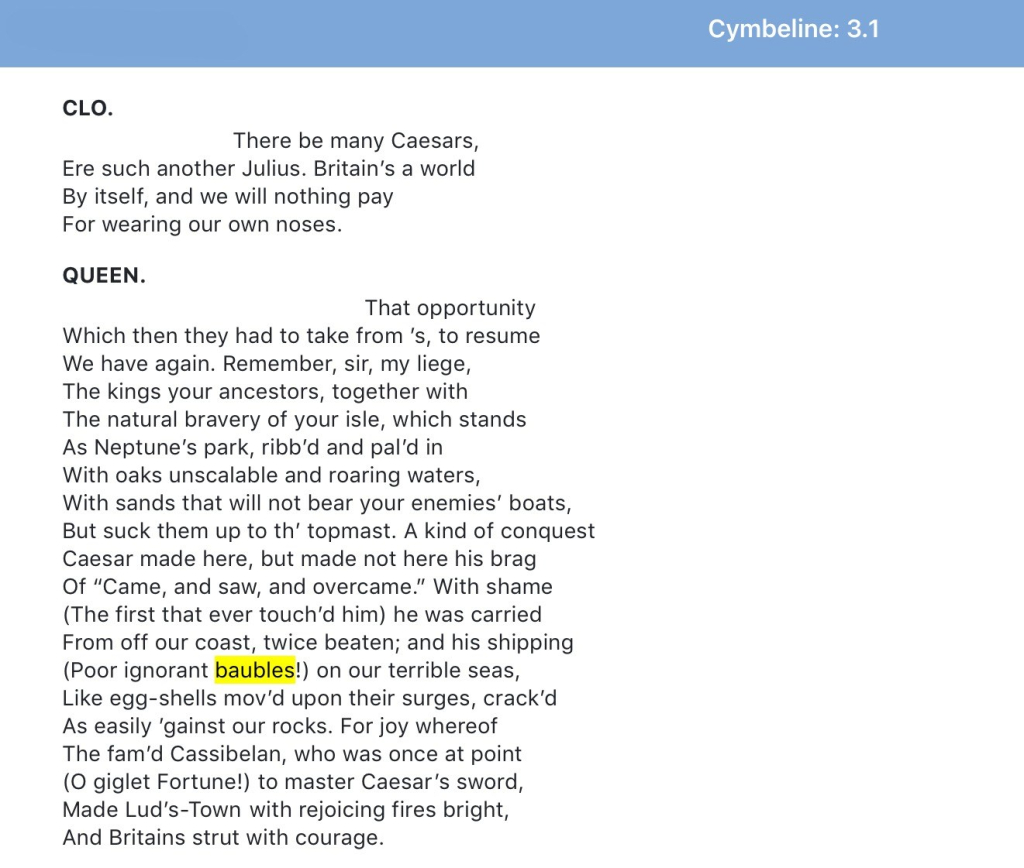
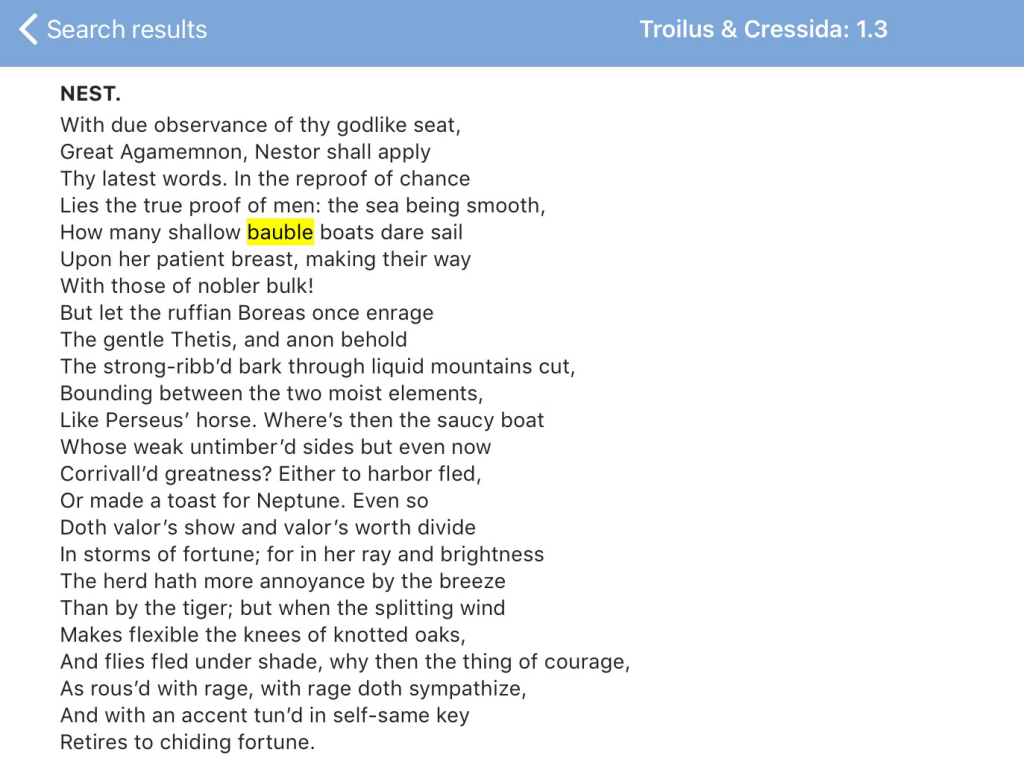
Interestingly, Shakespeare references one of the continued senses and the obsolete sense of the word, and creates double entendre with it for extra credit.
In ‘Cymbeline’, the queen refers to Caesar’s ships bobbing around on the sea as ‘ignorant baubles’, describing them further as being like egg shells, being thrown and broken against the rocks.
A similar reference to boats as ‘baubles’ is made in ‘Troilus and Cressida.
In ‘Othello’, Cassio shows his disregard for Bianca by describing her as a bauble that follows him around and tries to make him fall in love with her. That his companions laugh with him demonstrates that this use of the word…
On Saturday night we were out for a family dinner — we’re finally allowed to go out here, now, after months of lockdown and restrictions— and one of the young kids at the gathering commented to me that they liked the pretty balls on the light fittings, and then asked me if that’s what they were called.
I explained that they are called baubles, and added that the beads on her bracelet could also be called baubles because they are pretty things designed for decoration. They’re both different kinds of ornaments, and it’s cool how there are often multiple useful words to use for things.
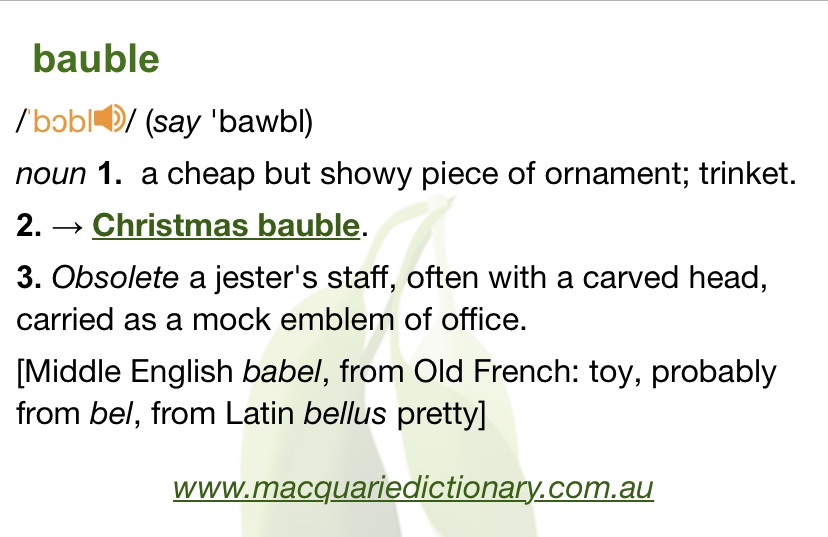
This got me wondering about the origin of the word ‘bauble’. I suspected it was French, simply because of how it sounded, but such assumptions are not safe. As always, my trusty Macquarie dictionary and Etymonline had my back.
‘Bauble’ came into English in the early 14th century, meaning a decorative trinket or ornament. It came from the Old French word ‘baubel’ meaning a child’s toy or trinket. That may have come from the Latin word ‘bellus’ meaning “pretty” which gave us belle, as in ‘belle of the ball’, or it could be related to ‘babe’ or ‘baby’. The sense of bauble meaning something of little or no value is later, dating from the early 1600s.
Long ago, ‘bauble’ was also the name given to a staff with a decorated or carved head, carried by a court jester and designed to mock the sceptre carried by a monarch. This meaning has fallen out of use, much as the position of court jester and the practice of a monarch carrying a sceptre have done.
So, now ‘bauble’ only relates to the pretty things. It is important to understand, though, that just because something can be called a bauble does not automatically mean that it has no value. It’s fair to say that while some baubles, such as Christmas decorations and the beads in a child’s bracelet, might usually be fairly inexpensive, there are other kind of baubles that tend to be more valuable.
Thus, the two meanings of bauble remain distinct, even though they can both apply at the same time.
In response to requests from several quarters to explore the ways in which the added stresses of online and remote learning, social restrictions, working from home and everything else that has come with COVID-19 have affected teachers this year, I conducted a survey.
Open to all teachers worldwide, I distributed the survey both on social media and via professional networks.
I asked teachers to respond honestly to nine questions, which I formulated based on comments and social media posts by teachers. To remove any possible disincentive for honesty, participation in this survey was completely voluntary and anonymous.
Thus far, there is only a relatively small number of respondents , and my little survey is by no means scientific research. Still, the results thus far bear out my own experience and observations, and what I have heard others saying: as resilient and committed as we might be, it has been a really rough year that has left teachers exhausted and, at times, quite discouraged.
79% of respondents say they have been much more stressed and tired than previously
21% reported no change in their levels of stress and tiredness.
There does not appear to be any correlation between how tired and stressed people are and the number of years of experience they have as a teacher.
50% of respondents said their stress was created by their own expectations of themselves
36% said that other people’s expectations of them as a teacher created their stress
14% reported that their stress came from the media’s continual reporting of COVID-19 related news and issues.
64% of people said that the tiredness experienced was longer term than usual, while 36% that it was about the same.
29% said they had consumed more alcohol in 2020 than in previous years
71% said their alcohol consumption was about the same as in previous years.
36% of people also said they had increased their caffeine intake
36% said that their caffeine intake had not changed.
It did seem that there was a correlation between people who had increased alcohol consumption and increased caffeine consumption with
The respondents’ responses regarding nutrition, though, was interesting.
Only 28% said their eating patterns had not changed
7% said they had paid more attention to good nutrition
65% said they had paid less attention to good nutrition.
79% said they wanted to continue their career as a teacher.
14% said they would only keep on teaching because they felt they had no choice.
Sadly, 7% said that the stress of the year had brought an end to their teaching career.
14% of respondents said they had sought medical advice for issues related to the stress of teaching this year.
None had sought counselling.
This final statistic is, to me, evidence of our collective resilience and commitment: we’re stressed and we’re tired, but we keep on going.
I do wonder, though, if we as a profession need to be more proactive in seeking help and support when we are experiencing increased levels of stress and tiredness, and possibly not taking such great care of ourselves at the same time.
The key to my own determination to keep going this year has been that I wasn’t actually doing it for me– I was doing it for the kids. I suspect that most of us feel the same way. It’s not just me, and not just my colleagues, having a hard year. It’s everyone. Every family, every community, every workplace, every career, every school, every student… you get the idea.
If I can model resilience, positive attitude and commitment to making the best of a tough situation, that’s exactly what I’m going to do my best to achieve.
I hope my students are encouraged by my commitment to them. I hope they learn from my example. And boy oh boy, do I hope their parents are watching, because I want them to love this school and to understand how much we value them and their children.
I have been enormously encouraged by a my colleagues, and some have said that I have been an encouragement to them. The members of my faculty office have been a lifeline for me as we laughed, cried, and collaborated together throughout the experience of teaching remotely for two terms of this most challenging year. The entire staff of my school committed from the outset to making the whole deal of working from home and teaching online something that was achievable, coordinated and professionally delivered. “That will do” was never going to be acceptable.
At the end of every school term, I comment that the break is well-deserved. That has never been more true than at this end of 2020.
As the final term of 2020 winds down to a close and teachers (and students!) everywhere look forward to the Christmas break, I truly hope we are all able to stop working long enough to get some much needed rest and downtime.
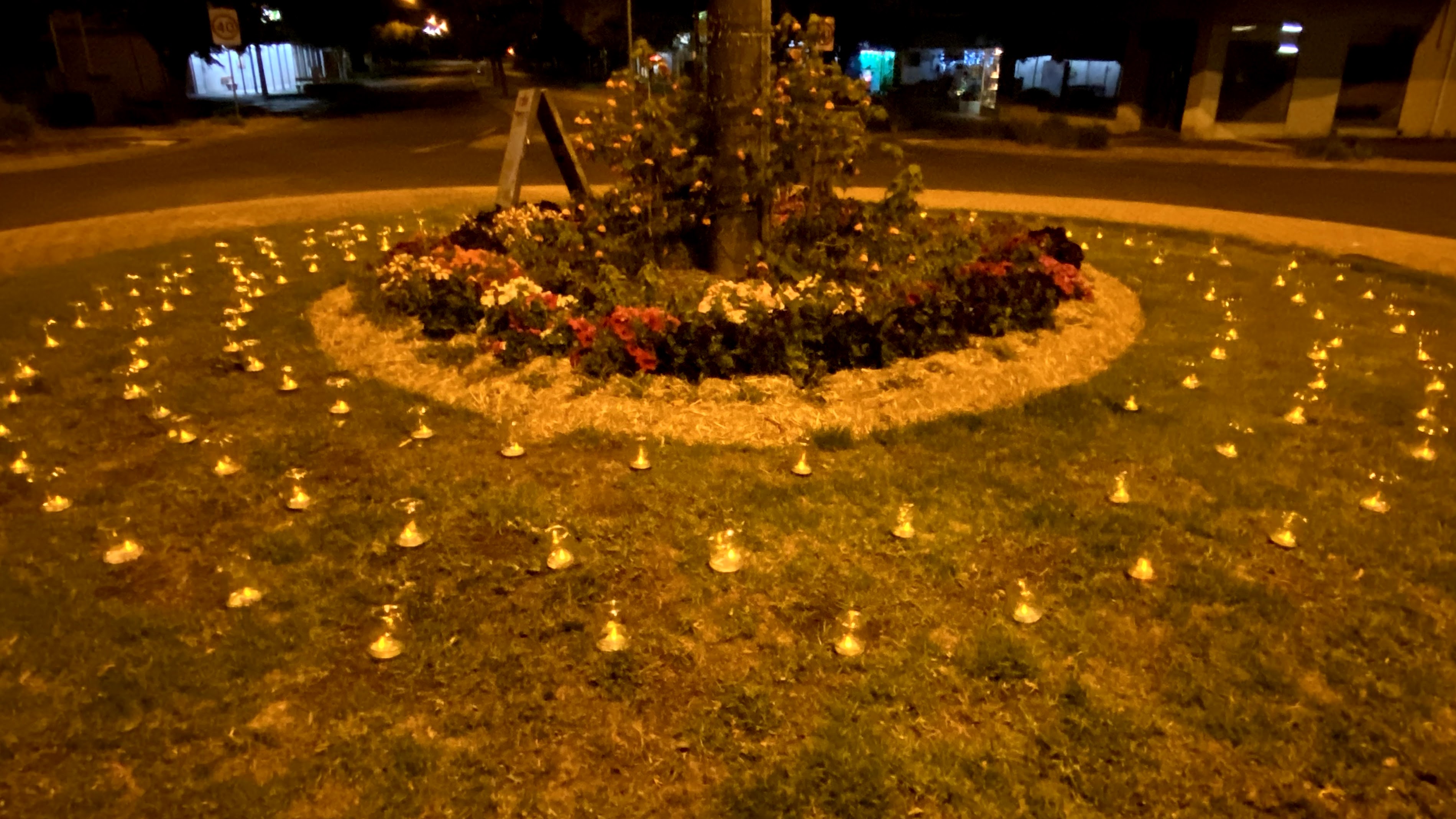
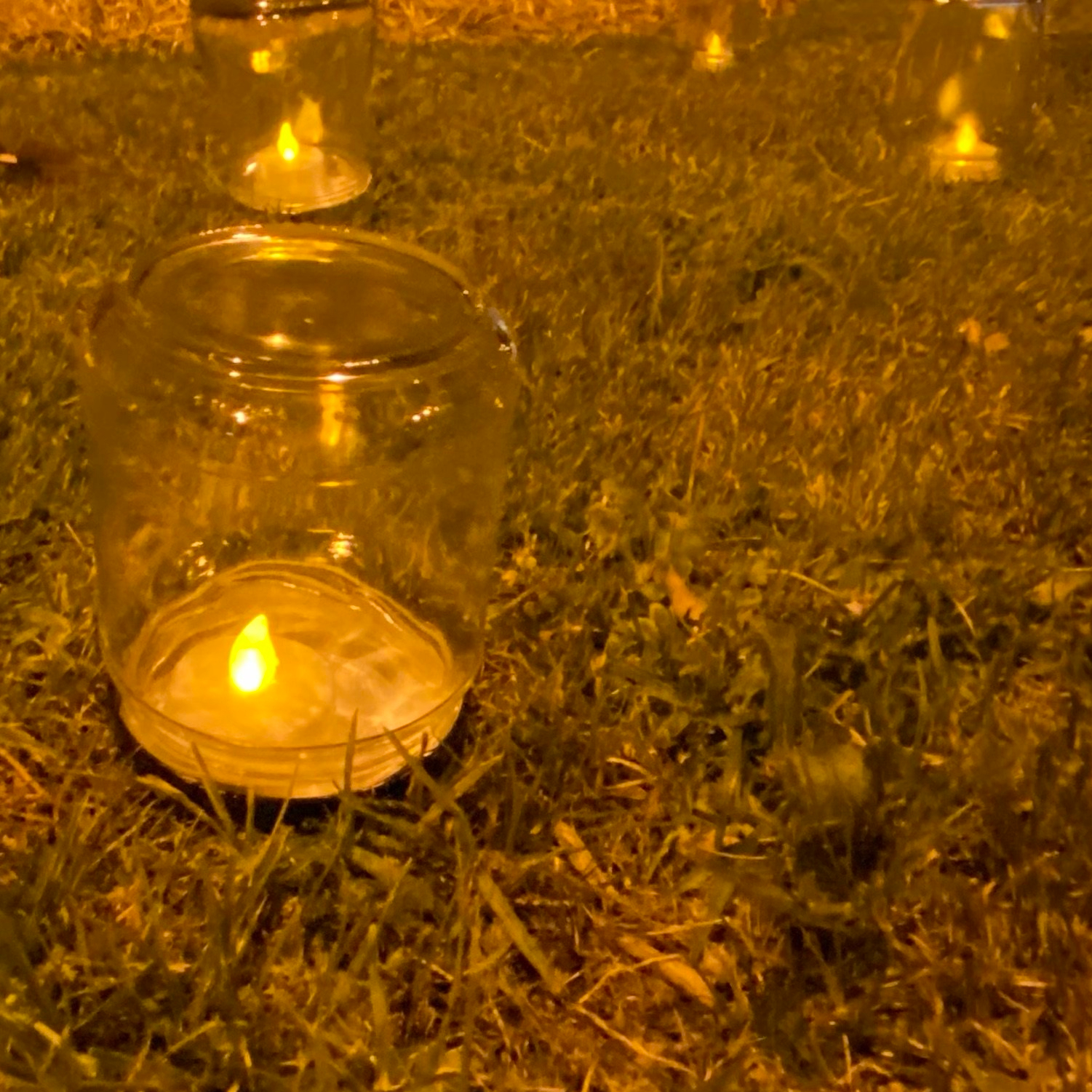
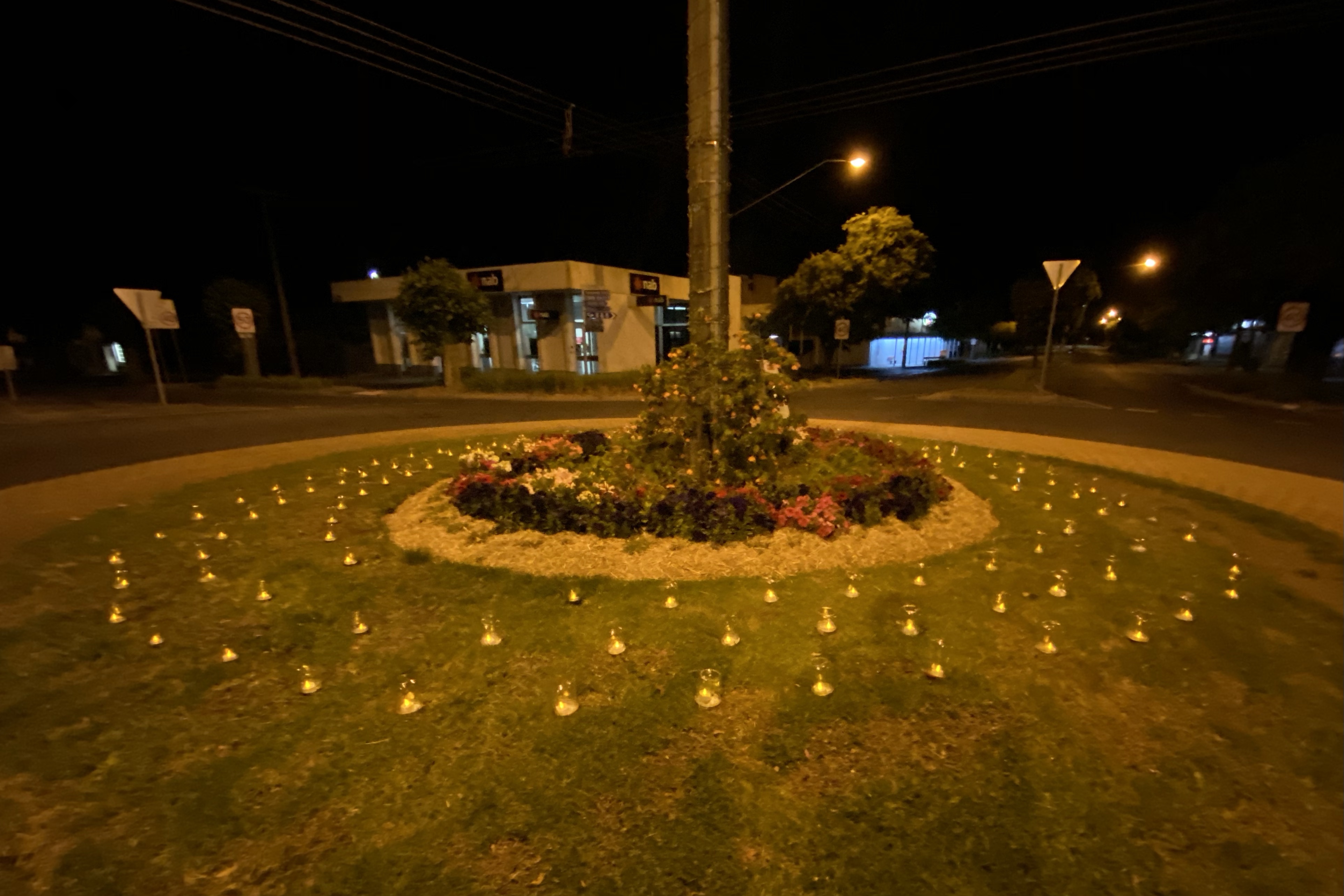
Our local council has created this gorgeous candlelight memorial for all the people in our local government area of Corangamite Shire who have passed away in 2020.
Most of these people‘a families were very limited in how many they could have at the funeral. The way we have mourned and comforted one another has had to change. Our ability to travel and see each other has been limited or, at times, impossible.
Gestures like this help us to feel less alone, and to know that our loved ones are remembered. It’s very touching that the community as a whole is able to acknowledge their absence from the towns and social circles in which they lived.
There are 129 lights burning through the night. That’s 129 families like mine that have been changed forever. And, I’m sure, it’s 129 families who appreciate the thoughtfulness of a local government that thinks beyond budgets and logistics to stop for as long as it takes to light 129 candles, and invite the community to stop, remember and reflect.
My sister and I went to see the memorial tonight, to pay tribute to our dad and to share the sight with our family interstate via video.
Thank you to the Corangamite Shire and the local community members who helped make this happen. It is very much appreciated.
I wrote this poem a while ago, but it seems so relevant at this point of 2020. Every time my Christmas fairy lights flick on lately, I think of this poem.
It’s the time of year when people want me to attend parties and end of year gatherings for work or other groups. They want me to sparkle, but I feel as though I am still so tangled and frayed and broken, I just can’t.
Yet again, I find myself ‘faking normal’ and smiling and nodding while wishing I could go home and go to bed instead. It’s a well-practised skill that, quite honestly, I wish I had never had to learn in the first place.
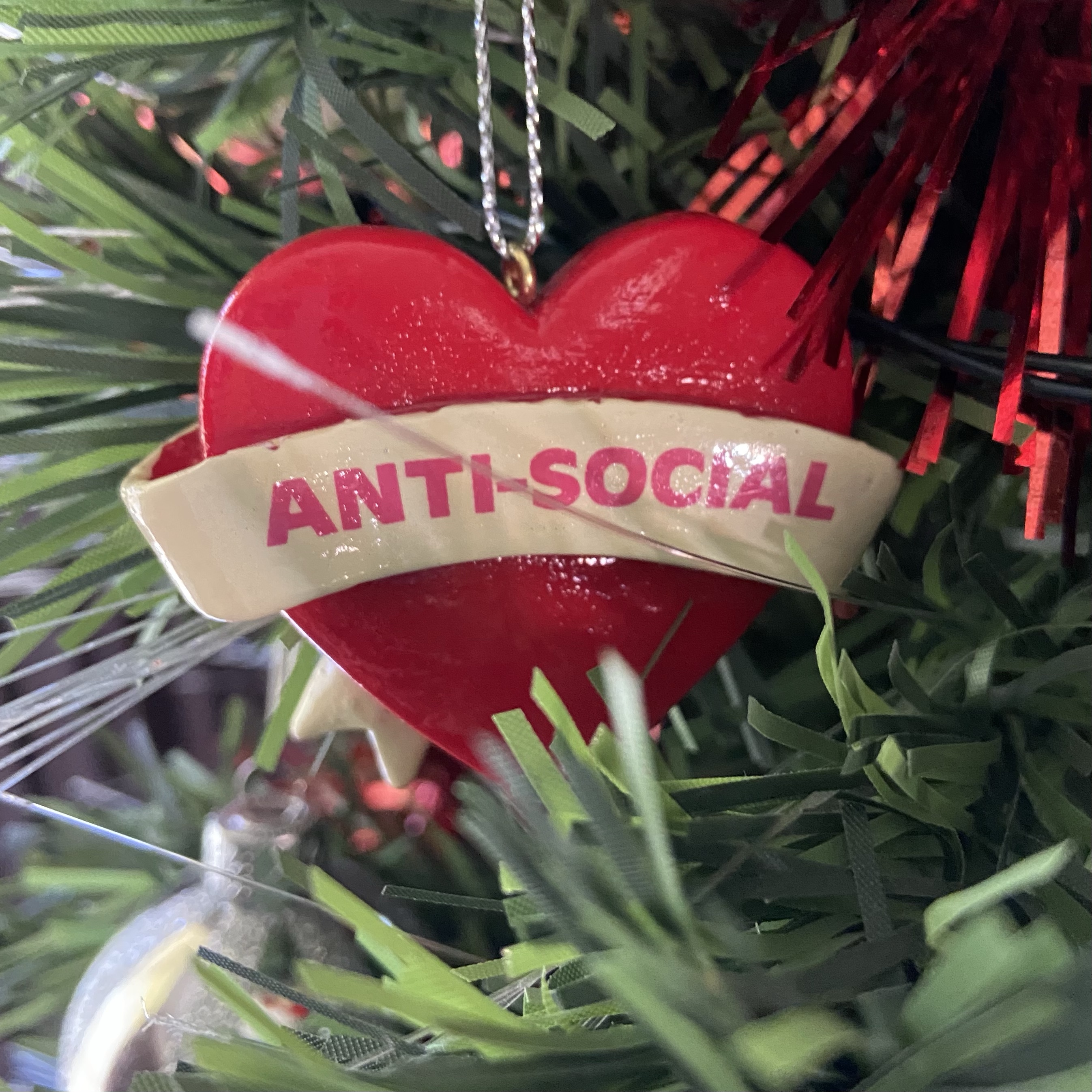
Hence my choice of new Christmas decoration, hung lovingly on my tree in honour of the mess that 2020 has been.
It’s fair to say I enjoy this bauble far more than I have enjoyed this year.
My comment yesterday that I was playing songs full of snow even though I live in Australia generated some interest in what Christmas is like here, so I thought I might share a little about how Australians celebrate Christmas.
I’ve got some of the gifts wrapped and under the tree.
Many of our traditions are the same as everyone else’s. We sing the same songs, send Christmas cards, decorate with Christmas trees, tinsel, wreaths and lights, and hope that Santa will visit and leave us gifts. We have Christmas music in all the shops and soppy Christmas movies on TV.
There are a few key differences though.
Christmas happens in summer here. When we sing ‘Let it Snow’ and ‘White Christmas’ it’s wishful thinking— usually because it’s ridiculously hot outside. My little Canadian spruce is decked with tinsel and fairy lights, but it will probably never see snow– at Christmas, or at any other time of year.
Because it is summer, kids are on their long break between one school year and the next. Term 4 finishes sometime in the middle of December, and the kids return to school sometime toward the end of January.
This gives people the opportunity to more easily travel longer distances to visit family, or to spend Christmas near the beach or in other desired locations. While this certainly happens in other countries, Australians have made a time-honoured national tradition of ‘going away for the Christmas Holidays’.
Some of the traditional Christmas songs like Jingle Bells have been rewritten to reflect Australian conditions, and we also have some of our own songs that probably aren’t sung anywhere else, except for maybe New Zealand. Many of these are less well-known now than they used to be, partly because our culture is significantly led by American and British influences, partly because their lyrics and subjects are outdated, and mostly because they were ridiculously hard to sing.
Many of us still have traditional Christmas food like turkey and ham, but we’ll often have salads on the side instead of hot vegetables. Some people barbecue steaks and other meats instead, while others opt for seafood for Christmas dinner. The traditional Christmas pudding is often accompanied or even replaced by cold desserts like cheesecake, trifle or iconic Aussie desserts like pavlova or chocolate ripple cake.
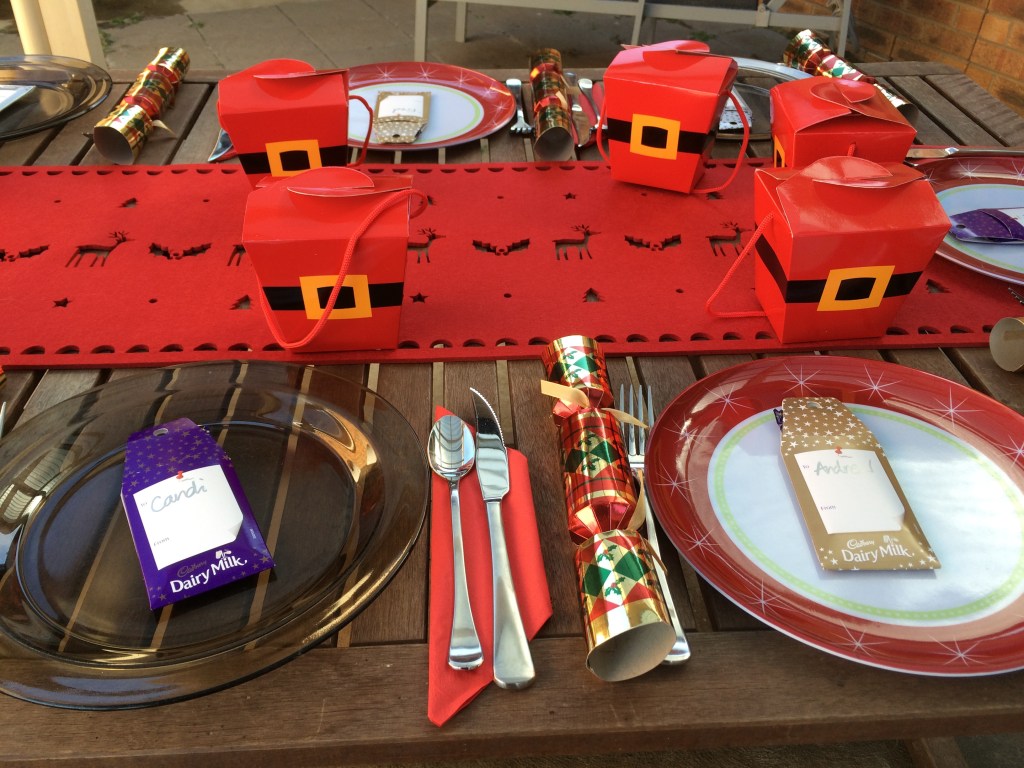
It’s still a day for family and friends, but lots of Australians spend Christmas or Boxing Day gathered at the beach or by the pool. Christmas meals are often eaten outdoors, hopefully under cover or in the shade. It’s not unusual for Aussies to enjoy their post-Christmas-dinner nap in the cool of the air-conditioning or in front of the fan.
Our Christmas table setting last year, in our outdoor courtyard.
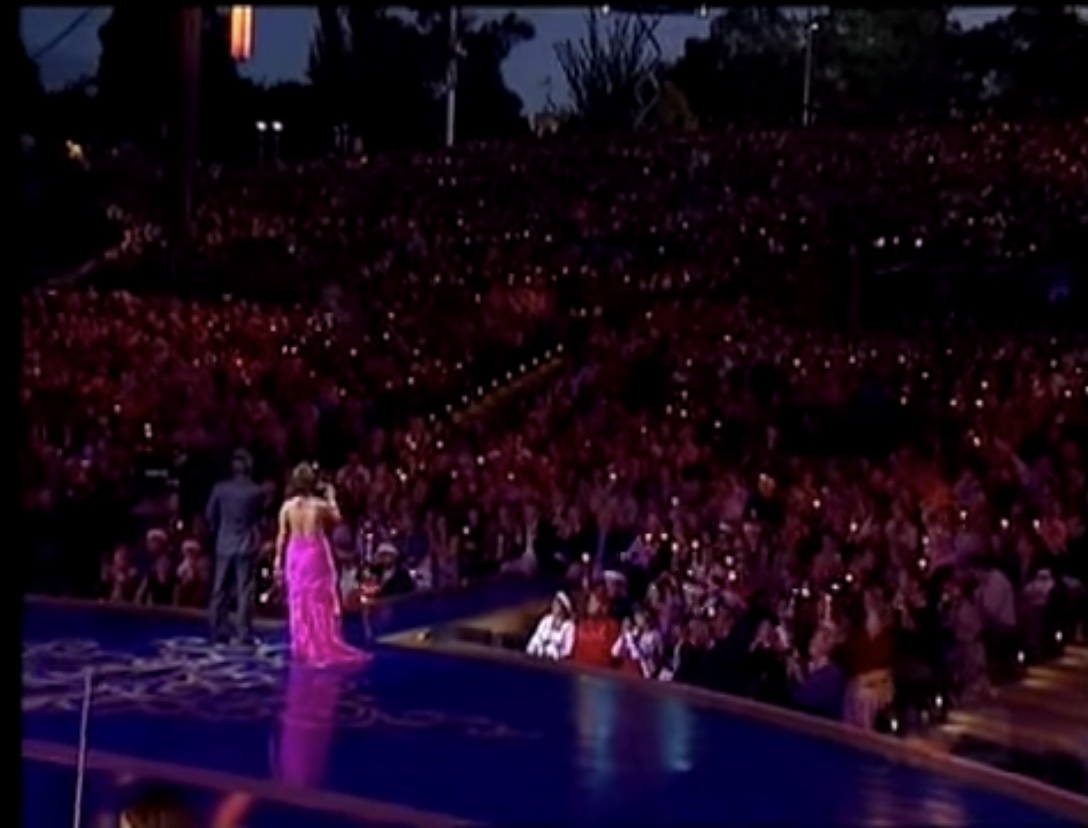
One of my absolute favourite Australian Christmas traditions is Carols by Candlelight. Crowds gather outdoors, often picnic style, and sing Christmas songs together. There are local events all over the country, but there is also the nationally televised showbiz charity event held in Melbourne on Christmas Eve every year. Santa usually makes an appearance, as do various celebrities of TV and the music industry who, supported by a band, an orchestra, and premium choirs, entertain and delight the nation.
Because of Australia’s longitude, we start our Christmas Day while most of the world is still full of anticipation on Christmas Eve. Only New Zealand and some small Polynesian nations of the Pacific Ocean start their Christmas before we do.
While the rest of the world is waking up to Christmas morning, Australians can often be found gathering outdoors again for a game of cricket in the back yard, or another dip in the pool or at the beach.
On the 26th, many Australians will tune in to the Boxing Day Test Match— also cricket— on the TV or radio, broadcast from the Melbourne Cricket Ground where up to 100 000 dedicated fans attend the game in person for each of the five days scheduled for the match. Don’t let that surprise you – we’re a sports-mad nation, and the cricket lovers among us are as dedicated as any.
After all the excitement of Christmas, things settle down for a day or two before we get the barbecues out and gather together again to celebrate New Year’s Eve.
I had my Christmas playlist on in the car. I defamed of a white Christmas with Frank Sinatra , I shared a grown-up Christmas list with Michael Buble, and then it happened. ‘Christmas Without You’ by Human Nature began to play. I held it together for the first verse, but I also knew it was time to pull over. There would be no driving through the rest of the song.
I couldn’t even play the whole thing. I had to turn it off because the big, ugly, messy cry was already just about out of control.
Knowing Christmas this year will be spent without two people I love dearly is hard. I’ve had to consciously motivate myself to do the shopping, put up the tree and hang the tinsel. This is highly unusual for me: I am generally a big kid when it comes to Christmas. . Buying and wrapping gifts is fun, but even that brings its own reminders of whose presents won’t be under the tree.
I will keep on playing Christmas music, but I have edited my playlist for this year. I have taken that song out, along with Blue Christmas, Please Come Home For Christmas, and All I Want For Christmas Is You. There will be fewer sad songs and more bells, reindeer and snow along with baby Jesus and the angels.
I will do my best to enjoy Christmas with my loved ones. I will drape tinsel over the broken bits, and perhaps keep some spare strong tape handy in case I come unstuck again. Bring on the merry and the sparkles.
Most people, though, have never heard of dysphemism, which is the opposite practice: using harsh or negative terms in place of neutral or positive language.
To refer to dying as “passing away” or “graduating to heaven” is euphemism. To refer to it as “kicking the bucket” or “carking it” is dysphemism.
To refer to having a cold as “being under the weather” is euphemism. To refer to it as “having the plague” is dysphemism.
English is full of examples of dysphemism. What’s your favourite? Alternatively, is there one you really dislike?

 My father grew up in Holland during the Depression and World War II. His family were not really poor, but neither were they rich. My grandfather worked very hard to provide for his family, and both he and my grandmother managed their resources carefully.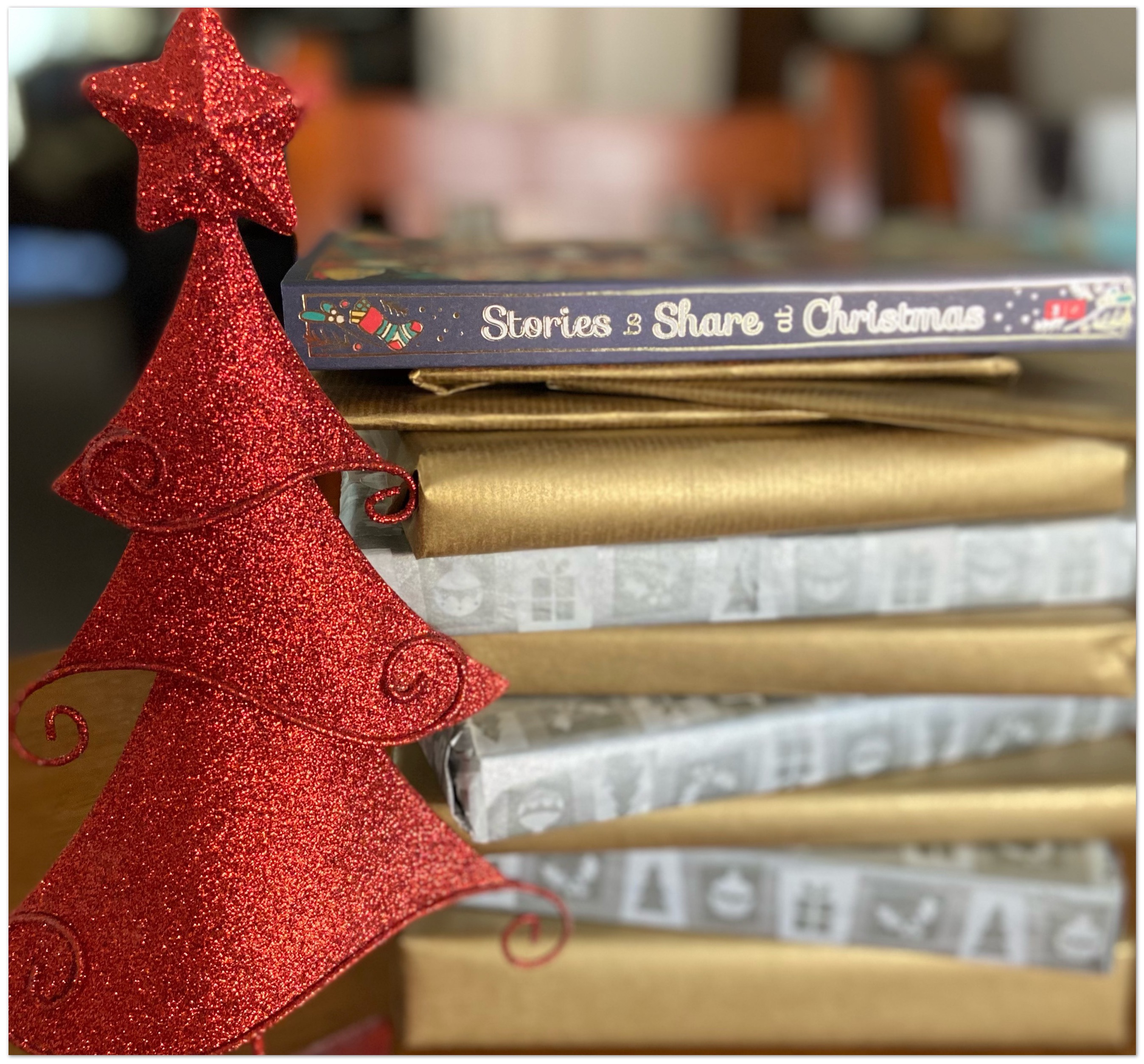



 WordyNerdBird