Six 21st Century Poets You Should Be Reading.

Six 21st Century Poets and Why You Should Be Reading Them.

I’m the first to admit that I’m fussy about the poetry I read. I want to experience something moving and powerful in a unique style. I want imagery, colour and movement. I want depth, and I want to be able to feel and hear the poet’s soul. It may be considered “old-school” by some, but I still want to find the music of rhythm and rhyme among the various techniques that a poet uses to deliver their ideas.

So, when I tell you that these are the poets you should be reading, please understand that this is not just a nod to people I like or who have pretty book covers. These people don’t just write poetry— they are poets, and they take their craft seriously. These poets can really take a reader beyond themselves, open a reader’s mind, and influence them so that they see things in a completely new way.

These Six 21st Century Poets You Should Be Reading are not listed in any order of preference. If you want to explore their work further, simply click on the cover of each book.

Lyra Shanti

Author of ‘Sediments’.

Lyra Shanti Sediments

Shanti’s poetry is rich and sensory, full of imagery that draws the reader into the emotion and wellsprings of the poet’s mind.
Drawing on mythological themes and elements of Biblical allegory, although it is by no means religious poetry, Shanti explores her place in time, relationships, and the universe through themes of belonging, human vulnerability, equality, and home. She is a master of contrast and balance, weighing sensitivity against images of those things that overwhelm, and confidence in belonging despite her humility, framed within a very real sense of awareness of the immeasurable breadth and depth of the universe.


Patrick Williams
Author of ‘Lethal As Love’.
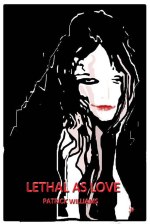
Patrick Williams Lethal As Love
Patrick Williams’ poems are beautiful in the simplicity and honesty of the feelings they convey, even though the feelings they communicate are at times complex and conflicted. There is no pretence or affectation in Williams’ writing, nor is there any strict observance of rhythm, rhyme or other particular poetic techniques. Instead, he uses language and form to evoke a strong sense of love and longing that is almost tangible as he leads the reader on a journey through the highs and lows of the love he so powerfully communicates in these poems.
Some of this poetry is quite erotic, so it’s definitely only for an adult audience, but there’s nothing gratuitous or tawdry about it. One could learn quite a lot about how to love deeply and sensuously from reading ‘Lethal as Love’, but there is also a more sombre lesson to be heeded: nothing lasts forever.  It is clear from ‘Lethal as Love’, though, that the pleasure and passion were definitely worth the pain.


Sarah Northwood
Author of ‘The Truths We Tell’.
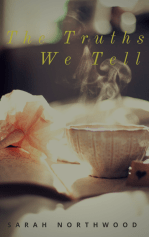
Sarah Northwood The Truths We Tell
Sarah Northwood gives voice to thoughts and feelings commonly experienced, but often not so thoughtfully expressed, by people in all walks of life.
Northwood explores the ways in which we respond to the situations and feelings that challenge us and those things that fill and complete us. The reality of being haunted by regret and the “what ifs” of life is contrasted with the whimsy of fleeting happiness and the irresistible, transforming power of love.
Through all of this is the reminder that life is what it is: “Feeling the breeze on her cheek she knew, the wind can never be the sun.” (Unique)


Joseph Ferguson
Author of ‘Reflections of a Scurvy Bastard’

Joseph Ferguson Reflections of a Scurvy Bastard
Ferguson writes with a very strong sense of realism and a degree of world-weariness in his profound poems that work like snapshots of different events and memories. He has a gift for creating vivid images that transport the reader to another time and place, and making it seem absolutely real.
When Joseph Ferguson’s poetry is recognised as ‘classic’ and he is regaled world-wide as a master poet, it shall come as no surprise to me.


Shelby Leigh
Author of ‘It Starts Like This’
Shelby Leigh It Starts Like This

Leigh’s poetry is thoughtful and often intense in its exploration of love, loss, anger,   loneliness and grief, and is highly relatable for anyone who has experienced the breakdown of a relationship or been let down by someone they trusted.
Her poetry and expression are accessible and easily understood, and Leigh’s imagery is often quite stark and raw, but that is where her strengths as a poet lie.


Joanne Van Leerdam 
Author of ‘Leaf’, ‘Nova’, ‘Stained Glass’ and ‘The Passing Of The Night’. 


Yes, that’s me, and those are my own books. Obviously, I write the type of poetry I want to read. Don’t take my word for it, though – I have compiled this description with quotations from different Amazon reviewers. 

“Joanne Van Leerdam is a master poet who combines an old-worldly feel to her poetry with a modern flavor.”
“Joanne Van Leerdam’s poems are about the emotional fragility of human existence, about the brittleness of love and about living with love lost. She expresses both the sense of frailty and the strength of resilience in her reflections, as if a lonely survivor on a faraway island.”
“Many of her poems are conventional in structure, with a regular rhyme scheme, traditional yet so sensitive and vulnerable that they emerge as special, standing out like novae in the vast night sky.
Her poems don’t crash through the door, flourishing their creative uniqueness, but in a quiet voice Van Leerdam almost whispers to us to let her poems come in as she both exposes the emotional pains of life and provides comfort for them.”
I’d love to know if you are encouraged to try any of these poets’ works, and if you do, what you think of them. You’re always welcome to leave a comment on this, or any other, post. 

April is National — or, more correctly, International Poetry Month.

Poetry Month is a great opportunity to enjoy great poetry.

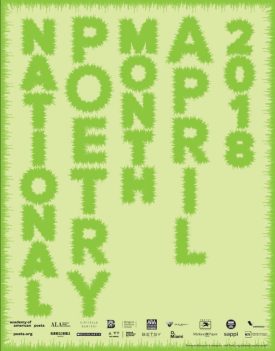
npm_2018_poster-e1520635983486

National Poetry Month started as a national celebration in the US back in 1996 as an initiative of the Academy of American Poets but has become something that is celebrated more and more internationally, with not just publishers but bookstores, schools, libraries, and poets themselves joining in the celebrations. As you know, I’m a poet, so I’m absolutely in favour of all of that.

As the month progresses, I’ll be sharing some of my poems with a bit of context about why they were written and how I went about crafting my initial idea into a poem that delivered the message I wanted to put out there.  I’ll also be sharing some of my favourite poems that I’ve loved for a long time, and introducing you to some new poets that you may not yet have heard of.

If you’re not into poetry, don’t worry – my blog posts won’t be exclusively poetry related. I hope to share some more insights about writing and social media for authors, too.

To encourage you to get involved in small ways, I have compiled a list of ten ways in which you can celebrate Poetry Month this April. Choose one, or choose all– it’s up to you.

  1. Read a poem that is new to you.
  2. Memorise a poem, or part of one.
  3. Support a poet by following their blogs or websites. Follow my blogs – here and at WordyNerdBird Writes where you can read my new writing, including recent poems and one or two from each of my books.
  4. Support a poet on social media by following and sharing their posts. I’ll be posting some more suggestions in the coming week about where you might like to start, but for now, my social media links are at the bottom of the post!
  5. Support a poet by buying a book of poetry. I’ll be posting some suggestions in a day or two, but you can check out last year’s suggestions here! They’re all really good.
  6. Participate in the Dear Poet project, even if just by enjoying the fantastic videos on the website.
  7. Subscribe to Poem-A-Day, where you will receive a brand new poem  and some insights from the poet each day.
  8. Put the National Poetry Month poster image on your social media, website, notice board, shop window or anywhere else you think it might make a good impression.
  9. Write your own poem for someone special.
  10. Listen carefully to songs on the radio. You might be surprised how many of them are poetry set to music.


Follow me on
FACEBOOK |TWITTER |INSTAGRAM | GOOGLE+TUMBLR | GOODREADS | WEBSITE

Have a safe, happy and Bookish Easter!

Two great book events this Easter weekend.

There are two great book events this Easter weekend that readers should be keen to join in.

I’m not for a moment suggesting that people set aside any religious observance, be it of Passover or Easter or another festival. Each of these book events can be enjoyed individually and privately at home, whenever it suits individuals to join in.

I would also like to take this opportunity to wish you a most enjoyable holiday weekend, whether you’re religious or not. We know there are more people on the roads, so please stay safe!


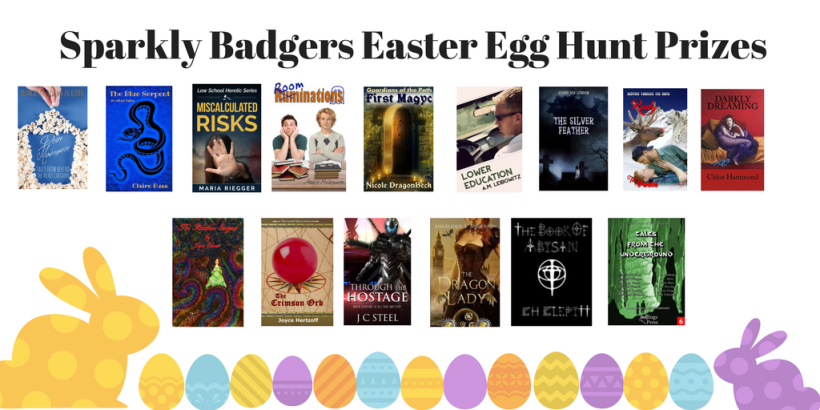
Sparkly Badgers’ Easter Egg Hunt.

This event runs all weekend. It has been organised by a sensational group of Indie authors known universally as The Sparkly Badgers— they’re very good friends of  Book Squirrel, with whom all readers of my blog should be familiar by now. In all honesty, it’s much easier if you just accept that there are bookish forest creatures, and move on.

How it works: Follow the trail of mystery eggs from website to website, and collect the clues. Answer the question at the end successfully, and you win a prize.

Sparkly Badgers Egg Hunt

One contestant will receive a copy of each of the books shown below and an actual chocolate egg.

All contestants who successfully complete the quest will receive their choice of one of the books offered by the Sparkly Badgers, who are not only brilliantly talented but also incredibly generous.


Hopping Good Reads. 

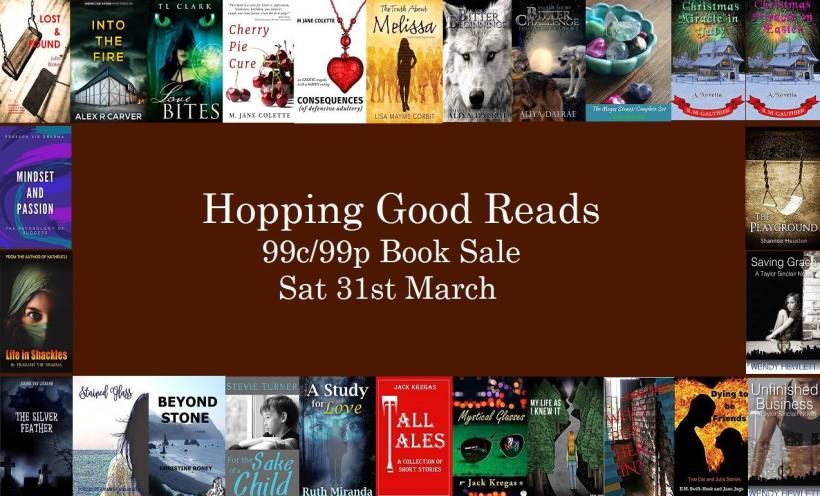
On offer are a range of excellent books, in different genres, and by different authors from the Indie Coffee Lounge Facebook group. Every book listed is only 99c, or 99p if you’re in the UK.
That means you can fill up your Kindle or Kindle app with great reads at bargain prices.

This event runs on Saturday, March 31st, only.

Click either image to head over and start browsing.

29570414_1642181405817430_5166177684410600435_n

The books are listed with information about their genre and recommended audience.

Take a look at the great books in this promotion! From poetry to mystery, romance to horror, there’s something here for everyone.

29258578_1630922286943342_5812180522129948672_o

My books – Stained Glass and The Silver Feather – are already both 99c, and I know some (although not all) of the others are, too. So if you’re busy all weekend, you could even start early!

Be sure to follow all the authors on Twitter so you can keep up with all their latest news and adventures in writing:

Enjoy!

Nine Things You Can Do With A Bookmark – Without Actually Putting Your Book Down!

When you don’t want to put your book down, here are nine great uses for a bookmark.

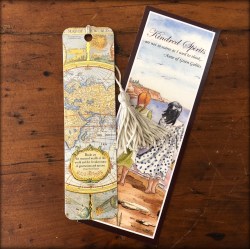
Using a bookmark to keep one’s place in a book when putting it down is common behaviour for readers.2018-03-06 17.31.19

Some, however, do not like to put the book down. It’s far more preferable to just keep on reading right to the end. I’ve been known to lose all track of time, and on more than one occasion I’ve forgotten to eat. It’s probably a good thing I wasn’t reading ‘War and Peace’ at the time.


When you don’t want to put your book down, here are nine great uses for a bookmark:

1. Mark a beautifully written sentence or passage.

2. Keep the place of a quote you want to use.

3. Save the location of a favourite event or conversation in the story.

4. Provide sensory pleasure by playing with the tassel while you read.

5. Fan yourself when the weather – or the story – warms up.

6. Shield your eyes from artificial lighting, or from the sun if you’re reading outdoors.

7. Swat at flies or mosquitoes that might be tempted to buzz or bite while you’re trying to read.

8. Lure someone — parent, sibling, best friend, or significant other, for example– into thinking you haven’t actually been reading all day when there were other things you were supposed to do, by tucking it about 20 pages previous to where you’re currently reading.

9. Hold it up as an unspoken barrier between yourself and anyone who might try to interrupt you. Pretend that it deflects any sound they might make, so that you can just keep on reading.


©2018 WordyNerdBird

Books, Authors, Double Standards and Snobbery.

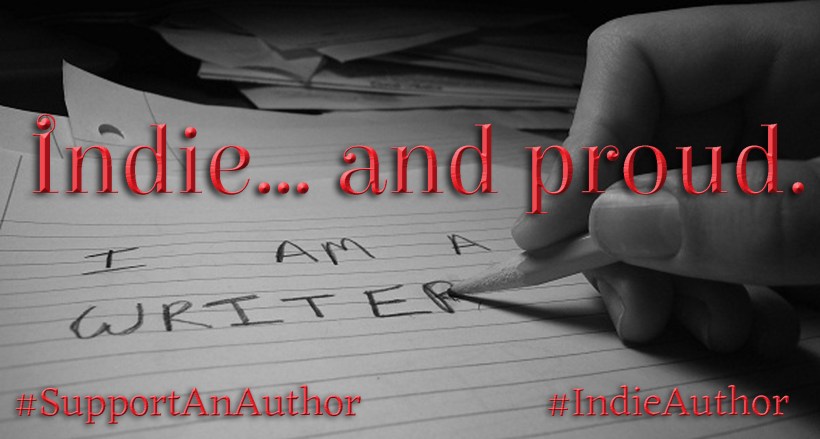
There remains a commonly held view that all Indie books are somehow sub-standard. This perception could not be more wrong.

angry-2191104_960_720

I am perpetually frustrated by the disdain that many have for Indie authors. Indie artists, musicians, and filmmakers are applauded for daring to step out, break the mould and do their own thing in defiance of the industries that are perceived to have grown too big, too powerful, too rich.

Nobody hesitates to go to a doctor or lawyer who owns their own practice. People don’t think twice about having their car serviced by a mechanic who runs a local garage. They’re independent practitioners within their industry, too. Let’s face it, there are some shonky ones out there – in any industry – but they are the vast minority, and their behaviour should never be used as the yardstick by which all others are measured.

So why is the double standard against Indie authors still not only acceptable, but so widely endorsed?

woman with bookI won’t deny that I’ve picked up two or three books that I just couldn’t finish because they were either poorly written, poorly edited, or just not very good at all. But two or three out of more than 150 is a very small percentage, where the others have consistently ranged between very good and excellent quality in terms of both writing and production.
Having been an avid reader all my life, it’s also true that I’ve read – or rejected – a number of books that weren’t so great in the traditionally published world, too. Some I just couldn’t get into – even among the most famous and widely commended are certain ‘literary greats’ whose writing I just don’t appreciate. There are also traditionally published books that remain popular among less discerning readers and sell quite well, despite the fact that the writing and/or story lines really are… well… rubbish.

I’ve read almost exclusively Indie books for more than a year. I am continually impressed by the originality of the stories, the high standard of writing, and the depth of creative talent. I’ve posted countless book reviews for these books, and have shared my appreciation of both books and authors far and wide, because those books deserve to be read and appreciated.

Having been an avid reader all my life, I’ve read – or rejected – a number of books that weren’t so great in the traditionally published world, too. Some I just couldn’t get into – even among the most famous and widely commended are certain ‘literary greats’ whose writing I just don’t appreciate. There are also traditionally published books that remain popular among less discerning readers and sell quite well, despite the fact that the writing and/or storylines really are rubbish.

Indie authors are, more often than not, Indie by choice. For many, the first foray into traditional publishing has ended up being a very negative and traumatic experience. For some, their publishers have closed down, leaving the author without their rights, unpaid and unable to sell or market their work. Other companies have published books and then done nothing, leaving them to languish in obscurity unless the author does their own marketing.

Sure, that hasn’t happened to J.K. Rowling or George R. R. Martin. People need to understand, though, that they are the exceptions, not the rule. That kind of success doesn’t just happen for everyone who writes a fantastic book or series, and it’s well-established fact that it almost didn’t happen for Rowling either.

Last week, I saw someone comment on social media platform in a most derisive tone that “traditional publishers won’t touch anything that’s been self-published”. My response was that it’s their loss. And when it comes to my own work, they’re not welcome to.

Like many others, I choose to be Indie because I control my own intellectual property, I retain my legal rights to my work, and I earn the royalties for my books. My hard work is not lining the pockets of some faceless company that pays a small fraction of the earnings of a book to the author and gets fat on the rest, without actually doing much in the way of marketing or promotion. Marketing and promotion is really hard work, there’s no doubt about it. But if I have to do the schlepp work anyway, why would I let someone else have control of my work? And I can take pride in the fact that I have earned every review, every award, and every cent, on my own.

In the end, I choose to be Indie because there is nobody in this world as committed to my books or my career as an author than I am.

It’s time we got rid of the double standard that celebrates Indie music and art, and which takes pride in supporting local and artisan businesses, but considers Indie books and authors to be something less than their traditional counterparts.

Indie authors are doing their part by writing and producing excellent books.

Readers are doing themselves a gross disservice by accepting the kind of intellectual snobbery at the heart of this double standard. I’m confident they will be more than pleasantly surprised when they finally choose to set prejudice aside and find out what they’ve been missing out on.

Promo Indie And Proud


Serendipity: When Things Just Happen Really Nicely… For Once.

One of the things I really love is when, for even just a brief moment, my favourite things in the world converge.

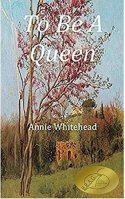
There are a number of things in life that I’m passionate about. British history, especially the medieval period, has always been my favourite for reading and study, as have the works of Shakespeare, along with a good number of other writers.  A teacher by profession, I love interacting with my students and leading them to those golden “penny drop” moments when something becomes real and meaningful. I have always loved reading. And as an Indie author who understands how hard it is to find readers, and how much harder than that it is to get reviews, I’m committed to reading, reviewing and sharing great Indie books of all genres.  Annie Whitehead To Be A Queen

I was very excited recently to discover, read and review an Indie novel about the life of Aethelflæd, the Anglo-Saxon queen. To my absolute delight, it was well-written and beautifully told. I thought then that several Christmases had come at once.

Now, less than a month after posting that review, it’s happened again, and I find myself at a quite magical point in time where my passions have met and over lapped,  as though life has popped me into the middle of some invisible but very cool Venn diagram.

I’m currently teaching Shakespeare’s ‘Richard III’ in one of my senior English classes. Not only is the writing and language incredible – there are curses and insult exchanges galore, along with some great monologues – it’s also the one with the hunchbacked evil genius who usurps the throne and has himself crowned king, the princes being murdered in the tower, and a fabulous haunting scene! The historiography of the play may be fairly tenuous, but the audience is left in no doubt of the creative genius of the writer.  All of this means that I am getting paid to be an absolute nerd about the language, the writing and the history, all at the same time. That in itself is pretty darned great.

ScreenHunter_439 Feb. 21 23.43

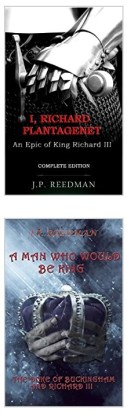
Tonight, though, as I was browsing through the Wordpress reader, I found an article about a great new Indie novel about the life of Henry Stafford, known in Shakespeare’s play as Buckingham, the ally and “other self” of King Richard III. When I went to a renowned global digital bookstore to check it out, I discovered the same author has also written a novel and several other books about Richard III.

That may not seem very exciting to some, but for me, it’s fantastic. I get to teach ‘Richard III’, indulge myself in Shakespeare and history to my heart’s content, and to read and review a couple of Indie books about two of the most fascinating characters in the play – and possibly in English history, it could be argued – at the same time.

My nerdy little mind is blown. I think I need to go and lie down.


Give books, not flowers!

Give Books, Not Flowers!

#Feb14th
#InternationalBookGivingDay

book-giving-day-facebook.jpg

Everyone knows February 14th is Valentine’s Day, but did you know it’s also International Book Giving Day?

Apparently, that’s been a “thing” for several years now. The first I heard of it, though, was earlier today when I saw a post – one post – on Twitter. Why have I never heard of this before? Why aren’t bookstores and publishers worldwide promoting this? Why have I been conditioned all my life to hope for a rose or a card that usually doesn’t materialise, when I could have been my own best friend and presented myself with a book instead? That, my friends, is absolute rubbish!

An international day for giving and receiving books is an idea that really appeals to me on so many levels.  In just five minutes, I came up with these reasons why books are better than roses, chocolates, and drugs:

Books don’t die like flowers do.

Books don’t make you fat or mess with your blood glucose like chocolates do.

Nobody judges you for showing off your new book on social media.
(Unless, of course, you’re an author and you wrote the book, in which case people complain because you’re somehow pressuring them to support you or asking them for money, which just isn’t the done thing, despite the fact that you’ve supported their careers in plastic kitchenware, fancy saucepans, designer linen ware, boutique underwear, party plan beauty products, and whatever other blarney they’ve asked you to buy. But that’s different, and I digress. And I’m not jaded, okay?)

You can stay home with a book and consume it as greedily as you wish without losing any respect.

Books are budget friendly. Do you have any idea how many books you could buy for the price of a bunch of long-stemmed roses in the middle of February?

Books are an investment in your mind and your soul.

Books are an investment in an author who will be more than happy to write more books for you to enjoy. It’s the ultimate gift that keeps on giving.

Books provide the most budget-friendly and instant escape from reality available to humanity.

Books won’t land you in rehab.

There is no law against driving with stories, ideas and knowledge in your system.

Not bad, eh?

So, what are you waiting for? Get out there and give someone you love, or yourself, a book.

Support An Author 3


If you’d like to suggest more reasons why books are better gifts than flowers and chocolates, feel free to leave them in a comment. 

My Favourite Escape.

When life takes an unexpected turn, there is no better place to escape than into a book.

What a week!

It was the first full week back at school with students after the summer break. New students, new classes, new schedules, new demands.  Not only was I ready, I was keen! I was determined to get through the week without falling in a heap.

The first day was great.

Then, just after recess on Wednesday, I got a call from my local medical clinic. My elderly father was unwell – again – and was on his way to hospital in an ambulance. Everything stopped except my mind: Is this it? Is this the beginning of the end? Must let the others know. Must tell the boss that I have to leave work. Must keep breathing. Can’t breathe. Okay. One thing at a time. Call the boss. Explain. No – don’t fall apart now. You don’t have time. 

I got to the hospital half an hour ahead of Dad because I work in town and the ambulance had a 45 minute trip, plus some road works to negotiate. I completed the necessary paperwork for him, and sat down to wait.

Waiting rooms suck on a major level. You sit there, surrounded by other people’s pain and misery, feeling alone and fearful, and trying to keep everything under control in your own overactive imagination – it’s quite some challenge.

reading-wonder.jpegSo while I sat and waited, I took refuge in a book. It didn’t stop me from looking up every time an ambulance rolled in, wondering if that was Dad being wheeled in. It didn’t stop me checking my phone and answering messages and questions from my siblings. But it did give me somewhere to go.

For the six and a half hours that I sat by Dad’s bedside in the Emergency Department, with medical questions answered and initial treatment under way, I escaped back into the book whenever I could. Dad knew I was there, but he wasn’t up to conversation. Reading someone else’s story kept me from focusing on my own, and it kept me from being overwhelmed by the flood of emotions that threatened to sweep me away while witnessing the pain and distress of my increasingly frail father.

After a somewhat tearful journey home, I thought I might be exhausted enough to fall asleep as soon as I got to bed. Nope. No such luck. Yet again, it was a book that came to the rescue. It didn’t put me to sleep, but it did relax me enough to be able to rest.

Taking refuge in a book is something I have often done in the troubled times of my life. Over the past couple of years, that has taken the form of both reading them and writing them. There are times, though, when I can’t write because the pain and fear is actually too close to think about at that level of depth. Wednesday was one such day.

Thursday was a blur of medical consultations, visits with various physical therapists, and further tests for Dad. Thankfully, at the end of all of that, I was able to bring him home again. It will take time for him, and for me, to recover. There will, undoubtedly, be further moments when I feel the need to make the world around me stop by escaping into a book.

Today, I’ve tried to catch up on the things I’ve let slide over the last few days. I haven’t quite managed yet to pick up all the threads again. I use Buffer, so my Twitter feed has kept on rolling, but many other things, including my writing, are at a standstill. Social media has only had the occasional cursory glance. I’ll get there – but not today.

For now, I’m thankful that Dad and I both survived the week, and that things are starting to return to normal.

And to the authors who continually craft such brilliant stories for me to escape into: thank you, from the bottom of my heart.  Your gifts mean more to people than you realise.


Women in Horror: 10 Authors You Should Read

I’m going to do you a favour and introduce you to ten women authors who write great horror.

Horror as a genre is as varied as any other. While everyone raves about Stephen King and Ann Rice – and there’s no doubt, they are what horror writers would aspire to become – it doesn’t mean that anyone who writes differently, or in a less mainstream sub-genre, isn’t worth reading.

Over the past year or so, I’ve read some fabulous horror books and stories by women who were new to me at the time, but they have quickly become some of my favourites.

Don’t worry if you haven’t heard of them before – I’m going to do you a favour and introduce them here. All you need to do to find their books is click on the author’s name.


Jane Jago is a multi-genre author whose novel ‘Who Put Her In?’ has a delicious, slow build and some finely crafted moments of horror. If you’re new to reading horror and unsure of how intense you want it to be, this book would be a great starting point.

D.J. Doyle writes horror stories that are often based in Celtic legend and religion.
Where to start: The Celtic Curse: Banshee


A. Drew
is the author of The Dowling House, a story of haunting and possession.

Nikki Landis writes both paranormal romance and horror. There’s even a little horror in her paranormal romance books, so it’s a win-win if you like both genres.
Where to start: Reaper’s Folly


Fiona Hogan writes  beautifully crafted contemporary Gothic stories.
An additional advantage to her story collections is that they’re great for busy people who don’t always have time to delve into a whole novel.
Where to start: The Nightmare
Lucretia Stanhope writes both paranormal romance and horror.  Another win-win for people who enjoy both genres!

Where to start: Beating Hearts


A.M. Rycroft
is the author of dark fantasy novels and some excellent horror short stories.  Again, these are great for someone with limited time available for reading.
Where to start: The Clearing


Lily Luchesi writes paranormal novels as well as some horror.
Where to start: Never Again

Logan Keys writes both dystopian and horror books.
Where to start: Unhinged.


Joanne Van Leerdam writes both poetry and horror, although only occasionally does she write both at the same time.
Where to start: The Silver Feather
Okay. This is my book. But there are no rules against self-promotion!

There are also some great horror anthologies available, in which you’ll find a great range of stories and styles, with something to please everyone.


Beautiful Nightmares        Ghostly Writes         Damsels Of Distress

WiHM9-GrrrlLogoWide-BR-L

Calling All Romantics!

Attention: Romantics. This is for you!

Happy_Valentine's_Day...!

In addition to being Women in Horror Month, February is also celebrated worldwide as the month of love. Valentines Day is the most popular day for declarations of love, marriage proposals, fancy dinners, and gifts of long stemmed roses and chocolates.

We all know, though, that these things aren’t really what love is all about. It’s way more complex, and far more frustrating, than that.

I’ve been privileged to be part of a group of authors who have collected excerpts about different aspects of love from their books into ‘All About Love’ an online magazine, completely free for all readers, which is available now for your reading pleasure. I’m not someone who enjoys reading a lot of romance, especially if it’s clichéd, but I’ve enjoyed reading this magazine because the pieces are varied and interesting, and have been drawn from different genres and styles of writing.

If reading about love and romance doesn’t interest you, feel free to keep scrolling past. We won’t be offended. But for all the romantics, the dreamers, the lovers and the hopeful folk out there – this one’s for you.

ScreenHunter_437 Feb. 04 12.23

We hope that you enjoy this collection, and that you find some great books in there that you’d like to read in full.

Enjoy!