My granddaughters and I were sitting on the floor of their pink-painted cabin at the bottom of the garden. I had evicted yet another invading spider and, while the youngest sat on my knee, her almost-five year old big sister was sprawling in the pink armchair.
The three of us had been playing. I had pushed little Imogen on her swing until she giggled with joy and had chased Hollie around the garden, swinging her up onto my shoulders and teaching her to stand on her head in a fairly unorthodox manner. Somehow, small children make you forget the aches and pains… at least until next morning when you try to move again.
By this point though, we had settled down in the playhouse and eaten a meal of chocolate-dipped worms and green slimegrobbels with custard… a menu chosen by Hollie and lovingly prepared by the…
I’m always a bit lost for words when people remark that history is boring. Not because I have nothing to say— far from it— but because I know they are never going to be anywhere near ready for the conversations I want to have with them.
I accept that in the past, some teachers have been guilty of making history very, very dull, but it was not the history that was boring: it was the teacher.
I’ve had some of my own students question, “Why do we need to learn about this? How am I ever going to use this in real life?” My responses vary depending on the topic at hand, but they are consistently positive and enthusiastic about how interesting and inspiring history can be.
I have recently discovered two new examples to offer to students or friends who complain about history.
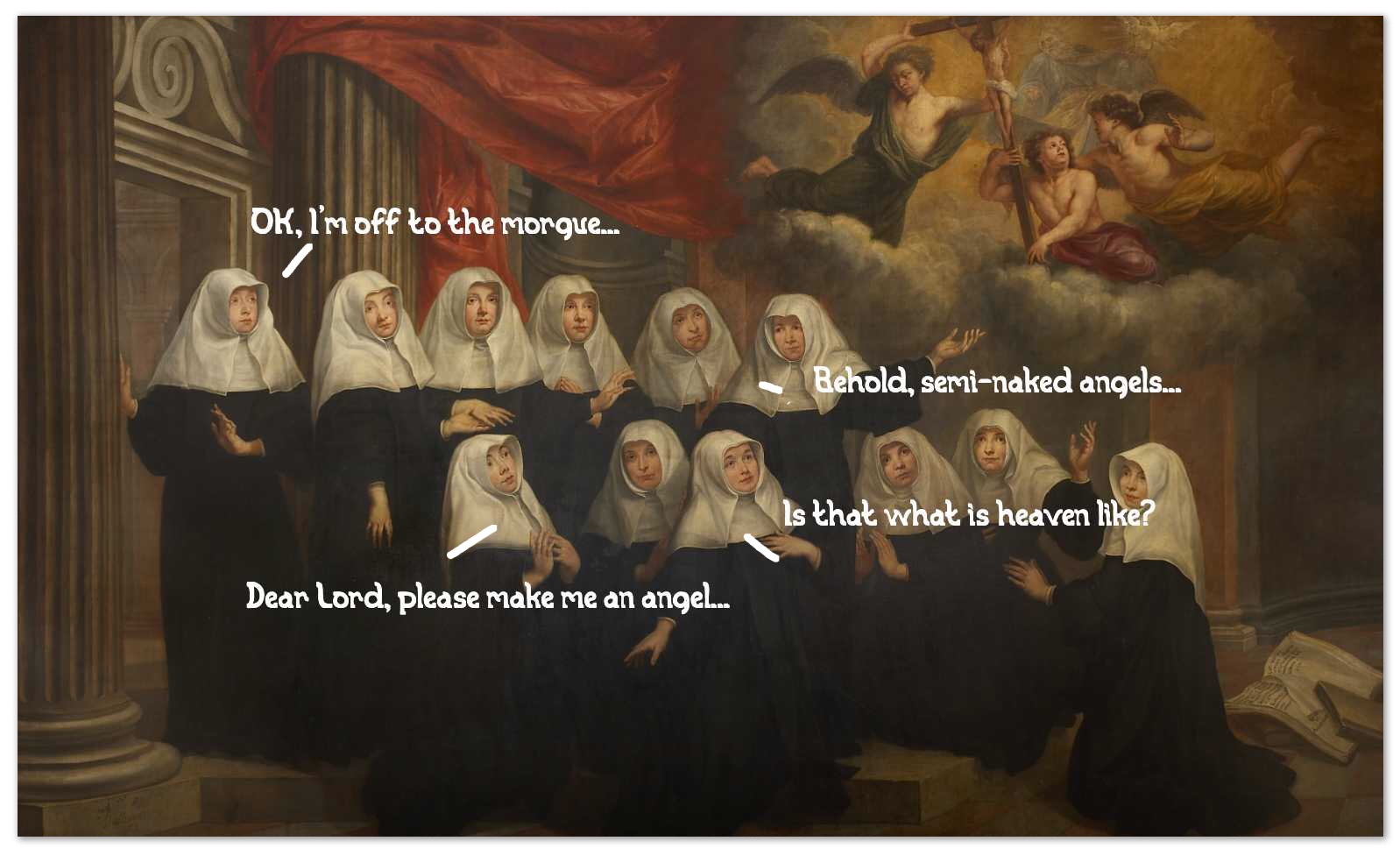
A week or so ago, I read a story of a 14th century nun named Joan who faked her own death to get out of the convent she was living in. How’s that for dedication?
Apparently, she wasn’t the only one who wanted to escape either. Having studied medieval history and knowing the lifestyle adhered to by monks and nuns of the time, I can’t say I blame any of them.
Faking your own death is definitely taking it to the next level, though, so I feel that Joan deserves a bit of recognition and applause for her commitment to the performing arts.
Original painting: Jan Van Helmont Portrait of the Sisters of the Black. Public Domain The clever edits are my own.
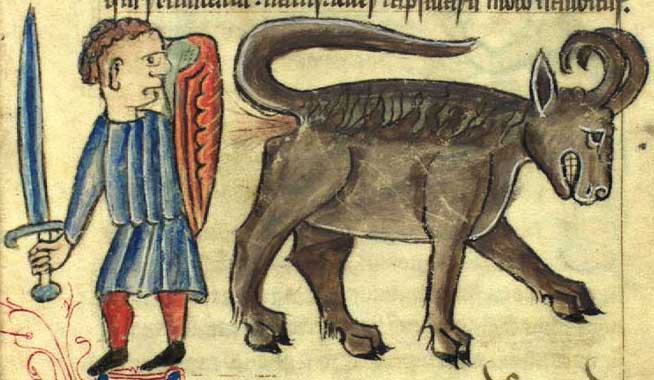
I now know more about this amazing creature than my friends will ever think beneficial. You can bet I’m going to tell them all about it, and I know my Year 9 boys are going to love it, too. I almost can’t wait until they complain again, so that I have a good reason to get the story out and share it.
Seriously, take a look at this beast. This picture from a medieval bestiary, or book of animals, portrays this particular bonnacon as being rather pleased with himself and his toxic poop. He’s never going to be sorry.
For Shakespeare Sunday this week, I want to share with you the wonderful work of cartoonist Mya Gosling at Good Tickle Brain.
Mya takes the vast works of Shakespeare and condenses them into cartoons that even those with very little knowledge of Shakespeare can read, understand and appreciate.
For Shakespeare nerds like me, it presents a lot of fun and great “oh yeah!” moments. For those new to the plays or wondering what on earth the characters are saying and doing, Mya’s cartoons make the complex much more straightforward.
This website contains a wealth of play summaries, character spotlights, analysis and audience insights. I frequently share Good Tickle Brain with my students because it really does help to make whatever play we are studying more accessible and relatable for them.
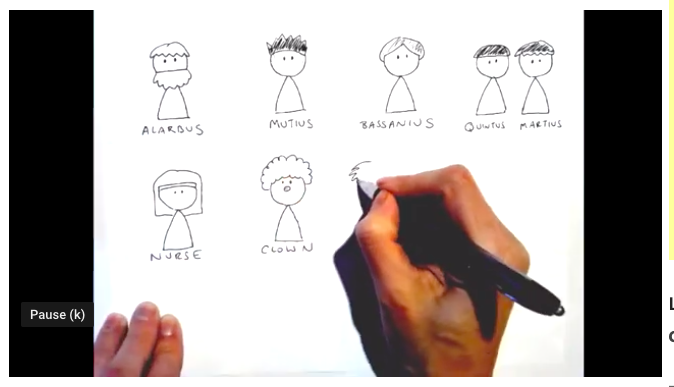
Even if you haven’t seen or read the play Titus Andronicus — and let’s face it, most people haven’t— make sure you watch the video titled ’Titus Andronicus: All The Deaths’. The way she draws all the characters and then depicts how they died in the play is brilliant!
Also incredibly insightful is the non-Shakespeare section titled ‘Keep Calm and Muslim On’, which is Mya’s exploration of the way in which Muslims and non-Muslims get along together in American society, which I find highly relevant to Australia too. I always enjoy seeing the simple but profound ways in which Mya breaks down the barriers and embraces the differences while still showing how similar we really all are.
It’s a great website that holds lots of fabulous little surprises. I really hope that you’ll take a look, and I hope that you enjoy it as much as I do.
I discovered this post on the abooknation today. It reminded me of starting my own book blog, although my reasons were slightly different.
Like this blogger, I have always been an avid reader, but it was really only when my first book was published that I began to understand the true value of a review for an author.
It’s really the only feedback you get from readers.
A negative review can crush your soul until you think about the fact that you haven’t liked every single book you’ve picked up, either. Sometimes it’s a matter of taste.
A thoughtful review helps you improve your writing and motivates you to keep going. And if someone praises your work, it’s incredibly satisfying and fulfilling because you know you’ve connected with a reader’s soul.
The fact that such a small proportion of readers leave reviews does not really surprise me, because I had never done so before, either.
Once I recognised the need for reviews of Indie books, I saw that this was an opportunity for me to use my love of reading to help other Indie authors by leaving an honest, constructive review.
Thus, Book Squirrel was born.
After developing my confidence with book reviews, Book Squirrel’s blog extended to include author spotlights and interviews, book events and, recently, a range of integrated Indie book promotion services.
I love blogging about books and supporting other Indie authors. I enjoy giving back to the Indie author community and showing others how positive and proactive Indying is done.
Book Squirrel brings me, and others, joy. And that is the best reason ever to keep going.
I’m not sure if I’ve actually ever mentioned why I got into book blogging but if I did I don’t think I made a blog post about it so… HUR WE GOO:
I’ve always loved reading but I feel like I went through phases where I went on a bit of a (very) long slump until I read a book that hooked me back into reading! I’m someone with the shitest memory, even now when someone asks me for book recommendations I have to skim through my posts to jig my memory of what books I’ve read. So around 4/5 years ago when I got back into reading, I had no idea that book blogging was a thing, I thought why would anyone want to hear my rambling thoughts about a book I’ve read??????
Whenever I finished a book I would write up a review and literally just leave it…
If you’ve been following my blog for any amount of time, you’ll probably know that when I’m not blogging, reading or writing, or strutting my stuff on stage in musicals, I’m a teacher.
Teaching is demanding and tiring and stressful, but I am always up for a great booknerdy discussion with my students, who I happen to believe are some of the coolest kids on the planet. That is one of the parts of my job that I really love.
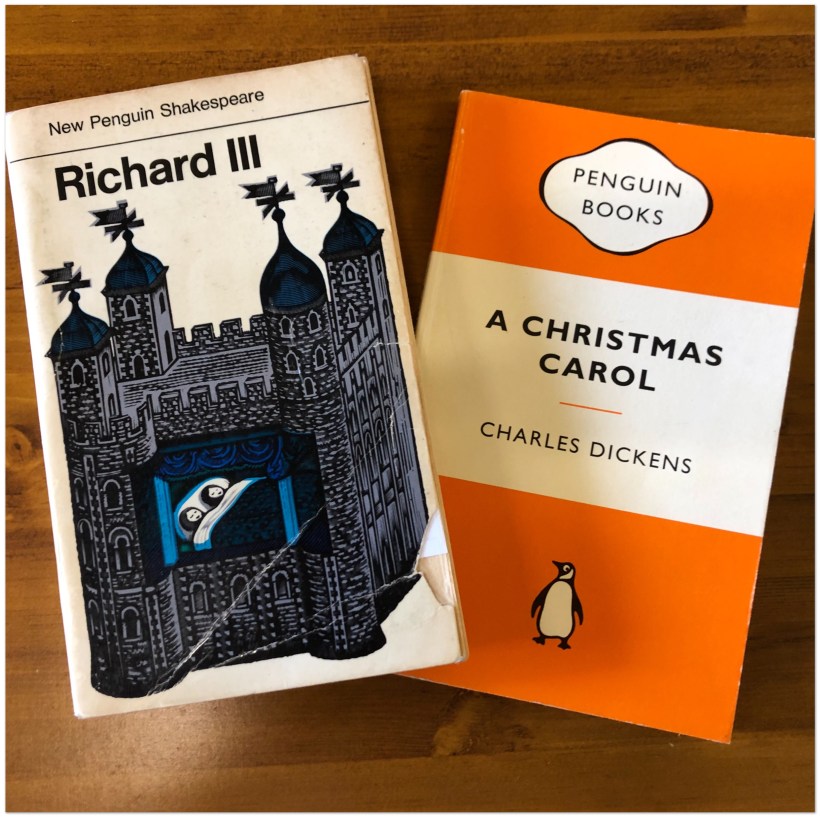
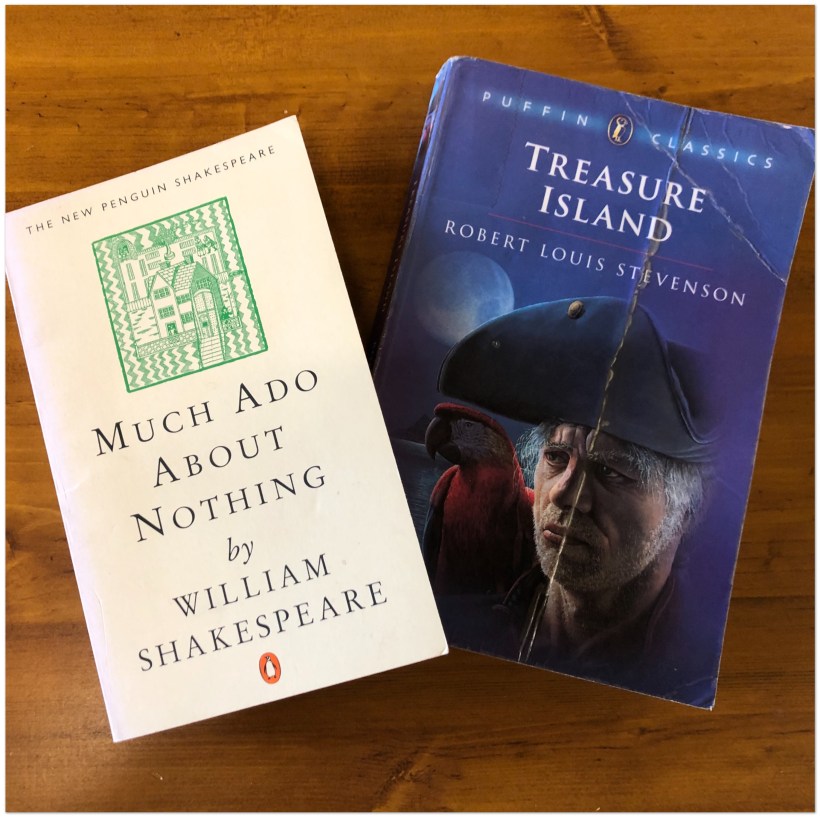
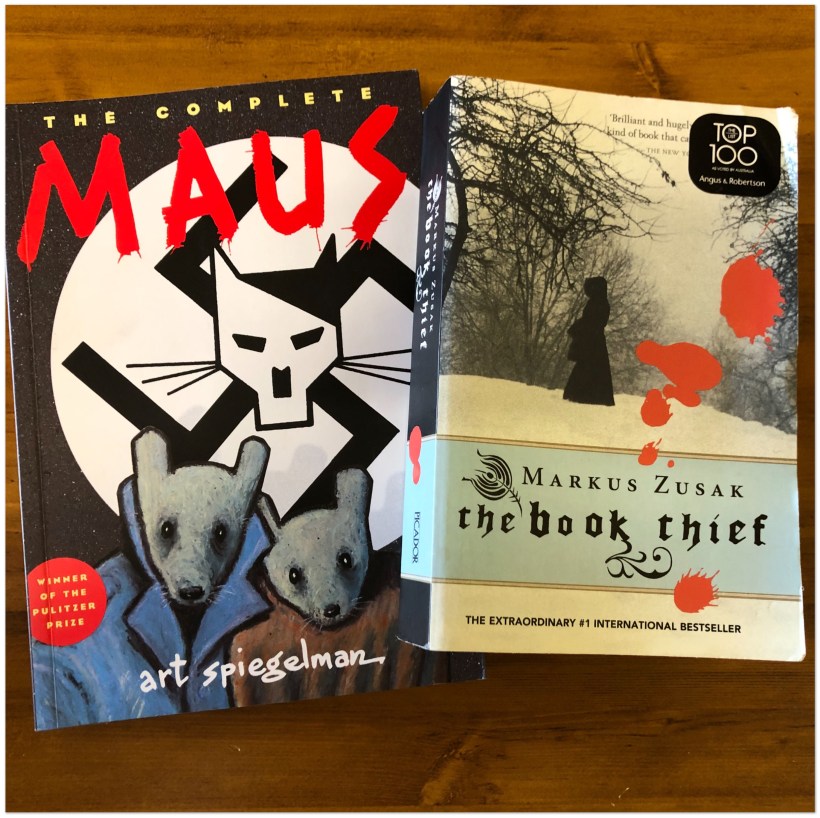
The fun continues this semester. I’m excited to be teaching four more texts I really enjoy. My Year 9 English class are going to study ‘Much Ado About Nothing’ and ‘Treasure Island’. My Year 11 English class will be studying ‘The Complete Maus’ and ‘The Book Thief’.
Teaching teenagers can be a tough gig sometimes, but it also has its perks.
If you had a teacher you liked, I’d love to know what it was about them that appealed to you or inspired you.Leave a comment and inspire me!
It is a constant source of amusement to me that barely a day goes by without someone reading a post I wrote over two years ago. As hard as I try to write posts that are interesting and engaging, and have some relevance to either readers or other authors the one post that shows up in my blog stats almost every day is ‘Top Four Shakespeare Podcasts’, posted in June 2017.
While I have had some posts that got a great response at the time, othing else I’ve published on this blog has had that kind of perpetual popularity,
The funny thing is, it’s only got three likes, but more people than that visit that post every day. Perhaps WordPress needs to make the “like” button bigger and brighter so that it’s easier to see and click.
Given that it’s the most successful blog post I’ve ever written, I thought it was worth posting again for all the followers I’ve gained since then. Enjoy.
I love podcasts, and I love Shakespeare. In these four podcasts, you’ll find the best of those two worlds combined.
#1: No Holds Bard. An informative and entertaining podcast by Dan Beaulieu and Kevin Condardo, directors of the Seven Stages Shakespeare Company in Portsmouth, New Hampshire. They discuss the plays, words that people in the 21st century might not know, different interpretations, and various performances of Shakespeare’s plays. They even have a segment where they’ll answer homework questions sent in by students.
#2: Folger Shakespeare Library: Shakespeare Unlimited. A podcast that explores the associations between Shakespeare’s writing and the world today through the words we use, ideas we discuss, and performance of the works of Shakespeare and others.
A million authors writing to entertain others. A million poets bleeding their souls onto the page. A million people trying to help others. A million people who are actually loyal. A million teachers going the extra mile for their kids. A million people caring for someone they love.
It might be easy to get lost in the crowd. It’s easy to feel insignificant. One tree among a million in the forest, so to speak. But I know I am one in a million.
We all write and grieve and serve and give of ourselves differently. Each of us is unique. Each of us is a distinct blend of personality, talent and substance.
Not a single one of us is worthless.
I may not stand out among the million. I may never strike it rich or become famous. I may never be someone else’s ideal. I cannot be perfect.
The truth is, I don’t have to.None of us do.
What matters is the contrast with some of the other people on this planet: the hateful, the cruel, the greedy, the selfish, the power-hungry, the narcissists. What matters is that I stand against the things they accept. What matters is that I am true to who I am, to my priorities, my values, my faith.
What matters is integrity. That’s what stands out in this world.
That, more than anything else, makes me one in a million.
Today my brother, sister-in-law and I took our elderly and increasingly frail Dad out for lunch.
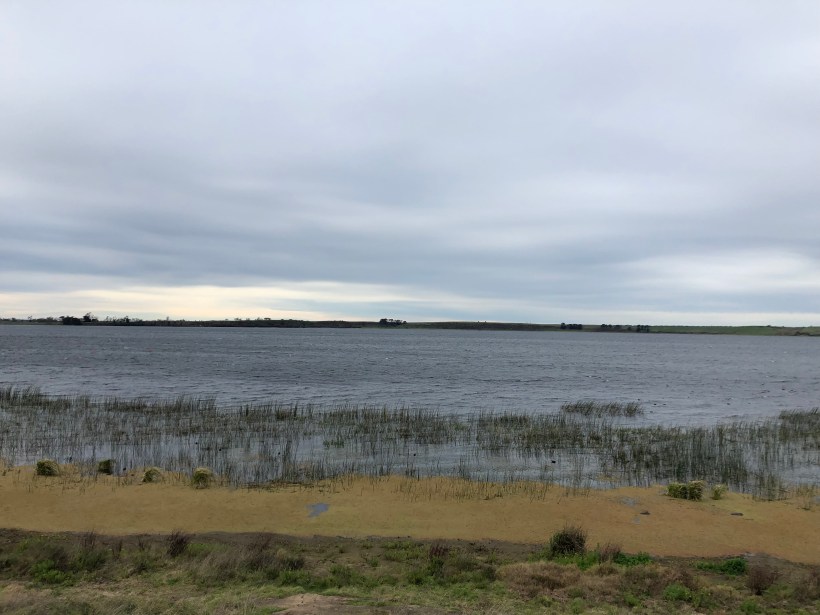
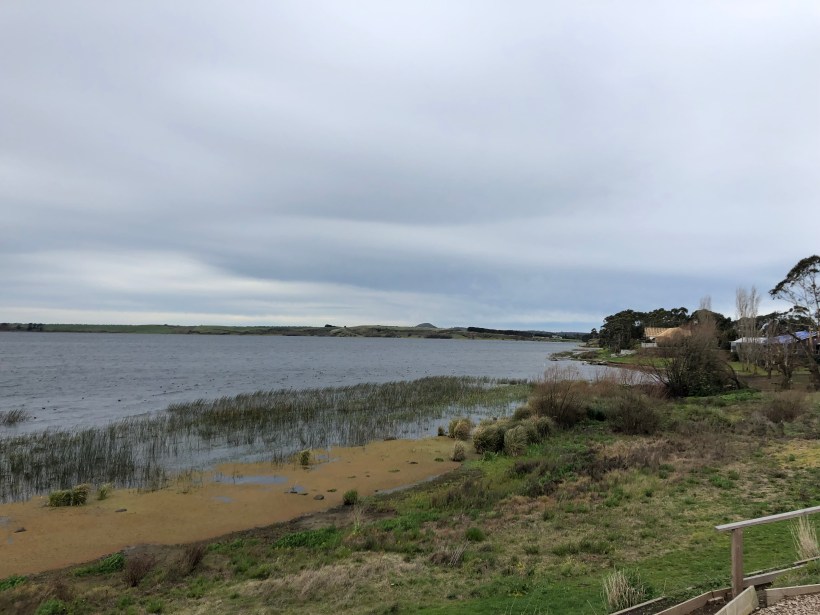
We went to one of our favourite local places: Lake Edge Cafe on the shore of Lake Purrumbete. The view is lovely in any weather, but it was nice and warm inside.
While we were waiting for our lunch, another family group came in and took the table next to ours. It looked to be a man around my own age, three boys, and the boys’ grandparents.
“Shall I tell you a bit about the menu?” the waiter asked.
“Could you wait a bit, please?” the guy responded. “My wife will be in in a moment… she’s just finishing the final few pages of a book.”
I smiled. Anyone who stays in the car to finish a book before lunch is my kind of person.
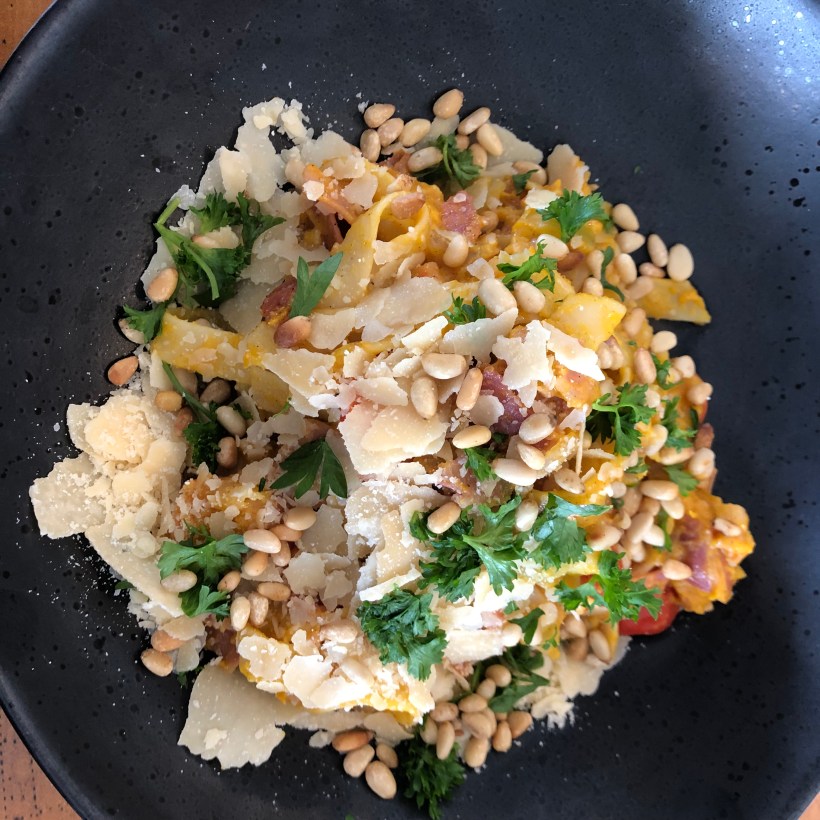
In case you were wondering, I ordered the pumpkin, prosciutto, pine nut and cherry tomato fettuccine. It was amazing.
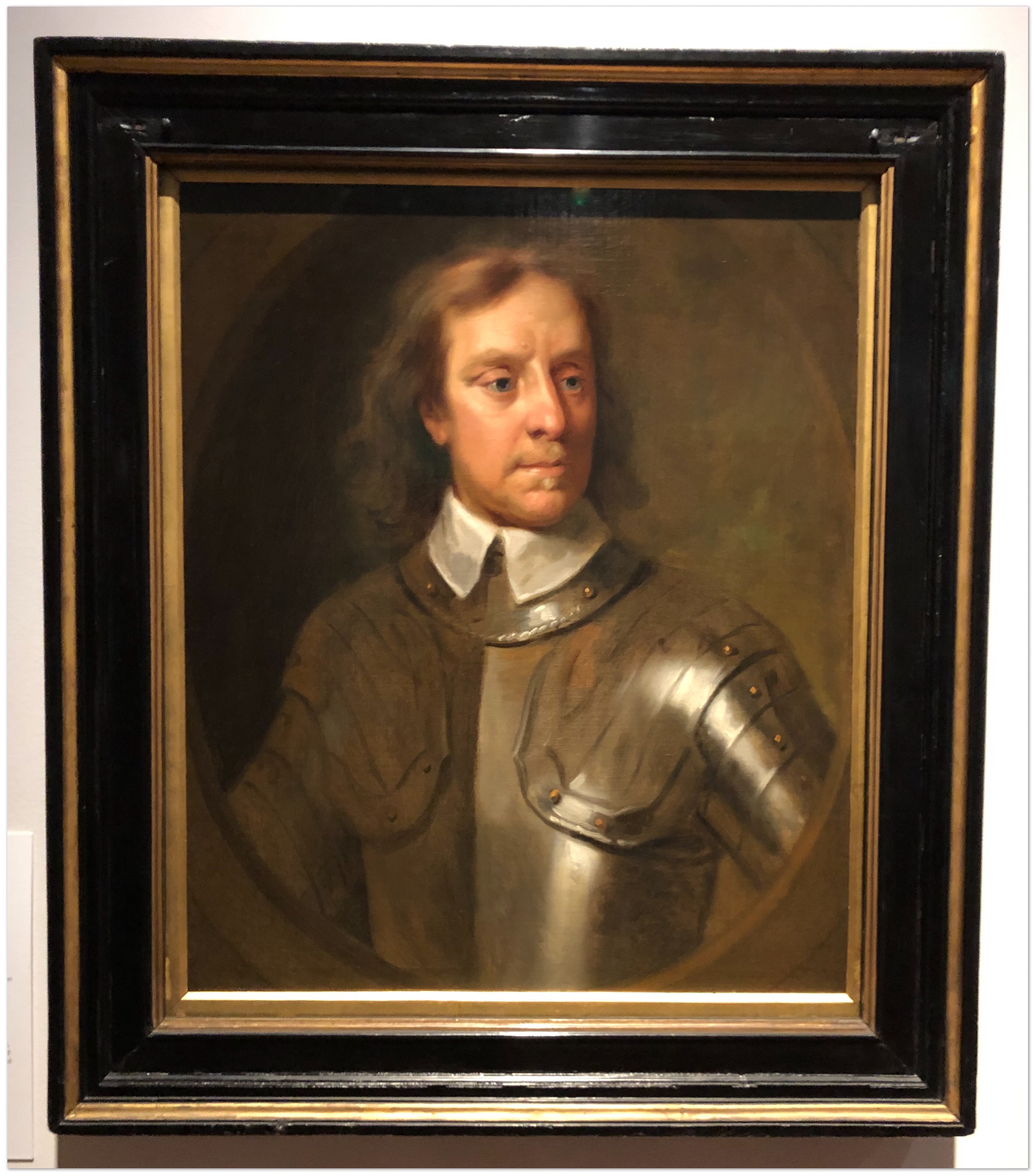
My friends and I were standing in front of a portrait of Oliver Cromwell at the Tudors to Windsors portrait exhibition at the art gallery in Bendigo. .
As I often do, I added my own commentary. In a posh English accent and lower vocal register, I quipped, “Look at me being all godly and humble and unroyal and stuff before I go and kill a bunch of people and destroy all the monasteries… you know, on God’s behalf.”
A well-dressed elderly gentleman had come to stand beside me. When I finished speaking, he added in a crisp, upper class accent: “Bastard.” He was not wrong.







 WordyNerdBird
