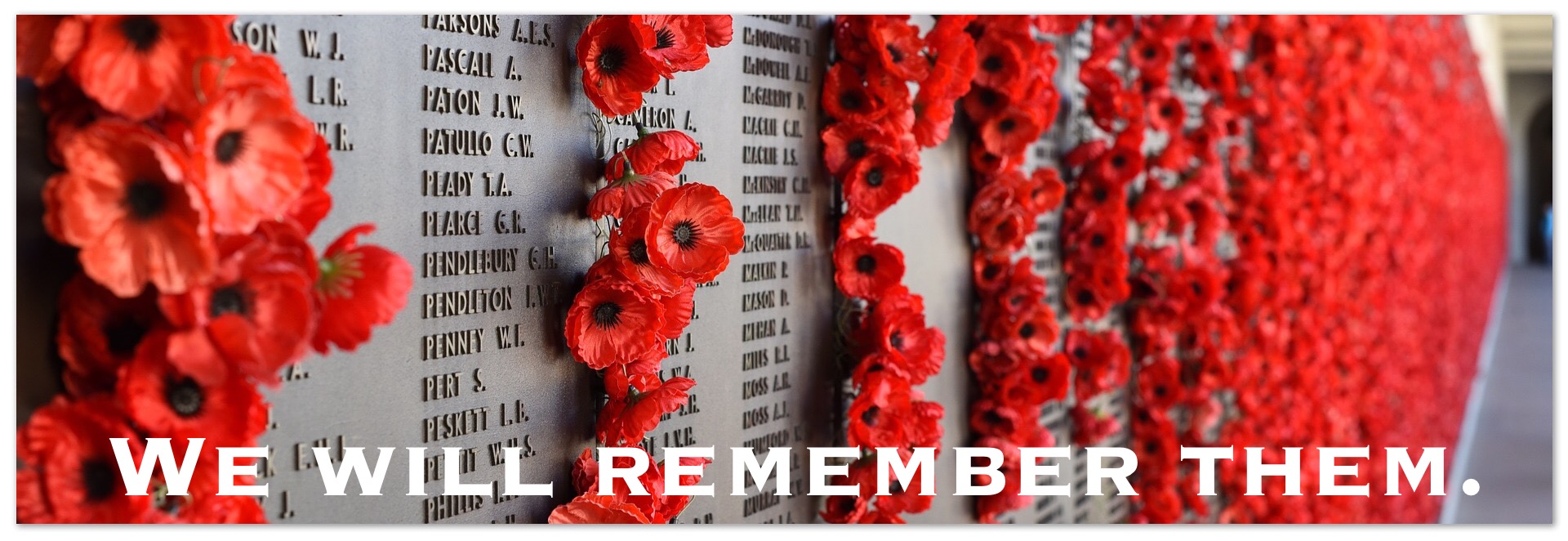
As my post about my local ANZAC Day ceremony generated a number of questions from around the world, especially via my social media posts, I thought I would follow it up with an explanation of the history and traditions of ANZAC Day.
This article from the Australian War Memorial explains everything very clearly, so I hope you enjoy it and learn a little more about your Australian friends through it.
101 years after the end of World War I, people all over Australia and New Zealand gathered today in remembrance of our soldiers, the nurses and doctors who supported them, and all those who served to preserve our freedom.
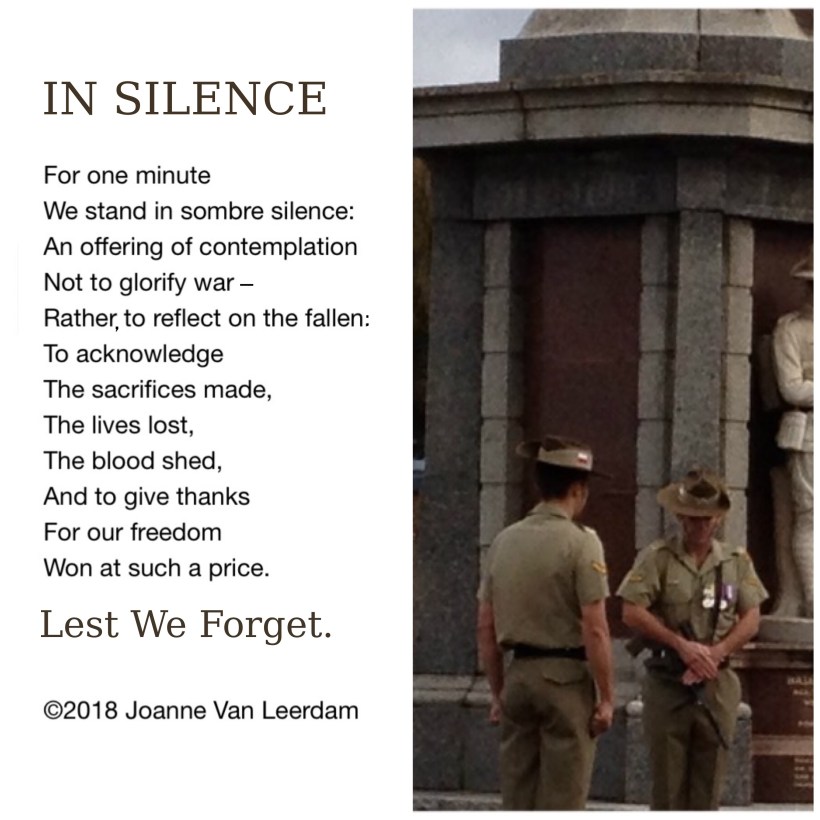
At our local ANZAC Day ceremony, I witnessed some lovely moments.
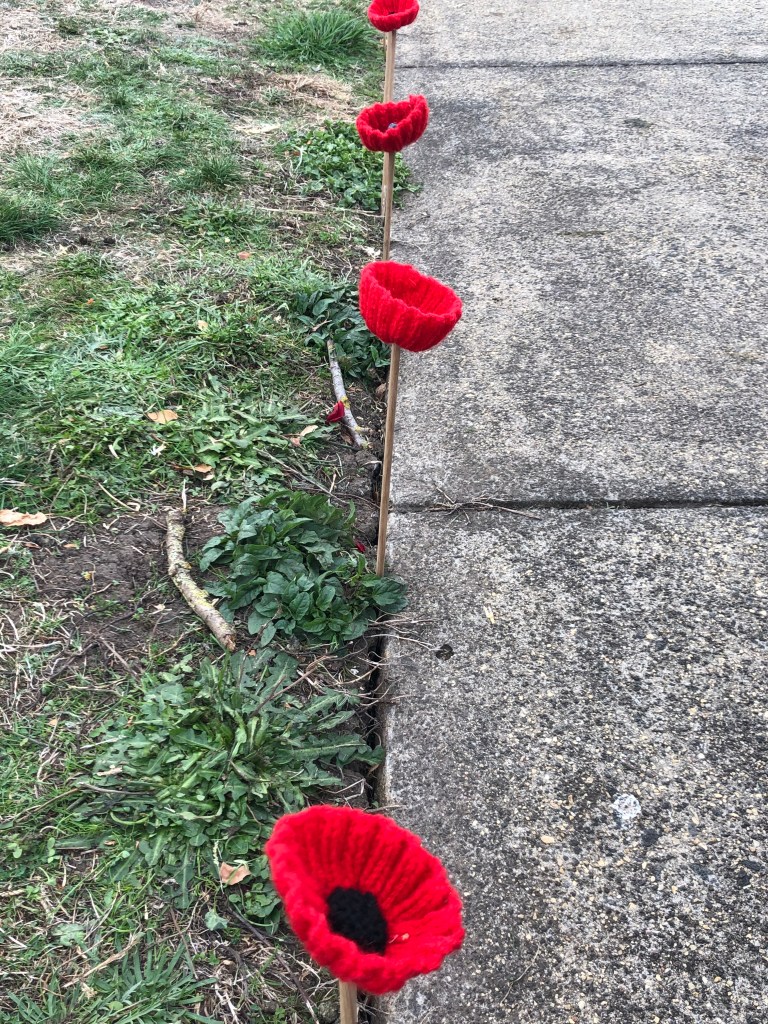
Members of the CWA had knitted poppies and used them to line the path to the cenotaph. They looked beautiful, but also served as a poignant reminder of those who had given their lives during the war.
Local men who had served stood proudly, wearing their medals. There are fewer of them each year, but their number was supported by the children and grandchildren of those who have passed, wearing their forebears’ medals with pride and reverence.
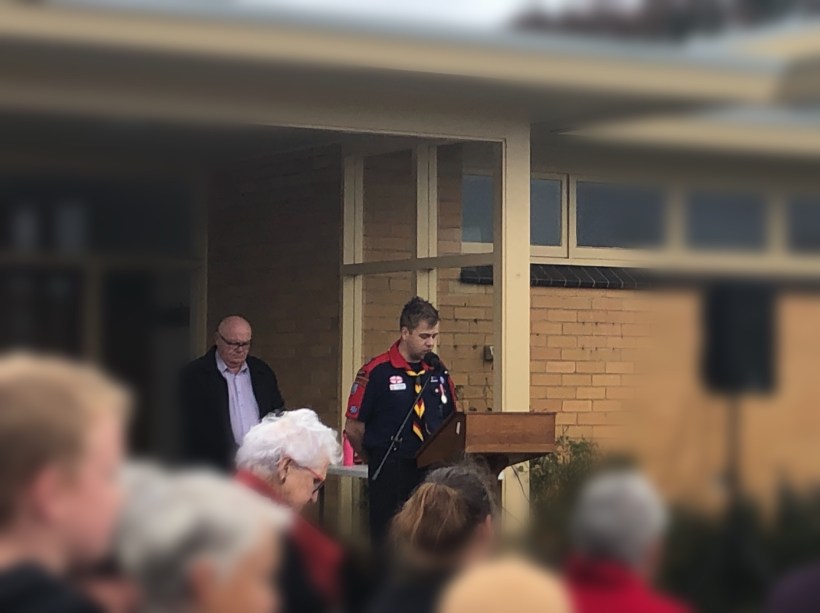
One of my own former students gave a beautiful heartfelt requiem for the fallen. He spoke so well, and really knew his history. He made me really proud.
An elderly gentleman standing near me bent down, took his restless young grandsons in his arms and explained to them why they needed to be quiet and pay respect. He then pinned his own poppy on one boy’s shirt. The smile on that child’s face as he stood quietly beside his grandfather for the rest of the ceremony was a wonderful thing to see.
Several young people of my town raised the flags of Australia and New Zealand to half mast and stood with their heads bowed during the Last Post and the minute of silence before raising the flags to full height and saluting them.
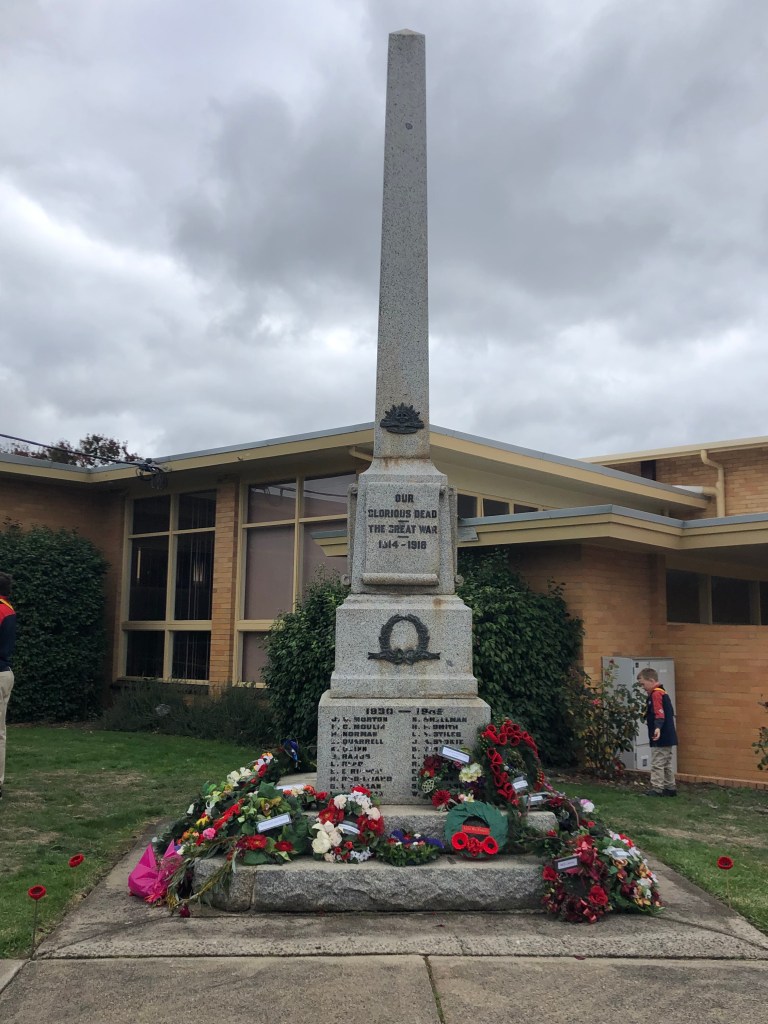
Over thirty local groups, organisations and businesses laid memorial wreaths at the base of the cenotaph. Young members of the local Scout group carried and laid wreaths for those who were too elderly or frail to do so, keeping pace with the older folk as they walked to and from the cenotaph.
A teenaged member of my theatre company sang the national anthems of both countries with reverence and pride. Everyone in attendance stood and sang along with pride. Not everyone knew the New Zealand anthem, but plenty of folk did.
After the ceremony, the local Scouts carried around plates of sandwiches and refreshments for the townsfolk who had congregated. Every single one of them said “Excuse me” before offering us something to eat. Every single one of them smiled and spoke respectfully.
I have no doubt that similar things happened in every locality across Australia at 11am today to commemorate all those who served to defend our country and preserve our freedom, because that is what Australians do on April 25th.
Last year during Poetry Month, I shared Paterson’s magnificent poem ‘The Man From Snowy River’. This year, I thought it would be good to share a city-dweller’s perspective of the Australian stockman’s life in the 19th century through another of Paterson’s much-loved works.
The Stockman by S.T. Gill (1818-1880) Public Domain.
Clancy Of The Overflow
I had written him a letter which I had, for want of better
Knowledge, sent to where I met him down the Lachlan, years ago,
He was shearing when I knew him, so I sent the letter to him,
Just “on spec”, addressed as follows: “Clancy, of The Overflow”.
And an answer came directed in a writing unexpected,
(And I think the same was written in a thumbnail dipped in tar)
‘Twas his shearing mate who wrote it, and verbatim I will quote it:
“Clancy’s gone to Queensland droving, and we don’t know where he are.”
In my wild erratic fancy visions come to me of Clancy
Gone a-droving “down the Cooper” where the western drovers go;
As the stock are slowly stringing, Clancy rides behind them singing,
For the drover’s life has pleasures that the townsfolk never know.
And the bush hath friends to meet him, and their kindly voices greet him
In the murmur of the breezes and the river on its bars,
And he sees the vision splendid of the sunlit plains extended,
And at night the wondrous glory of the everlasting stars.
I am sitting in my dingy little office, where a stingy
Ray of sunlight struggles feebly down between the houses tall,
And the foetid air and gritty of the dusty, dirty city
Through the open window floating, spreads its foulness over all.
And in place of lowing cattle, I can hear the fiendish rattle
Of the tramways and the buses making hurry down the street,
And the language uninviting of the gutter children fighting,
Comes fitfully and faintly through the ceaseless tramp of feet.
And the hurrying people daunt me, and their pallid faces haunt me
As they shoulder one another in their rush and nervous haste,
With their eager eyes and greedy, and their stunted forms and weedy,
For townsfolk have no time to grow, they have no time to waste.
And I somehow fancy that I’d like to change with Clancy,
Like to take a turn at droving where the seasons come and go,
While he faced the round eternal of the cashbook and the journal —
But I doubt he’d suit the office, Clancy, of “The Overflow”.
Every year on April 23rd, my family celebrates Shakespeare’s birthday with cake. I always do some reading from a play or sonnet, but my husband isn’t so fond of that as he is of the cake, so it’s usually either a solitary activity or one I share with my dog. It’s a well-established fact that Abbey the Labby loves the Bard… and cake.
This year, though, my homage will take the form of several hours of rehearsal for a different comedy – Monty Python’s Spamalot – before I am able to indulge in birthday cake. It does seem fitting that the show is a little bawdy, somewhat irreverent, and absolutely hilarious.
While the precise date of Shakespeare’s birth was not recorded, the date of his baptism was registered as April 26th, 1564. Because it was traditional for babies to be christened three days after they were born, it is generally accepted that William Shakespeare was born on April 23rd.
In an ironic twist, Shakespeare died on the same date in 1616. Some people think that is awkward, but I think it’s a pretty cool achievement. I’m not sure how common it is for people to die on their birthday, but one of my grandfathers did, so it’s a feat that has always been a point of interest for me.
So, here’s to The Bard, his works, and his legacy.
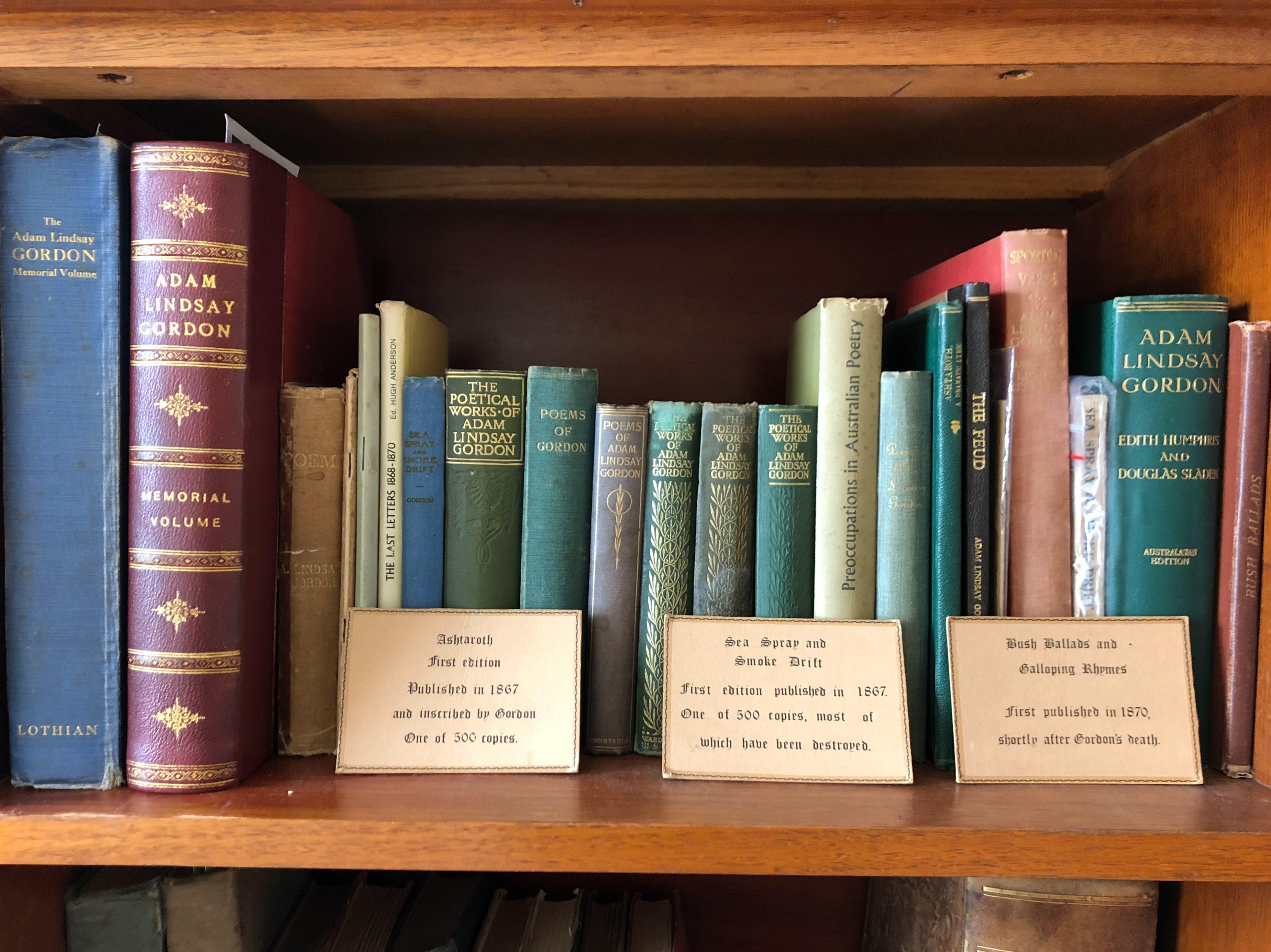
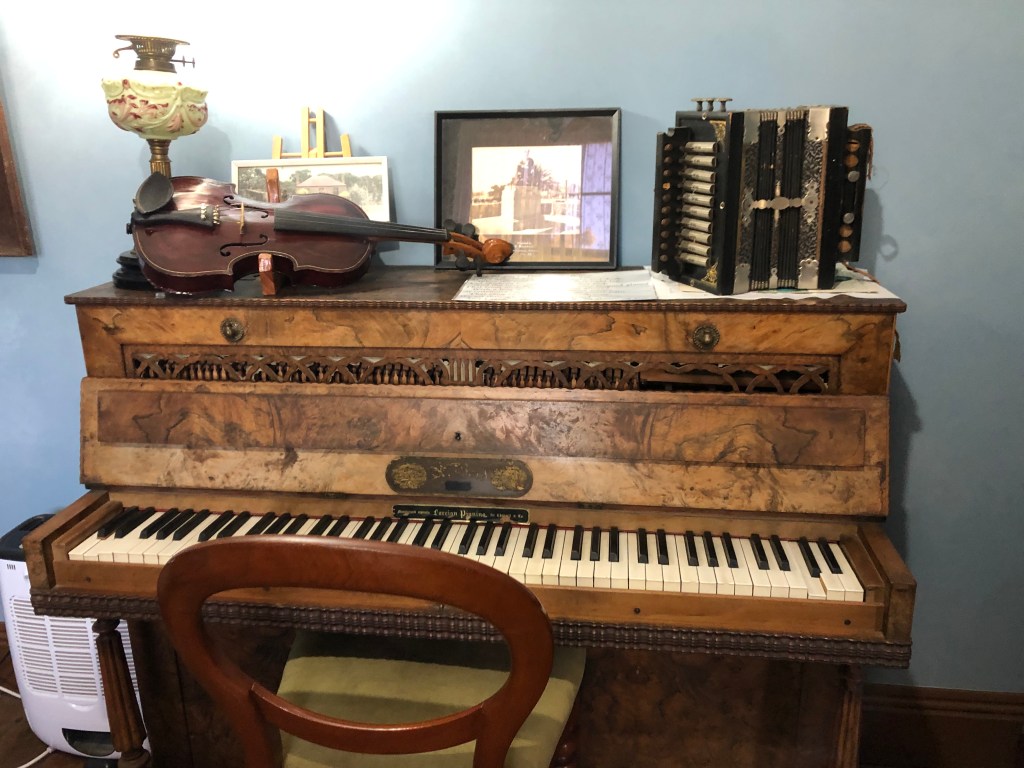
Nestled in the countryside at Port Macdonnell, South Australia, is Dingley Dell Cottage, once the home of Australian poet Adam Lindsay Gordon. He came to South Australia from England as a mounted policeman in 1853, and also made a name for himself as a jockey and steeplechase rider before entering politics in 1865.
His first published poem was’The Feud’, printed in the Border Watch newspaper in July, 1864. Two volumes of his poetry were published in 1870, after which Gordon suicided.
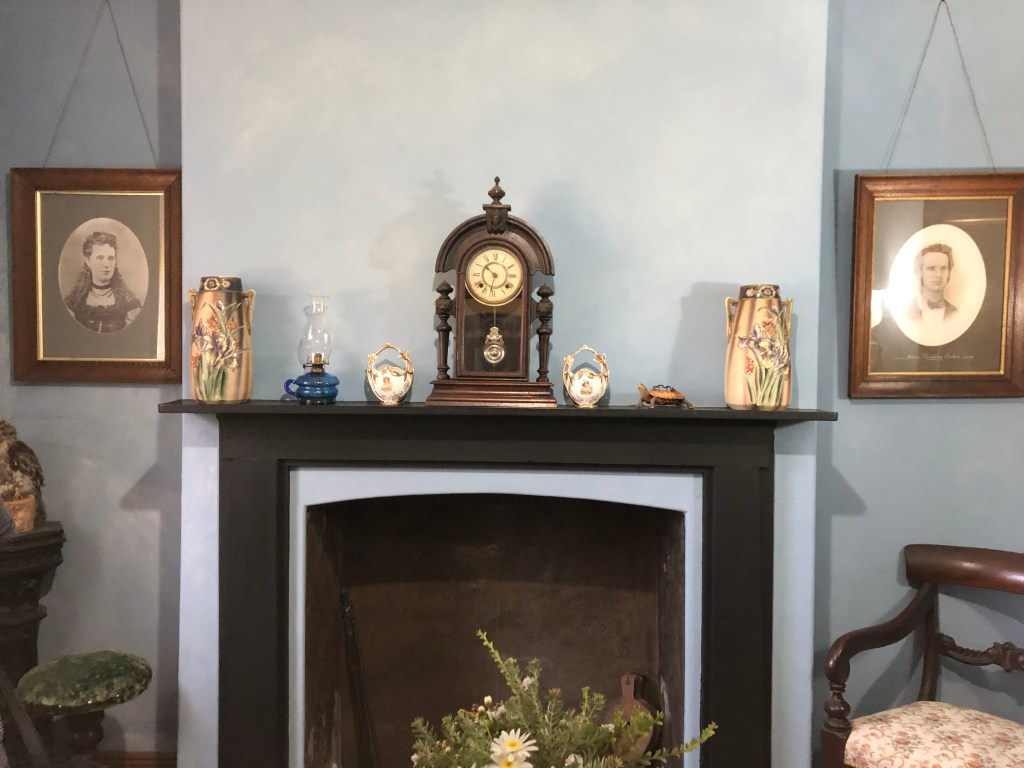
After falling into disrepair over the years, Dingley Dell Cottage has been restored and now operates as a museum, displaying Gordon’s horse-riding themed drawings, letters, and some of his personal possessions.
I was privileged to visit Dingley Dell on Saturday and see Gordon’s home and belongings for myself. My time there gave me a sense of connection with a poet whose works I confess I have read and studied less than other Australian poets, and motivated me to address that oversight.
However you celebrate, whatever you believe, I wish each of you a happy and blessed Easter Sunday, safety on the roads, and the very best in chocolate eggs and bunnies.
I’m away this weekend, enjoying time with my family and getting some much needed rest and relaxation.
We’ve taken off to Port Macdonnell, a little spot on the South Australian coast, for the long weekend. Hopefully, we’ll be making the most of some beautiful mild Autumn weather and seeing some new places and scenery.
As it is Easter Sunday, I thought I would share with you one of my favourite Easter songs. I grew up listening to the music of Keith Green, an enormously popular Christian singer and songwriter of the 1970s and 80s.
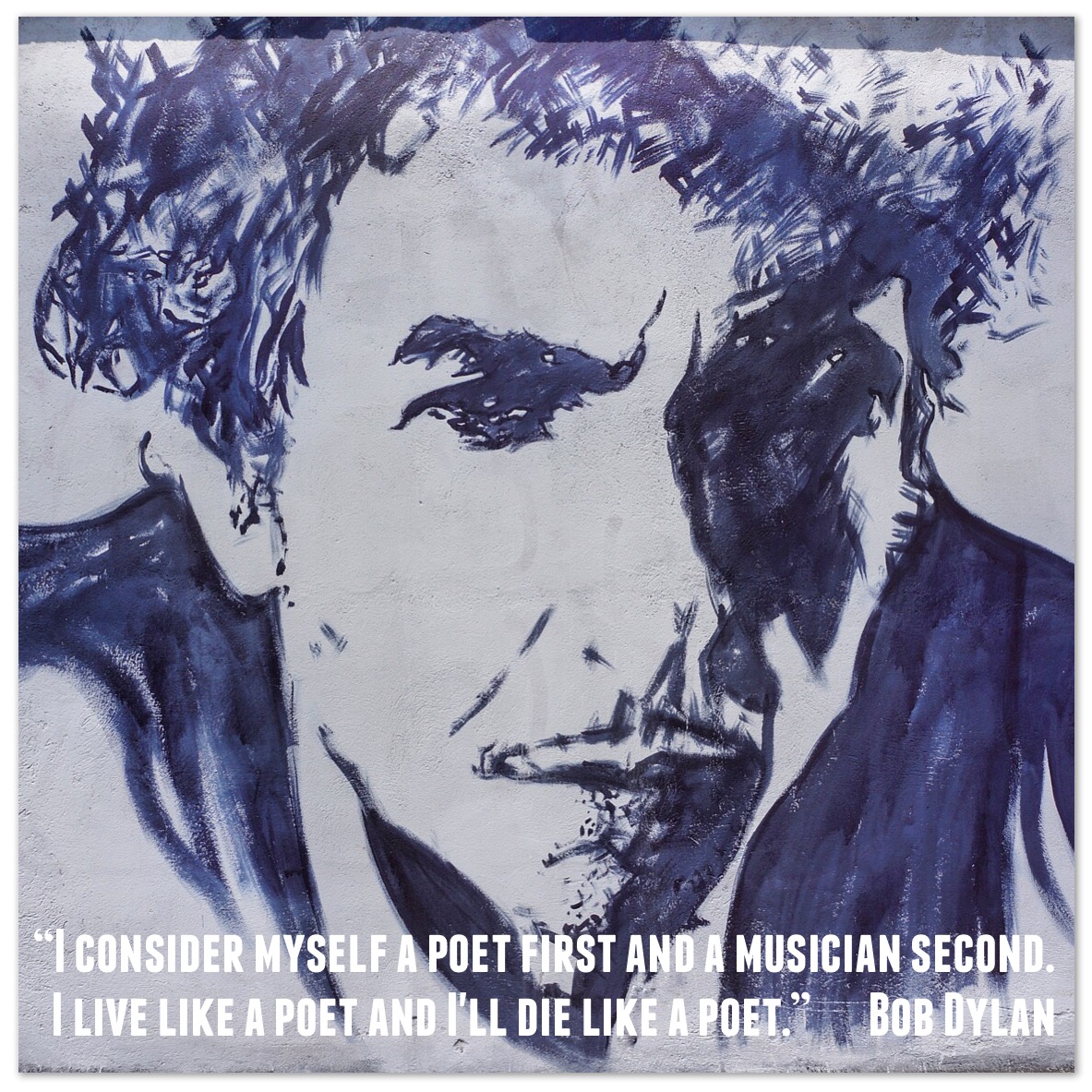
Bob Dylan knows a thing or thirteen about poetry: that’s why he was awarded the Nobel Prize for Literature in 2016.
Listening to his lyrics, there is no doubt of the poetic qualities of his writing. And in his own words, he considers himself a poet first and foremost.
Dylan’s songs became anthems of the 1960s before attaining legendary status in later decades. Love him or hate him, there’s no denying that Dylan’s words carry great meaning and importance.
Of all the protest songs of the 60s, Bob Dylan’s ‘Blowin’ in the Wind’ is still one of my favourites. Enjoy.
This poem expresses what I suspect many people, even very committed Christians, feel on Good Friday: we should weep more than we do, we should feel more than we feel, in response to Christ’s death on the cross.
While it’s true that faith and feelings are very different and distinct from one another, Rosetti observes here the misery and doubt that comes from knowing and believing in Jesus yet feeling as though she remains unaffected by her knowledge and faith, and expresses most eloquently the desire for God to help her to believe more fervently.
Whether or not one is a Christian does not limit their ability to be affected by the pathos in this poem, nor to consider the power of the imagery with which the poet evokes that sense of lonely difference from other people that pervades it.
‘Good Friday’
Am I a stone, and not a sheep, That I can stand, O Christ, beneath Thy cross, To number drop by drop Thy blood’s slow loss, And yet not weep?
Not so those women loved Who with exceeding grief lamented Thee; Not so fallen Peter, weeping bitterly; Not so the thief was moved;
Not so the Sun and Moon Which hid their faces in a starless sky, A horror of great darkness at broad noon– I, only I.
Yet give not o’er, But seek Thy sheep, true Shepherd of the flock; Greater than Moses, turn and look once more And smite a rock.
If you’d like a bookish Easter treat for Easter, you’re welcome to join in the
Sparkly Badgers’ Easter Egg Hunt
All you have to do is start here, find the egg hidden on each blog or website, arrange the letters, and follow the instructions to claim an ebook of your choice from the organisers.
The hunt officially begins on Good Friday.
One winner will receive a lovely Easter gift which includes chocolate and a copy of each book on offer.
‘Easter Day’ is a sonnet about seeing the Pope on Easter Sunday. It is not, however, as reverent of the pontiff as it first appears.
After describing the scene, Wilde observes that while the ceremony he observes is impressive, it actually has little to do with the reality of Jesus’ life. It’s all about thethe Pope, far more than it is about the death and resurrection of the Messiah.
This is a very powerful observation, and one that certainly resonates with me. As I have said many times before, “I love Jesus. I just have significant problems with the actions of many who claim to represent Him.”
This poem, then, serves as a reminder to not put faith in man-made institutions, regardless of who or what they claim to be, but instead to focus on Christ himself, what He taught, and on one’s own faith in Him as a personal, intimate relationship.
Easter Day
The silver trumpets rang across the Dome: The people knelt upon the ground with awe: And borne upon the necks of men I saw, Like some great God, the Holy Lord of Rome.
Priest-like, he wore a robe more white than foam, And, king-like, swathed himself in royal red, Three crowns of gold rose high upon his head: In splendour and in light the Pope passed home.
My heart stole back across wide wastes of years To One who wandered by a lonely sea, And sought in vain for any place of rest: ‘Foxes have holes, and every bird its nest, I, only I, must wander wearily, And bruise my feet, and drink wine salt with tears.’








 WordyNerdBird