A Day For Healing.

Today was a day for healing. 

After several absolutely brutal weeks, my bestie and I headed out to spend the day together— a day just for us. 

We didn’t talk about grief, or death, or funerals, or wills, or medical treatments. We just enjoyed each other’s company and pretended as much as we could that the rest of life and corona and lockdowns and work and pretty much everything else was not happening. 

Don’t get me wrong, though. We sanitised , we distanced, we avoided people as much as we could. We’re neither stupid nor irresponsible. 

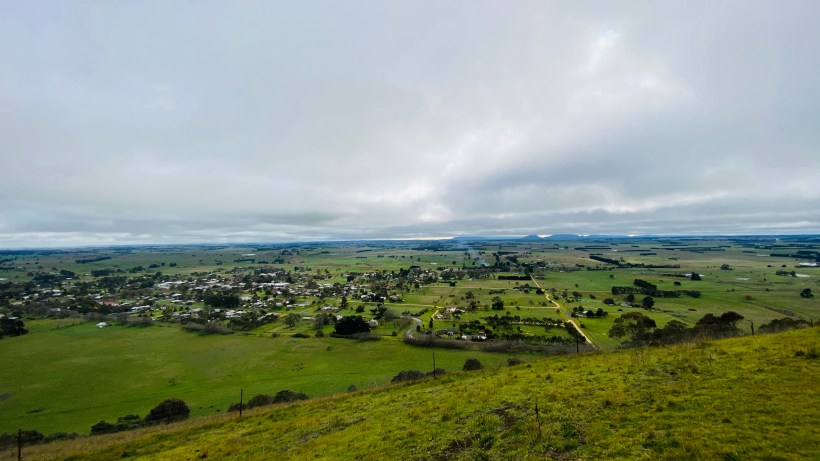
We drove up-country and visited places we haven’t been to before. 

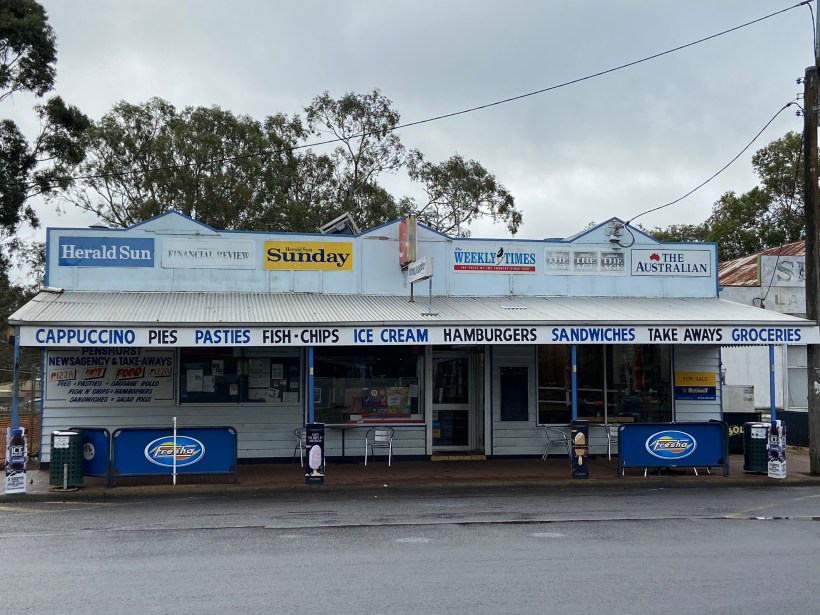
We stopped in a little country town, took some photos, bought a Coke, and kept going.

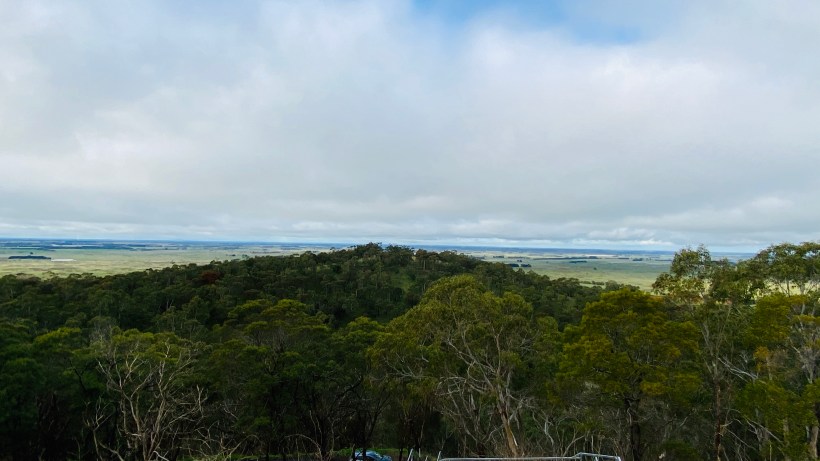
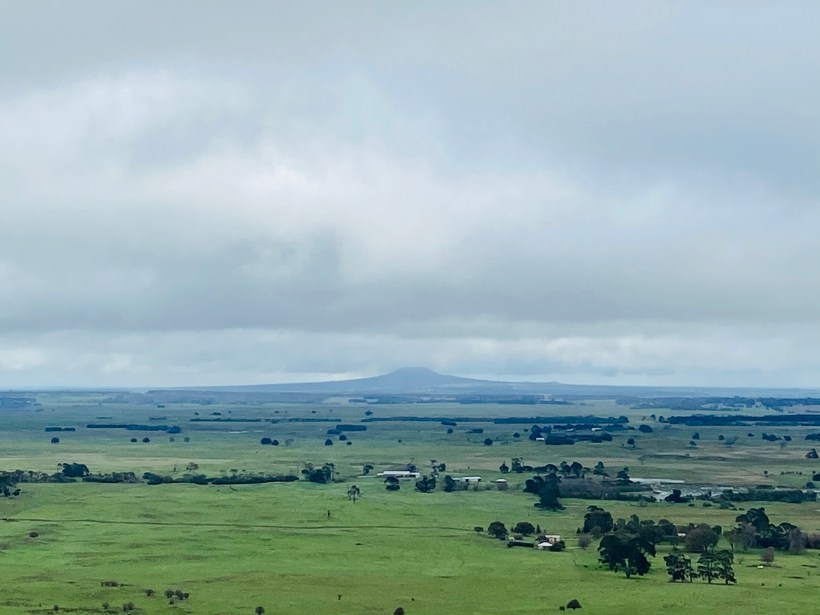
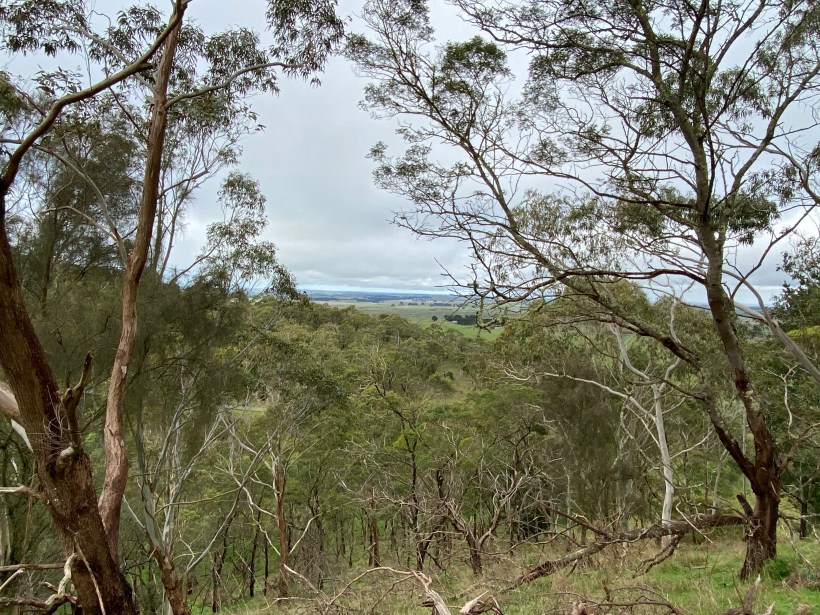
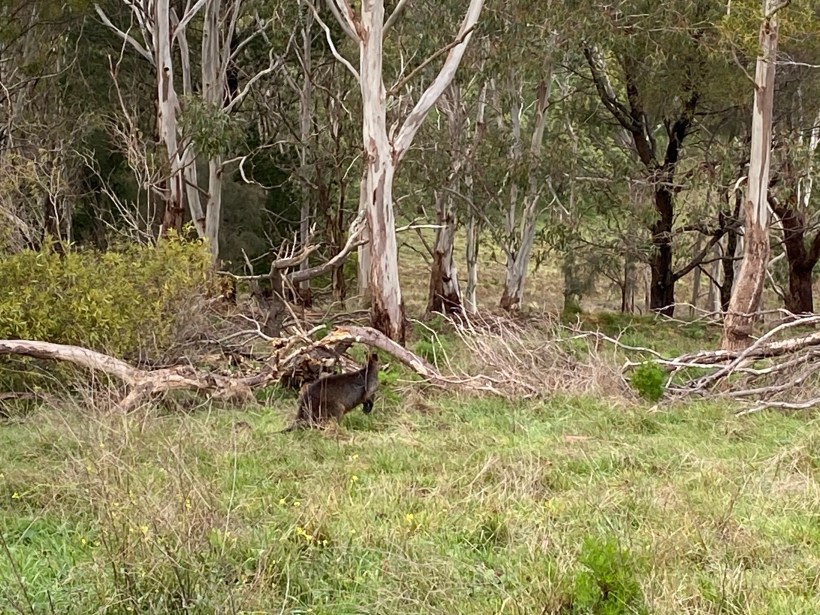
We stood on top of a mountain — well, technically it’s a dormant volcano, albeit not a very big one— and saw as far as we could see. We watched in silence as a wallaby fossicked for sweet blades of grass to eat, then hopped away. We listening to birdsong and tried to work out how many different birds we could hear. 

We visited a bookstore, as we always do on our expeditions, and we both found a couple of new treasures to bring home with us. 

We visited two different waterfalls about 9 kilometres apart on the same river, and looked at rocks and water and cascades and lichen and soil profiles. 

We ate lunch as we watched the water running and leaping its way down the rock face, and as we watched other visitors walk all the way down to the river bank and back up again. That’s a great way to wear out the kids during school holidays! We packed up our rubbish, along with some left behind by some other less considerate visitors to the park, and put it in the car to bring home with us, then returned to the falls to take photos. 

We watched the most delightful older couple walk hand in hand as they explored the park around the waterfalls, obviously as delighted with each other’s company as they were when they first met. She used a walking stick with her other hand, and he carried two umbrellas. The way they looked at each other was just adorable. 

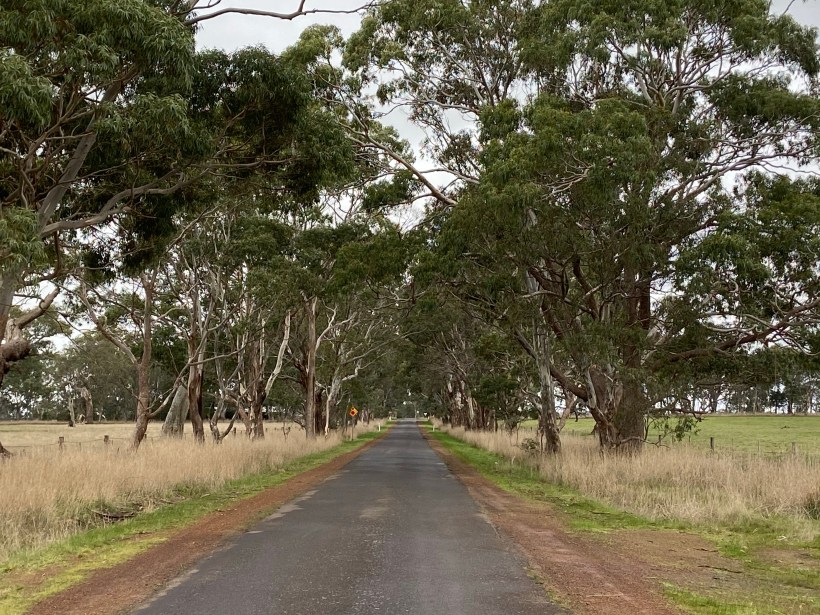
We looked at trees and enjoyed their beauty, their shapes, and their different profiles. Then we drove down country lanes where the gum trees on either side almost made a tunnel and commented on how magical and beautiful that felt.

We found a campground we want to go and stay at. It’s nestled in the bush near one of the waterfalls, and it’s just natural and quiet and beautiful. 

We met a lady with a gorgeous little dog named Milo, who insisted on wrapping his lead around my legs not once, not twice, but three times. We laughed. 

Oh, it felt so good to laugh. It felt so good to breathe fresh air, to not feel pressure from time or commitments or places and things that reminded me of my losses. 

It felt so good to just be. No responsibilities, no demands. Breathing deeply, enjoying the moment, and feeling refreshed. I can’t remember the last time I was able to do that. 

I am so blessed to have a friend with whom I can share days like today, but who has also supported me so faithfully through the trauma of the past few weeks. She has been an absolute rock for me, and I am thankful.

I am blessed to live in a place where I can go and spend time in nature and feel at peace there. I’m very blessed to not be in an area that is locked down, as Melbourne has been once again. 

Today didn’t make all those other things go away — far from it. But it gave me time to breathe, and it was very good therapy. 

A Day For Healing.
#therapy #emotions #grief #trees #waterfalls #personal #reflection #blogpost

Rainfall

It rained heavily the day of my father’s funeral. Many people remarked on how awful the weather was. I responded that it seemed kind of perfect for the occasion.

A week later, at the funeral of my close friend, the same thing happened.

I don’t think that was a coincidence. It could simply be that both events took place in winter, although the days either side on both occasions were sunny and quite pretty. I like to think it was nature’s way of showing empathy.

Rainfall
#poetry #reflection #personal #grief #weather #coincidence #blogpost

Upside Down.

Image: ©2020 Joanne Van Leerdam

My father and one of my closest friends recently passed away within five days of each other. In fact, Helen died on the afternoon of Dad’s funeral. It was too much loss. It was too painful. It was definitely too soon and too final. And “upside down” is exactly how I felt then and still feel now.

As always, my feelings have turned into poetry.

I wrote this poem on the morning of Helen’s funeral. It was impossible to contemplate one without revisiting the other in my mind.

So, this poem is for both of them.

Upside Down.
#grief #emotions #poetrylovers #poem #personal #blogpost

Remembrance, Always.

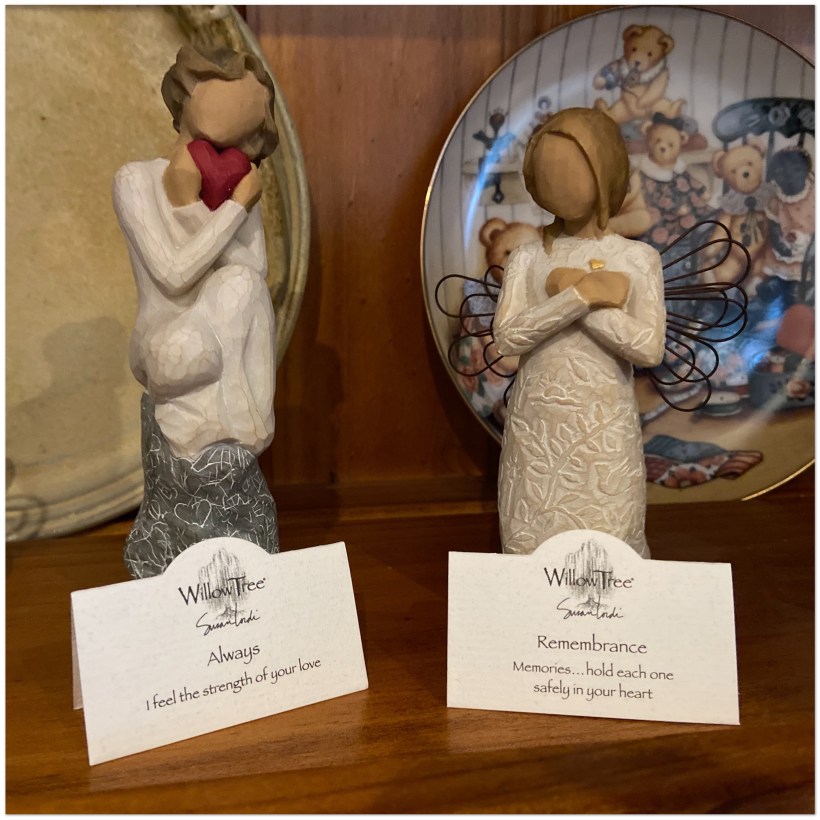
Always & Remembrance: are the two Willow Tree figures I have chosen in memory of two significant people in my life: my father, and one of my closest friends, who graduated to heaven five days apart.

These two lovely figurines now have pride of place in my special cabinet to remind me daily of these beautiful people and the incredible love I have for them both.

Mourning Song

Image by Joanne Van Leerdam. June 24, 2020.

I wrote this poem back in 2016.

These words have been in my mind again the past couple of weeks, following the death of my father and the passing of one of my closest friends on the day of his funeral. Losing them both within five days of each other was more painful than I can describe.

wordynerdbird's avatar

Photo artwork by Joanne Van Leerdam. June 24, 2020.

Tears fall,
Can’t stop them,
Can’t hide them.
You’re gone,
Can’t bring you
Back again.
Why am I always the one who is feeling
The pain of the wrenching and tearing of leaving?
Why must this pain be so raw deep inside of me?
My heart
Misses you
Desperately.
Please say
That you won’t
Forget me.
I can’t imagine my life without you in it,
Bereft of the light and the joy of your loveliness,
Every room filled with the echoes of memories.
Never
To be the
Same again.
Tears fall,
Into the
Loneliness.
You’re
Gone.

©2016 Joanne Van Leerdam

Mourning Song.
#poetry #grief #Emotions #poetrylovers #personal #ReadAWrite

This poem is included in my collection titled ‘Leaf’.

View original post

Old Man

I wrote most of this poem two years ago, when his health began to decline more noticeably, and the final verse on Sunday night after the passing of my father that afternoon.

Needless to say, it has been a rough week.

wordynerdbird's avatar

Image: Joanne Van Leerdam2020

Vigour has yielded to frailty,
Pain tarnishes every day,
He longs to be free of his misery -
Oh! If one could wish suffering away!

He despises his aged condition:
When he stands, his body is bent;
He cannot escape his suspicion
That the best of his days have been spent.

His voice has grown soft and he mumbles,
It’s harder to focus his mind,
He is more prone now to grumble -
His good humour has slowly declined.

His children observe the difference -
They lament the toll of the years;
What he prays for as deliverance
Will, for them, mean sorrow and tears.

For now, he sits in his armchair,
Dozing off whenever he can:
Precious little brings any pleasure
For the tired and broken old man.

Then, in an instant, he leaves them – 
No more misery, no tears, no night:
He…

View original post 18 more words

A Dark And Stormy Night

Image Credit: Mylene2401 on Pixabay

I generally love a good thunderstorm. Tonight, I appreciate it even more than usual.

Growing up, I loved seeing Snoopy start his stories with “It was a dark and stormy night”. I used to giggle at that clichè long before I understood the deeper allusion to the fact that authors sometimes use the weather to reflect or foreshadow what characters in their stories feel or experience.

This is a literary device known as pathetic fallacy. It is used to set mood and tone in a piece of writing or art, emphasising emotions and heightening reactions. Rain can be used to reflect sorrow or misery, dark clouds can suggest anger or resentment, and a storm can suggest conflict, inner turmoil or violence.

If you’ve ever read ‘Wuthering Heights’ by Emily Bronte, you will have experienced pathetic fallacy being used so expertly that you may not have even noticed. Blended seamlessly with gothic imagery, turbulent relationships and the isolation of the Yorkshire moors, Bronte’s use of snow, rain, storms, cold and dark makes for incredibly powerful writing. Who can forget Cathy at the window during that storm, begging Heathcliff to let her in? It’s legendary because it is powerful, emotive writing that embeds its imagery in the consciousness of the reader.

My other favourite example of pathetic fallacy is Shakespeare’s King Lear shouting at the snowstorm, “Blow, wind, and crack your cheeks! Rage, blow!” Lear has literally been left out in the cold by his daughters Goneril and Regan, who have exploited his love and trust before throwing him out, homeless and broke. It’s such a potent scene — the depths of human coldness are amplified by the vision of a broken-hearted old man outside in a blizzard. It is chilling in more ways than one, and possibly one of Shakespeare’s finest scenes.

At other times, pathetic fallacy seems predictable and cliched. Sometimes it is almost painfully obvious and clunky. It often appears to be overused by authors who don’t have the finesse required to make it work — possibly because when authors do have that skill and it is done well, it it works as it is intended to without irritating the reader.

Tonight, nature is doing the author’s work for me. Outside, it is indeed a dark and stormy night. It has been raining steadily for hours now, thunder rolls and reverberates every now and then, and a draught of wind occasionally howls at the door. I am sitting in my father’s hospital room, having been called in late at night because he has been distressed and agitated. I have shed tears while talking with family members or sending messages. My emotions are all over the place. I’m both incredibly tired and wide awake.

A rainy night with the occasional rumble of thunder is most fitting.

Life’s But A Walking Shadow

Over the past few days I have been struck by the paradox in which life seems to go by so fast, driven at breakneck speed by the demands of work and family and often leaving us little time to relax, but it can at the same time grind to a halt at key moments and leave us little to do but contemplate life itself.

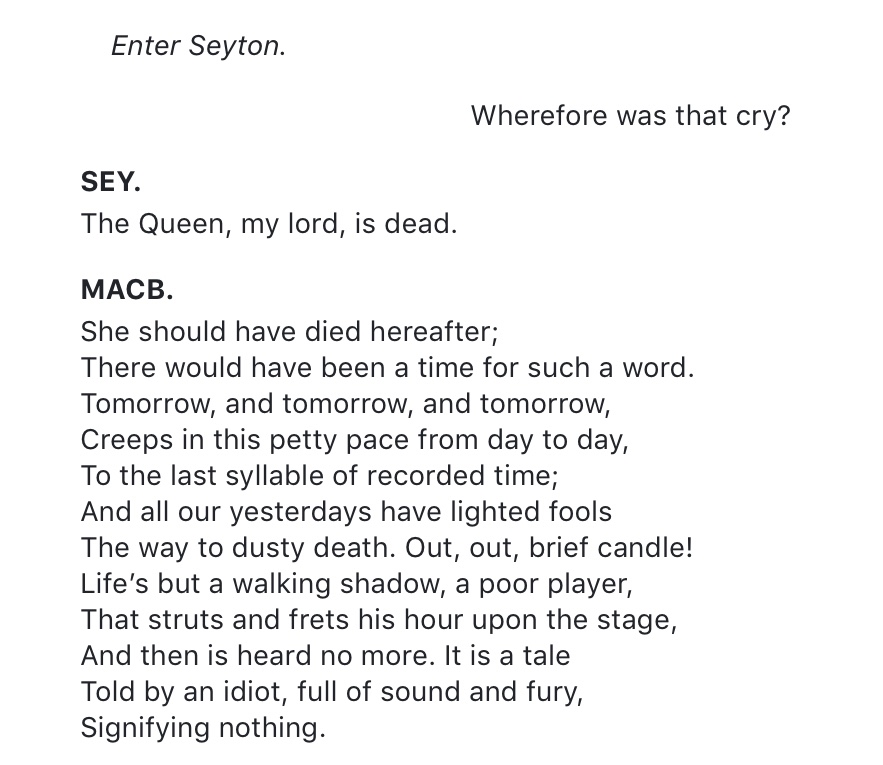
As I sit by my father’s bedside and look out the window of his hospital room, watching the long morning shadows fade and transform in bright sunshine and reappear later in the day, this passage from Macbeth V.v has been running through my mind.

Macbeth V.v

I’ve had plenty of time to think about what it means. Thoughts about the transience of life, the fleeting shadows, the fact that tomorrow is neither promised nor guaranteed, and how easily one’s candle can be snuffed out have been foremost in my mind.

The irony and contrast of interacting with my students on Monday and watching a performance of Macbeth from the Globe Theatre and then spending so much time in this quiet hospital room since Tuesday, thinking about the roles I play and the importance of how I play them, has not escaped me.

While “all the world’s a stage, and all the men and women merely players” (As You Like It, II.vii) I’d like to think at this point I am not a poor one. Whether at work or at home, and especially this week taking care of my dad, I have chosen to prioritise integrity and kindness. I will not deliver rehearsed lines, seeking instead to project and embody meaningful words with total commitment to my character and roles as daughter, career, sister, advocate, communicator and encourager.

Life’s But A Walking Shadow ‪#Reflection #LifeisStrange #ThoughtForTheDay #FridayThoughts #Shakespeare‬

wordynerdbird's avatarShakespeare Nerd

Macbeth, V.v

This short speech by Macbeth is his response to the news that Lady Macbeth is dead. It is not as emotional as Macduff’s response to the death of his wife and children, but instead is quite poignant and philosophical. A soliloquy might have been more expansive on his thoughts and feelings.

It is a reflection on the brevity and meaninglessness of life. Every day we live is someone else’s last, and our stories are full of noise and bother, but ultimately pointless.

Perhaps he anticipated her death, given her descent into guilty madness. His observation that “She should have died hereafter;There would have been time for such a word” suggeststhat he thought he had bigger problems at that point, and he simply didn’t have time to grieve properly. Implying that her timing was inconvenient is the kind of self-interest that those who love to hate Macbeth might find…

View original post 77 more words

On Tenterhooks.

Image Credit: Daniel_Nebreda

This morning I used the term “on tenterhooks” and then wondered where it came from.

It’s a term that means painful anticipation or being kept in suspense, commonly used by English speakers to describe any situation of tension or anxiety while waiting.

I imagined something being suspended or hung up, waiting for something to happen— which is exactly how I felt when I said it. I imagined the hooks to be larger and more cruel than they actually were, perhaps as some form of medieval torture or punishment, like hanging someone on a wall or in mid air using hooks to hold the body. That is an indication of several truths about me: my own feelings at the time, my love of medieval history, and my horror author’s tendency toward macabre imagination.

As it turns out, I was overthinking that part.

A little research at etymonline.org and worldwidewords.org informed me that it’s a very old word from the early 14th century that relates to the preparation of cloth, particularly woven woollen fabric, by hanging it up on a frame known as a tenter to stretch, straighten the weave, and dry. Tenter hooks were bent nails that held the fabric in place on the frame.

By the early 1500s, people spoke of being on the tenters to express being in suspense or waiting anxiously. The phrase “on tenterhooks” appeared in print for the first time in Tobias Smollett’s Roderick Random in 1748.

It is related to the word tent in that the word was used to describe the way in which hides, skins or coarse cloth were hung over a framework of poles to create a temporary dwelling, which then came to be called a tent.

Both tent and tenterhooks come to English from the Latin, tendere, meaning to stretch, via the old French word tente. They are related to the words tense, tension, intense and the phrase highly strung.

Although the ideas have come to be closely associated, tenterhooks and suspense are not related words.

Ambiguous Loss and Anticipatory Grief

I wish I had known about ambiguous loss and anticipatory grief much earlier in my life.

In yesterday’s post, I alluded to my Dad’s transition into residential aged care. 

Today, I want to share some knowledge I have gained over the past few months, because I have found it enormously helpful and therapeutic in dealing with my own experiences and feelings.  I am sure I wasn’t the only person who didn’t know these things, and my hope is that others will benefit from these insights. 

My father has become increasingly frail, and even though I knew the time was coming, making the decision to move him into residential aged care was incredibly painful. For him, it was a loss of independence, his home, his cat and my dog. His sadness was profound, and completely understandable. Still, he was very thankful — as were my siblings and I — that he could move into an excellent place where the care is consistently empathetic and kind, where the food is good, and where he can have his own things around him. 

My emotions, too, were complex. I felt guilty, even though I knew it was the right time and the right thing to do. No loving child wants to see their dad leave behind the life he has known and the things he has accumulated, and no loving child wants to see their Dad so sad. 

I experienced a very real sense of grief and loss while packing up his things, setting up his room, and helping him transition to a new phase of life, There was more to it, though, and often I didn’t know how to express what I was feeling. 

Through my research and reading, and through wonderful constructive advice from friends who have been through similar situations, I have come to understand that many of the things I am experiencing are encompassed by two terms: ambiguous grief and anticipatory grief

I had never heard of either one until recently, and I think they should both be much more commonly known.

Ambiguous Loss is a kind of grief experienced where there is no distinct end or no closure. Generally speaking, it arises from an emotionally painful or turbulent situation that one is going through, and which doesn’t have an “end date”. The reasons for grief or a profound sense of loss might be indistict, or complex, or unidentifiable at the time. Sometimes the grief masquerades as anger, frustration or overwhelm. To experience ambiguous grief is vague, exhausting and indefinite in more ways than just the timeline. 

It’s that mixed feeling of sadness at having to make big decisions that we didn’t feel ready to make, and thankfulness that things worked out perfectly when we needed them to.

It’s the sadness we felt at making decisions about what to do with his things, and asking my best friend to adopt his cat, even though he is still with us.

It’s the sadness I feel at saying goodbye and leaving Dad behind every evening, knowing he is safe and well cared for in his new home, but also that he is no longer ‘at home’. He is exactly where he needs to be, and I love it and hate it at the same time. 

Anticipatory Grief occurs when one realises or acknowledges that death is approaching, or even just a likely outcome. 

This is what I have experienced on a number of occasions when Dad had a health crisis and ended up in hospital. Most vivid in my memories was March 1st this year when I had followed the ambulance to the ER in the wee hours of the morning. When I got there, instead of being taken through to see Dad right away as I had always been before, the doctor on duty actually took me into a little room and  had “the talk” with me to made sure I understood how precarious Dad’s condition was, and that he might not make it this time. To his relief, I was fully aware of that. I suppose many people are surprised by it, or in denial, and I totally get that, too. It’s the natural reaction but, having been there more than once, it is no longer my default. There was no dozing while I sat by my father’s bed that night: instead, I spent hours composing the message I would send to my siblings, and another that I would send to other family and friends, at a decent hour of the morning. 

This is what we felt when packing up Dad’s things for his room at the home, and when sorting and cleaning out the accumulation of papers, trinkets, and household items in his house. Those are the sorts of things usually done after someone dies, not before. Still, it had to be done. 

Similarly, putting his wallet and the jewellery box containing my grandfather’s wedding ring and Dad’s much-loved pocket watches in a special spot in my own house for safekeeping felt strangely poignant and painful and incredibly sad. 

This is what I go through every time Dad has a episode of poor health, or gets an infection, or can’t express why he doesn’t feel good. It happens when he has times of vagueness or confusion, and when he can’t find his words All of those things are happening more often than they used to, so the sense of grief increases as time goes on. 

What I have learned thus far is that ambiguous grief is a very real and important part of the emotional process, and that my feelings don’t always have to be understood to make sense and be accepted as valid

In hindsight, I wish I had understood both of these realities when my mother was diagnosed with dementia, when she went into care, and when she didn’t know who I was anymore. My father, siblings and I were grieving the loss of the person she had been long before she actually passed away. When she died, it felt like it was my mother and someone entirely different at the same time. I felt so guilty about feeling that her passing was a liberation for her and a relief for us, even though my grief was as desperate and profound as ever. I was angry at myself for not knowing how to feel. 

At least this time, with experience and some knew understandings, I can accept the vagueness and complexity of my feelings, which can change from one moment or one day to the next, and just let it be whatever it is. I can cherish every moment with Dad and grieve at the same Time. I am free to laugh and cry, to tell my siblings the stories that are simultaneously sad and funny, and to live each day as it comes without having to explain to myself or anyone else why I’m a mess. 

As awkward and painful and weird as that may be, but I think it’s a healthy way to be. Still, I know I need to manage all those pesky feelings so I stay healthy, too. 

So, I try to make sure I talk honestly with my husband, siblings and closest friends about my thoughts and feelings. My sisters and brother are feeling the same things, and they all live interstate, so keeping them in the loop and encouraging them to express their feelings are hugely important, too. 
I allow myself to cry. ‘Being strong’ is rubbish. 
I refuse to beat up on myself when things are tough, or if I don’t achieve everything on my ‘to-do’  list. 
I remind myself to take each day as it comes.
I remind myself that we are doing the best thing for our dad, and that he is being expertly and compassionately cared for.

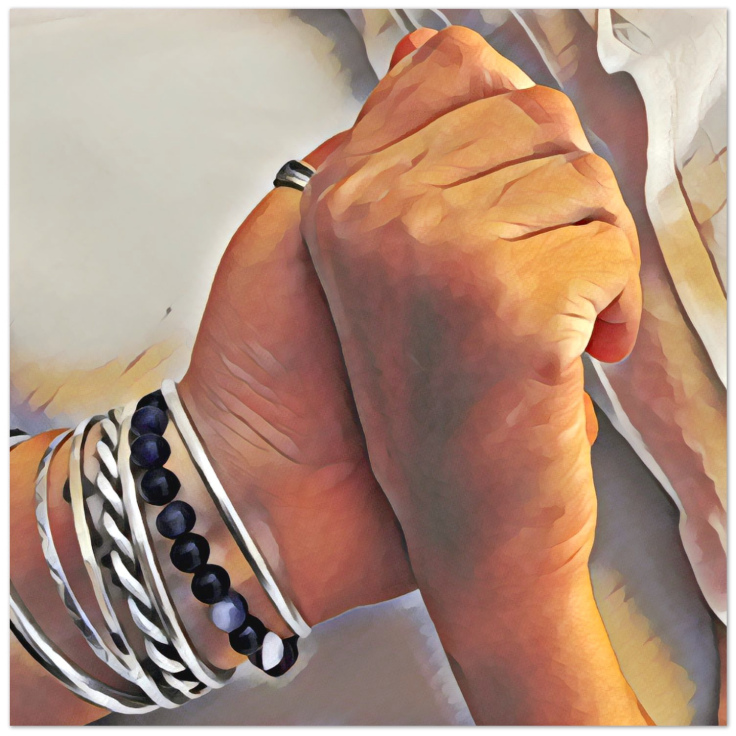
And every single day, I hold Dad’s hand and I tell him I love him. Because, throughout this whole process, Dad being sure of that is the most important thing of all.  

Different Kinds of Grief‪
#EmotionalIntelligence #emotions #grief #feelings #MentalHealthMatters  #MentalHealthAwareness‬ #personal #blogpost 

Helpful Reading: 

What Is Ambiguous Loss? 

Ambiguous Grief: Grieving Simone Who Is Still Alive 

How To Deal With Ambiguous Loss

Grief Before Death: Understanding Anticipatory Grief

Grieving Before A Death: Understanding Anticipatory Grief