Hal-arious.

We were watching Antiques Roadshow this evening. The host was enthusing over a large wooden table that he identified as a genuine piece of Tudor furniture. 

“Look at those gorgeous Tudor legs and lovely drawers!” he said. 

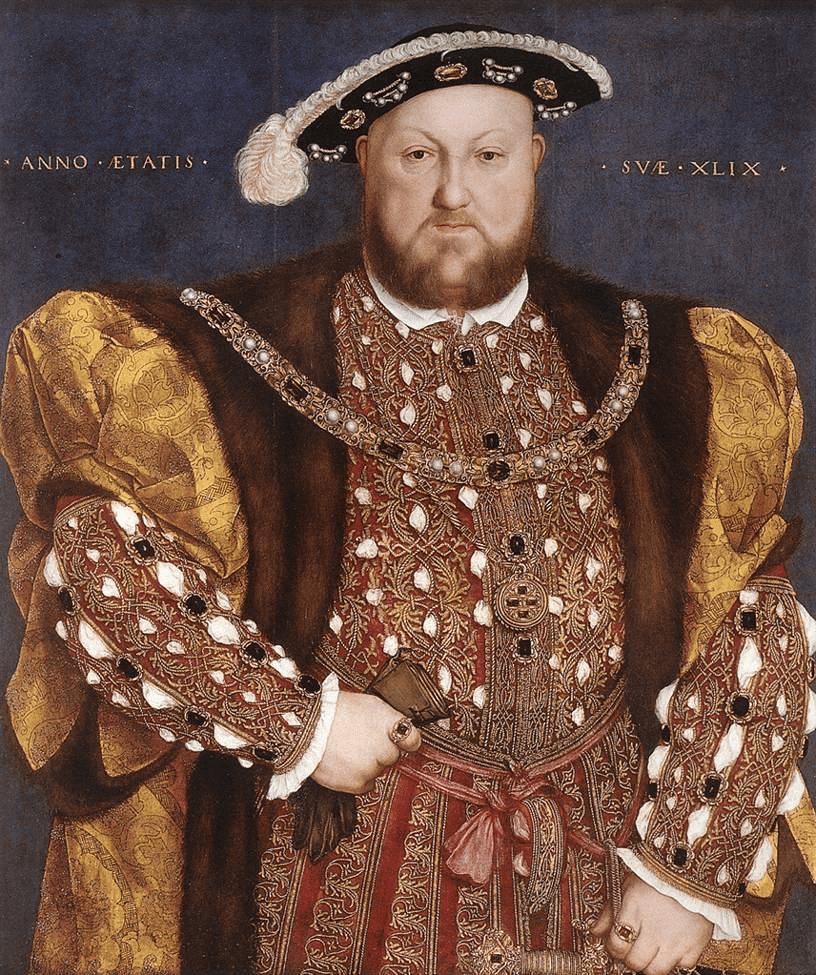
“Henry VIII had gorgeous Tudor legs and lovely drawers!” I quipped. 

“That thing’s bloody huge!” my husband observed. 

It’s not often I get such a perfect opportunity. There was only one thing left for me to say: “So was Henry by the end of it.”

I know, right? Comic genius. 

Shakespeare Nerd.

In an attempt to organise all my Shakespeare-related posts so they might actually reach the readers they were written for, I have a new Facebook page called Shakespeare Nerd

It’s easy to find those posts on WordPress because you can search, or simply click on a category like Shakespeare or a tag like Shakespeare Nerd and they will magically appear.

Finding specific posts on Facebook is not that straightforward, and so my new page was born. 

It’s already full of all sorts of hey nonny nonny and hurly burly, and waiting to be discovered by my fellow Shakespeare lovers.

If you are on Facebook, love Shakespeare, and want to make my day, please give it a like. 

If you’re not, or you don’t, or don’t want to, there is absolutely no obligation. You won’t miss a thing, because you’re already here, right at the front of the line waiting for me to serve up the wordy nerdy goods.

Thank you for being a supporter and reading my posts, by the way. It’s very much appreciated.

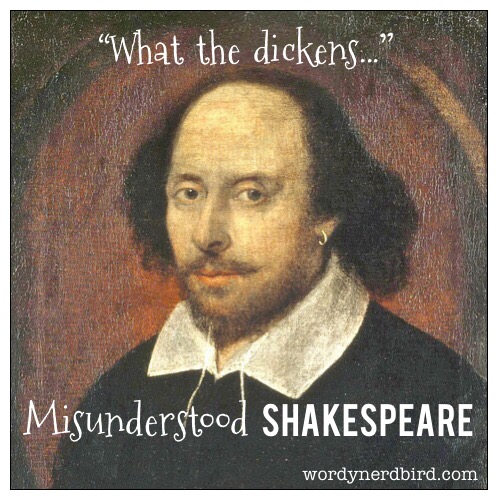
Misunderstood Shakespeare: “What The Dickens”

Many people assume that “What the dickens?” is a reference to the author Charles Dickens. 

Considering that Shakespeare wrote this expression in ‘The Merry Wives of Windsor’ in 1600 and Charles Dickens was born in 1812, that is entirely impossible. 

Instead, ‘dickens’ is a euphemism for ‘devil’, as is ‘deuce’. When Mrs Page says “I cannot tell what the dickens his name is…” she really means ‘what the devil”.

It’s a more polite way of expressing strength of an idea or emphasising their intent, in this case, that she has no idea of the identity of the person she is being asked about. It’s exactly the same as people saying ‘heck’ instead of hell, ‘gosh’ instead of ‘God’ and ‘jeez’ instead of ‘Jesus’, and is probably  done for the same reason: superstitious avoidance of using religious terms, or “using in vain” the names of religious entities. 

There’s also a chance that, for some folks, old-fashioned good manners may enter into it, too. 

In short, this is a euphemism: an inoffensive word or phrase used to replace an impolite or offensive one. We use euphemism when we talk about “powdering my nose” or “going to see a man about a dog” instead of “going to the bathroom”, or “bathroom” instead of “toilet”.

Like many of Shakespeare’s words and phrases, “what the dickens” has stood the test of time and is still used as a euphemism today.

A Fit of Pique.

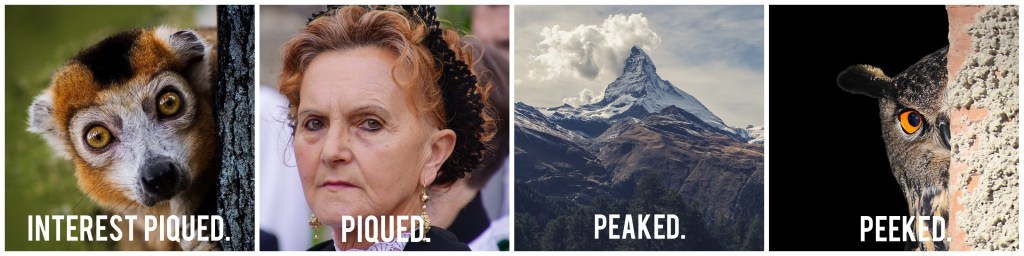
I get really annoyed when I see people writing about peaking someone’s interest. 

A mountain is peaked. A cap can be peaked. 
People can even look peaked: in this sense, it means they are pale. 
A career can peak. 
In fact, someone’s interest in something can peak, right before it declines again. 

While they sound the same, the correct term for having caused intense interest or curiosity, is piqued

To pique someone’s interest is to heighten or arouse it. In other words, it is to stimulate their curiosity or attention. 

A fit of pique is an episode of annoyance or irritation – such as might happen, for example, if someone’s negative emotions are piqued. 

A related word is piquant, which means provocative, tantalising, spicy or tangy. Food that excites the taste buds or a story that excites the imagination can both be described as piquant. 

The other homophone is peeked. This is the past tense of peek: to take a quick look, or a sneaky one. 

So… now that I’ve piqued your interest with my fit of pique, and you’ve peeked at my post… I’m sure your interest has long since peaked. 

See? Homophones can be fun!

Don’t Pour Over Those Books!

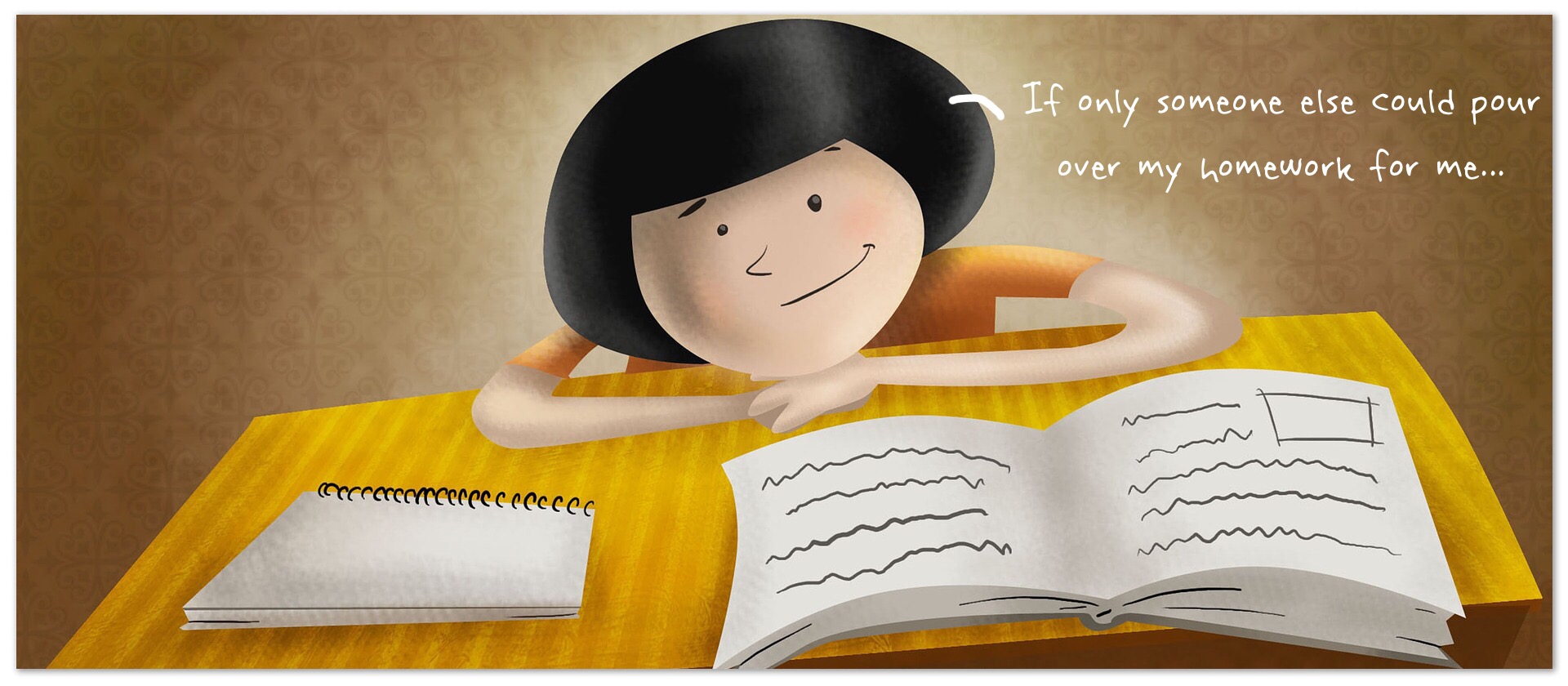
I’ve read a couple of different posts and even in a couple of books recently about people “pouring over” documents or books. 

I wondered at first if this was one of those things Americans do with words that nobody else does, but I checked, and it’s not. It’s simply an error caused by confusion by words that sound the same even though they are spelt differently and mean completely different things. 

What the people in question should be doing is poring over their books. 
To pore over books or documents is to be completely absorbed in what one is reading or studying. It suggests thoughtful application and concentration. 
The gerund is poring. 

To pour over books is just going to make a mess, and probably ruin them completely.  It’s really not advisable.

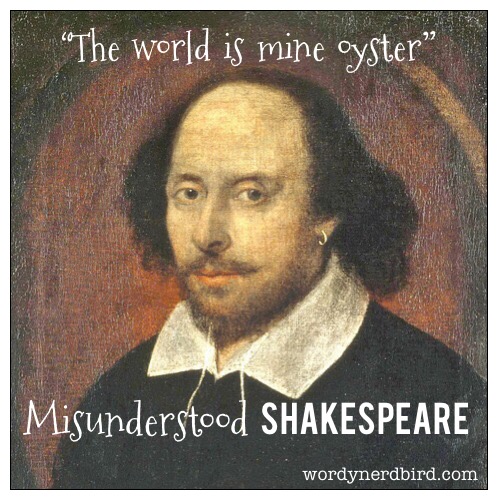
Misunderstood Shakespeare: “The World’s Mine Oyster”

When people say this, they usually assume it means that the world is at their feet and they are in a position where everything is going to work in their favour. Others say it to imply that they are “the pearl” and they are being cultivated for greatness. 

However, when these lines were spoken in Shakespeare’s ’The Merry Wives of Windsor’, the intention is actually quite different. 

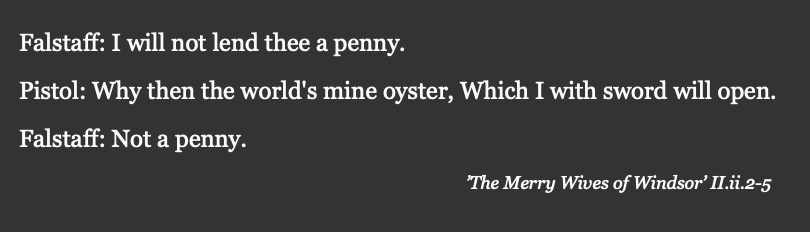
In a conversation between two less-than-reputable characters, this conversation takes place: 

In other words, if Falstaff won’t give him money, Pistol will go and take it forcibly from other people. It’s about taking what one is not entitled to, and it has quite violent connotations. 

An oyster does not willingly open – it has to be forced.
An oyster does not willingly give up its pearl, which can take years to develop, and the oyster is often damaged or killed in the process of extracting the pearl. 

This is an image of violence, and not one of happy or fortunate circumstances at all. 

Misunderstood Shakespeare: “Star-cross’d Lovers”

Just like ‘Wherefore art thou Romeo?”, this commonly misunderstood famous line comes ‘Romeo and Juliet’

I have witnessed so many people talking about Romeo and Juliet as “star-cross’d lovers” in the sense of their meeting and relationship being their destiny, and that the two were somehow fated to be together. 

This couldn’t be more wrong. 

The actual meaning of the term becomes clearer if one thinks of it in terms of the stars actually crossing them. 

Romeo and Juliet were never meant to be together. The fates were against them, right from the start, and it was never going to work out well. 

It’s important to remember that ‘Romeo and Juliet’ is a tragedy, not a comedy or romance. In Shakespeare’s tragedies, the main characters always die. There are no happy endings. That’s a convention of the genre, and it is pointless to expect anything else. 

Not only that, but Shakespeare gives us the spoilers right there in the prologue, the opening speech of the play, which is where the phrase comes from. They’re going to die, and as they are laid to rest, so too will be buried the feud between their families, which is what made their love forbidden in the first place. 

The prologue to Romeo and Juliet by William Shakespeare.

If, as some believe they do, the stars were to control one’s fortunes in life, the last thing you’d wish for is to be “star-crossed” in any way. 

Well… That Ended Badly.

I read a book this week that I was really enjoying. It kept me hooked right to the end, and then came the death blow: a sudden, out-of-nowhere, poorly executed ending. Without warning, or even the slightest hint that it was coming, the story just stopped. 

I hate that. I hate it so much that I am deferring writing my review until I’ve got over my annoyance at it. The story was so good, and the characters so interesting, that I was completely absorbed in it. And then? Suddenly, POOF! It’s all over. 

I dislike cliffhanger endings to books at the best of times. 
This one was not even the best of times.
It wasn’t really a cliffhanger, either. It was more like the whole book got snatched out of my hands and thrown over the cliff, and might never be seen again. 

It was possibly the worst sudden ending to a story I’ve ever experienced. It made me think that maybe the author did not know how to properly end a story, even though they obviously knew how to write the rest of one. 

I fully understand why authors design those suspenseful endings – they want to keep readers guessing and anticipating what comes next so they’ll read the next book. 

Here’s the thing, though: if the book is good, I’m going to buy and read the next one anyway. If the writing or editing is poor, or the storyline is weak, a cliffhanger isn’t going to make me buy or read the next one. 

If there has to be a sudden ending, or a cliffhanger, there should at least be enough resolution in the final chapters to answer some of the questions raised in the book. By all means, leave questions unanswered. Just— not all of them. 

I do quite like suspense and anticipation.
I love the sensation of looking forward to the next book.
I do not enjoy an ending that leaves me wondering if the author’s computer crashed and the final chapter was irretrievably lost. 

I read a lot of books, and for me, a quality conclusion is as important as the opening paragraphs. You can win or lose readers right there, regardless of how good the rest of the book might be. 
Misunderstood Shakespeare: “Wherefore art thou Romeo?”

Of all the lines written by Shakespeare, this is possibly the single most misunderstood by a 21st century audience.

While it might be a romantic notion for a lovesick teenager to look out her window— not a balcony, by the way— and wonder where her beloved might be, that’s all it is. That is not what is happening in this scene. 

In early modern English, “wherefore” meant “why”.

Juliet is not asking where Romeo is.  She is asking why, of all the families in Italy, did her new boyfriend have to belong to the family with which hers had been feuding? Why did he have to carry a name that would be an immovable obstacle to them both? 

She goes on to insist “that which we call a rose by any other name would be as sweet”— in other words, it’s not the name that makes someone what they are.  If Romeo were to change his identity, he would still be the same person. What his name is should not matter — what sort of person he is, and the fact that she loves him, is what should determine their compatibility. 

That’s why when you’re waiting for a friend or looking for your dog, it’s incorrect to ask “Wherefore art thou, Buddy?”
It may sound cute, but it will make your Shakespeare-loving friends cringe, at least on the inside. 

The Day After Yesterday

Yesterday was abysmal.
That’s not even an exaggeration. In my string of at least a month’s worth of rotten days, yesterday hit new lows. 

I can’t even pit into words how bad it was. It was a day in which I began to question everything I thought I knew about myself professionally, and some of the things I thought I knew on a more personal level. 

It was a day of alternating between being in tears in my office and being in class pretending nothing was wrong.

If the fact that my students have no idea what I have been going through for the past five weeks is testament to my ability as an actor, then yesterday’s performance was nothing short of stellar.

Even leaving work didn’t help: things just kept getting worse.

Today has been better – not because anything has actually changed— it hasn’t at all— but because of the people who told me they believe in me.

It does not change the way things are, but it does empower and encourage me to keep going. For every person who has no faith in me, I have two who do. 

So, I’m going to soldier through it and get things done. I’m going to focus on the positives. And if people try to bring me down, I’ll show them what I’m made of, and then I’ll probably put them in a story and kill them gruesomely. 

Hey nonny nonny.