A Favourite Shakespeare Play: ‘Macbeth’

Macbeth is a play that has always fascinated people, engaging their superstitions as well as their imaginations. For this reason, its often called The Scottish Play by actors and theatre folk, as it’s believed to be unlucky to say ‘Macbeth’ in a theatre.
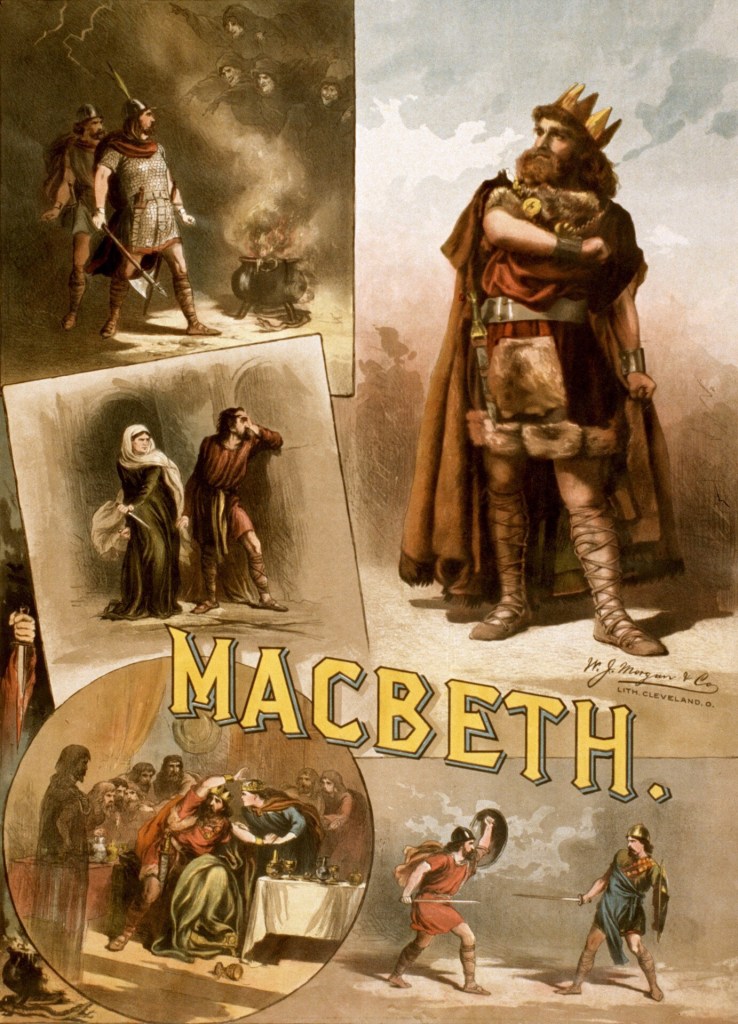
It’s a cracker of a story. The supernatural ‘weird sisters’ tell Macbeth he’s going to be Thane of Cawdor, and then tell him he is going to be king. In response, Macbeth does everything in his power to make it happen, only to be haunted by his victims and unable to actually enjoy his success when it does. You really do have to wonder how it would have all worked out if he’d responded with, “That’s nice!” and let things happen as they would. 

Of course, you can’t just blame it all on Macbeth. His wife – whom I like to call Lady Macdeath – plays a significant part in engineering him onto the throne, mostly by bullying him into doing things he doesn’t really want to do.

The play has some fabulous macabre moments— the witches are spooky, their prophecies are uncanny, and you can bet your last dollar you don’t want to eat what they’re cooking in that cauldron. Even better is the part where Banquo’s ghost shows up for dinner shaking his “gory locks”: that is my favourite scene in the whole play.

Laced with suspense, intrigue, and dramatic irony, ‘Macbeth’ keeps the audience hooked to the very end, even though we all know by now how it’s going to work out. There’s more magic than just “Double, double, toil and trouble / Fire burn and cauldron bubble” in this play. 

Strangely enough, reading the text has brought me some odd comfort this weekend as I contemplate the fate of people who manipulate, lie and use others for their own nefarious purposes. I have taken dark satisfaction in seeing those who chose to do evil get what they deserved in the end. It may not be gracious, but it is quite therapeutic to think that maybe the Fates really do have things under control. Sometimes you need to take your catharsis wherever you can get it. 

That, of course, is the genius of all Shakespeare’s plays. He deals in the emotions we all understand – ambition, greed, love, anger, jealousy, pride, and the experience of being at the receiving end of the bad behaviour of others. The language may have changed slightly, but human nature certainly has not. 

Shakespeare doesn’t have to work hard to make the audience dislike Macbeth and his cold-hearted shrew of a wife: we get it. We have all seen people succeed by means of deceiving and manipulating others, or by stabbing someone else in the back, and we don’t like them, either.

Things For Which I Am Thankful Today

Today, I am feeling very low. So, I am trying to focus on things for which I am thankful. 

I know it won’t fix things, but it’s a positive distraction from my own misery. 

Most of these are in no particular reason, although the first four are in the right place at the top of the list of what I am thankful for today: 

  • My best friend. For so, so many reasons that I can only barely start to count. 
  • Encouragement from friends. Even when life really sucks, they have my back. 
  • My dog. Abbey the Labby always knows when I need extra love. 
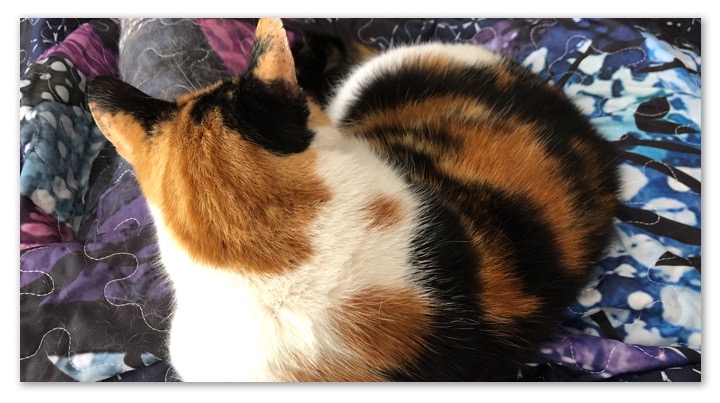
  • Scout Kitty purring on my lap. She, too, has been extra attentive. 
  • The lovely quilt with which I have wrapped myself. It was a gift from my best friend at Christmas time, and given that I can’t hug her today, it’s the next best thing. 
  • The audiobook I’m listening to. It’s good to give my mind something else to do. 
  • Peanut butter on toast. 
  • Coffee. In all honesty, I am thankful for coffee every day. You all should be, too… because even if you’re not drinking it, I am. 
  • Downtime, and the fact that I got all those exams and reports done. I really don’t think I could have maintained that pace much longer. 
  • The fact that I do not have to sit upright on stupid courtroom seats for one single minute of today. My spine has been brutalised this past week. 
  • Pain medication.  Enough said.
  • A Poet’s Curse. I’ve been reading it for therapeutic reasons last night and today. It helps. 

Why I Might Never Send Out Another Author Newsletter

They say having an email list is crucial for an author. It’s the one sure-fire way to reach your readers.

I am clearly the exception to that rule. 

Either I really suck at creating newsletters, or my subscribers signed up for the wrong list. 
It’s why I am very reluctant to  send out  newsletters now. 

When I send emails with other people’s books in them, my subscribers click through to those books. 
Do they click through to mine? Nope. 
And sadly, I get as many clicks to unsubscribe as I do on the links in my newsletter. 
It really is quite depressing. 

Yet I don’t do anything different than any of the dozens of authors whose newsletters I receive. Well, that part isn’t strictly true:

I don’t spam my books repeatedly.
I don’t email every week, let alone every day or two, like some do.
I don’t use high pressure sales pitches. 
I don’t beg, and I don’t whine. 
I don’t even include only my own content. I always share other books and bookish events that readers might be interested in. 

I have observed all those things happening in various different authors’ newsletters at different times, and have always tried to avoid doing anything I have found off-putting.

Honestly? I don’t know what I’m doing wrong, but I appear to be doing it consistently. 

I do suspect that maybe newsletter writing is not for me. I’ve given it a fair crack and it hasn’t been at all well received.

For now, I think I’ll stick to blogging. 

Courting Justice.

Today was hard. 

It was spent in the presence of someone I’d rather never set eyes on again. It was spent in pursuit of justice. It was spent blinking back tears and swallowing my revulsion. 

There is still anger burning within me that I cannot quench. My heart is heavy with the reopening of old wounds. 

And I am powerless, unable to do anything but look on and observe.  

I suppose it’s a good thing that I don’t have the psychic power to set someone on fire from across the room. I could do so, quite willingly, if I were able.

It’s fair to say that if a certain person did happen to spontaneously combust, I would make good use of my bottle of water by drinking it.  

I do not, as a rule, harbour such feelings toward other people. I am fully aware of my own sins and imperfections. But when people commit to the unconscionable and then defend it, any concept of “benefit of the doubt” or “we all make mistakes” is well and truly cast aside. 

I can feel another horror story coming on, but it’s not ready to be written yet. The ideas need to percolate more. And so, I must bide my time.

It will come… and, I trust, so will justice.

A Favourite Classic Novel: ‘Seven Little Australians’ by Ethel Turner

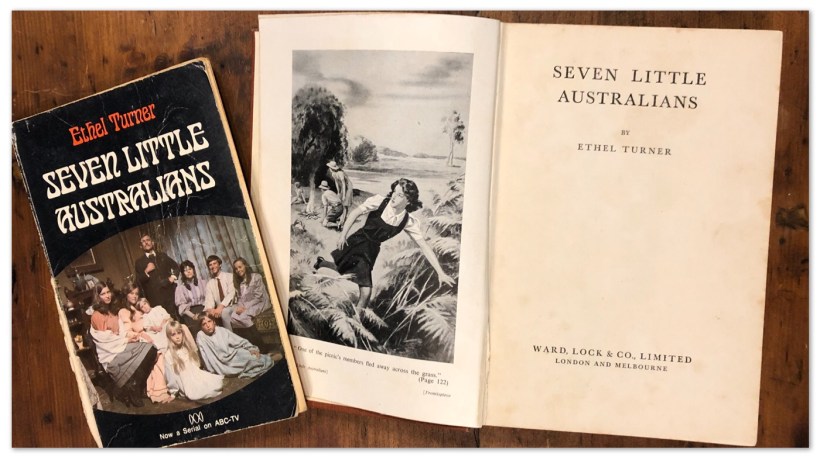
My copy of ‘Seven Little Australians’ is rather tattered and the worse for wear, a result of having been read many, many times.

This is an Australian classic that tells he story of the Woolcot family, and is set near Sydney in the late 19th century. The father was a gruff army captain, and his young wife was a sweet and kind stepmother to the children, most of whom were spirited and often mischievous.

The story is a lot of fun, but it also has some tragic moments. I remember reading the book for the first time when I was perhaps nine or ten. When my favourite character met a most untimely end, I put the book down and refused to read on. I couldn’t believe that an author would do such a thing! 

It was only when I talked about it with my great Aunt Judy, who had given me the book, that I resumed reading. She sympathised with me, of course, but told me I really needed to finish the book to understand that the author had a message and a purpose in making that happen.

If Auntie Judy had told me to read it standing on my head, I probably would have done. I adored her. As the sister of my grandmother, whom I had never bet because she died before I was born, Judy was much older than me, but we had always had a close bond. We were great friends and she would always call me “her little girl”. We enjoyed each other’s company enormously, and we both loved books,  She and her sister, my Auntie Enid, used to visit us regularly, and in school holidays or weekends, Mum and Dad would take us to visit them. Auntie Enid always brought me a pretty handkerchief as a gift, and Auntie Judy always gave me a book. On her next visit, we’d talk about the book and what we liked about it.   

The funny thing was, until the day I told her I couldn’t finish reading this book, I didn’t know that she had been similarly affected for a while. I also discovered that her name wasn’t really Judy. Her given name was Anne, and my mother had been named for her, but she chose to start calling herself Judy because the character of that name had been her favourite in this book, and she had also adopted that name for herself— her real name was Helen. 

So, this delightful book holds a lot of personally powerful memories and associations for me. Entirely apart from those, it’s a really good story that anyone who enjoyed Anne of Green Gables or The Adventures of Tom Sawyer would appreciate. It has a similar sense of fun and evokes an indulgent love for a naughty kid that is hard to resist. It also has a similarly sentimental tone about it, without being soppy at all. 

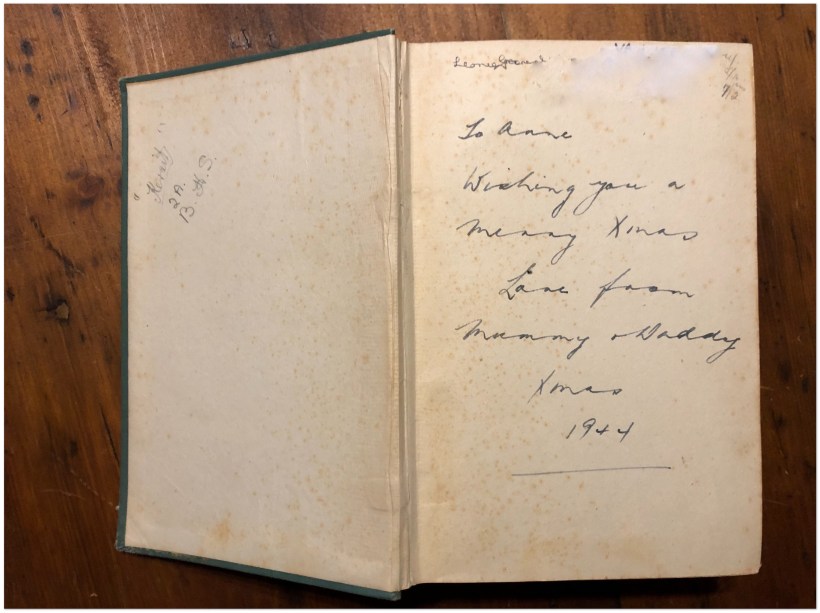
While my Auntie Judy is long gone, along with the rest of that generation of my family. I am very pleased that I still have this book and my memories. I also have my mother’s copy of two others in the series, given to her by her parents as gifts for her birthday and Christmas in 1944. I love looking at her handwriting inside the front cover, and feeling connected once again by our love of the same stories. 

I should also confess that I have laughed at myself heartily while writing about the memories of my outrage at an author killing off a character because, now that I’m an author, I knock people off all the time. My readers don’t tend to be children, though, and in all fairness, the people who die in my horror stories generally deserve what’s coming to them. 
Given that Auntie Judy also gave me a copy of  both Frankenstein and Dracula, and loved those stories, I am fairly sure she’d have enjoyed mine, too. My mother? Not so much. 

Oh well. You can’t please everyone. 

A Favourite Classic Novel: ‘Anne of Green Gables’ by L.M. Montgomery

Among its feisty, quirky main character Anne Shirley and the entire delightful cast of characters, the wonderful story and animated storytelling, and the magnificent Prince Edward Island settings which I have visited in person, there is nothing about this book that I do not adore. 

Anne taught me that it was a wonderful thing to love books and poetry more than anyone else I knew, and that it was better to be myself than to try to be someone else. She showed me how to embrace my quirks and to disregard the criticism of those made uncomfortable by them. 
This is a wonderful story, beautifully told, which I have loved since I first read it when I was seven years old. Yes, I was a prodigious reader even then, having started reading for myself at the age of three! Like Anne, I started out in the way I was destined to continue.

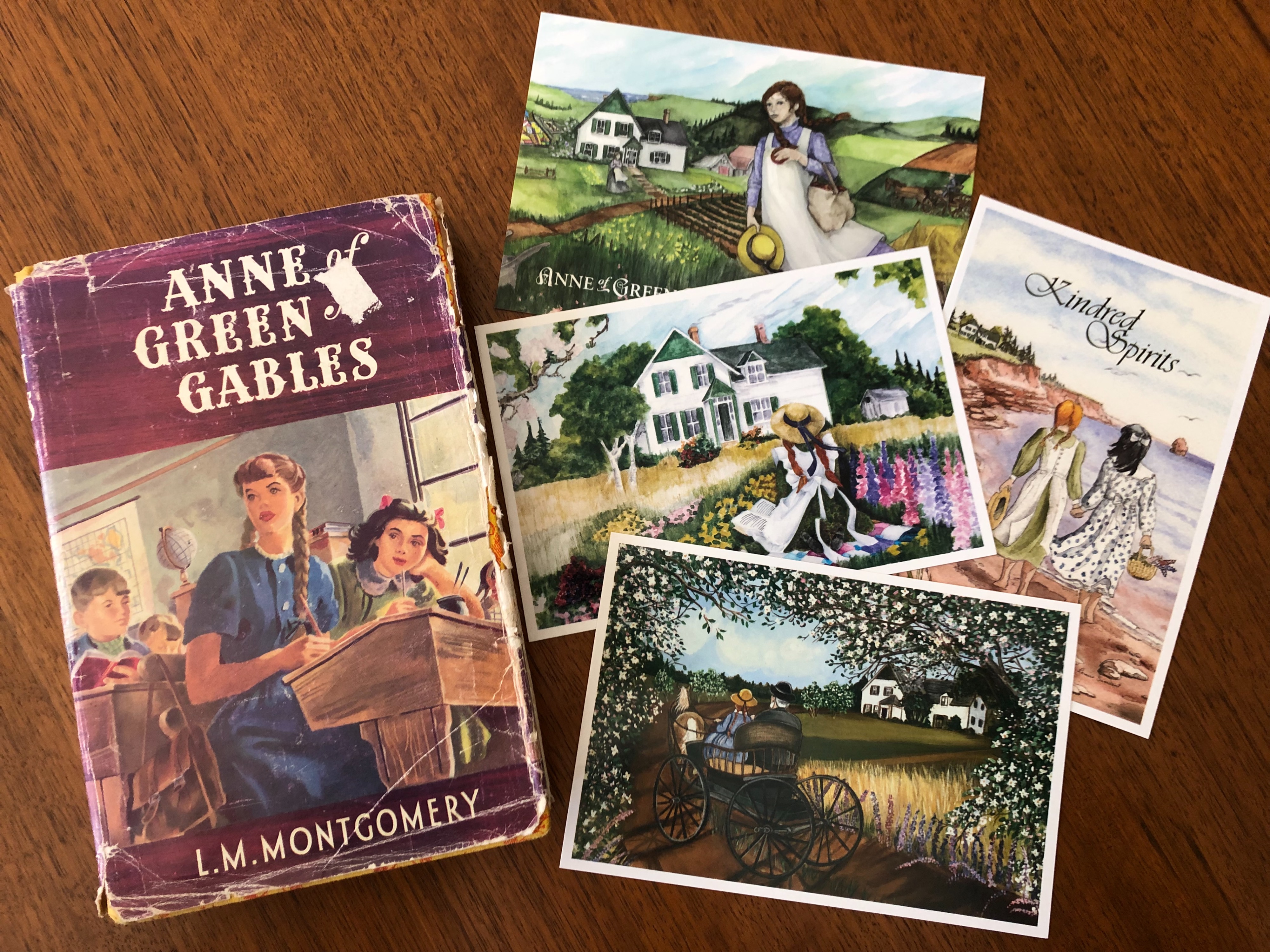
My vintage copy of ‘Anne of Green Gables’ and the postcards I bought at Green Gables on Prince Edward Island.

This vintage copy came to me courtesy of my favourite book rescue shelter, Spectrum Books in Warrnambool. It is the same vintage as the set I inherited from my mother although, sadly, her copy of ‘Anne of Green Gables’ has been lost.

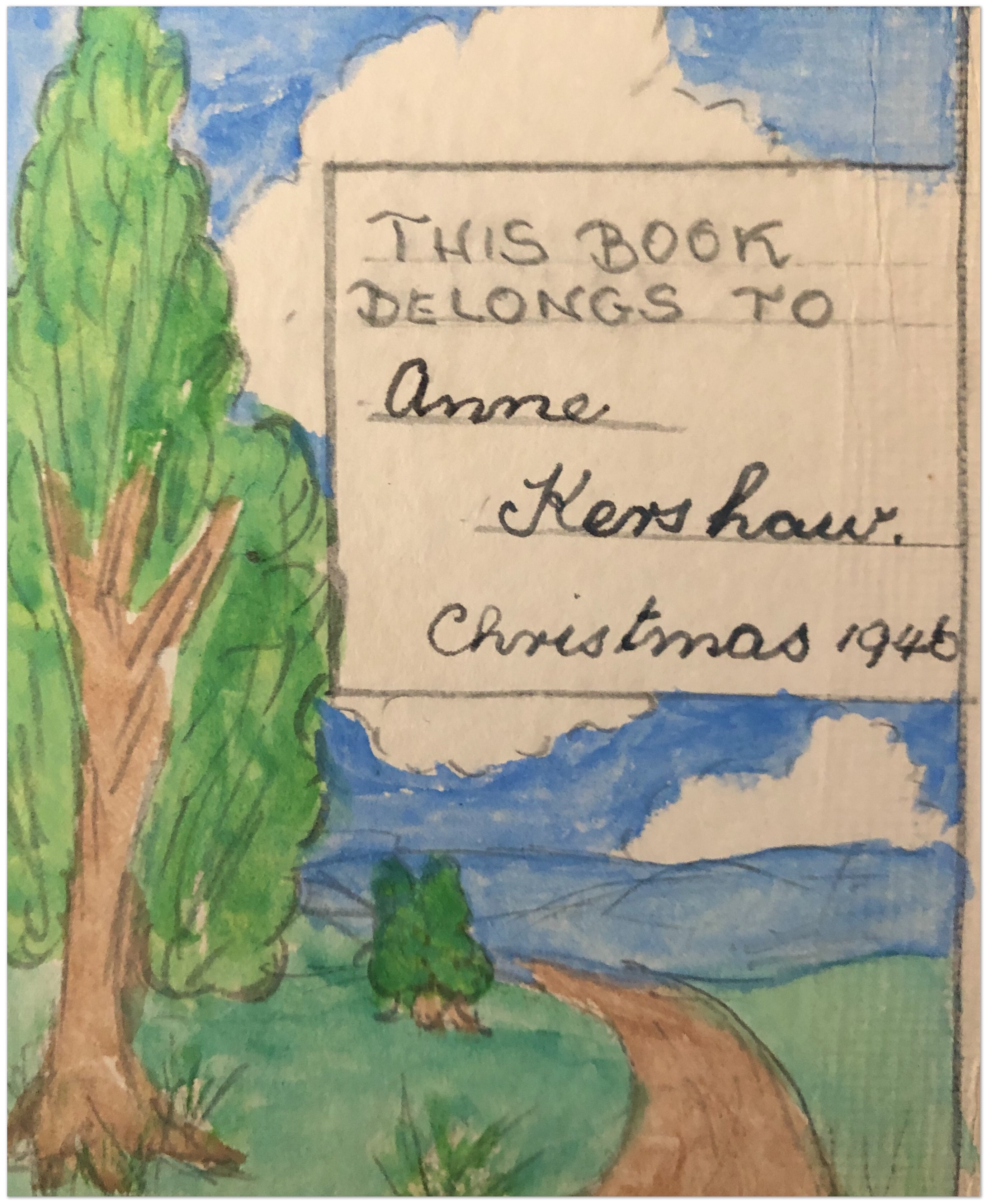
I remember that her book had an original bookplate inside the front cover which she had drawn and painted before adding her name and the date. For me, that is the saddest part of losing her book: her art is lost, too. This is her work inside the cover of the sequel, ‘Anne of Avonlea’, which she received along with the first book for Christmas when she was thirteen years old. 
Her full name was named Shirley Anne – named after both Shirley Temple and Anne Shirley of ‘Green Gables’ fame. 

ANZAC Day, 2019

101 years after the end of World War I, people all over Australia and New Zealand gathered today in remembrance of our soldiers, the nurses and doctors who supported them, and all those who served to preserve our freedom.

At our local ANZAC Day ceremony, I witnessed some lovely moments. 

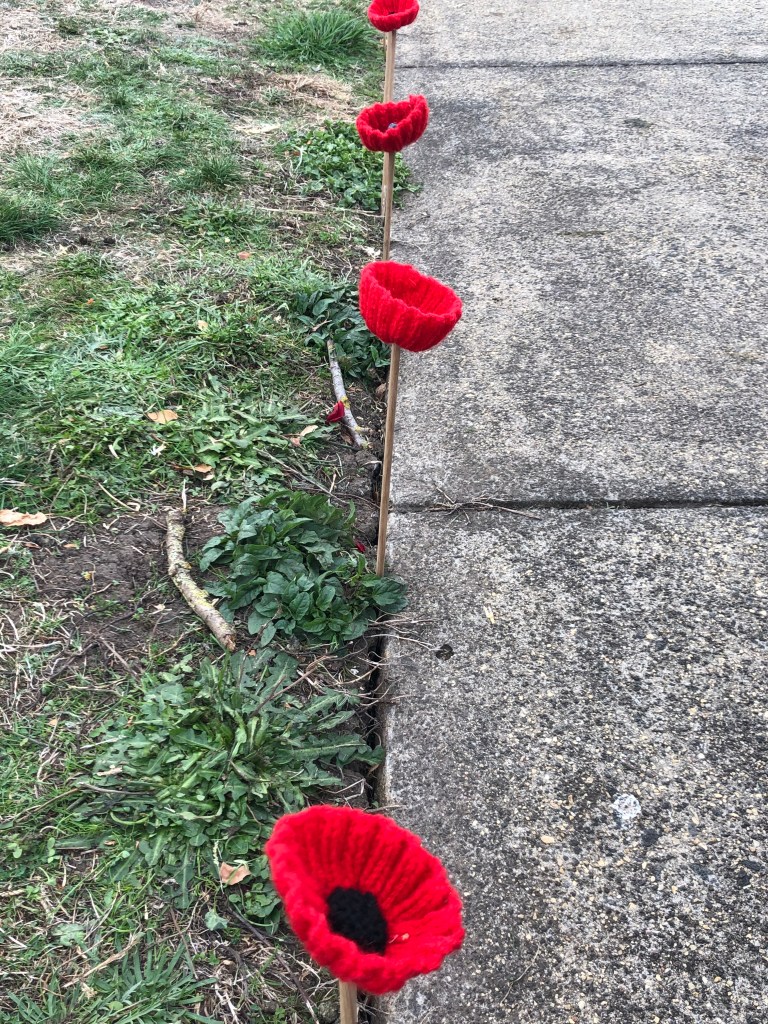
Members of the CWA had knitted poppies and used them to line the path to the cenotaph. They looked beautiful, but also served as a poignant reminder of those who had given their lives during the war.

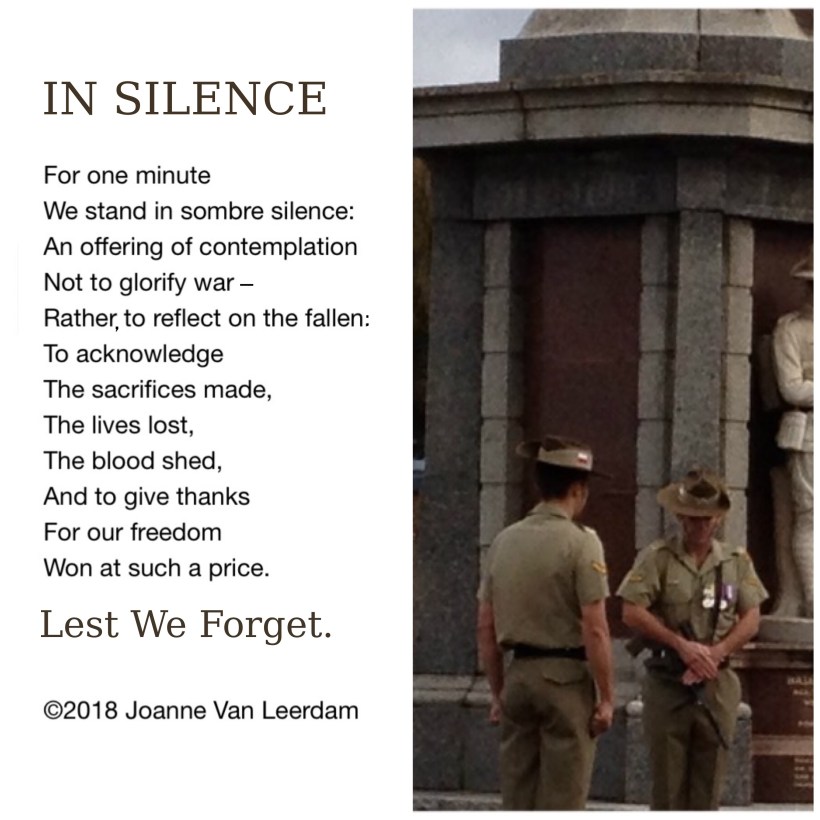
Local men who had served stood proudly, wearing their medals. There are fewer of them each year, but their number was supported by the children and grandchildren of those who have passed, wearing their forebears’ medals with pride and reverence.

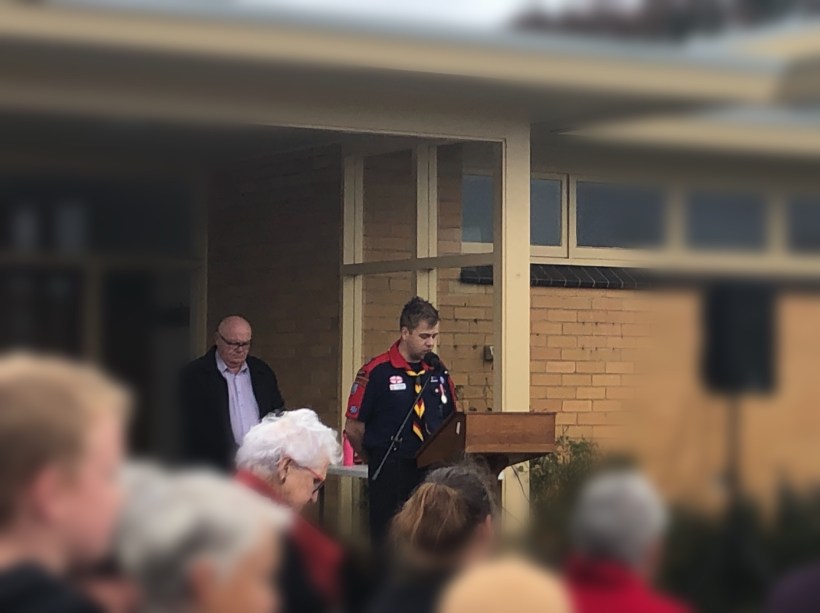
One of my own former students gave a beautiful heartfelt requiem for the fallen. He spoke so well, and really knew his history. He made me really proud. 

An elderly gentleman standing near me bent down, took his restless young grandsons in his arms and explained to them why they needed to be quiet and pay respect. He then pinned his own poppy on one boy’s shirt. The smile on that child’s face as he stood quietly beside his grandfather for the rest of the ceremony was a wonderful thing to see.

Several young people of my town raised the flags of Australia and New Zealand to half mast and stood with their heads bowed during the Last Post and the minute of silence before raising the flags to full height and saluting them. 

Over thirty local groups, organisations and businesses laid memorial wreaths at the base of the cenotaph. Young members of the local Scout group carried and laid wreaths for those who were too elderly or frail to do so, keeping pace with the older folk as they walked to and from the cenotaph. 

A teenaged member of my theatre company sang the national anthems of both countries with reverence and pride. Everyone in attendance stood and sang along with pride. Not everyone knew the New Zealand anthem, but plenty of folk did. 

After the ceremony, the local Scouts carried around plates of sandwiches and refreshments for the townsfolk who had congregated. Every single one of them said “Excuse me” before offering us something to eat. Every single one of them smiled and spoke respectfully.

I have no doubt that similar things happened in every locality across Australia at 11am today to commemorate all those who served to defend our country and preserve our freedom, because that is what Australians do on April 25th.  

Poem: ‘Good Friday’ by Christina Rosetti

This poem expresses what I suspect many people, even very committed Christians, feel on Good Friday: we should weep more than we do, we should feel more than we feel, in response to Christ’s death on the cross.

While it’s true that faith and feelings are very different and distinct from one another, Rosetti observes here the misery and doubt that comes from knowing and believing in Jesus yet feeling as though she remains unaffected by her knowledge and faith, and expresses most eloquently the desire for God to help her to believe more fervently.

Whether or not one is a Christian does not limit their ability to be affected by the pathos in this poem, nor to consider the power of the imagery with which the poet evokes that sense of lonely difference from other people that pervades it. 

‘Good Friday’

Am I a stone, and not a sheep,
That I can stand, O Christ, beneath Thy cross,
To number drop by drop Thy blood’s slow loss,
And yet not weep?

Not so those women loved
Who with exceeding grief lamented Thee;
Not so fallen Peter, weeping bitterly;
Not so the thief was moved;

Not so the Sun and Moon
Which hid their faces in a starless sky,
A horror of great darkness at broad noon–
I, only I.

Yet give not o’er,
But seek Thy sheep, true Shepherd of the flock;
Greater than Moses, turn and look once more
And smite a rock.

Poem: ‘Loveliest of trees, the cherry now’ by A.E. Housman

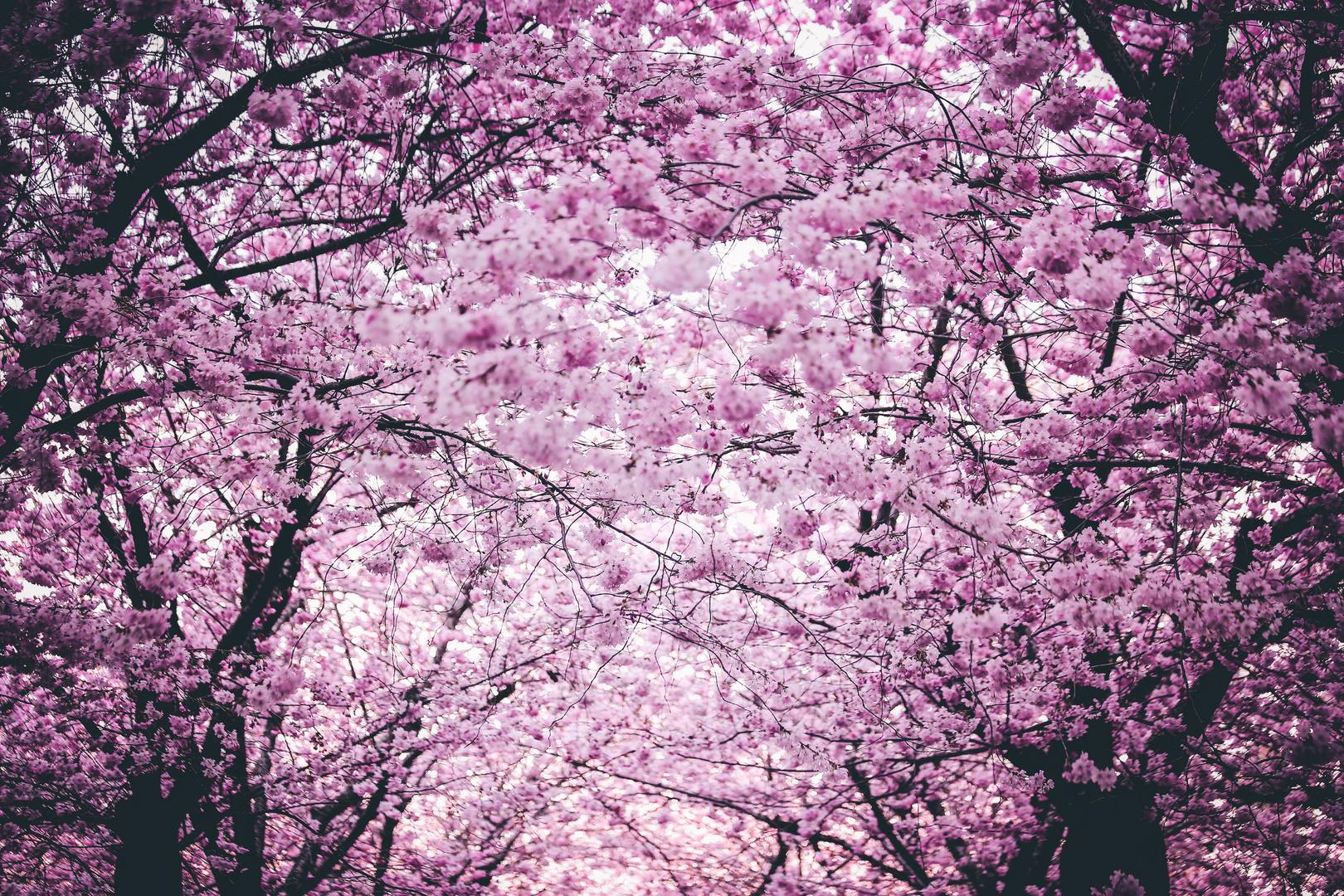
This poem is perfect for sharing just a few days before Easter, being the time of the year when it is set.

A.E Housman’s ‘A Shropshire Lad’ is a relatively small volume of poetry that he self-published in 1896, containing some really lovely poetry and delightful imagery such as that we see in this poem, the second in that collection.

While the poet is young – twenty years old – and acknowledges that he probably still has fifty years ahead of him, his life expectancy is framed in terms of only fifty more opportunities in his life to see such a beautiful tree. That’s why he’s going to take every opportunity to observe the beauty around him while he can.

This brings to mind the Latin phrase made popular by the film ‘Dead Poet’s Society’: carpe diem! Sieze the day!

The poem is a great reminder to embrace the joys we find in life while we can, and to make the most of our opportunities to stop and smell the… blossoms.  

Loveliest of trees, the cherry now

Loveliest of trees, the cherry now
Is hung with bloom along the bough,
And stands about the woodland ride
Wearing white for Eastertide.

Now, of my threescore years and ten,
Twenty will not come again,
And take from seventy springs a score,
It only leaves me fifty more.

And since to look at things in bloom
Fifty springs are little room,
About the woodlands I will go
To see the cherry hung with snow.

That certainly lays to rest the popular misconception that Indie poets are somehow lesser than others, doesn’t it?

Never Too Busy For Poetry!

This weekend is crazy busy. One evening and two full days of rehearsal for the show I’m in, which hits the stage on the first two weekends of May. 

The show is Monty Python’s Spamalot, performed by Camperdown Theatre Company. We’re working hard and having a blast rehearsing it, although one of the hardest parts is not laughing at the genuine comic talent of the actors.

It’s enormous fun, but it’s fair to say it’s exhausting. 

While most of my social media for the weekend could be scheduled and was organised by Friday, and there were only a few “on the spot” things I needed to do, I decided ahead of time to spend as little time online as I could over the weekend. Any spare time I have will be spent resting and relaxing, which means reading.

One of the lovely things about poetry is you can read it, and keep thinking about it at odd moments during the day. It adds a dimension of beauty and calm to a hectic schedule, and opportunities for reflection that might not otherwise offer themselves.  Even just a few lines can change a perspective and transform a moment into something that lifts the entire day. 

Another lovely thing about poetry is the sense of connection the reader has with the poet. Despite the fact that many of my favourite poets have been long dead, I can still experience a moment of empathy and understanding that reminds me that I’m not doing life in a bubble.

That is my hope for my own poetry. I may not become famous, or even widely known, for the poems I write, but I know that my own readers experience that same connection with me because their reviews and communications tell me so. 

So, even in the midst of a busy weekend, I’ll always make time for a little poetry.