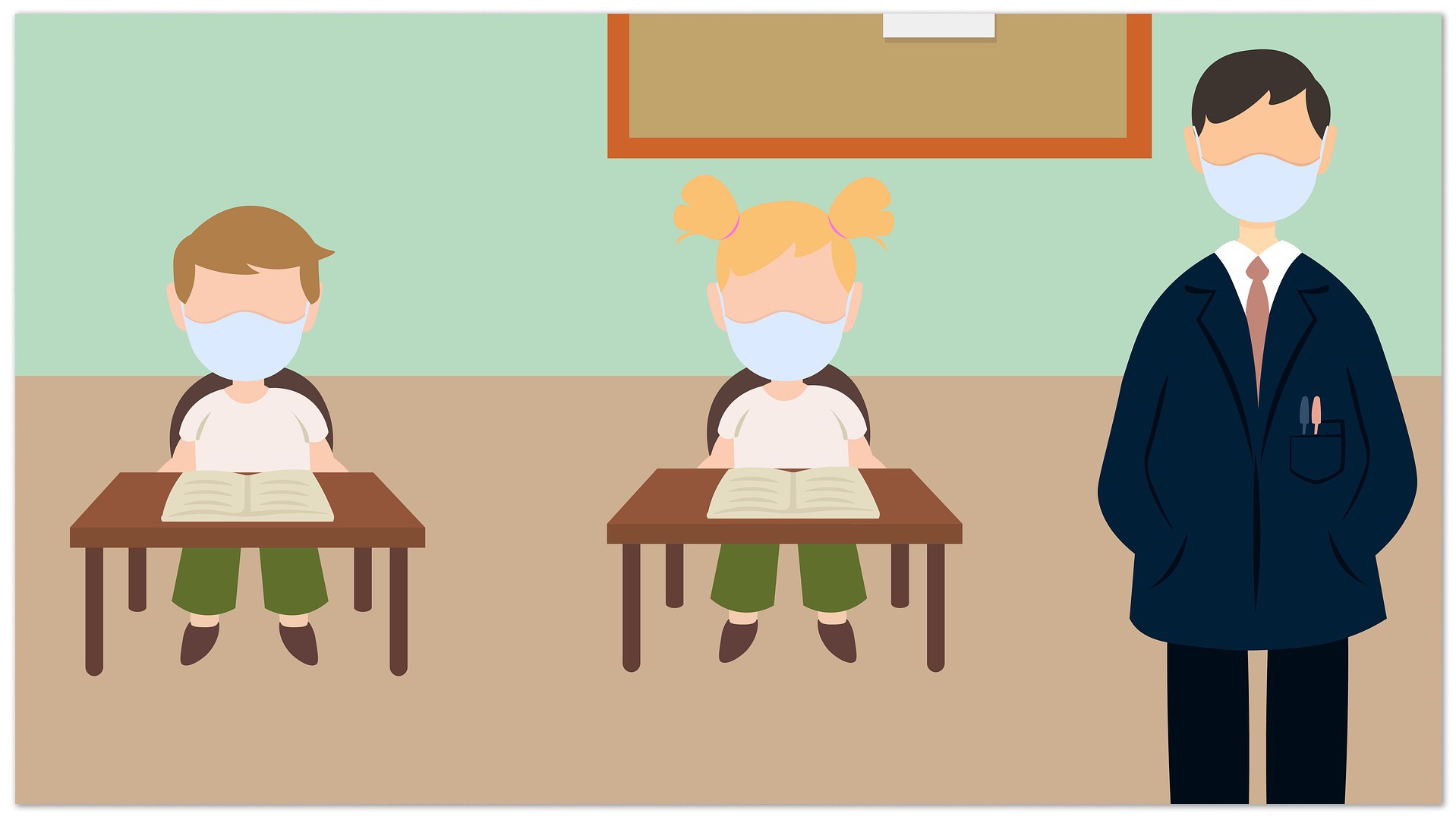
Back in the Classroom: Putting My Teacher Mask On

Thoughts on the first day of face to face teaching after months of lockdown and teaching online.

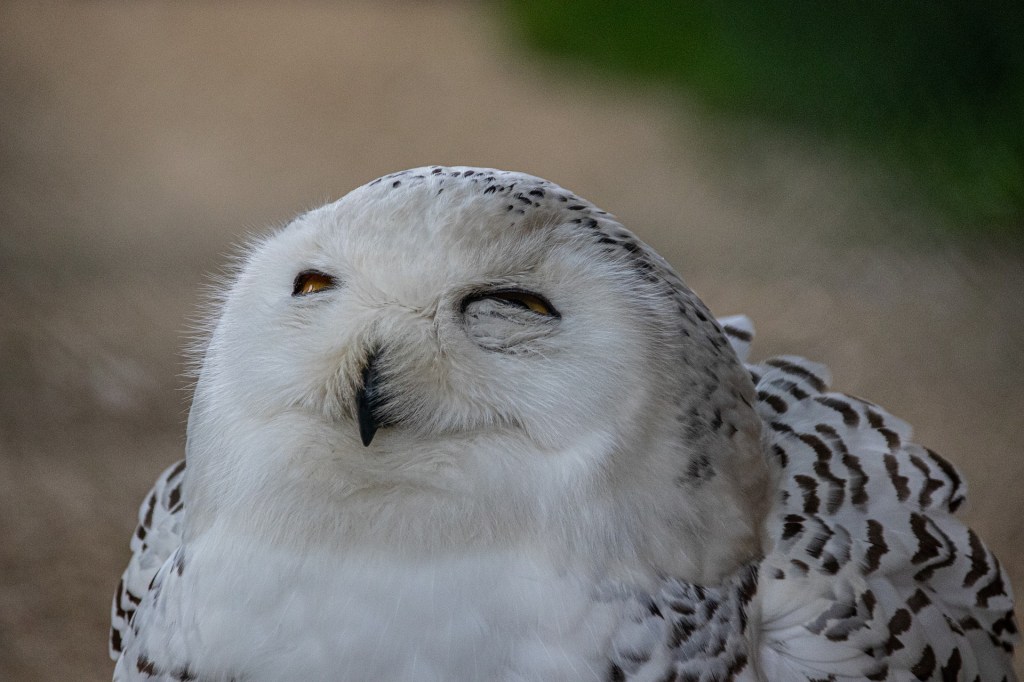
Image by HaticeEROL on Pixabay

After nine weeks of only seeing my students in little squares on my computer screen, a two week term break, and a final week of online classes, we resumed face to face lessons today. Things were a little bit different than they used to be, though. 

The desks were distanced from one another as practically as they could be. The bottle of sanitiser at the front of the room had been joined by another and, this time around, the students didn’t need reminding to use it. Most obviously, though, we were all wearing masks. 

We used to talk about “putting our teacher hat on” when we walked into the classroom, and taking it off again at the end of the day. I guess now it’s our teacher masks we have to consciously think about wearing, as this seems to be the new normal— in Victorian schools, at least— for the foreseeable future. 

The wearing of masks is something disliked by many students and staff alike. Personally, I don’t mind wearing one, and I am happy to not be breathing in whatever germs are floating around the room. Most of my students seemed to manage without any difficulty, but getting some of them to wear their masks properly and not keep touching them proved to be yet another new classroom challenge.

Still, there were some good things going on. 

The tone and humour in my classrooms was generally positive. One kid who doesn’t even like me much told me it was good to see me. I laughed and told him to give it time, and everyone laughed at that because we all knew it wouldn’t last.

Marking the class roll was significantly easier and quicker than online: once again, I could see at a glance who wasn’t there. Marking the roll in online classes was something I always found arduous. Today it took two seconds. 

I could see right away who wasn’t doing what they should be, and I could move around behind them and see their screens. There is no more effective way to make someone work than to be able to see their screen. 

At the same time, I could instantly encourage those who were working hard amd staying on task. It’s so much easier to be positive when you can be both natural and proactive about it. The added bonus is that when you praise and encourage one student for doing a good job or making a great effort, it tends to make those listening more inclined to want to do better and get some praise, too. 

Those few kids who have avoided doing much at all since we returned to online schooling finally had to do some work. Those who did not engage in online lessons found themselves no longer able to just sign in and zone out or leave the room. And because I was wearing a mask, they couldn’t see my wry grin as I watched them working. 

I was able to move around the room and look over the shoulders of my students. Delivering instant feedback and reminders about spelling, punctuation and paragraphs is significantly easier than trying to give that kind of advice online.

All things considered, while the day was not without a few issues and challenges, it’s fair to say that the positives outweighed the negatives. It’s hard not to be satisfied with that. 
Chasing Waterfalls.

In wilful defiance of TLC’s advice, we spent today chasing waterfalls. Thankfully, though, we were visiting real waterfalls rather than metaphorical ones. 

It was great to get out in the sunshine and fresh air, and to enjoy a change of scenery after months of social restrictions and another term of teaching from home. 

I visited both Nigretta Falls and Wannon Falls near Hamilton, Victoria, with my bestie in July, but my husband hadn’t been there before, so it was nice to be able to visit with him. 

Western Victoria has had a lot of rain the past couple of weeks, so the falls were both far more spectacular than they were in July. The volume of water at Nigretta Falls actually made it look completely different than it did just a few months ago. Wannon Falls had more water, but still looked much the same. 

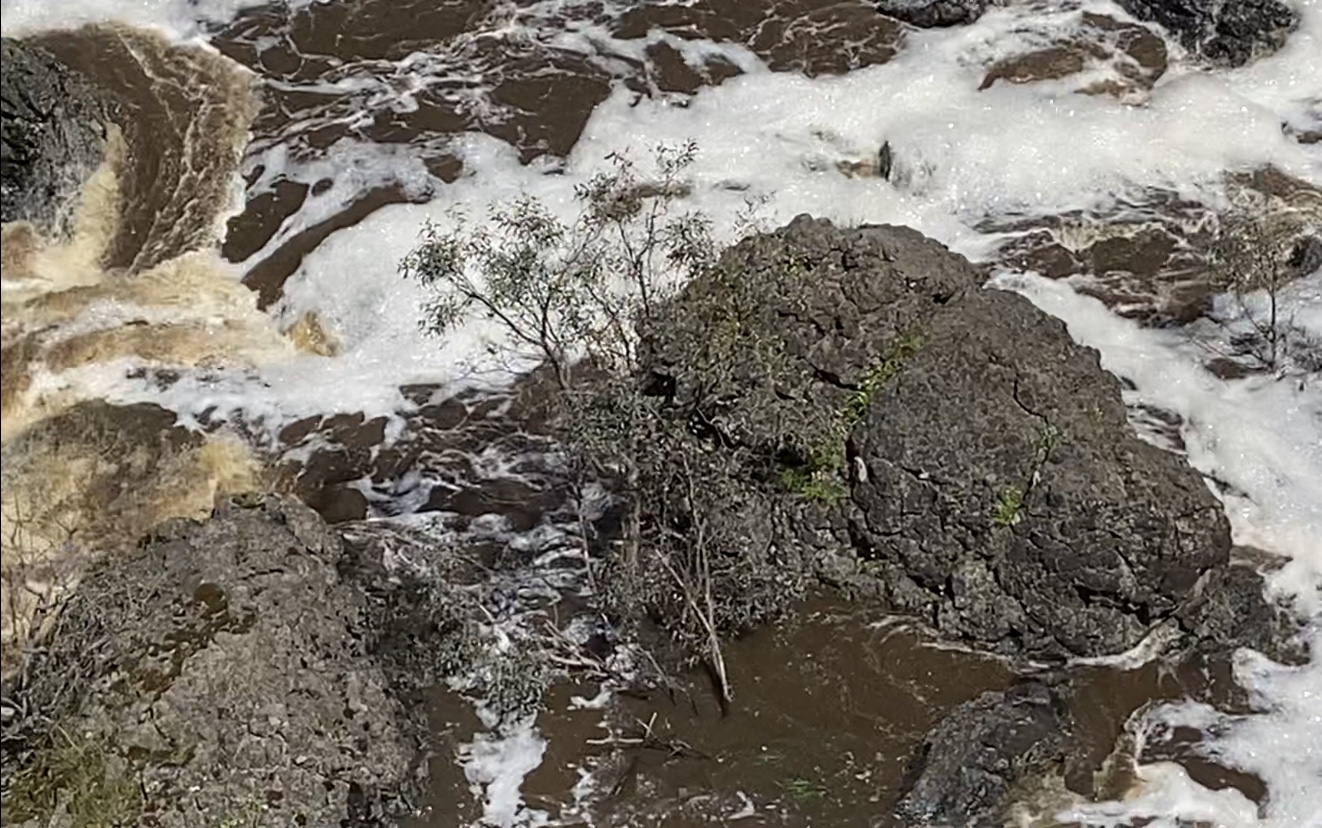
While watching the water cascading over Wannon Falls and flowing away, I spotted one resilient little tree growing in the river. It is barely visible in the bottom corner of the image above, but it’s there.

I thought about how the river just washes around it and keeps going, but rather than being washed away, that little tree stands its ground. The rocks around it may give it some protection and reduce the drag of the water, but even so, it must have very good roots. 

It occurred to me that I am a bit like that tree. 

This year has been a powerful and relentless river, and the last four months in particular have swollen that river with a lot of extra rain.  I’ve learned to stand my ground and, to purposefully allow many of the pressures of life to just pass me by. I’ve had to. My priority has been to just hang on and try to not get completely overwhelmed and washed away.

Chances are, without the rocks around me, I might have been broken or got washed away. I am so thankful for those people who have supported and protected me. I’m thankful for the powerful roots and protective rocks of faith, family and friends who have held me and sheltered me, each one of them helping to deflect the water in their own way.  

Hopefully, the floodwaters will recede soon and both that little tree and I can start to grow and flourish rather than merely surviving.

Chasing Waterfalls.
#LifeLessons #thoughts #grief #resilience

Grawlix.

Grawlix is an unusual word that most people haven’t heard of, although they’ve probably seen grawlixes many times before. 

A grawlix is a combination of symbols— most commonly the ones above the numbers on the keyboard— used in place of a offensive language in comics, cartoons and illustrations. It works as a visual, rather than verbal, euphemism.

The term was coined in the 60s by Mort Walker , the creator of the comic strip Beetle Bailey, although the practice had already been in use long before it was given a name.The grawlix is a clever and very effective way to express emotions like anger or frustration without actually offending anyone or causing problems with editors and censors. 

An alternative term that has been suggested is the obscenicon, which is very clever but doesn’t seem to be getting a lot of traction. Time will tell, as it always does when it comes to words and language. 

Somehow, grawlix just sounds more evocative and kind of sweary in itself.

Sources:
Lexico
Merriam-Webster
Grammarphobia

 Grawlix.
#language #words #swearing #interesting #language #blogpost

Asterisk.

The asterisk is the handy little star symbol* that we use to indicate that there is more information attached to something, to denote the existence of a footnote, to add emphasis to a word or point of notice, or to blank out letters in offensive words that we don’t want to type or write in full. 

The word asterisk means ‘little star’ and has been used as a noun since the late 14th century— well before the invention of the printing press— while the verb form “to asterisk something” was first recorded in 1733. 

Asterisk comes to use from Latin via Greek, but actually goes back to Proto-Indo-European roots, which is about as far back as any language or individual words can be traced. The PIE root *ster- is the source of the words for star in numerous languages including Hittite, Sanskrit, Greek, Latin and, thus, English. 

Therefore, the word asterisk is related to asteroid, aster daisies, disaster, constellation and starfish, among others. It is also a cousin of names such as Esther, Estelle and Stella.**  

More recently, the asterisk also inspired the name of Asterix, the hero of the classic comics by Goscinny and Uderzo. Those books are characteristically full of puns and word play, and the names of Asterix and Obelix are derived from mispronunciations of asterisk and obelisk respectively. 

* located above the 8 on a keyboard
** They are not close cousins, but more like the kind who are jealous of each other because they all want to be the most popular starlet in the family, and only make small talk with one another at family reunions. 

Source: Online Etymology Dictionary

Asterisk
#etymology #words #history #asterisk #language #typography

Tmesis: Abso-flaming-lutely!

Tmesis— pronounced teh-MEE-sis—  is an unusual word that many people will never have heard of, even though it’s the name for something we do frequently and quite naturally.

Tmesis is the name given to that linguistic behaviour by which we divide a word and insert another word into the middle. In the 21st century, the inserted word is often a swear word, but it doesn’t have to be. 

Image by hpgruesen on Pixabay

We do it to add emphasis and increase the strength of what we’re saying. 

The Ancient Greek word temnein meant ‘to cut’, and from that came the word tmesis, which meant ‘cutting’. It refers to the cutting or division of the first word in order to insert the second. 

The practice is centuries old. There are examples of it in Old Irish and Scandinavian poetry, although the earliest written examples of it being used in English only date back to the 1500s. 

Shakespeare used tmesis in a number of his plays:

  • “This is not Romeo, he’s some other where.” — Romeo and Juliet
  • “How heinous ever it be” — Richard II
  • “That man – how dearly ever parted.” — Troilus and Cressida

Tmesis also exists in the poetry of John Donne:


“In what torn ship soever I embark,
That ship shall be my emblem,
What seas soever swallow me, that flood
Shall be to me an emblem of thy blood.” — Hymn to Christ

From these examples, it is clear that the device has always been used to strengthen the idea or emotion being communicated, which is exactly how it’s still used today. 

In Australia, where we seem to love a good swear word and the power it gives our expressions, tmesis is so common that it seems to me to be part of our linguistic identity. Inserting a term such as ‘flaming” or ‘flipping’, or one’s preferred swear word, into words and phrases is a standard part of our speech. From “abso-flaming-lutely’ to “no freaking way!”, Australians have made tmesis their own without ever knowing that it was a literary device or that it has a name. 

Tmesis: Abso-flaming-lutely!
#language #English #grammar #speaking #englishvocabulary #wordynerdbird #blogpost 

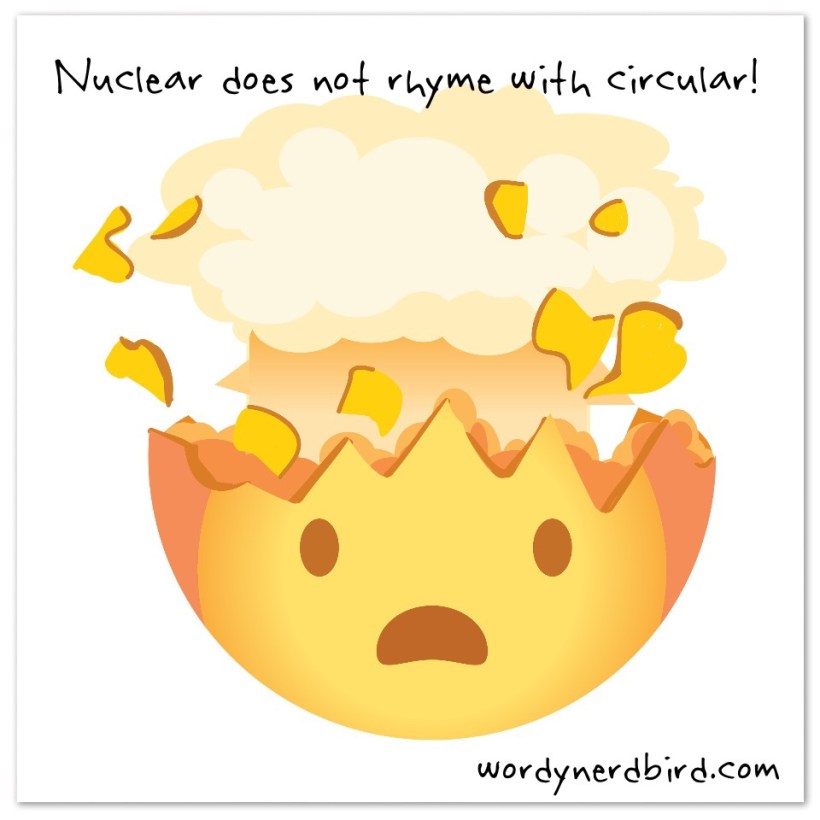
Nuclear Does Not Rhyme With Circular

This post might come across as some kind of linguistic snobbery, and while that’s not my motivation, it is a risk I am willing to take. 

The common mispronunciation of nuclear is something that drives me absolutely nuts. 

So many people pronounce it as nucular ( nyoo-kyoo-lar) but that is not how it is spelt or pronounced. I’ve even heard scientists on the radio and TV who say it that way, despite the fact that scientists of all people should know better. Did they get through however many of years study at university calling the central body of a cell the nuculus? I think not.

Nuclear is a three syllable word, pronounced nyoo-klee-ar.

If someone can say the words ‘new’ and ‘clear’ correctly, they should be able to manage ‘nuclear’ by just mashing those two words together. Think of it as linguistic nuclear fusion. 

It really isn’t rocket science. 

The Appeal of Poetic Justice

Why is it so satisfying to see horrible people get what’s coming to them?

Image by pixel2013 on Pixabay.

Poetic justice is the idea that someone will get, or has got, what they deserve as a consequence of their behaviour. It can be either a reward or a punishment, and these are sometimes thought of as two sides of the same coin: a perpetrator will suffer while their victim has the satisfaction of seeing that justice has been served. 

It is similar to the concept of karma, by which one’s intent and actions have a direct effect on their future and wellbeing. 

Another related idea is divine retribution: a divine being or the universe itself punishing someone for their actions. 

Of course, these concepts are highly subjective. What someone deserves or not depends on one’s perspective. If person A has suffered as the result of Person B’s actions, then A is able to interpret B’s bad fortune as poetic justice or karma, while B might well consider that they are a victim and have reason to hope for their own vindication. Realistically, those two people may never join the same dots. 

So why is the idea of poetic justice so appealing?

It can make someone going through a bad situation, or wearing the scars of previous suffering, feel that they are less alone. It can give them hope that and that someone or something somewhere might notice their situation and act in their favour. Ultimately, we would probably all want God or the universe or the supernatural or the powers that be to be on our side and rule in our favour. 

The thought of someone having to pay or suffer for what they’ve done to us or to others we care about is powerful. It’s also relatable: as much as we decry revenge and know that it doesn’t solve anything, it’s still an attractive prospect— particularly if we haven’t had to actually do anything to make it happen.

Hoping for poetic justice, or karma, or divine retribution, can also function as a passive way of taking back some control from those who have hurt us. How many of us can honestly say that we haven’t thought “Well, he had THAT coming!” when something bad that has happened to a horrible person?

They are natural thoughts and feelings, and they need to be acknowledged and worked through. 

Still, as understandable as those feelings may be, we cannot afford to unpack and live there, no matter how much some of us may want to. It’s not a healthy place to stay. We have to move on and find a way to prevent our feelings about someone else from controlling our behaviour and attitudes.  

Perhaps that’s why seeing poetic justice delivered to fictional characters— or, indeed, to public figures who behave badly—  is so satisfying. It may not be happening to our own nemesis, but at least it’s happening to someone else’s. 

The Appeal of Poetic Justice
#PoeticJustice #Karma #Retribution #satisfaction #observation #blogpost

Several of my books explore themes of poetic justice and seeing people who behave horribly punished for their actions in one way or another.
They are available via jvlpoet.com/books and in all digital stores. Paperbacks are also widely available via Amazon and Book Depository.

Irony, Dramatic Irony, and the Plot Twists of 2020

Image by sapphoris on Pixabay

Irony occurs when one thing is expected, but the opposite thing happens or turns out to be true. 

When the audience knows or understands something that the characters in a story or on stage or screen do not, that is called dramatic irony. 

It should be noted, too, that an event or outcome being ironic for one person or group does not preclude it being predictable for other people

Both irony and dramatic irony are much-loved devices for writers, but they do not only exist in literature and film. 

In fact, one could argue that the reason writers use these techniques is because they know that these things happen in everyday life, and that people love it when they do. The profundity of natural irony, dramatic or otherwise, is like crack for writers, who are often keen observers of human nature and behaviour.

Irony is a powerful thing. It can evoke all sorts of responses, ranging from pity to laughter to judgement, depending on the perspective of each onlooker. It can bring about self-pity, humility or significant changes in attitude and behaviour for those who experience it. 

When well executed by an author, irony creates plot twists and complications that add depth and complexity to a story, but which also make the experiences of the characters relatable and intriguing for readers. 

When expertly executed by the universe, though, irony can blow one’s mind. 

Without being political, it was ironic that Boris Johnson dismissed the potential threat of COVID-19, counted on the population developing herd immunity, and then got so sick with the virus that he ended up crediting the medical team who cared for him with saving his life.  

Likewise, Trump denied the existence or threat of the virus and casually dismissed the illness and death of thousands of his own people. He refused to wear a mask or observe social distancing, he insisted on holding social events and campaign rallies against all medical advice. That he has tested positive and ended up in hospital with the virus is loaded with both types of irony. 

Trump’s mockery of Hilary Clinton when she suffered pneumonia during her campaign in 2016 was not only a dreadful thing to do, it has also proven now to be deeply ironic. 

There is little doubt that 45’s illness is a plot twist that he didn’t see coming. 

One would hope that his treatment with highly experimental drugs that others with the illness haven’t had access to doesn’t end up doing more harm than good. That would also be ironic. 

Personally, I find it impossible to feel sorry for him. 

My empathy lies with all those Americans who suffered the disease and who lost loved ones to it while he proclaimed it as fake, and with all those who cannot afford the instant access to hospital care and fancy drugs that he can. 

Irony, Dramatic Irony, and the Plot Twists of 2020
#irony #PlotTwist #TrumpCovid #BorisJohnson #JustSaying #blogpost

Covid 19 and the Great Pestilence: How Much Have We Really Learned?

Image by ivabalk on Pixabay.

This post reminds me of the lessons I’ve been doing with my Year 8 History class about Medieval Europe and the Black Death.

My students were very interested in the plague, and surprised by the fact that this was when quarantine, social distancing, and the wearing of masks became the go-to modes of dealing with contagious disease. They were also surprised by the time it took the Europeans to understand the importance of basic hygiene, and how very long it took to develop good medical knowledge.

These lessons were highly relevant in These Times, and helped the kids to understand why we’re being reminded to wear masks, wash and sanitise our hands, and keep away from other people. It was good to be able to discuss how relevant history can be. 

We all agreed we are incredibly thankful for modern medicine, science, vaccines and health care. 

It does strike me as bizarre, however, that with all the scientific and technological advances we’ve made, we still have to remind people to wash their hands. Some things, it seems, never change. 

viscountessw's avatarmurreyandblue

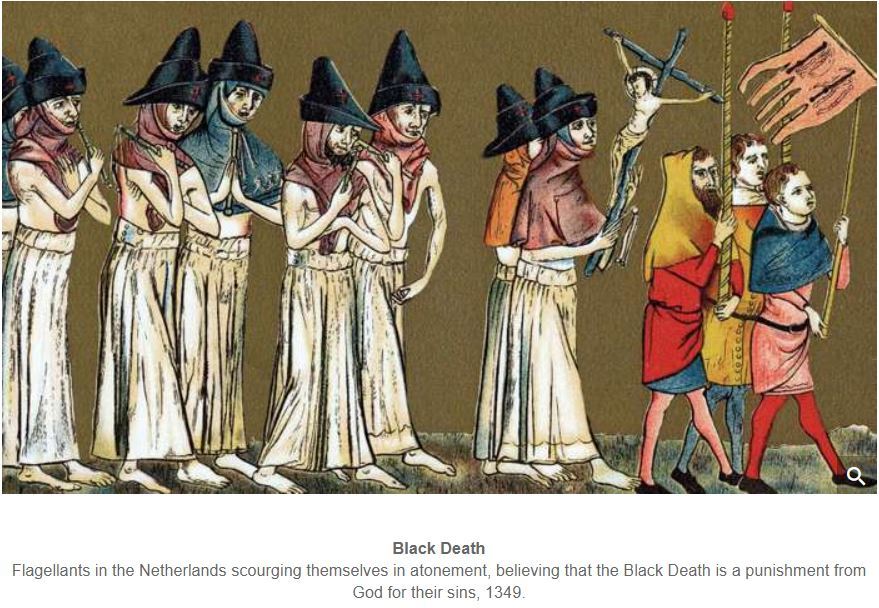
This illustration is simply that, a suitable illustration – the Flagellants followed the first wave of the Great Pestilence and aren’t mentioned here.
from https://www.britannica.com/event/Black-Death

In this time of Covid 19, when we don’t know why it seems to affect men more than women, and some ethnicities but not others, it is interesting that back in the 14th century the tsunami of the Great Pestilence of 1348 was followed by lesser waves that differed in many ways from the original. The first of these, in the England of 24 Edward III (January 1360 to January 1361) was called the secunda pestilencia and appeared to affect mostly the very young, babies and adolescents. Women were not affected in the same way.

The Chronicle of the Greyfriars of King’s Lynn notes: “…In that year [1360] began a plague among Londoners at about the feast of St Michael, where at first infants…

View original post 471 more words

What A Dictionary Does – and Does Not – Do

A dictionary is not a rule book for the language.

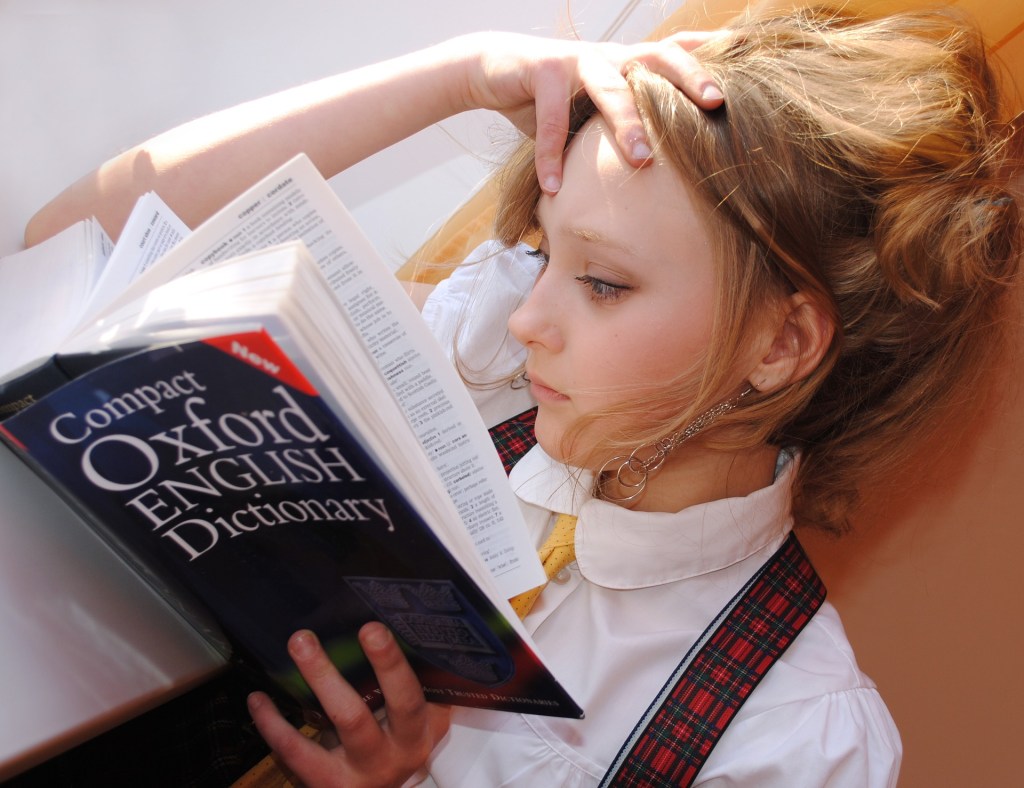
Image by libelulle789 on Pixabay.

This might seem like a no-brainer, but there seems to be some misunderstanding about the function or purpose of a dictionary, particularly on social media. 

A good dictonary serves a number of functions:

  • Dictionaries record language as it is used. Words are added to a dictionary when they become frequently used by the people who speak the language. One can’t just make up a word and apply to have it included. It needs to become part of the commonly spoken language of the people first. 
  • Dictionaries give meanings of words. 
  • Dictionaries provide accepted spellings of words, and often include alternative spellings. This varies according to the country of publication, particularly when it comes to the differences between English and American spellings of words. 
  • Dictionaries often give advice as to how a word should be pronounced. This too will vary according to common usage in the country in which the dictionary is published. Some dictionaries use the regular alphabet to achieve a phonetic respelling, while others use the International Phonetic Alphabet
  • Online dictionaries do all that, and also offer voice recordings to demonstrate pronunciation. They also provide direct links to thesaurus entries and related words. 
  • Dictionaries can also settle arguments. They are helpful in adjudicating spelling games such as Scrabble, and settling arguments about how a word is spelt or what it means. 
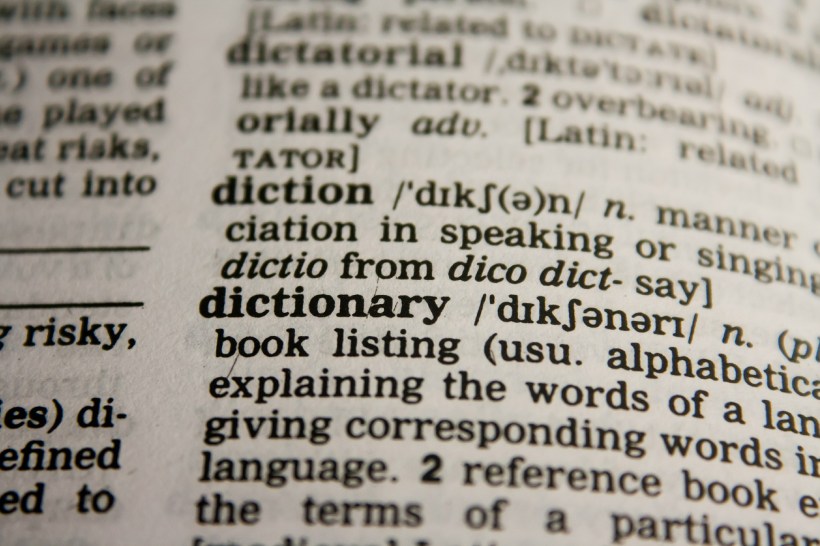
Image by PDPics on Pixabay

There are, however, things that dictionaries neither seek nor claim to do. 

  • A dictionary is not a rule book for the language. Just because a word isn’t in the dictionary does not actually mean that it’s not a word. If people say it, and other people understand it when they do, it’s a word. 
  • An Australian dictionary is not useful for recording American English, and vice versa.
  • A dictionary generally doesn’t give the etymology of a word, although it might suggest that it’s an old, obsolete or archaic word.
    There are etymological dictionaries that do this, but they are far less popular than the regular kind of dictionary with which most people are familiar. Some etymological dictionaries are specific to a particular area of study, while the Online Etymological Dictionary is a vast resource of the history of a plethora of English words and phrases.
  • A dictionary generally won’t include words that have fallen out of use. In the large dictionary on my desk at home, words like ‘forswunk’ and ’trustful’ are no longer included, while they would have been many years ago. It doesn’t mean they are no longer words: it simply means the likelihood of someone wanting to look them up is considered far less than someone wanting to look up ‘exhausted’ or ‘melancholy’ instead. 

What’s the best dictionary to use? 

Most people will find the greatest value in a dictionary which is compiled, written and published in the country in which they live and work. Most people will want one that is up to date. 

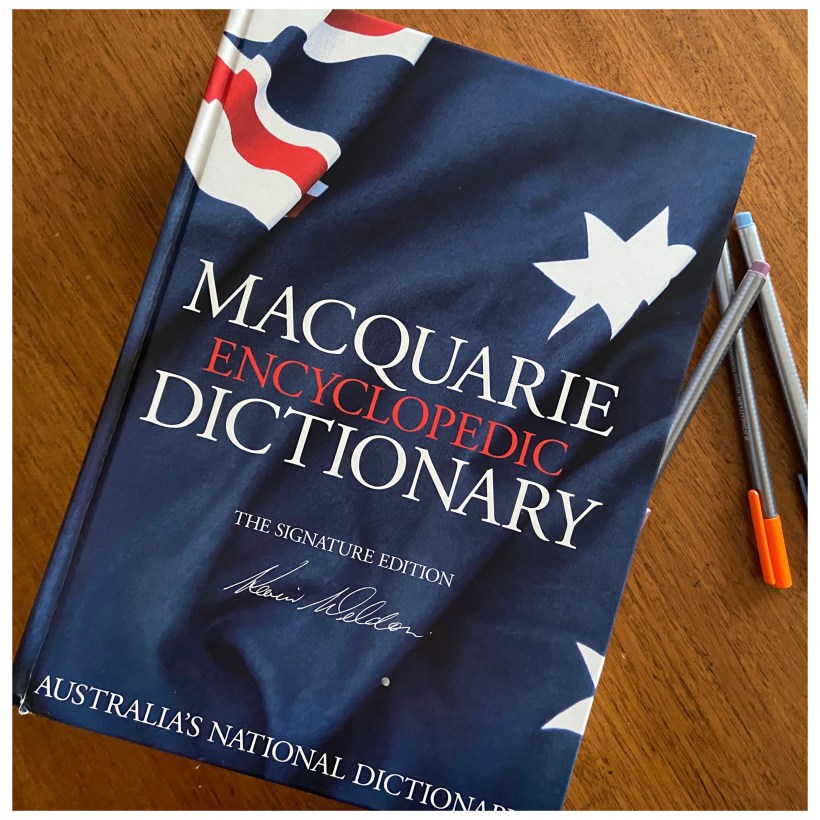
One of the two editions of the Macquarie Dictionary I own.

For Australian English, I love the Macquarie Dictionary.
For UK English, there is nothing that surpasses the Oxford English Dictionary, but the Cambridge English Dictionary is very good, too.

I have no preferred dictionary for American English, because I don’t use one. (If you can make a recommendation, please leave a comment!)

Old dictionaries hold particular appeal for scholars, teachers and lovers of language. They can be invaluable resources for authors and readers, too.