April is National — or, more correctly, International Poetry Month.

Poetry Month is a great opportunity to enjoy great poetry.

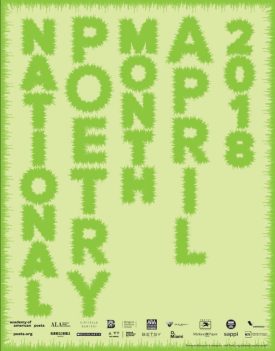
npm_2018_poster-e1520635983486

National Poetry Month started as a national celebration in the US back in 1996 as an initiative of the Academy of American Poets but has become something that is celebrated more and more internationally, with not just publishers but bookstores, schools, libraries, and poets themselves joining in the celebrations. As you know, I’m a poet, so I’m absolutely in favour of all of that.

As the month progresses, I’ll be sharing some of my poems with a bit of context about why they were written and how I went about crafting my initial idea into a poem that delivered the message I wanted to put out there.  I’ll also be sharing some of my favourite poems that I’ve loved for a long time, and introducing you to some new poets that you may not yet have heard of.

If you’re not into poetry, don’t worry – my blog posts won’t be exclusively poetry related. I hope to share some more insights about writing and social media for authors, too.

To encourage you to get involved in small ways, I have compiled a list of ten ways in which you can celebrate Poetry Month this April. Choose one, or choose all– it’s up to you.

  1. Read a poem that is new to you.
  2. Memorise a poem, or part of one.
  3. Support a poet by following their blogs or websites. Follow my blogs – here and at WordyNerdBird Writes where you can read my new writing, including recent poems and one or two from each of my books.
  4. Support a poet on social media by following and sharing their posts. I’ll be posting some more suggestions in the coming week about where you might like to start, but for now, my social media links are at the bottom of the post!
  5. Support a poet by buying a book of poetry. I’ll be posting some suggestions in a day or two, but you can check out last year’s suggestions here! They’re all really good.
  6. Participate in the Dear Poet project, even if just by enjoying the fantastic videos on the website.
  7. Subscribe to Poem-A-Day, where you will receive a brand new poem  and some insights from the poet each day.
  8. Put the National Poetry Month poster image on your social media, website, notice board, shop window or anywhere else you think it might make a good impression.
  9. Write your own poem for someone special.
  10. Listen carefully to songs on the radio. You might be surprised how many of them are poetry set to music.


Follow me on
FACEBOOK |TWITTER |INSTAGRAM | GOOGLE+TUMBLR | GOODREADS | WEBSITE

An Author With A Mission.

Developing my mission statement helped me to clarify my goals in a way that I had not done before.

When completing an author interview recently, I was surprised to find a question about my mission statement. My immediate reaction was, “My what?”


My next thought was of Jake and Elwood saying, “We’re on a mission from God!” in The Blues Brothers.

BluesBrothers
Image from tenor.com
Of course, it makes sense. If I can crystallise my goals in writing into a statement, it’s going to make them easier to achieve.


I do that all the time as a teacher. I think about objectives, learning intentions and success criteria all the time. So why didn’t I think about my objectives, intentions and success criteria as a writer? To be completely honest with you, I have no idea.


So, I started to work on my mission statement by writing down some basic questions:
What do I want to achieve?
What do I want my readers, or potential readers, to know?
How do I measure success?


Simple, right?


Wrong.
They’re actually really complex questions.


What does success as an author mean? Is it selling a million copies of my books? Well, that would be nice, of course, but it’s not just going to happen without me doing anything to achieve that. Who is going to buy my books if they’re not actually any good? My goal has to be one that I can achieve, and it has to be one that I can measure to see if I’ve met the mark.  My goal , therefore, is to write something that people enjoy and benefit from, not to become a millionaire. Because it’s more achievable, and measurable through both feedback and sales, it’s far more satisfying and encouraging than hoping for something that might never happen.


What do I want my readers to know? Recluses are mysterious, sure, but that only has limited appeal. What I really want them to know is that I understand what I’m writing about – grief, love, pain, pleasure, excitement, fear, exhaustion, joy. I want them to know that what I’m writing is real and meaningful. I want them to know that if they’re going through something really awful and difficult, I get that because I’ve been through some awful and difficult stuff too.  Particularly in my poetry, I want them to catch a glimpse of my soul, or see some blood on the page – metaphorically speaking, of course. I want there to be understanding between us. I want to connect.


So, measuring success isn’t in how many copies of each book I’ve sold, or how many dollars I’ve made. For me, success is in knowing that I’ve touched someone’s heart, or encouraged them, or entertained them. If they read my horror stories, I want to know that I scared them and they loved it.


The beauty of this process of setting goals and working toward them is that I can see with every review that I am achieving my goal, even more effectively than I can with each sale.


I owe enormous thanks to the person who asked me about my mission statement. They helped me clarify my goals in a way that I had not done before./div>

So, without further ado, this is my mission statement as an author:


Joanne Van Leerdam is an award winning poet and multi-genre author who is committed to writing meaningful and thought-provoking literature for the enjoyment of her audience.
Joanne is a thinker and puzzler, a reader and musician, a traveller, and a teacher who has never lost the joy of learning.
Joanne draws inspiration from her own experiences and observations of the world around her, crafting those ideas into works which will encourage those who struggle to persevere and inspire others to see the world from a new perspective. This is as true of her blog posts as it is of her works of poetry and fiction. She aims to continue to grow her readership into a fully global and inclusive audience.

So tell me, do you have a mission statement?

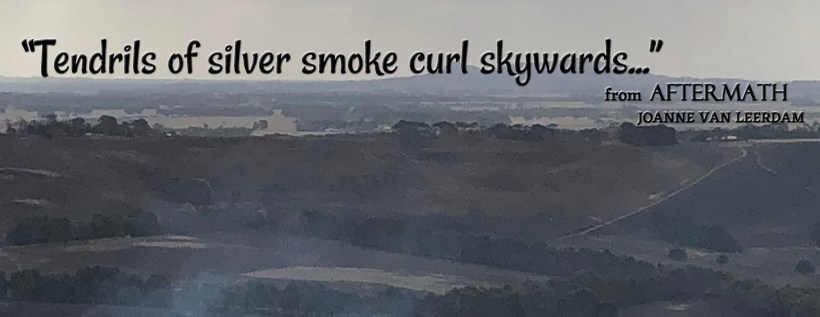
Aftermath.

Today, driving to and from work, I saw the devastation with my own eyes, and my mind took a snapshot that developed into a poem. 

Yesterday I wrote about the fires that had burned around my town on the weekend.

Today, driving to and from work, I saw the devastation with my own eyes, and my mind took a snapshot that developed into a poem.

It’s titled Aftermath and I’d love for you to read it.

Promo Y Aftermath 2018-03-20 17.17.03


I took some actual photos, too.

This slideshow requires JavaScript.

How To Avoid Blocked Hashtags On Instagram

Did you know that you aren’t allowed to use the hashtag #books on Instagram?
Until today, I certainly didn’t.

Instagram have been blocking some terms – mostly to do with sexism, sexual content, body shaming and bullying, or so I thought. It’s called a shadowban: posts using blocked tags are less visible than others, and repeated use can result in more definite blocking of posts or accounts.

Surely there’s nothing offensive about #books though? Yet it’s one of the hashtags that will cause your posts to drift into obscurity.

As an author, reader, book reviewer and all-round book nerd, that’s a trap I’ve fallen into more than once, but thankfully my love for tags like #bookstagram and #booklover has been saving my bookish hide more often than I ever realised.

I did find a rather extensive list of hashtags banned by Instagram, courtesy of the great people over at Instavast.com, but I don’t really want to go and consult another site and spend my valuable time reading through horrible words – and some of them are horrible – in order to find out if something relatively innocent is also blocked.

I’d rather be able to check quickly and easily inside the app itself. And that is quite do-able, even if you’re a novice.

Follow these handy and simple instructions to discover if a term you want to use is acceptable without consulting a long list somewhere that may even be out of date by now.

1. When you’re using the Instagram app, click on the search icon. It’s the one that looks like a magnifying glass.

2. Type in the hashtag you want to use. A list of possible tags will come up. So far, it looks like #books is okay.

3. Next, click on the Tags tab of the search window. #books is still there and still looks alright. However…

4. Tap on that tag in the list and scroll down, you will find only a few images, followed by a message that says the tag has been banned because reports have been made regarding inappropriate content.


If you go ahead and use the tag, nobody will see your tag because they can’t find posts using that tag, either. And your other tags might also end up being blocked. So might your account.

Nobody wants to end up there.

So, as authors and book lovers, we need to tag our posts differently so that other book lovers will find our posts.ScreenHunter_439 Mar. 13 19.13

When you click on a tag that is not blocked, you’ll see some further “related” tags that you could use in your posts. Notice, though, that this does not exist for #books.

I’ve slogged through a whole bunch of these “related tags” to find some great hashtags with good popularity that you can use safely – for now, anyway.

Try some of these great tags for your bookish posts:
#bookstagram
#booksofinstagram
#bookworm
#book
#booklover
#booklove
#instabooks
#booklife
#bookish
#instaread
#bookblogger
#bookaddict
#bookphoto
#booknerd
#booknerdigans
#bookstagrammer

If you’re posting images or reviews of books you’ve enjoyed, consider some of these:
#ilovereading
#epicreads
#amreading
#bibliophile
#lovetoread
#bookaddiction
#readingbooks
#readabook
#igreads

My final piece of good news is that if you have been using a blocked hashtag, you can rescue your posts and make them fully visible again.

1. For each post, click on the three dots to the right of your username.

2. Choose edit from the menu.

3. Scroll to your hashtags and change or remove the banned one.

4. Click on ‘done’ and your post will be back to full visibility.


Handy hint: if you “like” your own post once you’ve changed it, your post will re-enter the general Instagram feed.
It’s a good idea to do this one or two posts at a time, not all at once, so you don’t flood your followers’ feeds.

Branded Short Links.

Branded short links make your posts instantly recognisable as yours.

Short links like bit.ly/whatever and buff.ly/something are becoming more and more popular. I’ve been using bit.ly as a link shortening service for my social media posts for some time, and have loved the convenience and the ability to personalise links for myself.

Last week, though, I made a significant discovery: I could have my very own short link domain, and use my own branded short links across all my social media. This makes my posts and products more immediately recognisable. It gives me consistent and affordable branding. And it means the short link I want for a particular book or post is never going to have been taken by someone else!

I read a few blogs and website articles about it to make sure it was something that I understood before I signed up, but it’s really not that complicated. I explored a few different sites to see which ones offered the best service, and although they’re all quite similar to one another, I settled on Rebrandly because it’s very simply laid out and easy to use.

Getting hold of my own short domain name was easy. I clicked on the “domains” tab and then on the “New Domain” button. That took me to a page where I could browse domain names relevant to my branding – jvlpoet – so that I could choose whichever one I liked best. There’s a range of prices, and plenty for $2 for the first year. I chose jvlpoet.link for my branded short domain because it seemed the most straightforward, and it’s easy to remember.

2018-03-04 13.33.13

The slashtag is whatever comes after that link. I can use that short domain name and then the slashtag of my choice, which I set up at Rebrandly on the “links” tab. So, jvlpoet.link/nova is the branded short link for the universal link to my book, Nova, in all digital stores. It’s much more personal, and recognisable as mine, than www.books2read.com/jvlnova.

Now that I have set up my branded short links, Rebrandly keeps track of how many clicks each link has received, and when, so I can see how effectively each one is working.

They also offer a range of apps which enable me to synchronise my links on Rebrandly on my phone and tablet, and in conjunction with bit.ly, goo.gl, Clickmeter, Chrome, and all sorts of other services.

This gives me a tightly coordinated approach to branding and publicising my posts across social media, websites, blogs… everywhere. And thus far, all it’s cost me is $2. Even when my domain costs me $14 for the following year, it’s still a bargain for that level of visibility and recognition.

The links I’ve created with bit.ly still work, so I don’t have to rebrand the images or posts I’ve already made. They’re all still great, and there is absolutely nothing wrong with bit.ly’s service. I just like having my name there instead of theirs.

Author’s note: This post is not affiliated with Rebrandly or any of the other services I’ve mentioned. It’s simply my account of my choices and the steps I’ve made in achieving the desired outcome. 

Thank you, Mary Shelley.

How Mary Shelley Has Inspired Me, Yet Again!

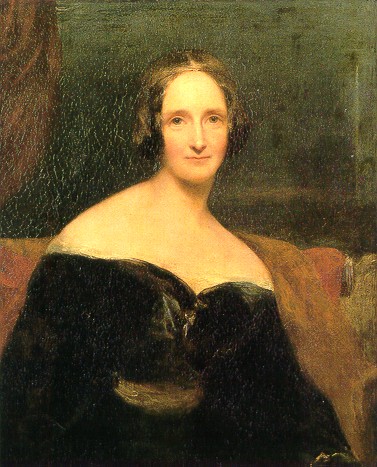
Mary_Shelley
At the beginning of February, celebrated as Women in Horror Month, I wrote about Mary Shelley, the author of Frankenstein, as one of my literary inspirations.


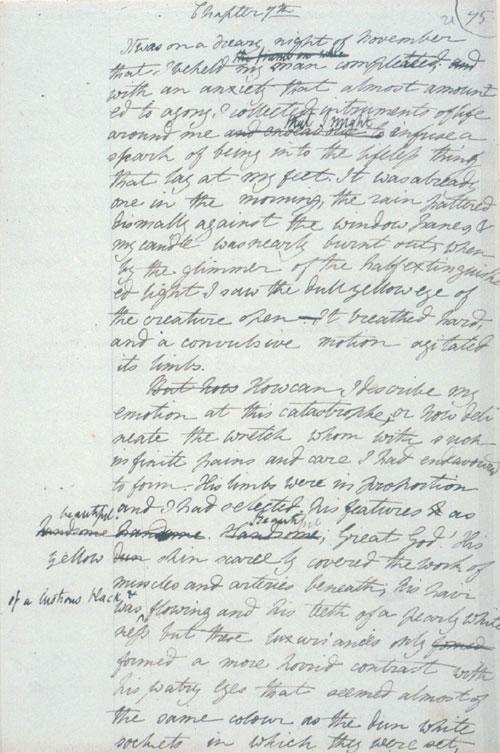
On this last day of the month, a friend shared with me a post from smithsonian.com titled ‘Frankenstein’ Manuscript Shows the Evolution of Mary Shelley’s Monster’ which speaks of a British publisher releasing 1500 facsimile copies of Mary Shelley’s original manuscript notebooks, complete with revisions and edits, in celebration of the 200th anniversary of the book’s first publication.


Oh, my heart! I know I’ll never be able to own one of those 1500 copies, but how I would love to read that manuscript!


FrankensteinDraft
Even just looking at the photograph of two pages, my author-heart swelled. Here is the work of a woman I have admired almost all of my life, showing that her work, too, needed editing and revising. She understood that no piece of writing is perfect the first time, even if the story itself is brilliant.


This is so incredibly encouraging in the moments when I doubt myself, or my story, or my ability to communicate my ideas the way I want to. It reassures me when the words don’t flow for a time. And it reminds me that I’m by no means the first, or last, to experience these things. The doubts and writers block don’t make me any less of a writer; instead, it’s working through them and in spite of them that makes me a better one.


Through these images, Mary Shelley inspires me all over again.

Books, Authors, Double Standards and Snobbery.

There remains a commonly held view that all Indie books are somehow sub-standard. This perception could not be more wrong.

angry-2191104_960_720

I am perpetually frustrated by the disdain that many have for Indie authors. Indie artists, musicians, and filmmakers are applauded for daring to step out, break the mould and do their own thing in defiance of the industries that are perceived to have grown too big, too powerful, too rich.

Nobody hesitates to go to a doctor or lawyer who owns their own practice. People don’t think twice about having their car serviced by a mechanic who runs a local garage. They’re independent practitioners within their industry, too. Let’s face it, there are some shonky ones out there – in any industry – but they are the vast minority, and their behaviour should never be used as the yardstick by which all others are measured.

So why is the double standard against Indie authors still not only acceptable, but so widely endorsed?

woman with bookI won’t deny that I’ve picked up two or three books that I just couldn’t finish because they were either poorly written, poorly edited, or just not very good at all. But two or three out of more than 150 is a very small percentage, where the others have consistently ranged between very good and excellent quality in terms of both writing and production.

Having been an avid reader all my life, it’s also true that I’ve read – or rejected – a number of books that weren’t so great in the traditionally published world, too. Some I just couldn’t get into – even among the most famous and widely commended are certain ‘literary greats’ whose writing I just don’t appreciate. There are also traditionally published books that remain popular among less discerning readers and sell quite well, despite the fact that the writing and/or story lines really are… well… rubbish.

I’ve read almost exclusively Indie books for more than a year. I am continually impressed by the originality of the stories, the high standard of writing, and the depth of creative talent. I’ve posted countless book reviews for these books, and have shared my appreciation of both books and authors far and wide, because those books deserve to be read and appreciated.

Having been an avid reader all my life, I’ve read – or rejected – a number of books that weren’t so great in the traditionally published world, too. Some I just couldn’t get into – even among the most famous and widely commended are certain ‘literary greats’ whose writing I just don’t appreciate. There are also traditionally published books that remain popular among less discerning readers and sell quite well, despite the fact that the writing and/or storylines really are rubbish.

Indie authors are, more often than not, Indie by choice. For many, the first foray into traditional publishing has ended up being a very negative and traumatic experience. For some, their publishers have closed down, leaving the author without their rights, unpaid and unable to sell or market their work. Other companies have published books and then done nothing, leaving them to languish in obscurity unless the author does their own marketing.

Sure, that hasn’t happened to J.K. Rowling or George R. R. Martin. People need to understand, though, that they are the exceptions, not the rule. That kind of success doesn’t just happen for everyone who writes a fantastic book or series, and it’s well-established fact that it almost didn’t happen for Rowling either.

Last week, I saw someone comment on social media platform in a most derisive tone that “traditional publishers won’t touch anything that’s been self-published”. My response was that it’s their loss. And when it comes to my own work, they’re not welcome to.

Like many others, I choose to be Indie because I control my own intellectual property, I retain my legal rights to my work, and I earn the royalties for my books. My hard work is not lining the pockets of some faceless company that pays a small fraction of the earnings of a book to the author and gets fat on the rest, without actually doing much in the way of marketing or promotion. Marketing and promotion is really hard work, there’s no doubt about it. But if I have to do the schlepp work anyway, why would I let someone else have control of my work? And I can take pride in the fact that I have earned every review, every award, and every cent, on my own.

In the end, I choose to be Indie because there is nobody in this world as committed to my books or my career as an author than I am.

It’s time we got rid of the double standard that celebrates Indie music and art, and which takes pride in supporting local and artisan businesses, but considers Indie books and authors to be something less than their traditional counterparts.

Indie authors are doing their part by writing and producing excellent books.

Readers are doing themselves a gross disservice by accepting the kind of intellectual snobbery at the heart of this double standard. I’m confident they will be more than pleasantly surprised when they finally choose to set prejudice aside and find out what they’ve been missing out on.

Promo Indie And Proud


What Will Make Me Refuse To Review Your Book?

You can’t promote anything worthwhile with bad behaviour.

This is a Public Service Announcement.

I find myself to be in an awkward situation: there are some individuals who have decided that it is appropriate to send messages to my inbox and to my email, asking with varying degrees of insistence that I might read and review their books.

I know everyone wants reviews and sales. I do, too. It seems they have overlooked the fact that I, too, am an author. Perhaps they think I am a professional reviewer – I’m not.

I read and review as much as I can, but I can’t and won’t take requests or demands from authors. I read and review what I want to, because it interests and entertains me, not because I am asked to, and certainly not out of any sense of obligation.

If it’s okay – and it is – for people to not want to read and review my books because they don’t read either of my genres, it has to be okay for me to make that same choice.

For that reason, there won’t be a lot of certain genres on my TBR list or book blog. I just don’t want to read them.

I don’t accept free books. It is only on a very rare occasion that I ever have. I buy books so that I can give a verified purchase review. In fact, I buy a LOT of books, and I’m more than happy to do that.

But I will not buy something I am not interested in. I work too hard for my money and my time is in too much demand for that.

So please, don’t embarrass us both by asking, or insisting, or nagging me to read and review your books. If I am interested in them, I will. If my inbox is full of your repeated demands, there is absolutely zero chance that it will happen.

I’m disappointed I had to write this post. Sometimes, though, one has to make a stand in the interests of self-preservation.

Those responsible should consider themselves warned: the next step will be a permanent block.

How to Achieve A Visually Attractive Twitter Feed.

Just because you can use 280 characters, doesn’t mean you should.

Over the past few weeks, I’ve noticed a lot of people commenting on how they love the new 280 character limit for Twitter. I’ve also noticed a lot of people writing long tweets with no line breaks, and barely any space in them to take a breath.

My message here may be unpopular with those folks, but it must be said: just because you can use 280 characters, doesn’t mean you should.

Remember, people are basically lazy. They don’t want to have to work to figure out what you’re saying, and they don’t want to wade through thirteen hashtags to do so, either.

When it comes to writing tweets, I’ve always assumed that the rule of “less is more” applies. I want my message to be short, easily understood and digested, and easily acted upon.
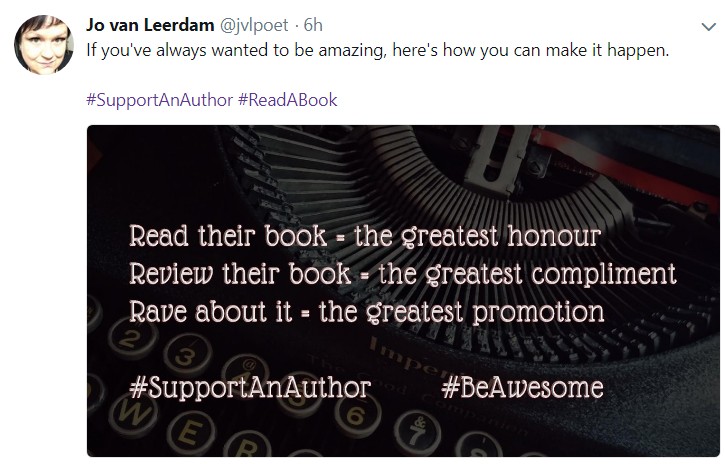
ScreenHunter_439 Feb. 20 21.34

I’ve always tried to keep my tweets to well under the 140 characters, as short as 100 characters if possible. A short, effective message is more attractive to people than a slab of text.

As an author, I’ve heard more people than I care to try to count tell me that they don’t like reading. (I know, right? I don’t understand it either.) However, it’s something that I’ve taken to heart when writing anything promotional. Any ad, tweet, or invitation is completely ineffective if it puts people off before they even really look at it.

I always leave a line of space between my main message and my hashtags. It breaks up the tweet so it looks more accessible. I also think that it makes the hashtags a bit more obvious, given that some people might take notice of those before the actual message.

When it comes to hashtags, I wrote a few months back about ‘How To Avoid Hashtag Hell’ in social media. I advised then to use two well-chosen hashtags, and no more. Given the increased word limit, I’m about to start experimenting with using three to increase the discoverability of my tweets, but that would be my upper limit. This isn’t a rule, as such, but simply my desire to keep my tweets looking simple and attractive. I’m no expert in advertising or design, but I go by what I experience myself: when a message is easy on the eye, it’s going to get more attention.

On that same assumption, I always include an image. People are very visually oriented and will, more often than not, look at the picture before the text. I try to make the image relevant to the post, and will often superimpose text and web addresses on the image in a way that won’t detract from the visual effect I hope it will achieve. Where appropriate, I use logos that will build familiarity with my work. Otherwise, I use my own images or stock images that are copyright and royalty free, so that I’m not infringing on copyright, either. There are lots of places that offer them, but I find pexels.com and pixabay.com to be excellent sources of quality images that are free for reuse for any purpose.
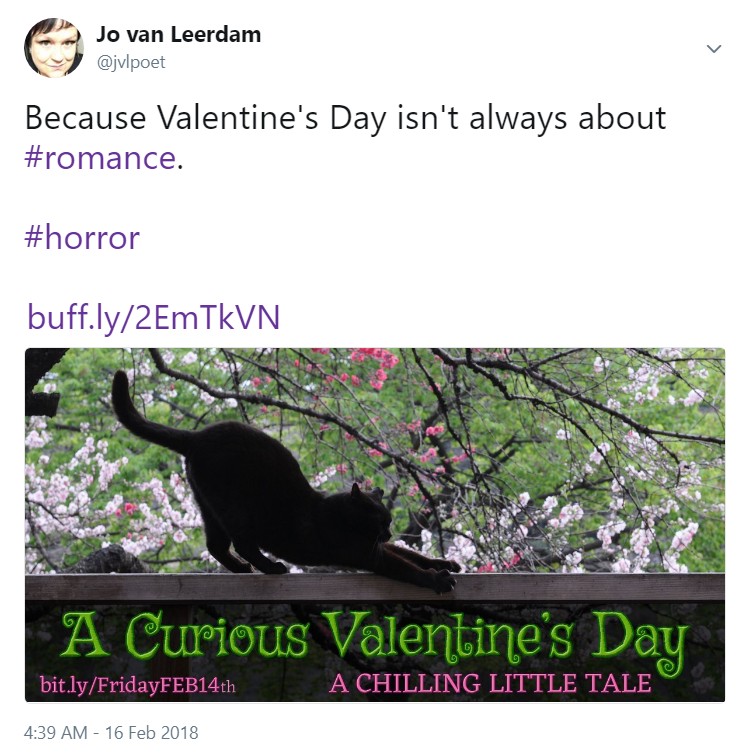
ScreenHunter_437 Feb. 20 21.33I use a link shortening service so that half the tweet isn’t taken up by an enormous web address or link. Bit.ly is free, so are many others. I use Buffer to schedule my tweets, and it shortens links automatically, so that’s a double win!

A further advantage of using Buffer is that it enables me to recycle my tweets so that I don’t have to spend hours each week coming up with new content. I regularly change the hashtags and messages on a reused tweet so that I’m not just giving people the same old thing time after time.

When it’s done a few rounds, I’ll rest a great tweet for a while, and pick it up again down the track if it’s still relevant. I save them in files in Evernote, so all I have to do when I come back is copy and paste it into a new message, attach the image, and off I go.
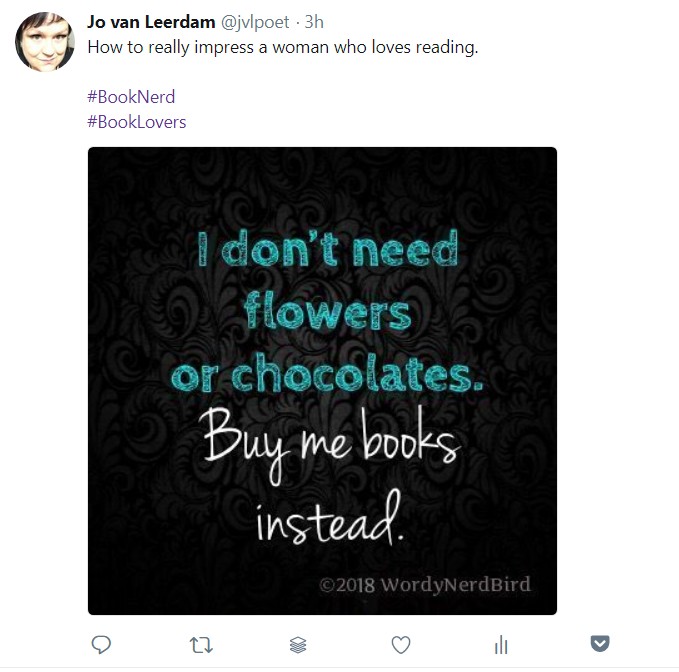
ScreenHunter_439 Feb. 20 21.33

Some of my tweets don’t have links. This is a deliberate decision on my part – sometimes I just want to offer a thought, a joke, or a compliment to my audience without asking them to do anything in return. That’s not a rule either – it’s just how I like to do things.

Finally, mix it up. If all you tweet is ads for your book or service, or quotations from your work in progress, it can get a little humdrum. I keep things varied by tweeting about great books, free reads, short reads, book reviews, magazines, great blog articles, and interesting tidbits of history, science and general interest far more than I tweet ads for my own books. My books are worthy of advertising and attention, and I would love to find more readers, but I don’t believe in shoving them in people’s faces at every opportunity, either.

I know all that seems like a lot of work, but being active on social media does take effort and thoughtfulness if you’re going to have something meaningful to offer.

Since I have been following these guidelines, I have had new followers every day. I started 2017 with just over 300, and now I have 3000 more than that. It’s slow growth, but it’s organic growth – my audience actually wants to be my audience! And that is worth far, far more than being able to fit a bunch of stuff in one tweet.
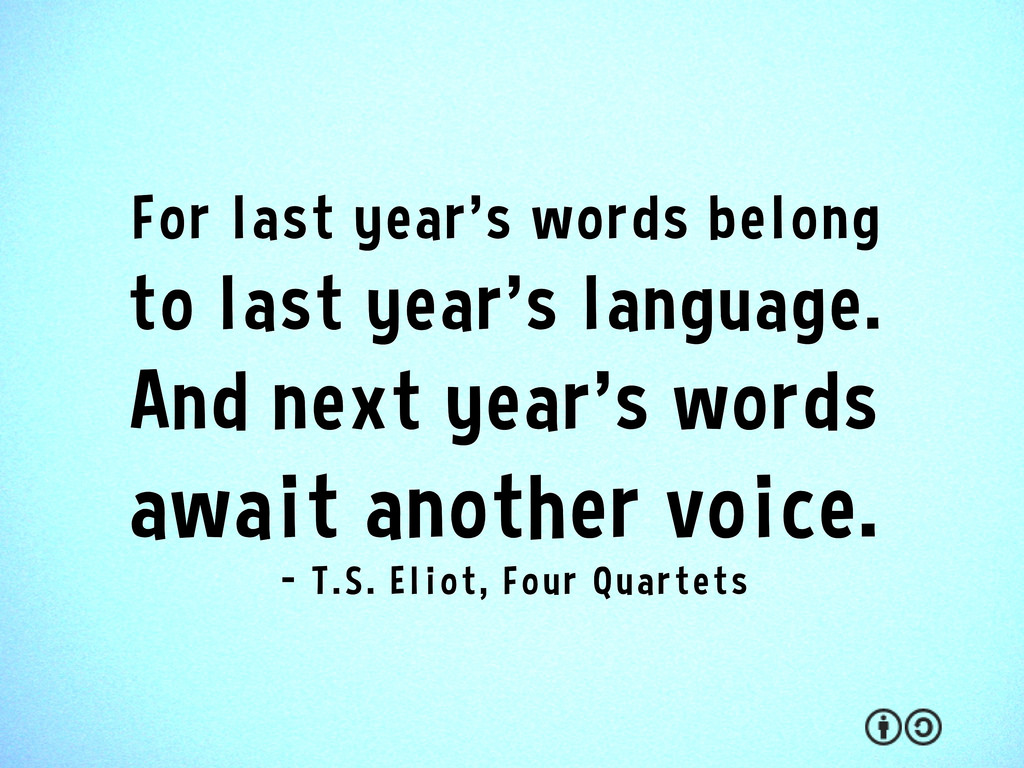
T.S. Eliot’s letter of advice to a sixteen year old aspiring writer

This article is a marvellous piece of writing in itself.  I really hope you’ll take the time to read it. 

Every now and then, I stumble across an absolute gem of inspiration. Sometimes it’s in a book. Sometimes it’s a quotation. Sometimes, as it was tonight, it was a blog post written by someone else.

This article is a marvellous piece of writing in itself.  It’s beautifully put together and composed, and the content is just magnificent.

15960194728_e48e03bb3b_b
It’s something every author, whether published or aspiring, should read because it addresses that infernal question with which we all torture ourselves: What’s the right way to do this? And the answers come from T.S. Eliot himself, esteemed 20th century author and poet.

I really hope you’ll take the time to read it.

You’ll find the post titled T.S. Eliot’s letter of advice to a sixteen year old aspiring writer on the Nothing In The Rule Book blog,