It can also be quite cathartic.
Let’s be honest, what day can’t be improved by a good “Arrrrrgh!” or two?
If people annoy you, you can threaten to make them walk the plank, or call them lily livered landlubbers, and nobody takes offence.
I grew up enjoying books like Treasure Island and Kidnapped!, and still enjoy a good, old-fashioned pirate story, so I thought I would share Book Squirrel’s International Talk Like A Pirate Day Book Recommendations.
In honour of International Talk Like A Pirate Day, here are three great pirate tales for your reading pleasure.
‘Fallen Into Bad CompaNy’ by Kayla Jindrich
Matthew wants nothing more than to escape from his past, but that hardly seems possible with his new apprentice. While William might be Matthew’s chance at redemption, an opportunity to pay for his mistakes, William also has a reckless streak that could ruin the new life that Matthew has built for himself. Either Matthew will pull William from piracy, or William will drag Matthew back into the dangerous world that they both come from.
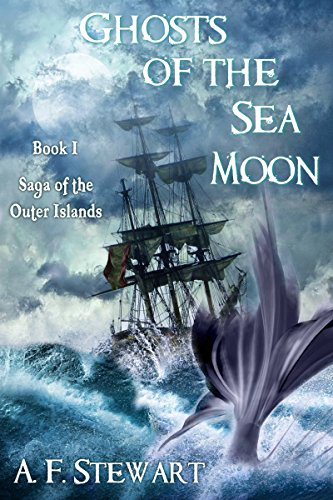
In the Outer Islands, gods and magic rule the ocean.Under the command of Captain Rafe Morrow, the crew of the Celestial Jewel ferry souls to the After World…
This morning’s conversation in my kitchen is a clear demonstration of just how much of a Shakespeare Nerd I really am.
H: I need egg cartons. Where do I get egg cartons? Me: How many do you want? I pointed to the top of my fridge where there sat a stack of egg cartons. Me again: Take them all. H: Oh wow! Thanks! K: That’s awesome! I’ll grab them in one foul swoop and put them in the car. Me: Well, that’s decided my blog post for today. K: Huh?
In Act 4, Scene 3 of ‘Macbeth’, Malcolm and Macduff engage in testing one another’s loyalty to Scotland rather than to Macbeth, who has become king. During that conversation, Macduff learns of the murders of his wife and children at the order of Macbeth, whom he describes as a “hell-kite” who has slain his “chickens” in “one fell swoop”.
The deed was certainly foul, but that isn’t what Shakespeare wrote. He wrote “one fell swoop” which is an entirely different thing.
Here, fell means ‘fierce’.
It’s an image of violent attack, of hunting, and of predator and prey, which leaves the audience in no doubt that these murders were calculated and precise. The term “hell-kite” leaves the audience in no doubt of the evil motivations behind the slaying.
Today is RU OK Day, also known as World Suicide Prevention day.
This is an awareness very close to my heart.
I’m not going to expand on why, because I want the focus of this post to be positive and encouraging.
The message is important not just for today because it’s a special awareness day. This message is permanently, crucially important.
We need to take care of each other. Each of us is uniquely placed to offer support and encouragement to the people we know – friends, families, colleagues, students, whoever we cross paths with in our lives. That doesn’t mean we have to be their only support, although sometimes we might be just that.
If you think someone is down, if they look tired or unwell, or notice they’re not taking care of themselves as well as they usually do, ask them if they are okay. Don’t just ask as a throwaway question. Be willing to have a quality conversation that includes questions like:
What’s going on?
What do you need?
How can I help?
Is there someone I can contact for you?
Taking the time to check in with someone deliberately and thoughtfully is a powerful communication of care and concern.
It’s important to realise that you or I might be the one positive thing that happens in someone’s day. We might be the only source of encouragement and light that they encounter.
We also need to consider the power of our words. A curt dismissal or snide remark in response to a comment that might actually be a true confession of desperation, depression or anxiety can be incredibly destructive. We should never, ever be making a joke of that. Yes, sometimes it is attention-seeking or needless drama— but sometimes it’s not.
A kind word or message of encouragement could be the difference between someone actually deciding that now is the time to end their life, or not.
I know. It’s a huge responsibility.
But imagine a world where each of us gives someone that kind of support, and someone else gives it to us when we need it.
And if you’re thinking you’ll never need it, stop right now and be very, very thankful for the blessings in your life and the comfort of good, stable mental health. It’s not possible to emphasise enough just how lucky you are.
If you’re one of those who is struggling, or feeling like you’re drowning, or tired of treading water… please, please, talk to someone. Seek help. Look for reasons — any reason — to stay. Please stay.
I wrote this poem after one of the darkest seasons of my life thus far. I hope that you will gain both perspective and insight from reading it.
Before you read this poem, there is somethingI would likeyou to know.
This poem is absolutely, 100% true. It is personal, it is painfully honest, and it tells of my own experience, not anyone else’s. And you may find it quite confronting.
Despite its darkness, it is written to be positive, not negative.
It was not written to win sympathy or make anyone feel guilt: it was written so that people might understand what’s in my head, and what I’ve been feeling, and why I’ve made the choices I have.
To answer your concerns: I have chosen to stay here and to defy all impulses that tempt me otherwise. I don’t always feel okay, I’m not always okay, but I will be okay.
For anyone in a similar position: hold on. Stay here. You matter more than you know.
STILL HERE.
For a moment- One fleeting, isolated point in time-
I can relate to this post on so many levels. As a writer. As a teacher. As a performer. As a director. Sometimes, even as a decent human being.
I may have proven myself time and time again, but it doesn’t stop that sensation that maybe I’m not any good, nor does it quell the fear that one day someone will expose me or my work as being rubbish.
Fear isn’t rational. Anxiety doesn’t care about track records. And Impostor Syndrome is relentless.
I don’t know why it happens, but I know it plagues creative people and sometimes renders them unable to keep going.
I haven’t given in to it yet. I don’t ever want to. But my goodness, trying to resist it is tiring.
Writing is hard enough. Add imposter syndrome into the mix and it becomes the kind of challenge you have to remind yourself, quite often, is still worth pursuing.
The pun is often quite an under-appreciated form of humour. Also known as paronomasia, its a device of word play that relies on the multiple meanings of words, or the alternate meanings of homophones, to make a joke or draw attention to an idea.
All my life, puns have been a much-loved form of humour in my family. Sometimes deliberate, other times incidental, my mother always took great enjoyment in teaching us to play with words and meanings, and to take great satisfaction in a well-executed pun.
Birds, flowers, food, animals, jobs… you name it, we punned about it.
One of my personal favourites occurred the first time we played Trivial Pursuit as a family. My brother-in-law asked me a Science & Nature question: “Which is bigger, the Moon or Uranus?” “Hold on and I’ll check!” I quipped, then bent right over and stuck my head between my knees. The combination of sight gag and pun had everyone roaring with laughter. Since then, the story has been passed on numerous times to friends, extended family, and the next generation.
Admittedly, some can be fairly lame, but when wielded by a person with great vocabulary and word power, a pun can be a thing of beauty. Shakespeare himself loved a good pun, incorporating many of them into his plays. Shakespeare often engaged in paronomasia in both humorous and more serious contexts as a way of exploring or developing key ideas..
Mercutio’s joke as he is dying, “Ask for me tomorrow and you shall find me a grave man” is a prime example, and a master stroke of dark comedy genius secreted within a play that actually has very little to laugh about.
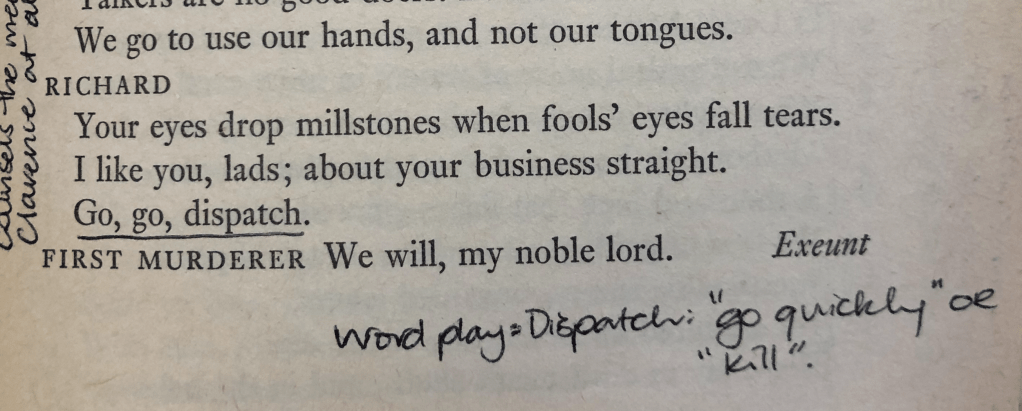
The ability of characters such as Iago and Richard III to twist words using puns demonstrates just how easily they are able to manipulate both meaning and situations to their advantage, and provide powerful insights into each one’s evil genius.
It’s nice to think that Shakespeare and I are of the same mind when it comes to puns. They are fun; they are clever; they engage the intellect; they bring ideas into sharp focus. And the fact that there are a plethora of ways to use them means a lot.
Of course, some people just don’t appreciate that particular brand of humour. There’s no point, for example, trying to explain puns to kleptomaniacs because they can’t help taking things literally.
For several weeks now, I have been almost bursting with excitement and anticipation, and with the pressure of keeping this news secret until now!
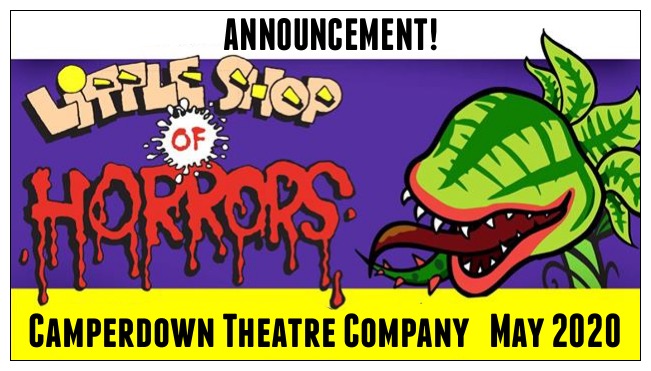
I am finally at liberty to announce that I am going to be the director of ‘Little Shop of Horrors’ in May 2020 with Camperdown Theatre Company.
I’m thrilled to be working with a wonderful friend as CoDirector alongside a brilliant team of incredibly talented people. I’m really looking forward to bringing this show to life with them, and building our friendships and experience at the same time.
And this show! I can’t put into words how much I want to do this show.
This is another “musical theatre bucket list” show for me, and I’m incredibly thankful to Camperdown Theatre Company for having faith in me as a director, but also for giving me the opportunity to do yet another amazing show with them.
This is so freaking awesome, I can’t even begin to express how I feel.
Auditions will be in November, and rehearsals will start early in the new year. There are lots of plans and decisions to be made before then, and I can’t wait to get started.
First things first, though. My school production of ‘Joseph and the Amazing TechnicolorTM Dreamcoat’ hits the stage next week, and that’s going to be my focus until it’s done and dusted.
Oh my gosh. Hold on tight, kids: the next seven months are going to be an incredible ride!
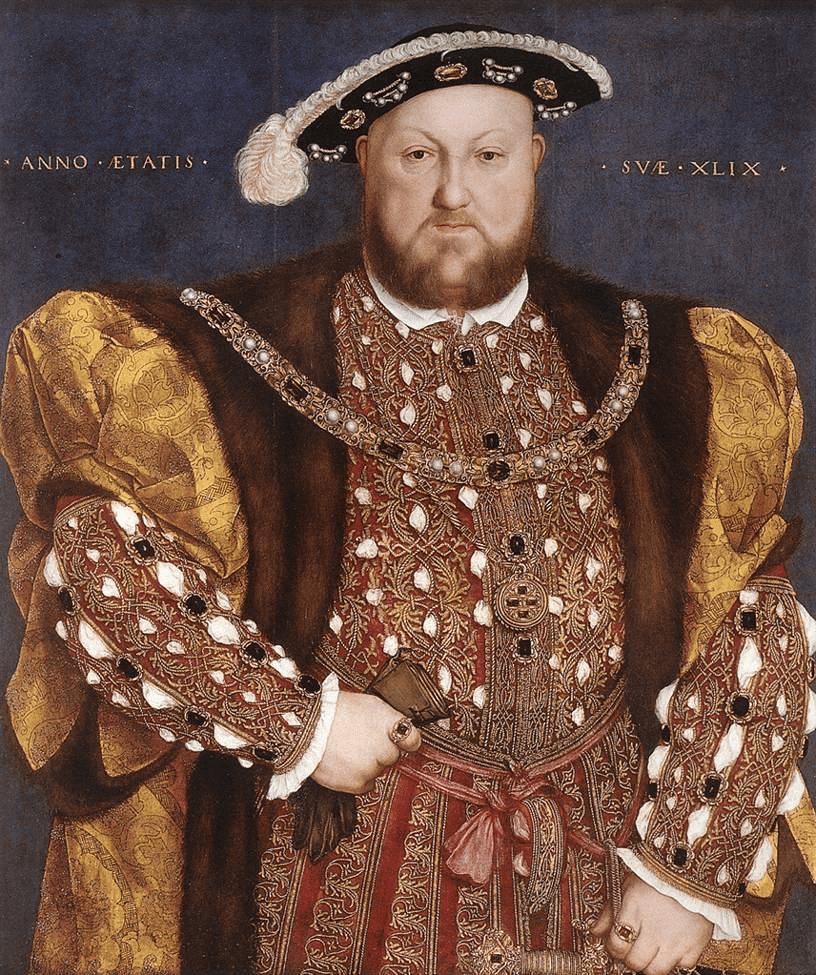
We were watching Antiques Roadshow this evening. The host was enthusing over a large wooden table that he identified as a genuine piece of Tudor furniture.
“Look at those gorgeous Tudor legs and lovely drawers!” he said.
“Henry VIII had gorgeous Tudor legs and lovely drawers!” I quipped.
“That thing’s bloody huge!” my husband observed.
It’s not often I get such a perfect opportunity. There was only one thing left for me to say: “So was Henry by the end of it.”
I love the fact that my students have great senses of humour. They’re quirky and fun, and they know they have the freedom to express that in my classes.
Last week, one of my students told me a funny story about what he did in Biology class. To his delight, I appreciated the humour a lot more than his classmates or the Biology teacher had done.
He was more than willing to give me permission to write his story creatively. I decided a Drabble would be perfect for creating a snapshot of that moment in the classroom.
I hope you enjoy his very classy humour as much as I did.
And thank you, James, for making me laugh on a regular basis. You’re a legend.
The teacher stood at the front of the room, textbook in hand, as the students settled down to business.
“Please open your text book to page four hundred and four, and… yes, James?”
The teacher looked with anticipation at the young man sitting in the second row, hand raised and an awkward smile on his face.
“That page cannot he found.”
His classmates looked confusedly at James, and then at the specified page in their own books.
The teacher frowned. “Are you sure? There must be some kind of mistake.”
James’ smile became a triumphant grin. “It’s an error 404.”
***
Credit for this story must be given to my student, James, who actually did this in one of his classes, and gave me permission to write it as a drabble.
Even though I’m still in the final weeks of directing and preparing ‘Joseph and the Amazing TechnicolorTM Dreamcoat’ to go on stage at my school in September, I’m already thinking a couple of shows ahead.
Not only do the musical director and I have some definite ideas about what show we’d like our school to do next year, I’ve also been in discussion and negotiations with a small group of likeminded individuals to put a show on stage for the local theatre company of which we are all active members.
The idea was hatched when we were all still riding high on the endorphins of a wonderful production of Monty Python’s Spamalot! in May. The fact that things are still in the budding stage is evidence that bringing it to fruition is a lot more complicated than simply deciding on a show and just doing it.
All sorts of things have to be considered: Can we cast it? Can we stage it? How will we achieve this effect or that outcome? How much is it going to cost? Who is going to fill the various roles on the production team? These are the sorts of details a theatre company will want before deciding to proceed.
I’ve just finished preparing the pitch for a show, which I hope to present to the theatre company on Wednesday night. I won’t reveal what show it is yet, because we have to get approval from the committee, apply for and secure the licensing rights, and make sure everything is in order before we announce what we’re planning to do.
The team and I are super excited about the possibilities and we hope that the committee embraces our ideas.
In the meantime, I’ll continue unintentionally mashing the two very different shows together in my mind, with a bit of Spamalot thrown in for good measure. I’m frequently amused by the “variant lyrics” that happen in my mind, which is at the very least an unexpected bonus.
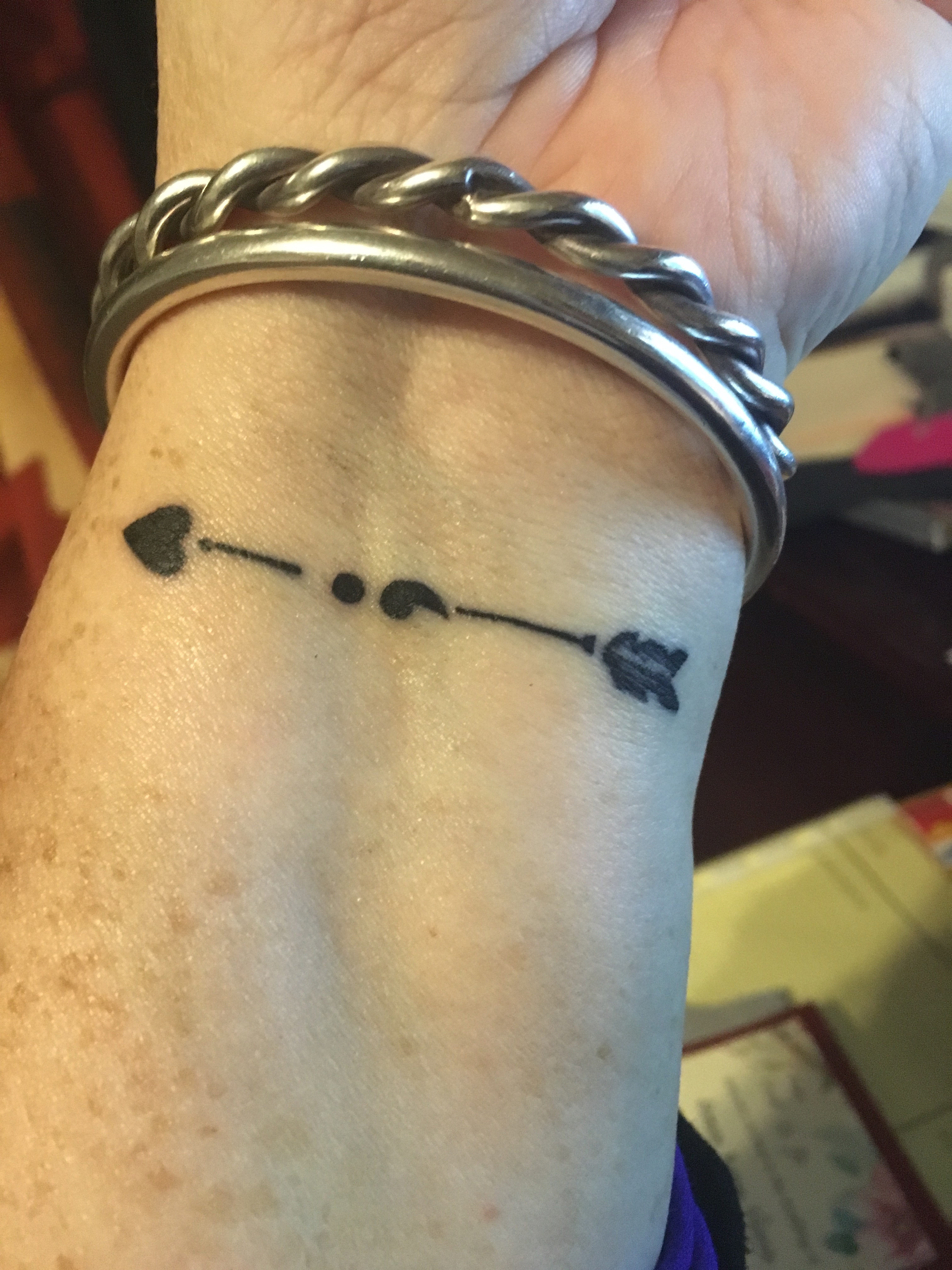
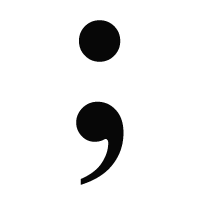
A semi-colon forms part of a highly symbolic tattoo on my inner wrist. Like many others who bear the symbol on their skin, I chose it because I, too, have struggled with depression, mental illness, self-harm and suicide. It’s a reminder that “this” is not all there is, and it’s not the end of the story.
As a punctuation mark, I am a big fan of the semicolon. It has the power to make someone wait momentarily, to hold a thought or their breath for a moment, and to anticipate what is to come next. It’s the symbol that tells the reader that there is more to come.
I really enjoyed this article by Celia Watson which discusses how the semicolon came to be.
And if you’re a grammar nerd like me, you’ll understand the appeal of Watson’s book on that wonderful, versatile little punctuation mark, simply titled ’Semicolon’, which I discovered via Stan Carey’s review.
The article titled The Birth of the Semicolon published in The Paris Review (August 1, 2019) by Cecilia Watson is not to be missed. Here is just the beginning to whet your appetite for arcane knowledge offering clues to the development of formal language.
The semicolon was born in Venice in 1494. It was meant to signify a pause of a length somewhere between that of the comma and that of the colon, and this heritage was reflected in its form, which combines half of each of those marks. It was born into a time period of writerly experimentation and invention, a time when there were no punctuation rules, and readers created and discarded novel punctuation marks regularly. Texts (both handwritten and printed) record the testing-out and tinkering-with of punctuation by the fifteenth-century literati known as the Italian humanists. The humanists put a premium on eloquence and excellence in writing…









 The article titled The Birth of the Semicolon published in
  WordyNerdBird