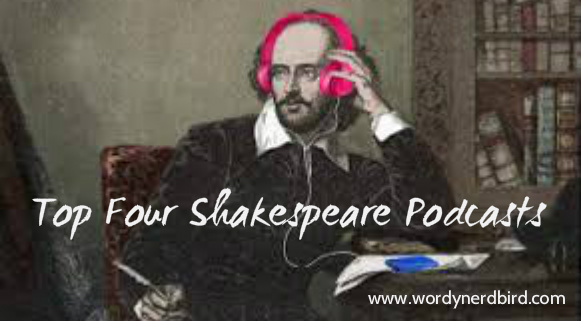
‘Top Four Shakespeare Podcasts’: The Most Successful Blog Post I’ve Ever Written.

It is a constant source of amusement to me that barely a day goes by without someone reading a post I wrote over two years ago. As hard as I try to write posts that are interesting and engaging, and have some relevance to either readers or other authors the one post that shows up in my blog stats almost every day is ‘Top Four Shakespeare Podcasts’, posted in June 2017.

While I have had some posts that got a great response at the time, othing else I’ve published on this blog has had that kind of perpetual popularity,

The funny thing is, it’s only got three likes, but more people than that visit that post every day. Perhaps WordPress needs to make the “like” button bigger and brighter so that it’s easier to see and click.

Given that it’s the most successful blog post I’ve ever written, I thought it was worth posting again for all the followers I’ve gained since then. Enjoy.

wordynerdbird's avatarWordyNerdBird

Promo WordyNerdBird Shakespeare Podcasts

I love podcasts, and I love Shakespeare. In these four podcasts, you’ll find the best of those two worlds combined.

#1: No Holds Bard. An informative and entertaining podcast by Dan Beaulieu and Kevin Condardo, directors of the Seven Stages Shakespeare Company in Portsmouth, New Hampshire.  They discuss the plays, words that people in the 21st century might not know, different interpretations, and various performances of Shakespeare’s plays.  They even have a segment where they’ll answer homework questions sent in by students. 

You can follow on Facebook and Twitter.

#2: Folger Shakespeare Library: Shakespeare Unlimited. A podcast that explores the associations between Shakespeare’s writing and the world today through the words we use, ideas we discuss, and performance of the works of Shakespeare and others.

You can find more information on their website.

#3: Chop Bard – In Your Ear Shakespeare. This podcast explores different parts of the…

View original post 74 more words

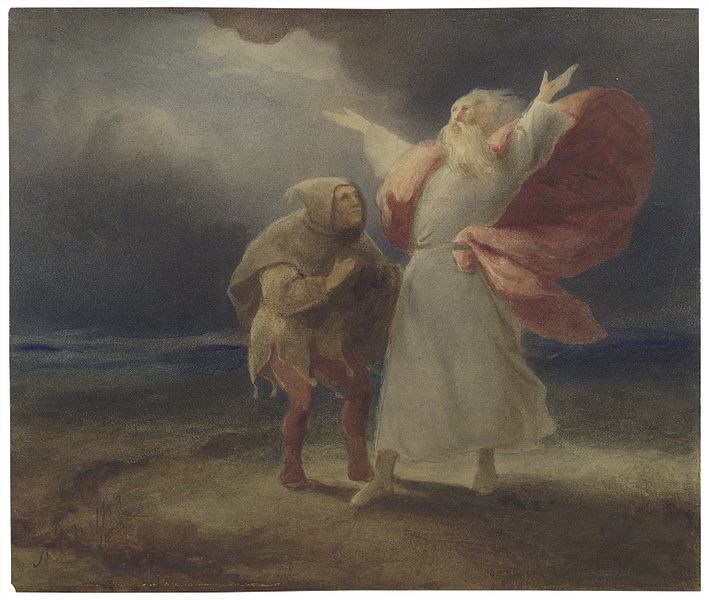
A Favourite Shakespeare Play: ‘King Lear’.

I have loved ‘King Lear’ ever since I saw a performance of the play in my teens and was completely transported by it.
I find it impossible to consider a parent being betrayed by their child without thinking of Lear, and am compelled to utter the quotation, “Blow, wind, and crack your cheeks. Rage! Blow!” at least once during every good storm I witness. 

‘King Lear’ is the story of a king with one daughter who actually loves him and two who are the most selfish, greedy, and deceitful women the kingdom had ever seen. The problem was that he was unable to tell which was which. And so, his story turns to tragedy. 

Shakespeare didn’t have to worry about being historically correct or pleasing the right people with this play, although it wouldn’t be right to show the king as being a bit of an idiot when it comes to his family relationships, so he was sure to stay safe by putting the blame on the king’s horrible daughters and their ambition to take what was not rightfully theirs. Loyalty and faithfulness were, after all, very important qualities and concepts for anyone living in Elizabeth’s England, and you couldn’t have people just seizing land and power that didn’t belong to them. 

It’s not just Lear’s elder daughters, either, that turn on their father. The Duke of Gloucester, faithful supporter of Lear, also feels the dagger of betrayal planted firmly in his back Edgar, by his bastard son, Edmund, who is seeking to take all that rightfully belongs to his brother Edgar. 

In all of this, there are valuable lessons to be learned about who to trust, how to discern who is really loyal to you, and the fact that some people are far more driven by greed and ambition than they are by familial love. Given that we live in a world where kids have been known to turn on their parents and even divorce them in some cases, and where families are divided and sometimes irreparably broken by disputes over money and property,  ‘King Lear’ is clearly a play that still holds relevance for us today. 

It is a beautifully crafted story, full of pathos and tragedy and heartbreak. The language and imagery is magnificent. The dramatic irony of Cordelia’s fall from grace and Lear’s subsequent fall from power at the hands of General and Regan is heartbreaking. Cordelia’s fate hangs in the balance right up to the end of the play while, it seems, the evil people win. That is another point of relatability for the audience: we don’t like seeing the evil people win, and we want to see them get their just desserts. It’s a theme that Shakespeare explores at length in this play, and he expertly positions the audience to keep hoping that Lear and Cordelia will win the day. 

It is the nature of Shakespearean tragedy, however, that pretty much everyone dies and there are a few minor characters left to pick up the pieces at the end, so the audience has to be content with the poetic justice delivered to some and the beautifully tragic ending that comes to others. 

The fact that it doesn’t have a happy ending is one of the things I like about it. Life often involves less-than-happy endings, and it has always seemed to me that those who hope only for happiness are setting themselves up for an enormous struggle when adversity shows up instead. We can’t always have what we want, and Lear would have done well to remember that. Cordelia would have been better off if she had realised that not everyone who should recognise your integrity will do so, and that sometimes you need to play the game better than the cheats do in order to make them lose. 

Sure, I believe in happiness, but I know from my own experience that life is generally far more complex than being able to achieve happiness and simply stay there. We are constantly challenged to maintain a balance  between necessity and luxury, joy and sorrow, pleasure and pain, lest we be overrun by one or the other. Achieving that balance is the art of life. 

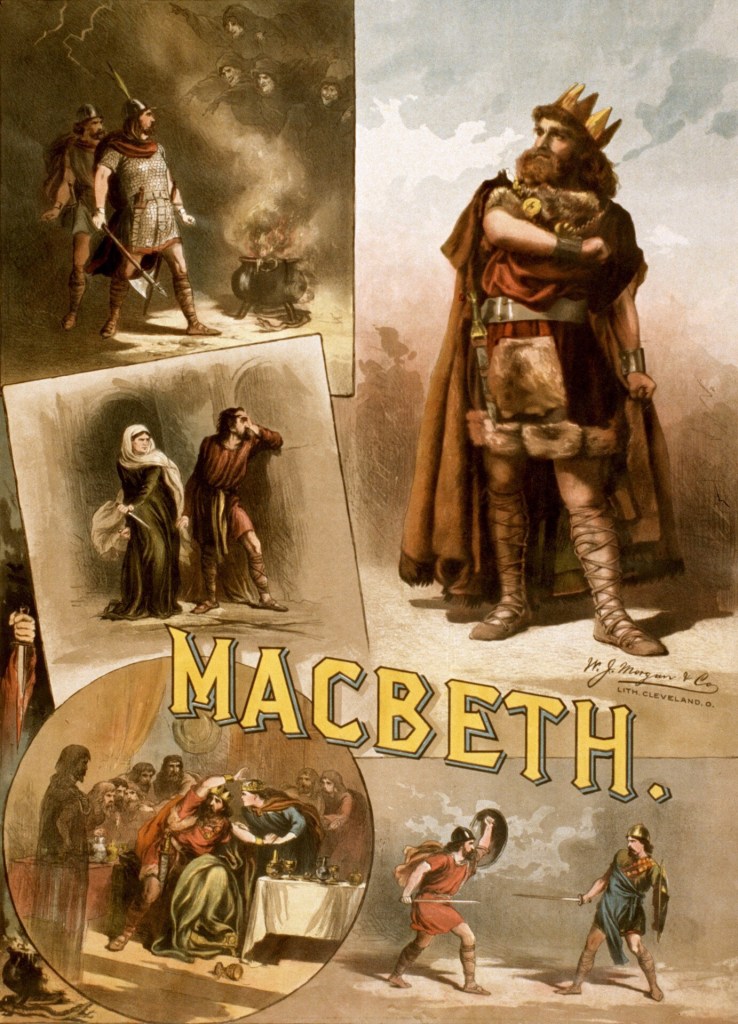
A Favourite Shakespeare Play: ‘Macbeth’

Macbeth is a play that has always fascinated people, engaging their superstitions as well as their imaginations. For this reason, its often called The Scottish Play by actors and theatre folk, as it’s believed to be unlucky to say ‘Macbeth’ in a theatre.

It’s a cracker of a story. The supernatural ‘weird sisters’ tell Macbeth he’s going to be Thane of Cawdor, and then tell him he is going to be king. In response, Macbeth does everything in his power to make it happen, only to be haunted by his victims and unable to actually enjoy his success when it does. You really do have to wonder how it would have all worked out if he’d responded with, “That’s nice!” and let things happen as they would. 

Of course, you can’t just blame it all on Macbeth. His wife – whom I like to call Lady Macdeath – plays a significant part in engineering him onto the throne, mostly by bullying him into doing things he doesn’t really want to do.

The play has some fabulous macabre moments— the witches are spooky, their prophecies are uncanny, and you can bet your last dollar you don’t want to eat what they’re cooking in that cauldron. Even better is the part where Banquo’s ghost shows up for dinner shaking his “gory locks”: that is my favourite scene in the whole play.

Laced with suspense, intrigue, and dramatic irony, ‘Macbeth’ keeps the audience hooked to the very end, even though we all know by now how it’s going to work out. There’s more magic than just “Double, double, toil and trouble / Fire burn and cauldron bubble” in this play. 

Strangely enough, reading the text has brought me some odd comfort this weekend as I contemplate the fate of people who manipulate, lie and use others for their own nefarious purposes. I have taken dark satisfaction in seeing those who chose to do evil get what they deserved in the end. It may not be gracious, but it is quite therapeutic to think that maybe the Fates really do have things under control. Sometimes you need to take your catharsis wherever you can get it. 

That, of course, is the genius of all Shakespeare’s plays. He deals in the emotions we all understand – ambition, greed, love, anger, jealousy, pride, and the experience of being at the receiving end of the bad behaviour of others. The language may have changed slightly, but human nature certainly has not. 

Shakespeare doesn’t have to work hard to make the audience dislike Macbeth and his cold-hearted shrew of a wife: we get it. We have all seen people succeed by means of deceiving and manipulating others, or by stabbing someone else in the back, and we don’t like them, either.

A Favourite Shakespeare Play: Richard III

I enjoy many of Shakespeare’s plays, but I do have a few particular favourites. 

At the top of that list would be Richard III. one of the history plays and part of the series that explores the conflict between the Lancaster and York branches of the Plantagenet family tree which we call The Wars of the Roses. 

Shakespeare’s characterisation of Richard as the ultimate villain is so masterful that it shaped how Richard was viewed for centuries afterward. The fact that the history was severely distorted and, at times, entirely fabricated, and that Shakespeare’s representation of Richard was hardly realistic, has nothing to do with it. Shakespeare was a playwright, not a historian, after all, and therefore not inclined  to let the truth get in the way of a great story. 

Of course, it was in his interests to cast Richard in a less than positive light. Shakespeare was very conscious of the fact that his Queen, Elizabeth I, was the granddaughter of Henry Tudor who defeated Richard in battle at Bosworth to become Henry VII. Making Richard less worth of the crown further legitimised Henry’s claim to it, and therefore reinforced her own. In a time when conspiracies and plots against Elizabeth were numerous, the validation of her place on the throne of England was essential for any playwright hoping for royal approval, and patronage from among the upper classes. 

Thus, Shakespeare’s Richard is a man who not only recognises his evil nature but delights in it and determines to see how much he can achieve with it. 

Richard’s choice to pursue evil rather than good from the very start sets the tone of the whole play, and the audience knows they are in for one hell of a ride. His soliloquies deliver profound insights into the evil mind of a villain. They are absolutely fascinating, crafted with intrigue and malice that horrify and enthrall the audience at the same time. It’s riveting stuff. And as Richard puts his schemes into action and celebrates his own cleverness and cunning when they succeed, the audience is acutely aware that they are watching an evil genius in action. 

My favourite character, though, is Margaret, the former queen of Henry VI. She is strong, she is angry, and she is hell-bent on justice. Margaret speaks vitriol and hurls insults and curses so effectively that Cecily, Richard’s own mother, asks Margaret to teach her how it’s done. She attains a level of Shakespearean Insult proficiency that nobody else ever quite managed, not even Richard himself.

The language of the play is magnificent. From the insult competitions to the curses that burn with the brimstone of hell itself, there is not a word wasted in this play. The imagery is incredibly powerful, and the emotive language is so clever and subtle that while the audience may recognise that the characters on stage are being deceived, they don’t realise until after the fact that that they, too, have been positioned and manipulated by a master of the art. 

It is only at the end of the play, when one realises they feel a little sorry for the villainous Richard, that the audience understands how the language and drama of the play have seduced them.   

To take a man from the pages of history, craft him into something hateful, and have the audience still feel something other than hatred for him— albeit, while most likely feeling hatred for him at the same time— is testimony to Shakespeare’s genius as a wordsmith and playwright. 

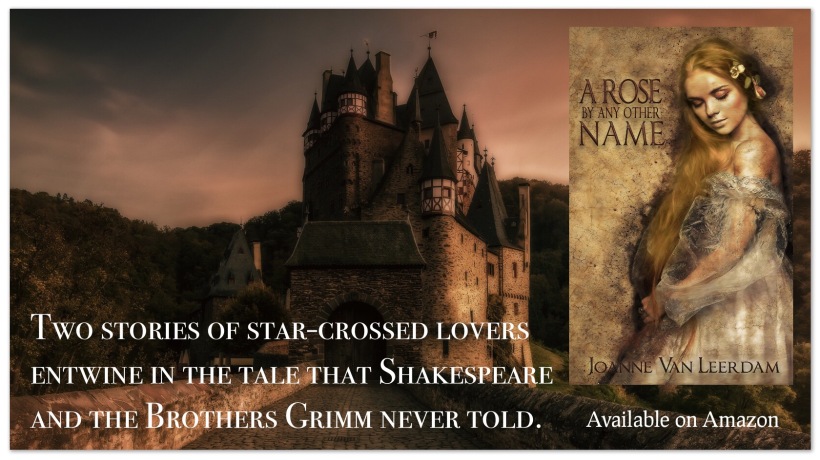
New Release: ‘A Rose By Any Other Name’

It’s live! 
My new Shakespeare/fantasy novella launched today at 3pm Sydney/Melbourne time. 

I am really proud of this book, and very excited to be able to introduce it to people as a new release. 

I hope that readers will enjoy the story. I certainly had fun writing it, and still laughed again reading it over while formatting the ebook and paperback. It was a most enjoyable challenge to take two old stories and weave them into something new and fresh. 

‘A Rose By Any Other Name’ is widely available in both paperback and ebook.

***

Excerpt from Chapter 1

Gnarled fingers gripped the doorframe tightly as she watched him riding slowly, as though searching for something.

What does his lordship want now? By the stars, I have precious little left.  Is it not enough that he has built his mansion on my father’s land? And his walls around the trees between which my poor mother is buried? I’ll give him something… although it may not be what he wants.

She grinned cynically, a glimpse of yellowed teeth between thin, hateful lips.

Wait. He’s dismounting… Fool. There are no raspberries yet; it’s still too warm. What kind of moron… picks raspberry leaves? Oh, now… that is interesting. Very interesting.

Straightening her thin body to her full height, she stepped out into the field, heading straight for the thicket of barren raspberry bushes.

“And what are you going to do with those?” she demanded.

Nico jumped at the sudden intrusion. His thoughts scattered at the sight of Malevolenza.

Wizened and ghastly, she had become even thinner and more gaunt since he had last laid eyes on her over twenty years ago. She had watched in angry silence as the walls of the estate were built by his father’s workmen. Her wailing curses had risen like a fortress of sound outside the completed estate walls continuing for what had seemed an eternity on the night they were finished and the gates locked – the night his father had died. Whether it was fear or black magic that had driven the soul from his body, Nicolas would never know. When his father was cold, his grey eyes staring sightlessly at the ceiling as though he had been interrupted mid-thought, the old crone had fallen silent and disappeared. Or so he had thought.

“Well? Gatto got your tongue? Or are you… bewitched?” she cackled.

Nico opened his mouth, but he could not speak.

“Raspberry leaves… what on earth would a man want those for? Unless… there is a child on the way?”

The fear in Nicolas’ eyes was like a drug to her.

Malevolenza pointed her bony finger at him, her dirty, ragged nail giving emphasis to her intent. She muttered the words of her spell under her breath: “Doppio, doppio, lavoro e disordine, Ora sono io il tuo maestro!”

Nico remained mute, entirely under her control.

“You will take these leaves to your wife. Grind them into a powder, and make a tea. She will drink it, and her pains will begin. And then, when the child is born, you shall give the baby to me. You will tell your wife the child is dead. Go now. It shall be done.”

Nico’s senses returned to him only when she had disappeared. Shaking his head, and unable to recall what had crossed his mind just now, he resumed picking the leaves and placing them carefully in the pouch he had brought for his special harvest.

As he returned home late that afternoon, the sun dropped low in the sky and a distinct chill fell over the air.

***

Why I Love Shakespeare

I’m currently reading a great book titled ‘Blood and Ink’ by DK Marley. It is a really well written historical fiction novel that explores, in part, one of the theories about the identity of the man we know of as William Shakespeare.

Rumours and theories that Shakespeare’s works were written by someone else have abounded for a long time. Various people have been proposed as the actual author. 

That’s all very interesting, of course, but the fact is, I really don’t care whether his name was actually Filchin McFarkle. 

My love for Shakespeare isn’t about the person: it’s about the language, the writing, and the craftsmanship that combine to be the genius of the writer. What his name was doesn’t matter one bit. 

The power of Shakespeare’s plays and poetry is that they take something ordinary and transform it into something extraordinary.

Themes of love, passion, ambition, revenge, hatred, despair, desire, and family dysfunction make his work interesting and relatable to just about everyone. And while there are at least a dozen ways to write any story, the way Shakespeare tells each story is absolute magic. 

Shakespeare used rhythm and poetic devices like imagery, allegory and highly emotive language to heighten the feelings and drama of the situations his characters find themselves in. He enmeshes them in a complex web of conflicting emotions and ambitions and then exposes their innermost  thoughts in the most profound ways. He really is the master of intrigue and dramatic irony, able to hold the audience spellbound, even though they probably already know what’s going to happen and what the various characters are thinking.

To be honest, some of the storylines are pretty rubbish. There are very convenient coincidences, leaps of logic, and plot holes galore, particularly in the comedies. The history plays are at times more fiction than history. Despite all that, Shakespeare dramatises the stories and scenes in such a compelling way, and so deeply engages the audience in the dilemmas and conflicts experienced by the characters, that any issue of credibility actually doesn’t matter.  

I will still pick up a play and read it, or watch a performance, or read the sonnets and be as entranced as ever. Even when interpretations change, the magic with which the words are crafted and woven never gets old. 

My Least Favourite Shakespeare Play

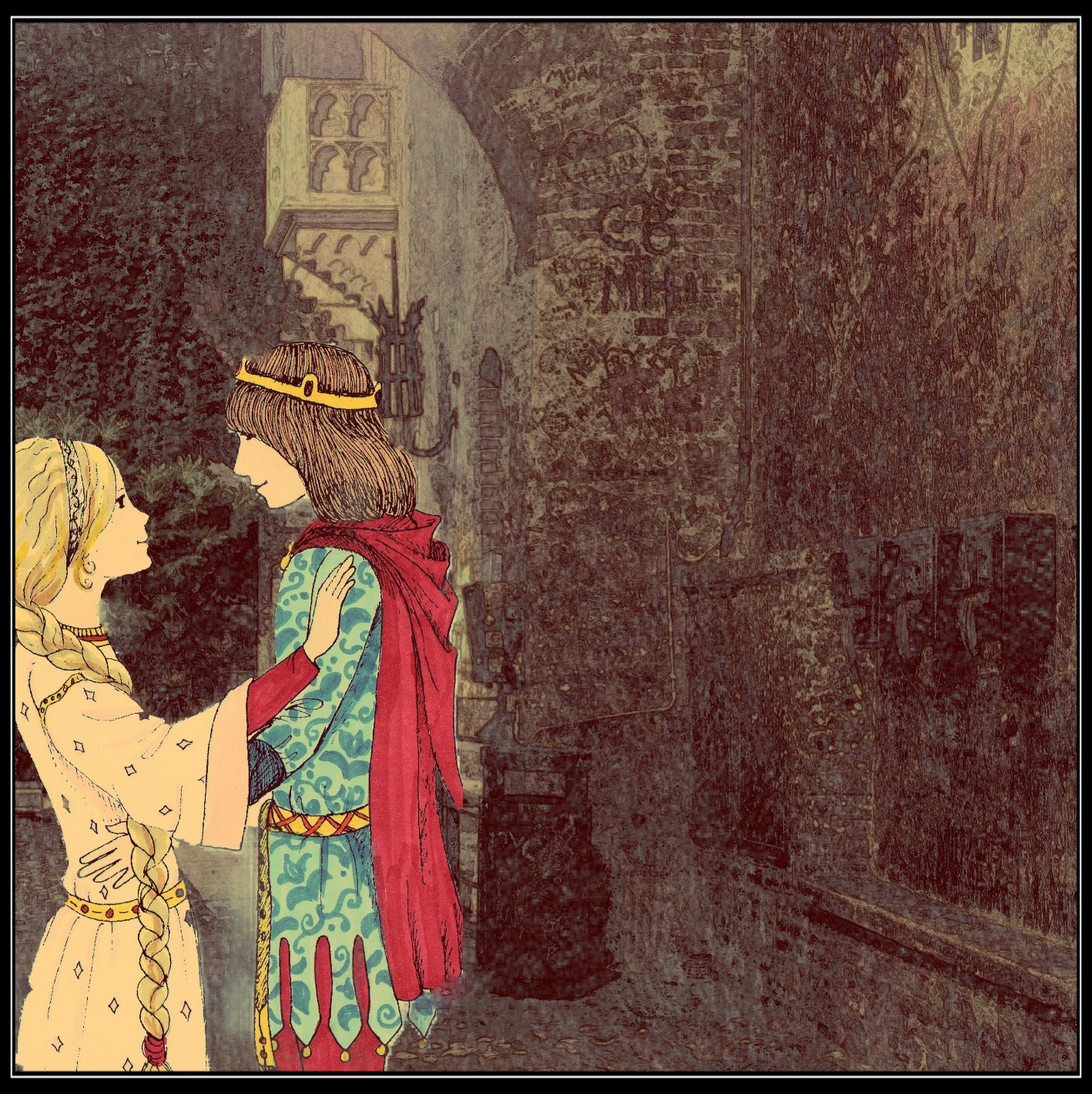
The reference to Shakespeare’s ‘Romeo and Juliet’ in the title of ‘A Rose By Any Other Name’ is blatantly obvious. 

The irony is that ‘Romeo and Juliet’ is probably my least favourite play from among Shakespeare’s works. As I often explain to my students who think it’s romantic and all about love, it’s really not. It’s a tragedy that demonstrates what happens when people do stupid things on impulse and don’t stop to think about the consequences of their actions.

They’re teenagers. They met on Sunday, and by Thursday, they’re dead.

And, as Shakespeare points out in the epilogue, they end up that way because their families both prioritise their stupid feud over the happiness and the future of their children.  How much more like a badly plotted teenage soap opera could it be?

It’s more of an anti-Romance, if you ask me. They’re not in love, they’re infatuated. Romeo really is quite an idiot, and as for fickle… how quickly did he forget his passion for Rosaline the moment he met Juliet? If you ask me, Rosaline dodged a bullet – or a dagger, or a vial of poison, there. 

To be fair, the fault isn’t Shakespeare’s. He based his play on an old story that was very popular back in the day, which was a brilliant marketing move. The other factor that made his play such a hit was the beauty of the language with which it is written. There’s nothing at all wrong with the writing: it’s magnificent. Nothing can convince me otherwise.  If anyone could give a story about two silly teenagers from equally silly families another 600 years plus in terms of longevity, he was the man for the job.

So, is it odd that I’ve used ‘Romeo and Juliet’ as one of the starting points of my story? Not really, because I wanted my story to be something of an anti-Romance, too. 

‘A Rose By Any Other Name’ draws on ‘Romeo and Juliet’, and on the Brothers Grimm fairy tale of ‘Rapunzel’ as starting points, then twists and tangles them together to create a mashup of the two stories with a very different ending. Romeo is still an idiot, it still ends in tragedy… but it’s a completely new story. It’s medieval fantasy, laced with faint traces of my subversive sense of humour. 

I like to think of it as the story that Shakespeare and the Brothers Grimm never told. 
But I bet if they’d thought of it, they would have. 

***

A Rose By Any Other Name is available for preorder.

Cover Reveal: A Rose By Any Other Name

I mentioned in a post last week that I was anticipating the release of a new book, about which I am very excited.

The book is a medieval fantasy story called ‘A Rose By Any Other Name’ which draws on both ‘Romeo and Juliet’ and ‘Rapunzel’ as the starting points for this story before taking those narratives in a very different direction. 

And so, without any further delay, let me reveal the beautiful cover, created for me by Renee Gauthier of RM Designs in Toronto, Canada. 

The back cover is gorgeous, too.

It’s fair to say I am thrilled by the beauty of this cover art, and incredibly thankful to Renee for her fabulous work. 

This story grew out of the inspiration from my author posse, the Indie Fabs. When one of them suggested that we write a fairy tale retelling anthology as a group, I was very nervous at first. I had never written anything like that. I didn’t know where to start, or how I might ever achieve that goal. I honestly thought I was going to let them down. 
Then one of them said, “Write what you know.”  Well, I knew all the old fairy tales that I had grown up with. And I knew and loved Shakespeare. 
And in that moment, this story concept was born. 

‘A Rose By Any Other Name’ took its place in that anthology, titled ‘Once Upon A Fabulous Time’ and published in 2017. It truly is an anthology unlike any other – far more than just a collection of our reinvented and often significantly transformed fairy tale stories, those stories were linked with one another by another separate, magical story that wove them all into one continuous narrative. Because it is such a very special book, it is still available in paperback, but no longer as an ebook. As a result, my story is back in my hands and free to be released as an individual title.

It is available for preorder, and will be released at 12.01am EST on June 14. 

Make sure you’re following me on Twitter or Facebook so that you are able to reserve your copy. 

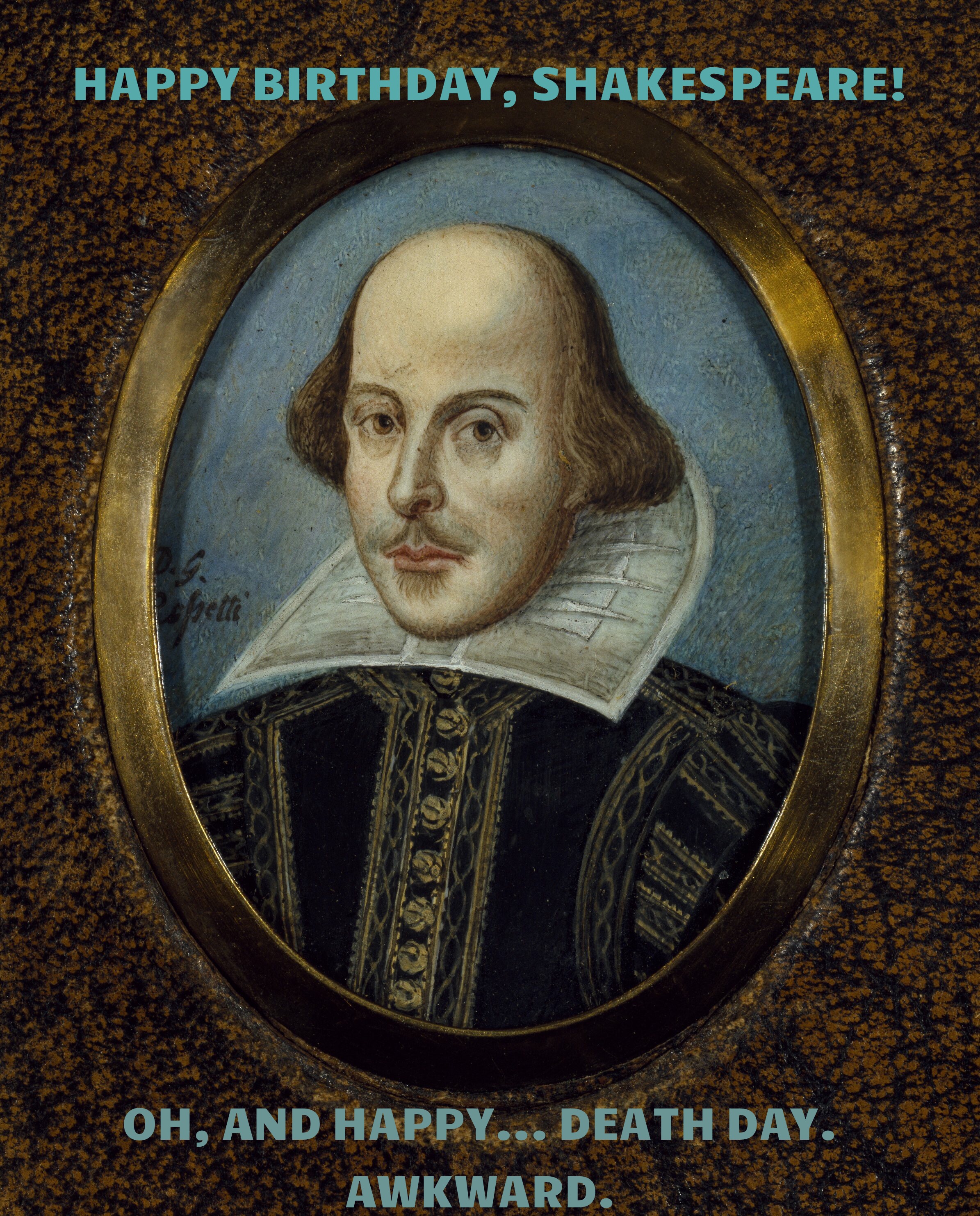
Shakespeare’s Birthday

Every year on April 23rd, my family celebrates Shakespeare’s birthday with cake. I always do some reading from a play or sonnet, but my husband isn’t so fond of that as he is of the cake, so it’s usually either a solitary activity or one I share with my dog. It’s a well-established fact that Abbey the Labby loves the Bard… and cake.

This year, though, my homage will take the form of several hours of rehearsal for a different comedy – Monty Python’s Spamalot – before I am able to indulge in birthday cake. It does seem fitting that the show is a little bawdy, somewhat irreverent, and absolutely hilarious. 

While the precise date of Shakespeare’s birth was not recorded, the date of his baptism was registered as April 26th, 1564. Because it was traditional for babies to be christened three days after they were born, it is generally accepted that William Shakespeare was born on April 23rd. 

In an ironic twist, Shakespeare died on the same date in 1616. Some people think that is awkward, but I think it’s a pretty cool achievement. I’m not sure how common it is for people to die on their birthday, but one of my grandfathers  did, so it’s a feat that has always been a point of interest for me. 

So, here’s to The Bard, his works, and his legacy.

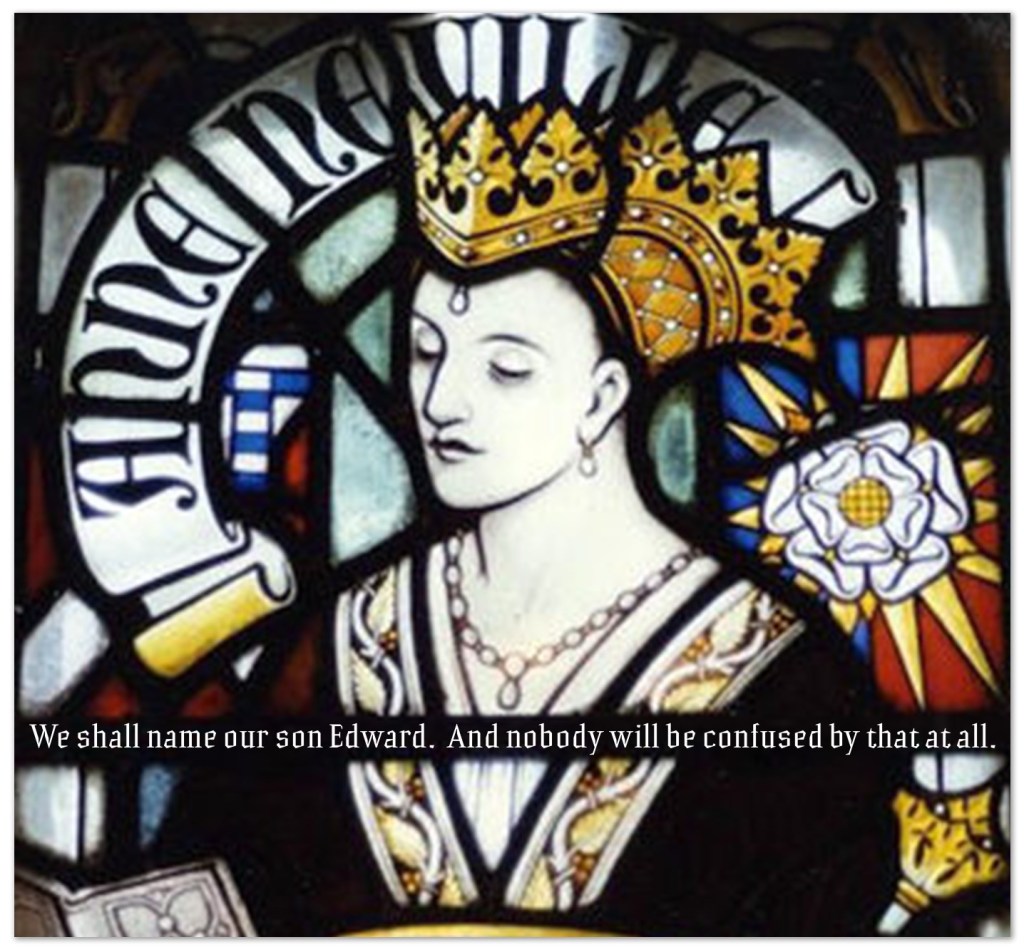
Women in History: Anne Neville

Anne Neville has to be one of the women in history most maligned by Shakespeare.

While it is true that he does portrays her as one of the many victims of Richard III, and doesn’t really say anything terribly nasty about her, it is also undeniable that her reputation is maligned by the way she is portrayed as being quite fickle and very, very gullible.

As I always remind my students, there is a vast difference between actual history and Shakespeare’s play. In fact, Shakespeare entirely misrepresents both the course of events and the relationship between Anne and Richard. 

Not only were their families well known to one another, they were quite closely related. 

Anne grew up at Middleham Castle, the daughter of the 13th Earl of Warwick and his wife, Anne Beauchamp. Anne’s great aunt was Cecily Neville, the wife of Richard, Duke of York, and mother of Richard and his brothers.

When the Duke Of York died, his youngest sons George and  Richard went to live at Middleham with Warwick’s family. Anne’s sister Isabel would later marry George, Duke of Clarence.

Warwick, known as The Kingmaker, played a crucial role in helping his cousin take and hold the throne as the King Edward IV of the House of York during the troubled times of conflict commonly referred to as either The Cousins’ War or the Wars of the Roses. For the first few years of Edward’s reign, Warwick held enormous influence over the young King. 

However, when Warwick tried to negotiate a marriage arrangement for Edward to secure an alliance with France, he discovered that Edward had secretly married Elizabeth Woodville, the widow of Sir John Grey who had been loyal to the Lancastrians. Warwick was not alone in distrusting her and her family, and was profoundly annoyed by Edward’s secret marriage to a woman whom Warwick considered entirely unsuitable. 

At the same time, and quite likely in direct response to Warwick’s contempt for his queen, Edward refused to give his blessing to a proposed union between his brother George, Duke of Clarence, and Warwick’s daughter Isabel, but the pair married anyway with Warwick’s blessing. 

This pitched Warwick and Edward against Edward, and their forces met in battle at Edgecote Moor in 1469. Edward was defeated and taken captive, although released before long, Warwick had sufficient time to reconcile his differences with Margaret of Anjou, the queen of the former Lancastrian King Henry VI. The significance of this is enormous: Warwick and Margaret absolutely hated one another.  

Even so, Warwick’s daughter Anne Neville was betrothed to Margaret’s son Edward of Westminster, the Lancastrian Prince Of Wales,  as a seal of the alliance, and Henry VI was restored to the throne of England two months before Anne and Edward were married in November of 1470. Thus,  Anne became the Princess of Wales and part of the Lancaster dynasty. 

Edward of York, however, was not so easily deposed. He defeated and killed Henry VI in the Battle of Barnet in April 1471, just as Margaret, Edward and Anne were returning to England. Margaret led an army to Tewksbury in May, where her son Edward was killed either during or just after the battle. Edward IV of York then reclaimed the throne as king of England.

Anne, a young widow, took up residence with her sister Isabel and her husband. When Richard asked for and was given consent to marry Anne, the only opposition came from his own brother, who wanted to inherit the entirety of Warwick’s wealth for himself. 

Anne was very willing to marry Richard, and harbored no resentment toward Richard for any of his deeds, perceived or real. They married in 1472 and theirr only son, Edward of Middleham, was born in 1473.

Her relationship with Richard’s mother Cecily was good and her marriage to Richard was happy, although stricken by grief when their son died at the age of ten. Anne and Richard then adopted the young orphaned son of her sister and Clarence, who was also named Edward — of course he was! and of a similar age to their own son. In yet another striking contrast to Shakespeare’s play, the newly adopted boy was named Richard’s heir. 

Anne Neville died at Westminster on 16th March 1485, from an illness that was most likely tuberculosis. She was only in her late twenties, but she had witnessed a very great deal of conflict, grief and turmoil in the kingdom in the course of her life. She was buried in Westminster Abbey, near the High Altar, although the location of her grave was never marked. 

Anne’s story is very different than that told by Shakespeare. Instead, Anne appears to have been a woman who possessed both integrity and backbone, and to have dealt with her trials with considerable resilience. As much as I love the works of the Bard, I do prefer the real story of Anne Neville, and feel sorry that for so many years, she was neither admired nor respected as she deserved to be.