What I Like … and What I Don’t… About Instagram

I really like Instagram. 

It’s easy. A nice picture, a few well-chosen hashtags, and you’re done.  Scrolling through your feed and liking posts is easy too. 

Of course, there are ways you can make things more sophisticated. Adding your post to your story is relatively straightforward. You can add posts to highlights that show up in nicely organised groups on your profile. You can save posts into collections. You can follow favourite hashtags as well as individuals. 

There’s no obligation to do any of those things, so you can really keep it as simple or make it as fancy as you like. 

I really enjoy looking at other people’s creativity in pictures, so I’m right at home on Insta. I’m happy to look at their books, their cats or dogs, their holiday snaps, whatever. I love baby pictures. I enjoy memes. Some people want to post about their books all the time. Some people hardly ever post about their books. Either way, I’m cool with that. I like the fact that we all have freedom to post as we please, and we’re all able to get on and play nicely in the Insta playground. 

I like the simplicity of responding to other people’s posts. Liking is easy. Commenting is easy. 
I do occasionally think it would be nice if there were a choice of reactions like there is on Facebook. Other days, though, I consider it in terms of “a heart is a heart is a heart” and am grateful that there isn’t more value given to one response over another. 

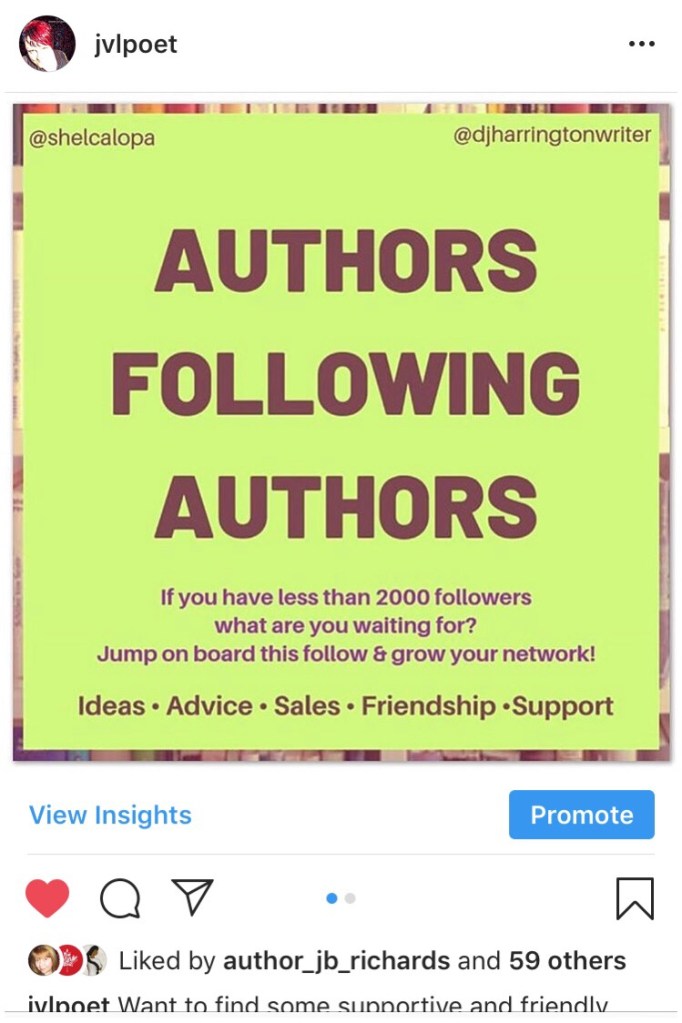
It has been really encouraging and motivating to connect with other people with similar interests through the use of particular hashtags and “follow loops”, which are basically posts where authors or other people with common interests respond and then follow one another. I’ve found so much inspiration, and received so much encouragement and feedback, from other authors and Indie creatives on Instagram. It’s a great way to become part of a very positive and proactive creative community. 
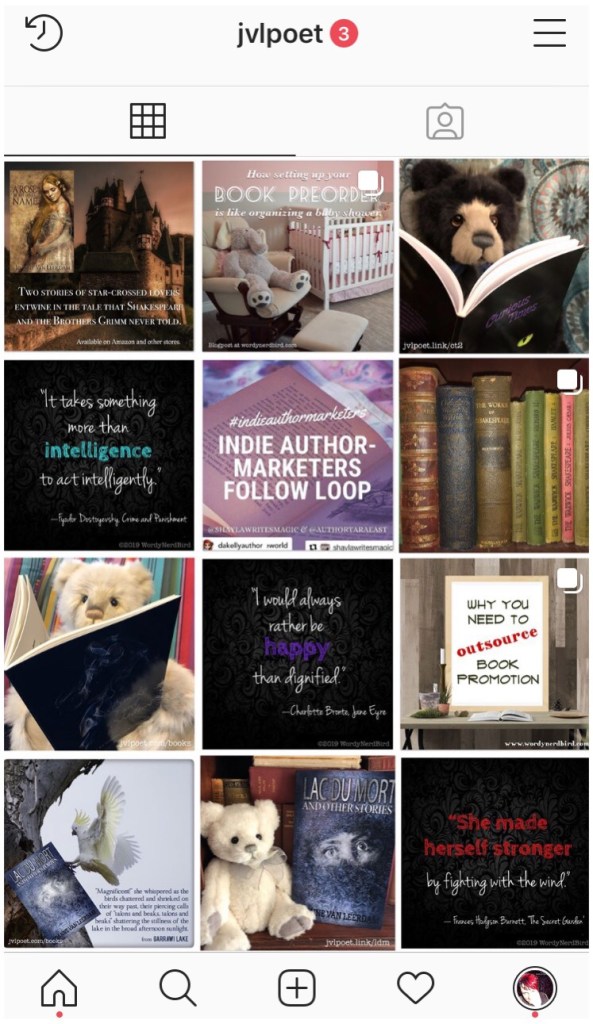
The challenge of developing my own creative identity on Instagram has been beneficial in terms of incorporating my own style and branding so that my Instagram profile is consistently “me”. I want people to be able to look at my profile and understand something of my personality and commitment to what I do. There’s a lot more to that than “buy my book” posts. It’s been a bit of a learning curve, but well worth it in terms of consistency and style, and as a means of establishing some credibility.  
And, of course, there are things that frustrate me.
These fall into two groups: less pleasant aspects of the app itself, and my own personal peeves. 

First up: the less “user friendly” elements.  

  • Using the wrong hashtags – or more correctly, hashtags that have been abused by others, can cause your posts using those tags to be shadow banned. That’s a nerdy way of saying fewer people will see them. Don’t panic, though – there are ways to find out which tags are  thus afflicted, and so avoid using them. 
  • Scammers that look like legitimate shopfronts frequent Instagram. They’re as capable of using a pretty picture as anyone else, it seems. It pays to check out any business or site before clicking through from an Insta ad – and that’s the voice of experience talking. I got caught out once, and learned my lesson very promptly. 
  • The challenge of gaining visibility for posts. It seems that no matter how many followers I have, there’s a natural cap on how many “likes” or views my posts seem to get.  Just like Facebook – which owns Instagram – there’s an algorithm running that appears to how many of my followers see my posts. The more likes a post gets, the more visible it is to more people.  Of course, they’re quite happy to encourage me to boost my posts and pay for them to show my posts to more people. Forgive my cynicism about that, won’t you?


Secondly, my “pet peeves”:

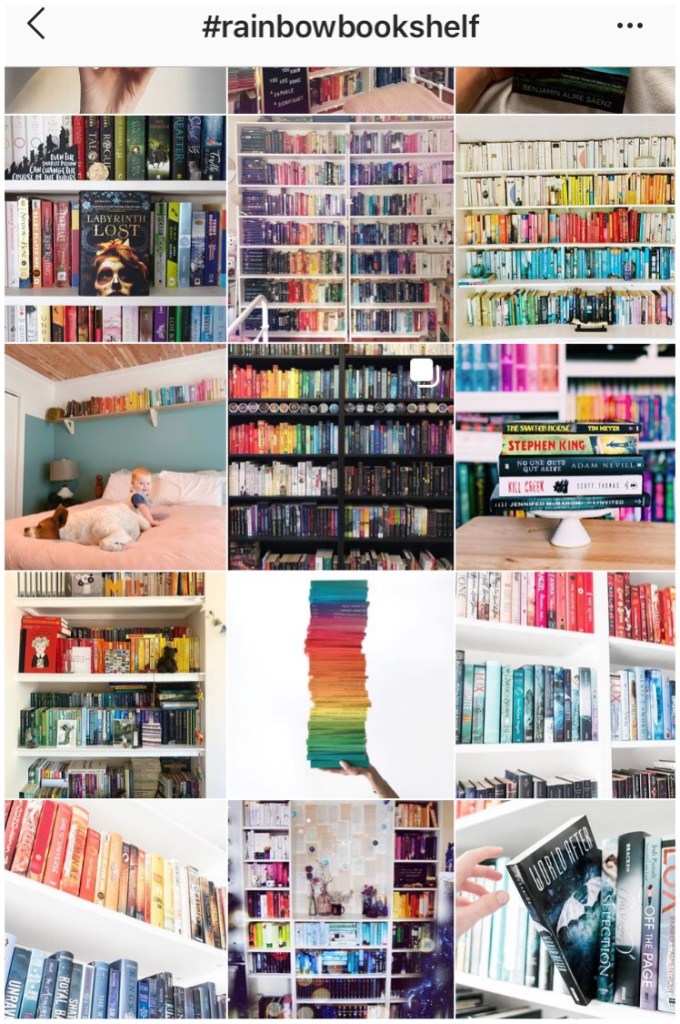
  • Bookshelves arranged into rainbows.  I just don’t understand. I get that it’s pretty, and I like rainbows as much as anyone… but it really gives the book nerd in me enormous anxiety. Wouldn’t that mean a series of books is separated on the shelves? And how does one find anything if different genres and categories are all mixed up on the basis of the colour of their covers?  This is clearly a hard no from me. 
  • People who appear to be commenting in response to something I post, but they’re really spamming me with their own content. Ugh. That’s just rude.
  • People who follow in the hope that you’ll follow them back, and then unfollow you. Especially those who don’t just do it once. There are a couple of accounts with a really distinctive  and instantly recognisable handle that keeps on following me, then unfollowing and following again a couple of weeks later. Frankly, I wonder why they bother, but it is amusing. Do they think people aren’t going to notice that? 
The verdict: Instagram is generally a very positive and enjoyable place for me. The things I don’t like are opportunities for me to practise being a grown up and just keep scrolling past them.
It’s an Insta-heart from me. 

Why a Heart is Better than a Thumbs Up

In the ever-evolving state of affairs that is the Facebook algorithm, there is one recent change that is actually quite easy to work with. Facebook now places more value on the other reactions than it does on the standard  “thumbs up” or “like”. 

I can understand why.
It takes just a little more effort, so it is easy to see why it might be interpreted as a more thoughtful and deliberate response to a post than simply hitting the default. 

It’s all part of their reported change of focus from content to engagement. It may be that this is a way to still be able to increase the reach of our posts, and boost our audience engagement at the same time. 

So, I’m trying to respond accordingly: 

  • I’m using the heart and surprised “wow” face more. I don’t know how much difference it makes, but for something so simple, it’s worth a try. 
  • I’m responding to the posts I make via my pages and groups with those “power responses” using my personal account in the interests of pushing my posts to gain more reach and engagement. 
  • I’m trying to respond with more comments, even if it’s just an emoji or a gif, in addition to using one of the response buttons. Obviously, I can’t do this for every post because I don’t want to spend my entire life on Facebook. I may have to be choosy, but there are posts out there that deserve a little extra love, so I’ll try to give it to them. 
  • I will still use the “thumbs up” to acknowledge posts. I don’t want to stop using it altogether, because then the others will become the default, and everything will undergo another adjustment. 


It’s all positive interaction and engagement, so it can’t hurt. 

Hopefully, it will be contagious. If people see more hearts and wow faces, and additional comments, they might start using them too! 

Ten Great Reasons To Preorder That Book!

Authors making their books available for preorder is becoming more and more popular these days. It’s natural. They’re excited about that upcoming New Release, and they want you to be a part of it. 

Apart from the obvious value of supporting authors and encouraging their creativity, there are some very good reasons why you will benefit from preordering a pending book release. 

Why You Should Preorder That Book 

  1. You will have it as soon as it releases. 
  2. It satisfies that “I want it now” feeling that we all have upon seeing a beautiful cover and reading an intriguing blurb.
  3. It’s convenient: you don’t have to remember to go back and order it later. 
  4. You get to share in the excitement of a pending arrival. Consider it a baby shower gift for someone who has worked hard for months to make that book a reality.
  5. Anticipation is a positive and highly motivating emotion. 
  6. For less than the price of a coffee, you can make someone’s day AND get a great read at the same time. 
  7. Books have zero calories, so it’s a guilt-free way of treating yourself to something wonderful. 
  8. It’s like giving yourself a gift. You order it, and a short time later, a wonderful surprise appears in your eReader. 
  9. You will have the satisfaction of knowing your supported someone’s creativity and talent. 
  10. Positive Karma.

What’s not “feel good” about that list?
If you have any more great reasons, feel free to add them in a comment!

The Importance of PreOrders: An Author’s Perspective

Picture this scene: a baby is due soon.
The mother has spent months anticipating the birth, making sure everything is okay, getting the nursery ready, and making sure she’s booked into the birthing suite at the hospital of her choice at the right time. 

Wouldn’t it be a little…well, weird if she didn’t tell anyone at all it was happening? 
Wouldn’t it be far more likely that she’d be sharing snapshots of the baby’s room and first teddy bear? And her friends would probably be liking those pictures, commenting on the anticipated arrival, and buying gifts for the baby shower. 

Setting up a preorder for a new book is, for an author, akin to getting the nursery ready and inviting one’s friends to the baby shower. Every preorder sale is like a baby shower gift that shows love for the author and excitement for the new arrival. 

To some, the analogy might seem far-fetched. As an author, I can assure you that it’s really not. 

***

Preorders really can make a huge difference to a new book’s start of life. 

Once you’ve got the writing, editing, formatting and publication organised, you can give your book a boost by making it available for preorder and getting some advance sales. 

Without going into a whole lot of technical details, there are some really good reasons to do so:

  • It’s convenient. When someone preorders a book, it is delivered straight to them upon release. They don’t have to think about saving links, bookmarking sites, or following up later. 
  • It allows you to tap into the “I want it now” mentality that is so strong these days. Enabling people to order your book right away and satisfy their impatience is a clever marketing strategy. 
  • Having your book available on preorder enables you to build excitement and anticipation for your release. It’s one thing to be able to say “this is being released on Friday”, but another entirely to be able to say “Reserve your copy now! Be the first to get it as soon as it’s released! You won’t have to wait!” Remembering that tone is everything, it can’t hurt to have some excitement injected into your pre-release social media chatter. 
  • Those advance sales push your book further up the rankings, so that vendors show it to more people, enabling it to get even more sales. If you can achieve a spot in the “top new bestsellers” list for a day or even a week, that’s going to mean a lot more potential customers seeing your book without you having to go out and find them. If you’re lucky enough to win a “Number 1 New Release” ribbon on Amazon or Barnes & Noble, that gives you more marketing momentum and appeal.
  • Strong sales in the first week help to get your book noticed by other readers. It will show up in the “customers also bought” or “based on your browsing/purchase history” lists for more readers, and again, get new eyes on your book that you don’t have to go and find on your own. 

In my experience, making my books available for preorder has definitely been a good strategy.

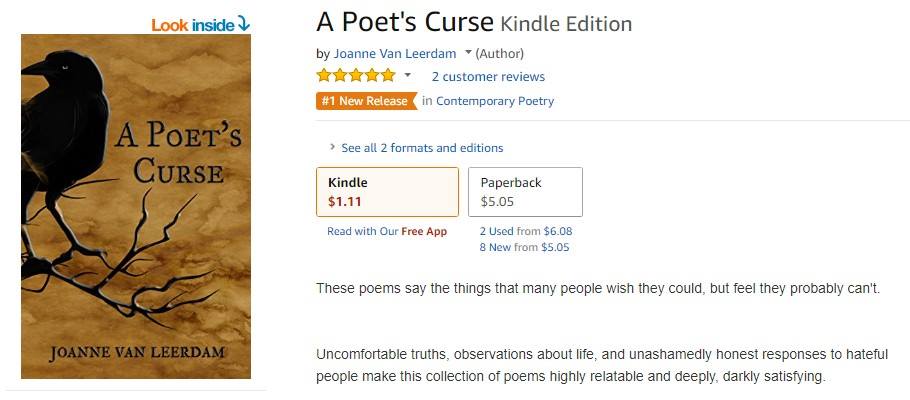
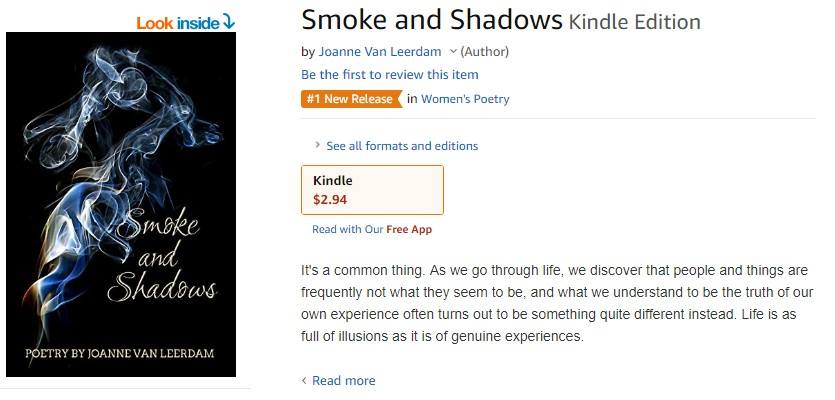
I’ve been lucky enough to gain the “#1 New Release” ribbon for poetry twice, and obviously I’d love to do that with ‘A Rose By Any Other Name’ when it releases on Friday. Although it is in the much more competitive categories of Fantasy and Fairy Tales, which is a much greater challenge, but it’s not impossible. It’s also in the category of ‘Mashup Fiction’ so it has a good chance there. 

Whether my book makes a big splash or simply becomes a drop in the ocean, I will have given it my best shot. And that knowledge and confidence is something that you can’t put a price on. 

***

If you’d like to join in my “baby shower”, you can preorder ‘A Rose By Any Other Name’ at
Amazon or your other preferred digital store.

Why I Love Shakespeare

I’m currently reading a great book titled ‘Blood and Ink’ by DK Marley. It is a really well written historical fiction novel that explores, in part, one of the theories about the identity of the man we know of as William Shakespeare.

Rumours and theories that Shakespeare’s works were written by someone else have abounded for a long time. Various people have been proposed as the actual author. 

That’s all very interesting, of course, but the fact is, I really don’t care whether his name was actually Filchin McFarkle. 

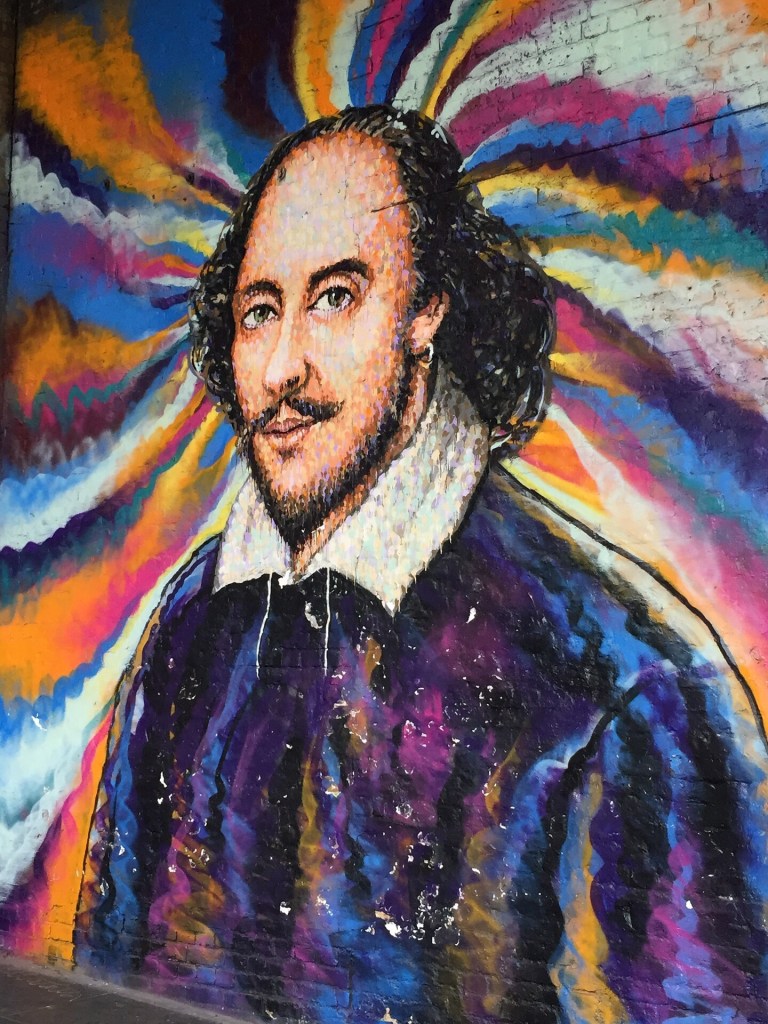
My love for Shakespeare isn’t about the person: it’s about the language, the writing, and the craftsmanship that combine to be the genius of the writer. What his name was doesn’t matter one bit. 

The power of Shakespeare’s plays and poetry is that they take something ordinary and transform it into something extraordinary.

Themes of love, passion, ambition, revenge, hatred, despair, desire, and family dysfunction make his work interesting and relatable to just about everyone. And while there are at least a dozen ways to write any story, the way Shakespeare tells each story is absolute magic. 

Shakespeare used rhythm and poetic devices like imagery, allegory and highly emotive language to heighten the feelings and drama of the situations his characters find themselves in. He enmeshes them in a complex web of conflicting emotions and ambitions and then exposes their innermost  thoughts in the most profound ways. He really is the master of intrigue and dramatic irony, able to hold the audience spellbound, even though they probably already know what’s going to happen and what the various characters are thinking.

To be honest, some of the storylines are pretty rubbish. There are very convenient coincidences, leaps of logic, and plot holes galore, particularly in the comedies. The history plays are at times more fiction than history. Despite all that, Shakespeare dramatises the stories and scenes in such a compelling way, and so deeply engages the audience in the dilemmas and conflicts experienced by the characters, that any issue of credibility actually doesn’t matter.  

I will still pick up a play and read it, or watch a performance, or read the sonnets and be as entranced as ever. Even when interpretations change, the magic with which the words are crafted and woven never gets old. 

Facebook’s Delicate Community Standards

Facebook’s “community standards” did not enter my thoughts last night when I was posting about what I love and hate about Facebook. Had I been writing that post today, it would have been a very different story. 

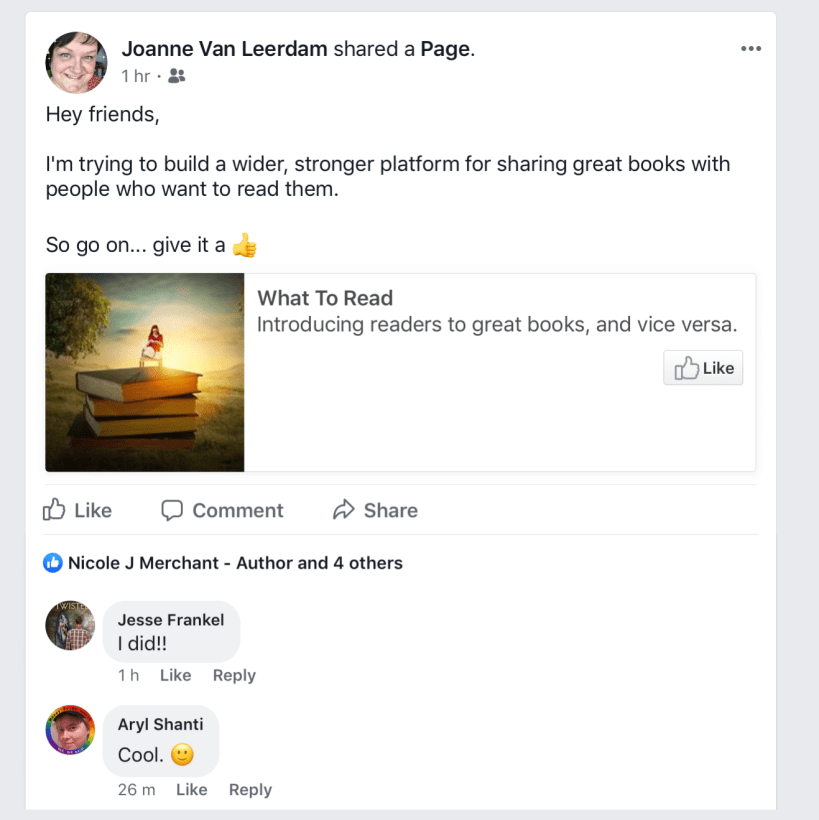
This afternoon, I set up a new page on Facebook with the aim of extending my reach to new readers by using a popular bookish hashtag phrase, What To Read, as the title. 

As soon as I had set up the page, Facebook started coaching me to complete certain steps to make my page more visible. 

Profile photo: check.
Cover photo: check. 
First post: check. 

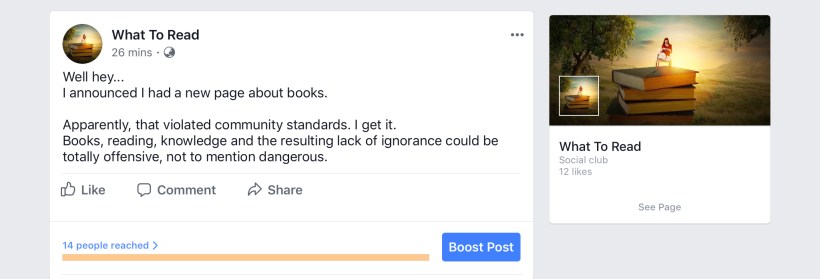
Oops! My first post violated Facebook’s delicate community standards. 
Want to know what it said? 

So… people can freely incite hate, vilify and shame others, put up pictures of them humiliating themselves… but I can’t suggest that my friends might like a page about books? 

Wow. 
Maybe I should have said something dumb instead. 

May the fates be in my favour when I actually start encouraging people to read. 

***

Update: it took me three attempts to share this blogpost on Facebook.
If they don’t want me to be snarky, they’re going the wrong way about it.

What I Love… and What I Don’t… about Facebook.

There’s no doubt about it: Facebook is one of the most popular social media platforms on the planet.

Like anything, it can be fantastic if it’s used the right way, and it can downright dangerous if used for sinister purposes. 

There are some aspects of Facebook I really enjoy:

  • Being able to connect with my family and friends all over the world in real time. What a blessing! When I’m homesick for someone I love – there they are! When I’m lonely – my friends are right there! I can see their pictures and videos, and respond to them right away. I can chat with them, talk with them, and send them stupid memes to cheer them up when they are down or unwell. 

  • Being able to connect with like-minded people all over the world. As part of the Indie author community, I have received so much help, encouragement, knowledge, advice and good direction from people in Facebook groups.

    It has also been a very great pleasure for me to be able to pass some of that knowledge and advice on to others, and to encourage them in their journeys.

    Similarly, I’ve made some wonderful lifelong friends in a particular grammar-nerd group, and have met two of them on one of my trips overseas.  I can’t imagine not knowing them or being able to talk with them.

  • Being able to find things I’m interested in via the pages people create. I’ve discovered some wonderful blogs to follow, some great information on specific topics, and I can’t tell you how many excellent Indie books I’ve found to read. That number has to be in the hundreds. 

  • Being able to permanently hide things from my timeline that I don’t want to see. This is generally anything racist, hateful, or politically zealous. 

  • Being able to permanently hide things from my timeline that I don’t want to see. This is generally anything racist, hateful, or politically zealous. 
  • Memes, jokes, and videos that make me laugh. Some of that stuff is pure gold.  
  • The block function. It’s really good. 

Of course, with the good comes the not-so-good. 

There are things I really hate about Facebook. 

  • The fact that they don’t show me everything my friends post. If my friends think it’s worth posting, I probably want to see it. But no… Facebook gets all choosy about showing me their posts, and when showing mine to them.

    Of course, they’ll tell you that boosting your post will get it shown to your friends. For $13, your post can reach… er, how about no? I’m not giving them money to show my posts to my own friends. They should do that for nothing. 

  • That dratted algorithm. It seems any moron can make a stupid post that will go viral because people “like” and  respond to it, but you can’t post a link for a product, or a blog post, or an event, or a website outside of Facebook without them suppressing it so that maybe 3% of the people who follow you or your page will actually see it.

    And every time you get clever about how to communicate your product/event/website to your audience, they change the algorithm so you are actually  no further ahead, yet again. 

    I know: it’s a business. But if they showed my stuff to the people I know, I’d probably be more interested in giving them a bit of cash to show it to folks I don’t know. 

  • The perceived freedom some people feel they have to deride, belittle, criticise, mock and bully others.  In a not-so-surprising coincidence, this correlates very closely with one of the things I hate most about people in general.  Just because they’re hiding behind a profile picture or an avatar, they think they can say what they want to and have no consequences. 

    Not in my world, Julie.
    Block, block, block.
    Fixed. 

The verdict: As much as I hate it, I love it.
I’m definitely keeping it.

But if I ever meet that algorithm in person… it may just walk away with a black eye. 

My Least Favourite Shakespeare Play

The reference to Shakespeare’s ‘Romeo and Juliet’ in the title of ‘A Rose By Any Other Name’ is blatantly obvious. 

The irony is that ‘Romeo and Juliet’ is probably my least favourite play from among Shakespeare’s works. As I often explain to my students who think it’s romantic and all about love, it’s really not. It’s a tragedy that demonstrates what happens when people do stupid things on impulse and don’t stop to think about the consequences of their actions.

They’re teenagers. They met on Sunday, and by Thursday, they’re dead.

And, as Shakespeare points out in the epilogue, they end up that way because their families both prioritise their stupid feud over the happiness and the future of their children.  How much more like a badly plotted teenage soap opera could it be?

It’s more of an anti-Romance, if you ask me. They’re not in love, they’re infatuated. Romeo really is quite an idiot, and as for fickle… how quickly did he forget his passion for Rosaline the moment he met Juliet? If you ask me, Rosaline dodged a bullet – or a dagger, or a vial of poison, there. 

To be fair, the fault isn’t Shakespeare’s. He based his play on an old story that was very popular back in the day, which was a brilliant marketing move. The other factor that made his play such a hit was the beauty of the language with which it is written. There’s nothing at all wrong with the writing: it’s magnificent. Nothing can convince me otherwise.  If anyone could give a story about two silly teenagers from equally silly families another 600 years plus in terms of longevity, he was the man for the job.

So, is it odd that I’ve used ‘Romeo and Juliet’ as one of the starting points of my story? Not really, because I wanted my story to be something of an anti-Romance, too. 

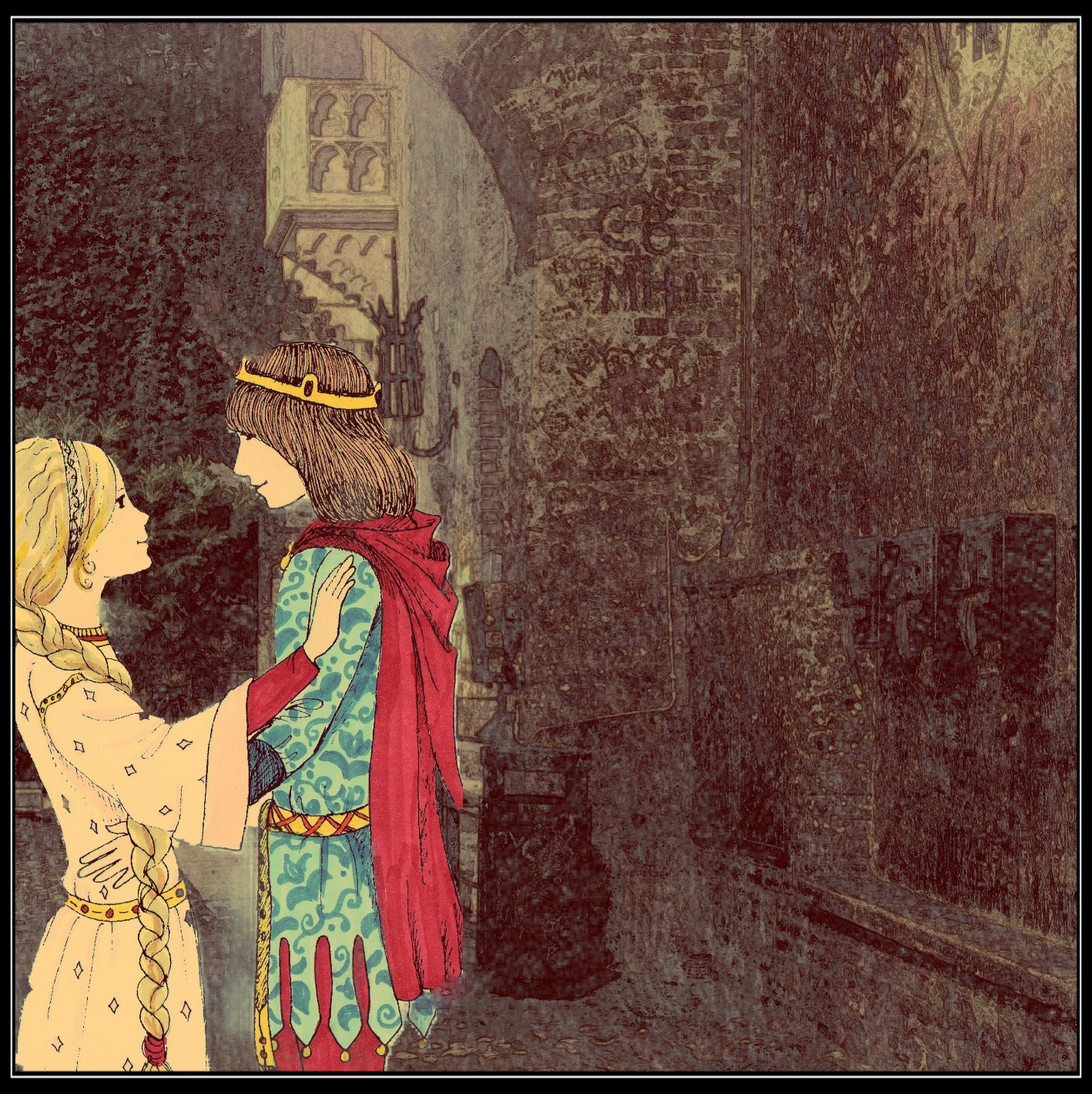
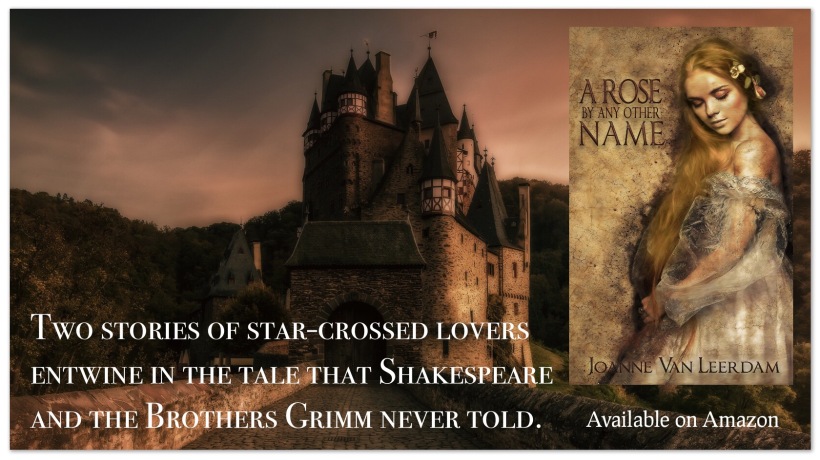
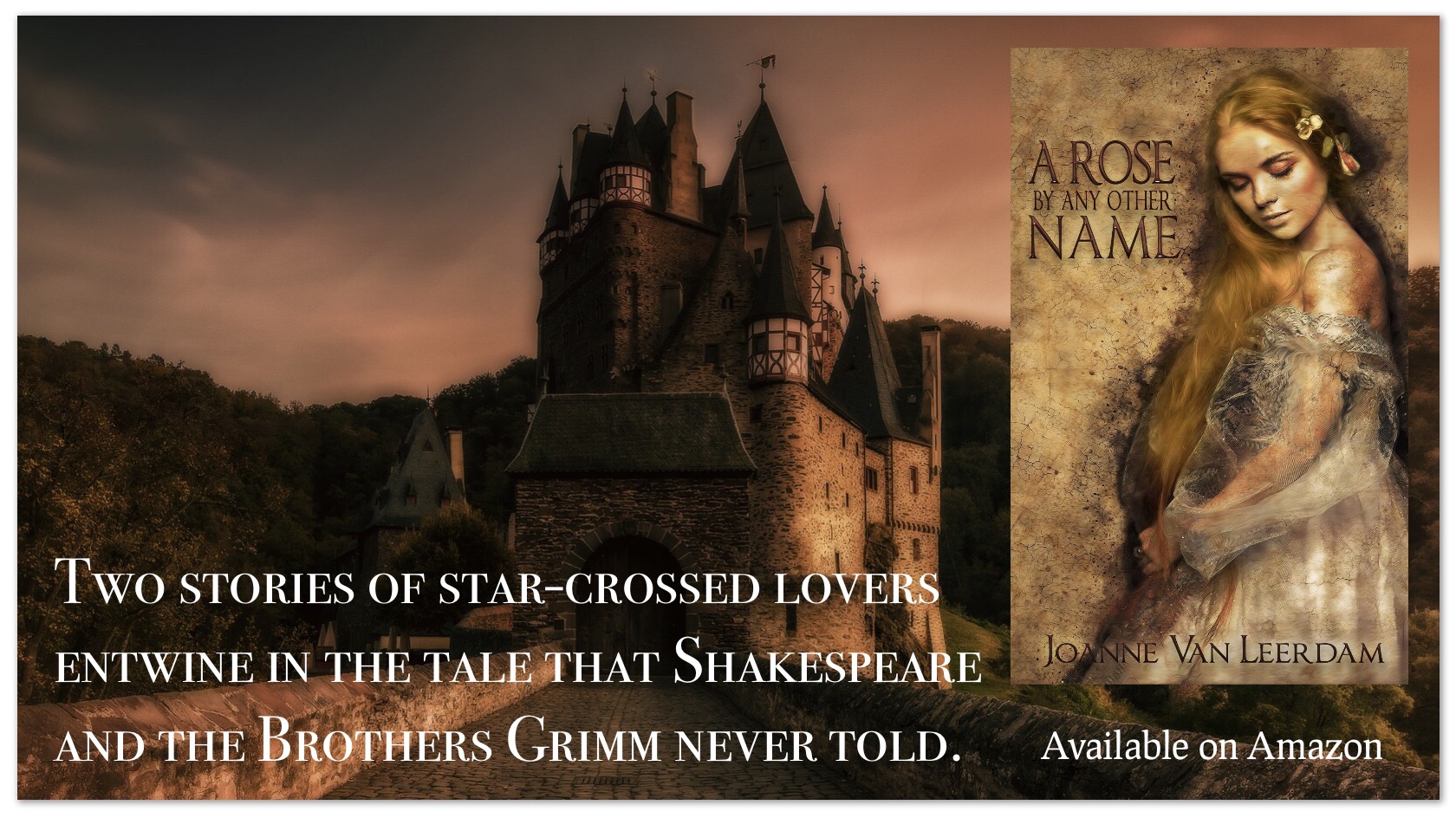
‘A Rose By Any Other Name’ draws on ‘Romeo and Juliet’, and on the Brothers Grimm fairy tale of ‘Rapunzel’ as starting points, then twists and tangles them together to create a mashup of the two stories with a very different ending. Romeo is still an idiot, it still ends in tragedy… but it’s a completely new story. It’s medieval fantasy, laced with faint traces of my subversive sense of humour. 

I like to think of it as the story that Shakespeare and the Brothers Grimm never told. 
But I bet if they’d thought of it, they would have. 

***

A Rose By Any Other Name is available for preorder.

Why You Need To Outsource Book Promotion

In yesterday’s post I discussed the importance of book promotion and the ways in which I can prepare for and present my upcoming new release in ways that will attract readers to my book.

Even though I provide book promotion for other authors, I would not ever suggest that what I do is everything they need. I certainly cannot achieve all the book promotion I need on my own, either. 

That’s why I believe it is necessary outsource some of my book promotion on a regular basis. 

There are some excellent reasons to do so:

  • Other people can do things I don’t know how to do
  • Other people reach different audiences and followers
  • Other people use different platforms than I do
  • As I pointed out yesterday, people are far more inclined to take my word about someone else’s book than about my own.  

In terms of what’s available, there are a number of options to consider:

Genre specific promotion: Some promoters focus on one or two genres and have invested significantly in reaching that specific audience. 
Using this kind of promotion ensures that your book is shown to people most likely to be interested in it.

Things to consider: It’s generally not inexpensive. While you’re getting established and building awareness of your book or profile as an author, you can’t expect to break even. 

Book blogs offer a variety of ways to promote your book.
Some offer a read and review service.
Some create posts from your book’s reviews and use that to generate publicity.
Others use their social media reach to promote with ads that may be created by them, or by you. 

Things to consider: this is usually either free or inexpensive, but usually not genre-specific. It will put your book in front of readers, though. 

Social media platforms all offer ways to use one of your posts to create an advertisement by paying to have it shown to people who don’t already follow you. This can help you get new followers, if not book sales. 

Things to consider: the costs can add up if you’re not paying attention, and you set the price up front so that you pay regardless of whether or not your boosted post is actually successful.

Amazon Ads promise to show your book to readers in various ways.
You set up your promotion using your author central account, and set a “price per click” amount.  
It is either genre or audience specific, and there are options for ways in which you might reach different readers.

Things to consider: your “price per click” amount is not a guarantee.
It is really more like a bid to compete with others wanting to advertise their book in the same genre or audience as yours. If you set your price per click too low, you’ll get very little response. 
Amazon ads are also inclined to work sometimes and not others depending on the current algorithm over at the Zon, which means that the exact same ad that worked for you last month won’t work again now. Have fun working that out. 

What I do: I tend do a bit of most of those things. 

  • I engage some genre specific promotion for my horror titles from time to time. I will also do this for my upcoming fantasy release. Some services are more effective than others, but there are two I have found to be really good. 
  • I also buy some promotional services through a multi-platform service that has a very good level of audience engagement for a variety of genres. This has proven to be very good promotion, and I will use that service again. 
  • I usually have Amazon ads running for two of my books at a time. I have mixed success with them and the results vary greatly, so this is not sufficient promotion to gain consistent sales. 

Doing those things allows me to use my own Facebook and Twitter profiles sparingly. The last thing I want to do is sound like I am hawking my own wares all the time, as that is the the quickest way to put people off. 

When I do post on my personal profiles, I try to maintain a fine balance.

  • I generally try to stick to about one tweet in 50 for my own books. That will change this week, as I have a new release coming up. My ratio will change then to one in ten, which equals once a day.
  • On Facebook, I avoid any more than one post a day about my own books, and always post via my page. From there, I share it onto my personal profile and into one or two groups that I own or administer, and where I engage regularly with other members. 

What I don’t do:

  • Boosted Facebook posts. In my experience, this is a total and utter waste of money. The actual audience reach of a boosted post has never been anywhere near what was estimated when I was setting up the promotion, and I don’t think it has ever won me a book sale. 
  • Use the same promotion or service every month. Variety is the spice of life, after all.  
  • Spend more than I can afford. This should be a no-brainer, and entirely self-explanatory. 

Sadly, nothing is guaranteed. All you can do is try different things and see what works for you.

Obligatory disclaimer statements: because it is the 21st century and people can be nasty, it’s necessary for me to state the following:

  • I don’t have all the answers. I’m simply stating what I do, why I do it, and what I have found to work or not. What works for me might not work for you, and vice versa: our books are different, and our readers probably are, too.
  • This post is in no way designed to direct you to my book promotion services. If that is what you think of me, please do not seek to engage my services. It’s entirely possible that we may not be able to play together nicely.

Pondering Promotion

One of the things I do in all the spare time I don’t have is creating book promotion for other Indie authors. 

Over the past few years, I have learned a lot about creating promotional images, writing effective tweets, putting images and text together for different platforms and using it all to put books in front of people who hopefully want to read them. 

Ironically, it’s a process that works better when you are advertising someone else’s book and not your own. If I tell a person that Charlie’s book is good, they are likely to take my words at face value. When I tell them my book is good, they tend to assume I have no idea. 

I have been pondering these things afresh while organising the preorder promo for ‘A Rose By Any Other Name’. 

Despite my obvious bias, it’s up to me to get my book seen by readers.
How can I make people want to read my book? How can I pique their interest? How can I get their attention? 

Those are the million dollar questions every author or promoter mst ask. 

The key lies in making them attractive to the target audience. An interesting story, well written and thoroughly edited, proofread, checked, formatted and checked again. A great cover that catches the eye and suits both the story and the genre. Promo images that are varied in colour and style, relevant to the story and genre, using clear and appropriate fonts. Not too wordy, and not too plain. 

Hopefully, those things will combine to have a positive effect. 
The fact is, before you can sell the book, you have to be able to sell the idea of the book. That’s why blurbs and taglines matter.  That’s why a cleverly worded tweet will sometimes have more effect than a beautifully written excerpt. 

Don’t get me wrong. A great excerpt is an effective way to win a reader, but you’ve still got to make people want to read it in the first place. 
So, for the next ten days until the book’s release date on June 14, I have prepared a bunch of teeets, some short Facebook posts, three different 16×9 promotional images ideal for Facebook and Twitter, and three square promo images for Instagram. 

There are hints but no spoilers. There is a mixture of information, humour and invitation. The hashtags are varied so that I reach more users than if I just stick to four or five basic tags. The images are different colours and styles, but all consistent with the story and genre.

Every post must have:

  • A promotional image that includes the book cover
  • Some information about the story or character
  • Clear indication of the genre
  • The link for ordering/buying the book
  • A mixture of popular and useful hashtags 

My goal is to achieve preorders for my book so that it has some sales momentum as soon as it launches, and then to continue promoting it to generate sales after that. That means creating different images, different tweets, and so on, on a regular basis. There is, after all, no such thing as “set and forget” promotion. 

***

A Rose By Any Other Name’ is available for preorder here