I know some people make a big deal of it, but that tends to diminish over the years when a couple have been together for a long time.
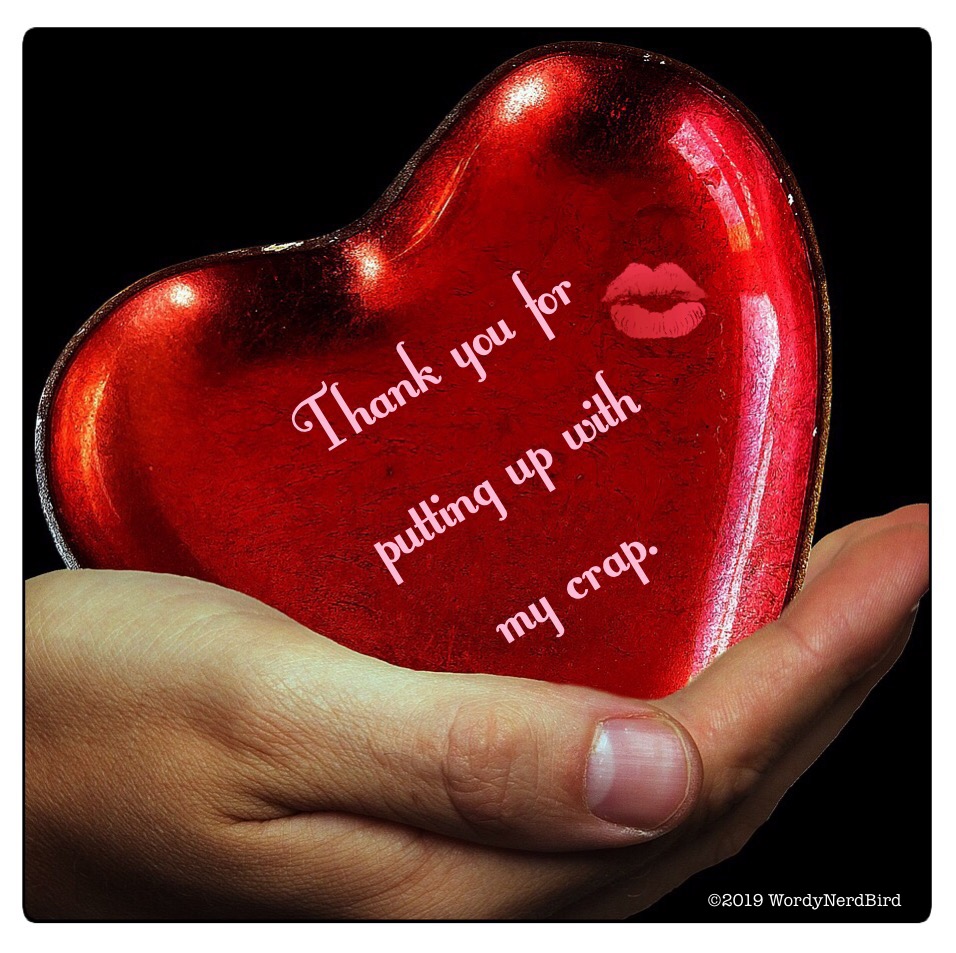
As half of one of those couples, I decided to create some attractive yet practical greetings that might come in handy for couples like us. In the interests of quality assurance, these have been road-tested on my husband, who laughed a bit.
You’re welcome to use any or all of these in order to win favor with your beloved, or just for a bit of fun.
Every author I know dreams of finding the perfect ‘set and forget’ book promotion.
I’m here with some bad news: it doesn’t exist.
Effective book promotion is about engagement and communication. It’s letting people know your book exists, what it’s about, and why they should read it… without stuffing it in their face and demanding that they buy it.
What many people don’t realise is that effectively promoting your book is a process, not an event. You cannot simply advertise it once, post it on Facebook and/or Twitter, then sit back to wait for the sales to roll in.
Personally, I’d love to think that everyone I know who sees my book will buy it, and that would flow on to lots of people I don’t know buying it. That isn’t how it works. The people you know are often less likely to be interested and willing to buy and read your book than complete strangers.
You’ve got to make them interested. Bait the hook the right way, and they’ll bite. But the bait that works for one won’t necessarily work for another. Effectively promoting your book is complex: you’ve really got to be exploring different angles and be patient enough to follow them through to see if they work. If they don’t, you try something different. If they do, that’s great – but that doesn’t mean those same things will work again next time.
As for what works, I don’t have all the answers. I wish I did. I do know what doesn’t work, though.
Being pushy doesn’t work. Can you imagine how you’d feel if someone wandered around a bookstore holding a card in front of your face that told you where to find the book they wrote? Or if they followed you around, begging you to buy it?
Even worse, actually demanding that people buy your book is a complete turn off. Temper tantrums fall into the same category.
Making every social media post you ever write a “buy my book” post doesn’t work. Put that stuff on your page or author profile, share some of it by all means, but use your personal profile as exactly that.
Taking advantage of the kindness of others doesn’t work – well, it might for about 30 seconds, but once they’re onto you, even the most supportive friend will back away and wear a necklace made of garlic cloves every time they see you coming.
Abusing people and talking down to them doesn’t work. Those walls will go up faster than anything you’ve seen before. Not only will they not buy your book, they will tell everyone else what you said, and they won’t buy your book either.
Ignoring or dismissing those who help you along the way is entirely counterproductive. You’ll find yourself quite lonely and without the support you once enjoyed.
Assuming loyalty will not work. Sad to say, some people who know you in person might actually think that anything you write might not be that great. That doesn’t mean it isn’t excellent – but changing their perceptions is tricky. Humans are odd like that, and finding one who believes in you is like the proverbial needle in the haystack.
The only way to go about it is to build engagement and develop a reputation for excellence.
If you’re going to make the grade, your book needs to be top shelf: professionally edited, a well-designed cover, clean formatting, and engaging content. Without those things, your book might be good, but it’s competing with a market full of other good books that have had more time and effort invested in them to make them attractive to readers.
It takes time, energy and commitment. Sometimes it takes sheer grit and determination, but you’ve got to manage all that without anyone really seeing that part of the job.
But if you’ve got a story to tell, or a message to communicate to the world, there’s nothing stopping you. Just make sure you do it well.
That will give you the best possible chance of promoting your book effectively and successfully.
It should come as no surprise that when you’ve been listening to people say the same thing for a while, you get better at understanding what they really mean.
Person Z. Take, for example, a young woman who approaches her friends and family members and says something like, “Hey, so, I’m having a fancy brand-name plasticware/linenware/healthy and beauty product/accessory/clothing party at my house in a couple of weeks, and I really hope you’ll come.”
What she’s really saying: Option A: I got sucked into one of these parties by relative/friend X, and she looked so hopeful that someone would book a party so she’d get some reward, and my mouth was open before my brain could stop it.
What she’s really saying: Option B: There’s a thing this company makes, and I’d really like to have it, but it’s expensive so I’m having a party and anything you buy will help me get it cheaper.
I’ve been on both ends of the equation, and can totally sympathise. It’s fair to say I’ve smiled and nodded through a whole bunch of those evenings, and even bought a thing or three, to help friends and family members out. From time to time, I’ve also been the Option A person.
Person Y. In another example, a child approaches family members and friends and explains that the school is selling chocolates/holding a “fun run”/doing some kind of suffer-a-thon as fundraising for a new toilet block so the kids can “go” comfortably during breaks.
What the child is really saying: Option A: The school insists that I must do this thing and there’s no way out of it, so please give me some money toward it so it’s not for nothing.
What the child is really saying: Option B: There are prizes for doing this, and I really want the floppitywoppity that you can only get if you raise $5000, so please give me some money to give me a fair chance at winning one. Again, I’ve helped more than one kid out of the hole. I don’t know if any of them ever got the floppitywoppity, but I know I have helped to build more than one toilet block in my time.
Person X. Then, there’s the Indie author. Actually, it could be any Indie creative – an artist, musician, or crafter. I just decided to use an author as the example here, because that enables me to draw on my own experience again. Person X has a passion for writing, a message they want to get out to the world, and they finally get their book published. They tell their friends and family members that they have a book out, and they’re about to tell them what it’s about…
What the author is really saying: Option A: I finally fulfilled my dream. Aren’t you happy for me?
What the author is really saying: Option B: I did a thing! I may never become a millionaire, but I did a thing! Please proud of me!
What the author is really saying: Option C: Remember all those times I supported your party plan things? And your fun runs? And your kids’ school toilet blocks? And…
…But as Person X talks, there are virtual crickets chirping, and eyes looking nervously at the door, and people checking their phones, and remembering appointments they need to be at, and… What the others are really saying: Option A: Well, this is awkward… who ever thought he/she was brave enough to get out there and do the thing! What the others are really saying: Option B: Yeah, we know you’ve supported us and our kids, but we’d prefer not to mention that now, because I would rather put my cash toward fancy plastic ware/linen/clothes/beauty products/accessories or a gym membership than some book by someone nobody’s ever heard of.
What the others are really saying: Option C: What the heck are we supposed to do now? We hope he’s not going to ask us to actually read it… maybe if I don’t ask what it’s about, he’ll stop talking about it.
What the others are really saying: Option D: But… you’re my brother/sister/cousin/relative/friend… how could a book you wrote even be any good? A bit full of yourself, aren’t you?
Person W. The final example is the one person in the room who hugs you and says, “Awesome! That’s fantastic! I’ll buy your book! How much do you want for it? You’ll sign it for me, won’t you? I can’t wait to tell my friends what you’ve done!”
What they’re really saying: Option A: I’m proud of you, and I’m on your team.
What they’re really saying: Option B: I’ll probably never read it, but I’m proud of you, and I’m on your team.
What they’re really saying: Option C: “Awesome! That’s fantastic! I’ll buy your book! How much do you want for it? You’ll sign it for me, won’t you? I can’t wait to tell my friends what you’ve done!” then looking over their shoulder with a glare at the rest of the people in the room who were too selfish to do or say anything.
The moral of the story: Option A: I’m really thankful for every ‘Person W’ in my life. I had no idea when I embarked on my journey as an Indie author that it would hurt so much to know there were so many Zs and Ys in my circles, but I also had no idea how wonderful it would be to know who the Ws were, and that they were on my team.
The moral of the story: Option B: Always be a W. Even if you never read the book, be a W.
This weekend we’re attending a family reunion in Anglesea. Just before lunch was served, we sat in a room full of relatives and listened as one of our cousins shared a reflection on relationships among family.
He said, “Think about tthe friendships and relationships you have. Consider the negative, the strained, and the unhealthy…”
“Never mind about the unhealthy,” I muttered. The cousin sitting beside me laughed.
“Can you imagine if they all went Marie Kondo on me?” I continued.
“Does she bring me joy?”
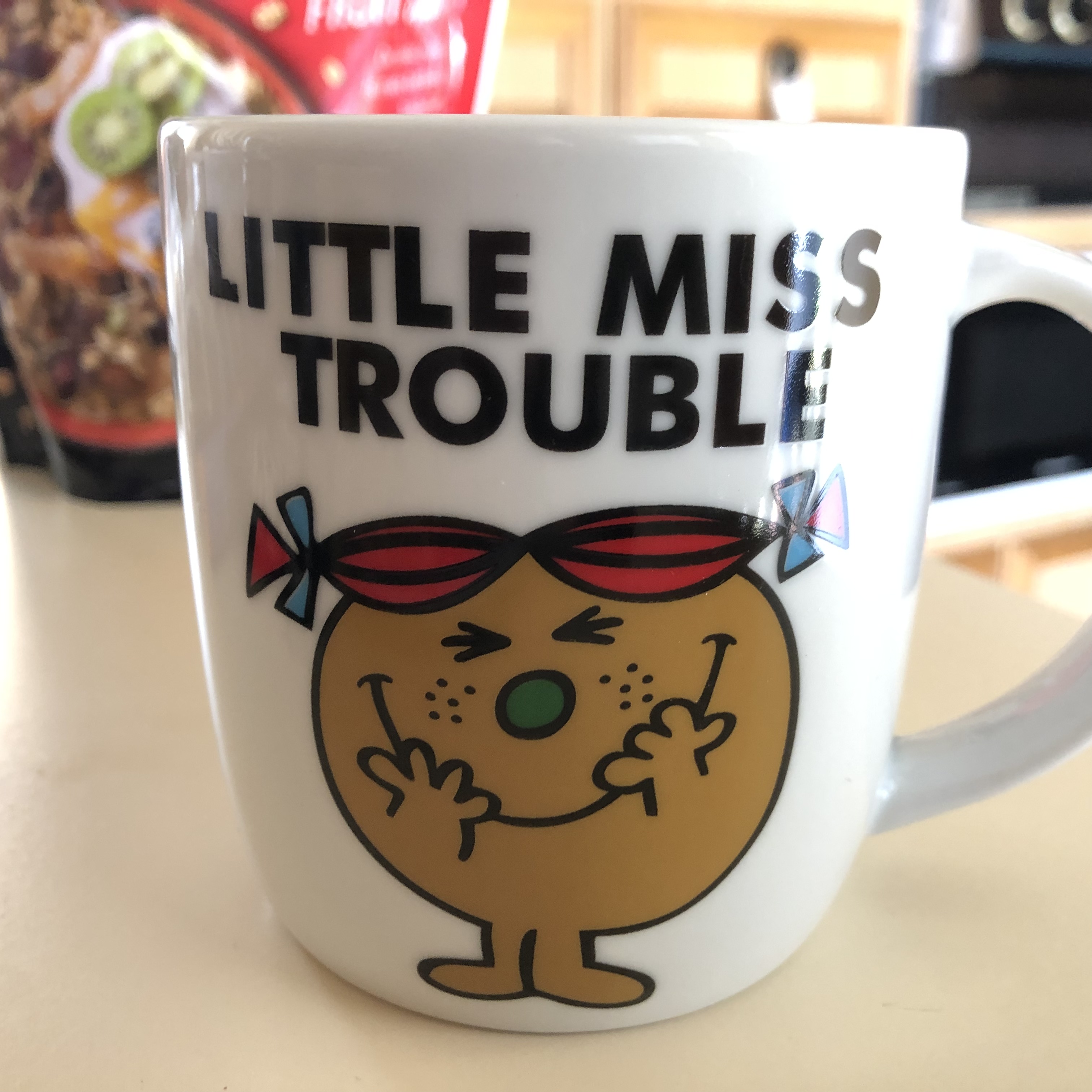
“No, she brings sarcasm, snark, inappropriate humour and painful honesty.”
This question was asked recently in one of the authors’ groups I belong to on Facebook:
The answer came to me in a blinding flash of little-appreciated genius.
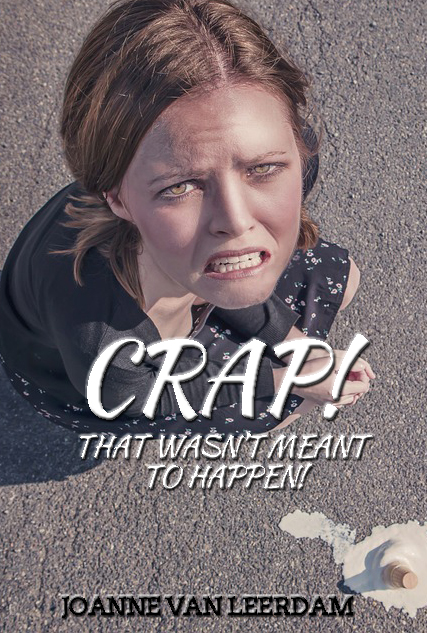
Alternate title: Crap That Wasn’t Meant To Happen.
Precis: A woman goes through life generally trying to do the right thing, but situations and people keep backfiring on her. This is further complicated by her own big mouth and her failure to learn the basics of human nature.
Tone: Initially comical, tending toward darkness and cynicism as the story progresses.
Chapter titles:
How Not To Fit In… Ever
How To Lose A Friend, Simply By Being Yourself
Dairy Farming: The Idyllic Life
How To Injure Both Hands At The Same Time
How To Lose A Friend By Standing Up For What You Believe In
Be A Teacher: They Only Work From 8.30 to 4, And Get All Those Holidays!
The Sneaky Ways Awful People Conceal What They Really Are
Apparently, I’m A Slow Learner
How To Get A Tropical Disease 2500km South Of The Tropics
Fibromyalgia: The Gift That Keeps On Giving
No, They Will Never Understand That ‘Introvert’ and ‘Shy’ Are Different Things
A Published Author: How Nice! You Must Be Rich.
Oh, You’re An Author? I Don’t Read.
Needles In The Haystack: There Are Actually Nice People Out There
‘One In A Million’: A Ridiculously Optimistic Ratio
How To Get A Knife Out Of Your Back
Why You Should Never Give That Knife To Someone Else
When Adding Extended Family On Social Media Backfires
Old Friends Can Turn On You, Too!
Why They Can Post Whatever They Want To On Facebook, But You Can’t
Why Doing Something Nice For Someone Is Often A Really Bad Idea
The Block Function: How To Slam That Door Well And Truly Shut
How To Offend Your Family And Friends By Succeeding
Why You Should Never Assume That People Are As Sincere As You Are
Vulnerability Explained: Discovering You Are An Empath
The Achilles Tendon: ‘Heel’ and ‘Heal’ Are Not The Same Thing
Still Hobbling? There Goes Your Other Ankle.
I know. It will never sell.
Marketing that kind of stuff is exhausting – I should know. It is, after all, the story of my life.
The classroom is busy in a studious kind of way. Students are working on the task I have assigned them, and I am making my way around the room, checking in with each student to see if they need any help or clarification. The tone of the room is positive and the level of noise is low.
I know these kids well enough to know some of their hobbies and interests, which ones love reading, which ones are sporty, and which ones are the introverts who would rather work alone than in a group situation. Suffice to say, I know their names.
As I move toward the first girl in the next row, I quietly whisper to myself, “Don’t call her Susie. Don’t call her Susie. It’s Sharon, not Susie.” In the very next nanosecond, I open my mouth and say, “Hi Susie! How are you going with this assignment?”
Everyone in the room has heard me do it – again. A collective sigh, non-verbal but heavily laced with the essence of “Not again!” can be heard. One kid shakes his head at me in an awkward blend of amusement and newly-refreshed disappointment. It’s fair to say that this has probably happened to him before.
Sharon looks at me with an expression that shows she is torn between saying “I’m Sharon!” and rolling her eyes, pretending I didn’t say it, and answering my question.
“I’m so sorry!” I say. “I know you’re Sharon. I don’t know why that happens. It’s certainly not deliberate. It’s just… my brain. It hates me.”
Sharon nods. Unfortunately, she’s heard this enough times to know it’s true. I give her a pathetic, apologetic smile in response, and go back to talking about the assignment.
How can I remember the details of the Industrial Revolution or talk ad nauseum about the literary qualities of Shakespeare’s ‘Much Ado About Nothing’, and still get some poor kid’s name wrong at least once a day?
It isn’t even always the same student. Occasionally, my brain/mouth coordination goes rogue, and I’ll call Kate ‘Lily’ or ‘Rose’, just to keep things interesting. Just once. Just to make things interesting, I’m sure.
This is one of the things that keeps me humble as a teacher. In my job, I’m required to talk to people and use their names in the classroom. And that very basic thing is something that, from time to time but far too often for comfort, I struggle to do.
The ironic thing is that I’m actually really good at remembering faces and names, where I met someone and conversations I’ve had with them. I have to remind myself that not everyone does that when I’m tempted to take it personally that someone hasn’t remembered my name, or having met me before.
I just don’t understand how the wrong name can come out of my mouth so often in every day situations.
The only thing I can put it down to is the brain fog I have carried since I contracted a delightful tropical disease called Ross River Fever in 2011, and which is also typical of fibromyalgia, which I have been left with as the legacy of the RRF. I know the fog is particularly meddlesome when I’m tired or my pain levels are high, but even at times when I am doing okay and enjoying otherwise greater clarity, some autonomous impulse to self-destruct in front of others fires off and I find myself apologising for calling Tom either ‘Dick’ or ‘Harry’.
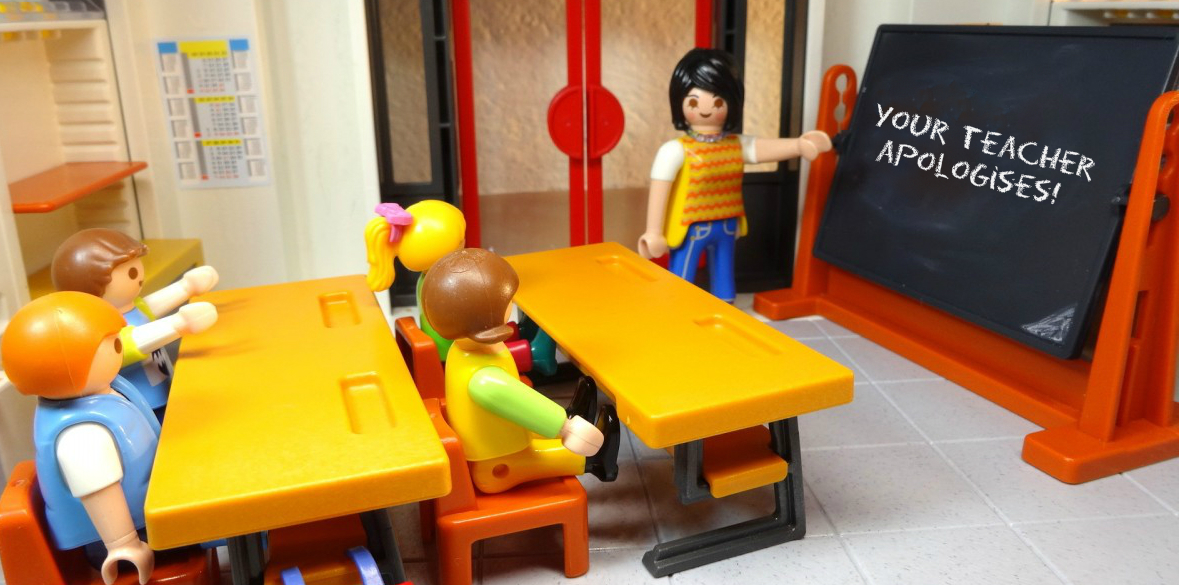
I think I’m going to have to just start telling my classes at the beginning of each year or semester that it’s likely to happen, it’s not intentional, and I apologise in advance. It’s either that, or resort to calling everyone “Hey You” or just never using their names, neither of which is a terribly professional option, either.
I want to start by saying that the intention of this post is not to present myself as some icon of virtue or being any better than anyone else: I am definitely neither. But there are some things I am good at, and one of those things is supporting and encouraging other Indie authors.
I have always been very clear about the fact that nothing I do in the Indie Author community is done with the hope of receiving anything in return. I am more than happy to buy and review the books I do, share posts, help answer questions, and encourage others as much as I can.
You might be tempted to assume that, as a result, I have a veritable army of people ready to fall over themselves to do similar things for me. Well, that would be nice!
In fact, that’s very rarely how it works. More often than not, those who are generous with their time and energy receive very little in return. That’s life: I accept that, as do others I know in the same situation, and keep going.
There seems to be a groundswell of folk, however, who have taken it upon themselves to resent others that they perceive as being “more successful” or “more popular” than them, and to insist that they’re not going to do anything for anyone who hasn’t done anything for them.
Just last week there was a situation where a friend tagged some people in a Facebook post to ensure that her post was seen, and didn’t some of those tag-ees complain! One of them took the opportunity to launch a personal attack and completely degraded the conversation into a most hurtful state of affairs. Another had plenty of very demeaning things to say, not just about the friend in question but also those who sprang to her defence.
Well, isn’t it a good thing we don’t all work that way? What sort of a world would that be. where we all carried on like six-year-olds in the playground?
Folks, that is not how we Indie.
Assuming that someone will share your post because you shared theirs will sometimes work out that way, but often not. Hoping that someone will buy your book because you bought theirs is not at all realistic.
There’s one thing you can be sure of, though: If an author – or anyone else, for that matter – is horrible to people, those on the receiving end are not going to forget that. There is absolutely zero chance that they will share the post, buy the book, or attend a Facebook event for someone who has abused or belittled them. In addition, the chances of their friends doing any of those things are remote. Tearing someone else down on social media— or anywhere— is entirely counterproductive.
As Indie authors, we’re all in the same boat. We’re all trying to find readers, sell books, write the next number one bestseller, and get noticed by the universe. We’re all tweeting, Instagramming, Facebooking, blogging and whatever-else-ing we can in the hope of putting our books, or whatever it is we’re doing to make our way in the world, in front of appreciative eyes who want what we’ve got to offer. We’d all like to be able to quit our jobs and pay the bills with our royalties.
But here’s the thing: this isn’t a competition. Readers will always be interested in another book, another genre, another great read. There is absolutely no need to snuff out someone else’s candle so that yours can burn. We make more light and warmth together than we can on our own. This is something that my friends, especially the Indie Fabs, and I have experienced and proven time and time again.
Encouragement costs nothing. It doesn’t even take much time or energy. If someone asks you for one or two clicks of a mouse button that doesn’t end in costing you money, where’s the harm? If someone does something praiseworthy, commend them. If someone has a great cover, or hits the bestseller list, or writes a great book, congratulate them… and then go one step further by telling others. Who knows? You may even find that they do return a favour one day, or you might discover that someone has done something for you out of the blue, just because they can.
Reciprocity as most people perceive it is a myth. Butinitiating goodwill by being positive and encouraging? That’s magic. And that is how we Indie.
I’ve never been a believer in keeping all my eggs in one basket, so to speak. I use more than one bank. I store my important files in more than one place. And I have always had my books available in more than one place.
In recent months, I’ve become more and more thankful that Amazon is not my sole venue for book distribution.
All my books are available on Kobo, Nook, iBooks, and a number of other stores in addition to Amazon. You can find all the links for each book at jvlpoet.com/books.
Like the kindle app, the Kobo, Nook and iBooks apps are completely free.
And from an author’s point of view, there are significant differences:
Those stores don’t remove readers’ reviews – but Amazon does.
Those stores don’t insist you spend $50 before you can leave a rating or a review – but Amazon does.
Those stores don’t care which country you live in – but Amazon does.
They don’t want to know who your friends are, or mistrust you because you might know some people. Amazon does, though.
As far as I know, I am the only Joanne Van Leerdam selling books in any of those stores. If you search for me, you’ll find me.
Amazon doesn’t necessarily make life as an Indie author smooth sailing. Sure, they’re the biggest beast in the eBook zoo… but that doesn’t mean it’s the only one that should be fed.
So, I’m going to start favouring different distributors when I buy eBooks, and still give the same support to my fellow Indie Authors through buying, reading and reviewing their books.
I’d love to see more people doing this, just to show we’re not reliant on a company that thinks it can do whatever it pleases, without consequence.
Let’s face it, if a dog bites your hand enough times, you’ll stop patting it. And if that dog doesn’t learn not to bite, it’s likely to end up very lonely. The only people who can teach it that lesson are the people with the option to pat the dog or not.
Personally, I think I’m going to make Kobo my first choice. Some may see it as the proverbial runt of the litter, but that just makes me want to support them. And in 24 months of working with them, I’ve never had anything but excellent service.
I’m also going to try to encourage others to buy my books somewhere other than Amazon.
In addition to adjusting my advertising and promotions, I think I may create a slight price advantage for those who buy from a non-Zon source. That’s easily achieved through my Draft2Digital account, and it might just drive some increased interest in my books on the other platforms. An additional advantage of using Draft2Digital is that their payment threshold is $10, not $100 as it is on Amazon.
On a final note, please don’t think I’m single-handedly trying to bring Amazon down. I’m not, at all. I’ve had good sales there and I’ve bought many, many books there, too.
I’m just very disappointed in some of their “developments” of late, and happy to find alternatives that don’t screw myself or my fellow Indie authors over at all.
During my lunch break today, I started reading a book I’d been looking forward to reading. I’d bought it because the story looked really interesting, and I was keen to give a new-to-me author a shot.
By the time I had read a few pages, I knew there were problems. The story didn’t go anywhere. More and more errors that should have been edited out were creeping in. Although marketed as a horror story, there were no hints that it was going to turn into one anytime soon… except in a grammatical sense, perhaps.
Still, I persisted. I figured that it had to get better. Right?
Sadly, it didn’t. It got worse. By the time I quit, there were numerous confusions of tense, and multiple blatant errors of spelling, syntax and word choice on a single page. By page 23, there still wasn’t a hint of anything remotely creepy, macabre or scary in the story. That really was the core of my problem – I was bored by writing that wasn’t even really a cohesive story, regardless of its intended genre.
I don’t like quitting. I really don’t. But when my dudgeon starts to rise because I’m not getting the escape I had hoped for in the middle of a ridiculously busy week, and I’ve wasted the time I had set aside to give my brain a break, it’s time to stop. In all honesty, most of the students in my Year 9 English class make fewer mistakes on a page than this writer, and he just hasn’t bothered editing anything, let alone getting anyone– professional or otherwise– to do it for him… I’m done.
In the past, I’ve let one or two authors know via private communication where there are a few really glaring errors that needed fixing. Those things have been fixed, and their book is better because of it. I’ve withheld my review until things were corrected, so that I could give a review that wasn’t full of complaints about errors. Most authors are receptive to that if it’s done discreetly and politely, with constructive help rather than criticism.
This time, though, I’m not going there. I simply don’t have time to fix this book – it’s time consuming, but not impossible, to correct spelling or grammatical errors; how, though, do you fix a broken plot that never does what it promised to do? The problems with this book are far more fundamental than a lack of editing. It makes me sad to have to add another title to the small handful of Indie books I’ve read that just weren’t up to scratch. Of the hundreds I’ve read, the vast majority have been great, and some have been among the best books I’ve ever read. It makes me angry that people are willing to sell something which gives other far more disciplined and talented Indie authors a reputation they don’t deserve. The temptation to name and shame is enormous, but I won’t do it.
I’m simply going to walk away and pretend I didn’t pick it up in the first place.
I’ll console myself, and reward myself for my own diplomacy, by setting aside another hour tonight to read something really good from one of my ‘One-Click” authors. That is something guaranteed to make me feel better.
A life-long devotee of L.M. Montgomery and ‘Anne of Green Gables’, I’ve read all the books several times. I’ve watched the miniseries starring Megan Follows more times than I can count. I’ve enjoyed various other film versions of the story. I’ve visited Prince Edward Island and the original house that was the inspiration for Green Gables, where I walked along the original Lover’s Lane and stood outside the Haunted Forest. I visited Montgomery’s birthplace and the first school in which she taught, which served as the inspiration for the school Anne Shirley attended.
I’m not an expert, but it’s fair to say I know my stuff when it comes to all things ‘Anne of Green Gables.
`My life is a perfect graveyard of buried hopes.’ That’s a sentence I read in a book once, and I say it over to comfort myself whenever I’m disappointed in anything.”
This is a line and a scene from Montgomery’s book which has always stayed with me. I found myself saying it again today, shortly after I started watching the series titled ‘Anne with an E’. I instantly liked this new Anne, and the new Matthew. I found Geraldine James’ portrayal of Marilla suitably crisp and direct. I was delighted by the way in which the story had started, and by Amybeth McNulty’s delivery of that favourite line of mine. I began to fall in love, all over again.
And then they changed the story. Before the first episode was over, the plot had taken a completely different direction than anything written by Montgomery. “WHY?!” I yelled. “WHY do people DO that?”
Still, I persevered, telling myself it might get better. It didn’t.
I made it to 13 minutes into the third episode, where I clicked off in disgust after yet another change to the original story.
I won’t watch any more of it. It had so much potential, and I had so many hopes… and all it did was desecrate my favourite story and make me angry. This series, like so many other abominations of great books, is yet another corpse buried in that perfect graveyard.







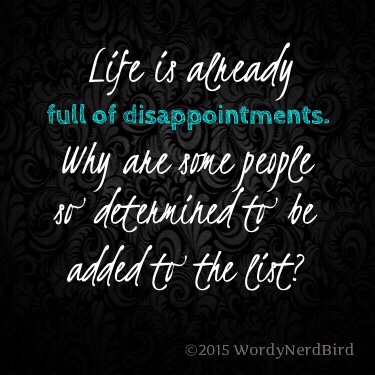
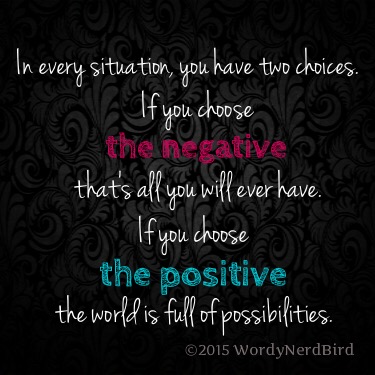 But here’s the thing: this isn’t a competition. Readers will always be interested in another book, another genre, another great read. There is absolutely no need to snuff out someone else’s candle so that yours can burn. We make more light and warmth together than we can on our own. This is something that my friends, especially the

 It makes me sad to have to add another title to the small handful of Indie books I’ve read that just weren’t up to scratch. Of the hundreds I’ve read, the vast majority have been great, and some have been among the best books I’ve ever read. It makes me angry that people are willing to sell something which gives other far more disciplined and talented Indie authors a reputation they don’t deserve. The temptation to name and shame is enormous, but I won’t do it.
 WordyNerdBird