Lyrics and Poetry: what’s the difference?

Many people don’t realise where the term “lyrics” came from.

In my first post related to National Poetry Month, I issued this challenge: “Listen carefully to songs on the radio. You might be surprised how many of them are poetry set to music. ”

Many people don’t realise that’s where the term “lyrics” came from.

A lyric poem is one that focuses on the feelings and thoughts of the poet, rather than describing something (an ode) or telling a story (a ballad). These poems were often set to music, especially that of a lyre – this is where the term “lyrics” for the words of a song came from. So when people talk about the lyrics of a song, it’s a throwback to the origins of the love song in popular poetry, centuries ago.

That’s the sort of poetic wordy-nerdy-ness that makes me ridiculously happy.

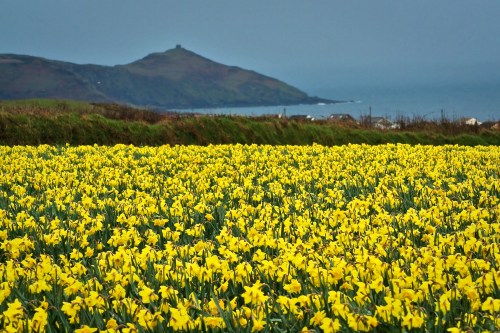
One of the most famous lyric poems in the English language is Wordsworth’s poem that is commonly, and somewhat affectionately, called Daffodils – even though that’s not actually its title. It gets quoted – and misquoted – a lot in films, TV shows and books.

Daffodils.jpg

It’s a beautiful poem that transports the reader’s vision to the field of daffodils, but also transports their thoughts into the reader’s mind to explore how the flowers made him think and feel.

As with all older poems, there are some words in it that don’t really get used much anymore:

  • Jocund means joyful or cheerful.
  • Gay – in the context of this poem – means happy.
    (To clarify further, daffodils are, like most things in the plant kingdom, completely uninterested in one’s sexuality. I like to think that this is probably why they’re happier than many people.)
  • Pensive means thoughtful.

Now that those tricky words are sorted, you should be able to make perfect sense of this beautiful poem.

‘I Wandered Lonely as a Cloud’ by William Wordsworth

I wandered lonely as a cloud
That floats on high o’er vales and hills,
When all at once I saw a crowd,
A host, of golden daffodils;
Beside the lake, beneath the trees,
Fluttering and dancing in the breeze.

Continuous as the stars that shine
And twinkle on the milky way,
They stretched in never-ending line
Along the margin of a bay:
Ten thousand saw I at a glance,
Tossing their heads in sprightly dance.

The waves beside them danced; but they
Out-did the sparkling waves in glee:
A poet could not but be gay,
In such a jocund company:
I gazed—and gazed—but little thought
What wealth the show to me had brought:

For oft, when on my couch I lie
In vacant or in pensive mood,
They flash upon that inward eye
Which is the bliss of solitude;
And then my heart with pleasure fills,
And dances with the daffodils.

If you’d like to hear a magnificent reading of this poem, I suggest you try the recording by English actress Noma Dumazweni.  The reading by Jeremy Irons is quite nice, too.


If you appreciated this post, please click like just below. It really does help to make my blog more visible to other potential readers. Thanks in advance.


A Favourite Poem: ‘The Highwayman’ by Alfred Noyes

For National Poetry Month, enjoy ‘The Highwayman’ by Alfred Noyes.

‘The Highwayman’ is one poem that I have always loved reading, but also one which I have considered an inspiration for my own writing. highwaymanHow I would love to be able to write poetry of this quality!
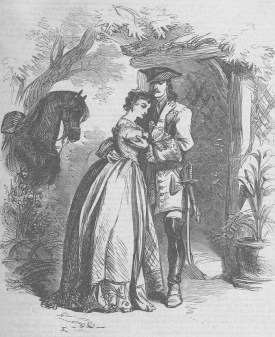
This poem tells a splendid tale of a dashing hero – even though he was an outlaw – and of daring, deceit and transcendent love.

The imagery is incredible – you only need to read the first verse to see what I mean – and you can almost hear the horse galloping in the rhythm as you read.

There are some old-fashioned words you may not be familiar with, so let me explain what they mean:

  • An ostler is a person responsible for stabling and caring for horses.
  • A galleon is a ship with three masts and squared sails. Think of a pirate ship!
  • A casement is a window.
  • A rapier is a long, narrow sword with a fancy handle designed to protect the user’s hand.

The Highwayman.

PART ONE

The wind was a torrent of darkness among the gusty trees.
The moon was a ghostly galleon tossed upon cloudy seas.
The road was a ribbon of moonlight over the purple moor,
And the highwayman came riding—
Riding—riding—
The highwayman came riding, up to the old inn-door.

He’d a French cocked-hat on his forehead, a bunch of lace at his chin,
A coat of the claret velvet, and breeches of brown doe-skin.
They fitted with never a wrinkle. His boots were up to the thigh.
And he rode with a jewelled twinkle,
His pistol butts a-twinkle,
His rapier hilt a-twinkle, under the jewelled sky.

Over the cobbles he clattered and clashed in the dark inn-yard.
He tapped with his whip on the shutters, but all was locked and barred.
He whistled a tune to the window, and who should be waiting there
But the landlord’s black-eyed daughter,
Bess, the landlord’s daughter,
Plaiting a dark red love-knot into her long black hair.
And dark in the dark old inn-yard a stable-wicket creaked
Where Tim the ostler listened. His face was white and peaked.
His eyes were hollows of madness, his hair like mouldy hay,
But he loved the landlord’s daughter,
The landlord’s red-lipped daughter.
Dumb as a dog he listened, and he heard the robber say—

“One kiss, my bonny sweetheart, I’m after a prize to-night,
But I shall be back with the yellow gold before the morning light;
Yet, if they press me sharply, and harry me through the day,
Then look for me by moonlight,
Watch for me by moonlight,
I’ll come to thee by moonlight, though hell should bar the way.”

He rose upright in the stirrups. He scarce could reach her hand,
But she loosened her hair in the casement. His face burnt like a brand
As the black cascade of perfume came tumbling over his breast;
And he kissed its waves in the moonlight,
(O, sweet black waves in the moonlight!)
Then he tugged at his rein in the moonlight, and galloped away to the west.

PART TWO

He did not come in the dawning. He did not come at noon;
And out of the tawny sunset, before the rise of the moon,
When the road was a gypsy’s ribbon, looping the purple moor,
A red-coat troop came marching—
Marching—marching—
King George’s men came marching, up to the old inn-door.

They said no word to the landlord. They drank his ale instead.
But they gagged his daughter, and bound her, to the foot of her narrow bed.
Two of them knelt at her casement, with muskets at their side!
There was death at every window;
And hell at one dark window;
For Bess could see, through her casement, the road that he would ride.

They had tied her up to attention, with many a sniggering jest.
They had bound a musket beside her, with the muzzle beneath her breast!
“Now, keep good watch!” and they kissed her. She heard the doomed man say—
Look for me by moonlight;
Watch for me by moonlight;
I’ll come to thee by moonlight, though hell should bar the way!

She twisted her hands behind her; but all the knots held good!
She writhed her hands till her fingers were wet with sweat or blood!
They stretched and strained in the darkness, and the hours crawled by like years
Till, now, on the stroke of midnight,
Cold, on the stroke of midnight,
The tip of one finger touched it! The trigger at least was hers!

The tip of one finger touched it. She strove no more for the rest.
Up, she stood up to attention, with the muzzle beneath her breast.
She would not risk their hearing; she would not strive again;
For the road lay bare in the moonlight;
Blank and bare in the moonlight;
And the blood of her veins, in the moonlight, throbbed to her love’s refrain.

Tlot-tlot; tlot-tlot! Had they heard it? The horsehoofs ringing clear;
Tlot-tlot; tlot-tlot, in the distance? Were they deaf that they did not hear?
Down the ribbon of moonlight, over the brow of the hill,
The highwayman came riding—
Riding—riding—
The red coats looked to their priming! She stood up, straight and still.

Tlot-tlot, in the frosty silence! Tlot-tlot, in the echoing night!
Nearer he came and nearer. Her face was like a light.
Her eyes grew wide for a moment; she drew one last deep breath,
Then her finger moved in the moonlight,
Her musket shattered the moonlight,
Shattered her breast in the moonlight and warned him—with her death.

He turned. He spurred to the west; he did not know who stood
Bowed, with her head o’er the musket, drenched with her own blood!
Not till the dawn he heard it, and his face grew grey to hear
How Bess, the landlord’s daughter,
The landlord’s black-eyed daughter,
Had watched for her love in the moonlight, and died in the darkness there.

Back, he spurred like a madman, shrieking a curse to the sky,
With the white road smoking behind him and his rapier brandished high.
Blood red were his spurs in the golden noon; wine-red was his velvet coat;
When they shot him down on the highway,
Down like a dog on the highway,
And he lay in his blood on the highway, with a bunch of lace at his throat.

And still of a winter’s night, they say, when the wind is in the trees,
When the moon is a ghostly galleon tossed upon cloudy seas,
When the road is a ribbon of moonlight over the purple moor,
A highwayman comes riding—
Riding—riding—
A highwayman comes riding, up to the old inn-door.

Over the cobbles he clatters and clangs in the dark inn-yard.
He taps with his whip on the shutters, but all is locked and barred.
He whistles a tune to the window, and who should be waiting there
But the landlord’s black-eyed daughter,
Bess, the landlord’s daughter,
Plaiting a dark red love-knot into her long black hair.

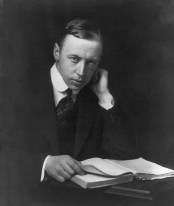
alfred-noyes_QFfuE

For your further enjoyment, you can listen to a recording of Alfred Noyes reciting ‘The Highwayman’.
An Author With A Mission.

Developing my mission statement helped me to clarify my goals in a way that I had not done before.

When completing an author interview recently, I was surprised to find a question about my mission statement. My immediate reaction was, “My what?”


My next thought was of Jake and Elwood saying, “We’re on a mission from God!” in The Blues Brothers.

BluesBrothers
Image from tenor.com
Of course, it makes sense. If I can crystallise my goals in writing into a statement, it’s going to make them easier to achieve.


I do that all the time as a teacher. I think about objectives, learning intentions and success criteria all the time. So why didn’t I think about my objectives, intentions and success criteria as a writer? To be completely honest with you, I have no idea.


So, I started to work on my mission statement by writing down some basic questions:
What do I want to achieve?
What do I want my readers, or potential readers, to know?
How do I measure success?


Simple, right?


Wrong.
They’re actually really complex questions.


What does success as an author mean? Is it selling a million copies of my books? Well, that would be nice, of course, but it’s not just going to happen without me doing anything to achieve that. Who is going to buy my books if they’re not actually any good? My goal has to be one that I can achieve, and it has to be one that I can measure to see if I’ve met the mark.  My goal , therefore, is to write something that people enjoy and benefit from, not to become a millionaire. Because it’s more achievable, and measurable through both feedback and sales, it’s far more satisfying and encouraging than hoping for something that might never happen.


What do I want my readers to know? Recluses are mysterious, sure, but that only has limited appeal. What I really want them to know is that I understand what I’m writing about – grief, love, pain, pleasure, excitement, fear, exhaustion, joy. I want them to know that what I’m writing is real and meaningful. I want them to know that if they’re going through something really awful and difficult, I get that because I’ve been through some awful and difficult stuff too.  Particularly in my poetry, I want them to catch a glimpse of my soul, or see some blood on the page – metaphorically speaking, of course. I want there to be understanding between us. I want to connect.


So, measuring success isn’t in how many copies of each book I’ve sold, or how many dollars I’ve made. For me, success is in knowing that I’ve touched someone’s heart, or encouraged them, or entertained them. If they read my horror stories, I want to know that I scared them and they loved it.


The beauty of this process of setting goals and working toward them is that I can see with every review that I am achieving my goal, even more effectively than I can with each sale.


I owe enormous thanks to the person who asked me about my mission statement. They helped me clarify my goals in a way that I had not done before./div>

So, without further ado, this is my mission statement as an author:


Joanne Van Leerdam is an award winning poet and multi-genre author who is committed to writing meaningful and thought-provoking literature for the enjoyment of her audience.
Joanne is a thinker and puzzler, a reader and musician, a traveller, and a teacher who has never lost the joy of learning.
Joanne draws inspiration from her own experiences and observations of the world around her, crafting those ideas into works which will encourage those who struggle to persevere and inspire others to see the world from a new perspective. This is as true of her blog posts as it is of her works of poetry and fiction. She aims to continue to grow her readership into a fully global and inclusive audience.

So tell me, do you have a mission statement?

Aftermath.

Today, driving to and from work, I saw the devastation with my own eyes, and my mind took a snapshot that developed into a poem. 

Yesterday I wrote about the fires that had burned around my town on the weekend.

Today, driving to and from work, I saw the devastation with my own eyes, and my mind took a snapshot that developed into a poem.

It’s titled Aftermath and I’d love for you to read it.

Promo Y Aftermath 2018-03-20 17.17.03


I took some actual photos, too.

This slideshow requires JavaScript.

My Personal Response To The Fires in SouthWestern Victoria.

It is not possible to adequately put into words how thankful we all are for the firefighters, first responders, police, and support crews who have kept us safe.

What a weekend it has been.

On Friday afternoon when I left town for a family wedding a couple of hours’ drive away, my greatest concern was that my father wouldn’t feel too lonely while we were away. When we left the wedding reception on Saturday night, and I checked my phone, my heart leapt into my throat as I began to realise what hell had unleashed back at home.

Wildfire.

It is late in the season for fires, but there has been very little rain and the region has been tinder dry. Hot and very windy weather conditions created the opportunity for fire to take hold and spread rapidly through both farmland and natural bush.

One outbreak led to another, and another, and then another. My town, and those nearby, were experiencing the greatest crisis in decades. Surrounded by a ring of fire, people watched, worried, and sought refuge in the middle of town.

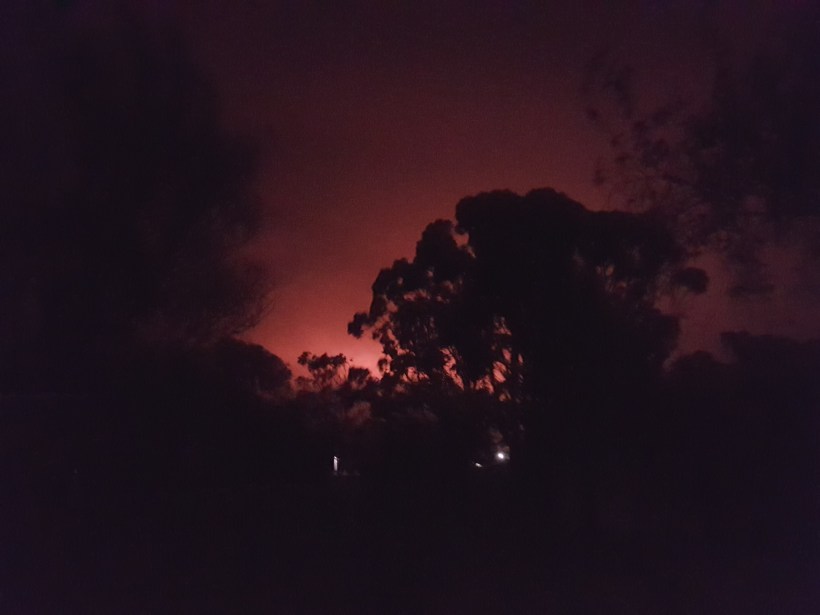
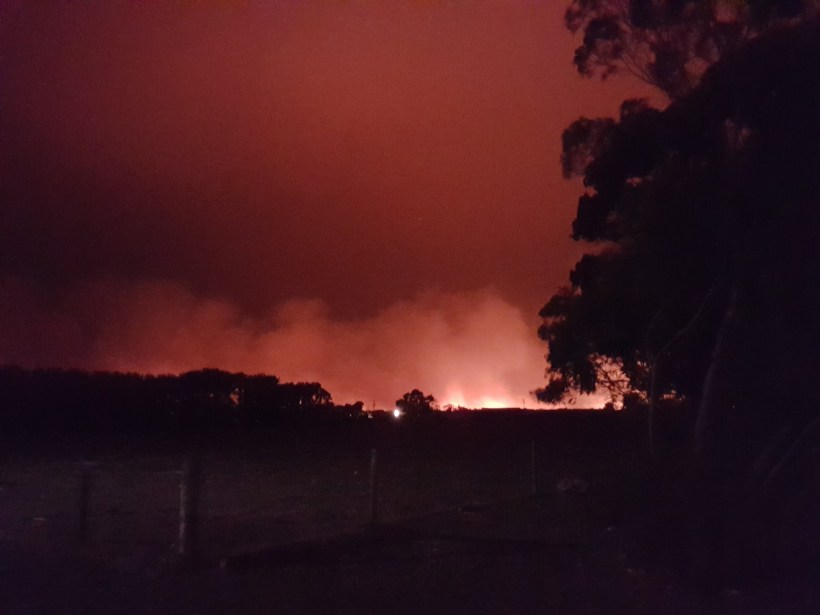
Social media posts showed what locals could see from their yards or where they had been driving. A friend who lives nearby posted photos of what she could see – and it was terrifying.

Wendy Bernhardt Photo 0 2018-03-18
Photo by Wendy Bernhardt. Saturday March 17 2018 22.19 Cobden Victoria
Wendy Bernhardt Photo 1 2018-03-18
Photo by Wendy Bernhardt. Saturday March 17 2018 23.46 Cobden Victoria

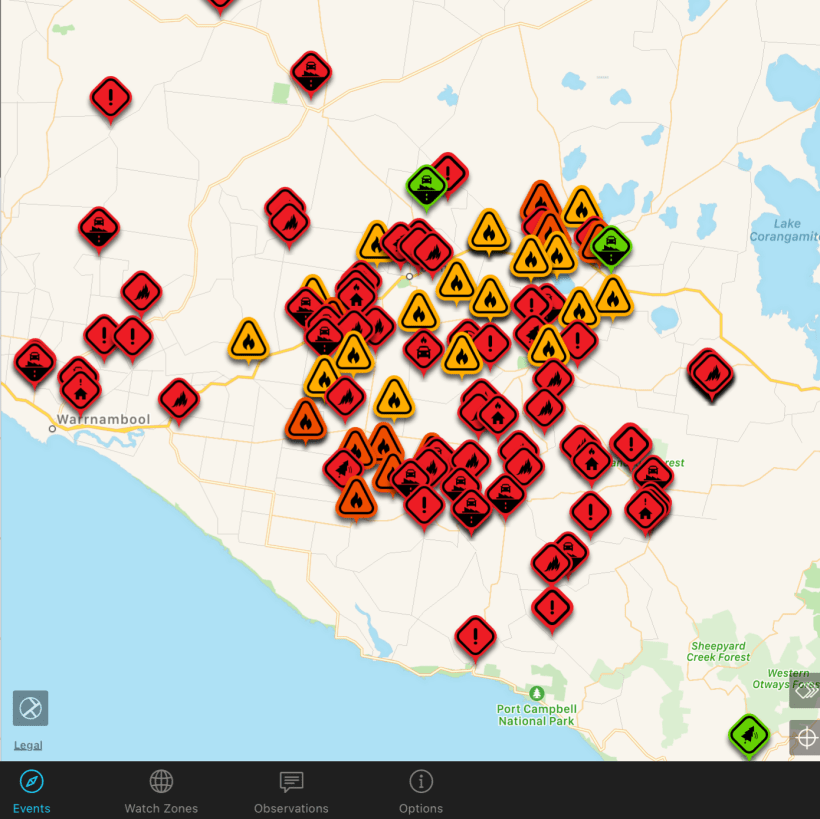
The emergency services website showed incidents all across the region, one after the other, spreading in a grim pattern of danger and destruction.

2018-03-17 23.42.18
That little white dot in the middle of the map is my town – Cobden, in southwestern Victoria.


Roads were closed. Authorities forbade people from driving into the area. The situation was officially described as catastrophic. And my 86 year old father was at home on his own. Nausea swept over me as I struggled not only with fear, but also with feelings of absolute uselessness: there was absolutely nothing I could do.

Needless to say, I didn’t sleep much. The radio stations weren’t forthcoming with updates until after 3am, so I turned to social media for information. With the aid of Facebook, I consulted with neighbours and made sure that our uncle had taken steps to make sure Dad was okay. I tried to call, but was unable to make contact. In the end, I just had to trust that things at home were as under control as they could be.

The fires continued to burn and spread throughout the night and the following day. As people’s stories of loss and devastation were told, offers of help were made and communities rallied, even while the fires still raged. There is no doubt about Aussies – they know how to help a mate, and they don’t hesitate to step in where needed.

Even late into the afternoon, the roads to home were all still closed, so we made our way back to a neighbouring town to wait until we could get home. One road opened at 5.50pm; we only needed one road, so we headed home. We knew that even though the road was open, authorities didn’t want people just driving into the area without good reason, but my dad was a very good reason to be making the trip.

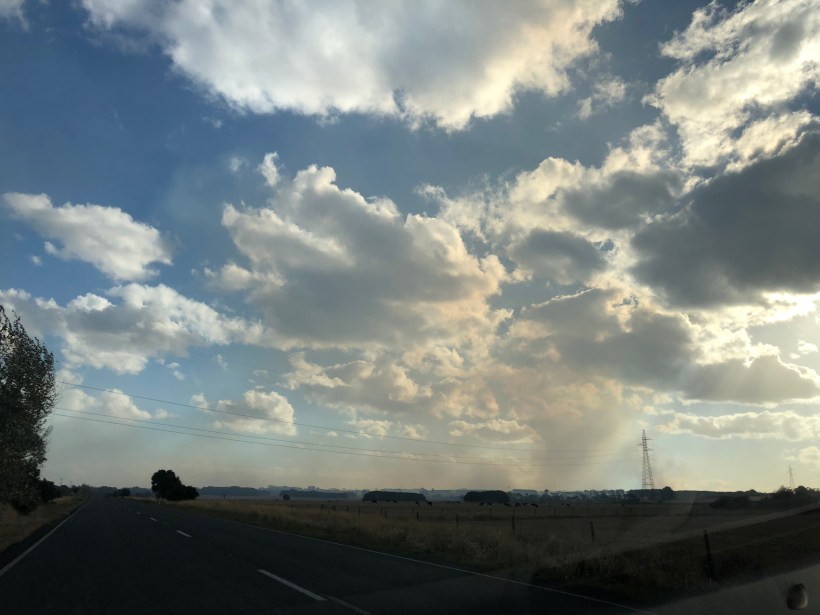
2018-03-18 17.57.44
Smoke rising above Cobden as we drove home from Camperdown on Sunday evening.


We were very glad to find that Dad was fine, our home was safe, and the town itself was untouched except for smoke. Our local football oval was filled with emergency service manpower and vehicles from other places. They had come to help fight the fires and provide relief to the local crews, many of whom are volunteers, who had been working for many long hours to defend and protect people, properties and towns.

Fifteen minutes after returning home, a succession of five fire trucks went zooming down our no-through road, and my heart was in my throat again. Whatever had them rushing out had to be close, as there’s only about two kilometres of road past our place before the road ends. Within half an hour they had sorted the issue and came trundling back. My neighbours and I applauded them, gave them the thumbs up, and cheered them to show our gratitude for their quick response. They waved back and returned the thumbs up, their smiles letting us know that they understood and were thankful for our response, too.

Not long after that, new plumes of smoke not too far away indicated that there were new fires springing up. I could hear the sirens as they rushed out of town to meet the new emergencies, and reminded myself that the crisis wasn’t over just because my immediate surroundings were relatively safe.

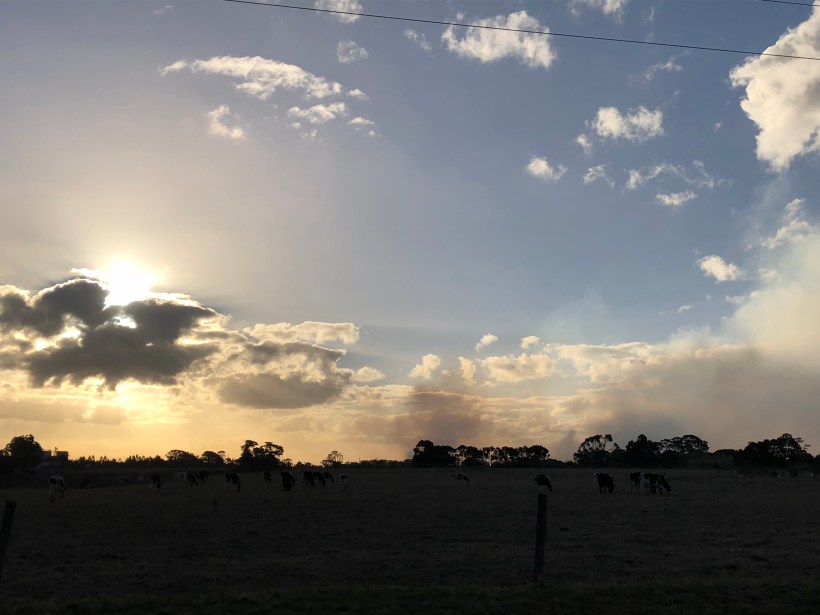
2018-03-18 18.55.10

Thick smoke once again settled over the town. We took encouragement from the fact that warnings were downgraded to critical from catastrophic, and the symbols on the emergency services’ online fire map gradually began to change from red to orange.

Incredibly, no human lives have been lost and very few serious injuries have been suffered. This is testament to the dedication, hard work and training of our first responders, particularly our firefighters and State Emergency Service volunteers.

Despite the smoke in the air and the knowledge that the crisis wasn’t over yet, I slept so much better last night knowing that we were being protected by hundreds of committed and able firefighters, first responders, police, and support crews. It is not possible to adequately put into words how thankful we all are for the job they’ve done and continue to do.

This morning the pall of smoke blanketing our town was thick. It stings the eyes and the throat, and it smells. Yet that is the only discomfort I suffer, and for that I am incredibly thankful. What a blessing to be able to say that.

This slideshow requires JavaScript.

The waterbombers and helicopters are flying overhead, and the work to control and extinguish these fires continues. People who are much, much braver than I are working in difficult and dangerous conditions, and for that we are all incredibly thankful.

The warnings for my town have been downgraded to Watch and Act but others are still in danger. We all have to remain vigilant.

Beyond that, we all have to care for each other.
People have lost homes, or farms, or herds… or all of that.
Our local community in the southwest of Victoria has been shaken and found strong, supportive and caring – and now, we must continue that by caring for those who have lost so much.
I have no doubt that Cobden will ace that – we’ve done it before, and we’ll do it again.

As I’ve said on numerous occasions, we’re incredibly blessed to live in Cobden. It’s a great community, and I’m thankful that it has passed this most recent test.


How Getting Pushed Around Changed My Perspective.

You see things differently when you’re in a wheelchair.

Today we went to a very large store that specialises in flat-pack furniture of Nordic design. It’s an amazing store full of very interesting things to look at.

Including me, apparently.

Being on crutches with an injured foot, I was anxious about how long I was going to last before I was exhausted, so my friends asked for a courtesy wheelchair. And thank God they did. I would have fallen over in tears before I got through the first section.

It came as a shock to realise, though, that when you’re in a wheelchair, people don’t look at you the same way as they do other people.

Sometimes it’s a look of sympathy. Sometimes it’s an expression that says, “You look surprisingly normal”.

And then there’s the occasional person who looks at you with fear and contempt, like you’re dangerous, or they might catch whatever it is that put you in the chair.

One woman gasped audibly, glared at me and pulled her child away from the aisle I was in, although he wasnt actually anywhere near me. What an appalling display of ignorance!

Seriously, folks. It’s my leg that doesn’t work properly, not my mind. And with limited mobility, I’m certainly no threat.

Then I had a sobering thought. Is this what people who are in wheelchairs permanently or long-term experience every day?

How absolutely awful.

It has never entered my mind to look at other people so differently. A disability or physical limitation does not define one’s character or personality. To me, a person is a person is a person.

Apparently, that is not the case for everyone.

Some people seem to think it’s acceptable to look at a person differently, or treat them differently, or pull their children away just because they look or move or get around differently than you most people.

I’m pretty sure that in the 21st century, we can be more decent and open-minded than that.

International Women’s Day, 2018

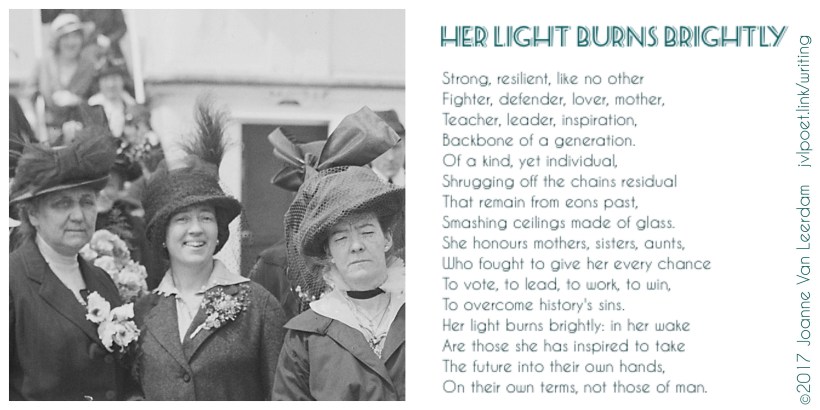
Why We Should Celebrate International Women’s Day.

As I was driving to work this morning, a caller to my favourite radio station was critical of the fact that the station was observing International Women’s Day as part of the day’s programming.

“What’s it going to achieve? Do you think you’re going to change everything in one day?” He spoke politely, but went on to dismiss the value of this, and every other, “touchy-feely day”.

While my initial instinct was to dismiss him as a sexist pig, his cynicism challenged me to consider that there might be many folks out there, and possibly not just men, who doubt the benefit or validity of such an observance.

This is what I would like to say to those with that mindset:

Observing International Women’s Day is definitely not going to change everything on one day. That’s not what anyone is expecting.

It is a chance to celebrate the changes that have been made, and to remember those who worked so hard to introduce them. It’s not even exclusively about gender equality – so many women have made significant advances, even when it was still almost entirely a “man’s world”. Think of Marie Curie or Ruby Payne-Scott making significant scientific and mathematical discoveries that have had a huge impact in many other areas of society. Think of Rosa Parkes and her courage that inspired so many. Think of the countless women who have worked for freedom, or justice, or civil rights for all people, not just women.

It is a day to remember that the rights and freedoms I have as an Australian woman were fought for by many – not just the suffragettes. Nurses at the battlefields of major conflicts, teachers, doctors and medical researchers, writers, women who raised their sons to respect them and therefore other women, lawyers, filmmakers, journalists— they and countless others have contributed to the privileges I enjoy in the 21st century.

It is a day to remember my own mother, grandmothers and aunts who worked hard to provide and care for me, but also to teach me and demonstrate for me what it means to be a woman of strength, confidence and integrity. It’s also a day to think of my sisters, cousins and friends who encourage and stand beside me when life is hard, because they model those same qualities for me time and time again. They remind me of not just what I am, but who I am.

It is a day to consider what legacy I pass on to my nieces, my students, and my readers. What do I want them to learn from my example? I want them to know they are enough. Strong enough, good enough, beautiful enough, deserving enough, talented enough, smart enough, and worthy enough. They do not have to take any else’s bullying or abuse. They do not have to accept other people’s bad behaviour. They are under no obligation to “measure up” to the yardstick of anyone else, male or female. They can make of their lives anything that they decide upon and set their mind to. They can face challenges with courage, and they can overcome whatever would seek to undo or defeat them.

These are the women I write of in my poems, blog posts and stories about women of strength and beauty.

That, my friend, is what this day helps me to achieve, because it sharpens my focus on those things for a time.

So, happy International Women’s Day 2018.

I hope that you will think of it in terms of gratitude and humility. I also hope that every woman will use it to both be inspired and be inspirational.

Thank you, Mary Shelley.

How Mary Shelley Has Inspired Me, Yet Again!

Mary_Shelley
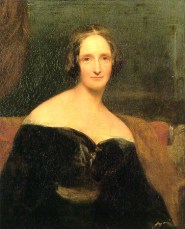
At the beginning of February, celebrated as Women in Horror Month, I wrote about Mary Shelley, the author of Frankenstein, as one of my literary inspirations.


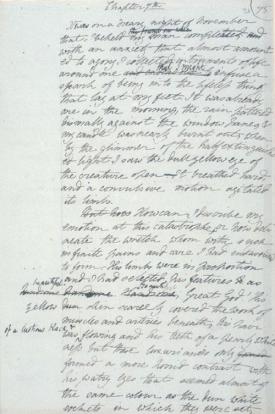
On this last day of the month, a friend shared with me a post from smithsonian.com titled ‘Frankenstein’ Manuscript Shows the Evolution of Mary Shelley’s Monster’ which speaks of a British publisher releasing 1500 facsimile copies of Mary Shelley’s original manuscript notebooks, complete with revisions and edits, in celebration of the 200th anniversary of the book’s first publication.


Oh, my heart! I know I’ll never be able to own one of those 1500 copies, but how I would love to read that manuscript!


FrankensteinDraft
Even just looking at the photograph of two pages, my author-heart swelled. Here is the work of a woman I have admired almost all of my life, showing that her work, too, needed editing and revising. She understood that no piece of writing is perfect the first time, even if the story itself is brilliant.


This is so incredibly encouraging in the moments when I doubt myself, or my story, or my ability to communicate my ideas the way I want to. It reassures me when the words don’t flow for a time. And it reminds me that I’m by no means the first, or last, to experience these things. The doubts and writers block don’t make me any less of a writer; instead, it’s working through them and in spite of them that makes me a better one.


Through these images, Mary Shelley inspires me all over again.

Books, Authors, Double Standards and Snobbery.

There remains a commonly held view that all Indie books are somehow sub-standard. This perception could not be more wrong.

angry-2191104_960_720

I am perpetually frustrated by the disdain that many have for Indie authors. Indie artists, musicians, and filmmakers are applauded for daring to step out, break the mould and do their own thing in defiance of the industries that are perceived to have grown too big, too powerful, too rich.

Nobody hesitates to go to a doctor or lawyer who owns their own practice. People don’t think twice about having their car serviced by a mechanic who runs a local garage. They’re independent practitioners within their industry, too. Let’s face it, there are some shonky ones out there – in any industry – but they are the vast minority, and their behaviour should never be used as the yardstick by which all others are measured.

So why is the double standard against Indie authors still not only acceptable, but so widely endorsed?

woman with bookI won’t deny that I’ve picked up two or three books that I just couldn’t finish because they were either poorly written, poorly edited, or just not very good at all. But two or three out of more than 150 is a very small percentage, where the others have consistently ranged between very good and excellent quality in terms of both writing and production.
Having been an avid reader all my life, it’s also true that I’ve read – or rejected – a number of books that weren’t so great in the traditionally published world, too. Some I just couldn’t get into – even among the most famous and widely commended are certain ‘literary greats’ whose writing I just don’t appreciate. There are also traditionally published books that remain popular among less discerning readers and sell quite well, despite the fact that the writing and/or story lines really are… well… rubbish.

I’ve read almost exclusively Indie books for more than a year. I am continually impressed by the originality of the stories, the high standard of writing, and the depth of creative talent. I’ve posted countless book reviews for these books, and have shared my appreciation of both books and authors far and wide, because those books deserve to be read and appreciated.

Having been an avid reader all my life, I’ve read – or rejected – a number of books that weren’t so great in the traditionally published world, too. Some I just couldn’t get into – even among the most famous and widely commended are certain ‘literary greats’ whose writing I just don’t appreciate. There are also traditionally published books that remain popular among less discerning readers and sell quite well, despite the fact that the writing and/or storylines really are rubbish.

Indie authors are, more often than not, Indie by choice. For many, the first foray into traditional publishing has ended up being a very negative and traumatic experience. For some, their publishers have closed down, leaving the author without their rights, unpaid and unable to sell or market their work. Other companies have published books and then done nothing, leaving them to languish in obscurity unless the author does their own marketing.

Sure, that hasn’t happened to J.K. Rowling or George R. R. Martin. People need to understand, though, that they are the exceptions, not the rule. That kind of success doesn’t just happen for everyone who writes a fantastic book or series, and it’s well-established fact that it almost didn’t happen for Rowling either.

Last week, I saw someone comment on social media platform in a most derisive tone that “traditional publishers won’t touch anything that’s been self-published”. My response was that it’s their loss. And when it comes to my own work, they’re not welcome to.

Like many others, I choose to be Indie because I control my own intellectual property, I retain my legal rights to my work, and I earn the royalties for my books. My hard work is not lining the pockets of some faceless company that pays a small fraction of the earnings of a book to the author and gets fat on the rest, without actually doing much in the way of marketing or promotion. Marketing and promotion is really hard work, there’s no doubt about it. But if I have to do the schlepp work anyway, why would I let someone else have control of my work? And I can take pride in the fact that I have earned every review, every award, and every cent, on my own.

In the end, I choose to be Indie because there is nobody in this world as committed to my books or my career as an author than I am.

It’s time we got rid of the double standard that celebrates Indie music and art, and which takes pride in supporting local and artisan businesses, but considers Indie books and authors to be something less than their traditional counterparts.

Indie authors are doing their part by writing and producing excellent books.

Readers are doing themselves a gross disservice by accepting the kind of intellectual snobbery at the heart of this double standard. I’m confident they will be more than pleasantly surprised when they finally choose to set prejudice aside and find out what they’ve been missing out on.

Promo Indie And Proud


Women in Horror Month: Facing My Own Fears

An Author’s Perspective on Facing One’s Own Fears In Writing.

One of the principles of writing good horror is tapping into your readers’ fears and anxieties, albeit in a controlled manner – I don’t want to trigger a heart attack or a psychosis, but I do want their skin to crawl and their innards to lurch. After all, that’s why they pick up a horror book or film in the first place.

It’s interesting – at least to me, at any rate – that I haven’t got any better at confronting my own fears.

I have always been, and still am, terrified of spiders and snakes. Of course, I do live in Australia where just about everything that crawls or slithers is deadly, so that is quite sensible. We’ll call it a healthy sense of self-preservation. Butterflies and moths, though… not so much. And crickets: ugh! Not exactly the stuff of nightmares— until they touch me. That’s when I lose all sense of reality.

fear-of-heights-2040805_960_720When I was a child, I considered that I had a fear of heights. As I grew older, I realised that what I actually have is a fear of falling. I can look out of the window of a plane that is flying at altitude, and it doesn’t bother me a bit. Ask me to step onto the balcony of a lookout at the top of a mountain, or to walk on stairs or a surface where I can see through to underneath, and you will only ever be disappointed. It’s not going to happen. The times I have been in such places, I have frozen to the ground in fear.

Interestingly, these are not fears that I have explored in my own writing— not yet, anyway. I’m far more comfortable playing on someone else’s weaknesses. Death. Hell. Demons. Fire. Hair. Monsters. Ghosts. Superstition. Possession. Unexplained coincidences. Easy peasy!

Maybe I will try to address one of my own fears in my writing this month, given that it is Women in Horror Month, and I happen to be a woman who very much enjoys writing horror.

I’ll get back to you on that one.

Maybe.