This week I read a blog post that asserted there is no right or wrong way to write a book review. The writer made some good points, particularly about reviews needing to be individual and personal responses to a book, but I disagree with the basic premise of the article.
I am writing this post from the perspective of a reader, not an author, and I realise that some people won’t agree with me, so let me explain my reasons.
A book review should never recount the story of the book. It shouldn’t give spoilers. Yet time after time, I see reviews that do exactly that. My issue is that if I already know what is going to happen, I feel as though I no longer need to read the book. The joy of the journey has been neutralised. That review has effectively cost the author a sale.
In all honesty, I hate blurbs that do this, too. As a reader, that’s one of the quickest turnoffs when I’m looking at a book.
Don’t give me a summary. Give me teasers, give me feelings, give me thoughts and observations. Pique my interest. Make me want to read it for myself, instead of making me feel as though I already have.
A good review doesn’t have to be long or complicated. It does needs to be at least 20 words in length, which gives you room to say whether you enjoyed the book and why. One or two sentences will do the trick. There is no obligation to write any more than that if you don’t want to.
If you do want to write more, you can consider including the following ideas:
Why you liked or disliked it. Remember that others may like what you disliked, and vice versa, so try to be kind.
What important ideas the story made you think about – love, anger, justice, revenge, pain, fear, overcoming… anything that is relevant to you is a valid point for comment.
What the characters are like as people, and what we learn from them Did the writer’s style impress you in any particular way?
Was it easy to read and understand, or did you have to really work at it?
Who else might like to read it? Think about interests, age group, and genres here.
This will help you to write a review that is interesting in itself, and which will encourage the right readers to choose that particular book. In that way, you’ll help both the author and prospective readers at the same time.
Today, I’m going to indulge my poetry-nerdiness yet again, in response to another trend I’ve observed on social media.
As both a reader and a poet, I get really annoyed when pieces of writing are labelled as poetry when they’re not.
This is rife on Instagram, where some folks take a pretty picture of a sentence or a paragraph and call it poetry. They use the hashtags like #poem, #instapoem, #poetry, #poemsofinstagram… you get the idea. I’ve bitten my tongue – or my virtual fingertips – so many times when I’ve wanted to comment that what is pictured is not a poem.
I’ve seen letters, paragraphs, and even short stories presented as “poetry”. I’ve seen single sentences tagged “poetry”. In fact, there are books out there with a sentence on each page, which the creators have classified as ‘poetry’.
This is where I beg to differ.
A sentence, a letter, a paragraph… an entire book may be written in highly poetic language. It may use conventional poetic techniques such as imagery or alliteration, but is it poetry? Everything within me screams “NO!”. A letter is a letter. A sentence is a sentence. A paragraph is… prose, not a poem.
The issue is one of form.
Poetry as a form has conventions of its own that set it apart from a letter or a sentence, or anything else. While it’s true that poetry can take any number of forms or styles, those are forms and styles that are recognised as being poetry. They are not forms that are instantly recognised as something else.
I totally accept and agree that a sentence or any other piece of writing can be beautiful. I’ve read individual sentences or paragraphs that have taken my breath away with the imagery or the power of the writing. They can be poetic. But, according to the conventions of one form as opposed to another, they’re not poems. They’re. Just. Not.
I’m not trying to be a poetry snob here— in fact, it’s taking no effort at all. I realise I may be coming across as a pretentious git, but let’s look at this from another perspective.
I don’t get to call myself an author if I don’t write and publish anything. I don’t get to call myself a doctor because I am not, in fact, a doctor. In terms of professions, we don’t get to call ourselves something we’re not.
Alternatively, I could choose to start telling people I’m a cheeseburger. I’ve eaten a few cheeseburgers, I know what they taste like, and I can list the ingredients. And they do say you are what you eat. However, people will fairly promptly tell me I’m not actually a cheeseburger. The more I make that assertion, the more strident people will be in assuring me I’m not. Even if I went to McDonalds or Burger King and sat in the food warmer, it wouldn’t make me a cheeseburger. I am quite obviously not a cheeseburger.
If we pretend to be other than what we are, that very quickly becomes a matter of integrity. At first people laugh, then they get frustration, and then they get angry. Trust is broken, and often, walls go up that are not easily dismantled.
That is exactly where I am with other pieces of writing masquerading as poetry. I’m well past the point of frustration. If I pick up a book because it says it is poetry, and the contents are nothing more than pithy sayings or observations of life in sentence form, I’m going to be annoyed, no matter how beautifully they’re written. If I wanted a book full of meme-worthy of proverbs and quotations, that’s what I would have gone looking for.
Poetry takes time and effort to craft and shape. It isn’t easy to condense the meaning and message into imagery and forms that require skill to master. To write something beyond trite rhyme or greeting card verses is more difficult than many people realise. The ability to do that, consistently and repeatedly, is what makes someone a poet. Poetry is a craft that I take very seriously indeed.
That’s why I refuse to “like” posts on Instagram, or anywhere else for that matter, which present one thing as something it’s not. It’s why I am very choosy about what poetry and poets I review and promote on my book blog. It’s why I’m on my soapbox, ranting furiously to anyone who will listen – or read, as the case may be.
It’s hard enough getting people to take real poetry seriously these days. We certainly don’t need to confuse people any further.
This morning I took my father to town for a medical appointment. It all went well, and quite quickly, so he decided he’d like to shop for a couple of things he needed.
As part of that shopping expedition, I took him to one locally owned store where the service has always been excellent.
It was a lovely surprise to see one of my former students who now works there.
“How are things with you?” I asked her.
“Really good!” she answered happily. “I really enjoy working here, and the boss is great to work for.”
When I introduced her to my father, she responded with respect and chatted with him about what he was looking for.
With utmost professionalism and kindness, she helped him find exactly what he wanted and made him feel as though he was her most important customer all day. What a blessing to be able to have such a positive impact on an elderly man’s shopping trip, which for him have become quite rare.
In doing so, she both impressed me and made me incredibly proud.
Her boss also happens to be the dad of some of my former students. When I asked after them, he told me they were happy and well, and enjoying what they were doing.
As a teacher, it’s harder than my students know to wave them goodbye and set them free to fly at the end of each year, but it is wonderful to know that they are happy in their chosen path and making their own way forward in the big, wide world.
Whether they choose university, a trade, hospitality, retail, or other pursuits doesn’t matter to me, as long as it’s what they want to do.
I have no intention of trying to take all the credit for any of my former students’ successes – far from it. I know I am only one of many who have helped and taught them, and encouraged them to pursue their goals and dreams. Even so, today I can enjoy the satisfaction of knowing that, for at least those three, it has been a job done well.
Every author I know dreams of finding the perfect ‘set and forget’ book promotion.
I’m here with some bad news: it doesn’t exist.
Effective book promotion is about engagement and communication. It’s letting people know your book exists, what it’s about, and why they should read it… without stuffing it in their face and demanding that they buy it.
What many people don’t realise is that effectively promoting your book is a process, not an event. You cannot simply advertise it once, post it on Facebook and/or Twitter, then sit back to wait for the sales to roll in.
Personally, I’d love to think that everyone I know who sees my book will buy it, and that would flow on to lots of people I don’t know buying it. That isn’t how it works. The people you know are often less likely to be interested and willing to buy and read your book than complete strangers.
You’ve got to make them interested. Bait the hook the right way, and they’ll bite. But the bait that works for one won’t necessarily work for another. Effectively promoting your book is complex: you’ve really got to be exploring different angles and be patient enough to follow them through to see if they work. If they don’t, you try something different. If they do, that’s great – but that doesn’t mean those same things will work again next time.
As for what works, I don’t have all the answers. I wish I did. I do know what doesn’t work, though.
Being pushy doesn’t work. Can you imagine how you’d feel if someone wandered around a bookstore holding a card in front of your face that told you where to find the book they wrote? Or if they followed you around, begging you to buy it?
Even worse, actually demanding that people buy your book is a complete turn off. Temper tantrums fall into the same category.
Making every social media post you ever write a “buy my book” post doesn’t work. Put that stuff on your page or author profile, share some of it by all means, but use your personal profile as exactly that.
Taking advantage of the kindness of others doesn’t work – well, it might for about 30 seconds, but once they’re onto you, even the most supportive friend will back away and wear a necklace made of garlic cloves every time they see you coming.
Abusing people and talking down to them doesn’t work. Those walls will go up faster than anything you’ve seen before. Not only will they not buy your book, they will tell everyone else what you said, and they won’t buy your book either.
Ignoring or dismissing those who help you along the way is entirely counterproductive. You’ll find yourself quite lonely and without the support you once enjoyed.
Assuming loyalty will not work. Sad to say, some people who know you in person might actually think that anything you write might not be that great. That doesn’t mean it isn’t excellent – but changing their perceptions is tricky. Humans are odd like that, and finding one who believes in you is like the proverbial needle in the haystack.
The only way to go about it is to build engagement and develop a reputation for excellence.
If you’re going to make the grade, your book needs to be top shelf: professionally edited, a well-designed cover, clean formatting, and engaging content. Without those things, your book might be good, but it’s competing with a market full of other good books that have had more time and effort invested in them to make them attractive to readers.
It takes time, energy and commitment. Sometimes it takes sheer grit and determination, but you’ve got to manage all that without anyone really seeing that part of the job.
But if you’ve got a story to tell, or a message to communicate to the world, there’s nothing stopping you. Just make sure you do it well.
That will give you the best possible chance of promoting your book effectively and successfully.
It should come as no surprise that when you’ve been listening to people say the same thing for a while, you get better at understanding what they really mean.
Person Z. Take, for example, a young woman who approaches her friends and family members and says something like, “Hey, so, I’m having a fancy brand-name plasticware/linenware/healthy and beauty product/accessory/clothing party at my house in a couple of weeks, and I really hope you’ll come.”
What she’s really saying: Option A: I got sucked into one of these parties by relative/friend X, and she looked so hopeful that someone would book a party so she’d get some reward, and my mouth was open before my brain could stop it.
What she’s really saying: Option B: There’s a thing this company makes, and I’d really like to have it, but it’s expensive so I’m having a party and anything you buy will help me get it cheaper.
I’ve been on both ends of the equation, and can totally sympathise. It’s fair to say I’ve smiled and nodded through a whole bunch of those evenings, and even bought a thing or three, to help friends and family members out. From time to time, I’ve also been the Option A person.
Person Y. In another example, a child approaches family members and friends and explains that the school is selling chocolates/holding a “fun run”/doing some kind of suffer-a-thon as fundraising for a new toilet block so the kids can “go” comfortably during breaks.
What the child is really saying: Option A: The school insists that I must do this thing and there’s no way out of it, so please give me some money toward it so it’s not for nothing.
What the child is really saying: Option B: There are prizes for doing this, and I really want the floppitywoppity that you can only get if you raise $5000, so please give me some money to give me a fair chance at winning one. Again, I’ve helped more than one kid out of the hole. I don’t know if any of them ever got the floppitywoppity, but I know I have helped to build more than one toilet block in my time.
Person X. Then, there’s the Indie author. Actually, it could be any Indie creative – an artist, musician, or crafter. I just decided to use an author as the example here, because that enables me to draw on my own experience again. Person X has a passion for writing, a message they want to get out to the world, and they finally get their book published. They tell their friends and family members that they have a book out, and they’re about to tell them what it’s about…
What the author is really saying: Option A: I finally fulfilled my dream. Aren’t you happy for me?
What the author is really saying: Option B: I did a thing! I may never become a millionaire, but I did a thing! Please proud of me!
What the author is really saying: Option C: Remember all those times I supported your party plan things? And your fun runs? And your kids’ school toilet blocks? And…
…But as Person X talks, there are virtual crickets chirping, and eyes looking nervously at the door, and people checking their phones, and remembering appointments they need to be at, and… What the others are really saying: Option A: Well, this is awkward… who ever thought he/she was brave enough to get out there and do the thing! What the others are really saying: Option B: Yeah, we know you’ve supported us and our kids, but we’d prefer not to mention that now, because I would rather put my cash toward fancy plastic ware/linen/clothes/beauty products/accessories or a gym membership than some book by someone nobody’s ever heard of.
What the others are really saying: Option C: What the heck are we supposed to do now? We hope he’s not going to ask us to actually read it… maybe if I don’t ask what it’s about, he’ll stop talking about it.
What the others are really saying: Option D: But… you’re my brother/sister/cousin/relative/friend… how could a book you wrote even be any good? A bit full of yourself, aren’t you?
Person W. The final example is the one person in the room who hugs you and says, “Awesome! That’s fantastic! I’ll buy your book! How much do you want for it? You’ll sign it for me, won’t you? I can’t wait to tell my friends what you’ve done!”
What they’re really saying: Option A: I’m proud of you, and I’m on your team.
What they’re really saying: Option B: I’ll probably never read it, but I’m proud of you, and I’m on your team.
What they’re really saying: Option C: “Awesome! That’s fantastic! I’ll buy your book! How much do you want for it? You’ll sign it for me, won’t you? I can’t wait to tell my friends what you’ve done!” then looking over their shoulder with a glare at the rest of the people in the room who were too selfish to do or say anything.
The moral of the story: Option A: I’m really thankful for every ‘Person W’ in my life. I had no idea when I embarked on my journey as an Indie author that it would hurt so much to know there were so many Zs and Ys in my circles, but I also had no idea how wonderful it would be to know who the Ws were, and that they were on my team.
The moral of the story: Option B: Always be a W. Even if you never read the book, be a W.
Having a song running in my head isn’t unusual. My BrainPod, as we lovingly refer to it, is easily and frequently triggered by events, words, or sights. It can change in a flash and ts usually easy to switch tracks if a song starts to annoy me.
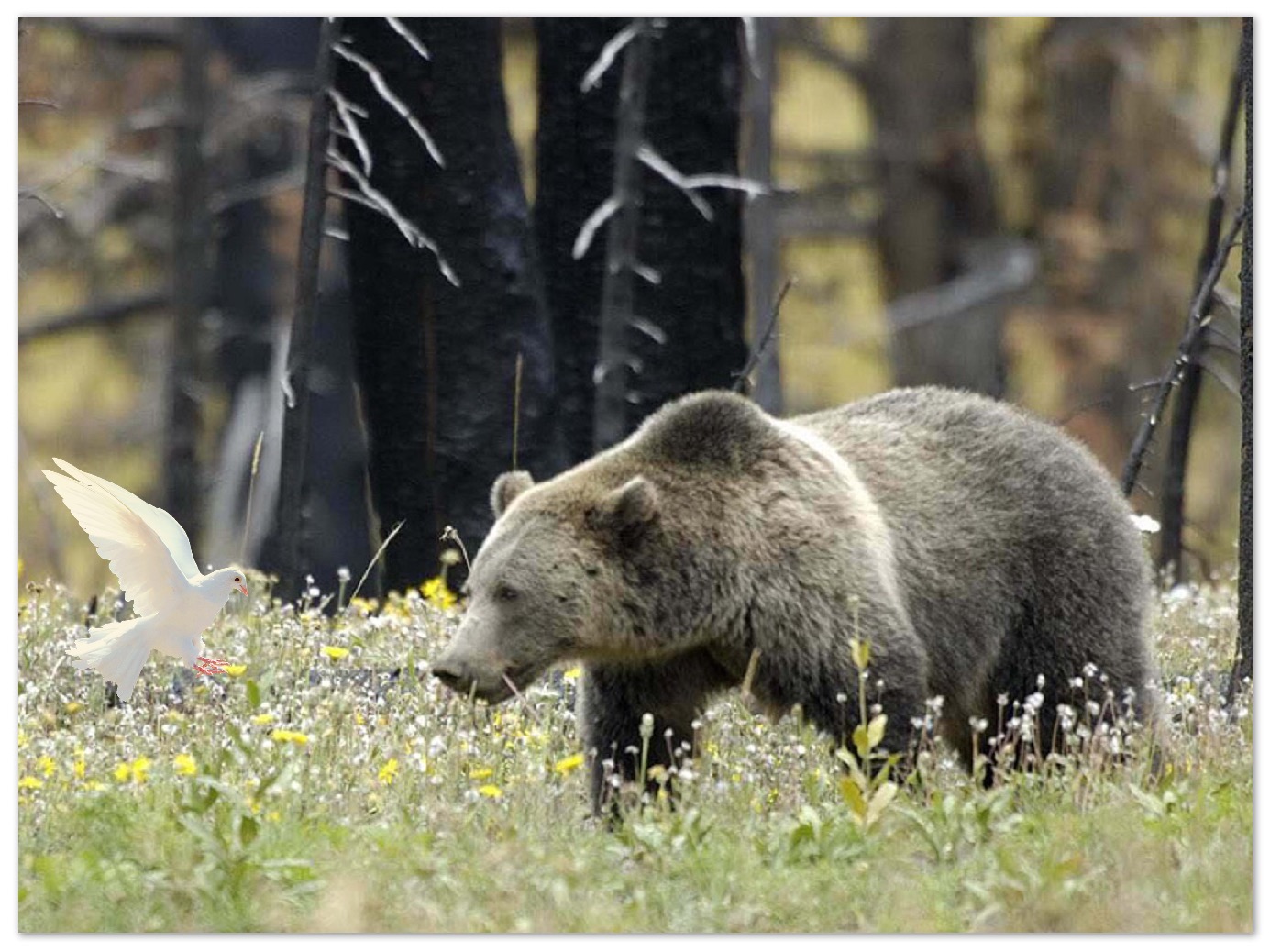
What was unusual about today is that I had no idea why that song was playing. It’s not a song I have ever particularly liked, especially since it makes no sense that Running Bear and Little White Dove would jump into the raging river and die together instead of just nicking off to the nearest bridge and eloping. I hadn’t seen any running bears or any little white doves, or had I been watching anything with Native Americans in it. I put it down to being one of those hinky things that happens sometimes, and got on with my day.
Despite my best efforts, Running Bear has been playing on a loop in my head all day. I’ve tried to change it by singing some of my go-to “sticky tunes” that usually do the trick for me. I’ve listened to other music.
On an impulse, I went for a drive to the coast with my husband this afternoon.He had a call out to replace a TV antenna, and a 40 minute drive each way seemed like a good opportunity to spend some time together before school starts again next week. I also figured that listening to something inane on his preferred trashy pop radio station – which normally bugs me a whole lot – would fix it for sure.
He pulled up at the house where he had to replace the TV antenna. As he got out of the car, we heard music playing loudly from the house across the street.
“Running Bear loved Little White Dove With a love big as the sky, Running Bear loved Little White Dove With a love that wouldn’t die.”
A chill crept across the back of my shoulders and my pulse sped up just enough for me to be aware of it doing so.
I know I am an empath, but this is different. Maybe it’s because I write horror that it seems creepier than it is. I’d like to think it’s just random coincidence, but you may consider me completely weirded out.
This weekend we’re attending a family reunion in Anglesea. Just before lunch was served, we sat in a room full of relatives and listened as one of our cousins shared a reflection on relationships among family.
He said, “Think about tthe friendships and relationships you have. Consider the negative, the strained, and the unhealthy…”
“Never mind about the unhealthy,” I muttered. The cousin sitting beside me laughed.
“Can you imagine if they all went Marie Kondo on me?” I continued.
“Does she bring me joy?”
“No, she brings sarcasm, snark, inappropriate humour and painful honesty.”
What a busy month it’s been. The last time I wrote on this blog, I bragged about turning my alarms off and being able to relax because school was done for the year. HA! Add that to the list of things I shouldn’t say if I don’t want to tempt the fates.
In the few days between school finishing and Christmas, my father had a slew of medical appointments. Christmas shopping had to be done. End of year breakup parties had to be attended. Some decoration of the house, at least, had to be done. Then the presents had to be wrapped. And all the time, people kept telling me to take it easy, to not worry about things, and to not feel I had to do all the usual Christmas things.
I did have to, though. My husband’s family were all coming for Christmas, and mine were arriving shortly after, so I needed to make some effort. I’m glad I did, too – we had thirty people sharing Christmas lunch in our home. Everyone brought part of the feast with them, so my contribution was minimal – I made a chocolate honeycomb cheesecake, a trifle, and the maple glaze for the ham, all of which were done the day before.
My husband and I had agreed well before the day that it would be better to leave the running of the day to him and his sisters, so that I could preserve both my back and my energy. There is, after all, no point in undoing weeks of healing for in the course of one busy day.
My Christmas Day was, therefore, quite relaxed. I was able to relax in my recliner and cuddle my adorable great-nephew, drink whatever lovely cordial was in the glasses that people handed to me, and enjoy a wonderful day of fun, laughter, conversation and sharing with my family. In the late afternoon, we went to visit our best friends and exchanged gifts before sharing dinner with them. That time, too, was precious and relaxing and lovely.
Boxing Day for us is always a day spent with extended family and friends, so we gathered at my sister-in-law’s home for a barbecue with another group of thirty or so people – some were double-ups from the previous day, some were not – on a blazing hot 40 degrees Celsius Australian summer’s day. Thank God for shade, fans, and lots of cool drinks!
Tomorrow, my sister and her family arrive from interstate for a second Christmas, and to spend some valuable time with my father. And that means it’s going to be busy again!
For that reason, I was determined that today would be blissfully quiet. It was stinking hot again: 41C in the coolest part of mainland Australia – so I stayed indoors and enjoyed the air conditioning. Thankfully, I managed to catch up on some social media and prepare the rest of Book Squirrel’s Golden Squirrel Indie Book Awards for the 31st, which I really needed to get done so that everything is properly prepared and ready to roll.
So, I really shouldn’t have made flippant remarks about being able to relax. It’s true I’ve been able to sleep in a bit, and I haven’t had to put real shoes on more than once, which is always nice.
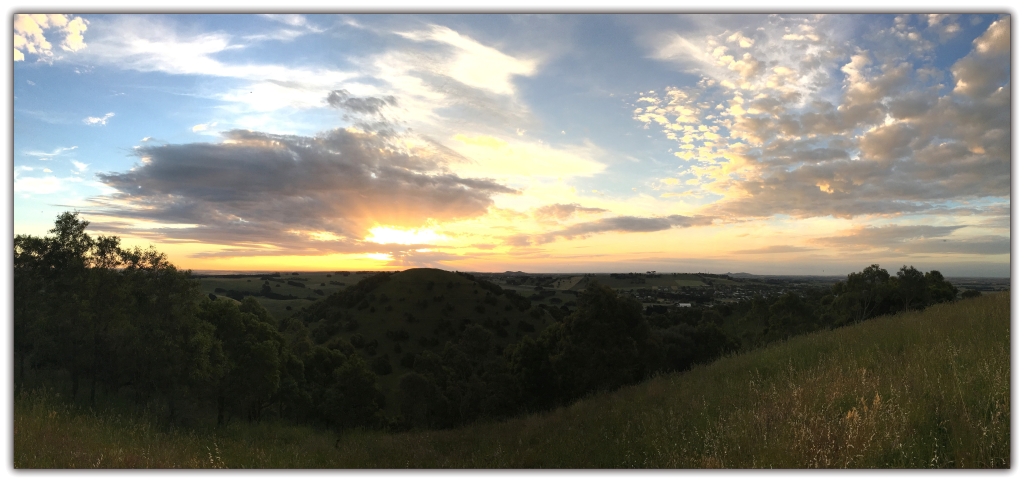
In all honesty, though, getting to the end of this year feels like I’ve climbed a mountain to find that I’m standing on top and looking out to the western horizon as the sun sets.
I’m thankful to have survived the journey thus far, and I can see how far I have come. One thing is for sure, though – I won’t complain if 2019 is kinder than its predecessor.
Today was the last day of term and the end of the school year.
The last two weeks since I returned to work after my surgery have been brutal and I feel like I have run a marathon, especially having had dad in hospital again at the same time, but I’m proud of myself for doing it, and looking forward to a very well-earned rest.
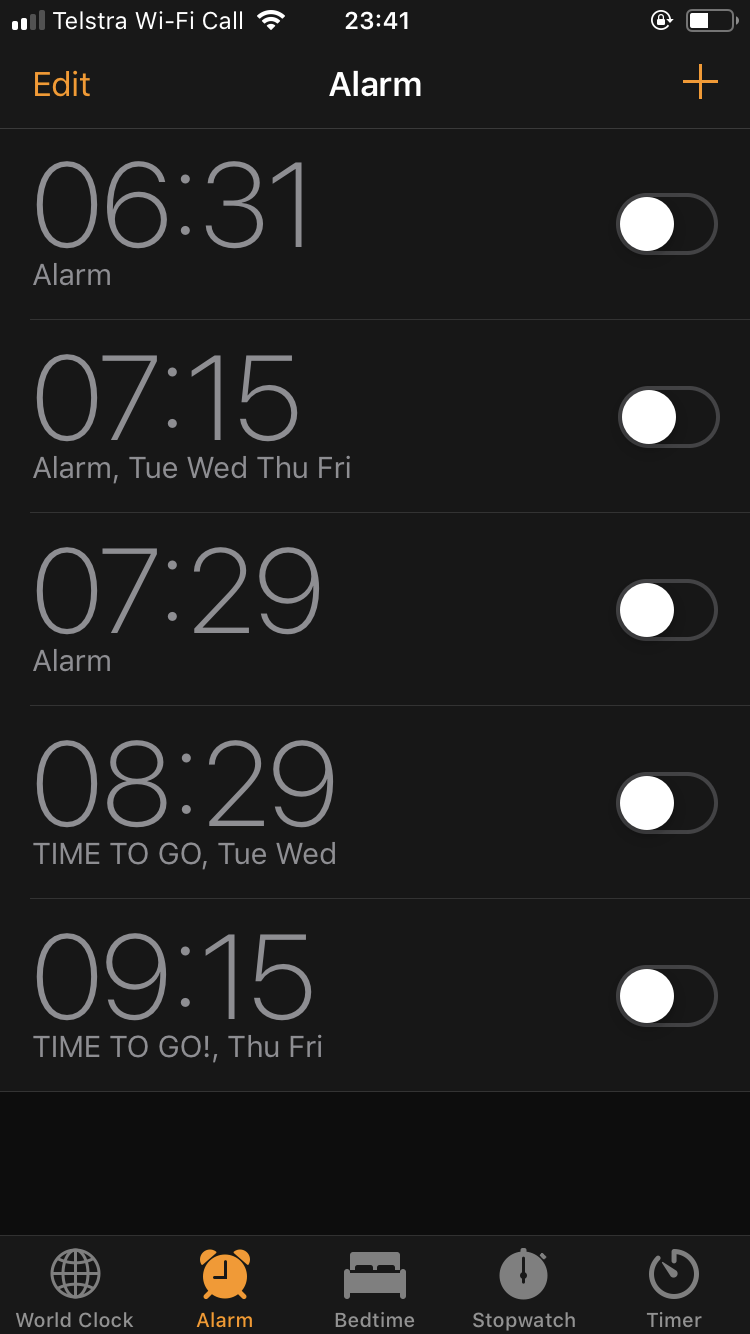
One of the things I really enjoy doing on this one particular day of the year is turning all my morning alarms off. It may take all of ten seconds, but it’s a ritual that restores my sense of “owning” my time again. I love being able to embrace my inner night owl once more, and take my daylight hours at a slower pace.
One of the most relatable scenes in Gilbert & Sullivan’s musical H.M.S Pinafore, which I had the pleasure of directing in September, is where Buttercup sings these lines to Captain Corcoran:
“Things are seldom what they seem, Skim milk masquerades as cream; Highlows pass as patent leathers; Jackdaws strut in peacock’s feathers.”
The Captain appears puzzled, as though thinking about this for the first time, before replying,
“Very true, So they do!”
It’s a common thing. As we go through life, we discover that people and things are frequently not what they seem to be, and what we understand to be the truth of our own experience often turns out to be something quite different instead. Life is as full of illusions as it is of genuine experiences.
False friends abound while finding a true and loyal one is like discovering gold. Trials hurt, but then deliver unexpected strength and blessings. People put up smokescreens to hide their true intentions or feelings; and only sometimes do we ever discover why. The world seems hateful until someone delivers light and love in a surprising way.
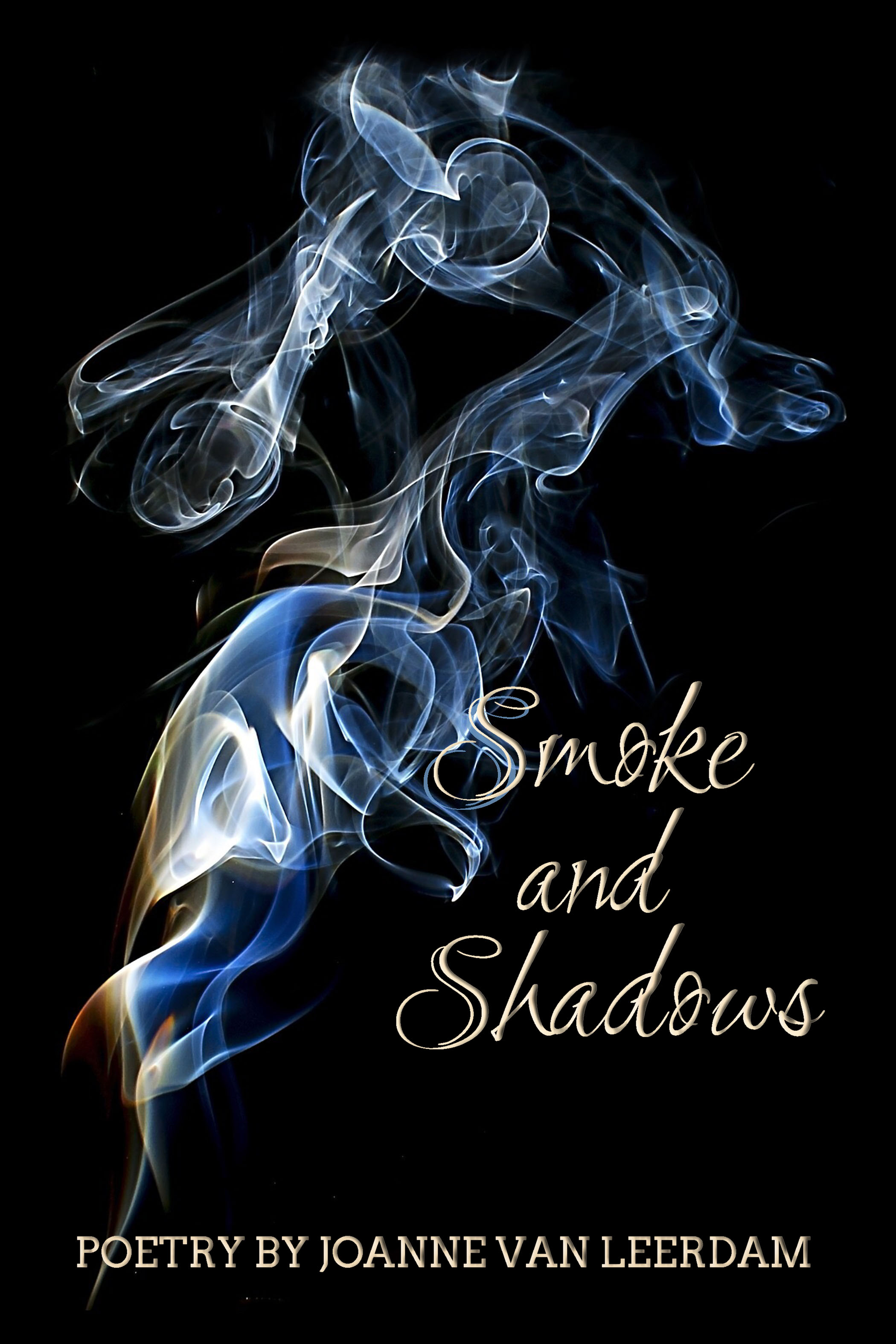
The poems in this new collection explore some of the illusions and deceptions people experience in their lives, the clarity and wisdom gained from hindsight, and the lessons we can learn from them.
Both the title of the book and its blurb come from the poem titled ‘The Simulacrum’. I considered using the title of the poem as the book title because it’s such a fascinating word which does, in fact, mean ‘a representation or image of something’. I wanted to go beyond that, though, because the book is really about the multitude of ways that something or someone might not be exactly what we think, or what we are led to believe, rather than focusing on a physical representation.
“Smoke and shadows yield to glimpses of light— Only then we begin to see: When we learn to perceive things as they are, We can have peace with whatever will be.”
So, without further ado, here is the cover of this new book, which will release on January 6th. It is available for preorder in all major outlets via this link.



 WordyNerdBird