Supporting Kids And Teens Through The Covid-19 Limbo

Self-isolation does not have to be completely isolating. There are ways to support and encourage our kids and teens through the times of Covid-19.

To many people right now, the world seems like it is in crisis in the wake of the corona virus outbreak. Those of us old enough to remember SARS, swine flu and H1N1 tend to understand more of the reasons for that than our kids do, even if we still don’t understand why toilet paper is worth pulling a knife on someone, 

Yes, you read that right. It happened in a supermarket in Sydney, Australia, a couple of weeks ago.

To many of our kids and teens, though, it seems like some kind of madness has taken over. As concerts, sports, social events, classes and rehearsals have been brought to a screeching halt as they look on, some of them are starting to buy into the fear that they have seen expressed on TV, in social media, and among some members of the community. 
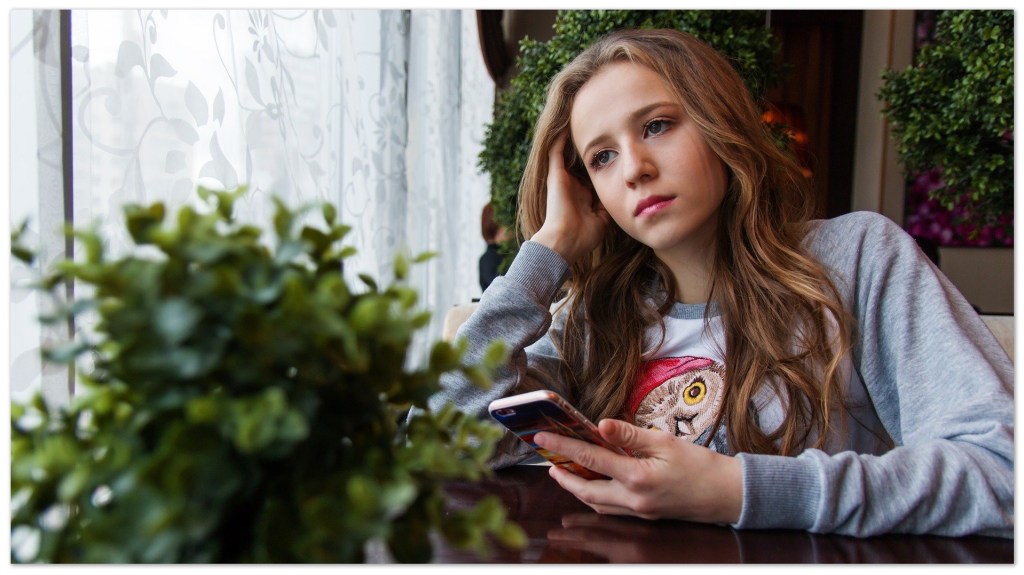
That hit home really personally on Sunday when our theatre company told the cast that we had decided to hit the pause button and defer our production of Little Shop of Horrors that was due to hit the stage in May. 

“This whole thing sucks!” one young cast member said. 
“I know!” another replied. “It’s taking all the joy out of life!” 
“I get it, though,” responded the first one. “We have to keep people safe. But it’s making a lot of people really miserable at the same time.”

She was 100% correct. I am feeling really miserable about it, too. That’s completely natural.

We will do the show — we just can’t say when. For now, rehearsals are suspended and we all find ourselves with a lot of extra time on our hands that we had been putting into working together for a common goal.

At a time when many of us are being isolated from the activities we love and the company of others who enjoy those same things, how do we stop the molehills of grief turning into mountains of misery? 

That’s a really big question, and I don’t profess to have all the answers. 

I do know that it’s important to find ways to encourage and motivate each other. It’s important to monitor and support each other’s emotional and mental health. 

So, here are just a few suggestions for possible ways to lift the spirits of the young people in your life during the disappointments and challenges caused byCovid-19:

  • Acknowledge their feelings. It’s quite natural to feel disappointed and a bit annoyed at the number of things being cancelled, postponed or banned. Instead of telling them to “suck it up” or “take it on the chin”, tell them you understand, and that you’re feeling similar things too. Empathy will always win more favour than platitudes. 
  • Involve them in the family decision making about social distancing, self-isolating and dealing with the practicalities that follow. Knowing that they have been listened to, and having some ownership of the decisions and plans that are made, will reduce feelings of resentment, anger and rebellion.
  • Praise and thank them for their maturity in accepting disappointments. A bit of intrinsic motivation goes a very, very long way with young people. 
  • Give them responsibility appropriate to their age and ability. It could be anything they feel is important and worthwhile: preparing a meal, keeping a particular area of the house clean and sanitised, disinfecting all the door handles in the house each day, or calling grandparents or other family members on the phone to support and encourage them. 
  • Limit the amount of “fear language” you allow in the house. This might  mean not watching the 6pm news on TV as a family, discussing what members of the family will allow on their social media feeds, and discussing things in a responsible way. Be honest about your feelings, but try to phrase your responses to the virus and consequent changes and limitations using positive and proactive language like “social responsibility” and “doing out part to protect the vulnerable” instead of using terms like “lockdown”, “corona virus jail” or “panic”. 
  • Encourage them to find constructive ways to use their spare time. ‘Netflix and chill’ is okay, but not all day, every day.
  • Self-isolation does not have to be completely isolating. Hanging out with friends in person may not be an option, but there are ways to socialise beyond the regular social media platforms where kids are likely to hear a lot of “doom and gloom” about the current situation. Try Skype calls or Google Meet, which enable people to spend time, chat, and still see each other, all from a distance.
  • Give them something to look forward to. Discuss and make plans for activities, holidays, or celebrations that will happen once the need for social distancing and self-isolation has passed. Anticipation of something good is a powerful antidote to feeling as though all the fun things have been taken away. 
  • Ask for their expert help. Whether it’s compiling a great playlist on Spotify, learning how to use Instagram or Snapchat, finding a great app or game for your phone or tablet, or ordering groceries or pizza online, older kids and teenagers are likely to have those skills down to a fine art. Even if you have a fair idea how to do those things, ask them anyway. 

While there is obviously no perfect solution, it’s important that we continue to try to find positive and healthy ways to deal with the limitations and restrictions that are being put in place.

If you have any other suggestions, please share them in a comment. 

Supporting Our Kids And Teens Through #CoronaVirus #lockdown disruption.
#support #PositivePosts #StayingHome #mentalwellbeing #MentalHealthAwareness #PositiveParenting
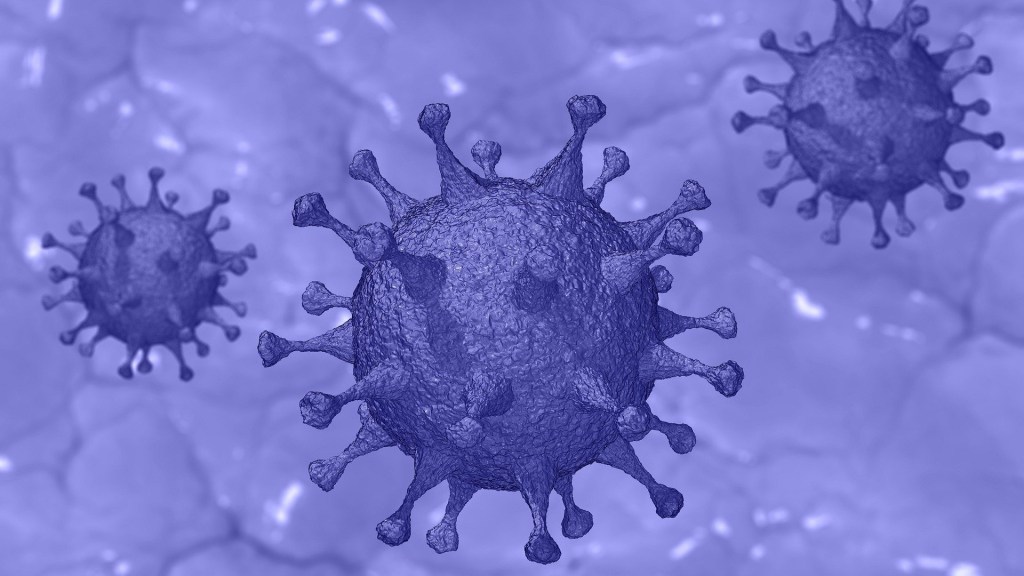
Some Things To Remember When Bunkering Down To Avoid Covid-19

While it’s important to be cautious and sensible, it’s also important that we stay as positive as we can during times of crisis.

Image by Pete Linforth from Pixabay

While I may not have stockpiled pasta, toilet paper, hand sanitiser and baked beans since the novel corona virus Covid-19 has made its presence felt around the world, I have been thinking about ways to stay positive during the pandemic. 

As someone who already lives with anxiety and chronic conditions, I know from personal experience that negativity can be as detrimental to one’s health as a virus. I fully agree that we need to be cautious and wise, but I refuse to despair or panic. I don’t think that’s going to help anyone— especially myself. 

So, let me take this opportunity to point out some things that it’s important to remember when we’re all trying to avoid either getting sick or contaminating anyone else. 

  • Good hygiene is always good practice, not just during a global health crisis. It has struck me as ironic more than once that The Jetsons told us the 21st century would bring us robotic housekeepers and flying cars, but here we are, still telling people how important it is to wash their hands. Using soap. And to dry them thoroughly. And to not put their fingers in their nose or their mouth. And… yeah. 
  • Self-isolation means keeping one’s distance from other people, not locking oneself in a room and eating canned peas for the duration. You can go out in your car, or ride your bike, or walk your dog, without being in contact with other people. You could walk through a park in the sunshine, breathing fresh air and enjoying different scenery, without breathing anyone else’s air or touching any surfaces with your hands. I can spend time in the yard with my dog. 
  • Communication and contact are really important for our mental and physical wellbeing, so we must not let those things fall by the wayside just because we are avoiding physical contact. We can stay in touch with my family and friends using phone, instant messaging or social media. 
  • Time alone does not have to equal boredom. Ask any introvert: there are myriad ways to entertain oneself, even before involving a screen of any kind in the process. Books are always my go-to, and writing is something I always want more time to do. There are also puzzles, art, music, and exercise people turn to as productive and enjoyable ways to spend time. 
    Even once you pick up a device, it doesn’t just mean TV, movies and games. This might be a great time to take up that old guitar or ukulele, improve your cooking or DIY skills using YouTube videos to show you how. You could start learning a new language – or resume learning one you’ve let slip – using one of the great apps available. 
  • You might be dreading a couple of weeks on your own, but some people spend most — or all — of each day alone all the time, and that’s not their choice, either. Elderly people in particular find themselves alone far more than they wish to be. They are probably more fearful of the virus than most healthier, younger people, and with good reason: they are more susceptible to it, after all. A bit of extra time on your hands is an excellent opportunity to give Grandma or Granddad or Great Aunt Edith a call. Say hello, have a chat, and make sure they’re okay. It’s a little bit of joy and encouragement that might make all the difference in how they cope with the extensive media coverage and the fear that can easily generate in older folk.  There’s every chance it might make your day a bit better, too.
  • There is no more danger posed by the Asian people in your neighbourhood than there is by anyone else, especially if they’ve been living there as long as you have. Sure, the virus may have first come to light in China. That doesn’t make Mrs Wang in Number 14 a carrier, and it doesn’t give anyone the right to swear at her or accuse her of being responsible for the plague. 
    That may seem tongue-in-cheek, but that very thing happened to a friend of mine last week, and she’s not even Chinese. I may be judging my fellow non-Asians harshly, but I figure if that’s happening in regional Australia, it’s probably happening everywhere. 
    This also applies to the Italians, Koreans, and every other cultural group in your community. People are people, regardless of their cultural heritage, and now that Covid-19 is everywhere, being a jerk about someone’s origins is no more justifiable than it ever was. Which it wasn’t. Ever. 
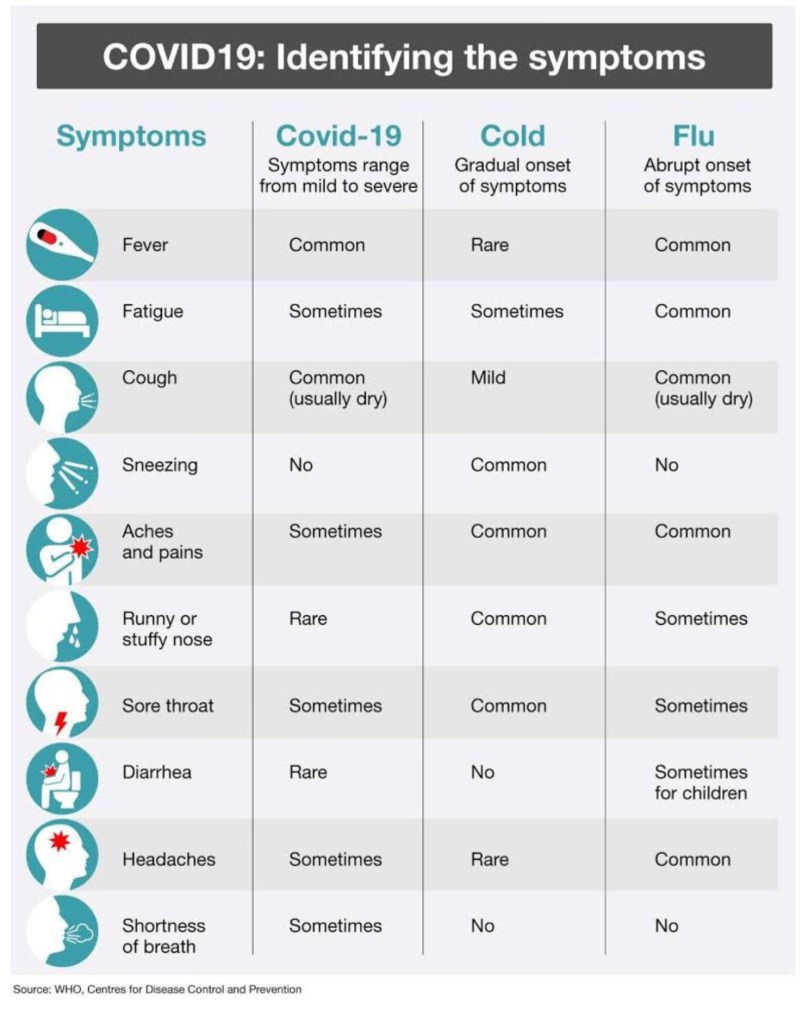
  • Not everyone who has cold or flu-like symptoms is going to have Covid-19. Some will have a regular cold, some will have the flu, and some will just have allergies, which aren’t contagious at all.
    Here’s a handy chart from the World Health Organisation to help you know who to avoid because they’ll give you a cold, or because they’ll give you the flu, or because they might actually have that nasty new virus. 

Australia’s Toilet Paper Panic: Yet Another Reason Why I Question People’s Priorities

In response to the growing panic about the spread of the new corona virus COVID 19, it seems many Australians have decided to stock up on the essentials in case they get quarantined.

I could understand it if they were rushing the stores for tissues, paper towels, hand sanitiser and soap. Maybe even some cleaning products might be a good idea. But they’re not.

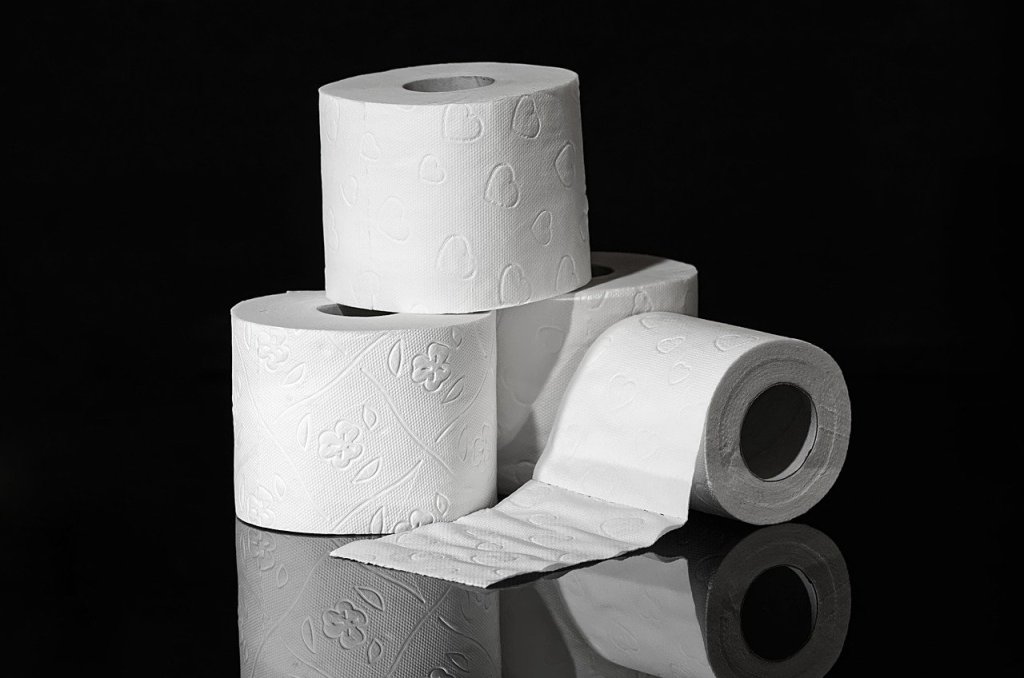
It seems the thing people fear running out of the most is toilet paper.

Image by Alexas_Fotos from Pixabay

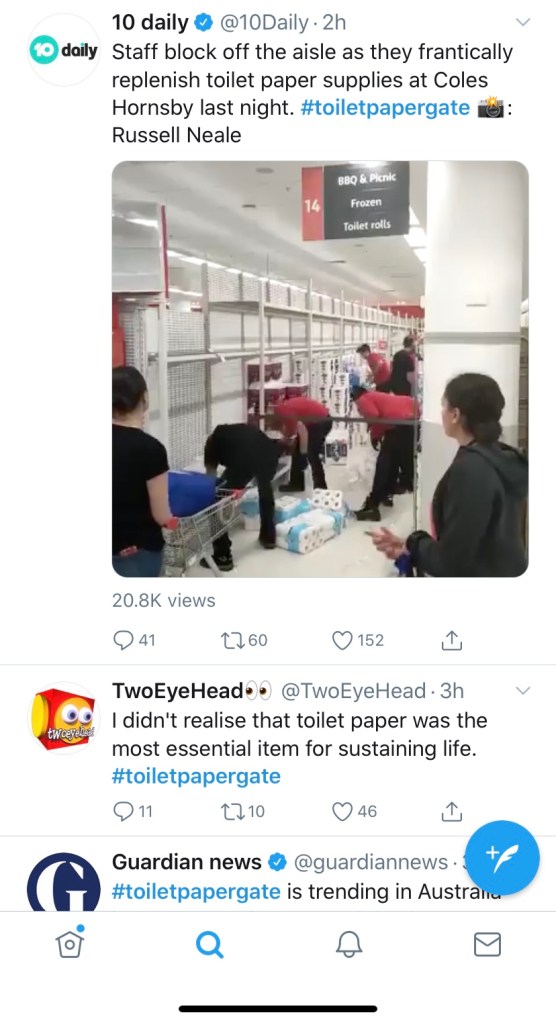
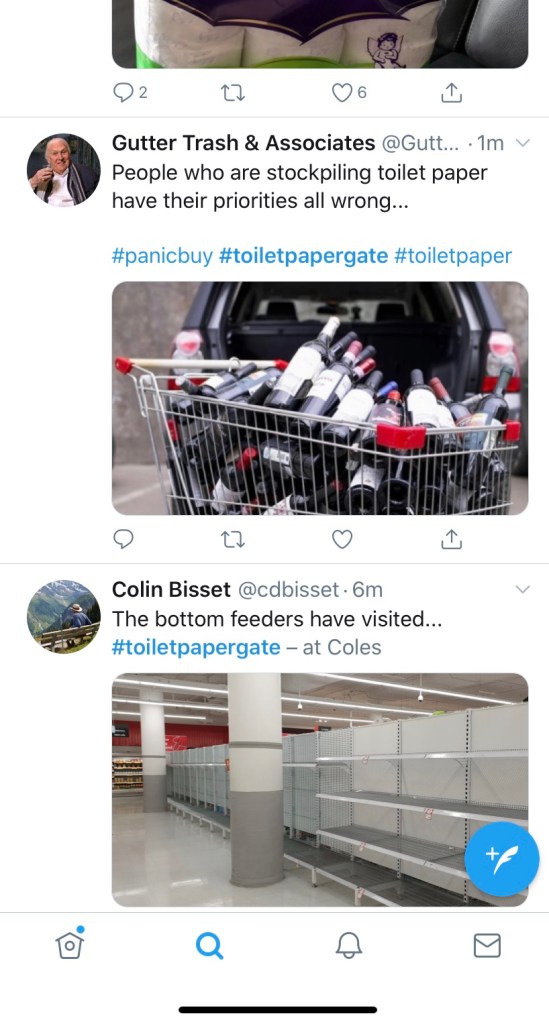
Social media and the news is full of reports and images of empty shelves where all the toilet paper was stacked.

It seems to me that these people have got their priorities wrong. It’s not Ebola, for crying out loud. Even if they did get the virus, they probably wouldn’t be needing any more toilet paper than usual.

Do they actually know anything about this virus and its symptoms? It causes respiratory illness. It makes people feel like they have a nasty cold or flu. They’re going to be blowing their noses and coughing.

That kind of lack of attention to detail will cause far more problems than not having 124 rolls of loo paper in the cupboard.

People need to stop and think before joining the panic. Supermarkets do home delivery every day of the week in Australia. If someone is quarantined, they’ll just drop off the delivery at the front door and leave without seeing or talking to anyone.

And if there is any toilet paper actually left in the stores, I’m sure they’ll deliver that, too.

Amazon Users: Beware!

Amazon users, beware of fake emails! 

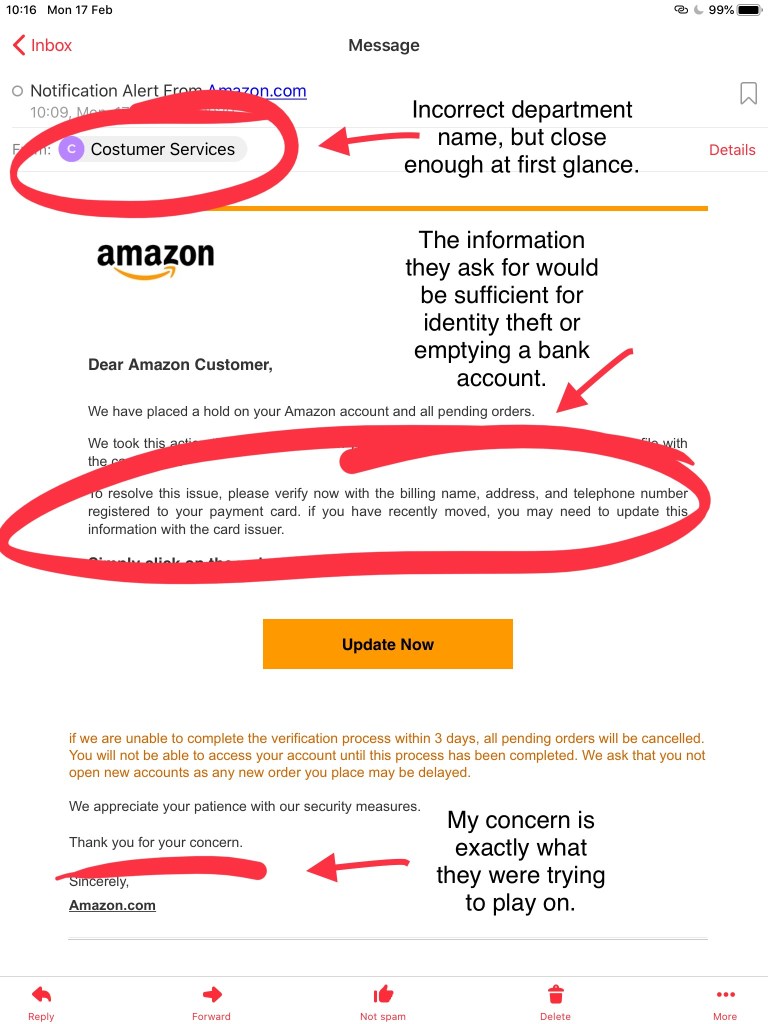
This morning I checked my email and had one of those “Oh NO!” moments when I saw an email from Amazon saying that my account had been put on hold. 

It’s a good thing I have trained myself to breathe deeply twice before reading such emails again to see what the problem is. 

It would have been easy to click on the link they gave me and do as they asked, but I’m glad I didn’t. The email looks completely legit, but it’s a scam. 

Three things gave it away: 

  1. I haven’t ordered anything, therefore there is no payment due that could have caused the problem. 
  2. The name of the department is incorrect, although deceptively close.
  3. The email address this came to is not the one associated with my amazon account. 

Had I clicked on the link and done as the email asked, I would have virtually signed my life away to whoever sent the email. 

My standard practice is to never click on a link in an email from any company, but rather to sign into my account normally to check and see if there is a problem. 

It just goes to show how important it is to read carefully and think before click!ing!

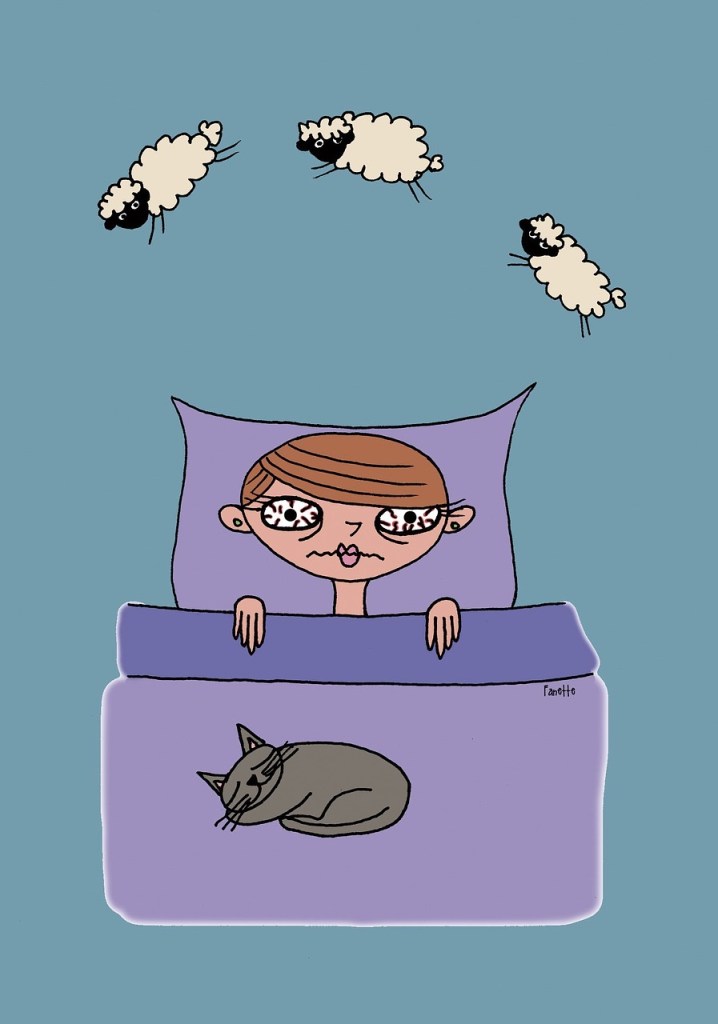
How can insomnia be a good thing?

This post struck a chord with me. I hate my insomnia, but because of it, I have written some incredible poetry at 3am.

I do try to manage it, and to practise good sleep hygiene, but sometimes my pain levels and my brain conspire against me.

On those night when I am not able to write, I find listening to talkback radio, a podcast or an audiobook helps me to relax and and least rest while I am awake.

I’d love to know what works for you.

How to Stay Motivated in Spite of Mental Health Concerns

There are some fabulous tips here for staying motivated despite the things that try to drag us down.
I found this post hugely relatable, and also got some great new ideas from it.

Plus, on an entirely different note, like this blogger, I also have a calico cat. Her name is Scout – after the central character in To Kill A Mockingbird – and she is divine.

Scout Kitty may have gotten her nose out of joint when I featured Abbey the Labby in yesterday’s post, so this was a good opportunity to make it up to her.

lizlucytoronto's avatarTwo Girls and a Calico Cat

Hi lovely readers,

Thursday is my least favourite day of the week, because I have a 3 hour class followed by 3 hours of work (I am a teacher’s assistant for a class I took a few years ago). I am my most awake and happy in the morning, but on Thursdays I have to relax during the morning and try to sleep in (I never end up doing this) and do some self-care so that I’m not totally drained by the time I have to head to school.

Every Thursday morning I wake up with dread because I am genuinely afraid I will end up having paralyzing anxiety, or start a depressive episode, or just plain get so tired I cop out of class and work. In the past, I did – often. When I was still using (I am a recovering addict, if you haven’t read my blog…

View original post 2,128 more words

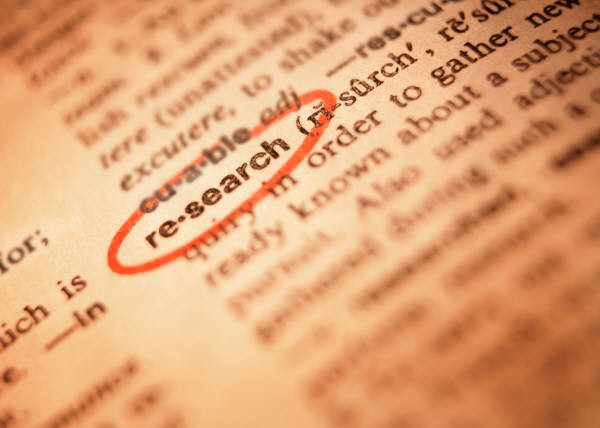
Helpful Tips on How to Research Your Novel

Like Tyson Adams, I’m a writer and I’m very happy to be labelled a nerd. I’m also a History teacher, so I understand the value of research.

That value is never, ever so clear as when reading a book that is poorly researched and presents events or settings that are inconsistent with what one knows to be the truth.

Tyson makes some very good points about research here, but for me, the crucial point is believability. Our readers have to be able to accept what we write as not only conceivable, but also credible.

Tyson Adams's avatarTyson Adams

I’m just going to say it: I’m comfortable with the label of nerd.

More specifically, I’m a Nerdius scientifica.

Being a nerd is more accepted nowadays, what with our bulging brains and chiselled knowledge. And the reality is that us nerds have a lot to offer, like research skills.

Writing requires a lot of research and writers generally fall into two categories in this regard: those who need to learn how to research, and those who took up writing to justify those dodgy topics they’ve researched. This post will hopefully help the former. But if anyone does want to know how much slack rope you need to hang someone correctly from your homemade gallows, I have a spreadsheet calculator for you.

I stole am reblogging a post from Writer’s Digest with a few of my own comments.

Ernest Hemingway said writers should develop a built-in bullshit detector. I imagine one…

View original post 1,697 more words

The Myth of Writing Every Day: Realistic Tips for Increasing Your Productivity

Everything Jodi Herlick has written here is true: the snark, the realism, and especially the advice about self-care. Her words provide a very real reflection of my own writing experience.

Whatever your experience is, whatever your writing pace, and whatever the other demands on your time, each of us can only do what is achievable within our individual limits.

The takeaway is this: You do what you need to do, and write your own way when you’re ready. None of that is for anyone else to judge.

jherlick's avatarJodi Herlick

We’ve all heard the well-intentioned advice: Write every day. It always seems to be spewed by privileged people who have a flexible schedule or a stable income without a day job or who have somehow managed to eschew all other commitments. And while there’s truth to the advice–I certainly find that writing is easier when I’m doing it consistently–for most of us, the pressure only leads to a cycle of despair that actually reduces our creative output.

Image result for crushing despair gif

So if you’re not one of the privileged few, here are some tips for getting all that daily writing in:

  1. Find yourself a wealthy significant other/sugar daddy/sugar mama/patron who will support your daily writing habit, and maybe buy you bonbons to munch on too.
  2. Wake up three hours early and get your writing in before your day job. Then hope that no one notices that you’re sleeping at your desk or in front…

View original post 1,012 more words

Why Writers Should Read Lousy Books

I confess that this is how I started writing horror.

While reading a book which was a real let-down. I said to my husband, “I could do better than this!”
My husband said, “You should.”

So I did.

Four books later… I’m working on stories for the next one.

theryanlanz's avatarRyan Lanz

by Larry Kahaner

All writers get the same advice. Read the great writers; study the great works. Learn how seasoned, professional, and successful authors get the job done. All true, but I maintain that it’s also crucial for writers to read crap to learn what not to do.

View original post 641 more words

How To Not Make Someone Feel Worse Than They Already Do

Despite having worked hard, going more than one “extra mile” and achieving some good things, I have spent much of the past  few days feeling absolutely, irretrievably inferior. Totally sub-standard. An awful disappointment.

It’s not a new experience, by any stretch of the imagination. It happens far more often than most people will ever know or realise. Even so, it is never pleasant feeling as though most of the world thinks you’re rubbish. 

It’s not as though any of us is perfect. I certainly make no claim to be… which is a good thing because I am most definitely not.

And yet, when others discover a flaw or weakness, or find I have made a mistake, they very often speak or act as though they feel they have a right to be outraged and judge me for my imperfection. 

So here’s a news flash. 

I am not perfect. 
Neither are you. 
Everyone makes mistakes. 
Everyone misses a beat every now and then. 

But you know what is more hurtful than someone making a mistake? 
Treating them as though they are less than you. 

Because, you know, they’re not. 

If someone does something that bothers you, or offends you, and you feel the need to talk to them about it, for goodness’ sake, be kind. And if you can’t be kind, then wait until you can. 

And please, please, oh please, go to them and speak to them rather than anyone else. Going behind their back and kvetching about it is only ever going to cause more complications and trouble, so unless that is your actual intent, it is a response that should be avoided.

Similarly, there is nothing achieved by being judgemental. In fact, it is entirely counterproductive. 

Sure, they might comply with what you ask or insist of them. But they might do that if you simply asked them to do something to resolve the issue, too— especially if you ask nicely and say please.

The saying that “you get more out of people with honey than you do with a stick” became a proverb for a reason: it is generally true. It is certainly true of how I respond to people. 

If someone treats me with kindness, I will do everything in my power to not let them down. 
If they dump judgement on me, I am just going to keep on beating myself up over it, because if someone tells me I am not good enough, I will believe them. I will also probably never again fully believe that they have any respect for me at all. 

And if someone else, completely unknown to them and in different circumstances, tells me the same thing, I will believe both of them, twice as hard and twice as long. 

It’s not deliberate, and it doesn’t matter if that is not your intention: that’s how I am wired. 

The consequence is that it makes everything I need to do in a day more difficult. I doubt myself and second guess everything, even the things I know I am good at. 

To be honest, life is actually hard enough without that. It’s bad enough knowing that I made the mistake in the first place, or that someone resents me for not measuring up to their standards. Add chronic pain, anxiety and depression into the mix, and it very quickly becomes both exhausting and excruciating. 

It’s almost certain that that doesn’t just apply to me, either. Many people have internal battles or burdens of one kind or another that they keep hidden, but which add another level of complexity to whatever else they have to deal with in a day. 

So when someone screws up— and we should all understand that everyone will, from time to to time— be kind. Tell them gently, person to person, and let them fix it, or at least try to. 

Please. And thank you.