What I Love… And What Frustrates Me… About Blogging On WordPress

There are many features of WordPress that I love. In terms of social media platforms, though, the advantages are clear.

It’s more meaningful than Facebook.
The content on WordPress – and I assume on other blogging platforms – is as varied and interesting as you’ll ever find. Books, history, poetry, literature, Indie authors, self publishing, photography, travel, food, music… you name it, there are multiple blogs right there waiting to be discovered and read.  There is no end to the talent in this place. 

There’s no clickbait, drivel or game requests.
Enough said.

You can engage exactly as one does on Facebook.
You can like a post, you can leave a comment. You can even like as many posts as you want to, and WordPress won’t stop you from doing so. How’s that for a positive, helpful algorithm?

Sharing posts is easy.
What’s on WordPress doesn’t have to stay on WordPress.
With one click, you can share posts on WordPress using the reblog function, or directly onto any of the other social media platforms.

Going ad-free with a custom domain is cheap and easy. 
It doesn’t cost much to have your own domain name that adds to your personal branding, and eliminate all advertising from your blog altogether. It works out even cheaper if you pay for two or three years instead of one, and as a business expense, you can claim it as a tax deduction. This can be done from the WordPress menu, so you don’t even have to Google how to do it. 

Sorry, though – wordynerdbird.com and mrbooksquirrel.blog are already taken. Have fun thinking up something cooler! 

There is no instant messenger, nor is there an inbox. 
There are benefits to not being quite so available all the time. 
I know. It’s a shocking thought, but I’m brave enough to say it. 

Many bloggers do have links to their other social media accounts on their blog, so you can still send a personal message or have a conversation there if you wish to. 

There’s no drama. 
Well… there might be on some political blogs, or perhaps some celebrity ones, I suppose. I don’t follow or read those, so I wouldn’t know.

Generally, though, you follow and read what you want to, and the rest sail blissfully past without even making a blip on your radar. 

Block style formatting. 
I found using the new “blocks” editor intimidating for about half a day, and have absolutely loved it ever since. It makes designing a great-looking post super easy. If you don’t like where an image or some other content is, you can move it around without fuss. Need a sub-heading? No problem. Formatting a list? Easy as. You can even save a particular block as a reusable one, so you can add it to subsequent posts with one click. This is great for themes and otherwise related posts. 

The Reader page on WordPress is brilliant
It lists all the posts from the blogs you follow, so that you can scroll through and see what’s on offer. It means that people who follow your blog will actually be able to see when you make a new post, and click through to read it with ease. 
If you want to find something new, you can search for a topic or click on the “Discover” tab.

There are, however, just a couple of things that frustrate me.

As I commented yesterday, I wish it were easier to get people to engage and respond. Perhaps they don’t perceive the value of that like they do on other social media platforms. Perhaps it’s a different type of audience. I just don’t know what the answer is there. 

The WordPress app. 
While the website uses “blocks” for content, the app is a dinosaur. Editing a post using the app is a nightmare because of the different formatting – you have to convert it from blocks to “classic” and it all just ends up looking wrong. 

It’s disappointing, because an outfit as big and professional as WordPress should be able to furnish their users with an app that is easy to use and which fully complements the website editor. 

Consequently, I do all my posting via the website, even on my iPad or phone. It’s far easier and the results are better. 

The Verdict:
WordPress wins, hands down. With just a little more audience interaction, it would be darn near perfect. 
What I Have Learned From Blogging 150 Days In A Row

Blogging consistently for 150 days in a row is no mean feat. It takes time, effort, and brain power, and a bit of self-discipline really helps, too. I’m thinking very clever things of myself today, but that’s not the only positive outcome. 

When I first started blogging, I was a bit here and there with it all, which is perfectly fine. Over time, though, I noticed that the more consistent I was, the more consistently my posts were being read. When I managed a three or four day streak, I felt like I had really accomplished something constructive in terms of getting myself “out there” as a blogger,

At the beginning of this year, one of my resolutions was to blog more consistently. I can certainly put a check in that box!  Now that we’ve reached the middle of the year, I have spent some time thinking about what I’ve learned from doing so. 

Goals are highly motivating. When you’re on a long streak, it’s very easy to dismiss thoughts like “I’m too tired” or “not today” and get it done. 

Planning is essential. Sometimes, deciding what to write about is the hardest part. Planning helps to overcome this.  I have developed a list of themes, post ideas and issues to explore. That way, I’ve always got something to write about if there is nothing pressing or timely bobbing around in my head.  Participating in special “months” like Women in History and “National Poetry Month” has helped me to focus my posts during those specific times. This has helped me to attract different kinds of readers to my blog, which is generally quite eclectic in the topics I cover. 

I still want to improve the way I coordinate my planning. I’ve started to time my Shakespeare-related posts to coincide with #ShakespeareSunday on Twitter so that I have an audience to reach that is automatically curated for me by someone else’s design. That’s proven to be very handy, so I want to find more opportunities like that to fit with my interests and content. 

Reblogging is a great way to share sand add value to someone else’s content. I often share other people’s posts via Twitter, and do so very gladly. When I discovered how to reblog someone’s work, that was a revolutionary moment for me. It enabled me to share their work in a more meaningful way than just tweeting it – which is meaningful and helpful, but it doesn’t add any value to the content. 

Reblogging makes it possible to add comments or a reflection of my own on the topic. This is helpful to both them and myself: their content reaches another blogger’s audience, and my content is enriched by theirs. It is also a very good thing to be inspired by what someone else produces, and to let that fuel my own thoughts and words. 

It’s also fair to say that there are times when the tank has been dangerously empty, and those bloggers whose work I have shared have literally saved my day – both by inspiring my post, but by encouraging my mind and spirit when life has been hard. 

Varying the topics attracts different readers. There are blogs dedicated to just one topic. Some of those bloggers do it extremely well. I am probably never going to be one of those people. 

I like to discuss different things that interest me. By mixing it up, I’ve been able to find new readers who like history, or poetry, or horror, or Shakespeare, or who are Indie authors and interested in the issues that relate to our awesome little corner of the publishing universe. These audiences often cross over, so if someone isn’t interested in what I write one day, they probably will be on the next. 

Over the past 150 days, I have seen my readership grow, measurable by the increase in followers on my blog. I find this very exciting, as when I started out, I thought having ten followers was incredible. Actually, given that I had very little clue what I was doing, it probably was incredible!

Consistency increases visibility. I’ve noticed that I’m getting more post likes and engagements from people who weren’t following me previously. I can only assume that this is because my posts are gaining visibility via the WordPress reader as well as on Twitter and via my very amateur attempt at SEO. My rather thorough use of categories and tags might be helping, too.  Whatever the source of the magic, I’ve enjoyed some great feedback and questions from readers that have been both helpful and stimulating. 

Accuracy and accountability matter. When you say something on your blog, you need to be able to back it up. Thankfully, as a History teacher, this is something I’ve always known. So when a reader asked me recently, “What’s your source?” I was able to answer promptly and easily.  I really don’t want to start providing a bibliography for every post I write, but it does matter that I can verify my content when I am called on to do so. 

People want to know who you are, Even though a blog post focuses on a particular topic or idea, readers respond well when you show them something of who you are or what makes you tick. I do not suggest making it all personal or discussing all your private issues in detail, but if readers can see that you are genuine, they will respond to you in positive and encouraging ways 

I am better at blogging than I used to be.  Part of that is in the development of my skills by learning as I go, and part of it is confidence that can only ever come from experience. This has, in fact, been the most motivating lesson of all. If I keep going, I’ll get even better. I don’t know if the world is ready for that, but I am. 

There are, however, still things that remain a mystery to me: 

How do you actually get people to click “like” before they leave? 
How can I get more people to leave a comment or question? 

Those are questions that fall into “next level engagement”. I’ll write that into my goal-setting now. 

Why We Should Rethink Using The Angry Face Reaction on Facebook

In a recent post, I commented that someone suggested that the angry face reaction to one or more of my Facebook posts may have contributed to some of the problems I have been having with them flagging and suspending my posts for no obvious reason.

It turns out that this theory may well be  correct. 

Having read a number of conversations on forums in the hope of discovering the cause of my problems, I have a strong suspicion that the algorithm may well interpret an angry face reaction as meaning that people don’t like the post, or object to it somehow. Whether or not this causes that post to undergo more scrutiny by the algorithm, and whether or not that might result in the post being deleted by Facebook, and the user having certain types of access or posting permissions suspended for a time, can only be a matter of conjecture, but it would certainly explain my circumstances.

The problem with that is that people might not intend for that to happen at all when they use the angry face reaction. It may be that they are sharing the anger, frustration or dislike expressed by the author of the post about something entirely different. It’s not the post they object to, it’s whatever the writer is angry about that makes them angry, too. 

It would be most unfair if the algorithm were to completely misinterpret that and set in place consequences that are both unintended by the responder while they are trying to be supportive of the author of the post. 

While I cannot prove that this is what has happened to me and to others, it seems to me that it is better to be safe than sorry. 

In short. unless someone posts content that is completely objectionable, I will not use the angry face reaction.

There are, after all, much more helpful alternatives:

  • Use the “wow” or “sad face” reaction
  • Comment with thoughts or reactions
  • Post a gif that expresses thoughts or feelings about the content of the post

That way, your friends and their posts will actually receive support rather than potential suppression. 

Let’s save the angry face for those posts that express hatred, vilification, prejudice, discrimination or violence. They’re the ones that should be suppressed. 

Author’s note: When I first wrote this post, it was based on information I found in forum conversations while looking for the answers to problems I was having with my posts and my ability to post on Facebook being suspended even though I was not active, and had not been for some hours, when those suspensions occurred. The posts in question had received angry responses because people were angry at the problems I was having. 

I should have recorded the urls of those conversations at the time, but failed to do so then, and am unable to find them again now. 

Therefore, I have edited my original post to reflect the fact that what I have written here can now only be considered anecdotal and conjectural in nature. 

My intention was only ever sincere and honest, and my initial statements based on information that did indeed seem to be consistent with my own experience. I apologise that I am unable to direct my readers to that evidence now. 

What I Love… And What Frustrates Me… About Snapchat

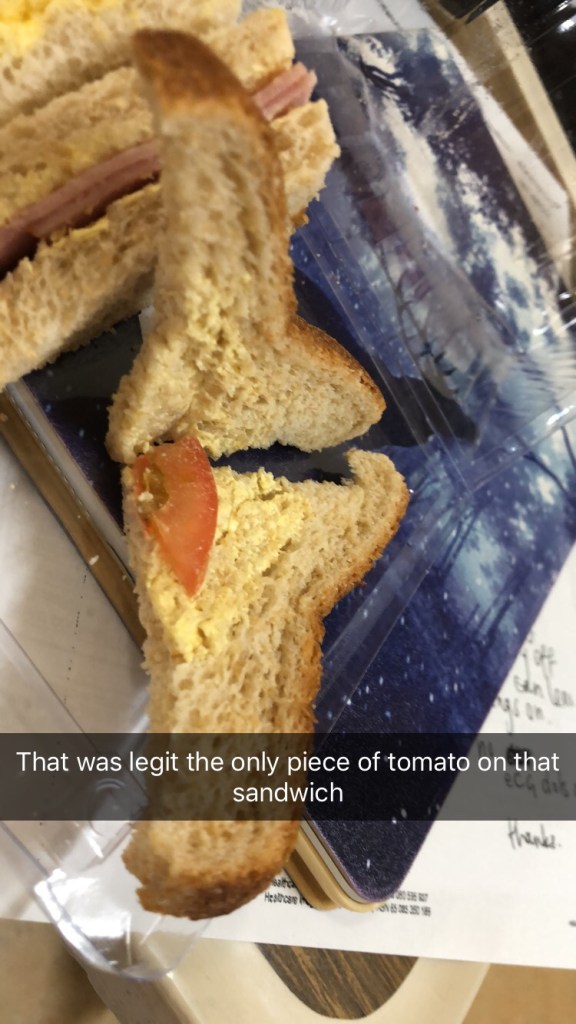
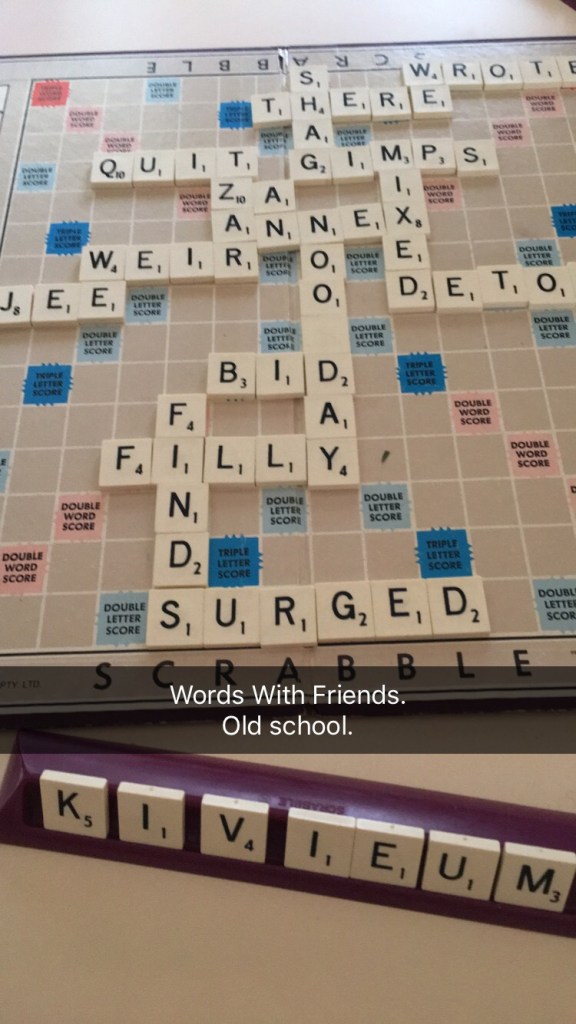
I’m proud to say that this was one of my first-ever Snapchats.

Snapchat has been the subject of much controversy in the past – mostly from people who have never used it. I know a lot of people have been vocal in their criticism of the ease with which teens could use it to send pictures of their naughty bits to one another. To be honest, they haven’t ever needed SnapChat to do that.  And, in a further moment of not-so-surprising honesty, I’ve never used Snapchat for that either. 

It’s like anything: you can use it sensibly, and be careful who you add to your contacts, or you can be an idiot and endanger any bit of credibility you ever had. Snapchat is definitely not alone in that regard. 

Contrary to all the negative press it has had, Snapchat is actually pretty cool. 

The process is simple:

  • Take a snap, choose who you want to send it to, and send it. 
  • If you want everyone to be able to see it, you add it to your “story”.
  • If you don’t, people will only see your snap if you actually send it to them individually. 
  • You can choose how long you want the photo or video to last. Once the time you set expires, it’s gone. 

It’s important to remember that people can take a screenshot, and people can be offended, so common sense and decency are still required. 

I have great fun using Snapchat for quick, easy contact with my family and friends.  It’s also a great way to quickly and easily share a moment in your day in ways that are hard to otherwise express. 

In that respect. It’s super duper effective. 

It’s actually great for introverts because we can communicate meaningfully without actually having to make, or answer, a phone call. I have found that if you send enough Snapchats, they know you’re okay and what you’re doing, and don’t actually try to call anywhere near as often. That may sound awful, but if you ask any introvert you know, they’ll tell you it’s a fact of life: talking on the phone for any length of time is hard, especially if you’re tired or unwell.

I also use it to share my comedic genius with the world. You’ve got to take your opportunities where you can get them, after all. 

My absolute favourite use of Snapchat, though, is when my family use it to send me baby spam. I’m one of those aunties who can never get enough pics of my babies so Snapchat offers a great way for them to send me pictures without all the cranky “we don’t want baby spam” whiners on Facebook and Instagram getting their noses out of joint. Snapchat makes it easy to be a lot more direct and “one on one” with your pictures. 

You don’t even have to take a photo every time. You can just use the instant message function if that’s all you want to do.  But then… why wouldn’t you take a photo every time when you’ve got those filters to play with? 

Seriously, the Snapchat  filters are fantastic. One minute I’m a washed out, permanently exhausted 50-something English teacher, and the next, I’m a cat… or an emu… or a pirate… or whatever the filters of the day offer. Sometimes, I have instant makeup and smoother, younger skin. Sometimes I can add a piercing or a tattoo. Finding out what the filters are each day is as much fun as using them. 

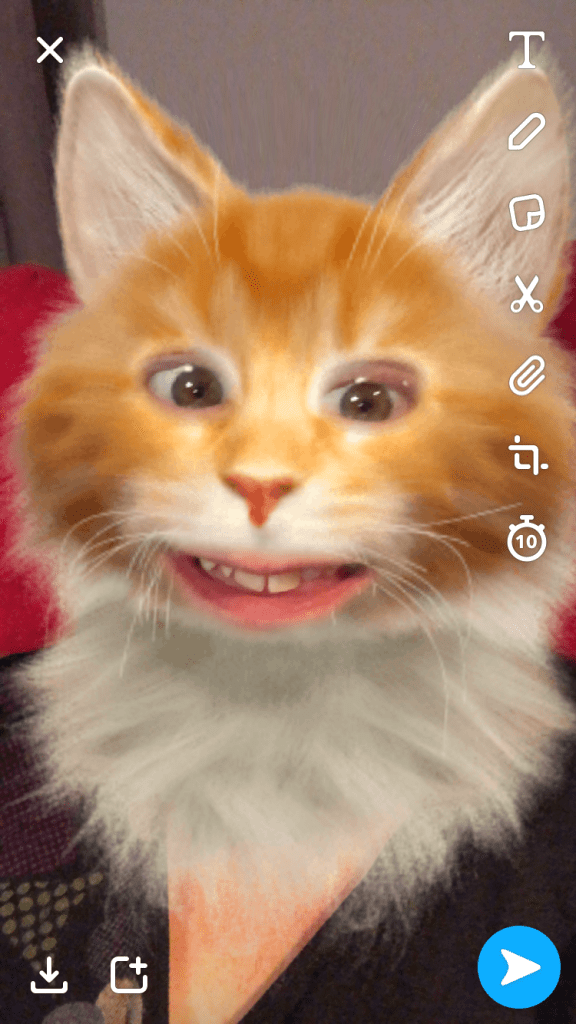
Its easy to edit a picture using the menu at the top right of whatever picture you take This allows you to:

  • add text, labels, and/or stickers
  • crop your photo
  • doodle or write on your picture
  • attach a URL or website to your image
  • cut out part of your picture to create a sticker

You can also easily save any picture you like to your phone’s camera roll, using the little down arrow icon at the bottom left of the image.


There isn’t really a lot that annoys me about Snapchat, but I probably should mention:

  • The silly, click-bait stuff they post on the “discover” page. Ugh.  Once I’ve looked at my friends’ stories, I swipe away from the page. 
  • On specific dates – Christmas, New Year, that kind of thing – the ’Snapchat Team’ send pictures or videos that you have to watch to get rid of them. Some of them are clever. Others… not so much. 
  • Occasionally, there will be a filter that makes me look uncannily like my brother. I’m really not so keen on those, but it is kind of fun freaking out his daughters and our sisters with the pictures. And no… I’m not going to show you what I mean! 

For me, the frustrations are very minor compared to the fun I have with the app. It’s a keeper. 

Why I Might Never Send Out Another Author Newsletter

They say having an email list is crucial for an author. It’s the one sure-fire way to reach your readers.

I am clearly the exception to that rule. 

Either I really suck at creating newsletters, or my subscribers signed up for the wrong list. 
It’s why I am very reluctant to  send out  newsletters now. 

When I send emails with other people’s books in them, my subscribers click through to those books. 
Do they click through to mine? Nope. 
And sadly, I get as many clicks to unsubscribe as I do on the links in my newsletter. 
It really is quite depressing. 

Yet I don’t do anything different than any of the dozens of authors whose newsletters I receive. Well, that part isn’t strictly true:

I don’t spam my books repeatedly.
I don’t email every week, let alone every day or two, like some do.
I don’t use high pressure sales pitches. 
I don’t beg, and I don’t whine. 
I don’t even include only my own content. I always share other books and bookish events that readers might be interested in. 

I have observed all those things happening in various different authors’ newsletters at different times, and have always tried to avoid doing anything I have found off-putting.

Honestly? I don’t know what I’m doing wrong, but I appear to be doing it consistently. 

I do suspect that maybe newsletter writing is not for me. I’ve given it a fair crack and it hasn’t been at all well received.

For now, I think I’ll stick to blogging. 

Current Status: Exhausted

Self Portrait: Exhausted. June 19, 2019.

I don’t write this to complain. I am, however, starting to feel like I need to account for my whereabouts. If this post sounds even remotely whiny, I apologise in advance.

The past few weeks have been brutal. 

A horrid throat infection a few weeks ago laid me low and set me at least ten days behind in my work schedule just before my students sat their mid-year exams. Trying to get those exams marked and into the Semester 1 reports by the deadline was always going to be a challenge, to say the least. 

That task, however, has been complicated by my being at court since last Friday, in the pursuit of justice and hoping for closure in a matter very close to my family and my heart. 

That, in turn, has limited the time available for grading exam papers and writing reports to the weekend and evenings. It also meant that every lesson for this week and next had to be fully prepared, resourced and assigned on the school system before I left work last Thursday afternoon. 

And thus, my waking hours have been fully consumed by matters of high priority that cannot be put off. I’m pulling successive 18 hour days with very little downtime. 

There has been no writing. There has been no reading. My friend taught me to knit on Saturday afternoon, and I completed four rows while I was with her. I haven’t had time to pick that up again yet, either. 

The only relief I have had is the audiobook I am listening to on the drive to and from court each day, and the few minutes I have taken over lunch or dinner to write the day’s blogpost if I am not using one written in advance.

I honestly don’t know how much longer I can keep this up, but I am going to have to try. 

I should finish the exams tonight, but the there is a stack of work and assignments that my students are turning in this week while I am away from school. I need to check, grade and return all of that as soon as I can so the kids get the feedback and help they need to keep on learning and improving.

I don’t know when the court case will finish. I don’t know when I will get all this work done or when I will be able to write again, or read for pleasure. 

Term ends at the end of next week and I am determined to take a well earned break then. Maybe I will sleep for the entire two weeks. 

And if you are one of those people who like to comment on “all those holidays” teachers get?
Don’t. 

What I Like… And What Frustrates Me… About Twitter

It seems to me that people either love Twitter or can’t stand it. I am definitely in the former category, for several reasons:

  • It’s direct. You follow someone? You see their tweets. You don’t follow someone? You live in blissful ignorance.  My feed is full of creative, positive people and exactly zero politicians. It’s a great way to filter reality. 

    Everyone who follows me can see my posts in real time, without any interference from the platform itself. Twitter sends every tweet into the world without trying to make a buck out of me to do it. That in itself is a refreshing change among social media platforms. 
  • Retweets are brilliant for extending your reach easily and painlessly.. With one click, someone else can share your post with all their followers, too. Not only does this take your content further, it can also result in new followers and interactions.
  • It’s brief.  Say what you want to say in 280 characters, preferably less. And that includes your hashtags. 
  • Hashtagging is easy.  Start typing a hashtag, and Twitter will actually suggest the most popular tags for you that start with those letters. It doesn’t get easier than that. 
  • Connecting with others who have the same interests is easy. Once again, hashtags ply a key role here. Searching for a tag you are interested in is a simple way to find people using that tag in their posts. I have found great people, interesting content, and some excellent books doing exactly that. 
  • I also like just scrolling through my feed and seeing what pops up. There is invariably something I want to respond to with a like or a bookish or bloggish post that I want to check out. I can spend as much or as little time as I have, put it down, and come back later. In that sense, it’s pretty cruisy. 
  • Lists. You can create lists of accounts you want to group together. I have lists for authors in different genres. I also have a list for my favourite accounts called “Don’t Miss a Tweet”.

    By going to a particular list in my profile, I can see only the tweets from the accounts in that list. It is a great way to cut through the voluminous white noise of the Twittersphere, and saves heaps of time when I am busy, because I see exactly what I want to and nothing else.

    Lists can be made public or kept private. While I keep my “Don’t Miss a Tweet” list to myself, I make my genre lists public so that if someone is looking for Fantasy Authors or Poets, they can find a ready-made collection in no time flat. I may not have every author of a particular genre in my list, but you may be sure that the ones on my lists are worth checking out.   

That all sounds pretty great, doesn’t it?

However, no social media platform is without its pitfalls. 

My dislikes include, in no particular order:

  • Trolls and fake accounts.  It’s easy for people to hide behind a social media account with a fake name and create mayhem. Whether it’s bullying or bullshit they are into, there’s not really a lot to stop them. 

    I overcome this by being very choosy about who I follow, and by making extensive use of the “unfollow” and “block” functions the minute my spidey senses start tingling. 
  • Direct messages.  Some people appreciate direct messages, but I am not one of them. It seems to me they are all either spamming a product or creepers trying to seduce me into giving them money or naughty photographs. 

    I overcome this by never looking at my inbox. 
  • Tweeting can be hot-and-miss. The life cycle of a tweet is short, and I f followers aren’t online when you tweet, they can miss your content. 

    I overcome this by recycling my content, using different tweets on non-consecutive days so it doesn’t get repetitive or boring. 
  • Clickbait. This is the term for anything exaggerated or sensationalised to make you click on a link to read the story. Ugh. 

    Once again, the blocking function has proven to be really effective in getting rid of these accounts from my feed. 

Overall, I find Twitter much more user-friendly than Facebook, but I doubt that I would if I hadn’t taken the time to learn how to keep my Twitfeed positive and focused, and free of politics, gossip and drama. 

Why a Heart is Better than a Thumbs Up

In the ever-evolving state of affairs that is the Facebook algorithm, there is one recent change that is actually quite easy to work with. Facebook now places more value on the other reactions than it does on the standard  “thumbs up” or “like”. 

I can understand why.
It takes just a little more effort, so it is easy to see why it might be interpreted as a more thoughtful and deliberate response to a post than simply hitting the default. 

It’s all part of their reported change of focus from content to engagement. It may be that this is a way to still be able to increase the reach of our posts, and boost our audience engagement at the same time. 

So, I’m trying to respond accordingly: 

  • I’m using the heart and surprised “wow” face more. I don’t know how much difference it makes, but for something so simple, it’s worth a try. 
  • I’m responding to the posts I make via my pages and groups with those “power responses” using my personal account in the interests of pushing my posts to gain more reach and engagement. 
  • I’m trying to respond with more comments, even if it’s just an emoji or a gif, in addition to using one of the response buttons. Obviously, I can’t do this for every post because I don’t want to spend my entire life on Facebook. I may have to be choosy, but there are posts out there that deserve a little extra love, so I’ll try to give it to them. 
  • I will still use the “thumbs up” to acknowledge posts. I don’t want to stop using it altogether, because then the others will become the default, and everything will undergo another adjustment. 


It’s all positive interaction and engagement, so it can’t hurt. 

Hopefully, it will be contagious. If people see more hearts and wow faces, and additional comments, they might start using them too! 

The Importance of PreOrders: An Author’s Perspective

Picture this scene: a baby is due soon.
The mother has spent months anticipating the birth, making sure everything is okay, getting the nursery ready, and making sure she’s booked into the birthing suite at the hospital of her choice at the right time. 

Wouldn’t it be a little…well, weird if she didn’t tell anyone at all it was happening? 
Wouldn’t it be far more likely that she’d be sharing snapshots of the baby’s room and first teddy bear? And her friends would probably be liking those pictures, commenting on the anticipated arrival, and buying gifts for the baby shower. 

Setting up a preorder for a new book is, for an author, akin to getting the nursery ready and inviting one’s friends to the baby shower. Every preorder sale is like a baby shower gift that shows love for the author and excitement for the new arrival. 

To some, the analogy might seem far-fetched. As an author, I can assure you that it’s really not. 

***

Preorders really can make a huge difference to a new book’s start of life. 

Once you’ve got the writing, editing, formatting and publication organised, you can give your book a boost by making it available for preorder and getting some advance sales. 

Without going into a whole lot of technical details, there are some really good reasons to do so:

  • It’s convenient. When someone preorders a book, it is delivered straight to them upon release. They don’t have to think about saving links, bookmarking sites, or following up later. 
  • It allows you to tap into the “I want it now” mentality that is so strong these days. Enabling people to order your book right away and satisfy their impatience is a clever marketing strategy. 
  • Having your book available on preorder enables you to build excitement and anticipation for your release. It’s one thing to be able to say “this is being released on Friday”, but another entirely to be able to say “Reserve your copy now! Be the first to get it as soon as it’s released! You won’t have to wait!” Remembering that tone is everything, it can’t hurt to have some excitement injected into your pre-release social media chatter. 
  • Those advance sales push your book further up the rankings, so that vendors show it to more people, enabling it to get even more sales. If you can achieve a spot in the “top new bestsellers” list for a day or even a week, that’s going to mean a lot more potential customers seeing your book without you having to go out and find them. If you’re lucky enough to win a “Number 1 New Release” ribbon on Amazon or Barnes & Noble, that gives you more marketing momentum and appeal.
  • Strong sales in the first week help to get your book noticed by other readers. It will show up in the “customers also bought” or “based on your browsing/purchase history” lists for more readers, and again, get new eyes on your book that you don’t have to go and find on your own. 

In my experience, making my books available for preorder has definitely been a good strategy.

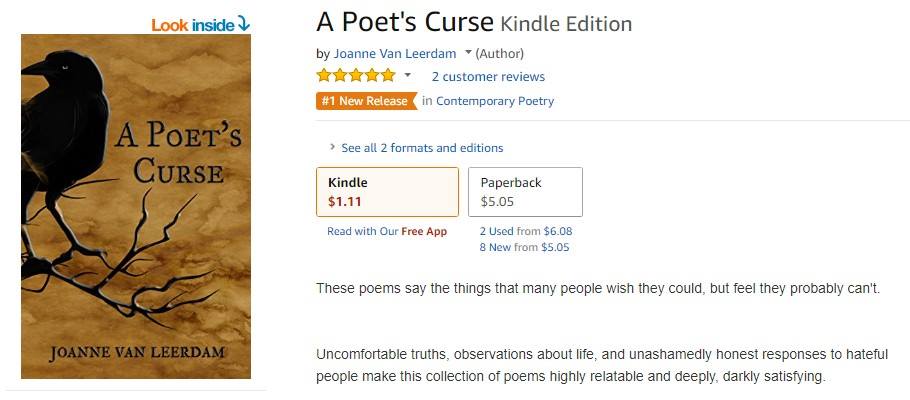
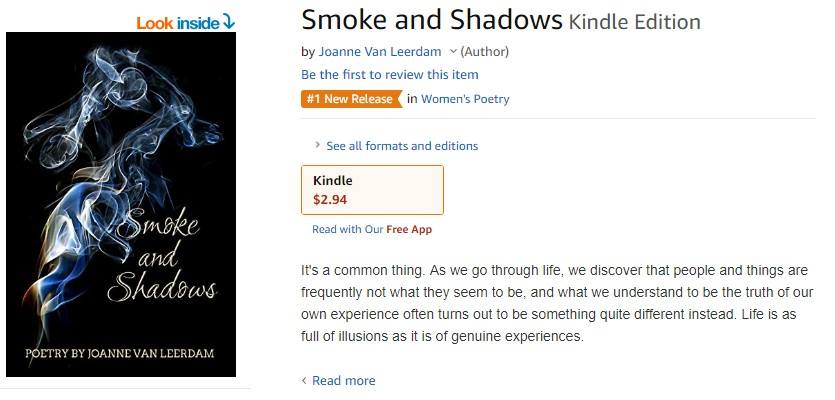
I’ve been lucky enough to gain the “#1 New Release” ribbon for poetry twice, and obviously I’d love to do that with ‘A Rose By Any Other Name’ when it releases on Friday. Although it is in the much more competitive categories of Fantasy and Fairy Tales, which is a much greater challenge, but it’s not impossible. It’s also in the category of ‘Mashup Fiction’ so it has a good chance there. 

Whether my book makes a big splash or simply becomes a drop in the ocean, I will have given it my best shot. And that knowledge and confidence is something that you can’t put a price on. 

***

If you’d like to join in my “baby shower”, you can preorder ‘A Rose By Any Other Name’ at
Amazon or your other preferred digital store.

What I Love… and What I Don’t… about Facebook.

There’s no doubt about it: Facebook is one of the most popular social media platforms on the planet.

Like anything, it can be fantastic if it’s used the right way, and it can downright dangerous if used for sinister purposes. 

There are some aspects of Facebook I really enjoy:

  • Being able to connect with my family and friends all over the world in real time. What a blessing! When I’m homesick for someone I love – there they are! When I’m lonely – my friends are right there! I can see their pictures and videos, and respond to them right away. I can chat with them, talk with them, and send them stupid memes to cheer them up when they are down or unwell. 

  • Being able to connect with like-minded people all over the world. As part of the Indie author community, I have received so much help, encouragement, knowledge, advice and good direction from people in Facebook groups.

    It has also been a very great pleasure for me to be able to pass some of that knowledge and advice on to others, and to encourage them in their journeys.

    Similarly, I’ve made some wonderful lifelong friends in a particular grammar-nerd group, and have met two of them on one of my trips overseas.  I can’t imagine not knowing them or being able to talk with them.

  • Being able to find things I’m interested in via the pages people create. I’ve discovered some wonderful blogs to follow, some great information on specific topics, and I can’t tell you how many excellent Indie books I’ve found to read. That number has to be in the hundreds. 

  • Being able to permanently hide things from my timeline that I don’t want to see. This is generally anything racist, hateful, or politically zealous. 

  • Being able to permanently hide things from my timeline that I don’t want to see. This is generally anything racist, hateful, or politically zealous. 
  • Memes, jokes, and videos that make me laugh. Some of that stuff is pure gold.  
  • The block function. It’s really good. 

Of course, with the good comes the not-so-good. 

There are things I really hate about Facebook. 

  • The fact that they don’t show me everything my friends post. If my friends think it’s worth posting, I probably want to see it. But no… Facebook gets all choosy about showing me their posts, and when showing mine to them.

    Of course, they’ll tell you that boosting your post will get it shown to your friends. For $13, your post can reach… er, how about no? I’m not giving them money to show my posts to my own friends. They should do that for nothing. 

  • That dratted algorithm. It seems any moron can make a stupid post that will go viral because people “like” and  respond to it, but you can’t post a link for a product, or a blog post, or an event, or a website outside of Facebook without them suppressing it so that maybe 3% of the people who follow you or your page will actually see it.

    And every time you get clever about how to communicate your product/event/website to your audience, they change the algorithm so you are actually  no further ahead, yet again. 

    I know: it’s a business. But if they showed my stuff to the people I know, I’d probably be more interested in giving them a bit of cash to show it to folks I don’t know. 

  • The perceived freedom some people feel they have to deride, belittle, criticise, mock and bully others.  In a not-so-surprising coincidence, this correlates very closely with one of the things I hate most about people in general.  Just because they’re hiding behind a profile picture or an avatar, they think they can say what they want to and have no consequences. 

    Not in my world, Julie.
    Block, block, block.
    Fixed. 

The verdict: As much as I hate it, I love it.
I’m definitely keeping it.

But if I ever meet that algorithm in person… it may just walk away with a black eye.