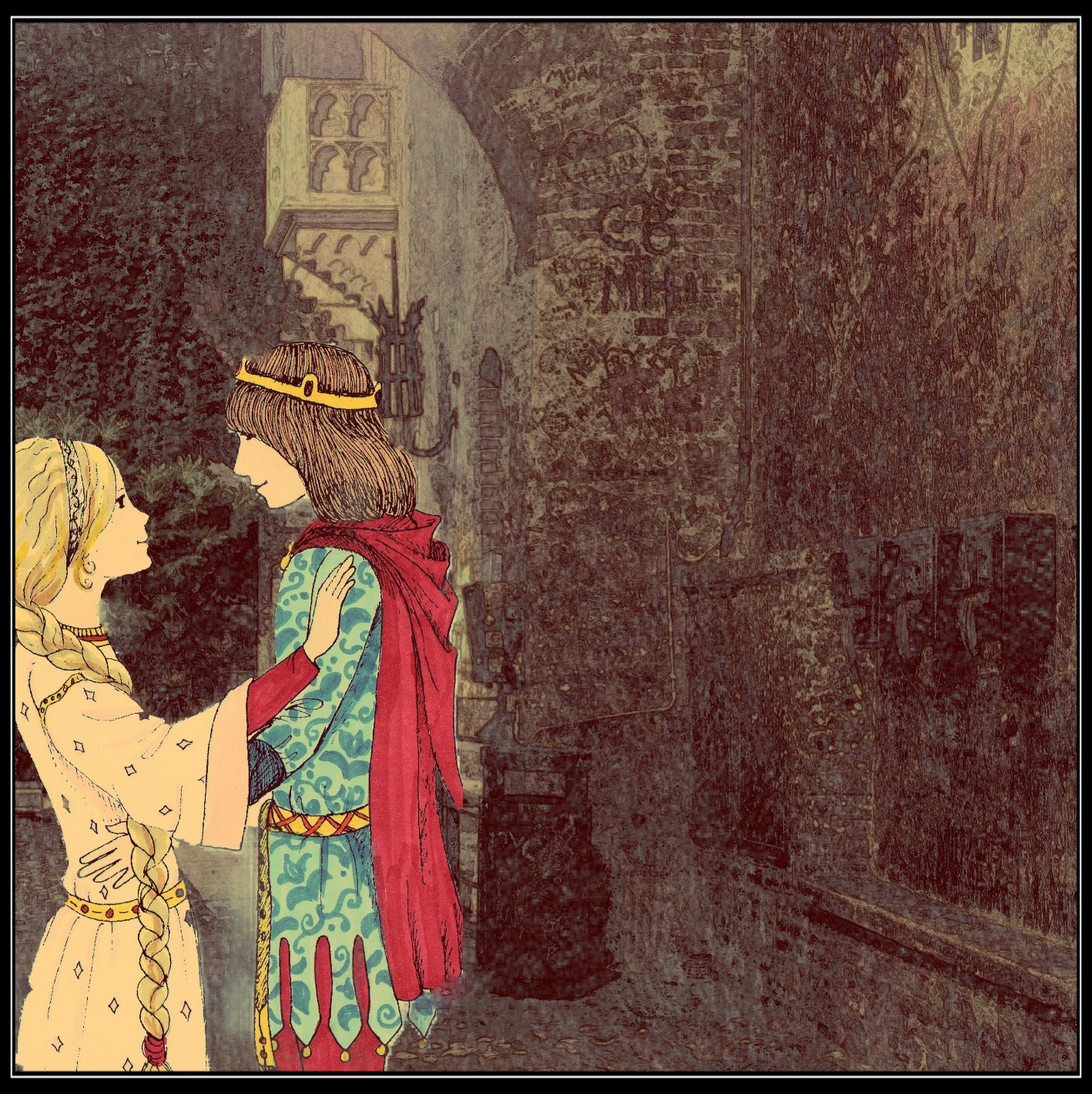
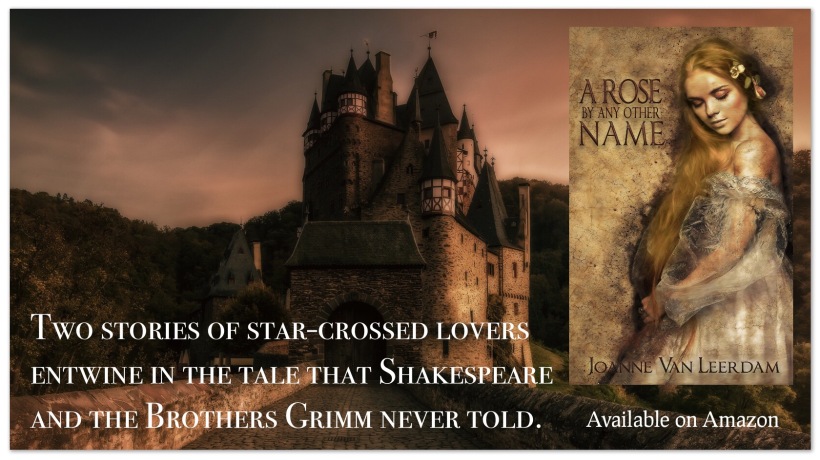
The reference to Shakespeare’s ‘Romeo and Juliet’ in the title of ‘A Rose By Any Other Name’ is blatantly obvious.
The irony is that ‘Romeo and Juliet’ is probably my least favourite play from among Shakespeare’s works. As I often explain to my students who think it’s romantic and all about love, it’s really not. It’s a tragedy that demonstrates what happens when people do stupid things on impulse and don’t stop to think about the consequences of their actions.
They’re teenagers. They met on Sunday, and by Thursday, they’re dead.
And, as Shakespeare points out in the epilogue, they end up that way because their families both prioritise their stupid feud over the happiness and the future of their children. How much more like a badly plotted teenage soap opera could it be?
It’s more of an anti-Romance, if you ask me. They’re not in love, they’re infatuated. Romeo really is quite an idiot, and as for fickle… how quickly did he forget his passion for Rosaline the moment he met Juliet? If you ask me, Rosaline dodged a bullet – or a dagger, or a vial of poison, there.
To be fair, the fault isn’t Shakespeare’s. He based his play on an old story that was very popular back in the day, which was a brilliant marketing move. The other factor that made his play such a hit was the beauty of the language with which it is written. There’s nothing at all wrong with the writing: it’s magnificent. Nothing can convince me otherwise. If anyone could give a story about two silly teenagers from equally silly families another 600 years plus in terms of longevity, he was the man for the job.
So, is it odd that I’ve used ‘Romeo and Juliet’ as one of the starting points of my story? Not really, because I wanted my story to be something of an anti-Romance, too.
‘A Rose By Any Other Name’ draws on ‘Romeo and Juliet’, and on the Brothers Grimm fairy tale of ‘Rapunzel’ as starting points, then twists and tangles them together to create a mashup of the two stories with a very different ending. Romeo is still an idiot, it still ends in tragedy… but it’s a completely new story. It’s medieval fantasy, laced with faint traces of my subversive sense of humour.
I like to think of it as the story that Shakespeare and the Brothers Grimm never told. But I bet if they’d thought of it, they would have.
I am a person who takes others at face value. I don’t immediately classify someone as pretty or ugly, gay or straight, progressive or conservative (unless, either way, they are hateful or prejudiced – then the deal is off) , black or white or some other colour, blonde or brunette, or anything else. I don’t care if they’re plain or fancy, nor do I care if they’re pretty or not. I try to take each person as they are and let their integrity speak louder than their features. I like to get to know them before I make any decisions about them.
When it comes to fonts, however, i am nowhere near as open-minded. Don’t get me wrong – there are plenty of fonts I like, and many others that I will view with an open mind depending on context and purpose. But there ARE two or three fonts I really hate. I refuse to use them. I have handed back an assignment or two, asking for it to be reprinted in a more acceptable typeface. It’s true: I am Fontist.
I wasn’t raised that way. We didn’t really need to think about fonts back then. When I was growing up, it seemed as thought books were printed in two, maybe three different standard fonts. From memory, there was something like Times New Roman, a basic Sans Serif, and possibly another standard typewriter-style serif font. There was never a question of what typeface to submit our work in, because computers weren’t a thing and our school work was all handwritten. When I started university, assignments and essays had to be typed and double-spaced, so I used my parents’ typewriter. Of course, it only got to the typing stage when one or two hand-written drafts had been painstakingly written, proofread, edited, and revised.
Don’t get me wrong: I’m glad those days are over. I appreciate the ease of writing using my laptop as much as anyone else, and I’m happy for my students to do some – but not all – of their work on their devices. My underlying Fontism rears its ugly head, though, when someone hands in an assignment or broadcasts a presentation on the screen that screams “ridiculous font” louder than anything the student is trying to communicate. The same thing happens in meetings and seminars where the important information is obscured by the poor choice of font on the screen or handout.
You might think I’m overreacting. But consider this: I might read fifty student assignments in less than a week, or sit through twenty five student presentations in two or three days. When their font suggests I shouldn’t be taking their work seriously, that’s a complication neither they nor I need.
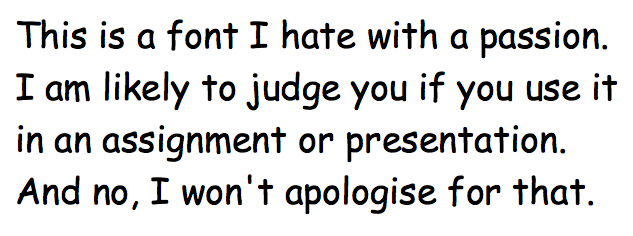
Right at the top of my hate list is Comic Sans. It looks childish, and gets increasingly ridiculous as the size increases, to the point where it is almost impossible for me to take anything printed in that font seriously. It is a font that should never be used for school work of any description by anyone older than six, nor should it be used for slide shows and presentations. Yes, it is “nice and clear for people to read”, but so are about 3000 other fonts one could choose. If your audience is not entirely in the First Grade, choose something else.
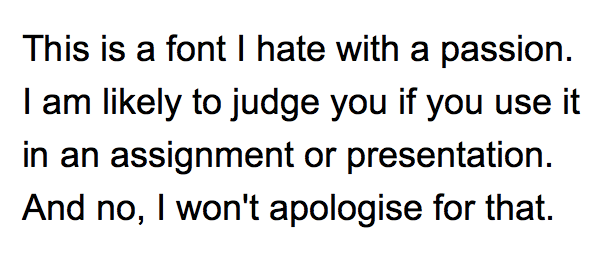
Another font I hate is Arial. Yes, it is also nice and clear for people to read. It is also entirely bland and unimaginative. Arial is the font equivalent of still having that original iPhone Marimba ring tone from 2008 on your new iPhoneX when you have 2500 different songs on your playlists. It is the font for lazy people who don’t care how their work looks. It doesn’t take much effort to switch so something equally clear but which looks a lot more polished and professional. In a word: boring.
The other fonts I really dislike fall into two groups: anything over-decorative and wrongly sized formatting.
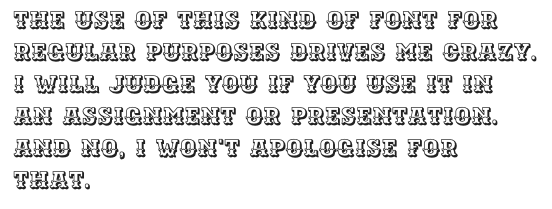
Over decorative fonts have their place, but trying to read a block of text printed in anything full of swirls and flourishes or trippy lines and shadows will make a teacher’s eyes bleed in less than three minutes. Decorative fonts can work really well for titles, or for a special capital letter or character to start a page or chapter, but they fail miserably for anything that needs to communicate information or arguments clearly and effectively.
In a similar vein, text printed too small or too large is equally frustrating. If it’s too small and condensed, it’s hard to read and… you guessed it, bleeding eyeballs. At the other end of the equation, students may think they can fool me into believing their 337words meets the 500 word minimum word count if their work is formatted in size 15 Helvetica, but my teacher brain knows better. My teacher brain has been doing this a lot longer than they have.
So, I guess this is me coming out of the classroom cupboard and acknowledging the ugliness of the deep-seated prejudice that lies deep within me. It is equally as rampant and undeniable as the grammar nerdism that I make no attempt to hide.
Call me fussy. Call me Fontist. I’m okay with that. But don’t call me to complain if I’ve asked your teen cherub to reprint an assignment so that I can read it without tears. Trust me – it’s better that way, and I’ve tried to be nice about it. Well, I’ve probably been nice..
Maybe.
Unless they are a repeat offender. In that case, there are no guarantees.
I have achieved a 118 day blogging streak. How’s that for a consistent effort?
I just wanted to say thank you for the encouragement to everyone who has motivated me by reading, responding, liking or commenting on my blog posts.
They seem like such small things to do, but they really are significant in the life of a blogger.
They help me know I’m not just typing into a void. They help me know I’m not alone in this big old bloggerverse. And it’s fair to say that they remind you of the same things.
Thank you for sharing the ride with me so far.
Stay tuned, folks. For my next trick, I plan to see how far I can make the streak last!
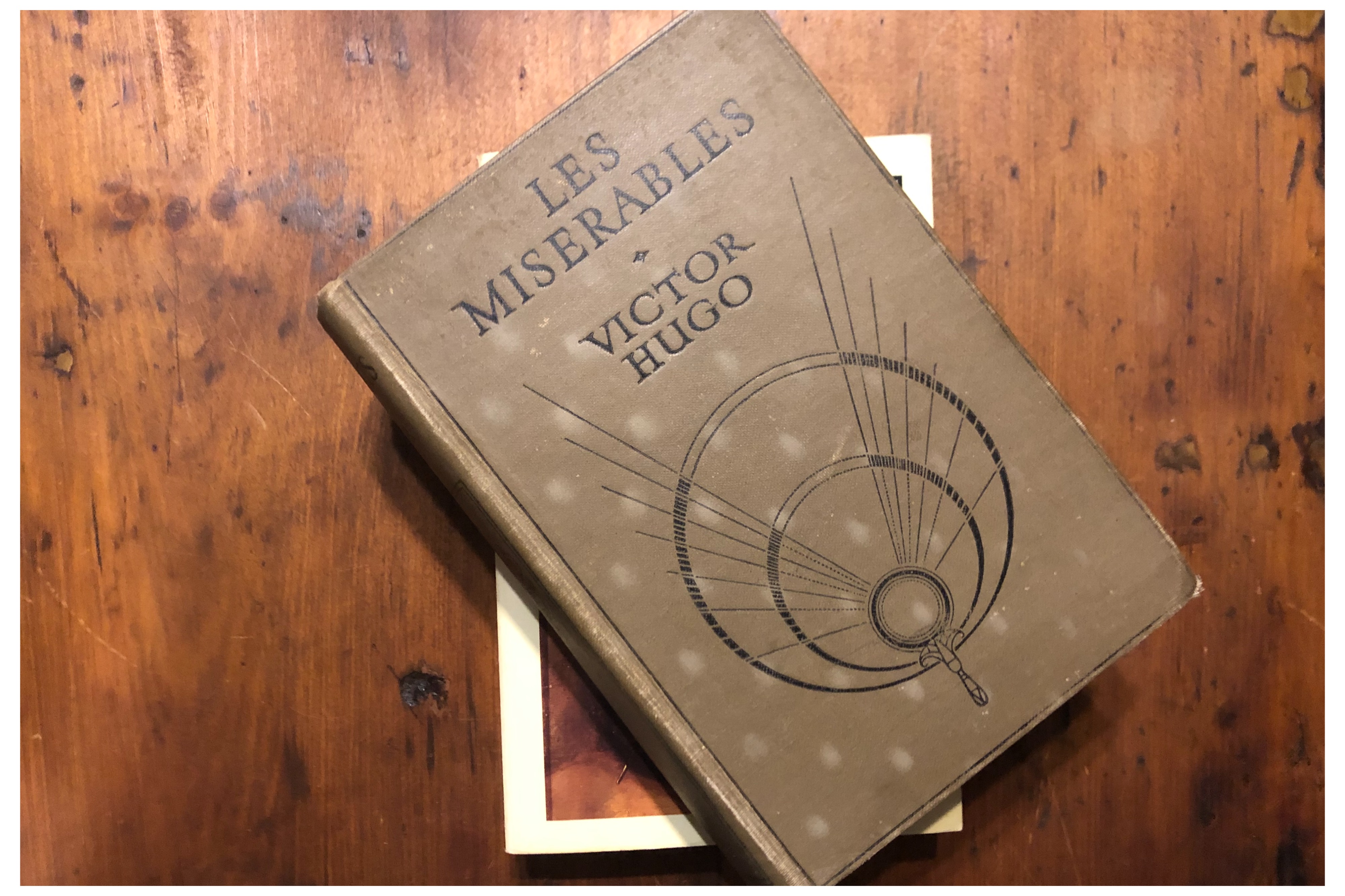
Set in France during the first decades of the 19th century, this is a story of the struggles of the lower classes — the miserable, the dispossessed, and the dissatisfied.
While many people in the 21st century know the story because of the highly popular and quite magnificent musical theatre show, most have never read the book. It is a large novel: epic in its scope, powerful in its storytelling and heartbreaking in its story and drama.
Many of the key events of the novel were based on events and circumstances that Hugo witnessed personally, adding a depth of detail and authenticity that immerses the reader in the settings and makes them feel as they are right there, watching the events and listening to the characters’ conversations.
Admittedly, there are some passages that are moral reflections rather than narrative, but they do add depth of understanding to the social issues and conflicts experienced by the French people of the time, and cause the reader to reflect on the responsibility of those with wealth and power to ensure that those under their rule are able to live without despair. Given that it is not possible to separate a work of literature from the society and environment in which it was written, Hugo’s thought-provoking digressions remain relevant to the story overall.
One can simply watch the musical or a film adaptation, but they will not deliver the full impact of the story as it is told in the book. It’s a magnificent, wide-reaching story with themes of social justice, equality and personal redemption that are still really powerful and resonate with readers today.
When this book was published, Victorian audiences didn’t know what to make of it. It wasn’t the light, fluffy romance and romp that they were accustomed to. Instead, it was dark, violent, and stormy, and there was no happy ending for most of the characters.
‘Wuthering Heights’ is about love, but it’s not romantic. It’s about dysfunction, selfishness, misunderstanding, bullying and manipulation. Much like Heathcliff and the Yorkshire moors on which the novel is set, it’s a bit dismal and morose most of the time, but it has power and substance that are fascinating and somewhat spellbinding.
I love the power of the writing and the tempest that inhabits the characters and their relationships. I am fascinated by the cleverness of the intrigue and mystery woven into the narrative. I enjoy the fact that the narrators, Nellie Dean and Mr Lockwood, tell the story as though they are objective onlookers, but when you delve into the story, you can see that neither of them is innocent or objective as the story develops. All the characters are flawed and selfish and broken in one way or another, and I remain unconvinced that we’re meant to actually like any of them. It really is a fascinating study of human psychology as much as it is a compelling work of fiction.
Even so, the story works because it is expertly written. The storytelling and the imagery are profound and beautifully constructed. The story appeals to our human nature, and to those voyeuristic tendencies that make people watch on with interest as things go wrong, take satisfaction in the misery of others, and slow down to get a better look at car accidents or natural disasters.
I have read ‘Withering Heights’ more times than I can remember, and I know I will read it again. It may have been published in 1847, but it’s a story that, for me at least, will never get old.
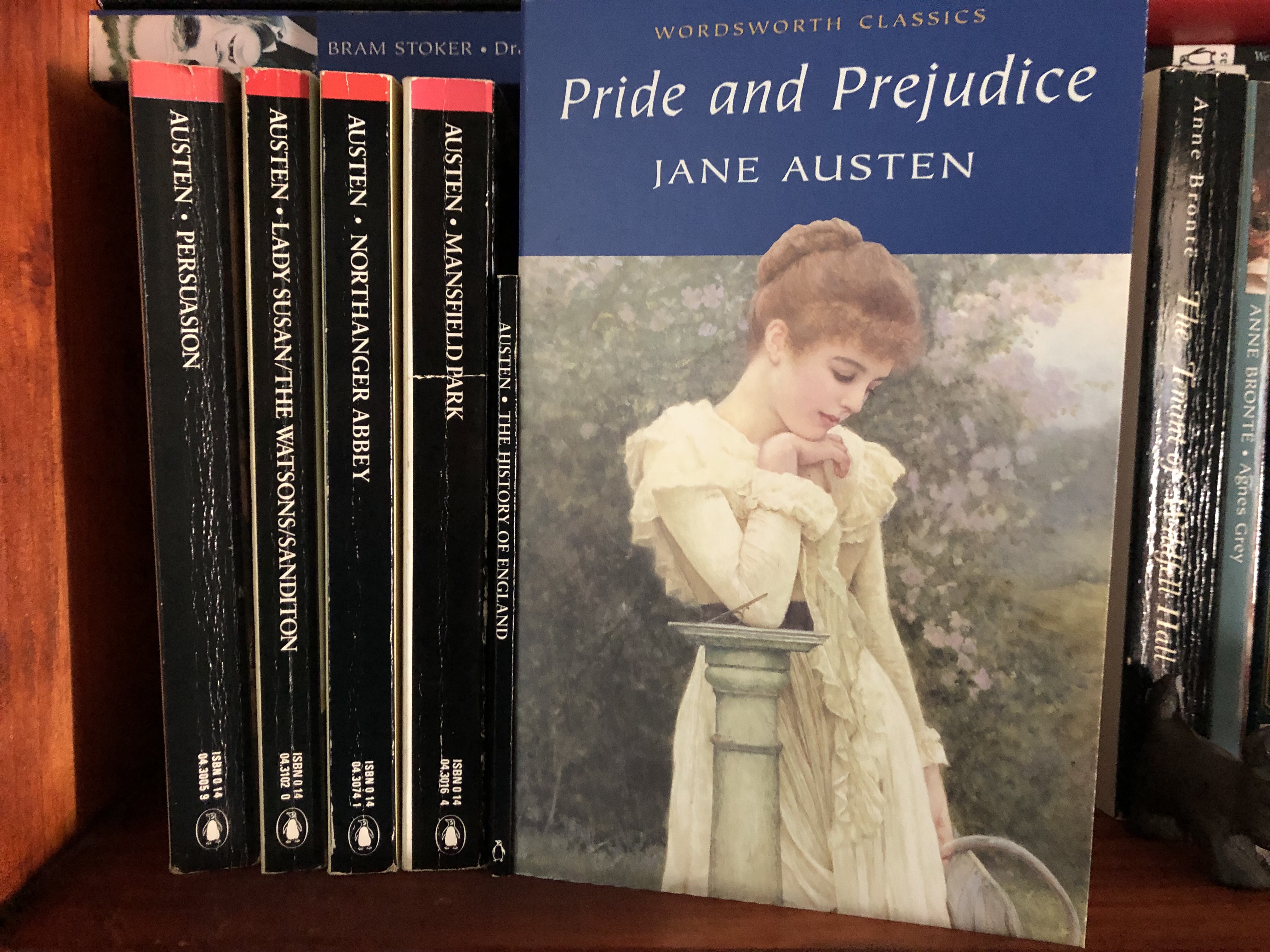
Many people assume that this is a book all about love and courtship. That comes into it, of course, but really only the sense that Jane Austen is blowing an enormous raspberry to the way society did those things.
‘Pride and Prejudice’ is full of delicious snark and subversive humour, parody and caricature, that make its observations far more rapier than romantic.
Of course, Mr Darcy is smolderingly handsome and, as an introvert, I totally get that he was regretting being dragged along to that party long before he even got there, and by the time he was offending all the locals, was busy trying to think of ways to leave without anyone noticing. Further evidence of that is found in the fact that he falls for the one brainy chick who is happy in her own company and reading a book without needing someone affirming her delicate sense of self every three minutes.
Elizabeth is smart and sassy enough to stand up for herself, and to not settle for the first nincompoop who tried to marry her, nor does she agree to marry Darcy just because he’s loaded. No, she is a woman of substance.
Those things are enough to make us love them both more than the rest of the characters, most of whom are either quite socially acceptably bland or rather horrid.
If you’re not sure where to find the sarcasm, it all starts with the very first line. Let’s be honest: what rich man, living the dream and enjoying his wealth, is desperate to find a wife to keep him at home and spend his money for him?
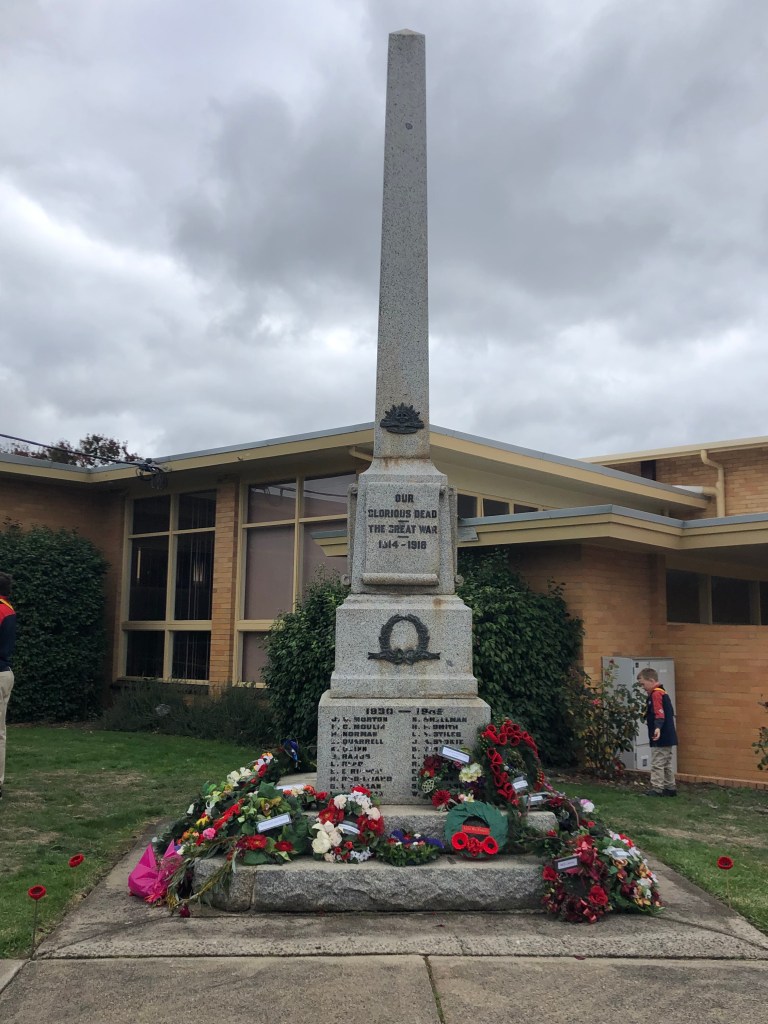
As my post about my local ANZAC Day ceremony generated a number of questions from around the world, especially via my social media posts, I thought I would follow it up with an explanation of the history and traditions of ANZAC Day.
This article from the Australian War Memorial explains everything very clearly, so I hope you enjoy it and learn a little more about your Australian friends through it.
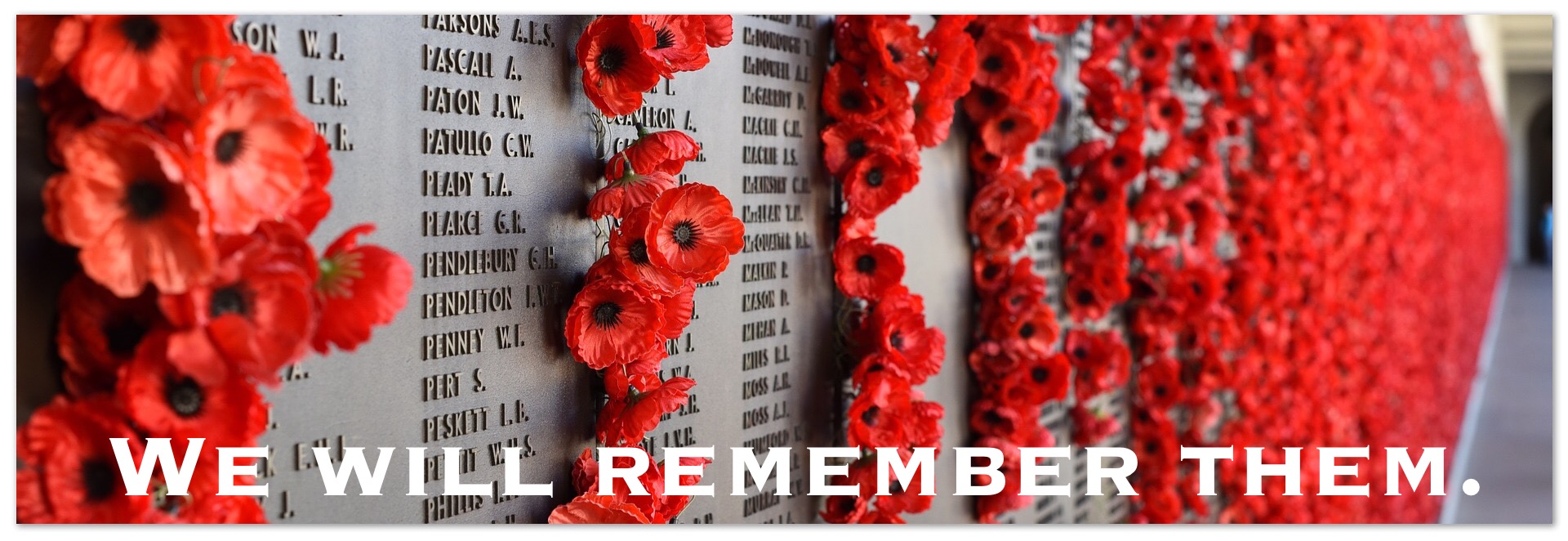
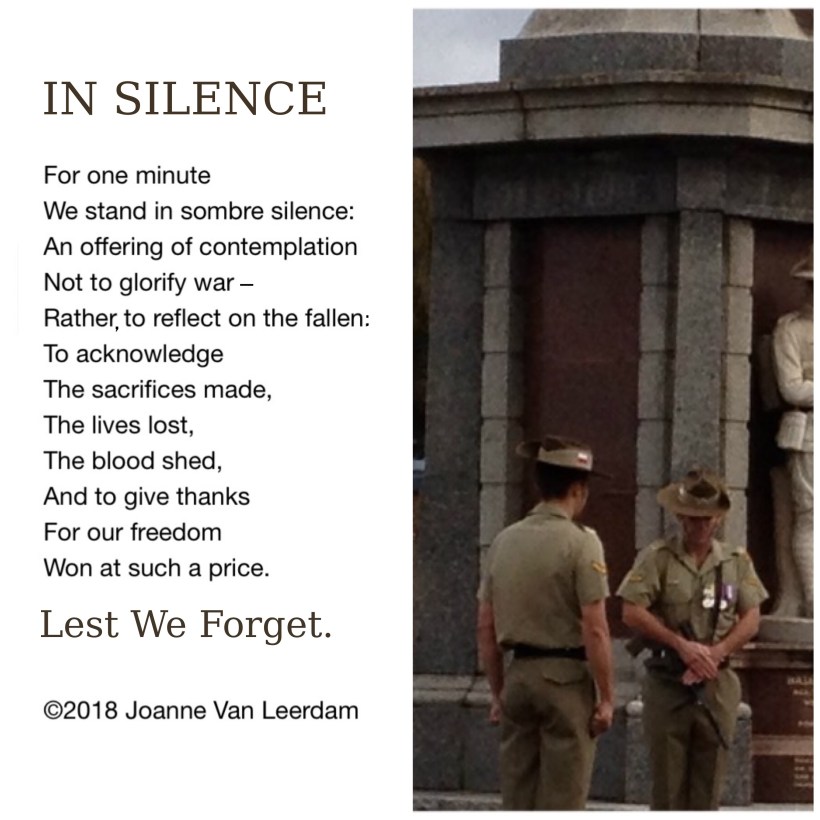
101 years after the end of World War I, people all over Australia and New Zealand gathered today in remembrance of our soldiers, the nurses and doctors who supported them, and all those who served to preserve our freedom.
At our local ANZAC Day ceremony, I witnessed some lovely moments.
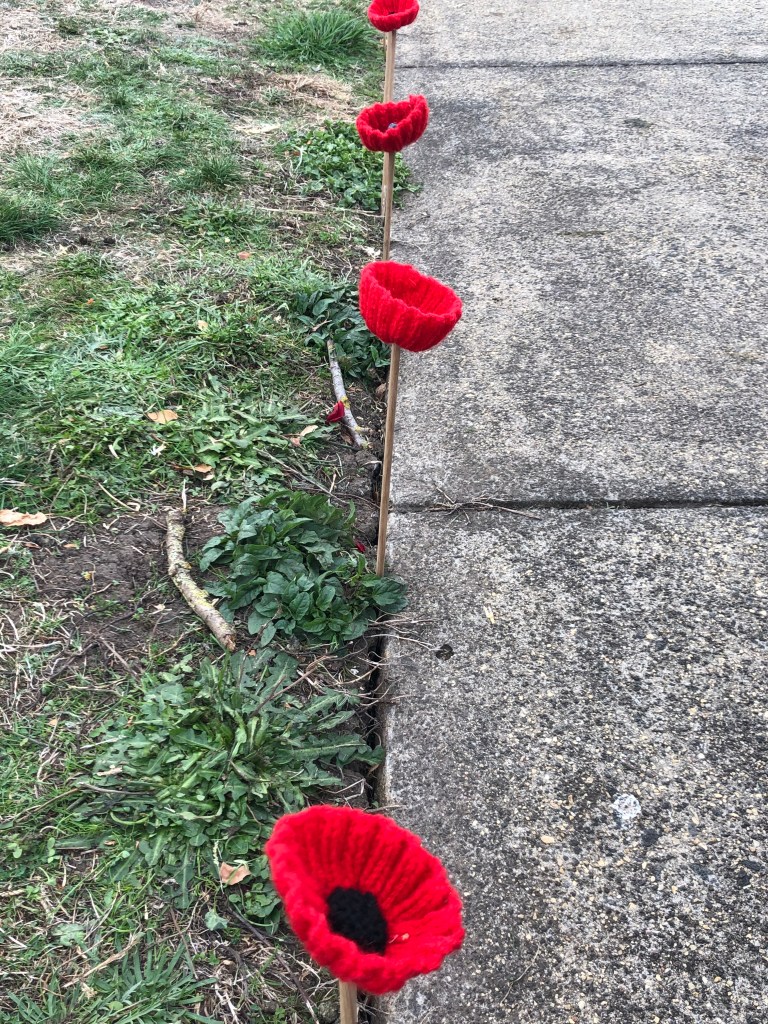
Members of the CWA had knitted poppies and used them to line the path to the cenotaph. They looked beautiful, but also served as a poignant reminder of those who had given their lives during the war.
Local men who had served stood proudly, wearing their medals. There are fewer of them each year, but their number was supported by the children and grandchildren of those who have passed, wearing their forebears’ medals with pride and reverence.
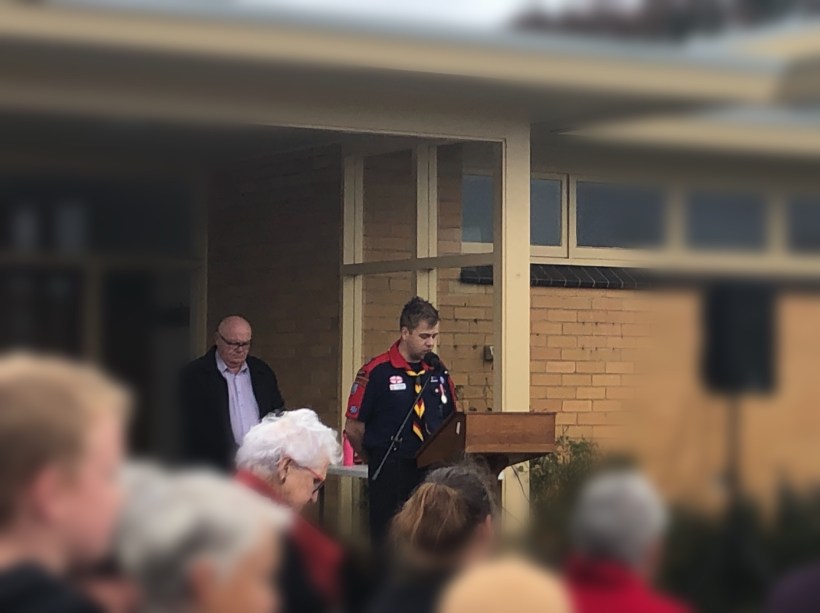
One of my own former students gave a beautiful heartfelt requiem for the fallen. He spoke so well, and really knew his history. He made me really proud.
An elderly gentleman standing near me bent down, took his restless young grandsons in his arms and explained to them why they needed to be quiet and pay respect. He then pinned his own poppy on one boy’s shirt. The smile on that child’s face as he stood quietly beside his grandfather for the rest of the ceremony was a wonderful thing to see.
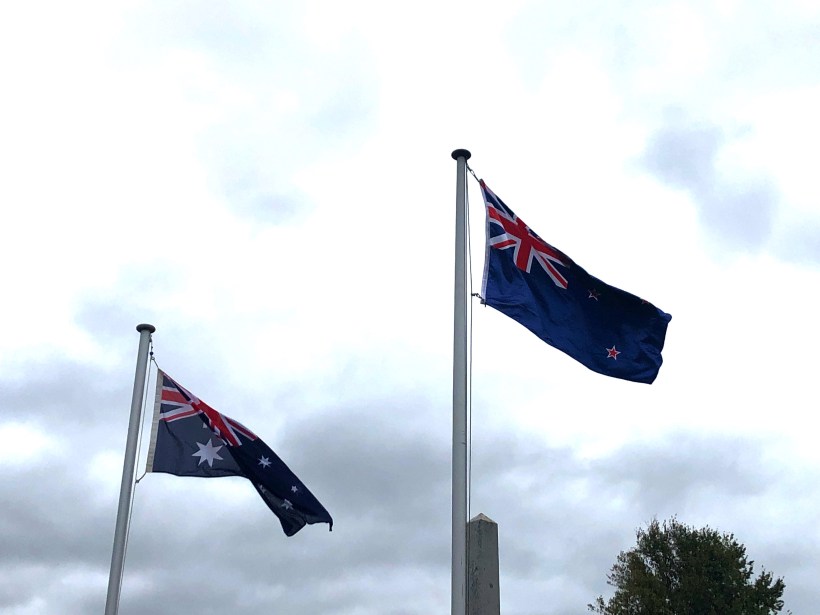
Several young people of my town raised the flags of Australia and New Zealand to half mast and stood with their heads bowed during the Last Post and the minute of silence before raising the flags to full height and saluting them.
Over thirty local groups, organisations and businesses laid memorial wreaths at the base of the cenotaph. Young members of the local Scout group carried and laid wreaths for those who were too elderly or frail to do so, keeping pace with the older folk as they walked to and from the cenotaph.
A teenaged member of my theatre company sang the national anthems of both countries with reverence and pride. Everyone in attendance stood and sang along with pride. Not everyone knew the New Zealand anthem, but plenty of folk did.
After the ceremony, the local Scouts carried around plates of sandwiches and refreshments for the townsfolk who had congregated. Every single one of them said “Excuse me” before offering us something to eat. Every single one of them smiled and spoke respectfully.
I have no doubt that similar things happened in every locality across Australia at 11am today to commemorate all those who served to defend our country and preserve our freedom, because that is what Australians do on April 25th.
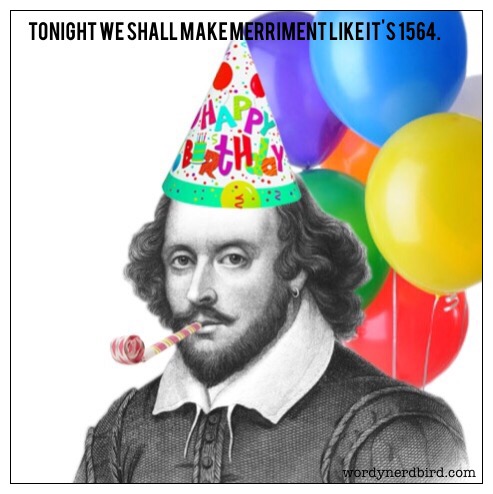
Every year on April 23rd, my family celebrates Shakespeare’s birthday with cake. I always do some reading from a play or sonnet, but my husband isn’t so fond of that as he is of the cake, so it’s usually either a solitary activity or one I share with my dog. It’s a well-established fact that Abbey the Labby loves the Bard… and cake.
This year, though, my homage will take the form of several hours of rehearsal for a different comedy – Monty Python’s Spamalot – before I am able to indulge in birthday cake. It does seem fitting that the show is a little bawdy, somewhat irreverent, and absolutely hilarious.
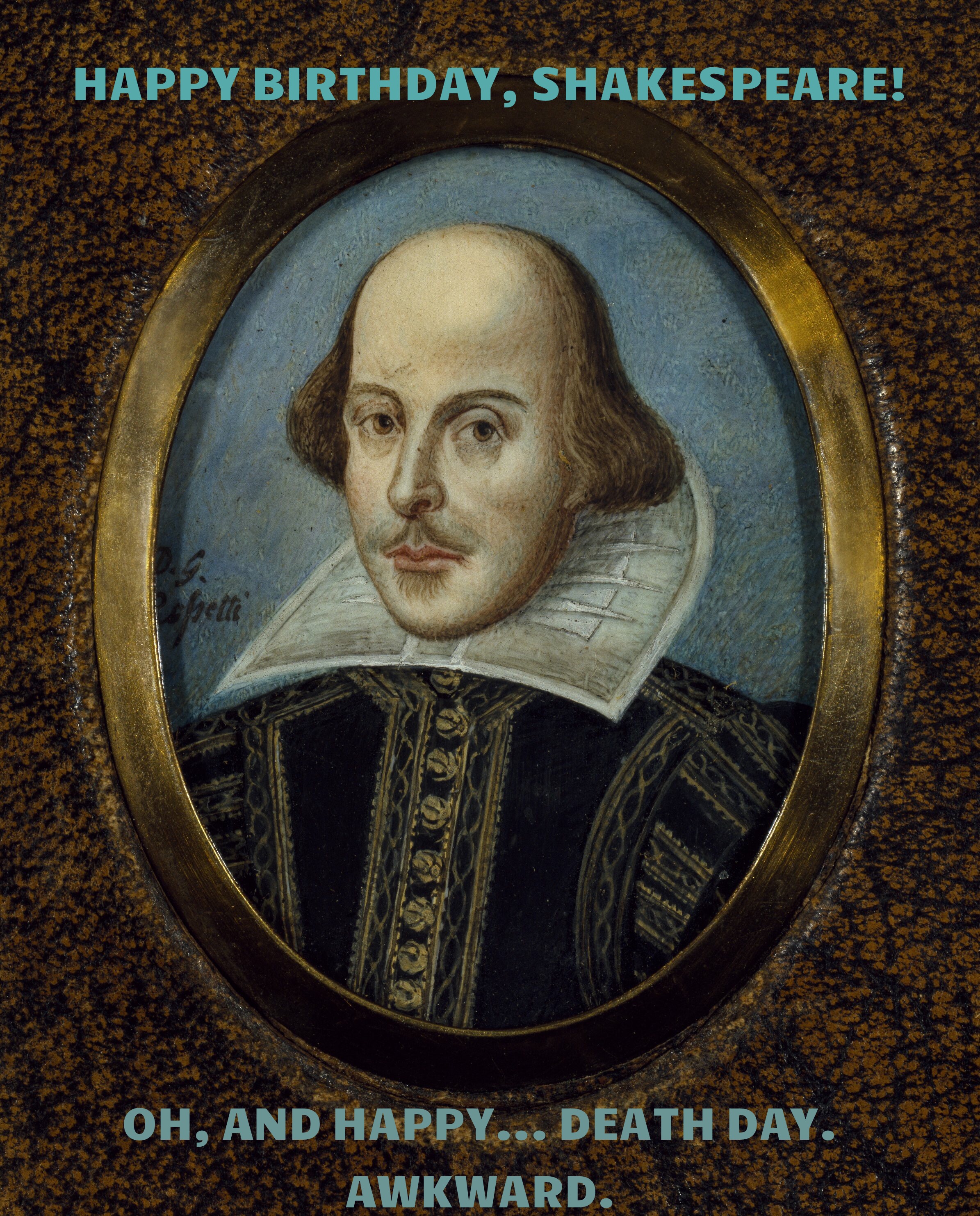
While the precise date of Shakespeare’s birth was not recorded, the date of his baptism was registered as April 26th, 1564. Because it was traditional for babies to be christened three days after they were born, it is generally accepted that William Shakespeare was born on April 23rd.
In an ironic twist, Shakespeare died on the same date in 1616. Some people think that is awkward, but I think it’s a pretty cool achievement. I’m not sure how common it is for people to die on their birthday, but one of my grandfathers did, so it’s a feat that has always been a point of interest for me.
So, here’s to The Bard, his works, and his legacy.
Just imagine a world Where more people read poetry Instead of giving breath To things that divide and cause fear.
Imagine a world Where more people picked up a pen Than a gun or a sword Or even a lawyer.
Imagine a world Where poets were the dealers That troubled souls turned to for a hit; Where people self-medicated with poetry Rather than drugs or alcohol To help them deal With their demons; Where addiction brought life and hope, Mindfulness and restoration To the broken, The hurting, The needy.
Imagine a world Where everyone knew and understood That they are not alone, That someone understands, That they are enough.


 WordyNerdBird