It is a constant source of amusement to me that barely a day goes by without someone reading a post I wrote over two years ago. As hard as I try to write posts that are interesting and engaging, and have some relevance to either readers or other authors the one post that shows up in my blog stats almost every day is ‘Top Four Shakespeare Podcasts’, posted in June 2017.
While I have had some posts that got a great response at the time, othing else I’ve published on this blog has had that kind of perpetual popularity,
The funny thing is, it’s only got three likes, but more people than that visit that post every day. Perhaps WordPress needs to make the “like” button bigger and brighter so that it’s easier to see and click.
Given that it’s the most successful blog post I’ve ever written, I thought it was worth posting again for all the followers I’ve gained since then. Enjoy.
I love podcasts, and I love Shakespeare. In these four podcasts, you’ll find the best of those two worlds combined.
#1: No Holds Bard. An informative and entertaining podcast by Dan Beaulieu and Kevin Condardo, directors of the Seven Stages Shakespeare Company in Portsmouth, New Hampshire. They discuss the plays, words that people in the 21st century might not know, different interpretations, and various performances of Shakespeare’s plays. They even have a segment where they’ll answer homework questions sent in by students.
#2: Folger Shakespeare Library: Shakespeare Unlimited. A podcast that explores the associations between Shakespeare’s writing and the world today through the words we use, ideas we discuss, and performance of the works of Shakespeare and others.
Pinterest is great for inspiration, curating themed collections and procrastinating by getting distracted with eye candy.
It is a platform on which the users create collections of images called boards. These are usually themed, although how organised and themed they are is entirely up to each individual user.
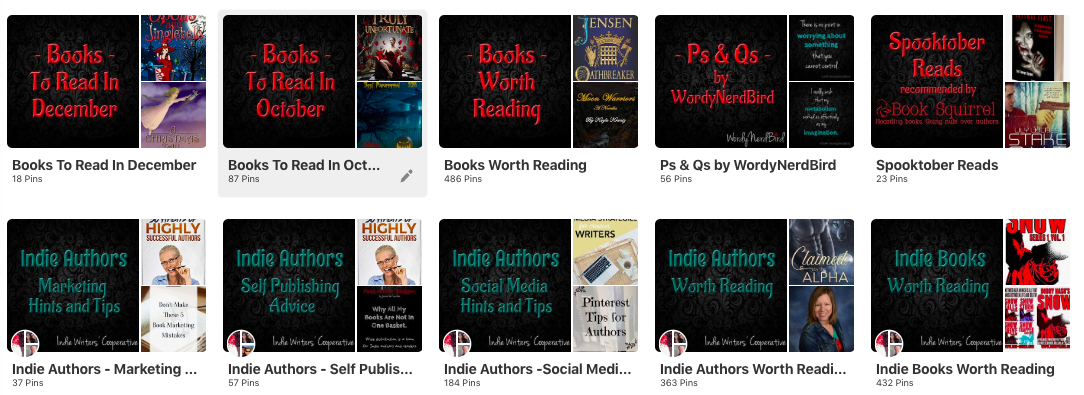
I love being able to put together a collection of images on any theme I wish. The evidence of this is the fact that I have a bazillion Pinterest boards for everything from books worth reading, my book reviews and blog posts and social media for Indie authors to costume and set ideas for musical theatre productions and swoonworthy libraries. I’ve collected hundreds of great looking recipes that I might never make, and probably twenty that I have. I can be as nerdy about things as I like- in fact, that is positively encouraged! It really is all very enjoyable.
Just a few of my bookish and Indie author boards.
Pinterest is a great way to highlight my own content and link it back to my blogs or website. When I write a blog post relevant to Indie authors in one way or another, I can add it to one of my boards on Pinterest where it is easily found and accessed by others. The link back to my blog post is an integral part of the pinned image, so that a click on that image takes a viewer straight to my blog. This link is easily achieved by sharing to Pinterest directly from each WordPress blogpost, or by adding the link manually to a custom image.
It is a wonderful thing to be inspired by others, whether it’s by “how to do something” posts, images of places you’d like to travel to, or ideas about how to take better photos of different things. This is something that Pinterest and Instagram have in common because they’re both highly visual in nature.
I also like the fact that you can have secret boards. This means that you can save collections of things like Christmas or birthday gift ideas or whatever else you want to keep private, and nobody else can see them.
One very practical, personal use for Pinterest is creating a Wish List. My best friend, my sister and I all have a Wish List board, where we place images of things we’d like to have as birthday or Christmas gifts. It makes shopping for one another so much easier, and enables us to buy the perfect gift every time. They don’t have to be expensive things – one of my friends used that board to find the pattern for a pair of knitted gloves I liked, and presented me with those very gloves in my favourite colour: black! If there is a particular book I want, or a particular bear I want to add to my collection, I can add it to that list and use it as a shopping list for myself, too!
What frustrates me, though, is that Pinterest is really not all that social.
You used to be able to like someone’s post, but you can’t do that anymore. You can save it to your own collection. You can leave a comment, but not many people do. You can send someone a pin via direct message, assuming they’re on Pinterest too. But none of it feels much like an immediate connection like it does on Facebook or Instagram. I may have 735 followers, but I never actually know if they’re there.
I suppose that’s because Pinterest is focused more on curating content than on creating connections between people. I understand the different emphasis, but I really don’t think being able to like someone’s image distracted from that.
The Verdict: Pinterest is a helpful and enjoyable media platform, but not exactly social in nature. It is best used for collecting and sharing content, not connections.
Having said that, if you’d like to follow me on Pinterest, you are more than welcome to do so. You won’t be able to ‘like’ my posts, but you may find one or three – or thirty – boards that inspire or help you somehow.
A million authors writing to entertain others. A million poets bleeding their souls onto the page. A million people trying to help others. A million people who are actually loyal. A million teachers going the extra mile for their kids. A million people caring for someone they love.
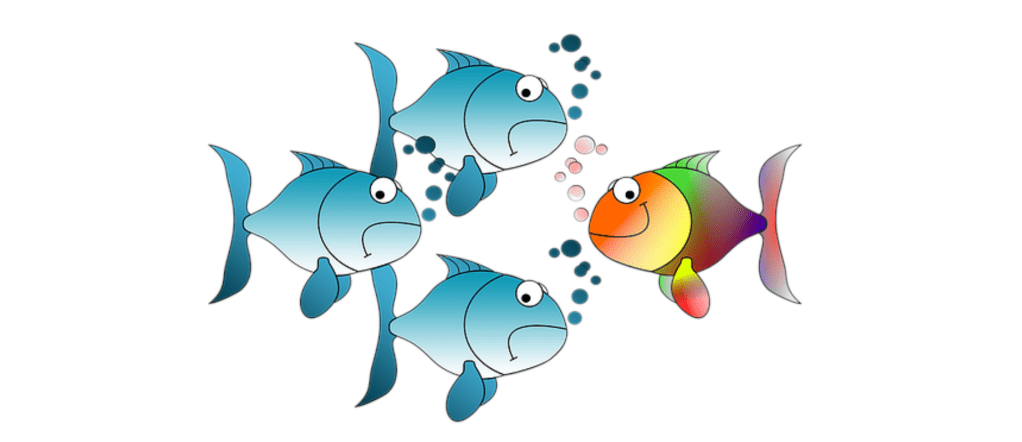
It might be easy to get lost in the crowd. It’s easy to feel insignificant. One tree among a million in the forest, so to speak. But I know I am one in a million.
We all write and grieve and serve and give of ourselves differently. Each of us is unique. Each of us is a distinct blend of personality, talent and substance.
Not a single one of us is worthless.
I may not stand out among the million. I may never strike it rich or become famous. I may never be someone else’s ideal. I cannot be perfect.
The truth is, I don’t have to.None of us do.
What matters is the contrast with some of the other people on this planet: the hateful, the cruel, the greedy, the selfish, the power-hungry, the narcissists. What matters is that I stand against the things they accept. What matters is that I am true to who I am, to my priorities, my values, my faith.
What matters is integrity. That’s what stands out in this world.
That, more than anything else, makes me one in a million.
Today my brother, sister-in-law and I took our elderly and increasingly frail Dad out for lunch.
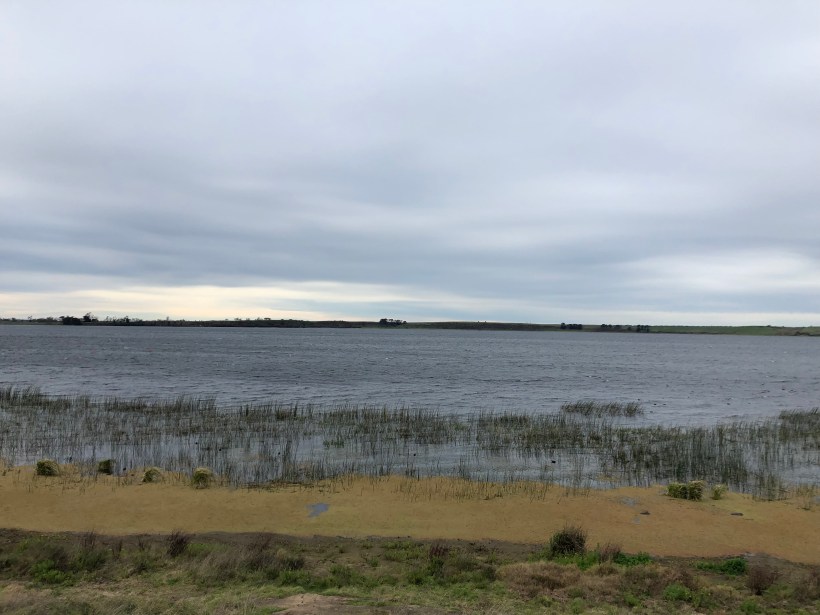
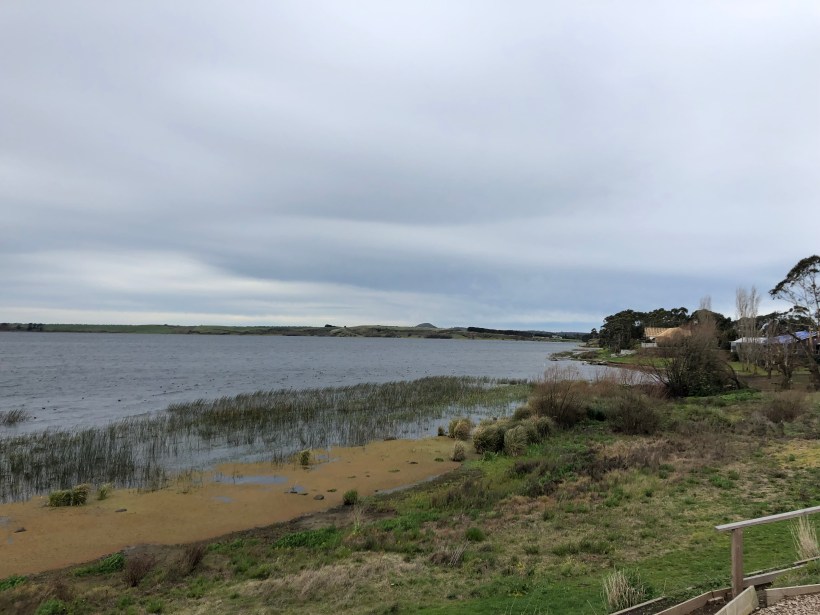
We went to one of our favourite local places: Lake Edge Cafe on the shore of Lake Purrumbete. The view is lovely in any weather, but it was nice and warm inside.
While we were waiting for our lunch, another family group came in and took the table next to ours. It looked to be a man around my own age, three boys, and the boys’ grandparents.
“Shall I tell you a bit about the menu?” the waiter asked.
“Could you wait a bit, please?” the guy responded. “My wife will be in in a moment… she’s just finishing the final few pages of a book.”
I smiled. Anyone who stays in the car to finish a book before lunch is my kind of person.
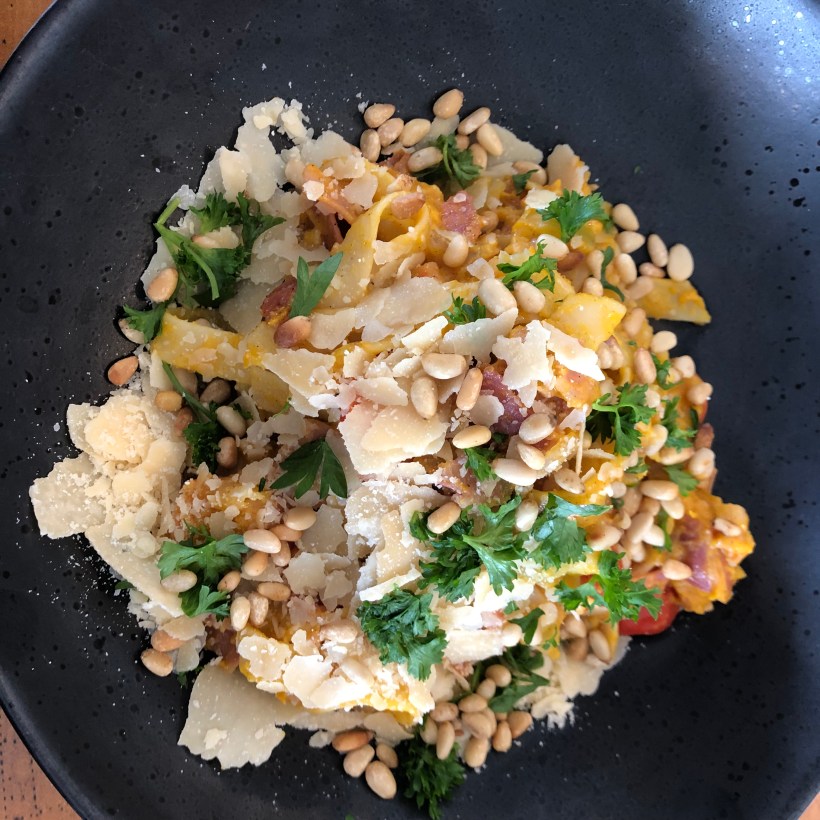
In case you were wondering, I ordered the pumpkin, prosciutto, pine nut and cherry tomato fettuccine. It was amazing.
As a promoter of Indie books and Indie authors, I’m always trying to find different ways to help authors put their books in front of readers.
The ever-changing and often-frustrating Facebook algorithm means that Facebook is becoming less and less fruitful for book promotion. My own recent frustration with that particular platform has provided further encouragement to look further afield.
This isn’t particularly devastating for me, as I have always believed that it’s better not to keep all your eggs in one basket, so to speak. My aim has always been to spread my promotions as widely as ever, and I have applied this principle to my promotions of others’ books as well as my own.
From the outset of my writing career, I have worked hard to build good reach on a variety of social media platforms. I have grown my following organically, through engagement and sharing, so that my audience is one actually interested in my content. That has paid off in the form of followers who respond in a positive way: with likes, shares, comments and engagement.
That is why I have confidence in Book Squirrel’s new promotional feature.
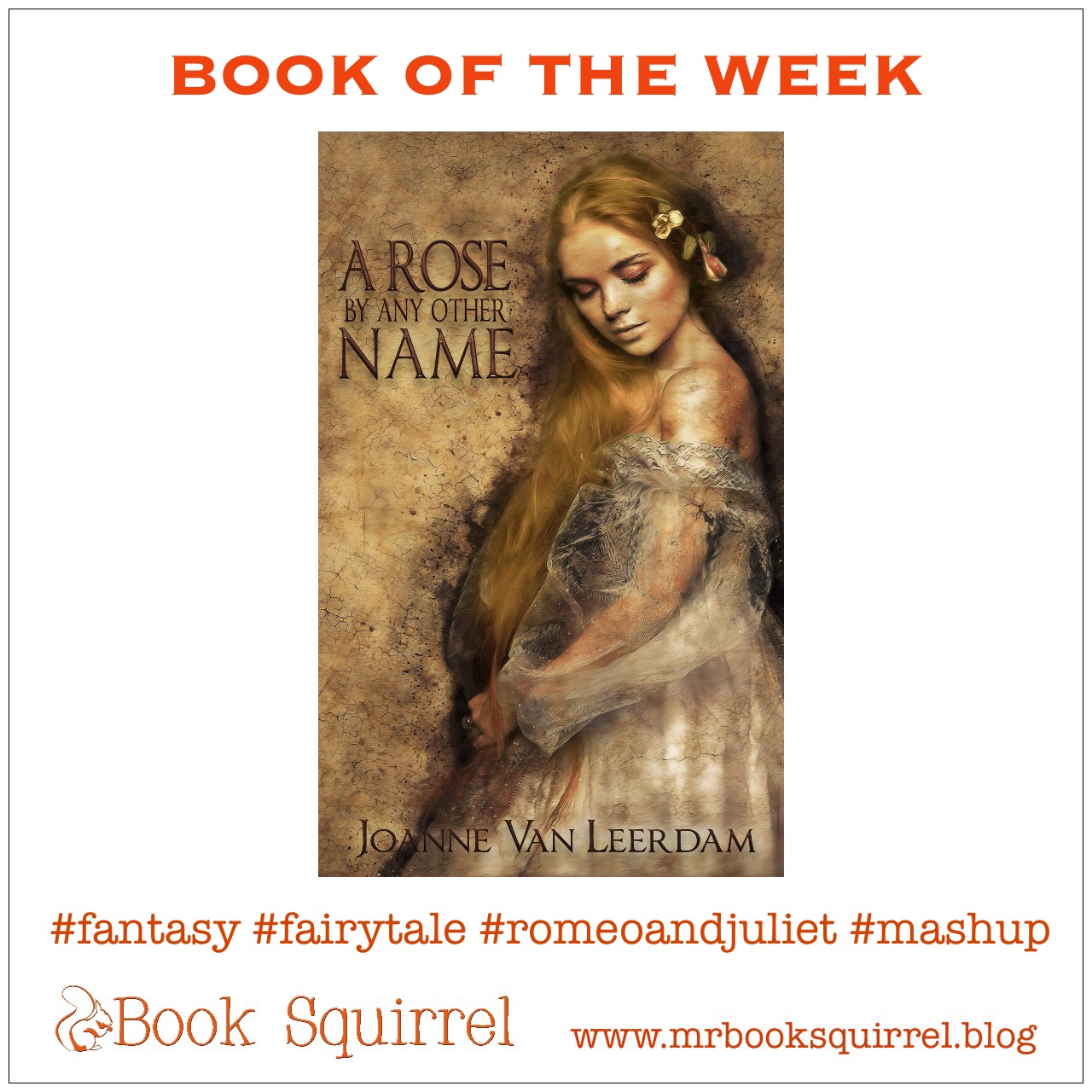
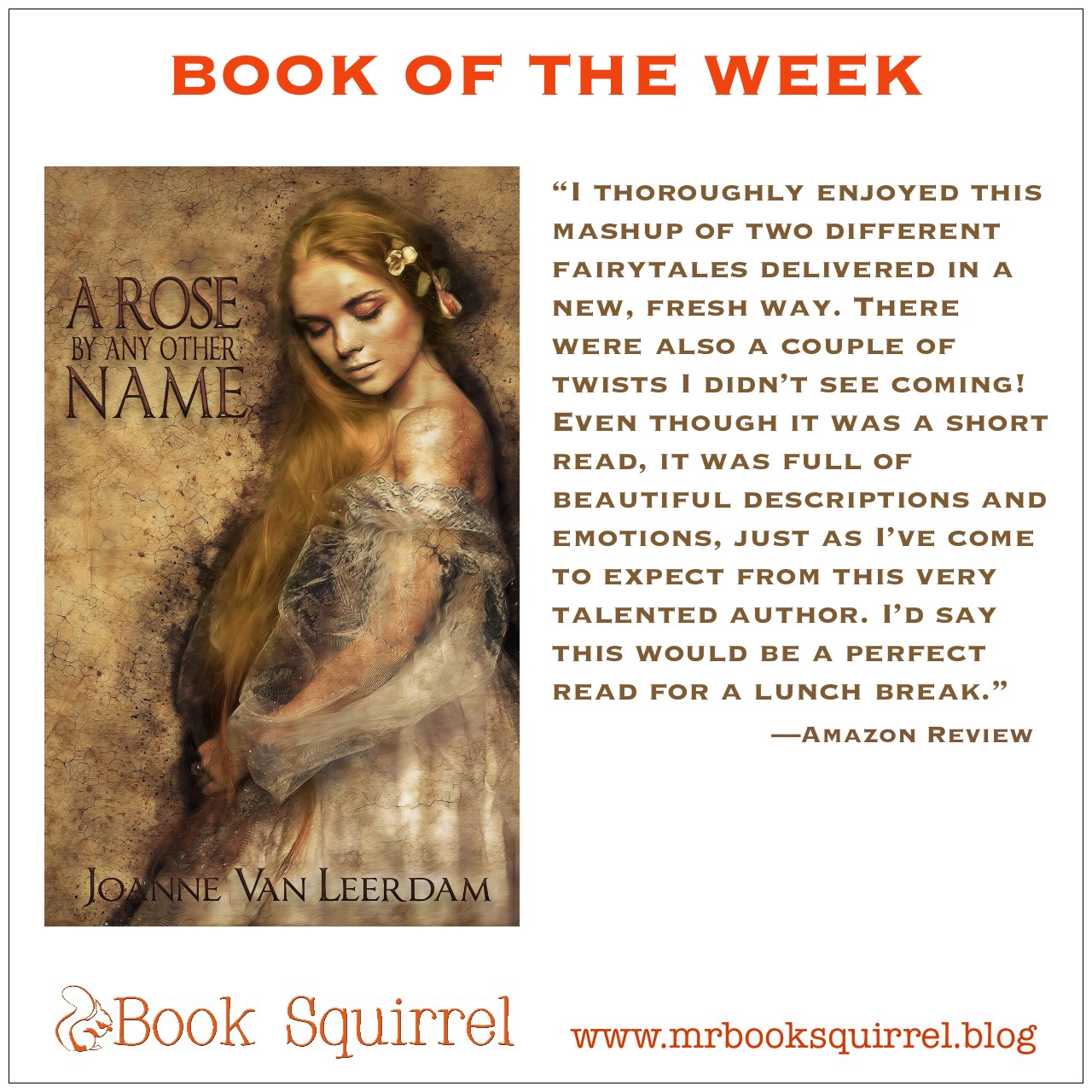
The ‘Book of the Week’ promotion provides a blog post including the book’s cover and blurb, and two reviews of the author’s choice from Amazon or Goodreads. This blog post is then shared throughout the week on Twitter and Pinterest in addition to Facebook. A “Book of the Week” post is also made on Instagram.
The social media posts will be accompanied by clear, attractive images like this:
As with all of Book Squirrel’s promotions, the price is deliberately set to be affordable for Indie authors on a tight budget. After all, I know what it’s like to want to promote your book, and not have at least $50 to make it happen.
I may need to learn to turn the volume down a little when being a comic genius in public places.
We were sitting at a cafe deciding what to have when I commented on one of the options: “I’m not sure I needed to know that their chicken was marinated by a jerk.”
A lady at the next table laughed out loud, turned around and said, “I had the same thought, but wasn’t brave enough to say it.”
The waiter showed up while I was writing this post, and I shared my observations. He laughed and said, “Actually, the chef IS a jerk!”
I nodded safely. “Many of them are,” I said.
“Too true!” he said. “But that’s all just between you and me, right?”
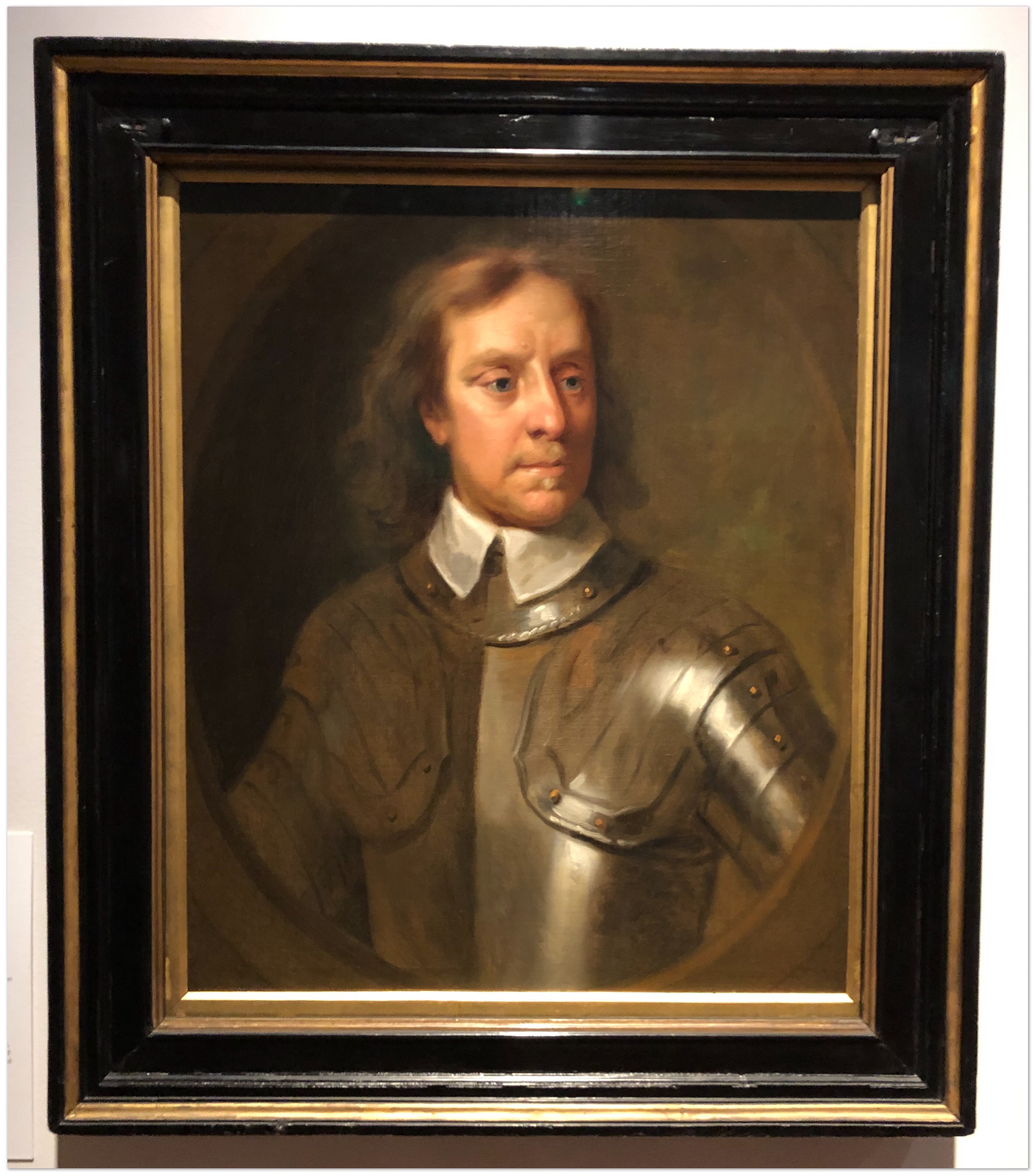
My friends and I were standing in front of a portrait of Oliver Cromwell at the Tudors to Windsors portrait exhibition at the art gallery in Bendigo. .
As I often do, I added my own commentary. In a posh English accent and lower vocal register, I quipped, “Look at me being all godly and humble and unroyal and stuff before I go and kill a bunch of people and destroy all the monasteries… you know, on God’s behalf.”
A well-dressed elderly gentleman had come to stand beside me. When I finished speaking, he added in a crisp, upper class accent: “Bastard.” He was not wrong.
Yesterday afternoon I took some friends to one of my favourite bookstores — which I lovingly refer to as book rescue shelters — in Bendigo.
While looking through the Historical Fiction section, I was delighted to find two books from the ‘Plantagenet Embers’ series by Samantha Wilcoxson that I really enjoy.
What made that such a cool thing for me is that Samantha is an Indie author from Michigan with whom I have interacted on social media. I have read several of her books on Kindle, and they are really well written.
As Indies, most of our sales are on Kindle, Kobo or other ebook stores. We don’t get big, fancy distribution via a global publishing company. so it’s great to see that Samantha’s papaerbacks have made it to Australia! That’s really exciting! And now I own two of them, because I knew right away I couldn’t leave them there.
These are excellent books that I am proud to have in my collection. And now that I have books 2 and 3, I may have to see if I can buy a signed copy of book 1 direct from the author. That would be an awesome addition to my bookshelf!
Lucy Mitchell’s experiences, as she describes in the article reblogged here, are not uncommon. Many writers, artists and musicians use their creativity to help process and deal with their mental health issues.
I share this author’s experience of gaining motivation, encouragement and purpose from writing and self-publishing my works.
Withdrawing my first book from its publisher and taking control of my publishing journey as an Indie author was incredibly empowering. Producing not just good writing but excellent books has been as source of both pleasure and pride for me, but it has also been fabulous therapy.
Every poem I write, whether it’s about mental health or a medieval princess saving herself and taking control of her destiny is evidence of my strength and resilience, even at those times when I am not feeling particularly strong or resilient.
The fact that I can write about my own mental health in a way that others relate to and find powerful is both liberating and encouraging. And every time I kill someone fictionally, it saves me bail money and keeps me out of jail because I haven’t actually laid hands on anyone. That’s a system that has worked extremely well for me so far, so I will stick with it.
Every book I have published is testimony to my survival. This is, perhaps, most true of A Poet’s Curse, which was written indirect response to evil behaviour and nasty people. Publishing that little volume, to which I like to refer as my “dark little book of hateful poetry” really felt like I was taking my life back from those who tried to destroy me, and I celebrated it as such.
At this point of my writing and publishing career, I can say that I am incredibly proud of what I have achieved. That in itself is positive and motivating, and encourages me to keep going. There are still a lot of ideas bubbling away, and there’s life in the old girl yet.
And where there’s life, there’s hope.
All of this is proof of how far I have come from those very dark times that almost destroyed me, and of my determination to never go back.
I hope you appreciate and enjoy the insights from Lucy Mitchell as much as I did.







 WordyNerdBird