This week I read a blog post that asserted there is no right or wrong way to write a book review. The writer made some good points, particularly about reviews needing to be individual and personal responses to a book, but I disagree with the basic premise of the article.
I am writing this post from the perspective of a reader, not an author, and I realise that some people won’t agree with me, so let me explain my reasons.
A book review should never recount the story of the book. It shouldn’t give spoilers. Yet time after time, I see reviews that do exactly that. My issue is that if I already know what is going to happen, I feel as though I no longer need to read the book. The joy of the journey has been neutralised. That review has effectively cost the author a sale.
In all honesty, I hate blurbs that do this, too. As a reader, that’s one of the quickest turnoffs when I’m looking at a book.
Don’t give me a summary. Give me teasers, give me feelings, give me thoughts and observations. Pique my interest. Make me want to read it for myself, instead of making me feel as though I already have.
A good review doesn’t have to be long or complicated. It does needs to be at least 20 words in length, which gives you room to say whether you enjoyed the book and why. One or two sentences will do the trick. There is no obligation to write any more than that if you don’t want to.
If you do want to write more, you can consider including the following ideas:
Why you liked or disliked it. Remember that others may like what you disliked, and vice versa, so try to be kind.
What important ideas the story made you think about – love, anger, justice, revenge, pain, fear, overcoming… anything that is relevant to you is a valid point for comment.
What the characters are like as people, and what we learn from them Did the writer’s style impress you in any particular way?
Was it easy to read and understand, or did you have to really work at it?
Who else might like to read it? Think about interests, age group, and genres here.
This will help you to write a review that is interesting in itself, and which will encourage the right readers to choose that particular book. In that way, you’ll help both the author and prospective readers at the same time.
Today, I’m going to indulge my poetry-nerdiness yet again, in response to another trend I’ve observed on social media.
As both a reader and a poet, I get really annoyed when pieces of writing are labelled as poetry when they’re not.
This is rife on Instagram, where some folks take a pretty picture of a sentence or a paragraph and call it poetry. They use the hashtags like #poem, #instapoem, #poetry, #poemsofinstagram… you get the idea. I’ve bitten my tongue – or my virtual fingertips – so many times when I’ve wanted to comment that what is pictured is not a poem.
I’ve seen letters, paragraphs, and even short stories presented as “poetry”. I’ve seen single sentences tagged “poetry”. In fact, there are books out there with a sentence on each page, which the creators have classified as ‘poetry’.
This is where I beg to differ.
A sentence, a letter, a paragraph… an entire book may be written in highly poetic language. It may use conventional poetic techniques such as imagery or alliteration, but is it poetry? Everything within me screams “NO!”. A letter is a letter. A sentence is a sentence. A paragraph is… prose, not a poem.
The issue is one of form.
Poetry as a form has conventions of its own that set it apart from a letter or a sentence, or anything else. While it’s true that poetry can take any number of forms or styles, those are forms and styles that are recognised as being poetry. They are not forms that are instantly recognised as something else.
I totally accept and agree that a sentence or any other piece of writing can be beautiful. I’ve read individual sentences or paragraphs that have taken my breath away with the imagery or the power of the writing. They can be poetic. But, according to the conventions of one form as opposed to another, they’re not poems. They’re. Just. Not.
I’m not trying to be a poetry snob here— in fact, it’s taking no effort at all. I realise I may be coming across as a pretentious git, but let’s look at this from another perspective.
I don’t get to call myself an author if I don’t write and publish anything. I don’t get to call myself a doctor because I am not, in fact, a doctor. In terms of professions, we don’t get to call ourselves something we’re not.
Alternatively, I could choose to start telling people I’m a cheeseburger. I’ve eaten a few cheeseburgers, I know what they taste like, and I can list the ingredients. And they do say you are what you eat. However, people will fairly promptly tell me I’m not actually a cheeseburger. The more I make that assertion, the more strident people will be in assuring me I’m not. Even if I went to McDonalds or Burger King and sat in the food warmer, it wouldn’t make me a cheeseburger. I am quite obviously not a cheeseburger.
If we pretend to be other than what we are, that very quickly becomes a matter of integrity. At first people laugh, then they get frustration, and then they get angry. Trust is broken, and often, walls go up that are not easily dismantled.
That is exactly where I am with other pieces of writing masquerading as poetry. I’m well past the point of frustration. If I pick up a book because it says it is poetry, and the contents are nothing more than pithy sayings or observations of life in sentence form, I’m going to be annoyed, no matter how beautifully they’re written. If I wanted a book full of meme-worthy of proverbs and quotations, that’s what I would have gone looking for.
Poetry takes time and effort to craft and shape. It isn’t easy to condense the meaning and message into imagery and forms that require skill to master. To write something beyond trite rhyme or greeting card verses is more difficult than many people realise. The ability to do that, consistently and repeatedly, is what makes someone a poet. Poetry is a craft that I take very seriously indeed.
That’s why I refuse to “like” posts on Instagram, or anywhere else for that matter, which present one thing as something it’s not. It’s why I am very choosy about what poetry and poets I review and promote on my book blog. It’s why I’m on my soapbox, ranting furiously to anyone who will listen – or read, as the case may be.
It’s hard enough getting people to take real poetry seriously these days. We certainly don’t need to confuse people any further.
With all the attention given among the Indie community to the removal of book reviews by Amazon, I’m amazed at the number of authors who still post dirty links to their books on social media. This is a rookie-level mistake that can actually do more harm than good.
A dirty link helps the algorithm at Amazon to determine if there are connections between author and reader that might suggest collusion or partiality.. Even if a review is from a verified purchase, a simple connection via a shared link can be enough to make them suspect that it’s not unbiased or from an unrelated party.
If the link used by multiple customers can be traced directly back to the author, that’s one of the reasons they will start flagging and eventually removing reviews.
The simple solution is to ensure your links are clean before you post them.
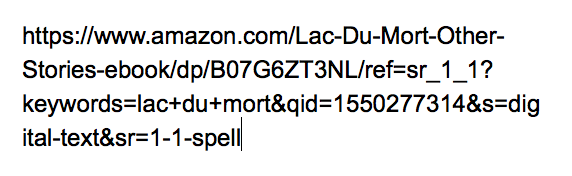
A dirty link occurs when one copies and pastes a URL without removing all the extra information that gets tacked onto it by searching for a product, copying links from a website, linking from another product, or using a bookmark created from a searched item.For example, if I search for one of my books on Google and click on the Amazon link, I get this as the URL:
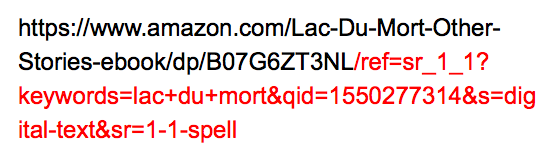
This is more information than is needed to actually find my book. In the image below, I’ve denoted the “dirty” part of the link by making it red.
The highlighted part of this link is the “dirty” part. If I were to give this link to someone else to use, it tells Amazon how they got the link. All you need to post is the part of the link that directly goes to your book page. In the link above, that’s the part that is still black. Once the link identifies which display page your book has, no further information is necessary.
You can check the clean link you want to post by pasting it into a new browser window and seeing that it goes directly to your book product page. Even if you use a link shortening service like bit.ly or buff.ly, or a customised branded link, you must ensure that the links you provide are clean. Just because you and your audience don’t see the extra information on a shortened or customised link doesn’t mean it isn’t there.
That way, stores will have no reason to suspect you or your readers’ integrity, and your verified purchase reviews will remain proudly on your book page.
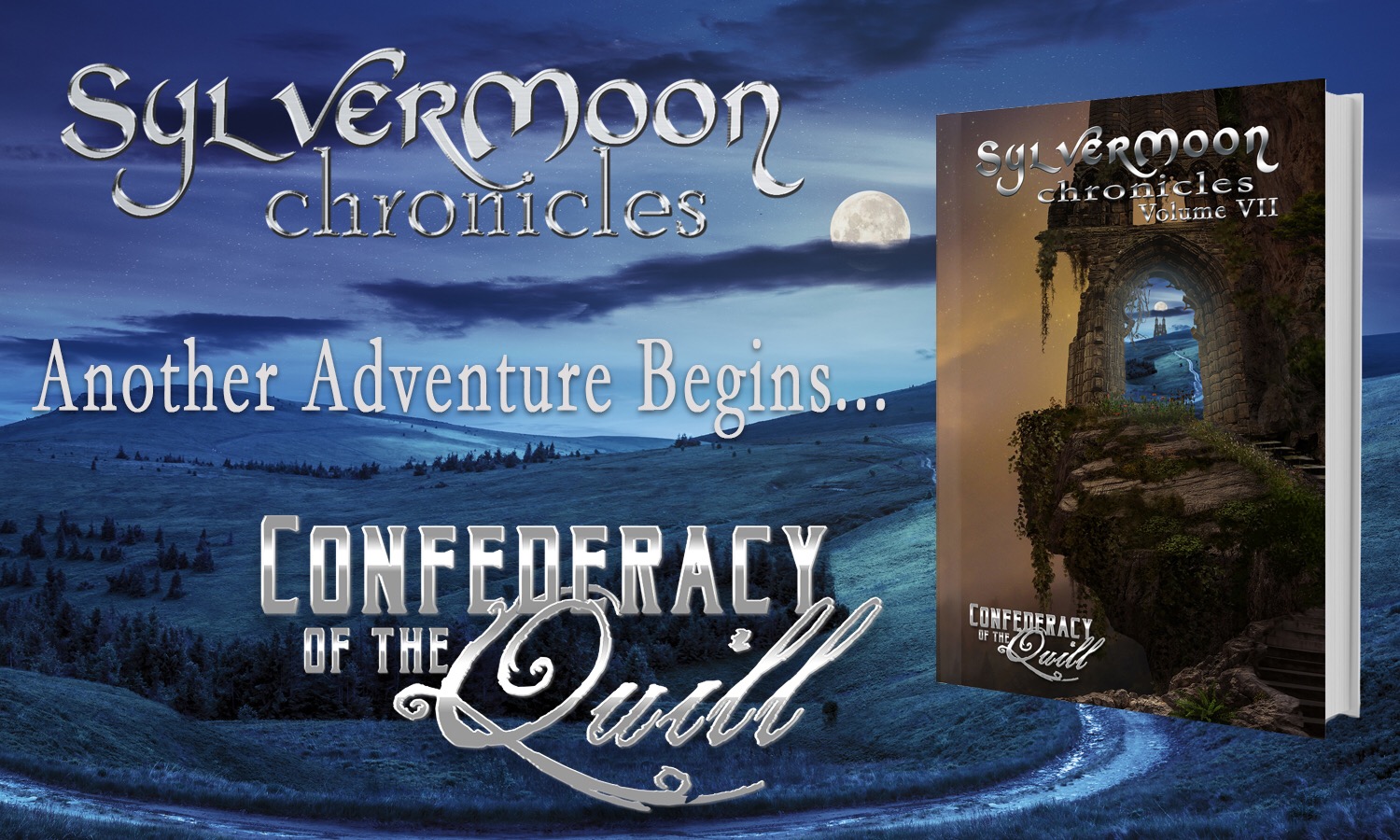
Sylvermoon Chronicles is an annual short story anthology created by The Confederacy of the Quill, an international writers’ cooperative. I am very proud to have one of my stories, Contaminus, included in the 2019 issue of this highly regarded anthology series.
While the book releases on Valentines Day, it should not be mistaken for a romance collection.
Rather, I like to think of it as a gift for those who, like me, would sooner read genres other than lovey-dovey romance, and a welcome distraction from all the kissy-face sentimentality often associated with February 14th. The Sylvermoon Chronicles series features stories in the genres of Science Fiction, Fantasy, Horror, and Adventure.
It is an honor to be published in a series which I have very much enjoyed as a reader, alongside a number of authors whose work I have previously read, reviewed and fangirled over. I was both excited and slightly surprised when my story was accepted, especially given the inspiration behind the writing of Contaminus.
New worlds await you in the newest Sylvermoon Chronicles collection, which hit the shelves today. The ebook is widely available now, and the paperback will be available soon.
I know some people make a big deal of it, but that tends to diminish over the years when a couple have been together for a long time.
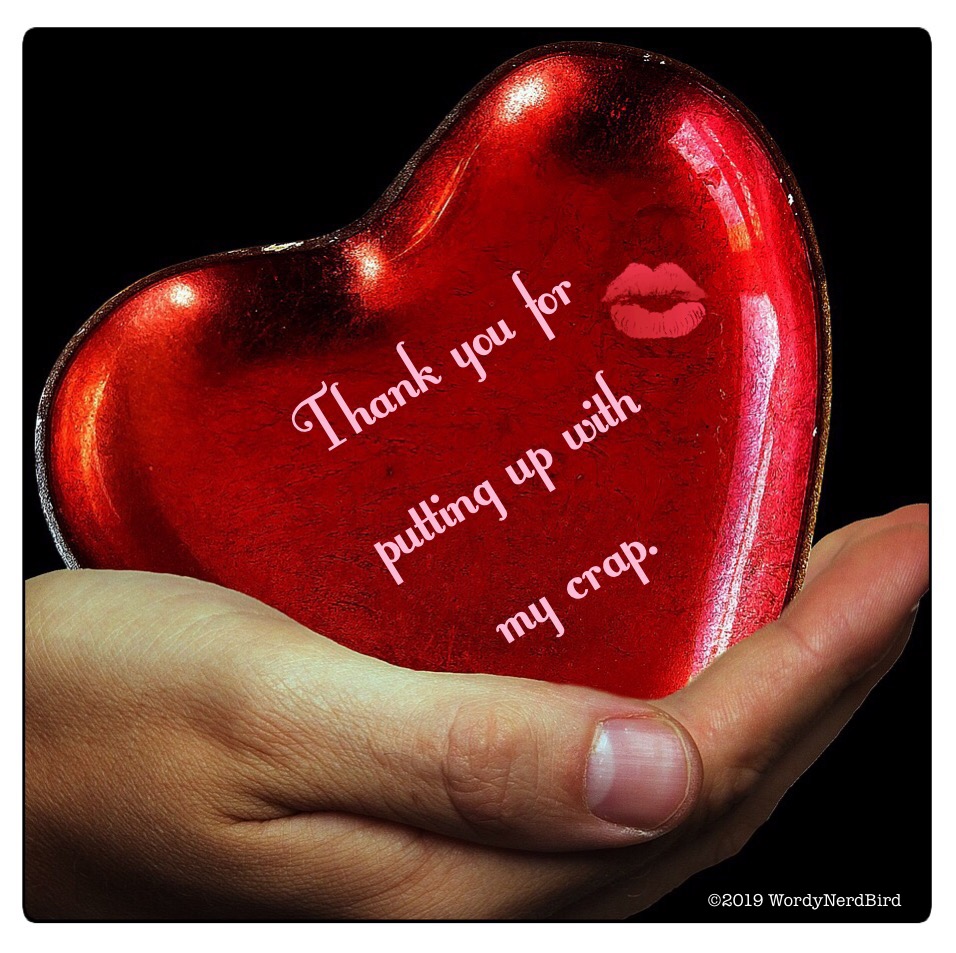
As half of one of those couples, I decided to create some attractive yet practical greetings that might come in handy for couples like us. In the interests of quality assurance, these have been road-tested on my husband, who laughed a bit.
You’re welcome to use any or all of these in order to win favor with your beloved, or just for a bit of fun.
This morning I took my father to town for a medical appointment. It all went well, and quite quickly, so he decided he’d like to shop for a couple of things he needed.
As part of that shopping expedition, I took him to one locally owned store where the service has always been excellent.
It was a lovely surprise to see one of my former students who now works there.
“How are things with you?” I asked her.
“Really good!” she answered happily. “I really enjoy working here, and the boss is great to work for.”
When I introduced her to my father, she responded with respect and chatted with him about what he was looking for.
With utmost professionalism and kindness, she helped him find exactly what he wanted and made him feel as though he was her most important customer all day. What a blessing to be able to have such a positive impact on an elderly man’s shopping trip, which for him have become quite rare.
In doing so, she both impressed me and made me incredibly proud.
Her boss also happens to be the dad of some of my former students. When I asked after them, he told me they were happy and well, and enjoying what they were doing.
As a teacher, it’s harder than my students know to wave them goodbye and set them free to fly at the end of each year, but it is wonderful to know that they are happy in their chosen path and making their own way forward in the big, wide world.
Whether they choose university, a trade, hospitality, retail, or other pursuits doesn’t matter to me, as long as it’s what they want to do.
I have no intention of trying to take all the credit for any of my former students’ successes – far from it. I know I am only one of many who have helped and taught them, and encouraged them to pursue their goals and dreams. Even so, today I can enjoy the satisfaction of knowing that, for at least those three, it has been a job done well.
Every author I know dreams of finding the perfect ‘set and forget’ book promotion.
I’m here with some bad news: it doesn’t exist.
Effective book promotion is about engagement and communication. It’s letting people know your book exists, what it’s about, and why they should read it… without stuffing it in their face and demanding that they buy it.
What many people don’t realise is that effectively promoting your book is a process, not an event. You cannot simply advertise it once, post it on Facebook and/or Twitter, then sit back to wait for the sales to roll in.
Personally, I’d love to think that everyone I know who sees my book will buy it, and that would flow on to lots of people I don’t know buying it. That isn’t how it works. The people you know are often less likely to be interested and willing to buy and read your book than complete strangers.
You’ve got to make them interested. Bait the hook the right way, and they’ll bite. But the bait that works for one won’t necessarily work for another. Effectively promoting your book is complex: you’ve really got to be exploring different angles and be patient enough to follow them through to see if they work. If they don’t, you try something different. If they do, that’s great – but that doesn’t mean those same things will work again next time.
As for what works, I don’t have all the answers. I wish I did. I do know what doesn’t work, though.
Being pushy doesn’t work. Can you imagine how you’d feel if someone wandered around a bookstore holding a card in front of your face that told you where to find the book they wrote? Or if they followed you around, begging you to buy it?
Even worse, actually demanding that people buy your book is a complete turn off. Temper tantrums fall into the same category.
Making every social media post you ever write a “buy my book” post doesn’t work. Put that stuff on your page or author profile, share some of it by all means, but use your personal profile as exactly that.
Taking advantage of the kindness of others doesn’t work – well, it might for about 30 seconds, but once they’re onto you, even the most supportive friend will back away and wear a necklace made of garlic cloves every time they see you coming.
Abusing people and talking down to them doesn’t work. Those walls will go up faster than anything you’ve seen before. Not only will they not buy your book, they will tell everyone else what you said, and they won’t buy your book either.
Ignoring or dismissing those who help you along the way is entirely counterproductive. You’ll find yourself quite lonely and without the support you once enjoyed.
Assuming loyalty will not work. Sad to say, some people who know you in person might actually think that anything you write might not be that great. That doesn’t mean it isn’t excellent – but changing their perceptions is tricky. Humans are odd like that, and finding one who believes in you is like the proverbial needle in the haystack.
The only way to go about it is to build engagement and develop a reputation for excellence.
If you’re going to make the grade, your book needs to be top shelf: professionally edited, a well-designed cover, clean formatting, and engaging content. Without those things, your book might be good, but it’s competing with a market full of other good books that have had more time and effort invested in them to make them attractive to readers.
It takes time, energy and commitment. Sometimes it takes sheer grit and determination, but you’ve got to manage all that without anyone really seeing that part of the job.
But if you’ve got a story to tell, or a message to communicate to the world, there’s nothing stopping you. Just make sure you do it well.
That will give you the best possible chance of promoting your book effectively and successfully.
It should come as no surprise that when you’ve been listening to people say the same thing for a while, you get better at understanding what they really mean.
Person Z. Take, for example, a young woman who approaches her friends and family members and says something like, “Hey, so, I’m having a fancy brand-name plasticware/linenware/healthy and beauty product/accessory/clothing party at my house in a couple of weeks, and I really hope you’ll come.”
What she’s really saying: Option A: I got sucked into one of these parties by relative/friend X, and she looked so hopeful that someone would book a party so she’d get some reward, and my mouth was open before my brain could stop it.
What she’s really saying: Option B: There’s a thing this company makes, and I’d really like to have it, but it’s expensive so I’m having a party and anything you buy will help me get it cheaper.
I’ve been on both ends of the equation, and can totally sympathise. It’s fair to say I’ve smiled and nodded through a whole bunch of those evenings, and even bought a thing or three, to help friends and family members out. From time to time, I’ve also been the Option A person.
Person Y. In another example, a child approaches family members and friends and explains that the school is selling chocolates/holding a “fun run”/doing some kind of suffer-a-thon as fundraising for a new toilet block so the kids can “go” comfortably during breaks.
What the child is really saying: Option A: The school insists that I must do this thing and there’s no way out of it, so please give me some money toward it so it’s not for nothing.
What the child is really saying: Option B: There are prizes for doing this, and I really want the floppitywoppity that you can only get if you raise $5000, so please give me some money to give me a fair chance at winning one. Again, I’ve helped more than one kid out of the hole. I don’t know if any of them ever got the floppitywoppity, but I know I have helped to build more than one toilet block in my time.
Person X. Then, there’s the Indie author. Actually, it could be any Indie creative – an artist, musician, or crafter. I just decided to use an author as the example here, because that enables me to draw on my own experience again. Person X has a passion for writing, a message they want to get out to the world, and they finally get their book published. They tell their friends and family members that they have a book out, and they’re about to tell them what it’s about…
What the author is really saying: Option A: I finally fulfilled my dream. Aren’t you happy for me?
What the author is really saying: Option B: I did a thing! I may never become a millionaire, but I did a thing! Please proud of me!
What the author is really saying: Option C: Remember all those times I supported your party plan things? And your fun runs? And your kids’ school toilet blocks? And…
…But as Person X talks, there are virtual crickets chirping, and eyes looking nervously at the door, and people checking their phones, and remembering appointments they need to be at, and… What the others are really saying: Option A: Well, this is awkward… who ever thought he/she was brave enough to get out there and do the thing! What the others are really saying: Option B: Yeah, we know you’ve supported us and our kids, but we’d prefer not to mention that now, because I would rather put my cash toward fancy plastic ware/linen/clothes/beauty products/accessories or a gym membership than some book by someone nobody’s ever heard of.
What the others are really saying: Option C: What the heck are we supposed to do now? We hope he’s not going to ask us to actually read it… maybe if I don’t ask what it’s about, he’ll stop talking about it.
What the others are really saying: Option D: But… you’re my brother/sister/cousin/relative/friend… how could a book you wrote even be any good? A bit full of yourself, aren’t you?
Person W. The final example is the one person in the room who hugs you and says, “Awesome! That’s fantastic! I’ll buy your book! How much do you want for it? You’ll sign it for me, won’t you? I can’t wait to tell my friends what you’ve done!”
What they’re really saying: Option A: I’m proud of you, and I’m on your team.
What they’re really saying: Option B: I’ll probably never read it, but I’m proud of you, and I’m on your team.
What they’re really saying: Option C: “Awesome! That’s fantastic! I’ll buy your book! How much do you want for it? You’ll sign it for me, won’t you? I can’t wait to tell my friends what you’ve done!” then looking over their shoulder with a glare at the rest of the people in the room who were too selfish to do or say anything.
The moral of the story: Option A: I’m really thankful for every ‘Person W’ in my life. I had no idea when I embarked on my journey as an Indie author that it would hurt so much to know there were so many Zs and Ys in my circles, but I also had no idea how wonderful it would be to know who the Ws were, and that they were on my team.
The moral of the story: Option B: Always be a W. Even if you never read the book, be a W.
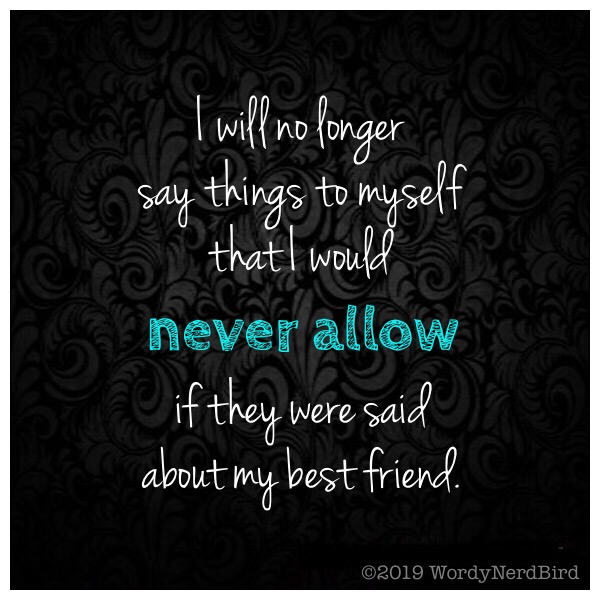
I have reached a new landmark in my journey of self-acceptance and self-care: I have finally decided to stop saying and thinking horrible things about myself.
When I posted this image last night, a friend responded with the observation that ” The trick is to catch it and recognize it. That’s the hard part.”
What she says is true, but the fact is that I’ve already been recognising it, and it’s something that has been bugging me for a while.
For me, the hardest part is that I see my flaws and failures much earlier and more honestly than anyone else does. I know I’m valued and loved, and I know I have talents and abilities that others admire, but I am much quicker to comment on my mistakes and shortcomings than on anything good or positive that I might do. Sadly, this is the habit of a lifetime.
It’s often said that we’re our own worst enemies. When it comes to cruel words, I think that’s definitely true of me.
I write poetry that moves people and touches their souls. I write horror stories that chill my readers to the bone. My books get good reviews, and readers tell me they love my work. I teach teenagers, and from time to time, some of them tell me I’ve had a positive impact on their life.
At the same time, I know full well that not everyone loves me. That doesn’t actually bother me: I don’t like everyone else, either. None of us do. Yet it seems that my most consistent critic is none other than myself. It’s fair to say that on some days, even the people who really, really don’t like me – and they do exist – would be hard pressed to say worse things about me than I do.
Why do I accept it from myself, when I never would from anyone else? Why do I allow words about myself that I refuse to hear my best friend say about herself? I don’t allow my students to talk about themselves or others that way. I’ll unashamedly call someone out for putting another person down, and remind them that they don’t get to talk that way to other people.
I’ve written previously about having to learn to be patient and kind toward myself physically, especially since my back injury. Now, I’m taking the challenge to master the words and thoughts I use, and to be as quick to defend myself as I am when it’s others on the receiving end.
I know that making this decision is only the first step, and that actually doing it will be harder than writing about it. I do hope, though, that putting it into writing makes my commitment more binding and less of an impulsive thing that I can forget about.
This is a change that is long overdue. And no matter how flawed or prone to error I may be, it’s a change that I really need to make. I deserve better treatment than I have been giving myself, and today is the day I will start to make it happen.
Having a song running in my head isn’t unusual. My BrainPod, as we lovingly refer to it, is easily and frequently triggered by events, words, or sights. It can change in a flash and ts usually easy to switch tracks if a song starts to annoy me.
What was unusual about today is that I had no idea why that song was playing. It’s not a song I have ever particularly liked, especially since it makes no sense that Running Bear and Little White Dove would jump into the raging river and die together instead of just nicking off to the nearest bridge and eloping. I hadn’t seen any running bears or any little white doves, or had I been watching anything with Native Americans in it. I put it down to being one of those hinky things that happens sometimes, and got on with my day.
Despite my best efforts, Running Bear has been playing on a loop in my head all day. I’ve tried to change it by singing some of my go-to “sticky tunes” that usually do the trick for me. I’ve listened to other music.
On an impulse, I went for a drive to the coast with my husband this afternoon.He had a call out to replace a TV antenna, and a 40 minute drive each way seemed like a good opportunity to spend some time together before school starts again next week. I also figured that listening to something inane on his preferred trashy pop radio station – which normally bugs me a whole lot – would fix it for sure.
He pulled up at the house where he had to replace the TV antenna. As he got out of the car, we heard music playing loudly from the house across the street.
“Running Bear loved Little White Dove With a love big as the sky, Running Bear loved Little White Dove With a love that wouldn’t die.”
A chill crept across the back of my shoulders and my pulse sped up just enough for me to be aware of it doing so.
I know I am an empath, but this is different. Maybe it’s because I write horror that it seems creepier than it is. I’d like to think it’s just random coincidence, but you may consider me completely weirded out.









 WordyNerdBird