I am a real sucker for posts that offer writing tips, publishing tips, and the experiences of other authors and bloggers. I’ve shared a number of them on this blog, because some people have genuinely good advice and share their experiences in a very positive and constructive way.
This response to those kind of posts is quite refreshing in its honesty and in its explanations of why those posts can actually be demotivating for some people. I can totally relate to the feeling of disappointment in myself that I haven’t adopted and implemented more of the great advice given by other Indie authors since beginning my own author journey, and to the sense of “exhaustion” at the number of “You Can Do This If You Follow My Formula” posts out there.
It’s true that those hints and tips for success aren’t “one size fits all”, and nor is success. There are many ways to measure success, and we all have individual goals that determine what our own standards or images of success might be.
It is also fair to say that there is so much advice, so many tips, so many things people tell us to do, that it’s simply not possible to try it all out, and we really do need to remain realistic about what advice we are going to take on at any given time.
I do like Daegan’s points about daily and weekly reviews of what has been done or achieved. I actually do this, and it helps me stay on track because I find achieving small goals and milestones along the way incredibly motivating.
I don’t meditate as such, but I do set time aside for quietness and reflection in my daily routine. I wear a lot of hats in my day-to-day life, so taking even just a few minutes when my brain has nothing to do is a vital means of refreshing and resetting my mind at various stages of the day. As an introvert who is often surrounded by people all day long and again at home, that quietness is also how I recharge my energy, so it’s a crucial thing for me to do.
My “takeaway” from this article is that it’s important for each of us to set our own goals, define what sort of “success” we are hoping to achieve, and find what works for us as individuals.
The one thing we should all do is keep striving to make it happen.
I have read so many articles that have a headline similar to:
“If you want to be successful, adopt these 5 habits right away!”
The problem is, the author is always telling me what I should do to be successful as if my success and their success looks exactly the same.
I get so many of these articles telling me about the habits that I should have or my life is clearly falling apart. I’ll admit, many are good and I have certainly tried them.
But what about the author? Are they using all of those tips? Do they really have all of those habits locked down when they had a post a month ago telling me 12 other success tips? I want to know the person behind the word and if it’s actually worth my time.
Maybe I’m small minded and not wired for success, but…
I found these writing tips by Paul Skenazy to be very pertinent to myself as a writer.
I really like the one that says “Never lose your awkwardness,” I have awkwardness by the bucketload, so I’ve got that part covered.
Really, though, when I read and consider these points, they converge into an encouragement to be the writer only you can be, and to tell the story the way only you can tell it.
Writing is an invitation to humility—you realize you’re on the wrong track, you’ve lost connection with a scene, an emotion, a voice. The return on that humility is when your imagination lets you slip into someone else’s skin. The tales you come up with tell the story you are trying to tell when you sit down to write and also the story of the years you spend working on the book. Rendering a/your life into art changes you.
Trust your intuitions but trust (admit) that you don’t understand what your intuitions are telling you. They have their own truth and direction; your job is to follow where they lead. This doesn’t mean you don’t exert control, but you don’t exert as much control as you think you do. And you are often at your best when you don’t.
I’m always interested to see how different people react when I tell them I’m a published author. You can never really tell which way it’s going to go.
I’m accustomed to people saying, “Oh, that’s nice” or “Oh, interesting! I’ve never met an author before!”. Some people look at me with pity, others adopt an expression that suggests I have three heads.
I am, I confess, always puzzled by people who say, “I don’t read”. I have absolutely no idea what that kind of existence must be like, so I just smile and nod.
The response I find most confronting, though, is “Oh, you must be rich!”
I have two favourite responses for those people: I either say “Nobody gets rich writing poetry!” or “You don’t become a writer if you’re looking for an easy way to make a buck.” To write really well is hard work. It takes time, commitment, energy and attention to detail – and those things generally don’t see a vast return in cash.
My motivation as a writer doesn’t come from money – if it did, I’d have quit after the first book. Sure, I’d like to sell more books, and be able to quit my job and write full time. That would be great… but it’s not likely to happen anytime soon.
For me, writing is a passion, a drive that I find it almost impossible to resist. When I write something good, I feel fulfilled. When I refine it, edit it, craft it, polish it and finally publish it, it’s both exciting and immensely satisfying.
The real thrill comes when a reader responds positively to my work, especially my poetry. To know someone has enjoyed one of my stories or been touched by one of my poems is the best feeling because that doesn’t happen accidentally.
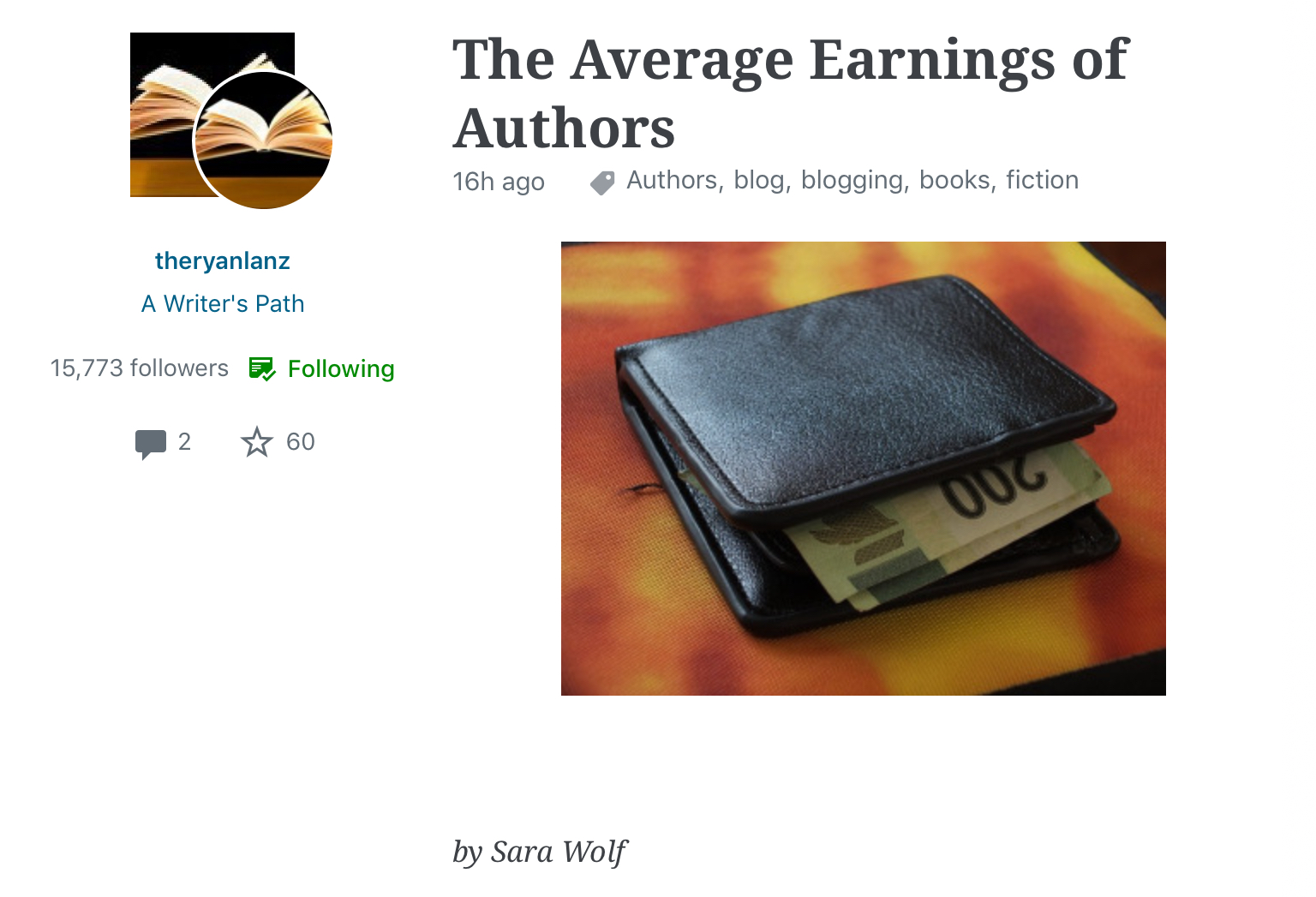
This post by Sara Wolf, which I found on Ryan Lanz’s blog, addresses the issue of the vast differences between what the majority and the minority of authors earn. It’s a well-written article with a message that comes as no surprise to me or any other Indie author.
Most authors aren’t rich. Some manage to make a living. Only a very small percentage make it into the big league and get rich and super famous.
It is a frequent occurrence in the news to hear about authors cutting multi-million (or even billion) dollar book or movie deals. Famous examples of ridiculously successful authors, such as J.K. Rowling, E. L. James, and Stephen King, often lead people to think that becoming an author will undoubtedly lead to an equally as lucrative outcome. However, it turns out that the average author makes much, much less.
Pinterest is great for inspiration, curating themed collections and procrastinating by getting distracted with eye candy.
It is a platform on which the users create collections of images called boards. These are usually themed, although how organised and themed they are is entirely up to each individual user.
I love being able to put together a collection of images on any theme I wish. The evidence of this is the fact that I have a bazillion Pinterest boards for everything from books worth reading, my book reviews and blog posts and social media for Indie authors to costume and set ideas for musical theatre productions and swoonworthy libraries. I’ve collected hundreds of great looking recipes that I might never make, and probably twenty that I have. I can be as nerdy about things as I like- in fact, that is positively encouraged! It really is all very enjoyable.
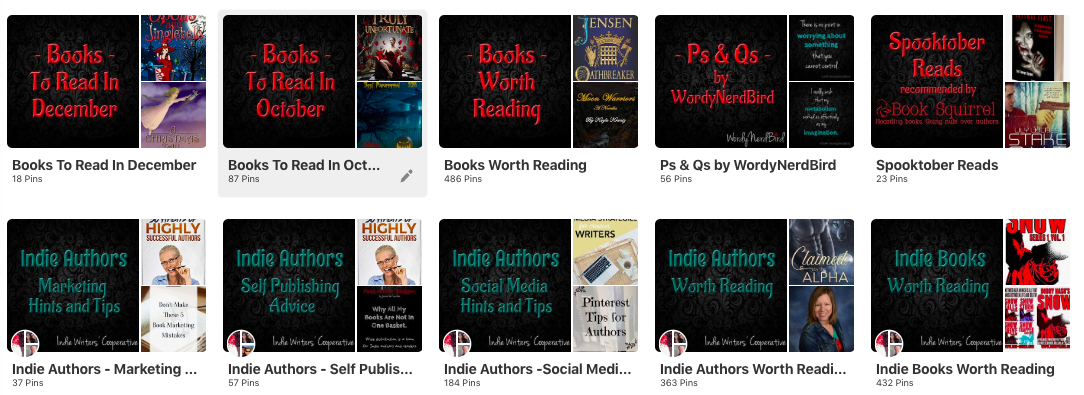
Just a few of my bookish and Indie author boards.
Pinterest is a great way to highlight my own content and link it back to my blogs or website. When I write a blog post relevant to Indie authors in one way or another, I can add it to one of my boards on Pinterest where it is easily found and accessed by others. The link back to my blog post is an integral part of the pinned image, so that a click on that image takes a viewer straight to my blog. This link is easily achieved by sharing to Pinterest directly from each WordPress blogpost, or by adding the link manually to a custom image.
It is a wonderful thing to be inspired by others, whether it’s by “how to do something” posts, images of places you’d like to travel to, or ideas about how to take better photos of different things. This is something that Pinterest and Instagram have in common because they’re both highly visual in nature.
I also like the fact that you can have secret boards. This means that you can save collections of things like Christmas or birthday gift ideas or whatever else you want to keep private, and nobody else can see them.
One very practical, personal use for Pinterest is creating a Wish List. My best friend, my sister and I all have a Wish List board, where we place images of things we’d like to have as birthday or Christmas gifts. It makes shopping for one another so much easier, and enables us to buy the perfect gift every time. They don’t have to be expensive things – one of my friends used that board to find the pattern for a pair of knitted gloves I liked, and presented me with those very gloves in my favourite colour: black! If there is a particular book I want, or a particular bear I want to add to my collection, I can add it to that list and use it as a shopping list for myself, too!
What frustrates me, though, is that Pinterest is really not all that social.
You used to be able to like someone’s post, but you can’t do that anymore. You can save it to your own collection. You can leave a comment, but not many people do. You can send someone a pin via direct message, assuming they’re on Pinterest too. But none of it feels much like an immediate connection like it does on Facebook or Instagram. I may have 735 followers, but I never actually know if they’re there.
I suppose that’s because Pinterest is focused more on curating content than on creating connections between people. I understand the different emphasis, but I really don’t think being able to like someone’s image distracted from that.
The Verdict: Pinterest is a helpful and enjoyable media platform, but not exactly social in nature. It is best used for collecting and sharing content, not connections.
Having said that, if you’d like to follow me on Pinterest, you are more than welcome to do so. You won’t be able to ‘like’ my posts, but you may find one or three – or thirty – boards that inspire or help you somehow.
Yesterday afternoon I took some friends to one of my favourite bookstores — which I lovingly refer to as book rescue shelters — in Bendigo.
While looking through the Historical Fiction section, I was delighted to find two books from the ‘Plantagenet Embers’ series by Samantha Wilcoxson that I really enjoy.
What made that such a cool thing for me is that Samantha is an Indie author from Michigan with whom I have interacted on social media. I have read several of her books on Kindle, and they are really well written.
As Indies, most of our sales are on Kindle, Kobo or other ebook stores. We don’t get big, fancy distribution via a global publishing company. so it’s great to see that Samantha’s papaerbacks have made it to Australia! That’s really exciting! And now I own two of them, because I knew right away I couldn’t leave them there.
These are excellent books that I am proud to have in my collection. And now that I have books 2 and 3, I may have to see if I can buy a signed copy of book 1 direct from the author. That would be an awesome addition to my bookshelf!
Lucy Mitchell’s experiences, as she describes in the article reblogged here, are not uncommon. Many writers, artists and musicians use their creativity to help process and deal with their mental health issues.
I share this author’s experience of gaining motivation, encouragement and purpose from writing and self-publishing my works.
Withdrawing my first book from its publisher and taking control of my publishing journey as an Indie author was incredibly empowering. Producing not just good writing but excellent books has been as source of both pleasure and pride for me, but it has also been fabulous therapy.
Every poem I write, whether it’s about mental health or a medieval princess saving herself and taking control of her destiny is evidence of my strength and resilience, even at those times when I am not feeling particularly strong or resilient.
The fact that I can write about my own mental health in a way that others relate to and find powerful is both liberating and encouraging. And every time I kill someone fictionally, it saves me bail money and keeps me out of jail because I haven’t actually laid hands on anyone. That’s a system that has worked extremely well for me so far, so I will stick with it.
Every book I have published is testimony to my survival. This is, perhaps, most true of A Poet’s Curse, which was written indirect response to evil behaviour and nasty people. Publishing that little volume, to which I like to refer as my “dark little book of hateful poetry” really felt like I was taking my life back from those who tried to destroy me, and I celebrated it as such.
At this point of my writing and publishing career, I can say that I am incredibly proud of what I have achieved. That in itself is positive and motivating, and encourages me to keep going. There are still a lot of ideas bubbling away, and there’s life in the old girl yet.
And where there’s life, there’s hope.
All of this is proof of how far I have come from those very dark times that almost destroyed me, and of my determination to never go back.
I hope you appreciate and enjoy the insights from Lucy Mitchell as much as I did.
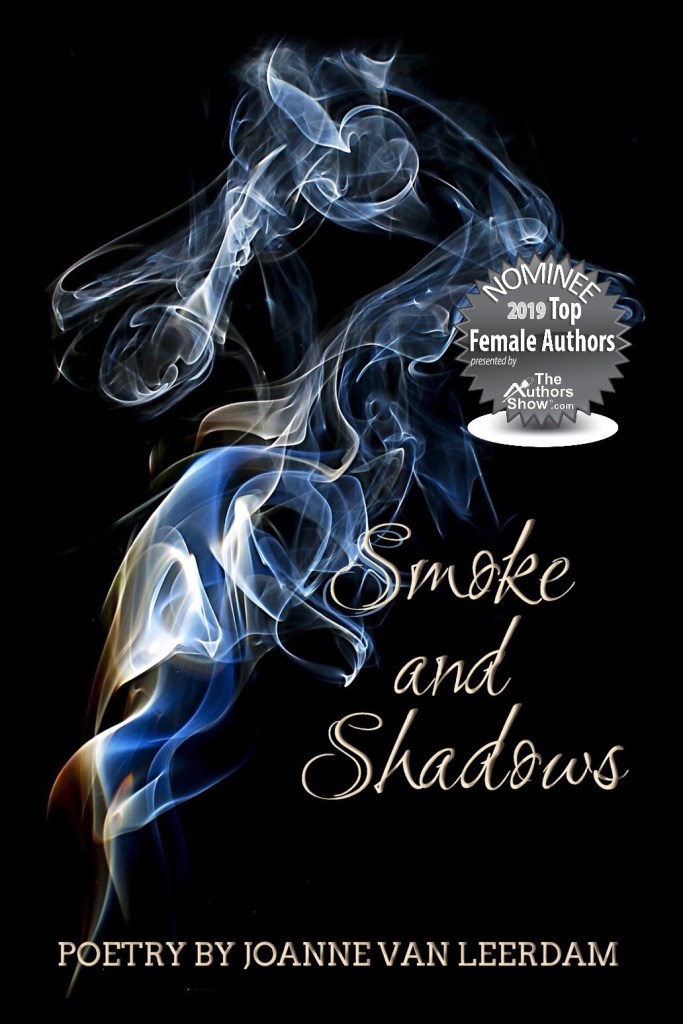
Guess who got nominated again for Top Female Author 2019?
I did, that’s who!
‘Smoke and Shadows’ has been nominated in the Poetry category – the same one in which Nova won in 2017.
It’s fair to say I am excited!
It couldn’t have come at a better time. The crazy busy pace and emotional demands of the last three weeks and the stress I have been under because of things outside my control have really worn me down, and while I’ve enjoyed the release of ‘A Rose By Any Other Name’, I haven’t really given my books or my writing the attention they deserve at all the past month or so. I’ve started a number of poems lately, but haven’t finished any of them… yet.
It’s really nice to know someone loved my book enough to nominated it. I love it, and I’m proud of it for so many reasons – but that is no guarantee that anyone else is going to. The reviews have been good, though, so I have reason to hope that others will enjoy reading it, too.
It’s also very timely reminder that there are things which transcend those times of stress and exhaustion in our lives that seem to take over and leave no time or energy for anything else.
Of course, we know that, but sometimes we forget to keep that thought in our mind. It’s amazing the difference a little bit of encouragement and support can make.
Winners are announced on July 8th. I’ll be sure to let you know if I win!
They say having an email list is crucial for an author. It’s the one sure-fire way to reach your readers.
I am clearly the exception to that rule.
Either I really suck at creating newsletters, or my subscribers signed up for the wrong list. It’s why I am very reluctant to send out newsletters now.
When I send emails with other people’s books in them, my subscribers click through to those books.
Do they click through to mine? Nope.
And sadly, I get as many clicks to unsubscribe as I do on the links in my newsletter.
It really is quite depressing.
Yet I don’t do anything different than any of the dozens of authors whose newsletters I receive. Well, that part isn’t strictly true:
I don’t spam my books repeatedly. I don’t email every week, let alone every day or two, like some do. I don’t use high pressure sales pitches. I don’t beg, and I don’t whine. I don’t even include only my own content. I always share other books and bookish events that readers might be interested in.
I have observed all those things happening in various different authors’ newsletters at different times, and have always tried to avoid doing anything I have found off-putting.
Honestly? I don’t know what I’m doing wrong, but I appear to be doing it consistently.
I do suspect that maybe newsletter writing is not for me. I’ve given it a fair crack and it hasn’t been at all well received.
It’s live! My new Shakespeare/fantasy novella launched today at 3pm Sydney/Melbourne time.
I am really proud of this book, and very excited to be able to introduce it to people as a new release.
I hope that readers will enjoy the story. I certainly had fun writing it, and still laughed again reading it over while formatting the ebook and paperback. It was a most enjoyable challenge to take two old stories and weave them into something new and fresh.
‘A Rose By Any Other Name’ is widely available in both paperback and ebook.
***
Excerpt from Chapter 1
Gnarled fingers gripped the doorframe tightly as she watched him riding slowly, as though searching for something.
What does his lordship want now? By the stars, I have precious little left. Is it not enough that he has built his mansion on my father’s land? And his walls around the trees between which my poor mother is buried? I’ll give him something… although it may not be what he wants.
She grinned cynically, a glimpse of yellowed teeth between thin, hateful lips.
Wait. He’s dismounting… Fool. There are no raspberries yet; it’s still too warm. What kind of moron… picks raspberry leaves? Oh, now… that is interesting. Very interesting.
Straightening her thin body to her full height, she stepped out into the field, heading straight for the thicket of barren raspberry bushes.
“And what are you going to do with those?” she demanded.
Nico jumped at the sudden intrusion. His thoughts scattered at the sight of Malevolenza.
Wizened and ghastly, she had become even thinner and more gaunt since he had last laid eyes on her over twenty years ago. She had watched in angry silence as the walls of the estate were built by his father’s workmen. Her wailing curses had risen like a fortress of sound outside the completed estate walls continuing for what had seemed an eternity on the night they were finished and the gates locked – the night his father had died. Whether it was fear or black magic that had driven the soul from his body, Nicolas would never know. When his father was cold, his grey eyes staring sightlessly at the ceiling as though he had been interrupted mid-thought, the old crone had fallen silent and disappeared. Or so he had thought.
“Well? Gatto got your tongue? Or are you… bewitched?” she cackled.
Nico opened his mouth, but he could not speak.
“Raspberry leaves… what on earth would a man want those for? Unless… there is a child on the way?”
The fear in Nicolas’ eyes was like a drug to her.
Malevolenza pointed her bony finger at him, her dirty, ragged nail giving emphasis to her intent. She muttered the words of her spell under her breath: “Doppio, doppio, lavoro e disordine, Ora sono io il tuo maestro!”
Nico remained mute, entirely under her control.
“You will take these leaves to your wife. Grind them into a powder, and make a tea. She will drink it, and her pains will begin. And then, when the child is born, you shall give the baby to me. You will tell your wife the child is dead. Go now. It shall be done.”
Nico’s senses returned to him only when she had disappeared. Shaking his head, and unable to recall what had crossed his mind just now, he resumed picking the leaves and placing them carefully in the pouch he had brought for his special harvest.
As he returned home late that afternoon, the sun dropped low in the sky and a distinct chill fell over the air.
It’s easy. A nice picture, a few well-chosen hashtags, and you’re done. Scrolling through your feed and liking posts is easy too.
Of course, there are ways you can make things more sophisticated. Adding your post to your story is relatively straightforward. You can add posts to highlights that show up in nicely organised groups on your profile. You can save posts into collections. You can follow favourite hashtags as well as individuals.
There’s no obligation to do any of those things, so you can really keep it as simple or make it as fancy as you like.
I really enjoy looking at other people’s creativity in pictures, so I’m right at home on Insta. I’m happy to look at their books, their cats or dogs, their holiday snaps, whatever. I love baby pictures. I enjoy memes. Some people want to post about their books all the time. Some people hardly ever post about their books. Either way, I’m cool with that. I like the fact that we all have freedom to post as we please, and we’re all able to get on and play nicely in the Insta playground.
I like the simplicity of responding to other people’s posts. Liking is easy. Commenting is easy. I do occasionally think it would be nice if there were a choice of reactions like there is on Facebook. Other days, though, I consider it in terms of “a heart is a heart is a heart” and am grateful that there isn’t more value given to one response over another.
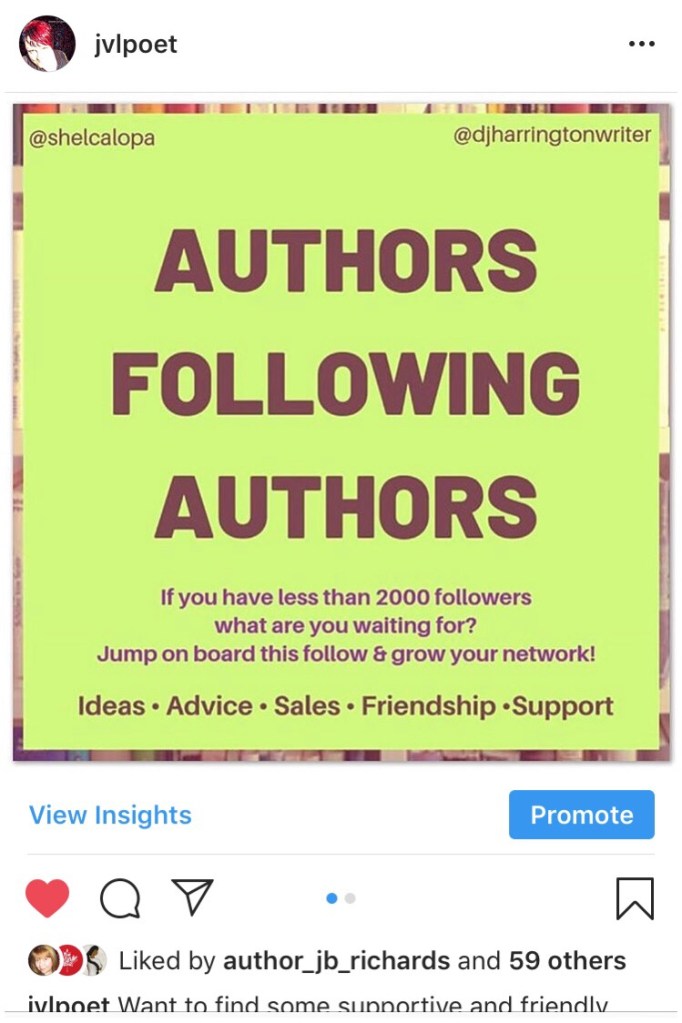
It has been really encouraging and motivating to connect with other people with similar interests through the use of particular hashtags and “follow loops”, which are basically posts where authors or other people with common interests respond and then follow one another. I’ve found so much inspiration, and received so much encouragement and feedback, from other authors and Indie creatives on Instagram. It’s a great way to become part of a very positive and proactive creative community.
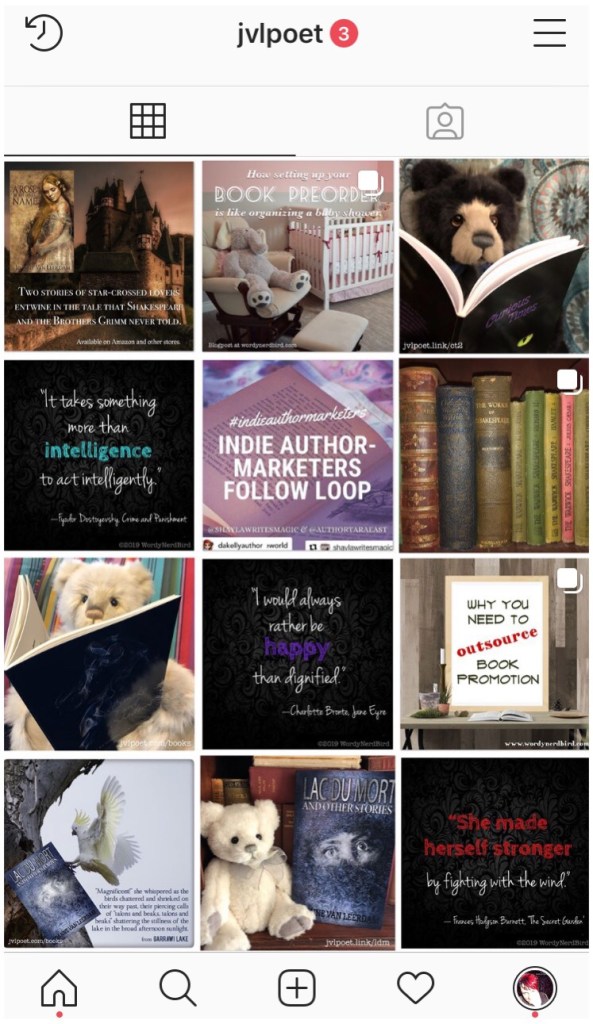
The challenge of developing my own creative identity on Instagram has been beneficial in terms of incorporating my own style and branding so that my Instagram profile is consistently “me”. I want people to be able to look at my profile and understand something of my personality and commitment to what I do. There’s a lot more to that than “buy my book” posts. It’s been a bit of a learning curve, but well worth it in terms of consistency and style, and as a means of establishing some credibility.
And, of course, there are things that frustrate me. These fall into two groups: less pleasant aspects of the app itself, and my own personal peeves.
First up: the less “user friendly” elements.
Using the wrong hashtags – or more correctly, hashtags that have been abused by others, can cause your posts using those tags to be shadow banned. That’s a nerdy way of saying fewer people will see them. Don’t panic, though – there are ways to find out which tags are thus afflicted, and so avoid using them.
Scammers that look like legitimate shopfronts frequent Instagram. They’re as capable of using a pretty picture as anyone else, it seems. It pays to check out any business or site before clicking through from an Insta ad – and that’s the voice of experience talking. I got caught out once, and learned my lesson very promptly.
The challenge of gaining visibility for posts. It seems that no matter how many followers I have, there’s a natural cap on how many “likes” or views my posts seem to get. Just like Facebook – which owns Instagram – there’s an algorithm running that appears to how many of my followers see my posts. The more likes a post gets, the more visible it is to more people. Of course, they’re quite happy to encourage me to boost my posts and pay for them to show my posts to more people. Forgive my cynicism about that, won’t you?
Secondly, my “pet peeves”:
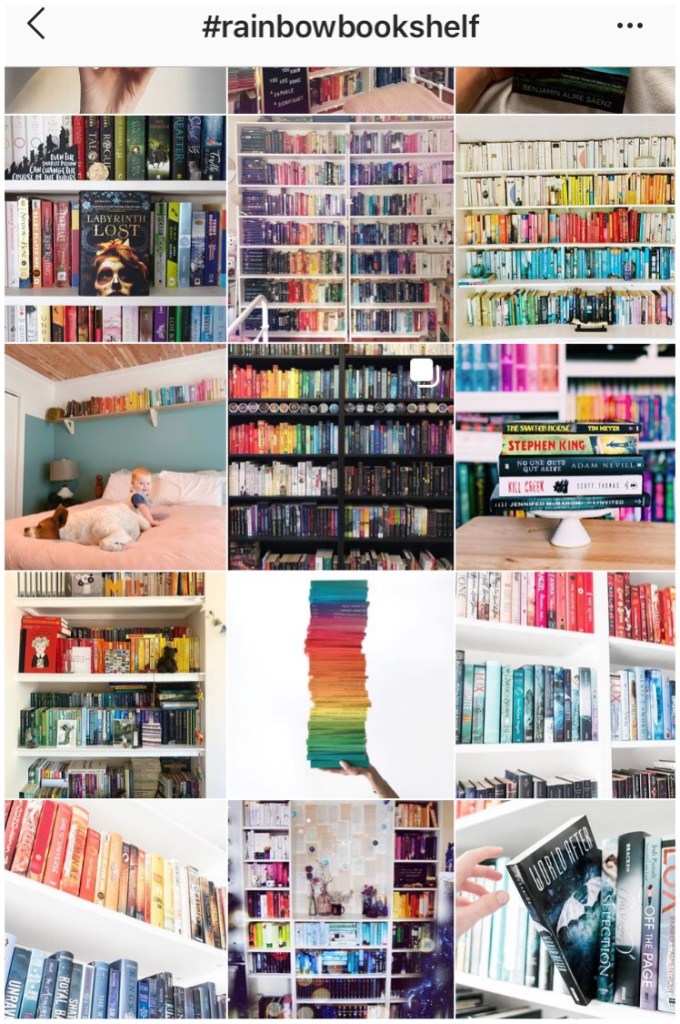
Bookshelves arranged into rainbows. I just don’t understand. I get that it’s pretty, and I like rainbows as much as anyone… but it really gives the book nerd in me enormous anxiety. Wouldn’t that mean a series of books is separated on the shelves? And how does one find anything if different genres and categories are all mixed up on the basis of the colour of their covers? This is clearly a hard no from me.
People who appear to be commenting in response to something I post, but they’re really spamming me with their own content. Ugh. That’s just rude.
People who follow in the hope that you’ll follow them back, and then unfollow you. Especially those who don’t just do it once. There are a couple of accounts with a really distinctive and instantly recognisable handle that keeps on following me, then unfollowing and following again a couple of weeks later. Frankly, I wonder why they bother, but it is amusing. Do they think people aren’t going to notice that?
The verdict: Instagram is generally a very positive and enjoyable place for me. The things I don’t like are opportunities for me to practise being a grown up and just keep scrolling past them. It’s an Insta-heart from me.








 WordyNerdBird