And People Wonder Why I Have Trust Issues.

This happened today… and I am very unhappy.

Anyone who knows me well enough to be in my front yard knows how much I love my maple trees that I have carefully and lovingly grown as reminders of my beloved Canada. I can’t get there anywhere near as often as I want to, so the least I can do is have a bit of Canada in my own garden. It’s not too much to ask.

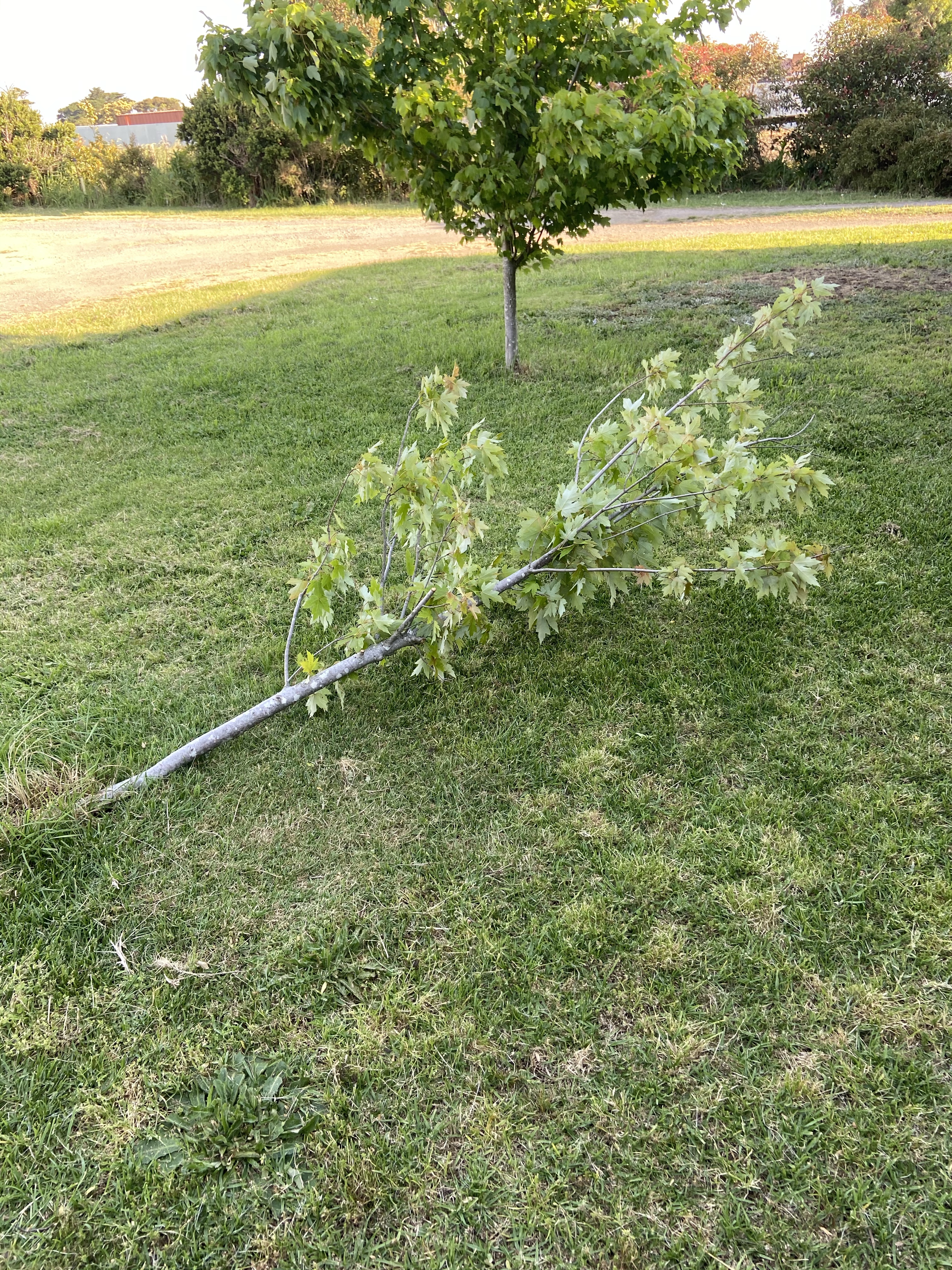
Today, though, someone who was in my front yard — unbeknown to anyone who lives here, of course, heartlessly ran down one of my maples.

The victim.

Yes, it was a fairly small tree. That is irrelevant, because it was on its way to being big. Big maples cost lots more than smaller maples in Australia, and small ones cost more than enough. More importantly, it was my tree.

The only notification they left of the destruction of my tree was the tree itself, now horizontal rather than vertical. No note. No phone call or text. No apology. No identification of the culprit.

I am so sad. I’m sad for the loss of a tree that actually meant something to me.

I’m also sad that whoever is responsible felt it was okay to not be honest with me.

If I knocked over someone’s tree or broke something that belonged to someone else, I would be guilt-ridden and desperate to replace it.

Apparently, not everyone I know is quite so principled.

Fortunately for them, I have absolutely zero clues as to who is responsible.

Unfortunately for me, that means that my already cynical INFJ mind will not just go “oh well…” and let it go. Self-destructive as it may be, a little voice in my head will wonder ‘Was it you?’ every time I see people I should be able to trust. The question will probably never come out of my mouth, but it will be there, nevertheless.

The group of people in whom I have  absolute trust was already  a very small group indeed.
And people wonder why.

A Spooky Story For Halloween

This very spooky true story is a perfect short read for Halloween week.

I hope you enjoy this creepy tale as much as I did.

Want to read a true spooky story? In Godwin, (near Erwin), North Carolina on a dirt road past the Chicora Civil War Cemetery,  sits the antebellum …

My Spooky Story For Halloween

Josh Frydenberg: You Have Some Nerve, Mister.

An open letter to Josh Frydenberg, Federal Treasurer and MP for Cooyong:

You have some nerve. Your outburst in Parliament yesterday was way out of line.

Yes, mistakes were made early on in Victoria’s management of COVID. And they got cleaned up. We’ve actually done a brilliant job, which you didn’t even acknowledge. But that isn’t the part of your speech to which I, and many other Victorian teachers, take particular exception.

While the rest of the House was congratulating the people of Victoria on crushing the curve and bringing the numbers back to zero, you chose to be ungrateful. That little tantrum of yours would make a two year old proud.

An excerpt from Frydenberg’s speech in Parliament, Tuesday Oct 27, 2020.

Your assertion that your children missed out on six months of schooling is highly offensive to every teacher in this fine state who has gone way beyond the call of professionalism and duty of care to ensure that our students did not miss a single thing that we were able to provide for them.

Were my colleagues and I merely dreaming all the extra work we put into setting up online classrooms, doing extra courses in online safety and classroom management, monitoring our students’ wellbeing and mental health, in addition to all the usual planning, preparation and teaching we have been doing all year?
Did we imagine the eye fatigue and headaches from being in online classrooms all day, doing all our marking and reporting online, meeting with colleagues and conferencing with parents online?

You have been able to do your job almost completely normally all year.

We have had to completely reinvent ours, while at the same time being required to switch from face to face teaching to online classrooms, then back, and back again, sometimes at only a few days’ notice.
We’ve done it without tantrums, without complaints, and without pointing fingers at people who were also trying to do their best in otherwise uncharted territory.

Victorian teachers have proven to be dedicated, resilient, and incredibly versatile this year.

And I will tell you one thing that is absolutely certain: the students at my school did not miss six months of school. They had their full timetable, every school day, complete with teachers and teachers aides, differentiated lessons, roll call, and individual help whenever they needed it.

Don’t be firing your nasty little aspersions at Victorian schools and the 100% committed teachers in them, Mr Frydenberg, even by inference.

We do not deserve that. We are exhausted, our patience has been pushed to the limit, and we are still going. We are not in the mood for your petulant tantrums.

It’s high time you gave credit where credit is due, learned some gratitude and grace, and got on with doing your job while we continue to do ours.

An Open Letter to Josh Frydenberg @JoshFrydenberg
#TeacherLife #VictoriaTheHeroState #howdareyou

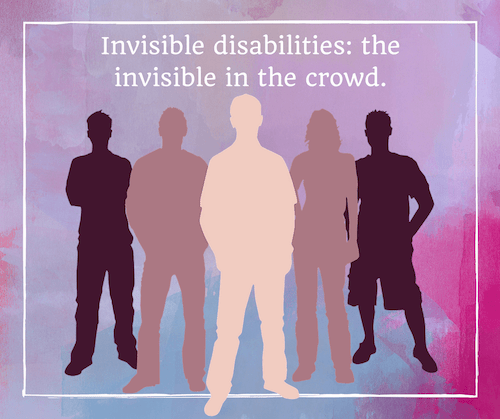
6 Things to know about Invisible Disability Awareness

Everything this post says is true.

I, too, suffer from chronic, invisible illnesses.
I have fibromyalgia. I have a permanent back injury. I have depression and anxiety, and I work hard to keep those under control. I strive to take good care of myself, and to manage my conditions. I avoid aggravating them. I also make every possible effort to stay positive and to do the things in life that I enjoy doing.

The fact is, though, no matter what good care I take care of myself or how positive and proactive I am, I cannot heal or cast off my invisible disabilities.

The debilitation is real.
The exhaustion is real.
The misconceptions are real.

And the judgement? Many people would not be willing to believe how real, and how consistent, and how very, very toxic that is.

The critics are only right about one thing: I don’t look sick.
That’s because I’ve been faking being well for years.

Uhtcare

Uhtcare— pronounced oot-care — is a lovely Old English word that dates back to the Anglo-Saxon poem ‘The Wife’s Lament’, and was probably used throughout medieval times.

I heard it for the first time today in the Something Rhymes With Purple podcast by Susie Dent and Gyles Brandreth.

Image by pasja1000 on Pixabay

Uhtcare translates to ‘dawn care’ and relates to the anxiety of lying in bed worrying about the coming day before it has even really started. It comes from the OE words uht meaning before dawn and cearu/caru meaning anxiety.

It wasn’t just the beauty of the word that struck me, but also the timeliness of hearing it today. Completely forwallowed after a night of very little sleep courtesy of painsomnia, I could totally relate to that feeling! I was lying in bed before dawn this morning wondering if it were at all possible for me to actually make it to work today. I thought about the lessons I wanted to teach, and how much effort it always takes to ensure that a substitute teacher has everything they need to deliver my lessons effectively.I also felt incredibly guilty about the fact that we have only just returned to face to face teaching, and there I was thinking about staying home.

Still, I knew I wouldn’t be a safe driver today, and I also knew there was very little likelihood of me teaching anything effectively at all.

So, I got up at 5.45 am and made sure all my lessons, material and extra notes for my replacement for the day were loaded in the school’s system and ready to go.

Image by MichaelGaida on Pixabay

Given that we don’t really have an adequate alternative for such a useful and expressive word in today’s English, It is a shame that this word has fallen out of use. Maybe it’s time to bring it back.

Uhtcare: lying awake before dawn, worrying about the day.
Anglo-Saxon/Old English
#English #words #blogpost

Sources:
Something Rhymes With Purple podcast: Vedettes 15/9/2020

Ten Rare But Useful Words Everyone Should Know

Anglish Wordbook

The Latest, Perhaps Greatest, Swear Word

Last week I asked my students to do something creative. 

 Today, Student A  wasn’t very impressed with the outcome of their efforts. “I tried, but it’s turned out a bit 2020.” 

“It’s a bit what?” I asked. 

“2020.” 

Obviously, I was expected to understand. 

“Mine’s pretty 2020 too, to be honest,”  Student B admitted. 

I looked at their faces on my screen. They were being serious. 

“So…” I asked, “Are we using that as a swear word now?” 

They’re right. It actually works.

“More meaningful than swearing, Miss,” said Student B.

The rest of the class concurred. 

“And we can’t even get in trouble for saying it.” Student A grinned, clearly rather pleased with that reality. 

I smiled, told them their work was way better than 2020, and moved the lesson on. 

I don’t know if they just started doing that by themselves or picked it up from somewhere else, but at least they’re finding some practical use for 2020. I may just follow suit. 

Fibro Flares and Self Care

It’s been a rough week, both emotionally and physically. Sleep has been patchy, which isn’t unusual for me, and my back pain has been relentless. 

Naturally, my fibromyalgia decided to join the pain party with some extra bass beats and neon flares of its own. 

Yesterday I chose to work through it. I’m a teacher working from home and my students are depending on me. It’s not that easy for substitute teachers to step into a remote learning classroom and make things happen the way I want them to. And, you know, I didn’t have to drive to school, which helps when you wake up in crushing pain. My classes were great, and spending ninety minutes with Genghis Khan in my Year 8 History class was a good distraction. 

When my classes finished, I had to go to town to pick up my much needed new glasses, I’ve been struggling with eye fatigue while doing so much remote teaching, and it’s fair to say that the curriculum planning and lesson preparation don’t stop just because we’re working off campus. It was a 45 minute drive, but I just went there, got my glasses, and came home. I am not interested in shopping or spending any more time around people than I need to right now. 

When I got home, I rested. Dinner was easy – the soup was already made, and just waiting for us to enjoy it with a spinach and feta bread twist. 

I really hoped the evening of rest would be enough to make the pain flare back off. 

Nope. 

So, by necessity, this weekend has to be a quiet one. 

My new glasses are great, but I’m not going to be spending much time on screen. I’d love to read a book, but my hands hurt too much to hold one for long. 

So, I will do what needs doing, and that’s it. I have a couple of new podcasts to road test, and then I’m going to indulge in an audiobook. I’ve got my recliner, my quilt, my cat, and the sound of rain falling outside.

Choosing my content is important for my mental and emotional wellbeing. I’m taking care to exclude anything negative, so I’m avoiding the news and social media. Throughout the whole Covid-19 pandemic and working from home experience, I have found that to be a good strategy for keeping my mental and physical spaces positive and healthy.

I’ve also got my pain medications handy in the drawer just beside me, because those things are my friends. It’s all well and good to be idealistic about managing pain and not relying on drugs, but on flare-up days, there is absolutely zero chance of that happening. A girl has to do what a girl has to do. 

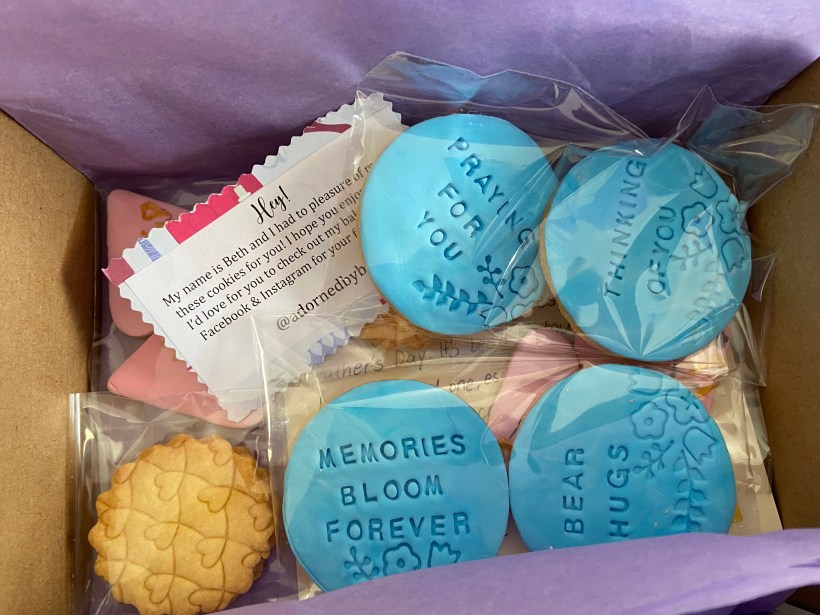
I have good coffee and plenty of water on hand. And, at some point, I’m going to have one or two of those fabulous cookies from the care package I received in the mail yesterday.

So, here’s to a quiet weekend. I’ll be looking after myself, and I hope you are able to do the same.

At least raccoons look cute with dark shadows under their eyes.

Grieving From A Distance.

While I’ve been on my own grief journey recently, many others are experiencing grief of their own.  And in this time of social and travel restrictions in Australia and elsewhere, people’s sorrow and grief is being complicated by distance and isolation. 

I have seen this happen multiple times within my own circle of family and friends in just the past few weeks. 

My brother in Canada lost his own brother a couple of weeks ago. It was unexpected, and therefore an enormous shock. 

Talking with my brother and trying to support him via instant messaging has been a blessing for both of us – to share the pain eases it somehow, if only slightly. But what I really wanted to do was get on a plane and go there to hug him and support him in person. Even if I couldn’t go immediately, the knowledge that I’d be there at some point soon would encourage him enormously. 

Sadly, it’s just not possible. My state is in lockdown. We are under strict conditions for leaving home. International travel for personal reasons is not possible. Heck, going anywhere at all beyond my local supermarket or pharmacy in the time of COVID-19 is ridiculously problematic, and probably not really safe given my lousy immunity. As it is, I have to stay here and he has to be there. 

He knows I’m with him in spirit, but it just doesn’t seem enough. I know how hard it was to lose a loved family member and a close friend within five days of each other, and his brother was both those things to him. I know how hard it was to deal with the trauma, and I had my family around me. I’ve been painfully aware of the fact that he lives on his own, some distance from the rest of the family, and hasn’t had the close support that I’ve had. 

After losing our father in June, my sister has lost two good friends and another friend she has known for more than forty years in the space of a month. I’ve been able to talk with her and listen to her express her shock and sadness, but I haven’t been able to hug her or help her in any physical way because we’re hundreds of kilometers apart.

A friend lost his uncle this week, and be there to grieve with his family because his uncle lived interstate and our border is closed. It doesn’t matter to the authorities how close he was to his uncle, nor do they care that his uncle was a father figure for him and helped raise him. The rules apply to everyone, regardless of personal circumstance. It’s understandable, but it makes the pain and misery so much worse. 

It’s not just immediate grief that is complicated by distance, either, My beloved late friend’s husband and son have both had birthdays in the past couple of weeks, and  I would have so loved to be there to support them as they struggled with not wanting to celebrate, and not being able to see the rest of the family because their lockdown restrictions are so tight. They’re all dealing with curfews, stay home orders, and only being allowed to travel within five kilometres of home for essential purposes. It’s not so restricted here, but nobody is allowed to visit Melbourne for social reasons, so that’s that. 

The result for all of them, and for everyone experiencing grief in the time of corona, is a vicious cycle of mental and emotional distress as sorrow and isolation feed on each other. The effect on one’s wellbeing is profound. 

My heart aches for everyone in that situation. I can’t imagine how much worse it must be for those who have actually lost loved ones to the virus and haven’t been able to be with them, or with their family members as they grieve. 

We are all struggling with the impact of the virus and the social restrictions it has brought to our lives, but let’s remember that there are some who are really, really doing it tough. It certainly puts the inconveniences of wearing a mask outside of home and sanitizing our hands fifty times a day into perspective. 

It may not seem like much, but a phone call or message to someone can make a huge difference in their day and in their mental and emotional health. Being willing to care and to listen is an act of love and support of immense value. 

Upside Down.

Image: ©2020 Joanne Van Leerdam

My father and one of my closest friends recently passed away within five days of each other. In fact, Helen died on the afternoon of Dad’s funeral. It was too much loss. It was too painful. It was definitely too soon and too final. And “upside down” is exactly how I felt then and still feel now.

As always, my feelings have turned into poetry.

I wrote this poem on the morning of Helen’s funeral. It was impossible to contemplate one without revisiting the other in my mind.

So, this poem is for both of them.

Upside Down.
#grief #emotions #poetrylovers #poem #personal #blogpost

Ambiguous Loss and Anticipatory Grief

I wish I had known about ambiguous loss and anticipatory grief much earlier in my life.

In yesterday’s post, I alluded to my Dad’s transition into residential aged care. 

Today, I want to share some knowledge I have gained over the past few months, because I have found it enormously helpful and therapeutic in dealing with my own experiences and feelings.  I am sure I wasn’t the only person who didn’t know these things, and my hope is that others will benefit from these insights. 

My father has become increasingly frail, and even though I knew the time was coming, making the decision to move him into residential aged care was incredibly painful. For him, it was a loss of independence, his home, his cat and my dog. His sadness was profound, and completely understandable. Still, he was very thankful — as were my siblings and I — that he could move into an excellent place where the care is consistently empathetic and kind, where the food is good, and where he can have his own things around him. 

My emotions, too, were complex. I felt guilty, even though I knew it was the right time and the right thing to do. No loving child wants to see their dad leave behind the life he has known and the things he has accumulated, and no loving child wants to see their Dad so sad. 

I experienced a very real sense of grief and loss while packing up his things, setting up his room, and helping him transition to a new phase of life, There was more to it, though, and often I didn’t know how to express what I was feeling. 

Through my research and reading, and through wonderful constructive advice from friends who have been through similar situations, I have come to understand that many of the things I am experiencing are encompassed by two terms: ambiguous grief and anticipatory grief

I had never heard of either one until recently, and I think they should both be much more commonly known.

Ambiguous Loss is a kind of grief experienced where there is no distinct end or no closure. Generally speaking, it arises from an emotionally painful or turbulent situation that one is going through, and which doesn’t have an “end date”. The reasons for grief or a profound sense of loss might be indistict, or complex, or unidentifiable at the time. Sometimes the grief masquerades as anger, frustration or overwhelm. To experience ambiguous grief is vague, exhausting and indefinite in more ways than just the timeline. 

It’s that mixed feeling of sadness at having to make big decisions that we didn’t feel ready to make, and thankfulness that things worked out perfectly when we needed them to.

It’s the sadness we felt at making decisions about what to do with his things, and asking my best friend to adopt his cat, even though he is still with us.

It’s the sadness I feel at saying goodbye and leaving Dad behind every evening, knowing he is safe and well cared for in his new home, but also that he is no longer ‘at home’. He is exactly where he needs to be, and I love it and hate it at the same time. 

Anticipatory Grief occurs when one realises or acknowledges that death is approaching, or even just a likely outcome. 

This is what I have experienced on a number of occasions when Dad had a health crisis and ended up in hospital. Most vivid in my memories was March 1st this year when I had followed the ambulance to the ER in the wee hours of the morning. When I got there, instead of being taken through to see Dad right away as I had always been before, the doctor on duty actually took me into a little room and  had “the talk” with me to made sure I understood how precarious Dad’s condition was, and that he might not make it this time. To his relief, I was fully aware of that. I suppose many people are surprised by it, or in denial, and I totally get that, too. It’s the natural reaction but, having been there more than once, it is no longer my default. There was no dozing while I sat by my father’s bed that night: instead, I spent hours composing the message I would send to my siblings, and another that I would send to other family and friends, at a decent hour of the morning. 

This is what we felt when packing up Dad’s things for his room at the home, and when sorting and cleaning out the accumulation of papers, trinkets, and household items in his house. Those are the sorts of things usually done after someone dies, not before. Still, it had to be done. 

Similarly, putting his wallet and the jewellery box containing my grandfather’s wedding ring and Dad’s much-loved pocket watches in a special spot in my own house for safekeeping felt strangely poignant and painful and incredibly sad. 

This is what I go through every time Dad has a episode of poor health, or gets an infection, or can’t express why he doesn’t feel good. It happens when he has times of vagueness or confusion, and when he can’t find his words All of those things are happening more often than they used to, so the sense of grief increases as time goes on. 

What I have learned thus far is that ambiguous grief is a very real and important part of the emotional process, and that my feelings don’t always have to be understood to make sense and be accepted as valid

In hindsight, I wish I had understood both of these realities when my mother was diagnosed with dementia, when she went into care, and when she didn’t know who I was anymore. My father, siblings and I were grieving the loss of the person she had been long before she actually passed away. When she died, it felt like it was my mother and someone entirely different at the same time. I felt so guilty about feeling that her passing was a liberation for her and a relief for us, even though my grief was as desperate and profound as ever. I was angry at myself for not knowing how to feel. 

At least this time, with experience and some knew understandings, I can accept the vagueness and complexity of my feelings, which can change from one moment or one day to the next, and just let it be whatever it is. I can cherish every moment with Dad and grieve at the same Time. I am free to laugh and cry, to tell my siblings the stories that are simultaneously sad and funny, and to live each day as it comes without having to explain to myself or anyone else why I’m a mess. 

As awkward and painful and weird as that may be, but I think it’s a healthy way to be. Still, I know I need to manage all those pesky feelings so I stay healthy, too. 

So, I try to make sure I talk honestly with my husband, siblings and closest friends about my thoughts and feelings. My sisters and brother are feeling the same things, and they all live interstate, so keeping them in the loop and encouraging them to express their feelings are hugely important, too. 
I allow myself to cry. ‘Being strong’ is rubbish. 
I refuse to beat up on myself when things are tough, or if I don’t achieve everything on my ‘to-do’  list. 
I remind myself to take each day as it comes.
I remind myself that we are doing the best thing for our dad, and that he is being expertly and compassionately cared for.

And every single day, I hold Dad’s hand and I tell him I love him. Because, throughout this whole process, Dad being sure of that is the most important thing of all.  

Different Kinds of Grief‪
#EmotionalIntelligence #emotions #grief #feelings #MentalHealthMatters  #MentalHealthAwareness‬ #personal #blogpost 

Helpful Reading: 

What Is Ambiguous Loss? 

Ambiguous Grief: Grieving Simone Who Is Still Alive 

How To Deal With Ambiguous Loss

Grief Before Death: Understanding Anticipatory Grief
Grieving Before A Death: Understanding Anticipatory Grief