Good Grief! Getting Through My First Father’s Day Without My Dad.

The challenge: dealing with my feelings on a day I’ve always enjoyed celebrating before.

Over the past few weeks, I found myself growing heartily tired of advertisements and posts about Fathers’ Day. 

I sincerely wish all the dads out there and their kids a very happy Father’s Day, and I truly hope they can spend some quality time together. I hope kids of all ages cherish their dads and make the most of every opportunity to spend time with them while they still have them. 

For me, though… it just hurts. This is my first Father’s Day without my dad after 53 years of having him in my life. It has only been 11 weeks since he died and I miss him enormously every day. 
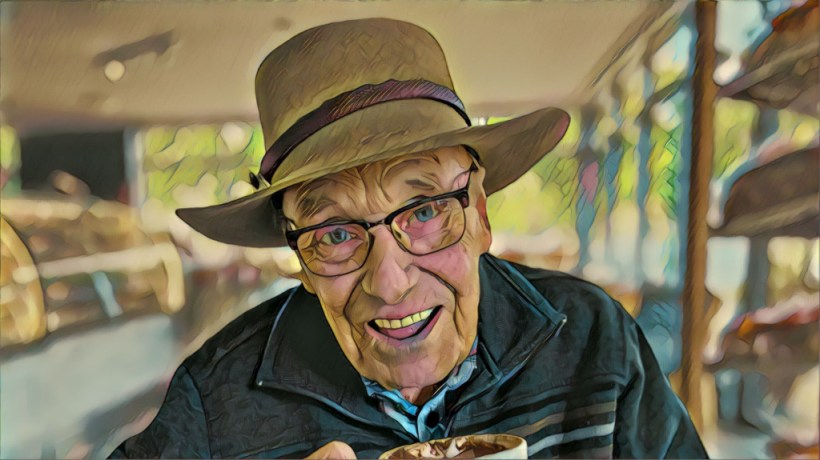
Dad enjoying a great coffee at Camperdown Bakery in March 2020.

I have so much to be thankful for. Dad was wise, and funny, and encouraging, and consistent, and caring, and always there when I needed him. I loved being able to care for him and provide for him, to spend time with him every day, and to take him to the places he needed or wanted to go. We were father and daughter, but also great companions and partners in laughter, day trips, good coffee and sweet treats. 

All of that is why I miss him so much. And while everyone else is celebrating their dads as they absolutely should, it feels empty for me. 

So, I spent part of my day commemorating my father. 

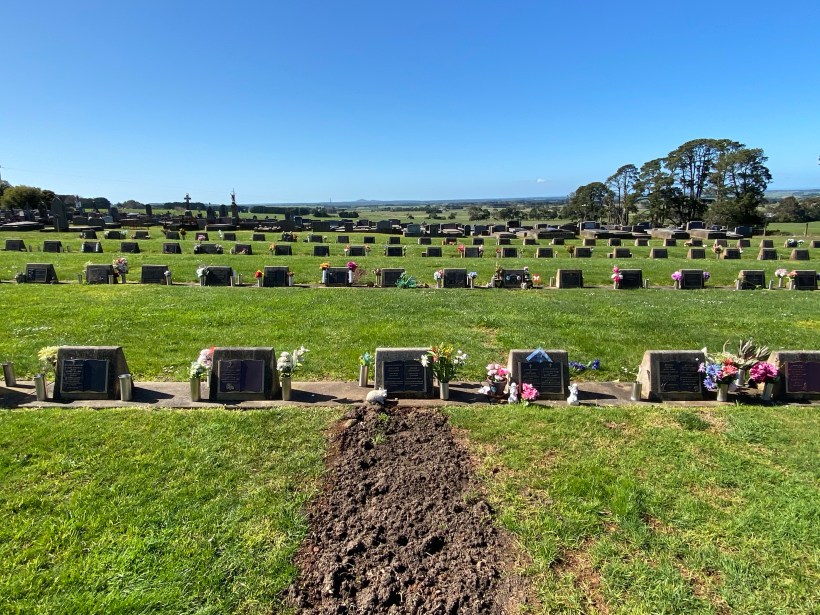
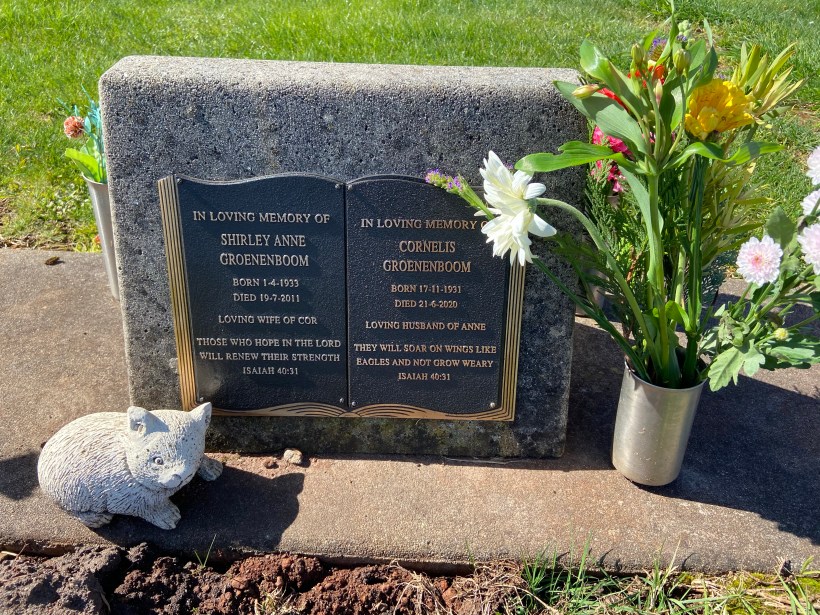
I went to visit the grave where both my parents are now buried. I placed flowers there, took some photos, and had a big howly cry. 

There was a young guy nearby, placing something on a grave — maybe his own dad’s or grandfather’s resting place, I don’t know. He approached me gently and asked, “Are you okay, miss?” We we’re both wearing masks, but his eyes were kind and I could see he was genuinely concerned for me. I thanked him and explained it was my first Father’s Day without my dad as he died in June, and he nodded. “He was lucky to have a daughter who would cry for him,” he said. Then he patted my arm and walked away. What a kind, compassionate soul! 

As I calmed my breathing and emotions, I took some photos for the family. 
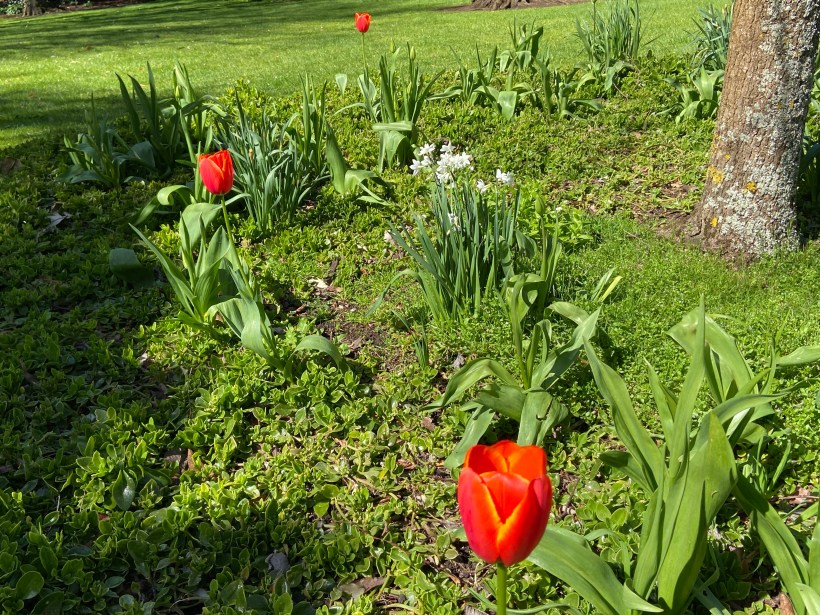
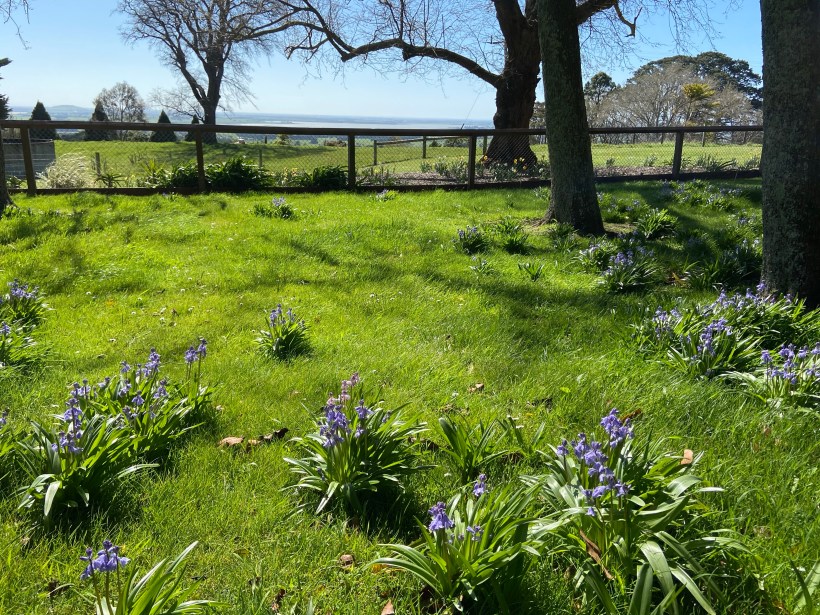
My next stop was the Camperdown Botanic Gardens. I love walking there. It’s so pretty and there is always something lovely to see. It was the perfect place for reflecting and mindfulness as I walked.  Surprisingly, I was the only person there: everyone else was missing out, because it was an absolutely glorious day. There were blossom trees covered in buds and blooms, new leaves on limbs that have been bare all winter, a glorious grove of bluebells, pretty tulips and cheerful daffodils and jonquils. They were all sights that were good for the soul. 

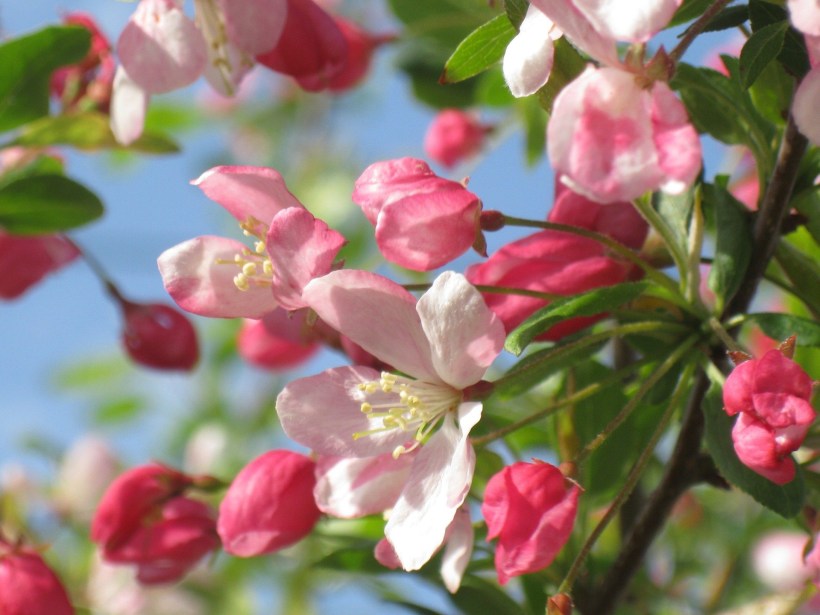
My third destination for the day was the nursery: I wanted to buy a tree to plant in memory of my dad. There were some lovely options – silver birches, ornamental pears, weeping cherry blossom, and a range of decorative blossom trees. In the end, I couldn’t decide between the crabapple and the Persian witch hazel, so I bought both. They both have leaves that change with autumn colour, and pretty blossoms to give cheer in late winter and early spring. 
There was one funny moment when the lady who runs the nursery suggested a maple tree. I had to confess to her that I adore maples — they are my favourite tree— but I couldn’t get a maple this time because nobody would believe I bought it to remember Dad. A maple would definitely be just  for me. 

It has been an emotional roller coaster of a day, but I have tried to fill it with positive things and happy memories instead of dwelling on the past or wallowing in misery. I experienced a beautiful moment of kindness from a stranger, enjoyed fresh air and sunshine on an absolutely cracking spring day, and I have two lovely new trees that will brighten the garden and my life. 

The crabapple has been planted, and the Persian witch hazel is just waiting until tomorrow evening for its turn. 

Counting my blessings instead of my tears is definitely what Dad would have wanted me to do.

So, once again, job done.  

Stress Management Tips For Workaholics.

At a time when my state is still in lockdown, we’re back to teaching online and trying to tick all the boxes that go with that while at the same time dealing with all the other demands of life.

It’s very easy to become consumed by the job. It’s very easy to rationalise going those extra steps to create whizz-bang lessons that will engage and interest the students and hopefully keep both them and myself motivated despite the malaise that I have dubbed ‘online learning fatigue”.

I have learned over recent months how important it is to set limits for myself. I have consciously tried to avoid overburdening my students with work, and sought to develop learning activities that they can complete offline. I’ve tried to remind them to get up and walk around, to drink water, to get sunshine on their face and on their back.

Ironically, I’m not always so great at managing my own stress. In the midst of trying to be Super Teacher or Little Miss Motivator, I still have to remind myself to do those same things.

This post from Nerdome appeared in my feed at an opportune moment. It’s a good read, providing some quick tips and good insights about managing stress.

I hope you enjoy it as much as I did.

GigaWorld's avatarNerdome

Those who spend more time with their works tend to suffer from stress more than the other. The mental and emotional burden that is often attributed to the demands of work can affect our productivity and efficiency with our task that would often lead us to troubles than not. This is one reason why it is very important for workaholics to undertake stress management to avoid compromising their career.

You don’t have to be in a special place to apply stress management. In fact, you can do it anytime and anywhere if you feel like it. You can do it while at your work desk, in the comfort room, or even out in the lobby. The idea here is to control your mind to relax so that you can continue fresh with your task — emotionally, physically, and mentally. Here are some tips that will surely help you out.

Tip…

View original post 412 more words

Grieving From A Distance.

While I’ve been on my own grief journey recently, many others are experiencing grief of their own.  And in this time of social and travel restrictions in Australia and elsewhere, people’s sorrow and grief is being complicated by distance and isolation. 

I have seen this happen multiple times within my own circle of family and friends in just the past few weeks. 

My brother in Canada lost his own brother a couple of weeks ago. It was unexpected, and therefore an enormous shock. 

Talking with my brother and trying to support him via instant messaging has been a blessing for both of us – to share the pain eases it somehow, if only slightly. But what I really wanted to do was get on a plane and go there to hug him and support him in person. Even if I couldn’t go immediately, the knowledge that I’d be there at some point soon would encourage him enormously. 

Sadly, it’s just not possible. My state is in lockdown. We are under strict conditions for leaving home. International travel for personal reasons is not possible. Heck, going anywhere at all beyond my local supermarket or pharmacy in the time of COVID-19 is ridiculously problematic, and probably not really safe given my lousy immunity. As it is, I have to stay here and he has to be there. 

He knows I’m with him in spirit, but it just doesn’t seem enough. I know how hard it was to lose a loved family member and a close friend within five days of each other, and his brother was both those things to him. I know how hard it was to deal with the trauma, and I had my family around me. I’ve been painfully aware of the fact that he lives on his own, some distance from the rest of the family, and hasn’t had the close support that I’ve had. 

After losing our father in June, my sister has lost two good friends and another friend she has known for more than forty years in the space of a month. I’ve been able to talk with her and listen to her express her shock and sadness, but I haven’t been able to hug her or help her in any physical way because we’re hundreds of kilometers apart.

A friend lost his uncle this week, and be there to grieve with his family because his uncle lived interstate and our border is closed. It doesn’t matter to the authorities how close he was to his uncle, nor do they care that his uncle was a father figure for him and helped raise him. The rules apply to everyone, regardless of personal circumstance. It’s understandable, but it makes the pain and misery so much worse. 

It’s not just immediate grief that is complicated by distance, either, My beloved late friend’s husband and son have both had birthdays in the past couple of weeks, and  I would have so loved to be there to support them as they struggled with not wanting to celebrate, and not being able to see the rest of the family because their lockdown restrictions are so tight. They’re all dealing with curfews, stay home orders, and only being allowed to travel within five kilometres of home for essential purposes. It’s not so restricted here, but nobody is allowed to visit Melbourne for social reasons, so that’s that. 

The result for all of them, and for everyone experiencing grief in the time of corona, is a vicious cycle of mental and emotional distress as sorrow and isolation feed on each other. The effect on one’s wellbeing is profound. 

My heart aches for everyone in that situation. I can’t imagine how much worse it must be for those who have actually lost loved ones to the virus and haven’t been able to be with them, or with their family members as they grieve. 

We are all struggling with the impact of the virus and the social restrictions it has brought to our lives, but let’s remember that there are some who are really, really doing it tough. It certainly puts the inconveniences of wearing a mask outside of home and sanitizing our hands fifty times a day into perspective. 

It may not seem like much, but a phone call or message to someone can make a huge difference in their day and in their mental and emotional health. Being willing to care and to listen is an act of love and support of immense value. 

Tristful.

Image by huskyherz on Pixabay.

Tristful is an archaic word that means to be melancholy or full of sadness. Like forswunk and forwallowed, it is a word which is said to be obsolete now, but it is so beautiful that I want to bring it back. 

It came into the English language, as many words did, courtesy of the Normans and the Plantagenets, in medieval times.  The Latin word tristis gave French the word triste, which gave English trist meaning sad or gloomy, and thus tristful. 

I discovered this word today while looking for words to describe my feelings and state of mind at this point in my grief journey. Over the past few days, I have been feeling as though everything is too hard, and I just want to withdraw into my cocoon and wallow. I’m not angry, nor am I ungrateful, but I am definitely not numb. My emotions are very close to the surface, and at times I am unable to hold back the tears. 

I know all of that is completely natural, and I know I need to accept it and work through it. I know it won’t last forever.

But I also needed the words to understand and express my emotions. 

I have been using the term ‘melancholy’ a lot, and it describes my condition perfectly. However, I know that while one cannot actually wear a word out, it is entirely possible to cheapen it with overuse. Melancholy is a word that I love because it is so expressive, and because it’s beautiful to say and to hear, so I would hate to be guilty of turning it into a cliche. 

Sad isn’t deep enough. Miserable would be appropriate, but it feels more temporary and somehow more minor than what I am experiencing. 

I very quickly rejected morose and in a funk because both suggest sullenness or a bad mood, which is not reflective of my feelings or state of mind. Moody was no better.

When I saw tristful listed in my thesaurus under the entry for melancholy, I had an immediate sense of having discovered a gem that most people had laid aside and forgotten about. As I researched its meaning and etymology, I knew I had discovered the perfect alternative. 

Tristful: to be melancholy or full of sadness. #words #emotions #etymology #English #blogpost

Balancing Positive and Negative Emotions

Today’s professional development day at school focused on Positive Education and how we can help our students and our communities to flourish. 

One of the aspects I found most thought-provoking was the discussion about positive or comfortable emotions and negative or uncomfortable emotions. It was particularly relevant to many of the things I have been experiencing and observing about life in recent weeks, and I want to share my observations and reflections on those things with you here.

Before I go any further, though, I want to make it absolutely clear that I am not a medical or psychological expert or professional. I am, however, a high school teacher of 30 years’ experience, so I have had time and opportunity to make some observations about the things that happen in life and how we deal with them.

More personally, as someone who experiences chronic physical issues and mental health challenges, and who has experienced many conflicting emotions recently due to profound personal loss, I’m confident I know at least a little bit about dealing with adversity, and I’ve learned a few things about the importance of balancing negative emotions with positive ones. 

Both positive and negative emotions can be powerfully motivating.  Fear of failure or embarrassment is as strong, or stronger, in some people as desire for success is in others. 

Negative or uncomfortable emotions can motivate and fuel positive outcomes such as creativity, empathy, and relationship building.

Positive and negative emotions can actually be highly effectivecompanion emotions‘.  I don’t expect that this is a scientific term at all, but it seems to me a useful term that describes how contrasting emotions experienced at the same time can provide some healthy balance and perspective. 

I can testify from the past few weeks that gratitude can moderate grief, and enjoying a few quiet moments in the beauty of nature can transform abject misery into much gentler sadness.  

In different contexts, fear can be a healthy addition to awe or wonder – think of a child at the zoo, for example, for whom interest and desire to engage with the animals should always be balanced with both respect and a little fear or mistrust, so that the child and the animals all remain safe. In yet another situation, a little anxiety or nervousness can actually heighten deliberate preparation and performance if it is paired with intentional and thoughtful preparation, because it can stop one from making rushed or careless errors, or from taking success for granted. 

Life is not about always avoiding the feelings that make us uncomfortable or sad. Hoping to do so isn’t realistic at all, given that there are many situations that we can neither actually control or entirely avoid. 

Instead, it’s crucial that each of us learns to manage those negative or uncomfortable feelings and use the situations in which we encounter them to develop and consolidate our personal strengths and resilience.  Learning to look for the positives in life and choosing to find a balance for the negative experiences or emotions we encounter is how we grow and move forward in life. 

“Whether dealing with a major lifeshattering event or a small bump in the road, we can use gratitude to help boost our happiness and change our outlook. While gratitude won’t change our circumstances, experts say gratitude can change how we feel about them.”

Paula Felps in ‘Your Brain on Gratitude’ by Paula Felps 

That’s certainly what I’m seeking to do while working through my grief. It’s okay to take the time to mourn my losses, but I can’t afford to unpack and live there. Finding a constructive way through my pain will enable me to heal, and come out stronger at the other end. 

In being honest about how I feel and what I’m thinking in my posts on this blog, my hope is that my words will help and encourage someone else get through their personal challenges, whatever they are, and to deal with both their circumstances and their feelings.

I have no doubt that knowing we are not the only ones going through grief or pain or whatever trial it is that is burdening us actually helps us to start to heal. That’s why empathy and compassion are so powerful. That’s why the support and love of family and friends is what we yearn for and seek out when things are hard.  

Tonight, as I reflected on these ideas and considered the fact that I had no evidence for my inexpert assertions, I did find a number of articles that show my conclusions are consistent with current science and research surrounding emotional and mental health. 

Of those articles, some were quite wordy and far too academic to be accessible, but I did find two easily readable and very interesting pieces that discuss the ways in which positive emotions such as gratitude and self-compassion can help individuals deal with adverse situations more constructively.  They are:
‘Your Brain on Gratitude’ by Paula Felps via livehappy.com
’The Reason You Make Unhealthy Choices’ by Mandy Oaklander via time.com

“Being kind to yourself, as opposed to tearing yourself down, leads to fewer bad feelings and, in turn, healthier actions.”

Dr Fuschia Sirois, quoted in ’The Reason You Make Unhealthy
Choices’ by Mandy Oaklander
, via time.com September 25, 2014

Balancing Positive and Negative Emotions
#emotions #feelings #psychology #thoughts #reflection #personal #blogpost

Stepping Back Out Into A Changed World

Image by qimono on Pixabay

Tomorrow school starts again for Term 3. 

Tonight, I am contemplating — somewhat anxiously — what tomorrow will bring. That’s fairly standard territory the night before returning to school for a new term, but right now it’s even more complicated than usual. 

Phrases like “back into routine” and “good to keep busy” have been bandied about altogether too casually by people who don’t understand how I feel. In one sense, things may seem as though they are “returning to normal”, but I don’t feel that way at all. Instead, it feels very much like I’m stepping into the vast unknown. 

The world out there is anything but normal. 

The state in which I live ihas been cut off from the rest of the country by border restrictions because of the COVID-19 outbreak in Melbourne. We’ve all been quarantined to an extent, and Melbourne itself is locked down much tighter than we are out here in the western region of the state. 

The distance between us and Melbourne is no room for complacency, though. Just today we heard the news that Warrnambool,  the regional city in which I work, has reported its first active case in months. It’s sobering news, and terrible timing for the beginning of a new school term. Honestly, it just adds a greater sense of impending doom to the craziness that is going on out there. 

I’m keen to see my students, though. My hope is that they will take my mind off things through each school day and keep me motivated when I’m feeling low.

So, I’ve invested in masks and extra sanitiser. I even have sprays to disinfect any work the kids hand in. I will be even more conscientious and deliberate about social distancing, because I don’t trust other people to do the right things.  At least my natural cynicism about human nature is intac which, I suppose, is something. 

Life isn’t ‘normal’ on a personal level either. 

I miss Dad. 
I miss Helen. 
Enormously. 

I have lost two of the constant, consistent encouragers in my life. I keep thinking of things I want to tell them, and photos I want to show them, and I can’t. I want them to know about my new great-nephew. I want to tell them I love them. It’s really, really hard. 

I’m trying to work through my grief, but that isn’t going to happen according to any timetable.  That’s a process that will take as much time as it will take. 

The past three weeks have changed me, although I can’t define exactly how. 

I feel like I should be more resilient, or better at handling things, or at least better at faking an appearance of being able to manage, but I’m not. 

I feel like I should look different somehow, but I probably don’t. 

That is, of course, if you don’t look too closely at the dark circles under my eyes. 
Sleep has been evasive ever since Dad was admitted to hospital with coronary issues on June 16. During the week in which both he and Helen passed away, I barely slept at all.  Last night I managed seven hours, but it was in two instalments with an hour off at half time. It’s no wonder I feel like rubbish. 

My purpose in expressing my thoughts and feelings here is not to moan or whine. I know I am not the only person experiencing these things. I am not the only person experiencing grief, or lugging emotional baggage everywhere. 

I want others in similar situations to understand that there is nothing wrong with feeling the way they do. All of this is part of the grieving process, and it’s crucial to be kind and patient with ourselves while we sort our various burdens out. 

I want other people to understand that they can’t expect people who are grieving, or anxious, or caring any other kind of burden for that matter, to feel a certain way or simply “get over things” in any set period of time. 

Grief is not a tidy and well-organised domain. Everyone experiences it differently. It brings with it a whole variety of secondary emotions that are unpredictable at best.  Denying it, suppressing it, or trying to make our grief fit preconceived expectations are futile and unhealthy ways of dealing with it. 

That means each of us has to deal with it in our own time, and each of us can expect to be as messy as our grief.  Each of us will, at some point, have to step out into a world that has changed significantly and irreversibly.

Acceptance, kindness, patience and self-care will help to make that a healthier process for everyone. 

Stepping Back Into A Changed World
#grief #emotions #anxiety #personal #blogpost

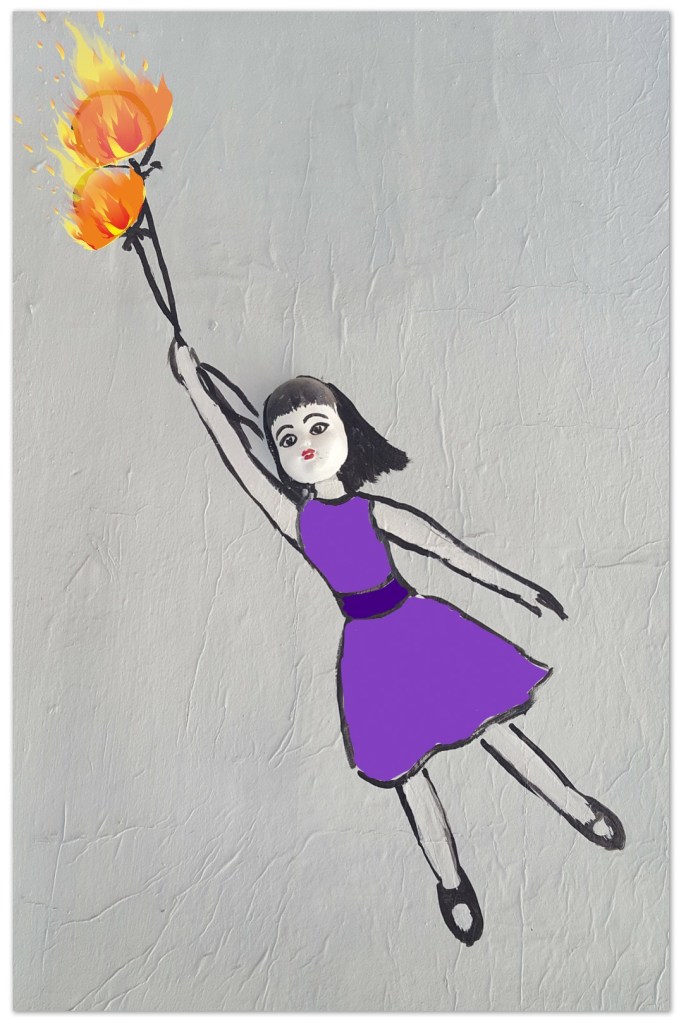
The Child With A Balloon

I was looking at figurines in my favourite gift shop, trying to choose one to commemorate my dad and another to commemorate my friend.

I noticed one that represented a child running with a balloon trailing behind her. The balloon was made of gold wire with 2020 woven into it. 

“Way too pretty,“ I observed. “That balloon should be on fire,” 

There was no argument from my sister, nor from either of the two ladies who run the shop. They all just nodded. 

The Child With A Balloon ‪#2020SoFar #2020worstyear #accurate #TrueStory #metaphor‬

A Day For Healing.

Today was a day for healing. 

After several absolutely brutal weeks, my bestie and I headed out to spend the day together— a day just for us. 

We didn’t talk about grief, or death, or funerals, or wills, or medical treatments. We just enjoyed each other’s company and pretended as much as we could that the rest of life and corona and lockdowns and work and pretty much everything else was not happening. 

Don’t get me wrong, though. We sanitised , we distanced, we avoided people as much as we could. We’re neither stupid nor irresponsible. 

We drove up-country and visited places we haven’t been to before. 

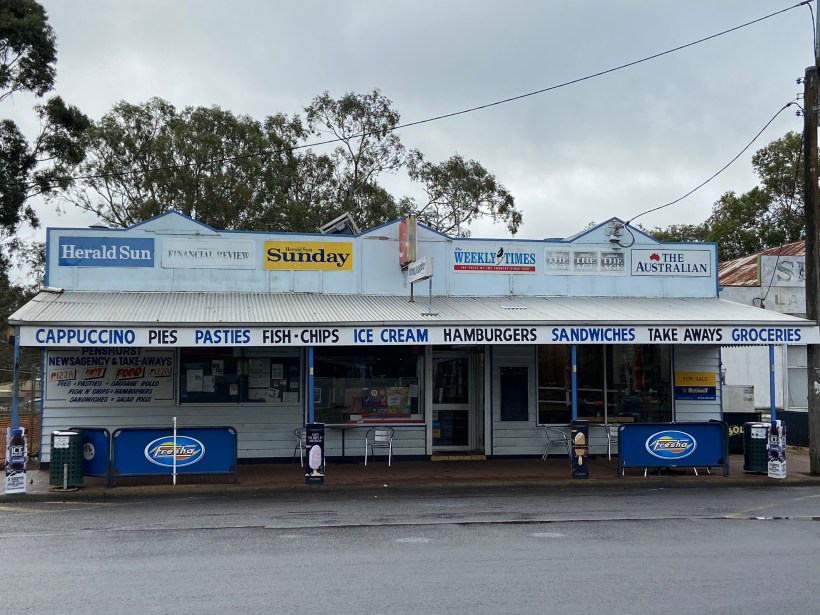
We stopped in a little country town, took some photos, bought a Coke, and kept going.

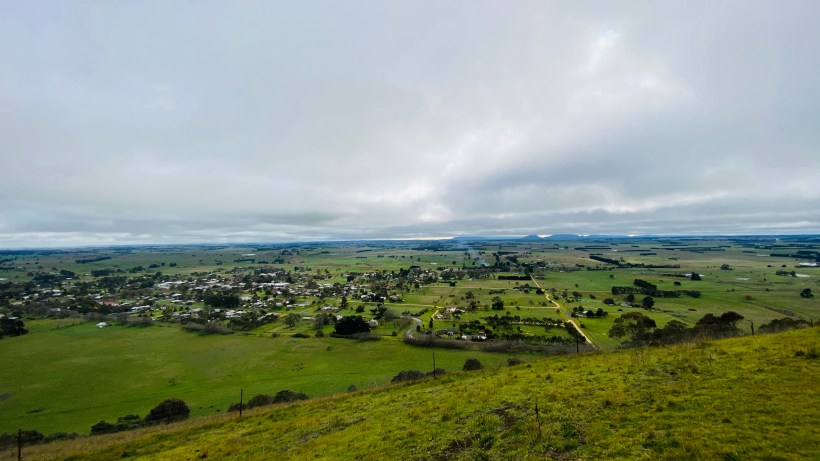
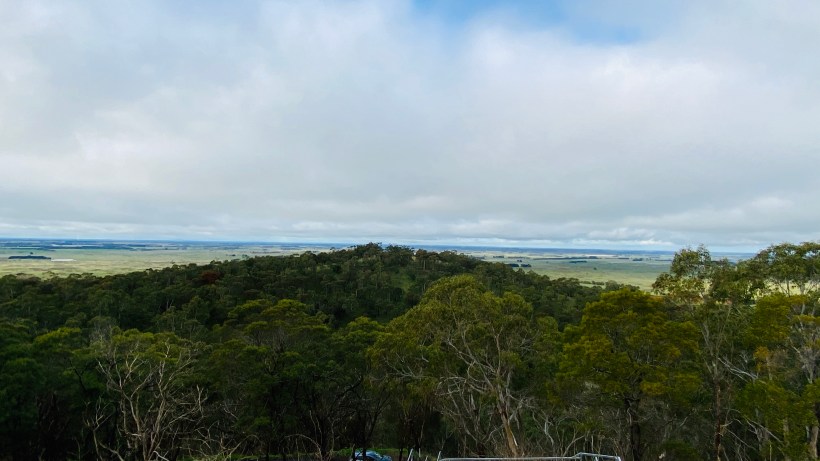
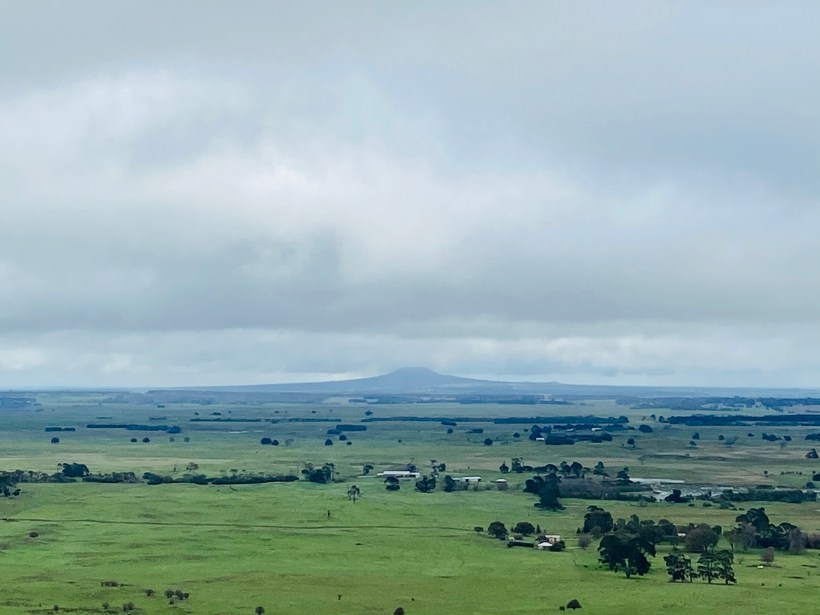
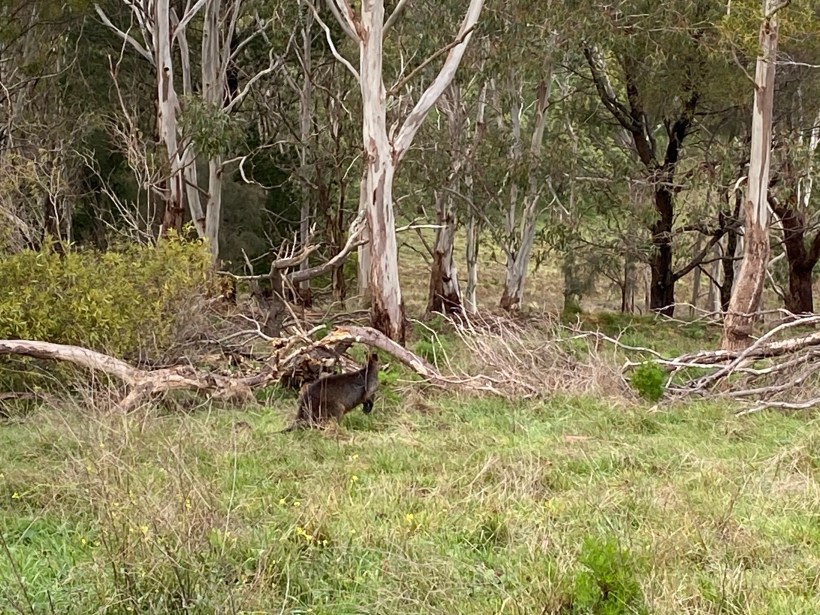
We stood on top of a mountain — well, technically it’s a dormant volcano, albeit not a very big one— and saw as far as we could see. We watched in silence as a wallaby fossicked for sweet blades of grass to eat, then hopped away. We listening to birdsong and tried to work out how many different birds we could hear. 

We visited a bookstore, as we always do on our expeditions, and we both found a couple of new treasures to bring home with us. 

We visited two different waterfalls about 9 kilometres apart on the same river, and looked at rocks and water and cascades and lichen and soil profiles. 

We ate lunch as we watched the water running and leaping its way down the rock face, and as we watched other visitors walk all the way down to the river bank and back up again. That’s a great way to wear out the kids during school holidays! We packed up our rubbish, along with some left behind by some other less considerate visitors to the park, and put it in the car to bring home with us, then returned to the falls to take photos. 

We watched the most delightful older couple walk hand in hand as they explored the park around the waterfalls, obviously as delighted with each other’s company as they were when they first met. She used a walking stick with her other hand, and he carried two umbrellas. The way they looked at each other was just adorable. 

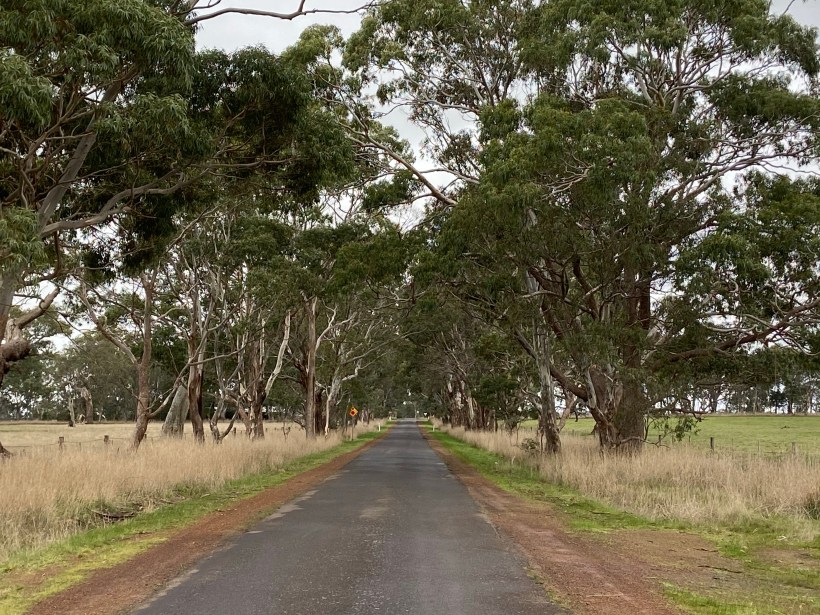
We looked at trees and enjoyed their beauty, their shapes, and their different profiles. Then we drove down country lanes where the gum trees on either side almost made a tunnel and commented on how magical and beautiful that felt.

We found a campground we want to go and stay at. It’s nestled in the bush near one of the waterfalls, and it’s just natural and quiet and beautiful. 

We met a lady with a gorgeous little dog named Milo, who insisted on wrapping his lead around my legs not once, not twice, but three times. We laughed. 

Oh, it felt so good to laugh. It felt so good to breathe fresh air, to not feel pressure from time or commitments or places and things that reminded me of my losses. 

It felt so good to just be. No responsibilities, no demands. Breathing deeply, enjoying the moment, and feeling refreshed. I can’t remember the last time I was able to do that. 

I am so blessed to have a friend with whom I can share days like today, but who has also supported me so faithfully through the trauma of the past few weeks. She has been an absolute rock for me, and I am thankful.

I am blessed to live in a place where I can go and spend time in nature and feel at peace there. I’m very blessed to not be in an area that is locked down, as Melbourne has been once again. 

Today didn’t make all those other things go away — far from it. But it gave me time to breathe, and it was very good therapy. 

A Day For Healing.
#therapy #emotions #grief #trees #waterfalls #personal #reflection #blogpost

A Dark And Stormy Night

Image Credit: Mylene2401 on Pixabay

I generally love a good thunderstorm. Tonight, I appreciate it even more than usual.

Growing up, I loved seeing Snoopy start his stories with “It was a dark and stormy night”. I used to giggle at that clichè long before I understood the deeper allusion to the fact that authors sometimes use the weather to reflect or foreshadow what characters in their stories feel or experience.

This is a literary device known as pathetic fallacy. It is used to set mood and tone in a piece of writing or art, emphasising emotions and heightening reactions. Rain can be used to reflect sorrow or misery, dark clouds can suggest anger or resentment, and a storm can suggest conflict, inner turmoil or violence.

If you’ve ever read ‘Wuthering Heights’ by Emily Bronte, you will have experienced pathetic fallacy being used so expertly that you may not have even noticed. Blended seamlessly with gothic imagery, turbulent relationships and the isolation of the Yorkshire moors, Bronte’s use of snow, rain, storms, cold and dark makes for incredibly powerful writing. Who can forget Cathy at the window during that storm, begging Heathcliff to let her in? It’s legendary because it is powerful, emotive writing that embeds its imagery in the consciousness of the reader.

My other favourite example of pathetic fallacy is Shakespeare’s King Lear shouting at the snowstorm, “Blow, wind, and crack your cheeks! Rage, blow!” Lear has literally been left out in the cold by his daughters Goneril and Regan, who have exploited his love and trust before throwing him out, homeless and broke. It’s such a potent scene — the depths of human coldness are amplified by the vision of a broken-hearted old man outside in a blizzard. It is chilling in more ways than one, and possibly one of Shakespeare’s finest scenes.

At other times, pathetic fallacy seems predictable and cliched. Sometimes it is almost painfully obvious and clunky. It often appears to be overused by authors who don’t have the finesse required to make it work — possibly because when authors do have that skill and it is done well, it it works as it is intended to without irritating the reader.

Tonight, nature is doing the author’s work for me. Outside, it is indeed a dark and stormy night. It has been raining steadily for hours now, thunder rolls and reverberates every now and then, and a draught of wind occasionally howls at the door. I am sitting in my father’s hospital room, having been called in late at night because he has been distressed and agitated. I have shed tears while talking with family members or sending messages. My emotions are all over the place. I’m both incredibly tired and wide awake.

A rainy night with the occasional rumble of thunder is most fitting.

Ambiguous Loss and Anticipatory Grief

I wish I had known about ambiguous loss and anticipatory grief much earlier in my life.

In yesterday’s post, I alluded to my Dad’s transition into residential aged care. 

Today, I want to share some knowledge I have gained over the past few months, because I have found it enormously helpful and therapeutic in dealing with my own experiences and feelings.  I am sure I wasn’t the only person who didn’t know these things, and my hope is that others will benefit from these insights. 

My father has become increasingly frail, and even though I knew the time was coming, making the decision to move him into residential aged care was incredibly painful. For him, it was a loss of independence, his home, his cat and my dog. His sadness was profound, and completely understandable. Still, he was very thankful — as were my siblings and I — that he could move into an excellent place where the care is consistently empathetic and kind, where the food is good, and where he can have his own things around him. 

My emotions, too, were complex. I felt guilty, even though I knew it was the right time and the right thing to do. No loving child wants to see their dad leave behind the life he has known and the things he has accumulated, and no loving child wants to see their Dad so sad. 

I experienced a very real sense of grief and loss while packing up his things, setting up his room, and helping him transition to a new phase of life, There was more to it, though, and often I didn’t know how to express what I was feeling. 

Through my research and reading, and through wonderful constructive advice from friends who have been through similar situations, I have come to understand that many of the things I am experiencing are encompassed by two terms: ambiguous grief and anticipatory grief

I had never heard of either one until recently, and I think they should both be much more commonly known.

Ambiguous Loss is a kind of grief experienced where there is no distinct end or no closure. Generally speaking, it arises from an emotionally painful or turbulent situation that one is going through, and which doesn’t have an “end date”. The reasons for grief or a profound sense of loss might be indistict, or complex, or unidentifiable at the time. Sometimes the grief masquerades as anger, frustration or overwhelm. To experience ambiguous grief is vague, exhausting and indefinite in more ways than just the timeline. 

It’s that mixed feeling of sadness at having to make big decisions that we didn’t feel ready to make, and thankfulness that things worked out perfectly when we needed them to.

It’s the sadness we felt at making decisions about what to do with his things, and asking my best friend to adopt his cat, even though he is still with us.

It’s the sadness I feel at saying goodbye and leaving Dad behind every evening, knowing he is safe and well cared for in his new home, but also that he is no longer ‘at home’. He is exactly where he needs to be, and I love it and hate it at the same time. 

Anticipatory Grief occurs when one realises or acknowledges that death is approaching, or even just a likely outcome. 

This is what I have experienced on a number of occasions when Dad had a health crisis and ended up in hospital. Most vivid in my memories was March 1st this year when I had followed the ambulance to the ER in the wee hours of the morning. When I got there, instead of being taken through to see Dad right away as I had always been before, the doctor on duty actually took me into a little room and  had “the talk” with me to made sure I understood how precarious Dad’s condition was, and that he might not make it this time. To his relief, I was fully aware of that. I suppose many people are surprised by it, or in denial, and I totally get that, too. It’s the natural reaction but, having been there more than once, it is no longer my default. There was no dozing while I sat by my father’s bed that night: instead, I spent hours composing the message I would send to my siblings, and another that I would send to other family and friends, at a decent hour of the morning. 

This is what we felt when packing up Dad’s things for his room at the home, and when sorting and cleaning out the accumulation of papers, trinkets, and household items in his house. Those are the sorts of things usually done after someone dies, not before. Still, it had to be done. 

Similarly, putting his wallet and the jewellery box containing my grandfather’s wedding ring and Dad’s much-loved pocket watches in a special spot in my own house for safekeeping felt strangely poignant and painful and incredibly sad. 

This is what I go through every time Dad has a episode of poor health, or gets an infection, or can’t express why he doesn’t feel good. It happens when he has times of vagueness or confusion, and when he can’t find his words All of those things are happening more often than they used to, so the sense of grief increases as time goes on. 

What I have learned thus far is that ambiguous grief is a very real and important part of the emotional process, and that my feelings don’t always have to be understood to make sense and be accepted as valid

In hindsight, I wish I had understood both of these realities when my mother was diagnosed with dementia, when she went into care, and when she didn’t know who I was anymore. My father, siblings and I were grieving the loss of the person she had been long before she actually passed away. When she died, it felt like it was my mother and someone entirely different at the same time. I felt so guilty about feeling that her passing was a liberation for her and a relief for us, even though my grief was as desperate and profound as ever. I was angry at myself for not knowing how to feel. 

At least this time, with experience and some knew understandings, I can accept the vagueness and complexity of my feelings, which can change from one moment or one day to the next, and just let it be whatever it is. I can cherish every moment with Dad and grieve at the same Time. I am free to laugh and cry, to tell my siblings the stories that are simultaneously sad and funny, and to live each day as it comes without having to explain to myself or anyone else why I’m a mess. 

As awkward and painful and weird as that may be, but I think it’s a healthy way to be. Still, I know I need to manage all those pesky feelings so I stay healthy, too. 

So, I try to make sure I talk honestly with my husband, siblings and closest friends about my thoughts and feelings. My sisters and brother are feeling the same things, and they all live interstate, so keeping them in the loop and encouraging them to express their feelings are hugely important, too. 
I allow myself to cry. ‘Being strong’ is rubbish. 
I refuse to beat up on myself when things are tough, or if I don’t achieve everything on my ‘to-do’  list. 
I remind myself to take each day as it comes.
I remind myself that we are doing the best thing for our dad, and that he is being expertly and compassionately cared for.

And every single day, I hold Dad’s hand and I tell him I love him. Because, throughout this whole process, Dad being sure of that is the most important thing of all.  

Different Kinds of Grief‪
#EmotionalIntelligence #emotions #grief #feelings #MentalHealthMatters  #MentalHealthAwareness‬ #personal #blogpost 

Helpful Reading: 

What Is Ambiguous Loss? 

Ambiguous Grief: Grieving Simone Who Is Still Alive 

How To Deal With Ambiguous Loss

Grief Before Death: Understanding Anticipatory Grief

Grieving Before A Death: Understanding Anticipatory Grief